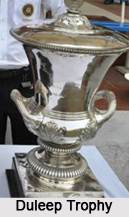
 Duleep Trophy is one of the top class domestic cricket tournaments in India that started its journey in the years of 1961-62 as zonal rather than a state first-class competition.Naming of Duleep TrophyDuleep Trophy competition is named after Kumar Shri Duleepsinhji of Nawanagar (also known as "Duleep").History of Duleep TrophyDuleep Trophy is a famous Cricket competition in domestic Cricket. The Board of Control for Cricket in India (BCCI) named the tournament after the legendary cricketer, KS Duleep Singh. According to the original format of the tournament, there were a number of five teams, drawn from the five zones - North Zone, South Zone, East Zone, West Zone and Central Zone. The teams played each other on a knockout basis and the BCCI decided to convert the tournament to a league format, from 1993-1994.Format of Duleep TrophyBoard of Control for Cricket in India (BCCI) once again changed the format of the Duleep Trophy in the year of 2002-03 and replaced the zonal teams with five new sides named, Elite A, Elite B, Elite C, Plate A and Plate B.
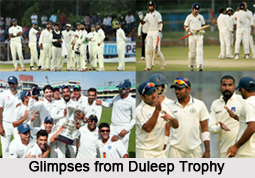
Construction of the Teams in Duleep TrophyThe BCCI constructed the teams from the new Elite Group and Plate Group divisions that had been introduced into the Ranji Trophy in that season. However, this format lasted for only one season, as BCCI felt that the new teams lacked a sense of identity and as a result, it went into the old zonal format from 2003-04. The BCCI also started to invite one overseas guest side every year in the tournament, England A being the first one to come.First Champion in Duleep TrophyThe West Zone has the credit of becoming the first Champion in the Duleep Trophy, in the 1961-62 seasons. The team beat the South Zone by 10 wickets in the final to win the trophy. Each of the zonal teams is actually a composite team of some cricketers, who play for the Ranji Trophy state/city teams situated in that region of India.
For more visit the page:
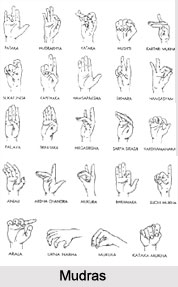 Mudra is a gesture by hand or seal which symbolizes energy. This is one of the most beautiful forms of expression by using the fingers and thumb. Mudra is a voluntary neuromuscular action (contraction) or posture by which the prana is controlled and directed through a particular Nadi, known as Mudra. It is also known as the ritual or symbolic gesture which is practiced from very old times in Buddhism and Hinduism. Mudra calls for the involvement of the whole body and it is performed by the use of fingers and the hands as well. Mudra is regarded as energetic or the ‘seal of authenticity’ utilized in the Indian religious spiritual practice. There are references of Mudras in the philosophies of the Eastern world and it is also a part of Yogic practice and culture. Mudra is hence defined as a mystical gesture of the hand in order to focus elusive energy by symbols.Etymology of MudraThe term ‘mudra’ is derived from two words; ‘mud’ and ‘ra’. Here, ‘mud’ means to rejoice or to be happy and ‘ra’ means ‘to give’. Thus, Mudra is an action which offers delight or extreme joy. This is an indication that the practice of Mudra is concerned with sensory aspect.Concept of MudrasConcept of Mudras depends upon all the fingers of both the hands of an individual. Each of the fingers is linked with specific meaning and energy. The accurate use of the fingers provides the Mudra with the energy to heal. Fingers are stated to bear the human body's five elements, which are air, water, fire, earth and sky. These are there in set proportions and a slight imbalance may cause severe disaster. The striking of balance in between these elements is however not easy. Thus, the practice of Mudra facilitates the harmonizing of the five elements present in the human body.Finger Tattvas in MudrasAn elaborate study concerning the fingers and their links with the five elements unveils the fact that the element earth, worry and stomach are represented by the thumb. Index finger of a human being comprises of the element metal and has an influence over the large intestine, lungs, and also the control over emotions like sadness, depression and grief. The hand's middle finger is regarded as the element fire which is connected with the small intestine, heart, respiratory and circulatory systems and the emotions include hastiness and impatience. The element wood is constituted by the ring finger and the same is associated with the gall bladder, liver and nervous system, and represents anger, while the little finger represents water, fear and kidney.
For more visit the page:
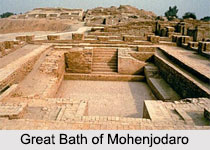 With evolution through centuries, the Indian architecture is the result of socio-economic and geographical conditions. The different types of Indian architectural styles include a mass of expressions over space and time, transformed by the forces of history, culture and religion considered unique to India. Whether it is the Great Bath at Mohenjodaro or the Taj Mahal in Agra, Indian architecture has been successfully enamouring the connoisseurs of art and architecture for ages. The Indian architecture can be divided into several stages starting from 3300 BCE to the Indian Independence and the present era which are elaborately discussed below.Ancient Indian ArchitectureThe history of Indian architecture dates back to the era of Indus Valley Civilization till the phase of the colonial architecture. Between the periods of 2600 to 1900 BCE, the Indus Valley Civilization produced several cities marked by great uniformity within and between sites, including Harappa, Lothaland Mohenjodaro. The design of these planned cities is remarkable with extremely minimalistic decorations. The architecture of Indus Valley Civilization shows the advanced level of societal development of the people of that era.
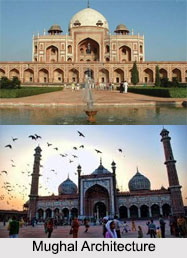 Among India's ancient architectural remains, the most characteristic are the temples, chaityas, viharas, stupas and other religious structures. The earliest existence of the ancient Indian architecture is the Buddhist and Jain structures. The Buddhist caves, monasteries and stupas are fine example of this which stored the sacred relics of Buddha. One such example can be the first monasteries such as the Jivakarama vihara in Rajgir, Bihar and the natural caves of Saptaparni.Stone Architecture of IndiaDuring the period from 320 BCE to 550 BCE witnessed the rise of the Mauryan Empire, where the new wave of buildings were structured that mostly relied on the first examples of true stone architecture. It was during this time under the rule of Emperor Ashoka that 84,000 stupas were constructed all across India to distribute the sacred Buddhist relics. The capital city of Pataliputra, the Pillars of Ashoka and the Mahabodhi Temple in Bodh Gaya are just few of the examples of the impressive Indian architecture with stone during that period.
For more read:
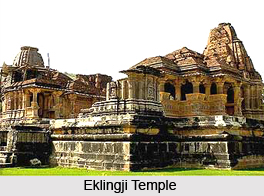 Rajasthan, the largest state in India, is blessed with natural beauty and a great history. With the majestic palaces, historical forts, desert and lakes, tourism is a booming industry in Rajasthan. Jaipur, Udaipur, Bikaner, Jaisalmer and Jodhpur are the most preferred destinations for the tourist. Tourism accounts for eight percent of the state's domestic product. Many old and neglected palaces and forts have been converted into heritage hotels. Unlike what its barren scenery suggests, one will find that Rajasthan is the most colourful and fascinating place inhabited by humans. The desert safari of Rajasthan is an exhilarating experience of a lifetime. An exotic land, a trance come true for the Western world, Rajasthan is home to the Rajputs, the military races of India known likewise for their love of arts and architecture as well as courage and chivalry. Even at the present day Rajasthan, which is inhabited by the Rajasthani people, is culturally and artistically rich in its own way.Pilgrimage Tourism in RajasthanTemple building in Rajasthan received royal patronage under the reign of the religious-minded Rajputs. The most notable temples in Rajasthan are Eklingji temple, Someshvara Temple, Ramavaikunth temple and Kalki Mata Temple. These temples attract thousands of pilgrims every year. The renowned Brahma temple at Pushkar is the only temple in the entire Indian sub-continent which is visited by devotees all the year round.
  Pilgrimage to Rajasthan remains incomplete without visiting the Govind Dev Ji Temple in Jaipur which is dedicated to Lord Krishna. It is a must visit location for devotees and tourist alike. As rulers, the Rajputs followed a policy of religious tolerance. Hence, besides the Hindu temples there are Jain temples and mosques in Rajasthan. The Ajmer Sharif in Rajasthan is a holy place where Muslim saint Khajwa Moinudin Chishti was buried. This draws pilgrims and disciples from all places of the Islamic world. But at present people from all religions come here to pay their homage as the Dargah Sharif is a holy place where wishes are fulfilled. The Dilwara temple in Mount Abu in Rajasthan is an important religious centre for the Jain pilgrims. It dates back to the ancient times and is also noted for its architectural brilliance. The Jain temples at Jaisalmer in Rajasthan are also a frequent haunt for Jain pilgrims. Based on the pattern of the Dilwara temple this temple is dedicated to first and third Jain Tirthankaras Rikhabdev and Sambhavnath. The various religious places in Rajasthan give the tourist an insight of the rich traditions and legacy of India.
For more visit the page:
The game of Indian cricket from colonial era has generated a whole lot of unforgettable Indian Cricket Personalities, and this does not only consist of players. Unlike most other sports, where only the performers are remembered, cricket has equally immortalised coaches umpires and even commentators. Indian Cricket Personalities played a significant role in further strengthening the game after retirement. Some of the major Indian Cricket Personalities are R Ashwin, P Awana, PP Chawla, Mahendra Singh Dhoni, Zaheer Khan, Yuvraj Singh, UT Yadav, R Vinay Kumar, I Sharma, I Sharma, IK Pathan and many others.S. VenkataraghavanSrinivasaraghavan Venkataraghavan was an able off spinner, who captained India in the first two World Cups in 1975 and 1979. Nicknamed, Venkat, he also went on to become a reputed international umpire. He officiated in 73 Test matches and 52 one-day internationals during the period 1993 to 2004 following which he retired. After retiring from first-class cricket in 1985, he also became a cricket administrator and the manager the Indian Test team. Venkat was part of the famous quartet of Indian spinners in the 1970s. But he often lost out his place in the side to the other off-spinner Erapalli Prasanna, who was believed to be more talented of the two. For his all-round contribution to cricket, he was awarded the Padma Shri in 2003. Anil DandekarAnil Dandekar is an Indian cricket umpire. In India he has stood in matches in the 2015–16 Ranji Trophy, the 2015–16 Vijay Hazare Trophy and the 2015–16 Syed Mushtaq Ali Trophy.Sanjeev DuaSanjeev Dua is an Indian cricket umpire. Sanjeev Dua has umpired 5 Women's One Day International cricket matches, 44 first-class matches, 33 List A matches and 20 Twenty20 matches.Madan LalMadan Lal Udhouram Sharma coached India for a brief period in the 90s but did not taste too much success. He will be remembered more for being part of the World Cup winning squad in 1983. His statistics are not phenomenal but he had the ability of delivering with both the bat and ball. Lal played in played 31 Test matches for India and scored just over 1,042 runs averaging 22.65. He also picked up 71 wickets at an average of 40.08 and took 15 catches. He had much better figures at the first class level with 10,000 plus runs and 600 wickets.
 Kapil DevKapil Dev Ramlal Nikhanj also famous as Kapil Dev is a former Indian cricketer. He captained the Indian cricket team which won the 1983 Cricket World Cup. He was named by Wisden as the Indian Cricketer of the Century in 2002, Kapil Dev was also India's national cricket coach for 10 months between October 1999 and August 2000.Sachin TendulkarSachin Tendulkar is a former Indian cricketer and captain, widely regarded as one of the greatest batsmen of all time. He took up cricket at the age of eleven, made his Test debut on 15th November 1989 against Pakistan in Karachi at the age of sixteen, and went on to represent Mumbai domestically and India internationally for close to twenty-four years.Virender SehwagVirender Sehwag is a former Indian cricketer. He is the former captain of India. Often considered as one of the most destructive batsman of the game, Virender Sehwag is an aggressive right-handed opening batsman and a part-time right-arm off-spin bowler. He played his first One Day International in 1999 and joined the Indian test side in 2001. In April 2009, Sehwag became the only Indian to be honoured as the Wisden Leading Cricketer in the World for his performance in 2008, subsequently becoming the first player of any nationality to retain the award for 2009.
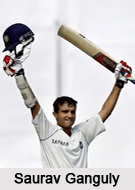
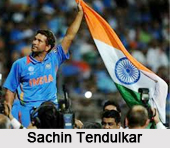 Saurav GangulySourav Chandidas Ganguly was born on 8 July 1972. He was affectionately known as Dada is a former Indian cricketer and captain of the Indian national team of Cricket. Presently Sourav Chandidas Ganguly is cricket commentator and President of Editorial Board with Wisden India. Born into an affluent Brahmin family, Saurav Ganguly was introduced into the world of cricket by his elder brother Snehasish Ganguly. Saurav Ganguly is regarded as one of India's most successful captains in modern times. Saurav Ganguly started his career by playing in state and school teams. Currently, Saurav Ganguly is the 5th highest run scorer in One Day Internationals (ODIs) and was the 3rd person in history to cross the 10,000 run landmark, after Sachin Tendulkar and Inzamam Ul Haq. In 2002, the Wisden Cricketers' Almanack ranked Saurav Ganguly the sixth greatest ODI batsman of all time, next to Viv Richards, Brian Lara, Dean Jones and Michael Bevan.
For more visit the page:
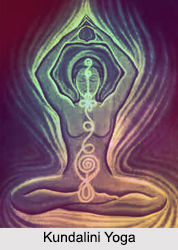 Kundalini Yoga is a mental, physical and spiritual discipline constructed around the meditative and physical techniques which were found in the teachings of Shakti Yoga, Raja Yoga, Bhakti Yoga, Kriya Yoga, Tantra Yoga, Nada Yoga, Laya Yoga and the principles and sutras of Patanjali. Kundalini Yoga is a form of meditative and physical yoga which comprises of several techniques by using the body, mind and senses and the result received is a relaxing and peaceful communication between the body and the soul.Kundalini Yoga provides special concern to the function of the endocrine system and the spine, which form a vital part in yogic awakening. This yoga puts stress on the spiritual and psychological growth and the capability of body in order to attain maturity. The chakras or psychic centers inside the human body are regarded as the center for generating spiritual power and this power is known as Kundalini energy. The life force or Prana is believed to be in a dormant state in the human body. Kundalini is the budding form of prana. It is the force preserved in the shape of a coiled serpent and this serpent is believed to take rest in a dormant state inside Mooladhara Chakra.Etymology of Kundalini Yoga
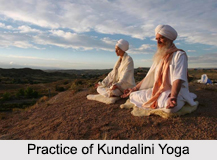 In Sanskrit language, the term ‘Kundalini’ literally means something that is coiled. It is considered to be taking rest at the basal portion of human’s spine and can awake and spring up when excited by the disciplines of spirituality known as ‘Kundalini Yoga’.Importance of Kundalini YogaKundalini Yoga practice consists of several bodily postures, utterances, expressive movements and breathing patterns, characterological cultivations and the levels of concentration. Like various other yoga forms, Kundalini Yoga also relates movement along with breath. The way it varies is its direct focus on the movement of energy through the system of chakra, motivating energy in the chakras of the lower portion and moving the same to the higher chakras. This Yoga wakes up the energy which resides in a dormant state in the spine. Even if Kundalini Yoga is greatly a physical pattern of yoga, the major benefit from it is received by the inner experience. Famously called the ‘Yoga of Awareness’, this yoga arouses the unlimited capability which exists there inside all individuals. When the unlimited potential is roused in the human body, it provides raised intuition and clarity of mind as well as the potential for creativeness. In Kundalini Yoga, the sustaining and creating Shakti of the entire body is truly and actually unified with Lord Shiva. The awakening of Kundalini Shakti and Her subsequent Union with Lord Shiva impacts the Samadhi state or Ecstatic union and spiritual experience or Anubhava.
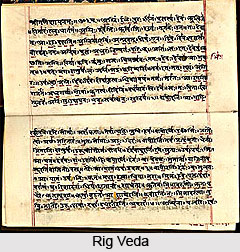 Vedic literature glorifies Vedic India. ‘Vedas’, a Sanskrit phrase, implies knowledge. It is the traditional faith that Vedas are ‘apuruseya’ (not composed by human beings), which was known to be a direct revelation of God, hence named shruti. Scholars believed that Vedic Literature originates long before the literary tradition started in India. However the oldest text, Rig-Veda has been traced back to the 11th century. The Vedic literature consists of the Vedas, Upanishads, Vedangas, Sutras, Upavedas, Shastras and Puranas.The Vedic period lasted for a millennium encompassing the late bronze & Iron Age. As far as the researches are concerned, the Vedic Literatures are composed in 1500 B.C, over a period of years. Vedic Literature saw its crest after the composition of the mantra texts, frequently called Samhita texts. With the composition of the mantra texts, shakas were established all over northern India. Usually Shakas are the theological schools that were focused on the learning of the Vedic Mantras.The Vedas can be classified into categories of texts, traditionally the Samhitas or mantras, Brahmans, Aryanyak and Upanishads. The Vedas, as often termed as the Sutra literature can also be classified into Shrautasutras and Grahyasutras.The Vedic Samhitas or the Mantras are mainly the metric texts and there are four Vedic samhitas- Rig Veda, Sama Veda, Yajur Veda and Atharva Veda. Sometimes the term ‘Vedas’ is used to signify those Samhitas. The Samhitas are the oldest stratum of Vedic texts. As ‘Vedic Concordance’ of Bloomfield, an eminent scholar records, Vedas have 89000 padas, of which 72000 are in Samhitas.
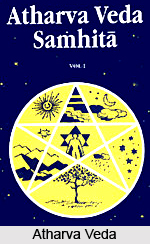 The Rig Veda: This oldest existing Indian text is an anthology of 1028 hymns and 10,600 verses devoted to the Rig Vedic deities, compiled in 10 mandalas or books. According to the different opinions forwarded by the historians, saints composed Rig Veda for a period of 500 years in the Sapta – Sindhu, present day Punjab region of Indian Subcontinent. The Indian Rig Veda is closely synonymous with the Iranian and Andronovo culture.The Sama Veda: The name ‘Sama’ derived from the word ‘saman’ means the ‘song of praise’. The Sama Veda is the ‘Veda of chants’ or ‘Knowledge of melodies’. Sama Veda is a compilation of 1875 verses, some of which are the repetitive imitations of the Rig Veda. It serves as a song book for the priests who take part in public worship. A priest singing in the rituals is commonly called ‘udgati’ or ‘cantor’. A fixed style was followed by the priests while enchanting. Two major shakas are associated with this Veda- Ranayianiya and Jainimiya.The Yajur Veda: It consists of cryptic prose mantras, some parts are borrowed from the Rig Veda. Each of the mantras in the Yajur Veda are associated with specific sacrificial rites, not merely Soma offering. Two major recessions of the Yajur Veda are "White" & "Black". The "White" discusses only those verses required for the sacrifices but do not explain the implication of those verses but the "black" Yajurveda contain specific explanations of the work to be performed.The Atharva Veda: depicts the "Knowledge of the Atharvans" or the "Agnisara". As it has been pointed by Apte, the scholarly historian, "atharvan" is a priest who worships fire and Soma. It is a collection of 760 hymns and about one-sixth hymns are the imitation of Rig Veda. The Atharva Veda has least connection with the sacrifices and rituals but involves the incantations required for prevention of demons and disasters.
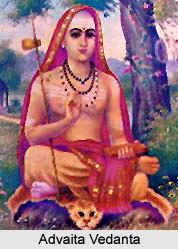 The Brahmanas are the prose literature, codified in a procedural fashion, which depicts the sacrificial rituals, their meanings and a complete commentary on the usage, implication and their significant effect of those rituals. Brahmanas are considered to be the heart of Indian Philosophy, describing the concepts of Karma and Samsara and the significance of the four stages of the life of a Hindu Brahmin, namely- Brahmacharya, Grihasthya and Vanprastha and Sanyas. It also provides a perception of the spirituality and supernaturalism of the Vedanta philosophy. Each of the Brahmans are associated with one of the Samhitas and according to that one of the shakas or schools. The Brahmans may also include the Aryanaka or the Upanishads.
For more visit the page:
