Showing posts with label yoga life. Show all posts

Saturday, 21 January 2023

Sankirtan Yoga


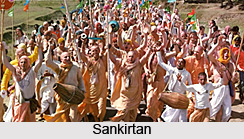
Sankirtan YogaSankirtan yoga refers to taking the name of God. It is one of the nine modes of Bhakti. According to the Puranas, the glory of the Supreme Being lies in his Name. Hence, the easiest way to attain the lord is by remembering him. Swami Sivananda, the founder of Divine Life Society, defines Sankirtan as the Swarupa (indispensable nature), Dhwani (sound) and the essence of Vedas. In fact, both the Vedas and Sankirtan originate from the same source. In Sankirtan people sit together and remember God by singing his name harmoniously. But the most important thing is the bhava (thought or feeling). If the person is taking the Lord’s name with utmost devotion, then He will answer the devotee’s call.

Sankirtan is further considered to be a science that has the power to lift the mind and spirits to its farthest extent. Sankirtan Yoga is the easiest and best way to realize God. In modern times, when it has become increasingly difficult for people to practice austerities, practicing Brahmacharya or Raja Yoga, singing His name is quite easy. Any common man can practice it as it does not require deep intelligence to comprehend Jnana Yoga or Sadhana.

According to belief there is Shakti in God’s name. It has the power to eradicate all the 'mala' or impurities of mind. In fact there are three types of obstacles in the path to attain God: Mala, Vikshepa and Avarana. In order to get rid of this, selfless service, intellectual seeking and upasana are recommended. However, Sankirtan Yoga can achieve all these single-handedly because nothing is more powerful than His name. Even if it is the veil of Maya that deludes man, taking the name of God will help man to severe the worldly ties. Thus, Sankirtan enables one to realise the Brahman.

For more, visit the link below:

Monday, 9 January 2023

Human Body and Hatha Yoga


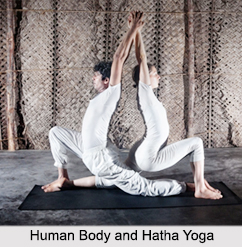
Human Body and Hatha YogaHuman Body and Hath Yoga are deeply connected. Hatha Yoga is designed to gain in-depth understanding of the body and to unleash its power and strength to obtain higher selves. To a Hath Yogi, the body is not a mere mass of living matter, but a mystic bridge between the spiritual and the physical being. Hatha Yoga is often regarded as physical or bodily yoga. This implies that bodily perfection is viewed as a consequence of meditative discipline, although the relation between the two should perhaps be better understood as one of mutual enhancement. According to Yoga Sutra, the goal of Hatha Yoga results in beauty, gracefulness, strength and robustness.

Hatha Yoga does not seek mere transcendental experiences. Its objective is to transform the human body to make it a worthy vehicle for Self-realization. According to a yogic philosophy, the body, mind and senses constitute instruments or tools for the respective processes of experiencing the world and realizing ones true nature. Physical upliftment assists the spiritual one and vice versa.

Impact of Hatha Yoga on Body Cells
Human Body and Hatha YogaHatha Yoga teaches that the physical body is built up of small cells, each cell containing within it a miniature life which controls its action. These lives on the other hand have small bits of intelligence which allow the cells to do their work in a proper manner. The small cells of human body are under the control of the central system and readily obey their orders consciously or unconsciously. The process of digestion, assimilation, etc shows the intelligence of the cells either separately or collectively in groups. Each atom of a living body according to the Yogi is a living being which has its own independent life. Cells in human body are the ones which carry on the work of continual regeneration. It has been said that in order to perform all the different actions the cells need a supply of Prana. The cells are able to get the supply of Prana from the nourishment they derive from the food which they have.

In order to supply adequate Prana to the cells it is necessary that the body is kept in a proper condition and the yogis believe that Hatha Yoga is a way to keep the body in a healthy condition.

For more, visit the link below:

Tuesday, 9 August 2022

Yoga For Sciatica


Yoga For Sciatica Yoga for Sciatica is an effective way to comfort the pain of sciatica. Sciatica is a physical ailment that affects the sciatic nerve, causing a shooting pain starting from the lower back and extending down the back of each leg. The pain of sciatica is very distressing, often making it difficult to sit and walk. Sometimes it is accompanied by a tingling or burning feeling down the leg. Depending on the severity, the pain of sciatica may be continuous or occasional and varies in intensity from mild to acute.

Symptoms of Sciatica
A person suffering from Sciatica experiences a pain in the lower back region which radiates to the inner side of the thigh, back of the knee, calf muscles, ankles and toes. Heaviness, numbness or weakness in the leg may also be felt and movements of the legs become troublesome. During acute condition the patient is generally advised bed rest. They are also advised to walk by taking short steps and placing the complete foot on the ground.

Causes of Sciatica
Sciatica results in pain along the course of the sciatic nerve, which is the longest nerve in the body of human beings. It stems from the lower back and travels down the leg up to toes. The common causes of Sciatica are injury or inflammation of the nerve or the nerve root resulting from metabolic, toxic or infectious disorders. Apart from this, it may also occur due of the compression of nerve root caused by ruptured or bulged intervertebral disc, often termed as herniated disc. This condition arises due to the prolapse of the pulp of the disc. Sciatica may also occur due to a sudden jerk in the lower back while lifting a heavy weight or by any sudden movement. Pregnant women may experience this problem owing to awkward positions maintained for a long time. If the blood sugar is not maintained properly, patients of diabetes are also prone to this condition as a result of neuritis. Osteoarthritis is another disorder which can result in nerve damage and hence sciatica. Smoking and obesity can also increase the likelihood of this disorder.

For more, visit the link below:

Thursday, 28 July 2022

Chakra Meditation


Chakra MeditationIn Hinduism and in some related Asian cultures, a chakra is thought to be a nexus of metaphysical and/or biophysical energy residing in the human body.

Chakra Meditation involves Chakra Anusandhana, which means "discovery or search of the chakras". It is a simple way for beginners to explore the chakras self-tutored. It helps in awakening them gently, and in a balanced integrated way.

Within our bodies there are focal points of energy, called Chakras, that we use, whether consciously or unconsciously.

Chakras are located in important parts of everyone's body. Any organ within the area of these Chakras are used to control; and are, therefore, directly affected by the properties of that Chakra. There are seven Chakras located throughout the body, each with their own unique attributes and characteristics:

The Root Chakra is located directly at the base of the spine, also known as the coccyx. This Chakra is closely related to the body and our ability to master it. One's health, constitution and security are linked to this Chakra. In addition, the realization of how our bodies connect to the material world is focused here.

Take a deep breath and pull it down through your body to the very base of your spine, the seat of the first chakra. As you release the air, relax all the muscles in your toes, feet and legs. Take in more air and focus on your connecting point to the earth. Now release the air, relax down through your body, and continue to send your attention deep into the center of the earth. Picture magnetic lines of force coming from the earth's core, connecting with your own root center. Allow that force to arise within you, from below. Imagine a feeling of power surging into this "root" center from the deep center of the earth. As it increases, keep your attention on this powerful magnetic energy at the bottom of your spine.

Focusing at the base of the spine, imagine that with each breath, energy collects and builds up there. Continue to relax, and sense the feelings in the coccyx, perineum, anus, and deep inside your pelvic cavity, the foundation of your body. Sensing your root center, breathe as if the earth's energy is coming directly into you from below. Allow the energy to build, like a growing, magnetic force.

The Naval Chakra or Libido is located in the lower abdomen. This Chakra is tied into the more physical feelings of love, passion and sexuality. The feeling of pleasure is also linked with this Chakra, so one may feel focus and feedback in this Chakra during moments of harmony, generosity, group creativity and selflessness.

Keeping the first chakra open, take a long deep breath in, and lift your awareness from your root center, up to the second chakra, the area of your sexual and reproductive organs. Take in more, letting the red energy from below heat up to a glowing orange surge... Now let the air rush out and begin to consciously relax your genital muscles, buttocks, abdomen, hips, and pelvis. Breathe the warm energy into the second chakra, deep inside your sexual center. Allow the power generated below to surge upwards and spread out at this second energy level, like warm, orange lava flowing out of a volcano. The Solar Plexus Chakra is located just above the navel and below the chest. This Chakra is a focus point for our force of will and our sense of transformation. Concentration and control of our personal energies originate from this point. One's sense of power and authority, as well as self-control and discipline of the ego converge here.

Thursday, 16 June 2022

Divine Body in Kundalini


Divine Body in Kundalini, Kundalini YogaKundalini in the divine body facilitates a person to feel oneness with God and the cosmos, to be in contact with his or her own glint of God consciousness, to feel divine vigour and love in life. As the monadic synthesises one’s individual karmic energy, so the divine level synthesises one’s individual karmic energy with the karmic energy interpenetrating everything, whether from families, friends, communities, nations, ideas, social pressures, the forces from geographical areas in which the individual lives, forces from planets, stars, or any other force. Every person is impressed very much by these forces, whether one substantiates it or not.

Cleansing the Divine
In the divine level, a person’s concept of God and the universe changes more radically compared to other levels. Several go through the “dark night of the soul”, sceptical about God, existence, intention or anything else in life. The divine body receives both the most harrowing and most gratifying purification and enhancement. Those with firm faith in a Divine Being have an easier time on this level; even during times of distrust, they have some faith to sustain them.

Facing Demons
Facing demons is pretty obligatory. At times one might be wholly against the spiritual side of life, whether on account of feeling disconnected from God or in fact experiencing the demons, which need to be metamorphosed. A person in the midst of purification is pretty conscious of this demonic side, which may entail deep feelings of bitter loathing, sexual distortion, sadism or other offensive tendencies. It is advised to pray for strength and supervision, as one faces their respective demons. One needs to fill oneself with light lavender and then breathe deeply and peacefully. One must allow the cells to be cleansed, altered and filled with spiritual energy. By doing so, one will redeem the negative forces within and ‘save’ oneself from the negative. It is only by facing the demons and metamorphosing their energy that one can exterminate them; some people desire professional advising when dealing with this facet of life.


Saturday, 30 April 2022

Swara Yoga


Swara Yoga, Types of YogaSwara Yoga is the science of realization of cosmic consciousness by the special awareness or observation and controlling or manipulating the flow of breathes through the nostrils. The word ‘Swara’ is a Sanskrit word, which means sound or musical note, also means the continuous flow of air through one nostril. Tantric traditions like Surya Tantra, Ganpatya Tantra and Vaishnava Tantra also provides knowledge about Swara yoga.

Swara Yoga is involves the systematic study of the breath flow through the nostrils or the Swara that is also related to the prevailing phases of the moon, time of the day and the direction. Swara Yoga is not like Pranayama or other breathing related yoga. In Swara yoga, the breath is associated with the activities or phases or positions of the sun, moon, planets, seasons, time of day and with the physical and mental states of the individual and these subtle reactions determine the mode of action accordingly. For example, in moon phases one can check the flow of breath through his/ her nostrils before getting out of the bed and floor should be touched first with the corresponding foot and the first step should be made with that foot. It is the simple practice that brings success in everything that happens in that particular day, the first foot to touch the ground will get the prevailing ‘successful’ flow of energy from the cosmos.

Origin of Swara Yoga
Swara Yoga, Types of YogaSwara yoga is a Tantric Science that originates from the Agama Shastras and from Shaiva Tantra, where Lord Shiva is the Guru and Shakti is the disciple. Swara Yoga is the ancient science that existed before the Vedic period, over 10,000 years ago. It was the secret science, only available for the selected few and was confined between kings and dedicated saints. The ancient saints and sages intuitively received the knowledge from the divine and kept it secret between them.

For more, visit the link below:

Monday, 18 April 2022

Science of Kriya Yoga

  Kriya Yoga is the union or Yoga with the Infinite through a certain action or rite. The Yogi who faithfully follows the technique is free from Karma and universal chain of causation. Paramhansa Yogananda describes the science of Kriya yoga in his 'Autobiography of a Yogi'.


Kriya Yoga procedure cannot be fully explained theoretically but the science beyond Kriya yoga can be explained. Kriya yoga is a simple, psychophysical method by which the human blood is decarbonized and recharged with oxygen. The atoms of this extra oxygen are transmuted into life current to rejuvenate the brain and the spinal centers. The Yogi is able to lessen or prevent the decay of the tissues by stopping the accumulation of the venous blood. The advanced Yogis have the ability to transmute their cells into pure energy.

Kriya Yoga is an ancient science. Lahiri Mahasaya received the technique from his guru, Babaji, who rediscovered and clarified the techniques of Kriya Yoga. In this technique Yogi is able to neutralize both inhaling breath and outgoing breath. He thus releases the life force from his heart and brings it under his control. The yogi arrests the decay of body by addition of this life force and arrests the mutations or changes of body by 'Apan' or eliminating current. Thus by neutralizing decay and growth and by tranquilizing the heart, the Yogi learns the way of controlling the life.

Science of Kriya YogaPatanjali refers a second time to the life-control or Kriya technique thus: "Liberation can be accomplished by that pranayama which is attained by disjoining the course of inspiration and expiration."

In the initial state of God- contact or the Saibakalpa Samadhi, the devotee's consciousness merges with the cosmic spirit, his life force is withdrawn from the body and thus the body appears dead or motionless and rigid. The Yogi is full aware of his bodily condition and suspended movement. Then he progresses to the higher spiritual state or the Nirbikalpa Samadhi. However he communes with God without material body and in his ordinary awakening consciousness. The Yogi can achieve this state even in the midst of worldly duties.

Kriya Yoga is an instrument through which human evolution can be quickened. "The ancient yogis discovered that the secret of cosmic consciousness is intimately linked with breath mastery. This is India's unique and deathless contribution to the world's treasury of knowledge. The life force, which is ordinarily absorbed in maintaining the heart-pump, must be freed for higher activities by a method of calming and stilling the ceaseless demands of the breath."

For more, visit the link below:

Tuesday, 15 March 2022

Symptoms of Kundalini Release


Symptoms of Kundalini Release, Kundalini YogaKundalini raising that occurs prior to adequate purification and spiritual awareness is considered premature, producing many different symptoms. Symptoms are dissimilar in each individual because each person has blocks, or energy concentrations, in diverse areas. The following are the different symptoms of Kundalini release:

  • In addition to short periods of intensified awareness and states of paradise or enlightenment, there may be times of extreme dreariness or gloominess, unpredictable behaviour, unexplainable illness, loss of memory, feelings of stupefaction with oneself, friends, work or the world in general.
  • If the liver is affected, the skin may take on a yellowish colour, a roughly dirty look, due to the release of negativity; or some areas of the body may take on a reddish or bluish cast. There may be other shadings relating to energy concentrations of different vibrational rates. Each vibrational rate has its own colour.
  • A person may look old, tired, or ill but a few hours later, looks younger and full of vivacity, or the reverse.
  • Another symptom of premature Kundalini rising is a blackish look to the nails of the big toes due to activated reflexes in the big toes that relate to the pineal gland.
  • At times there may be a fluttering feeling as the muscles relax and release more energy into the nerve endings.
  • There may be an internal illness or pressure, a wanting to ‘vomit’ out anything in order to eject the extra energy.
  • There may be nosebleeds. Kundalini in its stronger states can tear human tissue.
  • There may also be involuntary movements or shaking of the body; illness may develop from Kundalini cleansings, many times remedied simply by changing the energy patterns.


  • A warning is however given, to consult a doctor when changing the patterns does not help; when a problem appears to be medical, there should not be further hesitation to seek medical assistance.

    For more, visit the link below:

    Thursday, 17 February 2022

    Sahaja Yoga


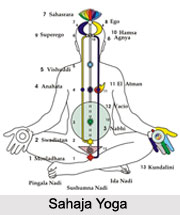
    Sahaja Yoga, Types of YogaSahaja Yoga is a way of special meditation based on the experience of Self Realization or Kundalini awakening which might occur within the human body. Shri Mataji advocates that self-realization is the highest achievement of human being. Through Sahaja Yoga, an inner transformation takes place in human being, which helps one to become moral, united, balanced and integrated. Sahaja Yoga is the way to arouse divine power as the cool breeze. This power inherits the spiritual tradition of the world.

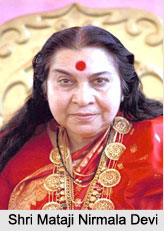
    Shri Mataji Nirmala Devi
    Shri Mataji Nirmala Devi introduced ‘Sahaja Yoga’ in 1970 among the commoners in India as well as abroad. She is an erudite woman who took active part in the freedom movements of India. Shri Mataji possessed spiritual power from her very childhood but she adopted the path of spiritual mission only after fulfilling her familial duties. Mataji rediscovered the ancient art of Sahaja Yoga, which brought her worldwide recognition.

    Concept of Sahaja Yoga
    Sahaja Yoga is an ancient practice, which brings the sensation of all pervading divine powers in the human being. By practicing Sahaja Yoga one can reach the absolute understanding about oneself. The aim of this method of meditation is to achieve self realization through Kundalini Awakening.Sahaja Yoga, Types of Yoga

    Method of Sahaja Yoga
    Sahaja Yoga is a very easy method to achieve self-realization. One can feel gentle cool breeze in the palms and above head after Sahaja yoga method is done. Sahaja Yoga brings relaxation in mind and body. It is very important to forgive everyone before performing the Sahaja yoga.

    Self Realization in Sahaja Yoga Meditation
    Self realization is the awakening of Kundalini. Kundalini rising is very easy by Sahaja Yoga meditation. Kundalini is the power of pure desire in human being. Kundalini is located at the base of the sacrum and is aroused through the central channel of the body by piercing the 6 charkas. This brings self-realization that takes the human being to the better state of life.

    For more, visit the link below:
    Thursday, 3 February 2022

    Kriya Yoga


    Kriya Yoga, YogaKriya Yoga is an ancient meditation technique of energy and breath control, or Pranayama. It is also a comprehensive spiritual path, which includes additional meditation practices and right living. Kriya Yoga is practiced in India since times unknown and is still a popular means of spiritual growth. Although this yoga was widely practiced in ancient India, the technique gradually was forgotten in the later ages.

    History of Kriya Yoga
    Kriya Yoga dates back to the thousands of years ago. It has its mention in the Bhagavad Gita. The earliest reference of Kriya Yoga can be traced back to Patanjali Yoga Sutra. Patanjali further states the need for cultivating the virtues that constitute Kriya yoga. These elements are purity (Shaucha) and contentment (Santosha).

    According to the history of Kriya Yoga, it was Lahiri Mahasaya who revived the methods of Kriya Yoga and taught it to his disciples, among which Paramhansa Yogananda was the most famous one. Lahiri Mahasaya learnt it from his guru Sri Mahavatar Kriya Babaji, the founder of Kriya Yoga.

    Concept of Kriya Yoga
    Kriya Yoga, YogaKriya simply means "to work". The basic tenet of Kriya Yoga lies in its technique of controlling the life force. By practicing it, the practitioner becomes able to overcome all the hindrances of life and to unite with the divine lord. Kriya yoga starts with Pranayama.

    Features of Kriya Yoga
    Kriya Yoga is the unique technique of highlighting the relationship between the mind and the breath as it is the mind which influences the breath and the breath in turn influences the mind. It is the science of controlling the mind, as breath control is ‘self-control’ and breath mastery is ‘self mastery’. Kriya Yoga is completely non-sectarian. Its easy techniques cause no hardships or austerities and were developed for aspiring householders as well as for the monks.

    For more, visit the link below:
    Thursday, 20 January 2022

    Bodies and Chakras, Yoga


    Bodies and Chakras, YogaBodies and Chakras are meant to be the seven bodies and their corresponding chakras that govern the respective type of the bodily aspects of a human. One may desire to be conscious of wearisome areas in one's own body and their corresponding chakras. The seven subtle bodies hold various forms of information and the respective chakra system produces energies that create the aura.

    Physical Body
    The physical body is the thickest of the seven bodies, the only one which can be seen without psychic vision. Through the physical body, one can articulate, receive and become conscious. These seven chakra levels consist of the physical body.

    Emotional Body
    The emotional body has a vibratory rate by which one feels and conveys emotions; it is also a passageway to the divine and when fully developed, serves as a channel for feelings of divine love.

    Mental Body
    Bodies and Chakras, YogaThe mental body is the vibratory rate through which one thinks and reasons out. When one operates in lower levels of the mental body, one’s opinions and attitudes may be heavily influenced by feelings, giving rise to a "desire mind", products of which include preconceptions, opinions and other forms of emotionally-seasoned thinking. Operating at the superior levels of the mental body, one is capable of non-figurative thinking, creativity, logical analysis, mathematics and philosophy.

    Intuitional/Compassionate Body
    This is the vibratory rate where one feels empathy and has understanding of self and others. It is also a medium for the manifestation of higher forms of love - a gateway to the Divine - functioning as a connecting link between the emotional and the divine levels. In this body, one is above the confines of time and space; there is understanding without the need to go through a process of analysis and judgement. This body is the home of intuition.

    For more, visit the link below:

    Wednesday, 22 December 2021

    Aim of Bhakti Yoga


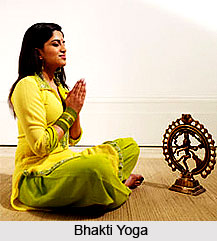
    Aim of Bhakti YogaFor a Bhakta who wants to practise Bhakti yoga, is very important for him to understand the need and the aim, since these would strengthen his will for doing the same. Bhakti yoga seems to be very simple and easy to practise but for a person, who leads a hazy path, has to practise this yoga continuously till he reaches the realm of realization. Then after the continuous practise, there comes a time when he soon, reaches a point where pedantic and powerless reason is left far behind and the more direct perception comes on to the fore. Bhakti yoga is no merely a stage of emotionalism, but it is actually a thorough discipline and training of one's will and the mind, to initiate spiritual realization of god through intense love and affection for him. It is a means to acquire true knowledge of Reality, beginning from the ordinary form of idol worship till the highest form of cosmic realisation of a Bhaktas oneness with god.

    This is a transition phase for the bhakta, since he is no longer the individual who reasons, believes, or argues but the one who perceives and senses the knowledge, which the otherwise normal person cannot. A bhakta literally sees and feels god and for him, this is more important than even moksha liberation. Thus, for such Bhaktas, God and the love of God form the highest and the only utility of human existence.

    A Bhakta can practise Bhakti yoga only when he can discriminate, control his passions, practice this yoga with purity, sacrificial work, strength and also by suppressing his excessive joy but at the same time remaining cheerful as well. The meaning of discrimination or Viveka is, discriminating the pure food from the impure one, since amongst the other things the question of food has always been one of the most vital one with the Bhaktas. There are many materials in the human body, and for a healthy spiritual body, it is required for the materials to enter the body properly. The materials, received through the food into the body structure, determine the spiritual and mental constitution in the human systems; hence the food is of great importance.

    However, the Discrimination of food is of secondary importance. Since, the very same concept is explained by Shankara in his Bhashya on the Upanishads in a different way, by giving an entirely different meaning to the word Ahara, translated generally as food. According to him, the knowledge of the sensations, such as sound etc., is gathered in for the enjoyment of the enjoyer; the purification of the knowledge, which gathers in the perception of the senses, is the purifying of the food. Purification of food refers to the acquiring of the knowledge of sensations untouched by the defects of attachment, aversion, and delusion; such is the meaning.

    These two explanations are apparently conflicting, yet both are true and necessary. The manipulating and controlling of the mind are higher in their functions than the human body. But the control of the body is absolutely necessary to enable one to arrive at the control of the mind. The beginner, therefore, must pay particular attention to all such dietetic rules as instructed by his teachers; hence the discrimination in the choice of food is necessary for the attainment of a higher state of mental composition, which cannot be easily obtained otherwise.

    After the food, it is very important for the individual to control his Passions. It is necessary for the religious culture to restrain the organs from going towards the objects of the senses, to control them and bring them under the guidance of the will. Then comes the practice of self-restraint and self-denial. Such all the immense possibilities of divine realisation in the soul cannot get actualized without struggle and without such practice on the part of the aspiring devotee. It is required for the mind to always think of the Lord. Though it might be a very difficult target to achieve in the beginning, but with every new effort, the power to do will surely grow stronger within a Bhakta and he will be compelled to achieve this aim.