Showing posts with label yogaposes. Show all posts

Wednesday, 22 March 2023

Features of Tantrism


Tantrism is the search for spiritual power and ultimate release by means of the repetition of sacred syllables, phrases, symbolic drawings, and other secret rites. Features of Tantrism have certain steps following which a yogi is able to realize the Absolute Truth.


Spirit of Heterodoxy
One of the main features of Tantrism is that it is a departure from tradition, especially the Vedic. The term ‘Tantrika’ was used as a mark of distinction from ‘Vaidika’. Tantra advocated certain peculiar and heterodox guidelines. The cult of the body, including sex -yogic practices along with esoteric geometric patterns, gestures and incantations are nothing but instruments to attain spiritual transcendence.

Spirit of Revolt
Tantrism as a movement of the masses is a reaction against the social ills and excesses of the established religions. It professed equality of all encouraged free social interaction among all castes and unrestricted access to ritual worship for all, in blatant opposition to the existing Brahmanic traditions.

Ritualism
Tantrism is essentially ritualistic with rites and rituals of varying complexity occupying a fundamental position in all Tantras whether Hindu, Buddhist or Jain. It echoes the strong trend that probably affected all religions to substitute tangible and popular ritual for the earlier abstract meditations.

Tuesday, 21 March 2023

Bandhas, Type of Pranayama


Bandhas, Type of PranayamaTypes of Bandhas
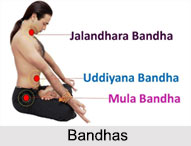
There are three major bandhas in vogue. Jalandhara Bandha is for throat, Uddiyana Bandha is for abdomen and Mula Bandha is for perineum and anus. Apart from these three main bandhas, there is another Bandha known as the ‘Maha Bandha’. It is an advanced yogic practice that involves practicing three major bandhas together: Mula Bandha, Uddiyana Bandha and Jalandhara Bandha.

These sensitive areas are stimulated during Pranayama by practicing these bandhas particularly during Kumbhaka. Then the Pranic energy passes upwards through Sushumna, which is to be experienced. Thus it may be said that the mudras will awaken the kundalini power while bandhas will help this serpent power to rise up along the chakras to bring about a specific effect.

Meaning of the word ‘Bandha’ is to bind, to lock, or to tie. The particular neuromuscular junction is contracted to increase positive pressure and to generate visceroreceptive or proprioceptive impulse that would travel upward through ascending path in the spinal cord. Secondly, there is a specific type of sensation at the contracted area. One has to remain attentive in order to maintain the contraction for a few seconds. One has to develop awareness of these impulses and the sensitivity to experience them.

For more, visit the link below:

Thursday, 1 December 2022

Astanga Yoga


Astanga YogaAstanga Yoga is a system of Yoga that was taught by the sage Vamana Rishi in the Yoga Korunta, which is an ancient manuscript "said to contain lists of many different groupings of asanas, as well as highly original teachings on Vinyasa, Drishti, Bandhas, Mudras and Philosophy". This text was imparted to Sri T. Krishnamacharya in the early 1900's by his Guru Rama Mohan Brahmachari, and was later passed down to Pattabhi Jois during the duration of his studies with Krishnamacharya, beginning in 1927. Since 1948, Pattabhi Jois has been teaching Ashtanga Yoga from his yoga shala, the Astanga Yoga Research Institute.

Astanga Yoga literally means the "eight-limbed yoga," as outlined by the sage Patanjali in the Yoga Sutras. According to Patanjali, the path of internal purification for revealing the Universal Self consists of the following eight spiritual practices:

1.Yamas (Principles or moral code)
Yama means restraints There are five yamas viz. Ahimsa, Satya, Asteya, Brahmacharaya and Aparigraha.
Ahimsa : Ahimsa is the foundation upon which the rest of the Yamas and Niyamas are based. One must have Ahimsa in one's thoughts, speech and actions.
Satya : Truth must always co-relate with the facts as they are. Truth that causes pain or injury is not positive. Truth should be spoken in harmony with nature.
Asteya : One must not take away from another. It would deprive others from the fruits of their work or from what is rightfully theirs. Thus stealing cause injury as well.
Brahmacharya : Control of sex organs / instincts increases one's energy. From this energy one can gain miraculous powers, or more important - can gain knowledge.
Aparigraha : Non - conveotusness is the lack of desire to possess not only material objects, but persons, places, feelings and so forth. The One who has no interest or desire to possess the past, present or future, will find knowledge of these three : time states coming to him naturally.

2. Niyamas (Self-Purification and study)
Niyam means observances . There are five niayamas viz. Saucha, Santosh, Tapa, Swa - adhyay and Ishwar Pranidhan
Saucha : Physical and mental cleanliness.
Santosh : Contentment with what one has.
Tapa : By fortitude the removal of impurities and mastering of the body and the senses follow.
Swadhyaya : Through self study, communication can be established with the desired spiritual entity.

Ishwar Pranidhan : " Our intelligence is no match to the divine wisdom". Keeping this in mind always, one should surrender to the will of God with complete faith after having done one's duties very well.

For more, visit the link below:

Saturday, 5 November 2022

Chakra Flows


Chakra FlowsAn underdeveloped person normally has several blocks around the edges of, or actually in, the chakras, slowing the energy or causing erroneous flow. After adequate development and chakra purification, a follower of Kundalini directs the energy towards a circular motion, such that it rotates clockwise from outside the body, counterclockwise from inside the body. This movement puts the chief force of the flow to the left, underlining the emotional and spiritual levels, establishing a solid base to work from, and heightening realising of energies. At later stages followers are asked to reverse this flow, this accentuates the right side or mental level and develops psychic abilities, power and force. The threat in developing the right side first is that followers would not have the intellect and perception to use the energy substantially and may not only find themselves in a little more trouble, but also find many things occurring to them they do not comprehend and do not know how to work with or manage.

In some people, the general chakra flow is tipped upward; this usually indicates the Poilyana kind, who thinks everything is fantastic and perceives only the good things in life. While it is pleasant to see the positive and the good, one must be conscious of the negative side of people, lest one missteps over them. The opposite circumstance is the person whose chakra flow is always headed en route for the ground; such a person can be skeptical, or in prosperous times have had immense benevolence, though of a kind in which there is a feeling of arrogance. When chakra flow tips more towards the right, a person will be judgmental and overly mental. When chakra flow tips to the left, an individual may be overly emotional, trying to understand things to the point of not working well.

Some people possess high amounts of poorly assimilated energy in the body such that the energy may flow in and out of the chakras with great force. When energy goes out in immense force, a person can be left manic or in states of unmaintainable rapture. The individual does not have a good energy connection in the body. Energy drops and inclines to go deep, creating a depressed state. The energy is literally pressed into the body. If one has these highs and lows, it is best advised not to try to let the thighs be exceedingly high or the lows exceedingly low; one must work to attain balance. One must try to feel the energy all over the body. It is suggested to take the energy of the rapture or the depression, spread it all over the body and assimilate it into oneself, until one feels more symmetrical.

Chakra FlowsWithin a more developed person, the chakras will gently flow in the direction which the person's destiny design commands. When necessary, they will flow in the opposite direction. A chakra is much like a spinning bowl; in more matured people, there will be smaller vortices flowing within this bowl, like petals just inside the rim. In the empathetic and loving heart, chakra, for instance, there are twelve petals. In the solar plexus chakra there are ten petals. There are twelve in the smaller crown chakra and 960 in the outer crown chakra.

When a chakra and its petals flow appropriately, a certain frequency is set up opening a person to psychic abilities or higher spiritual levels. A more, greatly developed person works at a higher octave of energy frequency. With a chakra cleansed and spinning appropriately, an individual has access through that frequency to higher octaves and may operate on greater magnitudes. As psychic or spiritual abilities are developed, wakefulness and understanding of cosmic energy and other gifts flourish.

It should be borne in mind that the beginner should not yet work for the greater octaves; until the areas are purified and suitably allied, distortions of energy, information and behaviour may result, resulting a person feeling as if he or she had gone backwards in maturation.

For more, visit the link below:

Friday, 7 October 2022

Mudras of Universal Application

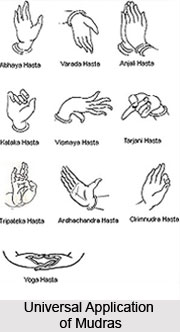
  In our daily life, we use all our body parts to give different gestures and postures. But the use of hands is the most frequent one. Here, are few mudras discussed below, which are given by the use of the hands.


Abhaya Hasta
Mudras of universal applicationThis mudra is denoted by exposing the right hand palm in front with fingers pointing upwards. This mudra indicates assurance and protection. The abhaya mudra can be seen in the images of Vishnu and Siva.

Varada Hasta
In this mudra, the palm of the left hand is exposed in front with fingers pointing downwards as if giving something. This mudra is commonly used by the deities to give a boon.

Mudras of universal applicationAnjali Hasta
In the Anjali hasta mudra, both the hands are clasped together. The palms are kept near the chest and touching it as if giving salutation. This mudra signifies the worship and can be seen usually in the images of devotees and subordinate deities.

Kataka Hasta
The Kataka hasta mudra is indicated by applying the tips of fingers loosely to the thumb to form a ring to hold flowers. This mudra is visible in the images of female deities to hold flowers for daily worship.

Vismaya Hasta
In the Vismaya Hasta, the forearm is bent at the elbow with palm facing the image. Then the fingers are kept pointing upwards. This particular mudra indicates the astonishment on the part of the deity.

Tarjani Hasta
The Tarjani hasta mudra denotes as if someone is warning or scolding the other or drawing attention as if preaching. In this mudra the index finger of a semi-flexed hand is pointed upwards.

Tripateka Hasta
In the Tripateka Hasta, the hand is raised above the level of the shoulder with the palm facing in front. The first two fingers are kept rising upwards and little separated to hold an insignia. This particular mudra can be seen in the images of Vishnu and Siva when carrying their emblems.

Damartt Hasta
In the damartt hasta mudra, the palm faces inwards and a drum is held either through a ribbon held between the index and middle finger or it is kept between the thumb and the three fingers lightly and in a playful manner. It is not a hard grip.

For more, visit the link below:

Wednesday, 21 September 2022

Yoga For Menstrual Disorders


Yoga For Menstrual DisordersOne of the major health problems faced by women is the menstrual disorders. An irregular menstrual cycle may result from some abnormalities, physical disorders, emotional and hormonal disturbances. Improper development of reproductive organs, imbalance of hormones of endocrine glands, weak muscles of reproductive organs, weak constitution, pathological development and psychological disturbances like depression, fear, stress and mental tension are also the causes for menstrual disorders. Yogic treatments can be beneficial in treating such health problems.

Some of the common menstrual disorders are as follows:
1. Amenorrhea
This refers to the absence of menstruation. It may be caused by a hormonal imbalance, obesity or extreme weight loss, emotional disorders and others.

2. Menorrhagia
There is an excessive bleeding during menstrual cycles, in terms of more days as well as the amount of blood. Disturbances in pituitary, thyroid and ovary functions, hypertension, and diabetes mellitus are the main causes.

3. Metrorrhagia
There is excessive flow of blood occurring between two menstrual periods. The main causes are poor functioning of ovaries, pituitary and thyroid glands, poor blood clotting function, some psychological factors, and lesions of the cervix.

4. Dysmenorrhea
Pain and discomfort is felt prior to the onset of or at the time of menstruation. The pain primarily occurs in the lower abdomen. There is also pain in the thighs and a general feeling of pressure. Causes of Dysmenorrhea are anatomical malformation like undeveloped womb, hormonal disturbances and mental factors. Sometimes, when the pain is severe, other complaints such as nausea, vomiting or headache interfere with the normal activities.

5. Pre-Menstrual Tension
Many women suffer from this complaint for a week or 10 days before the onset of menstruation. The symptoms are headache, tremors, irritability, heaviness in breasts and pelvic region.

The condition of Amenorrhea may not be having any particular symptom except obesity resulting from hormonal disorder. Women suffering from Menorrhagia and Metrorrhagia complain of pain and weakness and may be unable to carry routine work in case the bleeding is severe. Dysmenorrhea is associated with presence of pain in the lower back and hypogastrium.

Regular and proper practice of yoga asanas and Pranayama is beneficial for women who suffer from the menstrual disorders. However, it should be noted that, during menstruation yoga practices are not advisable for 3-5 days. Proper rest, medicines and relaxation are also necessary. Yoga helps by correcting and balancing the functioning of the endocrine system, toning up of the nervous system and it also relaxes the body and mind, thus, reducing the psychological problems.

For more, visit the link below:

Wednesday, 24 August 2022

Exercises for brain training in Kundalini

 Exercises for brain training in KundaliniIn order to train the brain exercise indeed plays the great role. To educate the four brains and to drive them in a particular direction, exercise is of course one of the core factors.

Exercise For the Reptilian Brain
One must contemplate on how to feel about one's own territory; how can one change it to make it more supportive. One must meditate on survival, to what extent it is an issue for the individual. One must also contemplate on what threatens or heightens one's sense of survival.

Symbolism- The exercise is to get hold of a stuffed toy or picture of one's preferred reptile. Then, one needs to feel connected to it at times during meditations.

For the Limbic System
One must meditate on owning and enjoying one's feelings. How many different feelings can one be conscious at a time? It is advised to let cuddlesome feelings enwrap one's whole body and to honestly enjoy them.

Symbolism- Colour is highly related to and symbolic of emotions. To heighten and develop one's emotions is considered foremost task, to make sure that one has enough colour in life- in their surroundings, attire, food, or creative projects.

For more, visit the link below:

 https://www.indianetzone.com/23/exercises_brain_training.htm

Wednesday, 29 June 2022

Karma Yoga


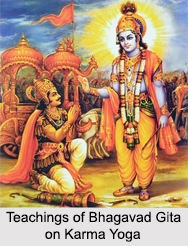
Karma YogaKarma Yoga is the first step in the spiritual discipline (Sadhana) which is to be adopted for Moksha. Karma yoga can serve as an aid to Jnana Yoga which secures the realization of the self. It can also serve as a direct means to self-realization since the practice of Karma Yoga in the prescribed manner includes in it the Jnana Yoga. The two are interrelated. But it is easier to practice karma yoga as it takes less effort and time to realize the goal because of the divine grace showered on the individual in response to the disinterested performance of karma.

Etymology of Karma Yoga
The term karma bears different meanings. In a general sense it means action or any activity. It also refers to the merits and demerits acquired as a result of the performance of good and bad deeds respectively. It is also understood as the observance of the prescribed religious acts and in this sense the term is used in the present context. Yoga means upaya or method to be adopted to achieve a goal. So the compound word karma yoga means a specific religious act adopted as a means or upaya for self-realization.

Religious Duties for Performing Karma Yoga
There are several religious duties laid down by the sacred texts. The Bhagavad Gita has enumerated the following as illustrative - (1) worship of God (devarchana) (2) performance of the sacrifice (yaga) in the consecrated fire (3) control of the sense organs (indriya-samyama) by arresting their outward movement towards external objects (4) control of the mind (manas-sarityama) (5) giving away the money earned in a righteous way in charity (dana) either for the worship of God or for performance of homa or to deserving persons etc. (6) observance of austerities (tapas) in the form of performance of prescribed rites such as fasting (7) visiting holy religious centres and bathing in sacred waters (punyatirtha-punyasthana-prapti) (8) recitation of the Vedas and study of the teachings of the sacred texts (svadhyaya tadartha jnanabhyasa) and (9) practice of breath control (pranayama). It is not necessary that all of these religious duties have to be observed for the purpose of karma yoga. Any one of them, depending upon the capacity and choice of an individual, adopted as a Sadhana or religious discipline can become karma yoga for self-realization. Each one of these acts is called Yajna in the Gita, thereby implying that it is to be performed with the spirit of a sacrifice (yaga) for the sole purpose of self-realization.Karma Yoga

Requirements for Karma Yoga
There are several important requirements to be fulfilled for a successful performance of Karma Yoga by an aspirant. In the first instance, he should acquire adequate philosophic knowledge about the true nature of Jivatman and Paramatman through the study of the sacred texts under the guidance of a qualified preceptor (Guru). The need of such knowledge is obvious because without knowing the true nature of the self, one cannot strive for its realization.

For more, visit the link below:

Saturday, 30 April 2022

Swara Yoga


Swara Yoga, Types of YogaSwara Yoga is the science of realization of cosmic consciousness by the special awareness or observation and controlling or manipulating the flow of breathes through the nostrils. The word ‘Swara’ is a Sanskrit word, which means sound or musical note, also means the continuous flow of air through one nostril. Tantric traditions like Surya Tantra, Ganpatya Tantra and Vaishnava Tantra also provides knowledge about Swara yoga.

Swara Yoga is involves the systematic study of the breath flow through the nostrils or the Swara that is also related to the prevailing phases of the moon, time of the day and the direction. Swara Yoga is not like Pranayama or other breathing related yoga. In Swara yoga, the breath is associated with the activities or phases or positions of the sun, moon, planets, seasons, time of day and with the physical and mental states of the individual and these subtle reactions determine the mode of action accordingly. For example, in moon phases one can check the flow of breath through his/ her nostrils before getting out of the bed and floor should be touched first with the corresponding foot and the first step should be made with that foot. It is the simple practice that brings success in everything that happens in that particular day, the first foot to touch the ground will get the prevailing ‘successful’ flow of energy from the cosmos.

Origin of Swara Yoga
Swara Yoga, Types of YogaSwara yoga is a Tantric Science that originates from the Agama Shastras and from Shaiva Tantra, where Lord Shiva is the Guru and Shakti is the disciple. Swara Yoga is the ancient science that existed before the Vedic period, over 10,000 years ago. It was the secret science, only available for the selected few and was confined between kings and dedicated saints. The ancient saints and sages intuitively received the knowledge from the divine and kept it secret between them.

For more, visit the link below:

Tuesday, 15 March 2022

Symptoms of Kundalini Release


Symptoms of Kundalini Release, Kundalini YogaKundalini raising that occurs prior to adequate purification and spiritual awareness is considered premature, producing many different symptoms. Symptoms are dissimilar in each individual because each person has blocks, or energy concentrations, in diverse areas. The following are the different symptoms of Kundalini release:

  • In addition to short periods of intensified awareness and states of paradise or enlightenment, there may be times of extreme dreariness or gloominess, unpredictable behaviour, unexplainable illness, loss of memory, feelings of stupefaction with oneself, friends, work or the world in general.
  • If the liver is affected, the skin may take on a yellowish colour, a roughly dirty look, due to the release of negativity; or some areas of the body may take on a reddish or bluish cast. There may be other shadings relating to energy concentrations of different vibrational rates. Each vibrational rate has its own colour.
  • A person may look old, tired, or ill but a few hours later, looks younger and full of vivacity, or the reverse.
  • Another symptom of premature Kundalini rising is a blackish look to the nails of the big toes due to activated reflexes in the big toes that relate to the pineal gland.
  • At times there may be a fluttering feeling as the muscles relax and release more energy into the nerve endings.
  • There may be an internal illness or pressure, a wanting to ‘vomit’ out anything in order to eject the extra energy.
  • There may be nosebleeds. Kundalini in its stronger states can tear human tissue.
  • There may also be involuntary movements or shaking of the body; illness may develop from Kundalini cleansings, many times remedied simply by changing the energy patterns.


  • A warning is however given, to consult a doctor when changing the patterns does not help; when a problem appears to be medical, there should not be further hesitation to seek medical assistance.

    For more, visit the link below:

    Thursday, 17 February 2022

    Sahaja Yoga


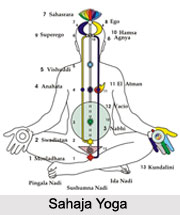
    Sahaja Yoga, Types of YogaSahaja Yoga is a way of special meditation based on the experience of Self Realization or Kundalini awakening which might occur within the human body. Shri Mataji advocates that self-realization is the highest achievement of human being. Through Sahaja Yoga, an inner transformation takes place in human being, which helps one to become moral, united, balanced and integrated. Sahaja Yoga is the way to arouse divine power as the cool breeze. This power inherits the spiritual tradition of the world.

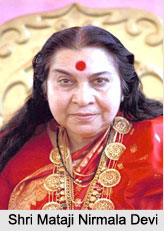
    Shri Mataji Nirmala Devi
    Shri Mataji Nirmala Devi introduced ‘Sahaja Yoga’ in 1970 among the commoners in India as well as abroad. She is an erudite woman who took active part in the freedom movements of India. Shri Mataji possessed spiritual power from her very childhood but she adopted the path of spiritual mission only after fulfilling her familial duties. Mataji rediscovered the ancient art of Sahaja Yoga, which brought her worldwide recognition.

    Concept of Sahaja Yoga
    Sahaja Yoga is an ancient practice, which brings the sensation of all pervading divine powers in the human being. By practicing Sahaja Yoga one can reach the absolute understanding about oneself. The aim of this method of meditation is to achieve self realization through Kundalini Awakening.Sahaja Yoga, Types of Yoga

    Method of Sahaja Yoga
    Sahaja Yoga is a very easy method to achieve self-realization. One can feel gentle cool breeze in the palms and above head after Sahaja yoga method is done. Sahaja Yoga brings relaxation in mind and body. It is very important to forgive everyone before performing the Sahaja yoga.

    Self Realization in Sahaja Yoga Meditation
    Self realization is the awakening of Kundalini. Kundalini rising is very easy by Sahaja Yoga meditation. Kundalini is the power of pure desire in human being. Kundalini is located at the base of the sacrum and is aroused through the central channel of the body by piercing the 6 charkas. This brings self-realization that takes the human being to the better state of life.

    For more, visit the link below: