Showing posts with label medicinal. Show all posts

Wednesday, 11 September 2024

Sala Plant

The Sala plant, known scientifically as Shorea robusta, is a prominent tree species in South Asia, particularly in India, Nepal, and Bhutan. It holds a significant place not only in the region's ecosystems but also in its cultural and medicinal practices. The tree, also referred to as "Sal," is highly regarded for its robust wood and the medicinal properties of its bark, leaves, and resin.


Physical Features

The Sala plant is a large deciduous tree that can reach heights of 30 to 35 meters, with a trunk diameter of up to 2 to 2.5 meters. The bark of the tree is thick, rough, and dark brown, with deep vertical fissures. The tree's leaves are simple, broad, and leathery, typically measuring 10 to 30 centimeters in length. The leaves are shiny and have prominent veins, giving them a distinctive appearance. During the dry season, the leaves turn yellowish-brown before falling off. 

The Sala tree produces small, yellowish-white flowers that are clustered together in dense inflorescences. These flowers bloom in the spring, filling the surrounding area with a sweet fragrance. The fruit of the Sala plant is a nut-like capsule, approximately 1 to 2 centimeters in diameter, containing seeds that are dispersed by wind. 

Medicinal Usage

The Sala plant has been utilized in traditional medicine for centuries, with various parts of the tree being used to treat a range of ailments. The bark of the Sala tree is particularly valued for its astringent and anti-inflammatory properties. It is often used in Ayurvedic medicine to treat conditions such as diarrhea, dysentery, and skin disorders. The bark is typically ground into a powder and applied as a paste or taken orally. 

The resin, known as "Sal resin" or "Rala," is another important medicinal component of the Sala plant. This resin is obtained by making incisions in the tree trunk, from which the resin oozes out and hardens. It is widely used in traditional medicine to treat wounds, ulcers, and respiratory issues. The resin has antimicrobial properties, making it effective in preventing infections and promoting healing. 

The leaves of the Sala plant are also used medicinally, particularly in the treatment of skin conditions. The leaves are often boiled and the resulting extract applied to the skin to soothe rashes, burns, and other irritations. Additionally, the leaves are sometimes used in the form of poultices to reduce inflammation and pain in joints and muscles. 

The Sala plant is a vital resource in South Asia, known for its distinctive physical features and extensive medicinal uses. Its bark, resin, and leaves have been integral to traditional medicine for centuries, offering natural remedies for a variety of health issues. As research into traditional plant-based medicines continues, the Sala plant remains an important subject of study for its potential therapeutic applications.

Thursday, 16 December 2021

Principles Of Ayurveda


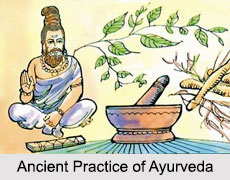
Principles Of AyurvedaPrinciples of Ayurveda aim at establishing such a state in which the function and structure of an individual operates optimally and that individual attains a state of mental, physical and spiritual equilibrium. In Ayurveda, there are several aspects of this traditional system of medicine, which discriminates it from other approaches to health care. The principle of Ayurveda is based on the Panchabhuta theory. The principle of Ayurveda perceives body, mind and spirit.

Ayurveda defines that the four basic aspects of life – ‘Atma’ (the soul), ‘Manas’ (the mind), ‘Indriyas’ (the senses) and ‘Sharira’ (the body) have their specific functions and that contribute to the completeness of life. Ayurveda mainly focuses on a balanced and integrated relationship among these four components. It also focuses on establishing and maintaining balance of the life energies within the individual. The principle of Ayurveda is based on the self healing process where the individual’s inherent tendency is to move from the diseased state towards the healthy state. In order to have a full knowledge and understanding of the functions of the body, understanding the senses of the body is very essential.Principles Of Ayurveda

Atma: The Soul
Atma is defined as the motivating intelligence that guides the human mind and life. Though, it is also said that atma is actually the least tangible part of human life. Each and every aspect of life has inherent coordination with other parts of the body. The principle of atma is also defined as the governing principle that existed within as a part of human beings. Further, this guiding principle has two aspects, first one being the ‘Jiva Atma’ where the intelligence is associated with entire concept of ‘soul’. It guides as per the particular destiny of an individual’s life. The second aspect is the ‘Param Atma’ or more commonly defined as the ‘universal soul’. It is the very consciousness of the nature and it is the essence of the individual soul. Param atma is responsible for unifying all diversity of nature. In short, Jiva atma is an appearance of the Param atma.

Manas: The Mind
Ayurveda specifies that all the happiness or unhappiness, health or ill-health and all the feelings arise in human mind first. Soul or atma is defined as the director of life and manas or mind is actually the controller of all senses that determines the actions of the body. It is responsible for maintaining a balance or harmony between the universal intelligence and human life. In Ayurveda, manas or mind is given the central importance. It is believed that all the phenomena of life or the universe are directly influenced by the ‘gunas’ or the three primary phases of life. The gunas govern the human existence and regulate the minds. These phases generate action, motivation, fascination and inspiration.

For more, visit the link below:

Thursday, 20 May 2021

Indian Medicinal Plants


Indian Medicinal PlantsIndian medicinal plants are being used to cure diseases, since several millennia. These plants are grown throughout the Indian subcontinent. They are significant parts of Ayurveda. Ayurveda is one of the most popular codified medical traditions in India. This treatment method traces its origins to the Vedic ages. Numerous Indian medicinal plants are mentioned in the Vedic texts. Besides Ayurveda, Siddha and Unani medicinal practices use several medicinal plants to prepare medicines. Whilst most of the medicinal plants are native to India, some have their origin in foreign countries. The probable trade taking place during the existence of ancient civilizations and the arrival of the Europeans, paved the way for medicinal plants in India.

Different Indian Medicinal Plants
Some of the most popular Indian medicinal plants are tulsi, ginger, turmeric, sunflower, Indian cherry and prickly pear. Each of these species has a botanical name, but they are more popular in India by regional names. For instance, turmeric is known as Halud in Bengali, Halaad in Gujarati, Haldi in Hindi, Arishina in Kannada, Halad in Konkani, Niannal in Malayalam, Halde in Marathi, Haldar in Punjabi and so on. Almost all parts of Indian medicinal plants, including leaves, flowers, fruits, roots, barks, etc are used to prepare medicines. Some important Indian medicinal plants are:

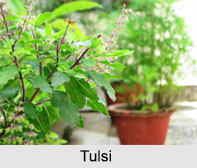
Tulsi: Among all herbs, Tulsi occupies the most respected and important position. Tulsi plant can be used for prevention as well as cure of illnesses. A Tulsi plant at the doorstep is said to keep the atmosphere of the house pure and clean, and keep illness away. Tulsi is known to treat cough, cold, bronchitis and loss of appetite.

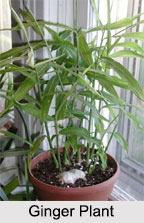
Ginger: It is used for abdominal bloating, coughing, vomiting, diarrhoea and rheumatism. Ginger is commonly used in the Ayurvedic systems of medicine for the treatment of inflammatory joint diseases, such as arthritis and rheumatism. Ginger is beneficial in treating nausea, especially morning sickness.

Turmeric: Turmeric is a popular spice that has been used as a remedy for thousands of years in Ayurvedic medicine. It is popular for its medicinal values, utilised as part of home remedy. It is proven to improve immune function with antioxidant, anti-inflammatory, antiviral and antibacterial properties. The main active ingredient of Turmeric is curcumin, which may offer protection against certain cancers, treat arthritis, benefit those with inflammatory bowel disease, reduce blood sugar and help prevent Alzheimer’s disease.

Sunflower seeds: Sunflower seeds enhance digestion and brain power. They have low level of cholesterol and sodium and can therefore protect the cardiovascular system. They are rich in healthy fats, beneficial plant compounds and several vitamins and minerals. These nutrients may play a role in reducing risk of common health problems, including heart disease and type 2 diabetes.

Prickly Pears: As with several other Indian medicinal plants, Prickly Pear also bears vital medicinal properties and uses. The fruit of the plant is considered a cooling agent and finds usefulness in the treatment of gonorrhoea. The baked fruit is purportedly used in the treatment of whooping cough, with the syrup of the fruit believed to increase secretion of bile and controlling of spasmodic cough and expectoration. The mashed joints of Prickly Pear are used as a poultice to relieve inflammation and the heated joint is applied to boils to accelerate suppuration.

Indian Medicinal PlantsPudina: This aromatic Ayurvedic herb is a natural coolant, with a sweet and a pungent aftertaste. Mint has the quality to pacify all the three doshas and chiefly manages the Pitta dosha. Pudina leaves owing to its carminative properties helps in digestion and assimilation of food and treats colic pain. The extract of pudina leaves is used to treat intestinal worms.

Henna: Henna is exceedingly beneficial for a number of disorders, like hairfalldysentery, liver, headaches, stinging feet, skin infection and female diseases. The leaves have curative properties, like checking secretion or blood loss and forestalling skin disorders. The bark and seeds of the plant are used in Ayurvedic and Unani medicine.

Guggulu: Guggulu is said to be demulcent, aperient, alterative and a purifier of the blood. It is used in rheumatism, nervous diseases, scrofulous affections, urinary disorders and skin diseases.

Aloe Vera: Indian aloe comes to requisite use in everyday sicknesses like, liver enlargement, cold, arthritis, indigestion, skin irritations, or sciatica. The leaves of the plant possess numerous curative properties. They are useful in reinstating the perturbed processes of nutrition. They boost libido and control secretion or blood loss. They also encourage and regularize menstrual cycle.

For more, visit the link below:

Monday, 14 December 2020

Primitive Medicinal Practices in India

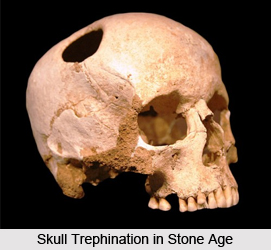
 Inoculation against small-pox and snake-bite were performed by rubbing the contents of a pustule into an incision in the skin. In the long process of discovering which plants are edible, humans in the Stone Age also identify many which seem to cure ailments or soothe a fever. ‘Venesection’ was performed on various veins. Even a difficult and severe operation as ‘Trephining’ of the skull was performed by the primitive men as early as the Stone Age. Modern research has brought to light the skulls on which it was performed. Even the world’s earliest surgical operation, practised at least 4000 years ago, is more probably intended to strengthen the doctor’s own powers than to cure a patient.


Medicinal Practice in Vedic Age
During the Vedic ages the course of instruction lasted for 6 years and included the mastery of the basic standard medical works as well as practical training in medicine and surgery under the guidance of qualified and reputed teachers. After the completion of the study, permission to practice had to be obtained from the king, like the various board certifications of the present world. The Indians developed the system of prognostication and differential diagnosis to a very high degree.

Sushruta, the founding father of Indian medicine, establishes a tradition later enshrined in a classic text, the "Sushruta Samhita". He identifies 1120 diseases, lists 760 medicinal drugs, and says that the surgeon’s equipment amounts to 20 sharp instruments including knives, scissors, saws and needles and 101 blunt ones such as forceps, tubes, levers, hooks and probes.

Primitive Medicinal Practices in IndiaHis explanation of how to rebuild a patient’s nose has given him the status of the ‘First Plastic Surgeon’. This is an important operation in Ancient India. Amputation of the nose is a punishment for adultery.

Indian medicine enshrines the theory that the human body consists of three substances, and that health requires a balance between them. They are usually translated as spirit, phlegm and bile.

In surgery, the attainments of the Indians, which were based entirely on keen observation, rich experience and rational considerations remained unrivalled for many centuries by any other nation. Their most astonishing performances were in the domains of laparotomy, lithotomy and plastic surgery. As a matter of fact the plastic surgery of the 19th century was stimulated by the example of Indian methods.

For more check the link below:

Friday, 7 August 2020

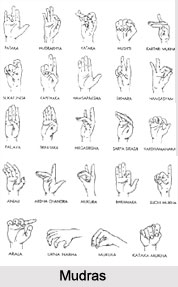
Mudra, Science of Gestures, Yoga


Mudra, Science of Gestures, YogaMudra is a gesture by hand or seal which symbolizes energy. This is one of the most beautiful forms of expression by using the fingers and thumb. Mudra is a voluntary neuromuscular action (contraction) or posture by which the prana is controlled and directed through a particular Nadi, known as Mudra. It is also known as the ritual or symbolic gesture which is practiced from very old times in Buddhism and Hinduism. Mudra calls for the involvement of the whole body and it is performed by the use of fingers and the hands as well. Mudra is regarded as energetic or the ‘seal of authenticity’ utilized in the Indian religious spiritual practice. There are references of Mudras in the philosophies of the Eastern world and it is also a part of Yogic practice and culture. Mudra is hence defined as a mystical gesture of the hand in order to focus elusive energy by symbols.

Etymology of Mudra
The term ‘mudra’ is derived from two words; ‘mud’ and ‘ra’. Here, ‘mud’ means to rejoice or to be happy and ‘ra’ means ‘to give’. Thus, Mudra is an action which offers delight or extreme joy. This is an indication that the practice of Mudra is concerned with sensory aspect.

Concept of Mudras
Concept of Mudras depends upon all the fingers of both the hands of an individual. Each of the fingers is linked with specific meaning and energy. The accurate use of the fingers provides the Mudra with the energy to heal. Fingers are stated to bear the human body's five elements, which are airwaterfireearth and sky. These are there in set proportions and a slight imbalance may cause severe disaster. The striking of balance in between these elements is however not easy. Thus, the practice of Mudra facilitates the harmonizing of the five elements present in the human body.

Finger Tattvas in Mudras
An elaborate study concerning the fingers and their links with the five elements unveils the fact that the element earth, worry and stomach are represented by the thumb. Index finger of a human being comprises of the element metal and has an influence over the large intestine, lungs, and also the control over emotions like sadness, depression and grief. The hand's middle finger is regarded as the element fire which is connected with the small intestine, heart, respiratory and circulatory systems and the emotions include hastiness and impatience. The element wood is constituted by the ring finger and the same is associated with the gall bladder, liver and nervous system, and represents anger, while the little finger represents water, fear and kidney.

For more visit the page:

Friday, 19 August 2016

Vitunna, Indian Medicinal Plants

Vitunna is quite a common Indian medicinal plant. The medical name is Celosia argentea and in Hindi it is more popularly known as 'sufaid murga' and in Bengali as Swetmurgha. In Tamil it is known as Pannakeerai and in Sanskrit it is famous as Vitunna. In Unani medicine, the seeds of Vitunna are used to treat diarrhoea, diseases of the blood, and mouth sores. To know more read:
http://www.indianetzone.com/38/vitunna.htm

Saturday, 13 August 2016

Development of Unani Medicine during Emperor Shah Jahan

Development of Unani Medicine during Emperor Shah Jahan was assisted by the distinguished physicians who came to India from Gilan.To know more read:
http://www.indianetzone.com/65/development_unani_medicine_during_emperor_shah_jahan.htm

Friday, 12 August 2016

Khair Plant, Indian Medicinal Plant

Khair is a moderate size deciduous tree with rough dark gray brown bark. It belongs to family ‘Leguminoseae-mimoseae’. The tree of Khair is found all throughout India.To know more read:
http://www.indianetzone.com/74/khair_plant.htm

Friday, 5 August 2016

Sudrabilo, Indian Medicinal plant

Sudrabilo in India is entirely used for its medicinal value in curing various diseases.s an Indian medicinal plant and is named as Holigarna longifolia Wight & Arn botanically. This herb is commonly known as 'bibu' or 'holgeri'or 'sudrabilo' in Maharashtra and is known as 'kattucheram' or 'karunjarai' among the people of Tamil Nadu . To know more read:
http://www.indianetzone.com/38/sudrabilo_plant.htm