Showing posts with label ayurvedic. Show all posts

Wednesday, 11 September 2024

Sala Plant

The Sala plant, known scientifically as Shorea robusta, is a prominent tree species in South Asia, particularly in India, Nepal, and Bhutan. It holds a significant place not only in the region's ecosystems but also in its cultural and medicinal practices. The tree, also referred to as "Sal," is highly regarded for its robust wood and the medicinal properties of its bark, leaves, and resin.


Physical Features

The Sala plant is a large deciduous tree that can reach heights of 30 to 35 meters, with a trunk diameter of up to 2 to 2.5 meters. The bark of the tree is thick, rough, and dark brown, with deep vertical fissures. The tree's leaves are simple, broad, and leathery, typically measuring 10 to 30 centimeters in length. The leaves are shiny and have prominent veins, giving them a distinctive appearance. During the dry season, the leaves turn yellowish-brown before falling off. 

The Sala tree produces small, yellowish-white flowers that are clustered together in dense inflorescences. These flowers bloom in the spring, filling the surrounding area with a sweet fragrance. The fruit of the Sala plant is a nut-like capsule, approximately 1 to 2 centimeters in diameter, containing seeds that are dispersed by wind. 

Medicinal Usage

The Sala plant has been utilized in traditional medicine for centuries, with various parts of the tree being used to treat a range of ailments. The bark of the Sala tree is particularly valued for its astringent and anti-inflammatory properties. It is often used in Ayurvedic medicine to treat conditions such as diarrhea, dysentery, and skin disorders. The bark is typically ground into a powder and applied as a paste or taken orally. 

The resin, known as "Sal resin" or "Rala," is another important medicinal component of the Sala plant. This resin is obtained by making incisions in the tree trunk, from which the resin oozes out and hardens. It is widely used in traditional medicine to treat wounds, ulcers, and respiratory issues. The resin has antimicrobial properties, making it effective in preventing infections and promoting healing. 

The leaves of the Sala plant are also used medicinally, particularly in the treatment of skin conditions. The leaves are often boiled and the resulting extract applied to the skin to soothe rashes, burns, and other irritations. Additionally, the leaves are sometimes used in the form of poultices to reduce inflammation and pain in joints and muscles. 

The Sala plant is a vital resource in South Asia, known for its distinctive physical features and extensive medicinal uses. Its bark, resin, and leaves have been integral to traditional medicine for centuries, offering natural remedies for a variety of health issues. As research into traditional plant-based medicines continues, the Sala plant remains an important subject of study for its potential therapeutic applications.

Monday, 30 January 2023

Shodhana Therapy, Ayurveda


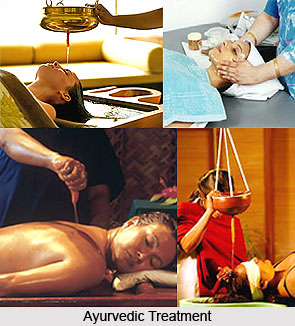
Shodhana Therapy, AyurvedaShodhana therapy in Ayurveda is also defined as the various procedures of eradicating diseases from the normal system of the body. It is actually considered as the second means of Ayurveda through which illness of the body is being treated. Shodhana literally means "to go away". In this specific form of treatment also known as Panchakarma, the basis or the root cause of the disease is eradicated. The shodhana therapy rids the body of Aama and malas and completely restores balance to the doshas. In simple terms, it can be said that it basically pulls the weeds out by its roots. Shodhana therapy is considered as superior to shamana therapy because it not only removes the symptoms of disease but it also eliminates their root cause.

In Ayurveda, it is defined that all disease processes point to a crisis of Aama toxicity in the body. In other terms it is also called as purification therapy. It is called so because it reverses the disease mechanisms which carry toxic waste products from the digestive tract in to the several tissues of the body. In Ayurveda, it is said that there is a simple elegance to the approach and effectiveness of Panchakarma as shodhana therapy. It takes advantage of the naturally occurring cycles of doshic migration and utilizes the active phases of each dosha to draw dosha specific 'Aama' out of the dhatus and eliminate it from the body. In this way, Shodhana Chikitsa differs from every other form of treatment and it includes all other modes of detoxification and purification.

In Shodhana therapy, doshas provide the vital connection between the gastrointestinal tract and the dhatus or the deep internal structures of the body. In case of the doshas, they are neither retained nor eliminated and they have the unique capability to travel throughout the body. They also transport the nutritive substances from the gastrointestinal tract to the tissues and organs and they carry unsuitable or damaging substances away from the dhatus and back to the gastrointestinal tract for elimination. Shodhana therapy emphasizes on the fact that doshas have the capacity to convey aama to the tissues as well as conduct it out of the tissues for disposal. As per the theoretical understanding of shodhana therapy, it is actually defined as cleansing therapy.

For more, visit the page below:

Friday, 9 December 2022

Ayurvedic Diet for Early Winter


Ayurvedic Diet for Early WinterAyurveda believes that if the diet is changed according to the season, it helps in maintaining a healthy body. The bodily humour increases or decreases according to the seasons. The frigid temperatures of early winter (November and December) cause tense muscles and runny noses. Vata types might become vulnerable to disease and flu. Kapha types might need to build protective layers of fat, creating ripe conditions for thick mucus. Therefore, a strong diet is required to be followed to maintain a healthy and sound body.

Foods to Include in Diet
During the early winters, the diet should consist of foods that keep the body warm. At this time, oily, sour and salty foods can be of great help. The food has to be freshly cooked. Healthy oils such as ghee, olive oil, walnut oil, sesame or flax seed oil, raw butter, and coconut oil are also good to use in preparation at this time.

Spices like honey, cinnamon, cardamom, black pepper and ginger can be used for destroying mucus, sore throat, and runny nose. The spices that can be used to keep the body warm are cinnamon, turmeric, cloves and black pepper.

For more, visit the link below:

Thursday, 24 November 2022

Vihara in Ayurveda


Vihara in Ayurveda, Concepts of AyurvedaVihara is defined as the second most important pillar of the Ayurveda. It means activity which highly influences the daily scheduled life that is full of stress and confusions. Just like the pillar of Ahara, this second pillar also plays a significant role in the proper functioning of the body.

Principles of Vihara
The principle of Vihara or activity explains clearly how to act in different ways that are life supportive and it also includes lifestyle guidelines for maintaining optimum health and balance. In Ayurveda, it is defined that the successful use of Vihara’s recommendations depend on the ability to know exactly what is good for the health and also on the motivation to act on whatever is known. The prime focus of the various lifestyle suggestions is to refine the quality of the mind.

Ayurvedic Activities in Vihara
There are actually an endless number of demands from various spheres and a lot of attention is required for keeping the minds constantly active. Additionally, the negative influences from the environment create confusion and fear. These negative influences cause the mind to be confined to a separate superficial level, where it is either too dull or too scattered to even experience the emotional, mental and physical resources that lay hidden most of the time. Ayurvedic scientists say that the limitless possibilities that exist in the subtler levels of awareness remain inaccessible except to a peaceful and settled mind. When the mind is strongly influenced by the sattva, it is quite possible to have the access to such a calm and composed mind. This stage allows appreciating the whole of life and its various aspects.

For more, visit the link below:

Friday, 11 November 2022

Colour Therapy, Indian Naturopathy


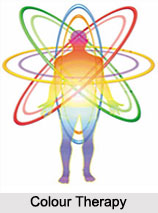
Colour Therapy, Indian NaturopathyColour Therapy, also known as ‘Chromotherapy’ deals with the method of treatment of diseases by colour. Colour therapy is a technique of restoring imbalance by means of applying coloured light to the body. It was a popular method of cure even in ancient times.

According to practitioners of Chromotherapy, the lack of a particular colour in the human system can cause various diseases. Different colours are associated with different physical and emotional aspects of the body. When the energy circles of the body are imbalanced, it leads to emotional disorders and physical ailments. These imbalances can be corrected by applying the corresponding colour to the affected part.

Diagnosis in Colour Therapy
A patient is first subjected to an examination to determine which colour he/she lacks. The deficiency is determined by observing the colour of the eyeballs, nails, urine and excrement. In cases of the lack of red, the eyes and nails will be bluish, and the urine and excrement white or bluish. If there is a deficiency of the blue colour, the eyes and nails will be reddish, and urine and excrement yellowish or red.

The action and effect of different colours on the body along with their healing properties in the form of food items are given below:

Red: This colour symbolises heat, fire and anger. It is a motivating and energising colour. It stimulates arterial blood and brings warmth to cool extremities. It is contained in food items like Beets, radish, red cabbage, tomatoes, watercress, most red-skinned fruits, red berries and watermelon.

Orange: This colour is emblematic of prosperity and pride. Orange is useful for stimulating blood supply and revitalising the nerves. Orange-skinned vegetables and fruits such as carrot, orange, apricot, mango, peach and papaya contain this colour.

Yellow: Yellow colour is associated with joy and happiness. It is laxative and diuretic. It is refreshment to the brain, the liver and the spleen. Lime and lemon, sweet lime, grapes, pumpkin, melon, banana, mango, yellow apple and guava contain this colour.

Purple: Purple or indigo combines the blood-warming red and pooling antiseptic blue. It is an excellent stimulant without being an irritant. It exerts a soothing effect on the eyes, ears and the nervous system. It contains in all the foods having both blue and violet colours.

For more, visit the link below:

Wednesday, 28 September 2022

Aromatherapy for Children


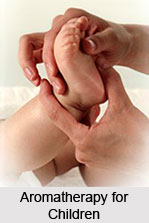
Aromatherapy for ChildrenA good aroma can make anyone happy and children are no exception. Baby massage is quite traditional in the east, especially in India. Though it takes a little time for the mother to adjust to the idea of massaging a wriggling baby, but she would gradually start enjoying it when the baby would respond to the mother's touch. Massage is a wonderful way of strengthening the bond between the mother and the child. Aromatherapy can prove very beneficial to the new born babies through massages. Though massage is the most common form of giving aromatherapy treatment to the child, there are many ways of giving aromatherapy treatment as well.

However, one has to be careful enough to keep the amount of aromatherapy oil very low, so as not to effect the baby. The baby's body is very small in size and too much of aromatherapy oil can have a slightly toxic effect. When using aromatherapy oils on children, make sure that the quantity of aromatherapy oil in the carrier oil is reduced to half. You can add two drops of aromatherapy oil in 4-6 fl oz (100 to 150 ml) of a carrier oil or two or four drops of aromatherapy oil in a baby bath. The best carrier oil for children is sweet almond oil, as it has a softening, lubricating effect on the skin and is better than the mineral oil that most commercial baby products are based on. Use a blend of 4 fl oz (100 ml) of sweet almond oil added with two drops of any of the following: Chamomile, Rose, Lavender & Neroli. The steps for the massage are as follows:

  • Start with your baby laying against your legs on his/ her back so that the child can look up to you.

  • Stroke gently down the child's arms, and then legs. Repeat each movement five or six times.

  • Circle round the tummy, using the flat of your hand, in an anti-clockwise direction.

  • Stretch out the child's toes one by one then gently rub the soles of the feet, using your thumb.

  • Uncurl the child's fingers and then gently move each one clockwise, then anti clockwise.

  • Now, rub over the palms of his/her hands with your thumbs. Turn your baby over, to lie on his tummy against your legs.

  • Gently rub a little oil into his back, bottom, legs and feet using long, light strokes.

  • Stroke down his back, giving a little squeeze at the buttocks. Repeat five or six times.

  • Gently stroke round his/her shoulders, down the arms and off at his/her hands.

  • Gently stroke down his legs several times. Each time finish by giving his legs a little stretch by pulling at the ankles.

  • Finish by stroking gently down his back and legs in one movement. Repeat, getting lighter with each stroke, until your hand just glides over your baby without actually touching him.

  • Gently stroke the baby on to his back so that he can see you again.

  • Now gently stroke a little oil (the surplus on your hands should be enough) on to the child's face. Lightly stroke, up the forehead several times.

  • Gently squeeze and rub the child's ear lobes between your finger and thumb.

  • Finish off with a connecting stroke. With one hand cradling your baby's head, stroke gently down his body with the other and bring it to rest on top of his feet.

  • Hold this position (one hand on the head, the other on the feet) for a count of ten.

  • Gently release and lift off your hands.

  • For more, visit the link below:

    Friday, 23 September 2022

    Indian Herbs


    Indian HerbsIndian herbs are considered to be helpful for achieving good health with the help of natural sources. The age old traditions associated with herbs are kept alive by the people of medicinal milieu, considering their effects on many diseases and the belief in herbal therapy has been creating in millions of people, since ancient times. Though the Indian herbs are used extensively in herbal therapy and other alternative treatments, they should be consumed in proper amount because over consumption of some herbs may lead to bad health or may have some kind of side effects. There are some agricultural institutes, which take initiatives to cultivate Indian herbs that can be the source of life giving medicines. Apart from this, there are yoga centers, where medicines are prepared like the Patanjali Yogpith of Haridwar.

    History of Indian Herbs
    Ancient history of Indian herbs depicts that the Rig Veda, the oldest document of human knowledge, carries evidence regarding the use of medicinal plants in the treatment of various diseases. The tradition of Ayurveda originated around 5000 years ago. Ayurveda, "the science of life", offers rich and comprehensive outlook to a healthy life. The basic concept of Ayurveda is to maintain a balance of body, mind and spirit, along with the usage of some herbs that are widely cultivated in India for medicinal usage. The ancient book of Charaka, which was written around 1000 BC, concentrates on medicine and depicts that in ancient times the practitioners used to treat diseases with the help of decoctions from different herbs.

    Types of Indian Herbs
    Indian HerbsIndian herbs are used as medicinal herbs, culinary herbs, aromatic herbs and ornamental herbs. They even have spiritual usage in some cases. These herbs and their uses are given below.

    Indian Medicinal Herbs
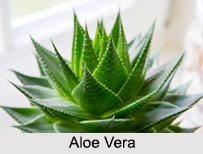
    Most of the Indian herbs are used widely used due to their medicinal values. For medicinal or spiritual use, any part of a plant might be considered to be herb. These parts are leaves, roots, flowers, seeds, resin, root bark, inner bark (cambium), berries and sometimes the pericarp or other portions of the plant. Plants contain phytochemicals that affect body. Medicinal herbs have curative effects and are used to prepare herbal medicines. They are considered as having powerful effects on curing certain diseases. Some types of herbal extract, such as the extract of St. John's wort (Hypericum Perforatum) or of kava (Piper Methysticum) can be used to relieve depression and stress. However, large amounts of these herbs may lead to poisoning. Therefore, they should be used with caution. One herb-like substance called 'Shilajit' is used to lower blood glucose levels. Thus, the herb is especially important for those suffering from diabetes. Some Indian herbs that are famous for their curative effects are abrus precatorius, adhatoda vasica, aloe vera, ashwagandha, asparagus racemosus, basil, bhringaraj, cardamom, castor, ginger, guggul, lemongrass, safed musli, sandalwood, sarsaparilla, shankapushpi, solanum nigrum, tinospora cordifolia and vinca rosea.

    For more, visit the link below:

    Wednesday, 14 September 2022

    Njavarakizhi, Kerala Ayurveda


    Njavarakizhi, Kerala AyurvedaNjavarakizhi treatment is associated with the neuromuscular disorders and degenerative muscle diseases. This treatment will give benefit to the patients who are suffering from spondylosis, osteoarthritis, diabetic neuropathy, inter vertebral disc prolapse, rheumatoid arthritis.

    Njavarakizhi treatment is also an exceptional rejuvenating therapy to keep the body young and healthy. Njavarakizhi treatment nourishes the muscles, improves their tone, and imparts longevity.

    Derivation of Njavarakizhi
    Njavarakizhi treatment is also known as Shashtikashali Pinda Swedam. Njavarakizhi treatment in Malayalam stands for the rice, Shashtika Shali in Sanskrit language that grows in 60 days.

    Kizhi (Pinda in Sanskrit) stands for bolus. Njavara is indigenous variety of rice grown in Kerala, having medicinal properties. Njavarakizhi treatment is a unique treatment procedure practiced by physicians of Ayurveda of Kerala.

    Process of Njavarakizhi
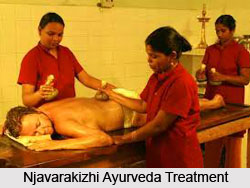
    The person in Njavarakizhi treatment is first preconditioned by applying mild oil on the body and head, and is made to lie down relaxingly. Warm "Njavara" rice, cooked with herbal decoction and milk, is squeezed out through a cotton pouch and massaged on to the whole body of the person. This continues for about 30 to 40 minutes until the whole preparation is evenly spread on the body. As soon as the rice spread looses its warmth, it is completely wiped off and warm oil is applied on the body. The person lies idle for another 30 minutes before he goes for a warm refreshing shower.

    In the meantime, the steamed rice and herb mixture infuse their properties into the body tissues and nourish them. This revitalizes the deficient areas of the body, reduces its degeneration, and stops muscle wastage. And as a result of extended treatments of 2 to 3 weeks the body recoups its lost vitality.

    The medicines like Lehyam (semi solid) and Kashayam (decoction) to be taken along with the treatment will give much more effective results in Njavarakizhi treatment. Other than the nourishing rice "Njavara", vetiver, ghee, ginger oil, milk, and herbs like sida, deodar and mustard are also used in making the decoction and preparation of Njavarakizhi treatment.

    For more, visit the link below:

    Wednesday, 31 August 2022

    Benefits of Mud Therapy


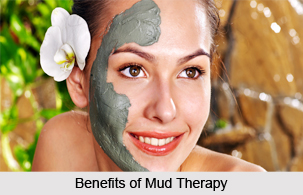
    Benefits of Mud TherapyMud Therapy is a naturopathy that has many beneficial effects in treating diseases, ailments and skin problems. It is also used as the beauty product now a days. The Mud Therapy is used to cure diseases like osteoarthritis, periarthritis, back and joint aches and pains where there is no inflammation.

    Beauty Benefits of Mud Therapy
    Mud Therapy has beneficial effect for skin due to following reasons:
  • It retains water for longer time even more than cold water pack.
  • Mud restores proper balance of skin pH.
  • The cold moistures in mud relax the pores of skin and helps in blood circulation in the surface area.
  • Mud Therapy helps in acne repair and prevention.
  • The scrubbing effect of mud leaves the skin smooth and rejuvenated.
  • Mud also has an anti-inflammatory effect, so it is great for healing wounds and scars.
  • Mud has anti-aging effect.
  • It regenerates healthy skin.
  • Mud has detoxifying and toning effect on skin.
  • Skin feels lighter after mud therapy.
  • Mud has exfoliating action. It eliminates dead skin and refines skin structure.
  • It helps to reduce spots and patches of skin, especially those formed after pox.

  • For more, visit the link below:

    Wednesday, 3 August 2022

    Raktamokshana, Ayurveda


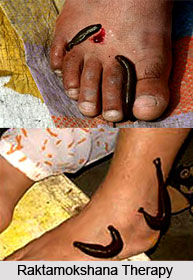
    Raktamokshana, AyurvedaAyurveda defines raktamokshana as the therapeutic withdrawal of blood from the body. It is the fifth major procedure that is used in Panchakarma therapy. However, raktamokshana is the most limited of the five major procedures. But this therapeutic procedure provides a rapid and sometimes dramatic reduction of symptoms in certain acute disorders especially where time is a critical factor. Comparatively, the other procedures of Panchakarma are much more comprehensive in their scope. The other procedures are also applied after raktamokshana is completed in order to provide deep cleansing of aama from the tissues and thereby remove the actual disease process.

    Rakta dhatu and pitta dosha are very closely connected and at the same time their function is interrelated. Rakta or the blood is also called 'Jeevan' or life. Rakta dhatu is represented by blood, which is formed and regulated by the liver, bone marrow and spleen. It performs the pitta associated work. That is why, toxins appear due to excess pitta and they get concentrated in the blood. If there is any disturbance in the circulation or constitution of blood then it causes diseases. When excessive pitta related aama exists in the blood, it gets transported to the body's periphery, where it often produces characteristic symptoms like skin hypersensitivity and skin inflammation. Once the aama is removed, rakta metabolism improves and the blood can perform its function very effectively. When the toxins associated with the pitta dhatu are removed from the body, the functioning of pitta regains balance. So, raktamokshana is the therapy that is used in order to reduce the impurities of the blood. Good blood sustains life and helps maintain the physiological equilibrium that is necessary for sound health.

    Tuesday, 26 April 2022

    Charaka Samhita, Ayurveda


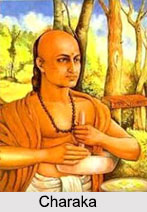
    Charaka Samhita, AyurvedaCharaka Samhita is the Ayurvedic text obtained from the ancient Indian tradition written by the great Ayurvedic physician Charaka. It is said to be the oldest of the three ancient treaties of Ayurveda. Charaka Samhita has relevance in the modern day practice of Ayurvedic medicine. Charaka Samhita and Sushruta Samhita are famous worldwide as an important source of old Ayurveda practice. Thus this book helps to gather an idea of the ancient medicinal practice.

    Source of Charaka Samhita
    The text Charaka Samhita is written in Sanskrit. The term ‘Charaka’ means ‘wandering scholars’ or ‘wandering physicians’ and ‘Samhita’ denotes ‘collected’ or ‘compendium’. The original source of Charaka Samhita is the Agnivesha Tantra based on the teaching of Punarvasu. It is thought that Charaka has edited this work and in later times another Ayurvedic Scholar Dridhabala extended the Charaka Samhita further more. The Charaka Samhita was most probably written in Mauryan era (around 3rd century BC).

    Charaka Samhita, AyurvedaContext of Charaka Samhita
    The text contains eight sections having 120 chapters in total. The eight sections are Sutra Sthana (General principles), Nidana Sthana (Pathology), Vimana Sthana (Specific determination), Sarira Sthana (Anatomy), Indriya Sthana (Sensory organ based prognosis), Cikitsa Sthana (Therapeutics), Kalpa Sthana (Pharmaceutics and toxicology) and Siddhi Sthana (Success in treatment).

    For more, visit the link below:

    Wednesday, 23 March 2022

    Shalya Tantra, Branch of Ayurveda


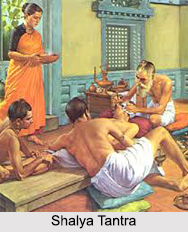
    Shalya Tantra, Branch of AyurvedaShalya Tantra is the surgical method which was initiated by Ayurvedic sages in ancient India. Shalya Tantra is the root of modern surgery, a branch of Ayurveda.

    Ayurveda considers a human body to be developed from five universal factors known as the ‘Panch Mahabhutas’. These are earth (prithvi), water (jal), fire (agni), air (vayu) and universal space (akash). These factors ultimately give rise to the ‘Tridosha’, that are Vata, Pitta and Kapha. These Tridoshas maintain the body’s balance in case of a disproportion in one or more than one of these components, one’s health degenerates and become ill. To a certain extent, the medicinal way of treatment or Kayachikitsa can be applied with good results. But at times the disease goes beyond the control of Kayachikitsa and surgical intervention or Shalya Tantra becomes mandatory.

    Etymology of Shalya Tantra
    The word ‘Shalya Tantra’ literally signifies the elimination of irritating factors from the human body. ‘Shalya’ means cause, which produces pain, or factor, which stimulates irritation, and ‘Tantra’ means the technique by which this cause or factor is done away with.

    Concept of Shalya Tantra by Sushruta
    Sushruta was the earliest surgeon to develop cosmetic surgery. Shalya Tantra is discussed in detail in his renowned Ayurvedic text ‘Sushruta Samhita’. Here he gives an exhaustive description of the surgical processes involved in different conditions where surgery is required.

    For more, visit the link below: