Showing posts with label sport. Show all posts

Thursday, 4 June 2026

Saba Anjum Karim: Trailblazer of Indian Women’s Hockey

 Saba Anjum Karim, born on 12 June 1985, is a former member of the Indian national women’s hockey team who emerged as one of the most promising talents in Indian hockey during the early 2000s. She hails from Kelabadi in Durg town, Chhattisgarh, a region that would later take pride in her international achievements. From an early age, her sporting abilities set her apart, paving the way for her entry into structured competitive hockey at the national level.


Entry into Junior National Hockey

Karim’s rise in Indian hockey gained momentum in 2000 when she was selected for junior national camps. That same year, at just 15, she made her professional debut at the Under-18 Asian Hockey Federation (AHF) Cup held in Hong Kong. Playing as a right-wing forward, she quickly demonstrated her attacking prowess and contributed significantly to India securing the gold medal. 

Her early success continued as she represented India at the 2001 FIH Junior Women’s World Cup in Buenos Aires, Argentina. During this phase, she participated in several youth-level international tournaments, consistently showcasing her skill, agility, and goal-scoring ability on the global stage. 

Breakthrough at the Commonwealth Games

A defining moment in Saba Anjum Karim’s early career came in 2002 when, at just 16 years of age, she became the youngest participant in the women’s hockey competition at the Manchester Commonwealth Games. Her inclusion itself was a testament to her extraordinary talent. 

More importantly, she played a role in India’s historic campaign, which culminated in a gold medal victory against host nation England in the final. Around the same period, she also participated in key tournaments such as the Asian Games (October 2002), Asia Cup (February 2004 in Delhi), and other international tours including Australia and New Zealand. 

Senior Career and Consistency

Karim’s consistent performances in her formative years laid a strong foundation for her senior career. Over time, she represented India in multiple international competitions, including the Commonwealth Games in 2002 and 2006, as well as various test series and multinational tournaments. 

She was known for her role as a right-wing forward and developed into a reliable attacking player. Over the course of her career, she achieved an impressive milestone of 92 goals in 200 international appearances, underlining her importance to the national team. 

She trained under coach Mr. Salim and was also part of the senior national coaching camps conducted by the Indian Women’s Hockey Federation (IWHF), where she was included among the top 31 players selected for advanced training. 

Leadership and Captaincy

A significant milestone came in 2011 when Saba Anjum Karim was appointed captain of the Indian women’s national field hockey team at the age of 26. Her first assignment as captain was a four-test series in Australia, followed by a three-nation Super Series Championship featuring nine-a-side matches. 

Her leadership marked a new phase in her career, where she combined experience with tactical understanding to guide a young Indian side on the international stage. 

Awards and Legacy

In recognition of her outstanding contribution to Indian hockey, Saba Anjum Karim was conferred the Arjuna Award in 2013, one of India’s highest sporting honors. The award was presented by then President Pranab Mukherjee at Rashtrapati Bhavan in New Delhi during the National Sports Awards ceremony. 

Her journey from a young girl in Durg to an international hockey captain remains an inspiring example of dedication, discipline, and sporting excellence in Indian women’s hockey. 

Saturday, 2 September 2023

Prakash Padukone: A Sports Icon


Prakash Padukone is a name that resonates with excellence and sportsmanship in the world of badminton. Born on June 10, 1955, in Bangalore, India, Padukone's journey from a young enthusiast to a legendary athlete is nothing short of inspiring. With a career spanning over two decades, he has etched his name in the annals of sports history through his remarkable achievements and contributions to the sport of badminton.


Early Years and Beginnings

Padukone's journey in the world of sports began at a young age when he picked up the badminton racket. His early training was under the tutelage of renowned coach Prakash Lakhani. His dedication and talent quickly became evident, and he began making strides in the national badminton scene. 

National and International Success

Padukone's rise to prominence in Indian badminton was meteoric. In 1971, at the age of 16, he clinched the national championship title. This marked the beginning of a string of victories that would cement his place as one of India's greatest sportsmen.

One of his most significant achievements came in 1980 when Prakash Padukone became the first Indian to win the prestigious All England Badminton Championships. This historic win not only brought pride to the nation but also put India on the map in the international badminton circuit. His victory at the All England Championships opened doors for Indian badminton players to compete at the highest level and inspired generations to follow in his footsteps. 

Asian Games and Commonwealth Games Glory

Padukone's success was not confined to just one tournament. He continued to shine on the international stage, winning the gold medal at the 1978 Commonwealth Games in Edmonton, Canada. His performance at the Asian Games was equally spectacular, with a bronze medal in the 1982 New Delhi edition and a silver medal in the 1978 Bangkok edition. 

Contribution to Indian Badminton

While Padukone's individual achievements are awe-inspiring, his contributions to Indian badminton go beyond his on-court triumphs. He played a pivotal role in nurturing young talent and shaping the future of Indian badminton.

Padukone's Badminton Academy, established in 1994, has been a breeding ground for talented shuttlers. Many of India's top-ranked players, including Pullela Gopichand and Saina Nehwal, honed their skills under his guidance. His commitment to the development of the sport and mentoring young talents has been instrumental in elevating the standard of Indian badminton on the global stage. Indian Badminton Players  

Awards and Recognitions

Prakash Padukone's illustrious career has been duly recognized with numerous awards and accolades. He was honored with the Arjuna Award in 1972 and the Padma Shri in 1982 for his outstanding contributions to sports. His enduring legacy in badminton was further celebrated when he was awarded the prestigious Padma Bhushan in 2018. 

In the annals of Indian sports history, Prakash Padukone's name shines brightly as a symbol of dedication, excellence, and sportsmanship. His journey from a young aspiring badminton player to an international icon is a testament to the power of hard work and determination. Not only did he conquer the courts with his remarkable skills, but he also contributed significantly to the growth and development of badminton in India. 

Prakash Padukone's legacy continues to inspire the current generation of badminton players and sports enthusiasts alike. His unwavering commitment to the sport and his role in nurturing young talent ensure that his influence on Indian badminton will endure for generations to come. Padukone's remarkable achievements and contributions have left an indelible mark on the world of sports, making him a true sporting icon in the history of India.


Tuesday, 29 August 2023

Wrestling in India: A Rich Tapestry of History and Achievements


Wrestling, a sport deeply ingrained in India's cultural and historical fabric, has a lineage that dates back centuries. With its origins rooted in ancient texts and mythologies, Indian wrestling, or 'kushti' as it is locally known, has evolved into a fiercely competitive and celebrated sport. This article delves into the history of wrestling in India, shedding light on its evolution and the remarkable achievements of some of the nation's most renowned wrestlers.


Historical Roots

The roots of wrestling in India are entwined with the country's rich mythological and historical narratives. References to wrestling can be found in ancient texts like the Mahabharata and Ramayana, where valorous warriors engaged in the sport as part of their training. The sport's ancient form, known as 'Malla Yuddha,' was a combination of physical prowess and strategic acumen, making it an integral part of warrior culture.


Evolution of Kushti

Over the centuries, kushti underwent transformations, merging indigenous techniques with influences from Persian and Mongolian wrestling styles. Traditional akhadas (wrestling training centers) became the nurturing ground for wrestlers, not only in terms of physical training but also in terms of values like discipline, dedication, and respect. Wrestlers, or 'pehlwans,' adhered to a strict regimen, often living austere lives to maintain peak physical condition. Traditional Sports


Pioneering Achievements

India boasts a long line of wrestlers who have not only excelled on the domestic front but have also made their mark on the international stage. One such trailblazer was Gama Pehlwan, hailed as one of the greatest wrestlers of all time. Gama's feats are legendary, from remaining undefeated in his career that spanned several decades, to even accepting challenges from international wrestlers and strongmen. His legacy continues to inspire wrestlers in India and beyond.


Modern-Day Icons

In recent decades, Indian wrestling has seen a resurgence, with athletes achieving remarkable feats in various international competitions, including the Olympics. Sushil Kumar, a two-time Olympic medalist, brought wrestling to the forefront of Indian sports consciousness with his bronze and silver medal wins in 2008 and 2012, respectively. His achievements sparked a renewed interest in the sport, inspiring a new generation of aspiring wrestlers.

Another name that shines brightly is Bajrang Punia. With numerous international titles under his belt, including World Championships and Commonwealth Games gold medals, Bajrang is a symbol of the relentless determination that defines Indian wrestlers. His agility and technique have earned him a reputation as one of the best in the world.

Vinesh Phogat's journey is equally inspiring. Hailing from a family deeply rooted in wrestling, Vinesh overcame adversity and injury to become the first Indian woman wrestler to win a gold medal at the Asian Games. Her success has been pivotal in changing societal perceptions of women in sports and has encouraged a growing number of young girls to pursue wrestling.


A Global Force

Indian wrestling's achievements extend beyond the mat. The annual 'Dangal' competitions draw massive crowds and provide a platform for emerging talent to showcase their skills. The rise of the Pro Wrestling League has further amplified the sport's popularity, allowing wrestlers from various countries to compete in an exciting team format.


Wrestling in India is a testament to the country's enduring traditions and its ability to adapt and excel in the modern world. From its mythological origins to the achievements of contemporary wrestlers, the sport has etched its place in India's cultural mosaic. As Indian wrestlers continue to make their presence felt on the global stage, the legacy of kushti grows stronger, inspiring generations to embrace the values of discipline, dedication, and determination.


Friday, 24 March 2023

History of Indian Cricket

 India started playing Cricket way back in 1721 unofficially but was granted the official test status in 1932. They played their first test cricket match from 25th June to 28th June in the year 1932 against England at Lords' in London. India was lead by C.K. Nayuduat that time. India was considered a weak team in the Cricketing Circuit for long time but Indian team changed from 1950s and is a major force to reckon with today.


Indian Cricket in 20th Century
After its initiation, Cricket started gaining popularity among the Indian people within a short period of time. The middle and last half of the 19th century was an important period in the history of Indian Cricket, as the game spread its reach in almost all the parts of India during that period.

The First Test Match was played in 1932. Though India did not have a national cricket team during the early 1900s, a few Indian great cricketers of that era did represent the England cricket team. Maharaja Ranjit Singh and Duleep Singhji were the prominent ones among them.

Indian Cricket during 1950s
After Independence, a big push came in the history of Indian Cricket, when India got its first ever Test series win against the neighbouring Asian counterpart and archrivals Pakistan, in 1952. The series saw brilliant and extraordinary performances from some of the greatest Indian Cricket players like Polly UmrigarVijay Manjrekar and S.M. Gupte.

For more, click the link below:

Thursday, 12 January 2023

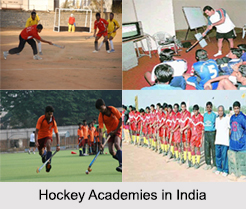
Hockey Academies in India


Hockey Academies in IndiaHockey Academies of India are providing the training to the young aspirants who are interested in playing hockey.

Dhanraj Ballal Hockey Academy
Dhanraj Ballal Hockey Academy is a renowned non-profit sports academy located in BangaluruKarnataka. Dhanraj Ballal Hockey Academy was established in 2001 and is being run and managed by the legendary Indian Hockey players like, Padmashri Dhanraj Pillay and Arjuna Awardee Ashish Kumar Ballal. The main objective of the players behind establishing Dhanraj Ballal Hockey Academy is to pass on their huge experience to the younger generation and also to attract them to take up the game of Hockey. Dhanraj Ballal Hockey Academy is working hard for training and coaching players at the grass root level and it also provides stipend to the talented players, who represent to the nation.

Jai Bharat Hockey Academy, Delhi
Jai Bharat Hockey Academy was inaugurated on 22nd May 2011 by former President of the Indian Hockey Federation, Mr.K.P.S.Gill, with an aim to provide the best training to the young players of India. Jai Bharat Hockey Academy is also flourished with the former coach of the men’s and women’s national hockey team Maharaj Krishna Kaushik, former captain of the national women’s hockey team, Preetam Siwachand national women’s team’s midfielder, Mamta Kharba.

Jude Felix Hockey Academy, Bengaluru
Jude Felix Hockey Academy (JFHA) is a non profitable hockey academy in India and it is managed by the Charitable Trust. Jude Felix Hockey Academy (JFHA) is a non-profit organization started in January 2009 by Olympians, Former International and National players to cultivate the game of hockey amongst the underprivileged children of our country and to develop new talent for the game.

For more, visit the link below:

Wednesday, 21 December 2022

Floorball Federation of India (FFI)


Floorball Federation of India (FFI)Floorball is a game played and encouraged by only a few people. People are in agreement that floorball is an excellent alternative to Floor Hockey. The big difference between the two is that the rules of floor ball do not allow any high sticking, stick contact or body contact, so the game tends to be less physical than floor Hockey and more skill oriented and fast paced.

History of Floorball Federation of India
The game of Floorball has come to India just a few years back and as a result, it has not got the chance of gaining popularity among the people till now. One of the great sports enthusiastic of India, Mr. Mohd Seraj Ansari has done a great job for bringing the sport to India, by registering the Floorball Federation of India (FFI) in 2001. Mr, Ansari registered FFI under the aegis of the International Floorball Federation-IFF. However, he faced a lot of obstacles at the beginning, as there were no equipments and no supporters. Mr. Ansari then met the famous Floorball enthusiast, Mr. Jarkko Harkonen of Finland in March 2003 and they together started working for promoting the sport in India. Mr. Harkonen helped FFI to import some equipments of Floorball to India and that helped the organisation a lot.

After receiving the equipments from the Finnish manufacturers, the FFI started preparation for organising a national championship and it organised the first ever National Floorball Championship (men & women) in Maharashtra. A large number of 200 enthusiastic players and officials took part in the first 5 days of the National Training Camp in India. The Girls & Boys Team from Manipur made the longest trip of 6 days in the championship. The Uttar Pradesh team won the National Championship in Men's division and the Team of Delhi was the winner of National championship in Women's division. The FFI organised the second National camp in Lucknow, in City Montessori School (CMS) and this time, a group of children joined the camp. The FFI became successful to convince the City Montessori School (CMS) of Lucknow to adapt the game to be one of the school sports. The first local league in India named the Avandh Floorball League was organised in August 2004. All the players were registered in FFI and they were also insured against floorball injuries.

For more, visit the link below:

Wednesday, 7 December 2022

Fari Gatka, Indian Martial Art


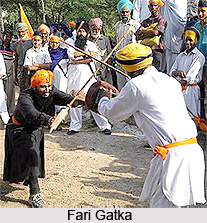
Fari Gatka, Indian Martial ArtFari Gatka is an ancient Indian fencing-combat form that incorporates the use of swords and shields. India is home to a variety of fighting and combat techniques. India deeply influenced the development of various modern martial arts, particularly within the countries that have been influenced by Indian culture and religion and one such game is Fari Gatka. It is a bladeless armed combat technique developed by the Sikhs of Punjab, in North-Western India. It is practiced like sword-fighting, but with wooden sticks and leather shields. This martial art was conceived as an offensive, as well as defensive combat form, which focuses on developing the physical state along with strengthening the mental and spiritual aspects as well.

History of Fari Gatka
History says that this martial art dates back to the Mughal era. It is said that initially it was practiced by the Sikh inhabitants of Punjab to protect themselves from Mughal invasion. It is also believed that a form of this art involving the use of sword and shield was practiced by Akbar.

Practice of Fari Gatka
It is practiced with a cane stick which is used as a Gatka or sword along with a small leather shield called Fari. The word Gatka is derived from the Sanskrit word "Gada", meaning Mace. The sword is usually around 3 foot, where as the shield is 9 inches in diameter. The Fari is made with sturdy leather and weighs around 1lbs. Fari Gatka is practiced in a 20 foot quadrangle arena. The sport involves the use of weapons by both hands, for it is believed that proper co-ordination of the two sides of the body is necessary for balanced development. The fighters could score points only when their swords would come in contact with vital pressure points on the opponent's body. The match ends when one of the participants has received 5 strikes in the body.

For more, visit the link below:

Tuesday, 22 November 2022

Rowing in India


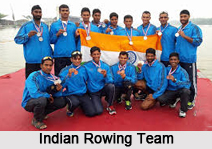
Rowing in IndiaRowing in India is a popular sport that involves propelling a boat through water to cover a specific distance in the quickest possible time. One or more people use wooden sticks as oars. Bajrang Lal Takhar hailing from Sikar District of Rajasthan, is one of the prolific rowers in India

In this game, the athletes of rowing compete against each other on lakes or rivers or sometimes on the ocean, depending, of course on the type of race or discipline. In rowing the boats are actually propelled by reaction forces on the ores blades as the same is pushed against the water. This sport can be played as both competitive and recreational purposes. For the former it involves learning the technique and for the latter overall fitness plays a major role.

History of Rowing
Rowing in IndiaRowing also happens to be one of the oldest Olympic sports. The earliest record of rowing as a sport can he traced back to Egyptian civilisation to about 1425 BC. This game was popular during the Roman period also. Rowing regattas were held for the first time in Venice around 300 AD. The oldest annual recorded race was from London Bridge to Chelsea held on 1 August, 7 776. India sees the rowing from the British era.

Wednesday, 9 November 2022

Indian Cricket During 1960s


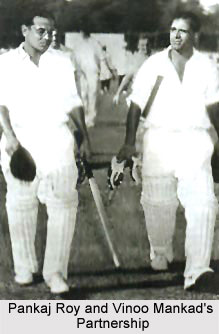
Indian Cricket During 1960sIndian cricket team during 1960s did get some significant successes that include some wonderful individual performances like the world record opening partnership of 413 runs between Pankaj Roy and Vinoo Mankad against New Zealand in 1955. The world record stood tall till the first half of this year, when the South African opening pair, Graeme Smith and Neil McKenzie broke it. Mankad-Roy's partnership stood tall for as long as 53 years and the new record of 415 runs was made by Smith-McKenzie, in March, 2008, against Bangladesh. Some other brilliant performance in this decade was Subhash Gupte's leg spin magic against the West Indies in West Indies in 1952-53 and also the Jasu Patel's stand-out performance against Richie Benaud's Australians in 1958-59. Overall, this decade witnessed some of the remarkable moments in the history of Indian cricket.

While making the world record opening partnership of 413 runs for India, the great batsmen, Vinoo Mankad and Pankaj Roy batted throughout the entire first day of the Test against New Zealand, which itself was a record. The partnership was really a valuable one for India, as it helped India clinch a huge an innings and 109-run victory in the fifth and final Test against New Zealand at home in 1955. They surpassed the previous world record of 359 runs, made by England's Len Hutton and Cyril Washbrook against South Africa in 1948-49. They showed a lot of grit and determination and batted out some hostile spells of bowling from the famous New Zealand bowlers like Cave and Hayes. Mankad eventually got out for 231 runs, that was the highest individual score by an Indian till then and the score of Roy was 173 runs. Roy also scored another two centuries in the same series and became one of the star players for India in its second home series win.

The Indian team presented some more glorious and spectacular moments for the Indian cricket enthusiasts in the 1960s, as they established themselves a team to reckon with on sub continental soil with consistent performances at home. The team first became successful to win a Test series against the England team for the first time in its history in 1961-62. It was considered as a sweet revenge, as the England team did white-washed the Indian team in its previous tour of England, in 1959. India won the four match series in 1961-62 by 1-0, by winning the last match, after drawing the first three.

For more, visit the link below:

Monday, 26 September 2022

Indian Football Associations


Indian Football AssociationsIndian Football associations include the regional associations, district associations, the state associations and also the national associations. All the football associations in Indian states like West BengalDelhiGoaManipurAssamMaharashtra are funded by the various sponsorships from the multi national companies and the governmental accreditations.

The game of Football is counted among the most popular and widely played sports in this huge nation. Football is being run and managed by a large number of associations that can be classified in different ways. The numerous Football clubs of India can also be included among the Indian Football associations. In contemporary India, Indian Super League has much contribution in fostering new talents in the football world and it is a chance to play and show their talents with the best attitude to the world spectators.

Role of All India Football Federation
All India Football Federation (AIFF) is an organization which manages the game of association football in India. Established in 1937, the All India Football Federation is the national governing body for Football in India. The AIFF is working relentlessly for the development and improvement of Football in India. It is being highly assisted by the district and state Football associations. The AIFF is in charge of supervising all kinds of football related activities in India and the State Football associations administer football in their respective states. The district football associations help the state associations in organising different kinds of football related activities in their district, as well. The young and talented Football players in India are first noticed in the district level and then they go on to show their talent in the state level. While representing their states in various national level tournaments, the football players earn attention from the national selectors and get a chance to play for the national team.

District and State Football Associations in India
The district and state Football associations in India are the most important of all the Indian Football associations. They are playing probably the most vital role in upbringing new talents from the grass route level in India. It is mainly because of their contribution that India has produced such a large number of talented Football players so far. All the state associations are associated with the AIFF, as members. The All India Football Federation (AIFF) also administers the women’s Football in India. However, the Youth football is administered by the governmental Sports Authority of India (SAI).

For more, visit the link below:

Monday, 12 September 2022

India`s Memorable Overseas Test-Series Wins


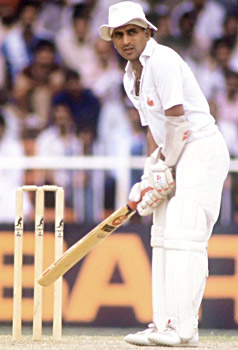
Sunil GavaskarThe performance of the Indian cricket team saw a lot of improvement in the later half of the 1960s and the improvement was evident from India's first ever Test series win in overseas, against New Zealand in 1968.

India Tour to New Zealand and England in 1968
The Indian team went on the tour of New Zealand in 1968, with Tiger Pataudi as the Indian captain and the win broke a 35-year-long plague of India's not winning a series overseas. India won the series by a comprehensive 3-1 and the Indian team literally dominated the New Zealand attack in the series. The players like E.A.S. PrasannaB.S. Bedi and R.G. Nadkarni were the stars for India in the series win and Mansur Ali Khan Pataudi also led the team with distinction.

Once the Indian team broke the jinx of winning a series overseas in 1968, against New Zealand, it became much more confident of repeating the success again and they did so twice within a short period. After the New Zealanders, the Indians beat the mighty West Indies in West Indies and also the England team in England.

India Tour to West Indies in 1971
The Indian cricket team went for a tour to West Indies in 1971 and it became successful to take a great revenge of the humiliation that it faced in its previous tour of West Indies, when West Indies white washed the Indians by 5-0. The Indian team played extremely well in the series to beat the West Indies team by 1-0.

The performance of the Indian cricket team saw a lot of improvement in the later half of the 1960s and the improvement was evident from India's first ever Test series win in overseas, against New Zealand in 1968. The Indian team went on the tour of New Zealand in 1968, with Tiger Pataudi as the Indian captain and the win broke a 35-year-long plague of India's not winning a series overseas. India won the series by a comprehensive 3-1 and the Indian team literally dominated the New Zealand attack in the series. The players like E.A.S. Prasanna, B.S. Bedi and R.G. Nadkarni were the stars for India in the series win and Pataudi also led the team with distinction.

Once the Indian team broke the jinx of winning a series overseas in 1968, against New Zealand, it became much more confident of repeating the success again and they did so twice within a short period. After the New Zealanders, the Indians beat the mighty West Indies in West Indies and also the England team in England. The Indian cricket team, led by Ajit Wadekar, went for a tour to West Indies in 1971. The team became successful to take a great revenge of the humiliation that it faced in its previous tour of West Indies, when West Indies white washed the Indians by 5-0. The Indian team played extremely well in the series to beat the West Indies team by 1-0.

The successful tour against West Indies is always considered as one of the most memorable moments in the history of Indian cricket, as this was the series that boost up the self-confidence of the Indians, a lot. The Indian cricket team fought hard with the mighty and dangerous West Indians in all the five Test matches of the series and became successful to win the second one, which eventually became decisive.

However, the most notable facts of the tour definitely include India's first victory in the Caribbean, the team spirit of the Indians through out the series and also the emergence of a young batsman, named Sunil Gavaskar.

For more, visit the link below:

Monday, 29 August 2022

India Tennis Academies


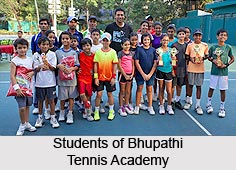
India Tennis AcademiesIndia Tennis Academies are the schools where the students have the scope to train themselves under the guidance of many internationally acclaimed tennis players in India.

The game of Tennis is considered among the most popular sports in India, as several Indian tennis players have earned international recognition and reputation, from time to time. The Indian Tennis players in recent years mainly get their training from several Tennis academies, spread all over India. There are a large number of academies operating in India to bring out new talents to represent India in the international arena. The Indian tennis academies have been playing an important role in the well being of Indian Tennis.

Management of Indian Tennis Academies
Most of the Indian Tennis academies are being run and managed by the former Indian Tennis players, who want to pass over their vast experience to the young and budding Tennis players. The Tennis academies have by and large proved to be instrumental in shaping the careers of many such young and talented players in India, so far. They have also been instrumental in making the players into big stars of tomorrow.

Involvement of Tennis Players in Indian Tennis Academies
The legendary Indian Tennis players like Rohit Rajpal and Leander Paes honed their Tennis skills at the Britannia Amritraj Tennis Academy. Apart from them, many leading players, who have been at the peak of their careers and have contributed immensely to this game, have planned to revive the interest in the game, in an effort to reclaim the lost glory of India.India Tennis Academies

Trends of Forming Tennis Academies by the World Class Players Of India
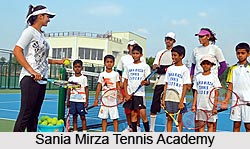
One of the best Indian Tennis players, Vijay Amritraj, started the trend of former great players establishing Indian Tennis academies. He started a full fledged Tennis academy in India for the first time. The then Chairman of Britannia, Mr. Rajan Pillay gave a lot of support to Vijay Amritraj and they together founded the Britannia Amritraj Tennis Academy in Chennai. After Amritraj, the other great Indian Tennis players like Jaidip Mukherjee, Mahesh Bhupathi, the famous father-son duo of Ramanathan and Ramesh Krishnan, etc have also established their own Tennis academies. In the recent years, the latest sensation of Indian Tennis, Sania Mirza has also approached the State Government of Andhra Pradesh for land to start her Tennis academy.

For more, visit the page below:

Monday, 20 June 2022

Types of Wrestling in India


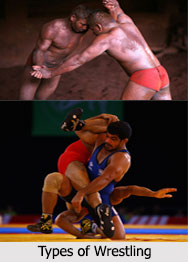
Types of Wrestling in IndiaTypes of Wrestling in India depend upon many factors like techniques, winning, regional and many more. Today, techniques of wrestling have been integrated with other hand-to-hand combat systems, including military combat and martial arts.

Modern Types of Wrestling in India
In the folk-style, Wrestling in India can be divided into two main categories like ‘Malla Krida’ and ‘Malla-Yuddha’. Malla Krida is the sports form of the game, while Malla-Yuddha is the battle version of wrestling. The free-style varieties are more common than the other forms, since Vedic times. The free-style varieties of wrestling in India are known as ‘Pushti’ or ‘Kushti’.

Malakhra: Malakhra is a unique type of wrestling, which has been derived from South Asia. This game is played in many portions of India and also in Pakistan. The participants tie a cloth around the waist of the opponent and each of them makes an attempt to throw him down, to the ground.

Vajra Mushti: Vajra-Mushti, also referred to as 'diamond-fist' or 'thunder-fist' is a technique of martial arts of ancient India which is performed by wrestlers known by the name Jyesthimalla. The weapon employed in this game is called 'Indra-mukti' which implies the fist of Lord Indra.

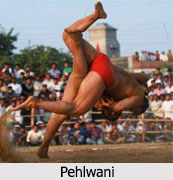
Types of Wrestling in IndiaPehlwani: Also known as 'Kusti', Pehlwani is a procedure of wrestling which originated from South Asia. It is said to be a fusion of the local form of wrestling, known as ‘malla-yuddha’ and 'varzesh-e bastani', a Persian form of wrestling.

Ancient Types of Wrestling in India
Wrestling was a traditional pastime in India during the ancient time. Wrestling in Ancient India was divided into four types like ‘Bhimaseni’, ‘Hanumanthi’, ‘Jambuvanthi’ and ‘Jarasandhi’, based on the technique and methodology.

• Bhimaseni Wrestling: The other type, Bhimaseni is for those wrestlers, who have huge build and strength. This form of wrestling gives pressure on acquiring the strength and then using it.

For more, visit the link below: