Showing posts with label wrestling. Show all posts

Tuesday, 29 August 2023

Wrestling in India: A Rich Tapestry of History and Achievements


Wrestling, a sport deeply ingrained in India's cultural and historical fabric, has a lineage that dates back centuries. With its origins rooted in ancient texts and mythologies, Indian wrestling, or 'kushti' as it is locally known, has evolved into a fiercely competitive and celebrated sport. This article delves into the history of wrestling in India, shedding light on its evolution and the remarkable achievements of some of the nation's most renowned wrestlers.


Historical Roots

The roots of wrestling in India are entwined with the country's rich mythological and historical narratives. References to wrestling can be found in ancient texts like the Mahabharata and Ramayana, where valorous warriors engaged in the sport as part of their training. The sport's ancient form, known as 'Malla Yuddha,' was a combination of physical prowess and strategic acumen, making it an integral part of warrior culture.


Evolution of Kushti

Over the centuries, kushti underwent transformations, merging indigenous techniques with influences from Persian and Mongolian wrestling styles. Traditional akhadas (wrestling training centers) became the nurturing ground for wrestlers, not only in terms of physical training but also in terms of values like discipline, dedication, and respect. Wrestlers, or 'pehlwans,' adhered to a strict regimen, often living austere lives to maintain peak physical condition. Traditional Sports


Pioneering Achievements

India boasts a long line of wrestlers who have not only excelled on the domestic front but have also made their mark on the international stage. One such trailblazer was Gama Pehlwan, hailed as one of the greatest wrestlers of all time. Gama's feats are legendary, from remaining undefeated in his career that spanned several decades, to even accepting challenges from international wrestlers and strongmen. His legacy continues to inspire wrestlers in India and beyond.


Modern-Day Icons

In recent decades, Indian wrestling has seen a resurgence, with athletes achieving remarkable feats in various international competitions, including the Olympics. Sushil Kumar, a two-time Olympic medalist, brought wrestling to the forefront of Indian sports consciousness with his bronze and silver medal wins in 2008 and 2012, respectively. His achievements sparked a renewed interest in the sport, inspiring a new generation of aspiring wrestlers.

Another name that shines brightly is Bajrang Punia. With numerous international titles under his belt, including World Championships and Commonwealth Games gold medals, Bajrang is a symbol of the relentless determination that defines Indian wrestlers. His agility and technique have earned him a reputation as one of the best in the world.

Vinesh Phogat's journey is equally inspiring. Hailing from a family deeply rooted in wrestling, Vinesh overcame adversity and injury to become the first Indian woman wrestler to win a gold medal at the Asian Games. Her success has been pivotal in changing societal perceptions of women in sports and has encouraged a growing number of young girls to pursue wrestling.


A Global Force

Indian wrestling's achievements extend beyond the mat. The annual 'Dangal' competitions draw massive crowds and provide a platform for emerging talent to showcase their skills. The rise of the Pro Wrestling League has further amplified the sport's popularity, allowing wrestlers from various countries to compete in an exciting team format.


Wrestling in India is a testament to the country's enduring traditions and its ability to adapt and excel in the modern world. From its mythological origins to the achievements of contemporary wrestlers, the sport has etched its place in India's cultural mosaic. As Indian wrestlers continue to make their presence felt on the global stage, the legacy of kushti grows stronger, inspiring generations to embrace the values of discipline, dedication, and determination.

 

Monday, 20 June 2022

Types of Wrestling in India


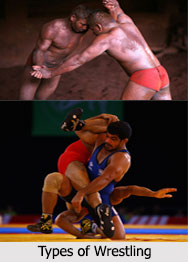
Types of Wrestling in IndiaTypes of Wrestling in India depend upon many factors like techniques, winning, regional and many more. Today, techniques of wrestling have been integrated with other hand-to-hand combat systems, including military combat and martial arts.

Modern Types of Wrestling in India
In the folk-style, Wrestling in India can be divided into two main categories like ‘Malla Krida’ and ‘Malla-Yuddha’. Malla Krida is the sports form of the game, while Malla-Yuddha is the battle version of wrestling. The free-style varieties are more common than the other forms, since Vedic times. The free-style varieties of wrestling in India are known as ‘Pushti’ or ‘Kushti’.

Malakhra: Malakhra is a unique type of wrestling, which has been derived from South Asia. This game is played in many portions of India and also in Pakistan. The participants tie a cloth around the waist of the opponent and each of them makes an attempt to throw him down, to the ground.

Vajra Mushti: Vajra-Mushti, also referred to as 'diamond-fist' or 'thunder-fist' is a technique of martial arts of ancient India which is performed by wrestlers known by the name Jyesthimalla. The weapon employed in this game is called 'Indra-mukti' which implies the fist of Lord Indra.

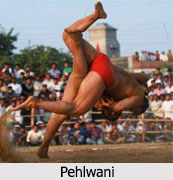
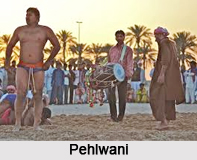
Types of Wrestling in IndiaPehlwani: Also known as 'Kusti', Pehlwani is a procedure of wrestling which originated from South Asia. It is said to be a fusion of the local form of wrestling, known as ‘malla-yuddha’ and 'varzesh-e bastani', a Persian form of wrestling.

Ancient Types of Wrestling in India
Wrestling was a traditional pastime in India during the ancient time. Wrestling in Ancient India was divided into four types like ‘Bhimaseni’, ‘Hanumanthi’, ‘Jambuvanthi’ and ‘Jarasandhi’, based on the technique and methodology.

• Bhimaseni Wrestling: The other type, Bhimaseni is for those wrestlers, who have huge build and strength. This form of wrestling gives pressure on acquiring the strength and then using it.

For more, visit the link below:

Wednesday, 29 December 2021

Pehlwani, Indian Martial Art


Pehlwani, Indian Martial ArtPehlwani or Kushti is a popular style of Indian wrestling that was developed during the Mughal period. Pehlwani is a fusion and combination of Varzesh-e Bastani of Persian origin and malla-yuddha of Indian origin.

Origin of Pehlwani
Pehlwani is an evolved and enhanced variation of the ancient Indian wrestling form known as Malla Yuddha, which was practiced during the 5th century BC. It can be described as the oldest and the traditional forms of Wrestling in India. Malla Yuddha is even described in the Malla Purana, a treatise formed in the 13th century. During the Mughal invasion in Indian in the 16th century, Malla Yuddha underwent a complete transformation as the Central Asian Mughals promoted Persian customs and culture. Malla Yuddha was hugely influenced by Mongolian and Persian (Varzesh-e Bastani) form of wrestling and thus Pehlwani was created. The various instructors and practitioners gradually developed it.

History of Pehlwani in India
There were several great and renowned wrestlers in India, like Ghulam Muhammad, popularly known as Gama Pehlwan, and Jatindra Charan Guha, famous as Gobar Goho, who brought the country international recognition in wrestling. In the IV Asian Games or Jakarta Games, India reached the summit of glory as all the 7 Pehlwans received medals, including 12 medals in freestyle wrestling and Greco-Roman wrestling. Again at the Commonwealth Games, conducted at Kingston, Jamaica, all of the 8 Indian wrestlers received medals for their outstanding performances. By 1960s, the country was ranked amongst the top 8 wrestling nations in the world. Due to their glorious history in wrestling, India hosted the World Wrestling Championships in New Delhi in 1967.

Development of Pehlwani in India
The practitioners of Pehlwani nowadays incorporate various Asian martial art styles in their training routine like including the grappling aspects of Jujutsu and Judo. The conditioning and sparring techniques of Pehlwani have been introduced into various aspects of Shoot Wrestling and Catch Wrestling, including the derivative systems. These also incorporate numerous throws, takedowns and submissions of Pehlwani.

For more, visit the link below:
https://www.indianetzone.com/57/pehlwani.htm

Friday, 26 March 2021

Wrestling in India


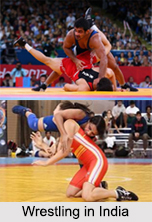
Wrestling in India, Indian Traditional SportWrestling in India is the most ancient sports whose past is enriched with glory. Wrestling in modern India is concentrated in the Indian states like Uttar PradeshTamil NaduPunjab and Haryana. The game of wrestling is considered to be one of the most significant games in the Olympics and was included in 708 BC at the Olympics. Sakshi Malik, Sushil Kumar Solanki, Udey Chand, Satender Dagar, Gobar Guha, Jatindra Charan Goho, Ambika Charan Guha, Khashaba Dadasaheb Jadhav, Yogeshwar Dutt, Ghulam Muhammad, Dara Singh and Geeta Phogat are considered as the all time famous and popular wrestlers in India.

History of Wrestling in India
In India, wrestling is also known as ‘Malla-Yudhha’. Some forms of Malla-Yuddha were practiced in India even before the invasion of the Aryans. The famous Indian epicMahabharata has numerous references of the game of wrestling in the country. Bhima, an important character in Mahabharata is believed to be a great wrestler. Karna, Jarasandha and Duryodhana were the other great wrestlers mentioned in this epic. Ramayana has also asserted about the activity of wrestling and Hanuman has been described as a talented wrestler here.

Wrestling in India, during the ancient times, used to get regular patronage from the emperors and kings of the nation. During the British rule, wrestling in India got another big push, as the British rulers included the game into the military practise. Wrestling in India continued to increase its popularity till the modern days and India was considered among the top 10 countries in wrestling till the 1960s. India also hosted the World Wrestling Championship in New Delhi in 1967.

Wrestling in India, Indian Traditional SportTypes of Wrestling in India
Wrestling in India can be divided into two main categories like ‘Malla Krida’ and ‘Malla-Yuddha’. While Malla Krida is the sports form of the game, Malla-Yuddha is the battle version of wrestling. There are also some other forms of wrestling in India, out of which, the free-style varieties are more common than the other forms, since Vedic times. The free-style varieties of wrestling in India are known as ‘Pushti’ or ‘Kushti’. Wrestling in India can also be divided into four types like ‘Bhimaseni’, ‘Hanumanthi’, ‘Jambuvanthi’ and ‘Jarasandhi’, based on the technique and methodology.

Based on the methods of selecting the winner, wrestling in India can also be divided into another two categories like the ‘Orthia’ and the ‘Kato Pale’. In Orthia type, the wrestler has to throw the opponent on the ground for three times consecutively to win the match. The Kato Pale type of wrestling demands the wrestler to accept defeat by raising his right hand with the index finger pointed. However, the rules of wrestling in India vary according to the various regions of the country.

Wrestlers of India
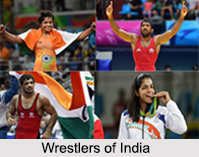
Wrestling in India has witnessed the rising of several eminent wrestlers, so far. The legendary Indian wrestler, Karim Bux became the first wrestler to defeat Tom Canon of England in 1892. Another eminent Indian wrestler, Gobar Guha became the World Champion in Wrestling in San Francisco in 1922, by defeating the hook wrestler Ad Santel. The renowned Indian freestyle wrestler, Khashaba Dadasaheb Jadav won bronze medal in the 1952 Olympic Games. Another eminent Indian wrestler was Salwinder Singh Shinda, who won the Chandigarh Kesari Award, four times. Some of the other legendary wrestlers in India include Kikkar Singh, Gulam, Rajeev Tomar, and Arjuna Awardees in wrestling like Anuj Chaudhury and Malkit Singh Kanjli.

For more visit the link  given below:

Thursday, 11 July 2019

Sushil Kumar, Wrestlers in India

sk
Sushil Kumar Solanki is an Indian freestyle wrestler who won gold in 74 kilograms category on 12th April 2018, beating South Africa’s Johannes Botha in the final that lasted 80 seconds. He also won silver medal at the 2012 London Olympics and a bronze medal at the 2008 Beijing Olympics.
sk3 

Early Life of Sushil Kumar
Sushil Kumar Solanki was born in a Jat family on 26th May 1983 at Baprola, Delhi. His father, Diwan Singh was a driver in MTNL Delhi, while his mother, Kamla Devi is a housewife. His father was a wrestler as well.
sk4Career of Sushil Kumar He won the gold medal in his weight category in at the World Cadet Games in 1998, followed by gold at the Asian Junior Wrestling Championship in 2000. In 2003, he won the bronze medal at the Asian Wrestling Championships and gold at the Commonwealth Wrestling Championships He won a bronze medal at the 2008 Olympic Games in Beijing.
Personal Life of Sushil Kumar
sk6
Sushil Kumar got married with Savi Solanki who is also a tennis player and played at the national level.
Read more : Sushil Kumar, Wrestlers in India

Monday, 10 July 2017

Wrestling in India, Indian Traditional Sport

Wrestling in India is said to be amongst the most ancient sports whose past is enriched with glory. Wrestling in modern India is concentrated in the Indian states like Uttar Pradesh, Tamil Nadu, Punjab and Haryana. The game of wrestling commenced its journey in India several centuries ago, during the middles ages. Even in the Olympic Games, wrestling is considered to be one of the most significant games. In 708 BC, this game was included in the Olympics. Sakshi Malik, Sushil Kumar Solanki, Udey Chand, Satender Dagar, Gobar Guha, Jatindra Charan Goho, Ambika Charan Guha, Khashaba Dadasaheb Jadhav, Yogeshwar Dutt, Ghulam Muhammad, Dara Singh and Geeta Phogat are considered as the all time famous and popular wrestlers in India from Independence. 

In India, wrestling is also known as 'Malla-Yudhha'. Some forms of Mallayuddha were practiced in India even before the invasion of the Aryans. The famousIndian epic, Mahabharata has numerous references of the game of wrestling in the country. Bhima, an important character in Mahabharata is believed to be a great wrestler. Karna, Jarasandha and Duryodhana were the other great wrestlers mentioned in this epic. Ramayana has also asserted about the activity of wrestling and Hanuman has been described as a talented wrestler here. Malla Purana, which dates back to the thirteenth century mentions about a group of Gujarati Brahmin wrestlers who were known as 'Jyesthimallas'. Wrestling in India, during the ancient times, used to get regular patronage from the emperors and kings of the nation. The kings of pre-independent India nurtured wrestling to a large extent. During the British rule, wrestling in India got another big push, as the British rulers included the game into the military practise. The British military armies, including Indian soldiers got attracted to wrestling, very much. Wrestling in India continued to increase its popularity till the modern days and India was considered among the top 10 countries in wrestling till the 1960s. India also hosted the World Wrestling Championship in New Delhi in 1967. 

Wrestling in India can be divided into two main categories like 'Malla Krida' and 'Malla-Yuddha'. While Malla Krida is the sports form of the game, Malla-Yuddha is the battle version of wrestling. To know more read: