Showing posts with label sports news. Show all posts

Wednesday, 18 October 2023

Newspapers in Local Dialects in India


India, with its rich linguistic diversity, boasts a thriving culture of local dialect newspapers that cater to the specific linguistic communities scattered across the country. These newspapers, published in languages like Malayalam, Marathi, and Hindi, serve as vital sources of information, education, and cultural preservation for their respective readerships.


Malayalam Language Newspapers

In the southern Indian state of Kerala, the Malayalam language takes precedence, acting as a crucial medium for communication among the local populace. Malayalam newspapers, such as Malayala Manorama and Mathrubhumi, have entrenched themselves deeply in the local culture, contributing significantly to the spread of knowledge, political awareness, and literary appreciation. With their insightful coverage of local events, political developments, cultural festivities, and literary discussions, these newspapers play a pivotal role in shaping the socio-cultural fabric of the region. Deepika Malayalam Newspaper is also a renowned Malayalam-language newspaper with a legacy spanning over a century, remains a significant voice in Kerala's media landscape. With its commitment to responsible journalism, it continues to provide comprehensive coverage of regional and national news.

Marathi Language Newspapers

Moving to the western state of Maharashtra, Marathi language newspapers have been instrumental in promoting the cultural heritage and linguistic identity of the Marathi-speaking populace. Esteemed publications like Sakal and Lokmat have successfully captured the essence of Maharashtra's vibrant culture, incorporating a blend of news, opinions, literature, and entertainment content. These newspapers actively engage with local issues, political dynamics, and socio-economic developments, effectively acting as a bridge between the regional concerns and the larger national discourse. 

Hindi Language Newspapers

Hindi, being the most widely spoken language in India, serves as the principal means of communication for a significant portion of the Indian population. Hindi language newspapers, including Dainik Bhaskar and Amar Ujala, hold a commanding presence in the Indian media landscape, catering to the linguistic needs of millions across the nation. These newspapers provide a comprehensive coverage of national and international news, alongside editorials, analyses, and features that reflect the diversity of India's social, political, and cultural milieu. They contribute to the dissemination of information and ideas, playing a vital role in shaping public opinion and fostering a sense of unity among Hindi-speaking communities throughout the country. 

Telugu Language Newspapers

Telugu language newspapers serve as vital mediums for the dissemination of information and news within the Telugu-speaking populace, primarily concentrated in the states of Andhra Pradesh and Telangana in India. With a rich literary tradition dating back centuries, Telugu newspapers have played a pivotal role in preserving and promoting the linguistic and cultural heritage of the Telugu community. Noteworthy Telugu language newspapers include well-established publications like Eenadu, Sakshi, Andhra Jyothy, and Andhra Prabha, among others.

Tamil Language Newspapers

Tamil language newspapers hold significant prominence in the cultural and media landscape of Tamil Nadu, a state in southern India, as well as among the global Tamil diaspora. These newspapers serve as instrumental vehicles for the dissemination of news, information, and opinion, catering to the diverse interests and concerns of the Tamil-speaking populace. Renowned Tamil language newspapers are Daily Thanthi, Dinakaran, Dinamalar, and Dina Thanthi, among others.

Kannada Language Newspaper

Kannada newspapers, serving the readership primarily in the state of Karnataka, India, are pivotal conduits for the dissemination of news, information, and cultural developments within the Kannada-speaking community. Among the notable Kannada newspapers, Kannada Prabha holds a prominent position, renowned for its credible and comprehensive reporting. Established in 1967 and headquartered in Bengaluru, Kannada Prabha has consistently upheld the values of journalistic integrity, contributing significantly to the fostering of informed public discourse and shaping public opinion within Karnataka and the global Kannada-speaking diaspora.

Local dialect newspapers in India not only disseminate information but also act as significant proponents of regional cultural identity, fostering a sense of belonging and pride among the linguistic communities they serve. By providing a platform for local voices and perspectives, these newspapers contribute to the preservation and promotion of indigenous languages and cultures, reinforcing the rich tapestry of India's linguistic diversity. As the media landscape continues to evolve, these newspapers remain steadfast in their commitment to serving their readers, fostering a deeper understanding and appreciation of the local ethos and values that define the diverse communities across India.

Wednesday, 30 June 2021

Lawn Tennis in India


Lawn Tennis in India, Indian TennisLawn Tennis in India is one of the popular sports of India. It is a game which can be played either indoors or outdoors on a rectangular court by two persons (in singles) or by four of the same sex (women's and men's double) or by men and women partners (mixed doubles). Contrasting to Cricket, Lawn Tennis has failed to get the hold of the masses in India and still, after 120 years of its beginning, it remains a game for the influential class.

History of Lawn Tennis in India
The game was brought to India by the British Army and civilian officers. Some of the most notable tennis tournaments in the history of the game in the India include Punjab Lawn Tennis Championship held at Lahore in 1885, Bengal Lawn Tennis Championship held at Kolkata in 1887 and the All India Tennis Championships organized at Allahabad in 1910. In the early years, when the Indians were habituated with tennis, the British players dominated the championships. The earliest All India Championships in Tennis were held in 1910, in which both men and women took part.

Development of Lawn Tennis in India
The year 1910 was the beginning of the development of lawn tennis in India in which both men and women took part. B.K Nehru in 1905 and Sardar Nihal Singh in 1908 and later M Saleem, Fayzee brothers with Jagat Mohan Lal made it to last 16 steps at the Wimbledon. Ghaus Mohammad was the first Indian to make in the quarterfinals at Wimbledon in 1939. In the 1960s, the Lawn Tennis observed a golden period. Ramanathan Krishnan received his top rank – No. 4 in Wimbledon in 1962. India continually became the Zonal Champions in the Davis Cup. Ramanathan Krishnan, along with Premjit Lal, SP Misra, Jaidip and RK Khanna as the non-playing captain, pushed India to the Cup finals in 1966.

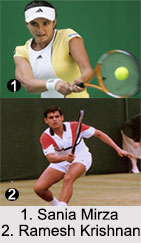
Lawn Tennis in India, Indian TennisIn the 1970s, Vijay Amritraj with his teammates Sashi Menon, Jasjit Singh and Anand Amritraj brothers took India to World Cup Finals for the second time in 1974. Moreover, Vijay also made it to the quarterfinals of US Open in 1973 and 198, Wimbledon in 1973 and 1974. The son of Ramanathan Krishnan, Ramesh Krishnan won the junior Wimbledon championship and junior French Open title in 1979 and was ranked number 1 junior in the world. He made it to the quarterfinals at Wimbledon (1986) as US Open twice. India won their first Grand Slam title at the French open in the Mixed Doubles in 1997. Although, none of the Indian player has won a Grand Slam Singles title in the Men's or Women's category so far.

Leander Paes won the Wimbledon Championship in 1999, 2003, 2008, 2009, 2010 and in 2015 in the category of Mixed Doubles. In the Mixed Doubles, Sania Mirza won the title of US Open in 2014, French Open in 2012 and Australian Open in 2009. Mahesh Bhupathi won the title of French Open and US Open in the category of Mixed Doubles. Leander Paes and Mahesh Bhupathi won the French Open and Wimbledon together. Sania Mirza won the Wimbledon in 2015 in Women's Doubles. Sumit Nagal won the Wimbledon in 2015 in Boys' Doubles.

For more, visit the link below:

Friday, 9 April 2021

Kabaddi in India, Indian Traditional Sport


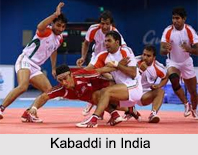
Kabaddi in India, Indian Traditional SportKabaddi in India is counted among the most common and widely played traditional sports. There is a popular belief that Kabaddi originated in the Indian state ofTamil Nadu, almost 4,000 years ago. According to a legend, this game came into existence, when a boy hit another boy for his candy. The boy who was hit chased the boy who hit him, and hit him back and ran away. The feature of holding the breath while chasing, was added later when the game evolved. Kabaddi is the game, where one person play against seven people. Kabaddi is also known as the "Game of the Masses" and it has simple, easy to comprehend rules.

The game of Kabaddi requires minimum equipment while having all the ingredients of thrill and excitement and audience appeal. Sometimes, the people enjoy the game of Kabaddi more than any other popular game, like Football or Basketball. This is a team game that requires both skill and power on behalf of the players, and it also combines the characteristics of wrestling and rugby.

Legends Attached to Kabaddi
In India, Kabaddi is quite famous and popular in the state of Punjab. There is also a popular belief that the game has its roots in the way Abhimanyu was killed in Chakravyuha by the Kauravas. Kabaddi is a rather simple and inexpensive game, and it does not require a massive playing area, or any expensive equipments. There are also some other ancient scripts that refers to the existence of Kabaddi in India. In Mahabharata, Arjuna had a unique talent in the game of Kabaddi, as he was able to go inside the wall of enemies, destroy them all and come back unscathed. According to the Buddhist literature, Gautam Buddha used to play Kabaddi for recreation in the early era. Apart from those manuscripts, history also reveals that princes of yore loved playing Kabaddi and took the game as a means to display their strength and won their brides. With due course of time, the game earned a lot of popularity in the Southern Part of Asia. For this inexpensive nature, the game of Kabaddi has become extremely popular in rural India.Kabaddi in India, Indian Traditional Sport

History of Kabaddi
Kabaddi is probably the only game of offence and defence in which attack is an individual attempt, while defence is a combined effort. The Tamil Language speaking people know the game in various names like Kabaddi, Sadugudu, Gudugudu, Palinjadugudu and Sadugoodatthi (Tamil). The word 'Kabaddi' may have originated from the Tamil words kai (hand) and pidi (catch).

Naming of Kabaddi
Kabaddi is also known as "Chedugudu" or "Hu-Tu-Tu" in southern parts of India, "Hadudu" (Men) and "Chu - Kit-Kit" (women) in eastern India, and as Kabaddi in northern India. The sport has earned a lot of popularity in the other Asian nations like Nepal, Bangladesh, Sri Lanka, Japan and Pakistan.

Kabaddi in Modern India
In modern times, Kabaddi in India attained National status in the year 1918. The state of Maharashtra is considered to be a pioneer for bringing the game to the National platform. The standard rules and regulations for Kabaddi were also formulated in 1918; however, the rules were brought out in print in the year 1923. An All India Tournament was also organized at Baroda following these rules, in 1923. Since then, the journey of Kabaddi in India has always been towards success and more popularity and numerous tournaments are now organized all over India throughout the year. The game got international exposure for the time during the 1936 Berlin Olympic Games. The game was also introduced in the Indian Olympic Games at Calcutta (now in Kolkata), in 1938. 

To know more, visit the link below:

Friday, 26 March 2021

Wrestling in India


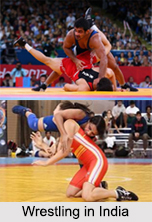
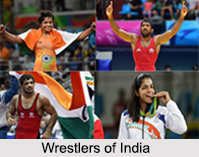
Wrestling in India, Indian Traditional SportWrestling in India is the most ancient sports whose past is enriched with glory. Wrestling in modern India is concentrated in the Indian states like Uttar Pradesh, Tamil Nadu, Punjab and Haryana. The game of wrestling is considered to be one of the most significant games in the Olympics and was included in 708 BC at the Olympics. Sakshi Malik, Sushil Kumar Solanki, Udey Chand, Satender Dagar, Gobar Guha, Jatindra Charan Goho, Ambika Charan Guha, Khashaba Dadasaheb Jadhav, Yogeshwar Dutt, Ghulam Muhammad, Dara Singh and Geeta Phogat are considered as the all time famous and popular wrestlers in India.

History of Wrestling in India
In India, wrestling is also known as ‘Malla-Yudhha’. Some forms of Malla-Yuddha were practiced in India even before the invasion of the Aryans. The famous Indian epic, Mahabharata has numerous references of the game of wrestling in the country. Bhima, an important character in Mahabharata is believed to be a great wrestler. Karna, Jarasandha and Duryodhana were the other great wrestlers mentioned in this epic. Ramayana has also asserted about the activity of wrestling and Hanuman has been described as a talented wrestler here.

Wrestling in India, during the ancient times, used to get regular patronage from the emperors and kings of the nation. During the British rule, wrestling in India got another big push, as the British rulers included the game into the military practise. Wrestling in India continued to increase its popularity till the modern days and India was considered among the top 10 countries in wrestling till the 1960s. India also hosted the World Wrestling Championship in New Delhi in 1967.

Wrestling in India, Indian Traditional SportTypes of Wrestling in India
Wrestling in India can be divided into two main categories like ‘Malla Krida’ and ‘Malla-Yuddha’. While Malla Krida is the sports form of the game, Malla-Yuddha is the battle version of wrestling. There are also some other forms of wrestling in India, out of which, the free-style varieties are more common than the other forms, since Vedic times. The free-style varieties of wrestling in India are known as ‘Pushti’ or ‘Kushti’. Wrestling in India can also be divided into four types like ‘Bhimaseni’, ‘Hanumanthi’, ‘Jambuvanthi’ and ‘Jarasandhi’, based on the technique and methodology.

Based on the methods of selecting the winner, wrestling in India can also be divided into another two categories like the ‘Orthia’ and the ‘Kato Pale’. In Orthia type, the wrestler has to throw the opponent on the ground for three times consecutively to win the match. The Kato Pale type of wrestling demands the wrestler to accept defeat by raising his right hand with the index finger pointed. However, the rules of wrestling in India vary according to the various regions of the country.

Wrestlers of India
Wrestling in India has witnessed the rising of several eminent wrestlers, so far. The legendary Indian wrestler, Karim Bux became the first wrestler to defeat Tom Canon of England in 1892. Another eminent Indian wrestler, Gobar Guha became the World Champion in Wrestling in San Francisco in 1922, by defeating the hook wrestler Ad Santel. The renowned Indian freestyle wrestler, Khashaba Dadasaheb Jadav won bronze medal in the 1952 Olympic Games. Another eminent Indian wrestler was Salwinder Singh Shinda, who won the Chandigarh Kesari Award, four times. Some of the other legendary wrestlers in India include Kikkar Singh, Gulam, Rajeev Tomar, and Arjuna Awardees in wrestling like Anuj Chaudhury and Malkit Singh Kanjli.

For more visit the link  given below:

Saturday, 17 October 2020

Badminton in India


Badminton in India, Indian AthleticsBadminton is extensively played throughout India, although it lacks the recognition of games such as cricket. Indeed, the modern version of the game has its origins in Pune, when British army officers introduced the net and devised the first rules of the game. Tournaments at various levels including the state, regional and national level are held in India and a few Indian practitioners of the sport have attained international acclaim. Badminton is popular in the Indian states like Kerala, Tamil Nadu, West Bengal, Andhra Pradesh, Telangana and Mumbai.

History of Badminton in India
Records suggest that the modern version of the game was perhaps invented first in Pune, in the state of Maharashtra. British Army officers stationed in Pune, India, introduced the net, and devised the rules of play; the officers introduced the new sport in Britain during the early 1870s, where it came to be named Badminton, after the Badminton House in Gloucestershire.

Once British Army officers mastered the game of Badminton in India, they introduced it to Britain. The game was definitively launched in the year 1873, when the Duke of Beaufort hosted it at a lawn party in his residence, Badminton House, whence the game derived its modern name.

Badminton in India, Indian AthleticsIn India, the sport of badminton began as a recreational activity in certain elite clubs. It acquired an organizational structure in India around the 1920s, and in a decade's time tournaments were held at both the national and regional level.

The game is now ubiquitous in India, and the country has produced several world renowned players like Prakash Padukone and Chetan Anand, to name a few.

Indian Badminton Players
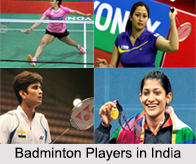
India has a strong badminton scene at the domestic level, which teems with young talents. These youngsters draw inspiration from legendary Indian badminton players like Prakash Padukone, Aparna Popat and Pullela Gopichand. Apart from these legends, India has also produced many top ranking players such as Saina Nehwal, Chetan Anand, Abhin Syam Gupta, Nikhil Kanetkar and Sachin Ratti.

For more click the link below:

Friday, 21 August 2020

History of Indian Cricket


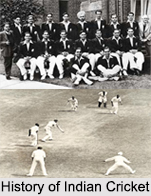
History of Indian Cricket reveals the fact that though the game was introduced by the British Government in India, its popularity kept on increasing with passing time. Cricket is now celebrated as a major sport in India. Cricket is considered to be a religion in India. There are no sure theories about the origin of Cricket in India but as British ruled on India for over 200 years, the game can be called as their legacy. The game took around four centuries to reach India. British brought this game to India in the 17th century. The first ever cricket match in India was played in 1721 AD. Initially accepted by the Parsi community, this game of foreigners began to appear in organized form with the establishment of the ‘Oriental Cricket Club’ in 1848.


India started playing Cricket way back in 1721 unofficially but was granted the official test status in 1932. They played their first test cricket match from 25th June to 28th June in the year 1932 against England at Lords' in London. India was lead by C.K. Nayuduat that time. India was considered a weak team in the Cricketing Circuit for long time but Indian team changed from 1950s and is a major force to reckon with today.

History of Indian CricketFirst Indian Cricket Club
The first Indian Cricket club, named the Parsee Oriental Cricket Club, was founded in that year and they played their first match in Bombay (Mumbai). From this point, the journey of Indian cricket began. This cricket club of Mumbai marked the beginning of interest of Indian people in cricket. The first official cricket match was played between Parsis and Europeans in 1877 AD. Till late 19th century people of this country did not open their hearts to the game.

Indian Cricket in 20th Century
After its initiation, Cricket started gaining popularity among the Indian people within a short period of time. The middle and last half of the 19th century was an important period in the history of Indian Cricket, as the game spread its reach in almost all the parts of India during that period.

The First Test Match was played in 1932. Though India did not have a national cricket team during the early 1900s, a few Indian great cricketers of that era did represent the England cricket team. Maharaja Ranjit Singh and Duleep Singhji were the prominent ones among them.

For more visit the page:

Saturday, 8 August 2020

Duleep Trophy, Indian Cricket


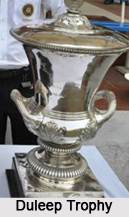
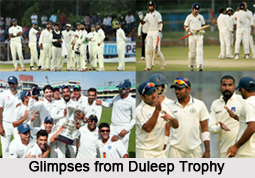
Duleep Trophy, Indian CricketDuleep Trophy is one of the top class domestic cricket tournaments in India that started its journey in the years of 1961-62 as zonal rather than a state first-class competition.

Naming of Duleep Trophy
Duleep Trophy competition is named after Kumar Shri Duleepsinhji of Nawanagar (also known as "Duleep").

History of Duleep Trophy
Duleep Trophy is a famous Cricket competition in domestic Cricket. The Board of Control for Cricket in India (BCCI) named the tournament after the legendary cricketer, KS Duleep Singh. According to the original format of the tournament, there were a number of five teams, drawn from the five zones - North Zone, South Zone, East Zone, West Zone and Central Zone. The teams played each other on a knockout basis and the BCCI decided to convert the tournament to a league format, from 1993-1994.

Format of Duleep Trophy
Board of Control for Cricket in India (BCCI) once again changed the format of the Duleep Trophy in the year of 2002-03 and replaced the zonal teams with five new sides named, Elite A, Elite B, Elite C, Plate A and Plate B.


Construction of the Teams in Duleep Trophy
The BCCI constructed the teams from the new Elite Group and Plate Group divisions that had been introduced into the Ranji Trophy in that season. However, this format lasted for only one season, as BCCI felt that the new teams lacked a sense of identity and as a result, it went into the old zonal format from 2003-04. The BCCI also started to invite one overseas guest side every year in the tournament, England A being the first one to come.


First Champion in Duleep Trophy
The West Zone has the credit of becoming the first Champion in the Duleep Trophy, in the 1961-62 seasons. The team beat the South Zone by 10 wickets in the final to win the trophy. Each of the zonal teams is actually a composite team of some cricketers, who play for the Ranji Trophy state/city teams situated in that region of India.

For more visit the page:

Saturday, 11 May 2019

Mumbai Indians

Mumbai-Indians-orissaPOST

Mumbai Indians is a Mumbai, based franchisee owned by the popular business tycoon of India, Nita Ambani. The title of this team is Duniya Hila Denge Hum. Mumbai Indians play their home games at the Wankhede Stadium .

 Mumbai Indians team is one of the eight founding members of the Indian Premier League in the 2008
rohit-1552989467.jpg

Rohit Sharma led the Mumbai Indians team in the year 2015. They are one of the main teams of the city, together with clubs like the Mumbai cricket team and football club Mumbai FC.

Reliance Industries Limited bought the rights for the Mumbai franchisee of the IPL for a total of 441 Cr during the auction on 24 January 2008. Previously MI team had played their game at the DY Patil Stadium.
full56407


Team Name and Logo of Mumbai Indians :The team logo has the Sudarshana Chakra with the team's name engraved in it. The official team colour for MI for 2008 and 2009 has been the same. The 2011 jersey  has three golden stripes going towards the back on the side of the jersey for the new players in the team.

Read more: Mumbai Indians

Wednesday, 30 November 2016

Davis Cup, Tennis Tournament in India


India competed in its first Davis Cup in 1921. But India lost the Davis Cup at first. India finished as runners-up 3 times in 1966, 1974, and 1987. In 1974, there was a final match played between India and South Africa. Know more about the history of this tournament here: http://www.indianetzone.com/9/davis_cup.htm