Showing posts with label historical. Show all posts

Monday, 26 August 2024

Folktales of Meghalaya


The northeastern state of Meghalaya in India is renowned for its rich cultural heritage, deeply rooted in oral traditions. Among the most significant aspects of this cultural legacy are the folktales passed down through generations. These narratives, often intertwined with the daily lives of the indigenous communities, not only serve as a means of entertainment but also play a crucial role in preserving the history, values, and beliefs of the people. This article delves into the historical and cultural significance of the folktales of Meghalaya.


Historical Significance

Folktales in Meghalaya have historically served as an essential vehicle for preserving the oral traditions of the state's indigenous tribes, particularly the Khasi, Garo, and Jaintia communities. Before the advent of written records, these stories were the primary means of passing down knowledge from one generation to the next. They encapsulated the wisdom, experiences, and historical events that shaped the community, ensuring that the younger generations remained connected to their roots. 

Reflection of Historical Events

Many folktales of Meghalaya also offer a glimpse into the region's past, reflecting historical events, migrations, and conflicts. For instance, stories of the Khasi Hills often recount the arrival of ancestors, the establishment of clans, and the battles fought to defend their land. These tales, while sometimes embellished with mythical elements, provide valuable insights into the historical landscape of Meghalaya and the experiences of its people. 

Cultural Significance

Folktales in Meghalaya are not merely stories; they are tools for imparting moral lessons and values. These narratives often revolve around themes of justice, bravery, loyalty, and respect for nature. Through the actions of characters, both human and supernatural, listeners are taught the importance of virtues such as honesty, humility, and compassion. In this way, folktales function as an informal educational system, guiding the community's ethical conduct. 

Preservation of Language and Dialects

The oral tradition of storytelling has also played a vital role in preserving the languages and dialects of Meghalaya's tribes. In a region with multiple languages, including Khasi, Garo, and Pnar, folktales have ensured that these languages remain vibrant and relevant. The use of indigenous languages in storytelling helps maintain linguistic diversity and allows for the continued transmission of cultural knowledge. 

Strengthening of Cultural Identity

Folktales contribute significantly to the cultural identity of the people of Meghalaya. By recounting tales of origin, mythical creatures, and supernatural occurrences, these stories reinforce a shared sense of belonging and continuity within the community. They serve as a link between the past and present, allowing individuals to connect with their heritage and understand their place within the broader cultural landscape. 

The folktales of Meghalaya are more than just stories; they are a vital part of the state's cultural and historical fabric. Through the preservation of oral traditions, the reflection of historical events, the transmission of moral values, and the strengthening of cultural identity, these narratives have played an indispensable role in shaping the community's collective consciousness. As modern influences continue to permeate traditional societies, the preservation and promotion of these folktales remain essential in ensuring that the rich cultural heritage of Meghalaya endures for future generations.

Saturday, 29 June 2024

Mythological Forests in India


India's rich tapestry of mythology and history is interwoven with the presence of sacred forests that have played significant roles in epic narratives and religious texts. These mythological forests are not only significant in ancient scriptures but also hold cultural and spiritual importance. Among the most notable are Dandakaranya, Kamyaka Forest, Dvaita Forest, Baikunthapur, and Naimisha Forest. 

Dandakaranya

Dandakaranya, often referred to as the Dandak Forest, is one of the most famous forests in Indian mythology. It is extensively mentioned in the Ramayana, where it served as the exile ground for Lord Rama, his wife Sita, and his brother Lakshmana. Located in the central part of India, Dandakaranya stretched over a vast region that included parts of present-day Chhattisgarh, Odisha, Telangana, and Andhra Pradesh. This forest was notorious for being infested with demons (Rakshasas), who frequently troubled the sages and ascetics living there. Lord Rama's journey through Dandakaranya was marked by several significant events, including the abduction of Sita by Ravana. 

Kamyaka Forest

Kamyaka Forest holds a significant place in the Mahabharata. This forest was the refuge for the Pandavas during their exile. Situated near the banks of the Sarasvati River, Kamyaka Forest provided a serene yet challenging environment for the Pandavas. It was in this forest that they encountered many sages and divine beings who offered them guidance and support. The Kamyaka Forest is also where the Pandavas received the Akshayapatra, a magical vessel that provided an endless supply of food, from the Sun god. 

Dvaita Forest

Another forest of great importance in the Mahabharata is the Dvaita Forest. Located near the banks of the Sarasvati River, like the Kamyaka Forest, the Dvaita Forest was a place where the Pandavas spent part of their exile. The forest is remembered for its tranquility and natural beauty. It served as a backdrop for many significant events and encounters, including meetings with various sages and gods. The Dvaita Forest also highlights the importance of nature and seclusion in spiritual growth and penance. 

Baikunthapur

Baikunthapur, while not as widely known as Dandakaranya or the forests mentioned in the Mahabharata, holds its own unique significance. Located in the northeastern region of India, in West Bengal, Baikunthapur is often associated with Lord Krishna and his divine play (Lila). This forest is believed to be a place of great spiritual energy and is visited by devotees seeking peace and enlightenment. The forest's association with Krishna adds to its mystique and importance in the cultural and religious landscape of India. 

Naimisha Forest

Naimisha Forest, also known as Naimisharanya, is one of the most revered forests in Hindu mythology. It is believed to be the site where many sages performed penances and held grand yagnas (sacrificial rituals). Located near the Gomti River in present-day Uttar Pradesh, Naimisha Forest is considered a sacred space where the Vedas were divided into four parts by Sage Vedavyasa. The forest is also mentioned in the Puranas and other ancient texts as a center of learning and spirituality. Pilgrims visit Naimisharanya to seek blessings and gain spiritual merit. 

The mythological forests of India, such as Dandakaranya, Kamyaka Forest, Dvaita Forest, Baikunthapur, and Naimisha Forest, are integral to the country's rich cultural and spiritual heritage. These forests are not just geographical locations but are imbued with stories of divine interactions, epic journeys, and profound spiritual significance. They continue to inspire devotion and reverence among people, reflecting the deep connection between nature and spirituality in Indian tradition.

Friday, 9 February 2024

Dogri Language


The Dogri language, with its rich history, unique script, and vibrant literature, stands as a testament to the cultural diversity of the Indian subcontinent. Tracing its origins back to the era of the great poet Amir Khusro, references to Dogri can be found in ancient Indian texts, indicating its longstanding presence in the region. The Greek astrologer Pulomi, accompanying Alexander the Great during his campaign into the Indian subcontinent in 323 B.C., made note of the brave Dogra families inhabiting the mountain ranges of Shivalik, further solidifying the language's historical roots. 

The evolution of Dogri literature witnessed significant milestones throughout the 20th century, marked by developments in prose, poetry, novels, plays, and short stories. Notably, on August 2, 1969, the General Council of the Sahitya Academy, Delhi, formally recognized Dogri as an "independent contemporary literary language" of India. This recognition underscored the growing significance and influence of Dogri literature within the broader Indian literary landscape. Subsequently, on December 22, 2003, Dogri attained national language status in India, a pivotal moment cementing its place in the country's linguistic heritage. 

Dogri literature boasts a diverse array of works, including poetry, fictional stories, and dramatic productions. Dr. Karan Singh, a prominent figure in Dogri literature, has made substantial contributions through novels, travelogues, and philosophical treatises. His efforts have not only enriched Dogri literature but have also served to popularize the language, including translating Dogri songs into English, thus broadening its accessibility and appeal. 

Originally written using the Dogri script, which bears close resemblance to the Takri script, the language now predominantly employs the Devanagari script in India and the Nasta'liq form of Perso-Arabic in Pakistan and Pakistani-administered Kashmir. Despite these variations in script, Dogri maintains its distinct grammar and vocabulary like all other languages in India. Influences from Persian and English are evident in Dogri vocabulary, while its roots can be traced back to Classical Sanskrit, the language of the Vedas. Additionally, Dogri incorporates various dialects of Punjabi and Western Pahari, further enriching its linguistic tapestry. 

The Dogri language stands as a testament to the rich cultural heritage of the Indian subcontinent. From its ancient origins to its recognition as a national language, Dogri has persevered and flourished, thanks to the contributions of its literary figures and the resilience of its speakers. As it continues to evolve and adapt, Dogri remains a vital component of India's linguistic mosaic, reflecting the diversity and complexity of its cultural landscape.

Monday, 21 August 2023

Ganashakti Newspaper in Bengal


The Ganashakti newspaper holds a significant place in the socio-political landscape of Bengal, serving as a prominent medium for disseminating information and shaping public opinion. Established in 1967, the newspaper has evolved over the decades to become a powerful voice that reflects the political aspirations and ideologies of the region.


Historical Background:

Ganashakti, meaning "People's Power," was founded by the Communist Party of India (Marxist) or CPI(M) in West Bengal. The party recognized the need for a platform to communicate its ideologies and promote the working-class perspective during a time of political turbulence. The newspaper's inception was a response to the prevailing socio-economic conditions and the political challenges of the period. 

Early Years and Growth:

In its early years, Ganashakti operated as a weekly publication, acting as a mouthpiece for the CPI(M) and championing the cause of the working class. The newspaper played a pivotal role in galvanizing public support for the party's initiatives and mobilizing the masses. Over time, the publication frequency increased, reflecting its growing popularity and influence. 

Political Significance:

Ganashakti has had a profound impact on the political narrative of Bengal. Its consistent advocacy for communist ideals, social justice, and pro-poor policies has contributed to shaping the ideological landscape of the state. The newspaper's coverage of workers' movements, land reforms, and agrarian struggles has consistently highlighted the concerns of marginalized sections of society, cementing its role as a representative of their interests. 

Role in Governance:

The newspaper has played a pivotal role in various elections, offering critical analysis and endorsements that have swayed voter opinions. Ganashakti's detailed coverage of political campaigns and its incisive commentary on policy matters have made it a key reference for voters seeking informed choices. Moreover, the newspaper's reporting has served as a watchdog, holding governments accountable for their actions and policies. Bengali Newspapers  

Evolution in the Digital Age:

With the advent of the digital age, Ganashakti adapted to new mediums, expanding its reach beyond print to online platforms. This transition enabled the newspaper to engage with a broader audience and maintain its relevance in an increasingly interconnected world. Its online presence has facilitated real-time dissemination of news, enabling readers to stay informed about local and global developments. 

The Ganashakti newspaper's journey from its inception in 1967 to its present status as a significant political and social commentator is a testament to its enduring impact. Its historical significance lies in its role as a platform for advocating working-class concerns and promoting communist ideals. While its association with the CPI(M) has drawn criticism, the newspaper remains a potent force in shaping public discourse and influencing the political landscape of Bengal. As it continues to evolve in the digital age, Ganashakti's legacy endures as a symbol of people's power and a mirror to the socio-political realities of the region.

Tuesday, 27 June 2023

Mughal Emperor Jahangir: A Reign of Opulence and Cultural Renaissance

 Mughal Emperor Jahangir, born in 1569, ascended the throne of the mighty Mughal Empire in 1605. His reign, spanning from 1605 to 1627, marked a period of opulence, artistic brilliance, and cultural renaissance in the annals of Indian history. Jahangir, whose birth name was Nur-ud-din Muhammad Salim, inherited a vast empire that was built by his father, Emperor Akbar the Great. However, it was under Jahangir's rule that the Mughal Empire reached its zenith in terms of prosperity and cultural achievements.


Jahangir was known for his love for the arts and his keen interest in the natural world. He was an avid patron of poets, painters, and musicians, fostering an environment that celebrated creativity and intellectual pursuits. The emperor himself was a talented poet and painter, and his court became a center for renowned artists and intellectuals from across the empire. Artists like Abu'l Hasan, Ustad Mansur, and Bishandas thrived under Jahangir's patronage, creating exquisite masterpieces that reflected the rich artistic traditions of the Mughals. Jahangir

One of the defining features of Jahangir's reign was his love for nature and his passion for collecting rare flora and fauna. He established extensive gardens and orchards, which were meticulously maintained and adorned with vibrant flowers and exotic plants. Jahangir's fascination with animals led to the creation of the famous "Tuzuk-i-Jahangiri," a memoir that chronicles his encounters with various species and provides valuable insights into the natural world of his time.

While Jahangir was known for his appreciation of the arts and nature, he also faced numerous challenges during his reign. The empire experienced territorial conflicts, particularly with the Rajput kingdoms, which posed threats to the stability of his rule. However, Jahangir displayed political acumen and diplomatic skills, successfully maintaining peace with many of his adversaries. His policy of religious tolerance also contributed to the stability of the empire, earning him the respect and loyalty of his subjects. Mughal Emperors

Jahangir's reign witnessed the consolidation of the Mughal Empire as a formidable force in South Asia. He expanded the empire's territories in Gujarat, Bengal, and parts of the Deccan, solidifying Mughal dominance over vast regions of the subcontinent. Jahangir's military campaigns were marked by strategic planning and efficient administration, ensuring the smooth administration of the empire and the prosperity of its people.

Another significant aspect of Jahangir's rule was the continuation and further development of the architectural marvels initiated by his father, Emperor Akbar. The famous Mughal monuments such as the Agra Fort and the Lahore Fort were augmented and embellished under Jahangir's guidance. His love for grandeur and architectural splendor can be witnessed in the construction of the famous Jahangir Mahal in Orchha, which stands as a testament to his aesthetic vision.

Jahangir's reign came to an end on October 28, 1627, when he passed away in Rajauri, Kashmir. His legacy, however, continues to endure through the artistic masterpieces and architectural wonders he left behind. Jahangir's patronage of the arts and his passion for nature played a significant role in shaping the cultural landscape of the Mughal Empire. His reign was a period of unparalleled opulence, intellectual ferment, and creative expression.

Mughal Emperor Jahangir, with his multifaceted personality and his contributions to the realms of art, culture, and administration, remains an iconic figure in Indian history. His reign stands as a golden age of prosperity and cultural achievement, leaving an indelible mark on the Mughal Empire and the subsequent generations. 

One of the remarkable legacies of Emperor Jahangir is his patronage of the renowned Mughal school of painting. During his reign, the Mughal miniature painting flourished, reaching new heights of artistic excellence. Jahangir's own passion for painting and his discerning eye for aesthetics greatly influenced the development of this art form. The Mughal miniatures of his time portrayed vivid scenes from courtly life, hunting expeditions, religious narratives, and exquisite portraits. These paintings were characterized by their meticulous attention to detail, vibrant colors, and delicate brushwork, creating a visual spectacle that captured the essence of the era. 

Jahangir's love for literature and poetry also contributed to the cultural renaissance of his empire. He patronized renowned poets and scholars, and his court became a center for literary gatherings and intellectual discourse. The emperor himself was a gifted poet, and his verses, collected in the "Tuzuk-i-Jahangiri," revealed his introspective nature, romantic inclinations, and philosophical musings. His poetic compositions, often infused with themes of love, nature, and spirituality, added a lyrical dimension to his reign. 

Furthermore, Jahangir's reign witnessed the flourishing of Indo-Islamic architecture, blending elements of Persian, Islamic, and Indian architectural styles. The Mughal architecture of his time showcased intricate designs, elegant domes, minarets, and ornate carvings. The most iconic example of this architectural brilliance is the world-famous mausoleum, the Tomb of Jahangir, located in Lahore, Pakistan. This grand structure, constructed under the emperor's supervision, serves as a testament to his love for grandeur and his enduring legacy as a patron of architectural splendor. 

In addition to his artistic and cultural endeavors, Jahangir's administrative policies and reforms played a pivotal role in maintaining the stability and prosperity of the Mughal Empire. He focused on efficient governance, promoting justice, and implementing policies that upheld the welfare of his subjects. Jahangir's reign saw advancements in trade, infrastructure, and the arts and sciences, creating an environment conducive to economic growth and intellectual pursuits. 

While Emperor Jahangir's reign was marked by prosperity and cultural achievements, it was not without its challenges. He faced rebellions from within his own court, as well as external threats from rival powers. However, his diplomatic skills and military strategies allowed him to navigate these challenges, ensuring the longevity of his rule and the continuity of the empire's growth. 

Mughal Emperor Jahangir's reign was a golden era that witnessed the convergence of art, culture, and administration. His passion for the arts, his patronage of renowned artists and intellectuals, and his love for nature left an indelible imprint on the Mughal Empire's cultural fabric. Jahangir's reign remains an emblem of opulence, intellectual ferment, and creative expression, standing as a testament to the enduring legacy of one of the greatest emperors in Indian history.


Tuesday, 9 November 2021

Jain Sculptures of India


Jain Sculptures of IndiaJain sculptures were primarily notable for their splendour. The brilliance of the Jain sculptures can be seen from the fine images of the Jain Tirthankaras. Columned chambers, inner sanctums, domes and pointed spires are the common elements of the Jain Temples architecture.

Figurines of Jain Art
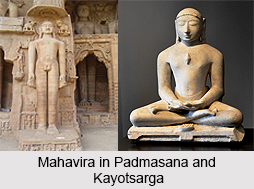
Jain sculptures are images of Jain Tirthankara. Jain sculptures are an example of Jain art. These figures, also known as "Tirthankaras" that are the principal focus of Jainism art. They are worshiped by followers of Jainism. The Tirthankara sculptures are mainly of Lord ParshvanathaRishabh Dev or Vardhaman. The highest ideal in Jainism is the wandering and passionless ascetic, which is why Jains are always depicted as mendicants or yogis. They are portrayed in only two positions: either seated in the lotus posture (Padmasana) or standing in the exclusively Jain body-abandonment posture (Kayotsarga).

In terms of style, ornament, subsidiary figures, Jain sculpture is indistinguishable from sculpture made for other Indian religious groups. Movements and innovations within the Jain religious communities are also depicted in sculpture, which proved influential to members of other religious traditions with which they regularly came in contact. Some features of Jain sculpture are Jain, unmistakable from imagery associated with other sects and they help one to identify the work as Jain in orientation. They include representations of the 24 Tirthankaras who are the liberated beings of Jainism. Narrative sequences that are found only in Jain devotional texts. Most common are scenes from the lives of the Tirthankaras especially Mahavira, Lord Parshwanatha or Rishavanatha.

Examples of Jain Sculptures
Giant rock-cut statues of Jain Tirthankaras are carved in the Gwalior FortGwalior and Madhya Pradesh. Charans are footprints exclusive to Jain temples. The charans of Tirthankara Rishabha are present at the Badrinath Temple. Many Jain sculptures are kept in Government MuseumChennai.

For more, check the link below:

Wednesday, 22 September 2021

Ramayana, Indian Epic


Ramayana, Indian EpicRamayana is one of the greatest Indian epics ever written and it forms an important part of Indian religious and literary history. Ramayana, even in the form in which it is read today, is still a fairly unified heroic poem. It is believed to have been written by a poet named Valmiki, and there is no doubt to believe that a poet of this name really lived and first shaped the ballads, which were scattered in the mouths of the bards, into the form of a unified poem. In fact, Valmiki is often said to be the first 'Kavi' or author of ornate poetry, Adikavi, and Ramayana is said to be the first ornate poem.

Origin of Ramayana
The great epic of Ramayana is traditionally attributed to Valmiki, who is considered to be the first poet of India. The Indian tradition believes that the great epic has been written by a single poet, the great sage Valmiki, who was also a contemporary of Lord Rama and also a marginal actor in the great epic. The original version of the story in Sanskrit language is called the Valmiki Ramayana, which dates back to the 4th century B.C. As per the Hindu tradition, the Ramayana was considered to have taken place during the period known as Treta Yuga. The beginnings of ornate epic poetry do indeed lead back to the Ramayana, and Valmiki has always remained the pattern to which all later Indian poets admiringly aspired.

Composition of Ramayana
In the composition of the Ramayana, as in all Kavyas, greater importance is attached to the form than to the matter and contents of the poem, and that so-called 'alankaras', i.e. embellishments such as similes, poetic figures, puns, and so on, are used largely, even to excess. Similes are heaped on similes, and descriptions, especially of nature, are spun out interminably with ever new metaphors and comparisons. Ramayana appears as a work that is a popular epic and ornate poetry at the same time.Ramayana, Indian Epic

Story of Ramayana
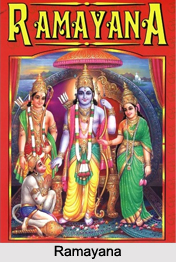
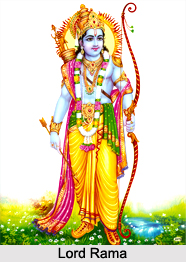
Ramayana presents the story of Lord Rama, who is also the main character in this epic. This great epic comprises of 24000 couplets in seven books which give an account of the royal birth of Rama and his other three brothers, the loss of his throne and his victory over evil. Dasaratha was Rama's father and was the king of Ayodhya. He had three queens named KaikeyiKaushalya and SumitraBharata was the second son of Dasaratha and Queen Kaikeyi. As a result of the jealously of Kaikeyi, Rama went into exile for fourteen years. Rama was accompanied voluntarily into the forest by his wife Sita and his brother Lakshmana. Lakshmana protected and served Rama and Sita in the forest. However, during their exile, Ravana abducted Sita with the help of an evil plot. Lord Hanuman also plays an important role in this epic by finding Sita and helping Rama to fight the battle against Ravana. The great monkey Sugriva and his alliance with Rama were also fruitful as he regained his wife and his kingdom and he in turn helped Rama in finding out Sita and employed his army of monkeys to fight for Rama against Ravana. After defeating Ravana, the victorious Rama returned to Ayodhya with his wife and was coronated as the new monarch. However owing to the long captivity of Sita the people of the kingdom could not accept her and she was forced to undergo an ordeal of fire, Agnipariksha, to prove her chastity. Even after Sita succeeds in proving her chastity through Agnipariksha, she remains as the subject of suspicion due to which Rama reluctantly abandons her while she was pregnant. Sita takes refuge in Valmiki's Ashram where she gives birth to twins Lava and Kusha. After the twin grows up and reunites with their father, Sita seeks refuge in the arms of her mother, the Earth, and frees herself from the unjust world.

For more, visit the link below:

Monday, 9 August 2021

Indian Scripts


Indian ScriptsIndian scripts have existed and made their presence felt since ancient and unaccountable times, times when the country was not unwrapped from its fold of dogmatism. During this Dark Age, the society and world order in India was consciously divided into the higher and lower strata of living, which was additionally sub-divided into religious sequestering and the realisation of caste system. As is almost evident from such sensitive information, India was wholly dominated by Hindus, with Hinduism being espoused by nearly the greater section of society and class. Hinduism was, in its nascent period, ruled by sadhus, sages and saints, zealously dedicated to making their religion a wide-spreading one. The system of religious reverence was primarily concentrated on Agni (Fire) or Jal (Water), the elemental aspects in life, which were at first delivered in the system of guru-shishya (teacher-student), through word of mouth. This tradition however metamorphosed into a comparatively better one, when oral preaching was replaced by written scripts. Indian scripts in ancient ages pertain to those writings, which have been devoted to prose or poetry pieces in honour of the Almighty and His umpteen dealings with the universe.

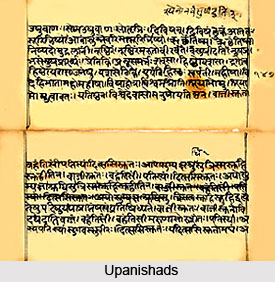
With passage of time, Medieval or Middle Age took the place of Dark Age, which witnessed a much more overpowering influence of scripts in India, which can be illustrated by scriptures like the four Vedas, Upanishads, Mantras, Sutras and Brahmanas. The Mahabharata, Bhagavad Gita and Ramayana can be some of the illustrations of Indian scripts from this epoch. Evolution of Indian scripts is a wondrous and breathtaking gradual development of Indian language and the art of man mastering it. Increased learning, the supplementary eagerness towards education and understanding and sophistication in prose and verse structure with advent of Sanskrit, made the genre of scrip-writing in ancient India rather popular.

Indus Valley Civilisation and the prolonged rulings of Hindu dynasties had bettered Indian populace in every sphere of daily life, with special accentuation on education and art of war. Each meticulous attempts made, each attempt towards improvisation of their subjects, each attempts at admiration of literary writings were indeed triumphant. Various Indian scripts had in fact germinated and matured during these ages, with dynasties like Mauryans, Guptas taking centre-stage. The Indus scriptBrahmi scriptKharosthi scriptGupta scriptSiddham script and Nagari scripthad gained pan-Indian acceptance, with practically endless store-house of information and knowledge. Scripts of South India had also incidentally matured during this period, committed absolutely to Dravidian style of language, a significant hand of Indian languages.

Friday, 23 July 2021

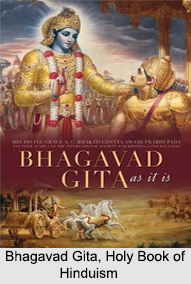
Bhagavad Gita


Bhagavad GitaBhagavad Gita, or the Lord's Song, is the greatest legendary text of the Hindus. It is in fact the holy book of Hinduism. Though it is the sacred book of the Bhagavatas, a Vaishnavite sect, it is a book of devotion and edification for every Hindu; to whatever sect he may belong. The Bhagavad Gita is also considered as one of the most substantial Sanskrit scriptural texts and religious classic over the world. The Gita constitutes a part of the Mahabharata and is treasured especially by the followers of Lord Krishna and is largely taken from the Bhishma Parva of the Mahabharata epic. There are many Hindus today who know the whole poem from memory. Countless are the manuscripts of it which have been preserved. And since it was printed for the first time in the year 1809 in Kolkata hardly a year elapses without a new reprint of the work appearing in India. Countless also are the translations into modern Indian languages.

Background of Bhagavad Gita
The poem is to be found at the beginning of Book VI, where the descriptions of the great fight commence. All preparations for the battle have been made. The two armies confront each other ready for the fray. Then Arjuna lets his war-chariot halt between the two armies and surveys the hosts of the Kauravas and Pandavas armed for the fight. And as he sees on both sides "fathers and grandfathers, teachers, uncles and brothers, sons and grandsons, friends, fathers-in-law and companions," he is overcome by a feeling of deepest pity. Horror seizes him at the thought that he is to fight against relatives and friends; it appears to him sin and madness to intend to murder those for whose very sake one otherwise goes to war. When Krishna reproaches him with weakness and soft-heartedness Arjuna declares that he is quite at a loss, that he does not know whether it is better to be victorious or to be defeated, and finally he implores Krishna to instruct him as to what he should really do in this conflict of duties. Thereupon Krishna answers him with a detailed philosophical discourse, whose immediate purpose is to convince Arjuna that it is his duty as a warrior to fight, whatever the consequences may be.

Composition of Bhagavad Gita
The date of composition of the text of Bhagavad Gita is not known with certainty, but it is believed to have been written around 150 B.C. The Gita contains 700 verses in 18 chapters. Krishna, the speaker of Bhagavad Gita, is looked upon as the Almighty, the Supreme Being himself. The Gita is penned down in the form of a dialogue between Krishna and Arjuna, taking place on the battlefield of Kurukshetra, just prior to the start of a climatic war.

For more. visit the link below:

Wednesday, 21 July 2021

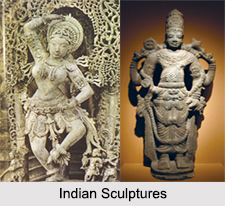
Indian Sculptures


Indian SculpturesIndian Sculpture was the favoured medium of artistic expression on the Indian subcontinent. Indian buildings were profusely adorned with it and indeed are often inseparable from it. Indian Sculptures and its associated zone lay bare the fact that sculpture is essentially a public art. It is indeed amazing how even day to day affairs have been portrayed with the help of sculptures in India from political economy to the cultural hedonism the plethora is immense and extensive. Mankind have had used sculpture as the basic means of artistic expression. The art of sculpture requires the sculptors to breathe life to the cold and lifeless stones and rocks. The Indian artisans have been successfully rendering life to these listless blocks.

History of Indian Sculptures
History of Indian sculpture dates back to the Indus Valley Civilization of 2500 to 1800 BCE, during which time small terracotta figurines were produced. While stone, metal, ceramics and wood have taken a back seat; the sculpture zone has been swept off by the horizons of light and sound. Environmental art and sculpture has hogged the limelight and the contemporary age has manifested the nuances of the same. There was a constant influence of foreign art and culture that enriched Indian sculpture and architecture. The grandeur that the Islamic art brought to India has been embossed in marbles and red sandstones. When the British reigned over India, the sculptures were of the European Gothic style. A wide range of styles and traditions subsequently flourished in different parts of India over the succeeding centuries. Indian sculpture had reached a form that has lasted with little change up to the present day.

Types of Indian Sculptures
The various types of Indian Sculptures depeIndian Sculpturesnd on the materials of which the sculptures have been composed. They are as follows:

  • Wooden Sculptures - Wooden Sculptures are made almost all over India. The southern states of KarnatakaKerala and Tamil Nadu have an exceptionally grand tradition of wood sculpting.
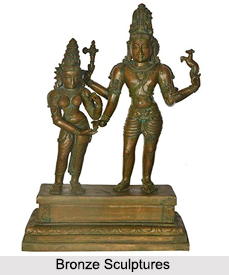
  • Bronze Sculptures - Bronze Sculptures have been discovered from many regions of India. These were used for ritual worship and are characterised by exquisite beauty and aesthetic appeal.
  • Marble Sculptures - Marble has been one of the most popular choices of material for crafting statues since ancient times. Marble sculptures are sturdy, durable, elegant and classy.
  • Stone Sculptures - The classical tradition of Stone Sculptures in India was closely linked with architecture. All major temples of India illustrate the rich tradition of Stone Sculptures.
  • Sand Sculptures - Sand Sculptures are popular among the booming tourist industry in Puri. The sculptures are created solely with sand, water and a small amount of glue.

  • For more, visit the link below:

    Wednesday, 2 June 2021

    Yantra, Astrology


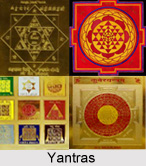
    Yantra, AstrologyYantra is a mystical diagram that possesses control over cosmic forces. It can be called as the divine storehouse of energy, which picks up cosmic rays emitted by the planets and transforms them into constructive vibrations. These energy impressions are then transmitted to the surroundings where Yantra is placed, thus destroying all the destructive forces within the vicinity. Vedic Yantras are geometrical figures intended to represent the basic energies. Right from a simple dot (bindu) to complex geometrical figure, each is symbolic of some form of energy.

    Yantra is derived from the word Yama. It destroys all the malefic effects of planets, regulates the energy and converts them in a positive power. It is an interlocking matrix of geometric figures, circles, triangles and floral patterns that form fractal patterns of elegance and beauty. The person under the influence of Yantra, slowly and steadily benefits by being at the receiving end of all the affirmative vibes of this cosmic conductor of infinite energy.

    Features of Yantras
    Yantra, AstrologyYantras can be drawn, engraved or painted on a variety of substances. The classical eight tantric surfaces are gold, silver, copper, crystal, birch, bone, hide (which can include any type of paper) and Vishnu stone (Shalagrama). There are two types of Yantras: Bhu and Meru. Bhu yantras are two-dimensional depiction of figures, whereas the Meru yantras are three-dimensional carvings of geometry. There is a specific designated place where a particular Yantra is seated for its full effect. Before establishing a Yantra, it is necessary to energize them by doing 'Pranaprathishtha'.

    Types of Yantras in Hindu philosophy
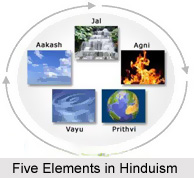
    Different Yantras are created to give different types of cosmic boons to individual problem. It can range from increasing the sexual powers, to gain harmony in business and wealth or to gain sidhi through meditation. Yantras help the individual with whatever ambition has to be accomplished. Basic elements considered in Hindu philosophy are Earth, Fire, Water, Air and Ether (Aakash). Depictions of all these forces are imbibed in the sophisticated and unbelievingly accurate mathematical construction of Yantras. Although these talismans were invented thousands of years ago, the highly developed mathematical and architectural concepts are still an object of awe and wonder for most researchers. For earth element rectangular Yantras are made, whereas for water element, circular shapes are assigned to get merits of that particular form of energy. Triangles are used for fire element. Complex shapes take in all these forces to generate an explicit force. Different elements have different objectives. Earth element passes on ambition, stability, comforts and material success. Water element imparts depth, wisdom, affection, love and emotional stability. Air element imparts intelligence, power of speech and removes hurdles. Fire element helps in gaining success, respect and in averting troubles. Aakash / Ether element helps in spiritual enlightenment, overall success and knowledge.

    To learn more about different yantras and their benefits, click the link below: