Showing posts with label mahabharat. Show all posts

Thursday, 11 July 2024

Forests in Ancient India


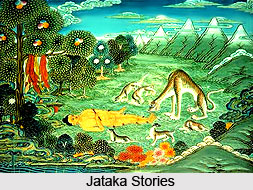
Forests have always played a significant role in the cultural, spiritual, and economic life of ancient India. These verdant expanses are frequently depicted in various mythological texts, most notably the Ramayana and the Mahabharata. These epic narratives not only provide a glimpse into the historical and religious significance of forests in ancient India but also highlight their importance in the daily lives of the people during those times. 

Forests in the Ramayana

The Ramayana, composed by the sage Valmiki, extensively references forests. One of the most significant forests in this epic is the Dandaka Forest. This forest serves as the setting for a considerable portion of the story, particularly during Rama's exile. The Dandaka Forest is depicted as a place of both beauty and danger, home to ascetics, sages, and various creatures, including demons (Rakshasas). It is within this forest that Rama, along with his wife Sita and brother Lakshmana, spends a significant part of their 14-year exile. 

The Panchavati forest, another crucial location in the Ramayana, is where the infamous abduction of Sita by Ravana occurs. This event sets off a chain of events leading to the eventual battle in Lanka. The forests in the Ramayana are portrayed as places of refuge, spiritual practice, and significant trials, reflecting their multifaceted role in ancient Indian life. 

Forests in the Mahabharata

The Mahabharata, attributed to Vyasa, also highlights the importance of forests. One notable forest in this epic is the Kamyaka Forest, where the Pandavas spend part of their exile. This forest is depicted as a place of solace and reflection, where the Pandavas engage in discussions about dharma (duty) and strategy. 

Another significant forest in the Mahabharata is the Khandava Forest, which is associated with the legendary figures Krishna and Arjuna. The burning of the Khandava Forest is a crucial event in the epic, symbolizing the transformation and renewal associated with forest landscapes. This act, though destructive, leads to the emergence of new life and serves as a metaphor for change and regeneration. 

Symbolism and Significance

Forests in ancient Indian mythologies are not merely physical spaces but are imbued with deep symbolic meaning. They often represent the wilderness and the unknown, contrasting with the ordered life of the towns and villages. Forests are depicted as places of penance and spiritual growth, where sages and ascetics retreat to meditate and seek enlightenment.

In both the Ramayana and the Mahabharata, forests serve as settings for critical events that shape the narratives. They are places of exile, reflection, and transformation, highlighting their importance in the moral and ethical framework of these stories. The depiction of forests in these epics underscores their role as sacred spaces that facilitate both physical and spiritual journeys. 

Forests in ancient Indian mythology, as depicted in the Ramayana and the Mahabharata, hold profound significance. They are portrayed as places of beauty, danger, refuge, and transformation. These narratives highlight the integral role that forests played in the cultural and spiritual life of ancient India. By examining these epic stories, one gains a deeper understanding of the reverence and importance attributed to forests in ancient Indian society. The forests, with their multifaceted roles, continue to be a testament to the rich cultural and spiritual heritage of India.

Wednesday, 6 September 2023

Arjuna in Mahabharata: A Journey of Skill


Arjuna's life in the Mahabharata is a journey of skill and transformation. From his early training in archery under Drona to his quest for spiritual knowledge during exile, and finally, his triumph on the battlefield of Kurukshetra, Arjuna's character evolves significantly throughout the epic. His story serves as a timeless example of how an individual can navigate life's challenges, uphold righteousness, and ultimately fulfill their destiny. Arjuna's legacy endures not only in the pages of the Mahabharata but also in the hearts and minds of those who continue to draw inspiration from his life and teachings.


Arjuna's journey begins with his birth in the royal Kuru family. Born to Queen Kunti and King Pandu, he is not only a prince but also destined to play a pivotal role in the events that will later unfold in the Mahabharata. His early life is marked by training in various aspects of warfare under the guidance of his teacher, Drona. 

Under Drona's tutelage, Arjuna hones his archery skills, eventually earning the title of "Arjuna," which means "bright" or "shining." His unwavering commitment to mastering the art of archery sets the stage for his future exploits on the battlefield. This phase of his life is crucial as it lays the foundation for his role in the Kurukshetra War. 

The Pandava's Exile 

The Mahabharata takes a dramatic turn when Yudhishthira, the eldest Pandava, loses the kingdom and their wealth in a game of dice. This unfortunate turn of events forces the Pandavas, including Arjuna, into exile for thirteen years. During this time, Arjuna's life undergoes a transformation that extends beyond physical prowess. 

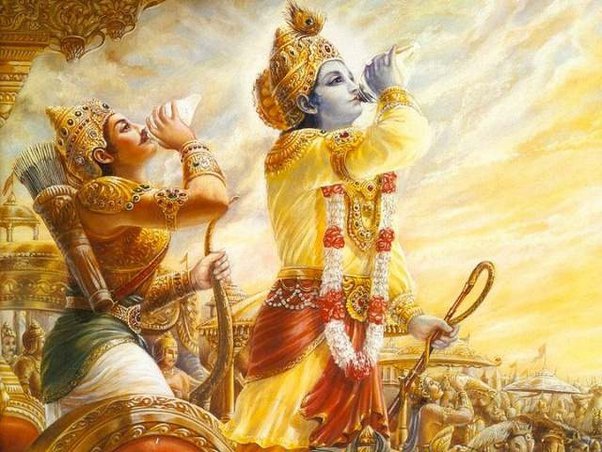
Arjuna embarks on a spiritual quest, seeking knowledge and guidance from great sages and divinities. One of the most pivotal moments in his life occurs when he encounters Lord Krishna, who becomes his charioteer and spiritual mentor. The Bhagavad Gita, a sacred text within the Mahabharata, is a profound conversation between Arjuna and Lord Krishna on the battlefield. It addresses the moral dilemmas Arjuna faces and imparts timeless wisdom on duty, righteousness, and spirituality. Mahabharata 

This phase of Arjuna's life highlights his evolution from a skilled warrior to a spiritually awakened individual who understands the complexities of life and his responsibilities. 

The Kurukshetra War 

The climax of Arjuna's journey in the Mahabharata unfolds during the Kurukshetra War. This epic conflict, born out of a longstanding feud between the Pandavas and the Kauravas, sees Arjuna at the forefront of the battlefield. 

As the commander of the Pandava army, Arjuna faces not only the physical challenges of warfare but also the emotional and moral dilemmas that arise from fighting against his own kin. The Bhagavad Gita, which takes place on the battlefield just before the war commences, reveals Arjuna's inner turmoil and Lord Krishna's guidance, ultimately leading Arjuna to overcome his doubts and fulfill his duty as a warrior. 

Arjuna's exceptional archery skills and unwavering commitment to righteousness play a pivotal role in the Pandavas' victory in the war. His virtuous conduct on the battlefield earns him a place of honor and respect in the annals of Indian mythology.

Kauravas were descendants of Kuru and the hundred sons of king Dhritarastra who opposed Pandavas. The Kauravas represent the material or evil forces who drove the Pandavas from their territory. 


Wednesday, 26 July 2023

Draupadi: The Enigmatic Heroine of Mahabharata


In the vast tapestry of the Mahabharata, one character shines brightly as a symbol of courage, resilience, and feminine strength - Draupadi. Her journey before, during, and after the Kurukshetra War showcases her exceptional character, unwavering devotion, and the complexities of her role as the shared wife of the Pandavas.


Before the Kurukshetra War:

Draupadi's life began in extraordinary circumstances, emerging from a sacrificial fire as the daughter of King Drupada of Panchala. Destiny had grand plans for her, and she was destined to play a pivotal role in the events that would unfold. Draupadi's marriage to the Pandavas was a unique and unconventional practice of polyandry, arising from the misunderstanding of a divine command by their mother, Kunti. Despite this, Draupadi embraced her unusual marital situation with grace, love, and an equal affection for all five Pandava brothers. Draupadi 

The infamous episode of the gambling match, where the Pandavas lost their kingdom and were forced into exile, thrust Draupadi into the center of a brewing storm. The Kauravas attempted to disrobe her publicly in the royal court, leading to a distressing and humiliating ordeal. In this darkest moment, Draupadi's faith in Lord Krishna and her unshakable courage shone through, as she called upon him for help. Through divine intervention, her dignity was preserved, and the attempt to dishonor her was thwarted. 

During the Kurukshetra War:

The Kurukshetra War became the ultimate test of Draupadi's strength and fortitude. As the conflict intensified, she transformed into a powerful and assertive figure, supporting the Pandavas and championing the cause of righteousness. Draupadi's presence on the battlefield acted as a moral compass, inspiring the warriors on the side of dharma. 

In the war, Draupadi's interactions with various characters were particularly significant. Her encounter with Karna, whom she had rejected during the Swayamvara due to his low birth, displayed her compassionate nature when she urged him to pause in battle to remove a splinter from his foot. This moment showcased Draupadi's capacity for forgiveness and kindness, even towards her perceived enemies. Pandavas  

The war, however, also brought moments of heartache for Draupadi. The tragic loss of their children during the war deeply wounded her, and her lamentations reverberated across the battlefield, reflecting the pain of a mother's love and the cost of war. 

After the Kurukshetra War:

Even after the war, Draupadi's trials were not over. Accompanying her husbands to the Himalayas, they prepared for their journey to heaven. Draupadi's unyielding loyalty and dedication to her family were evident in this final phase of the epic. 

The complexities of Draupadi's position as the shared wife of the Pandavas were evident throughout her journey. Her relationship with her co-wives, particularly with Duryodhana's wife Bhanumati, showcased the delicate balance she maintained as a part of the intricate familial dynamic. 

Draupadi's character remains an enigmatic and timeless figure in the Mahabharata, inspiring generations with her unwavering devotion, inner strength, and resilience. Her journey before, during, and after the Kurukshetra War serves as a reminder of the power of feminine virtue, compassion, and the unwavering pursuit of righteousness. 

Draupadi's portrayal in the Mahabharata stands as a testament to the depths of human emotion and the complexities of human relationships. Her unwavering support for her husbands, her courage in the face of adversity, and her capacity for forgiveness make her a heroine worth emulating. Draupadi's story continues to captivate hearts, leaving an indelible mark on the annals of ancient Indian epic literature and resonating with readers across cultures and generations.

Friday, 23 July 2021

Bhagavad Gita


Bhagavad GitaBhagavad Gita, or the Lord's Song, is the greatest legendary text of the Hindus. It is in fact the holy book of Hinduism. Though it is the sacred book of the Bhagavatas, a Vaishnavite sect, it is a book of devotion and edification for every Hindu; to whatever sect he may belong. The Bhagavad Gita is also considered as one of the most substantial Sanskrit scriptural texts and religious classic over the world. The Gita constitutes a part of the Mahabharata and is treasured especially by the followers of Lord Krishna and is largely taken from the Bhishma Parva of the Mahabharata epic. There are many Hindus today who know the whole poem from memory. Countless are the manuscripts of it which have been preserved. And since it was printed for the first time in the year 1809 in Kolkata hardly a year elapses without a new reprint of the work appearing in India. Countless also are the translations into modern Indian languages.

Background of Bhagavad Gita
The poem is to be found at the beginning of Book VI, where the descriptions of the great fight commence. All preparations for the battle have been made. The two armies confront each other ready for the fray. Then Arjuna lets his war-chariot halt between the two armies and surveys the hosts of the Kauravas and Pandavas armed for the fight. And as he sees on both sides "fathers and grandfathers, teachers, uncles and brothers, sons and grandsons, friends, fathers-in-law and companions," he is overcome by a feeling of deepest pity. Horror seizes him at the thought that he is to fight against relatives and friends; it appears to him sin and madness to intend to murder those for whose very sake one otherwise goes to war. When Krishna reproaches him with weakness and soft-heartedness Arjuna declares that he is quite at a loss, that he does not know whether it is better to be victorious or to be defeated, and finally he implores Krishna to instruct him as to what he should really do in this conflict of duties. Thereupon Krishna answers him with a detailed philosophical discourse, whose immediate purpose is to convince Arjuna that it is his duty as a warrior to fight, whatever the consequences may be.

Composition of Bhagavad Gita
The date of composition of the text of Bhagavad Gita is not known with certainty, but it is believed to have been written around 150 B.C. The Gita contains 700 verses in 18 chapters. Krishna, the speaker of Bhagavad Gita, is looked upon as the Almighty, the Supreme Being himself. The Gita is penned down in the form of a dialogue between Krishna and Arjuna, taking place on the battlefield of Kurukshetra, just prior to the start of a climatic war.

For more. visit the link below:

Monday, 15 February 2021

Indian Mythology


Indian MythologyIndian Mythology encompasses a wide field of myths and legends concerning Indian religion. India is a country of diverse religious practices and socio-cultural habits which incorporates a saga of a nation with a vivid religious background. Indian Mythology takes into consideration all those myths related to HinduBuddhistJain and some other scriptures. Indian Mythology is among the richest elements of Indian cultureVedas in India are important in shaping not only the culture but also the mythology of India. Through generations either by word of mouth or carefully stored scriptures, stories of Indian Mythology have been passed down. Indian Mythology is inseparable from Indian religion; the myths are religious accounts of Gods and Goddesses for many millions of people. The oral transmission of the stories could be trusted due to the strong religious aspects.

Indian Mythology in Indian Epic Poetry
Indian epic poetry is a rich reserve of epic poetry written in India and the deep seated inter relation of Indian epic poetry with Indian mythology cannot be denied. Indian mythology cannot be accounted without Hindi epic poetries. Memorable among them is Tulsidas’s ‘Ramcharitamanas’ based on Ramayana.

Indian MythologyVedic Mythology
Indian Mythology is incomplete without the mention of Vedic mythology. The Vedic tradition refers to the Vedic rituals, religious concepts that were essential in the development and evolution of Hinduism. The Vedic culture was constructed on the ruins of the Indus Valley Civilization. Indian mythology accounts for the existence of four Vedas namely Rig VedaYajur VedaSama Veda and Atharva Veda. Vedic mythology germinated from the Vedas, also known as Vedam, which are again a component of the Hindu Shruti. VayuVarunaIndraSuryaAgniYamaKuberaSomaMitraKama, Gayatri, AditiUshasSaraswati and Rudra are the Vedic Gods.

Indian Mythology in Different Religions
Indian Mythology comprises a whole lot of myths and legends associated with different religions. They are discussed below:

Indian MythologyHindu Mythology
Hindu Mythology has its origins in the Vedas and they date back to the era around 7200 BC. Hindu Mythology refers to the Indian literature which is replete with deities, divine incarnations, legends with a huge lot of philosophical discourses and moral and ethical connotations. Divine incarnation is another feature of Hindu mythology.

Religious cosmology also forms a part of the Hindu mythology, these are the ways in which evolution of the universe and its history is explained. Hindu mythology has the concept of fourteen worlds (not planets) – seven higher worlds (heavens) and seven lower ones (hells). Different deities play their part in ruling these worlds.


In Hindu cosmology, the concept of "Lokas" holds a significant place, representing various planes of existence that comprise the vast and intricate structure of the universe. These Lokas, also referred to as worlds or realms, are believed to exist on different levels of reality, each with its own distinctive attributes and inhabitants. Understanding the framework of these Lokas provides a glimpse into the intricacies of Hindu cosmology and the spiritual dimensions it encompasses.


Tuesday, 12 November 2019

Draupadi


draupaddi

Draupadi was the daughter of King Drupada in the epic Mahabharata. She was also known as Panchali, as Drupada was the ruler of the kingdom of Panchala.

Drupada had prayed for a son, but Draupadi emerged as well. Draupadi grew to be a young woman she was considered very beautiful, mainly for her glowing dark skin, large dark eyes and graceful figure. Due to her dark skin, she was also called by the name 'Krishna'. She seemed to have been blessed with powers from Goddess Kali for the purpose of destruction of Kauravas of Mahabharata.

main-qimg-6d9e3ef886b603f3dcbccb1857c10c52.jpg
Draupadi's devotion to Lord Krishna
Draupadi is regarded as Shakti (Goddess Kali) incarnate who was the sister of Vishnu. This makes Lord Krishna (an avtaar of Lord Vishnu) Draupadi's brother.

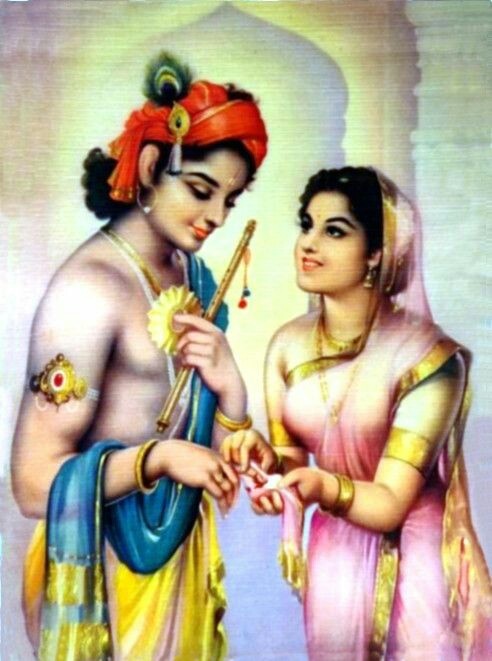
The incident wherein, Krishna cut his finger through his Sudarshan Chakra and Draupadi bound it with her sari was the origin of 'Rakhi' concept

images.jpg
Draupadi's Marriage to Pandavas
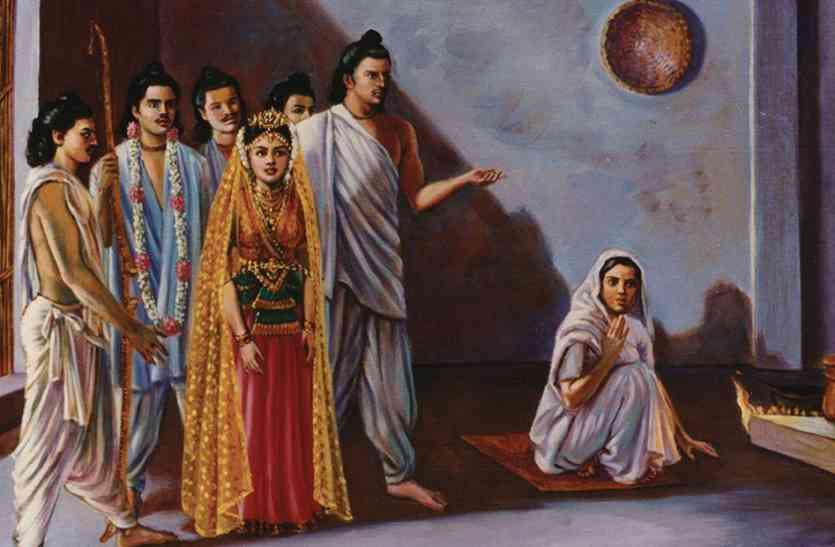
The contest was that there would be a target. The target was a bird which is placed on a revolving disc. It should be struck by an arrow only by looking at its reflection in the water below. A huge bow was kept for that purpose. Most kings failed to even string the bow. Only Arjuna was successful in hitting the target and won Draupadi's hand in marriage.


pandav_2104886_835x547-mDuring the period of exile Kunti had taught the Pandavas to share everything among them. When Arjuna came to Kunti and said that he has won a prize, Kunti without giving it a look told Arjuna to share him among all the brothers. Thus respecting his mother's words, all the brothers accepted Draupadi as their wife.

draupadi_sari-1kdCheer-Haran of Draupadi
Draupadi's Cheer-Haran was one of the central reasons for the Kurukshetra battle. The term literally means stripping one from their clothes.
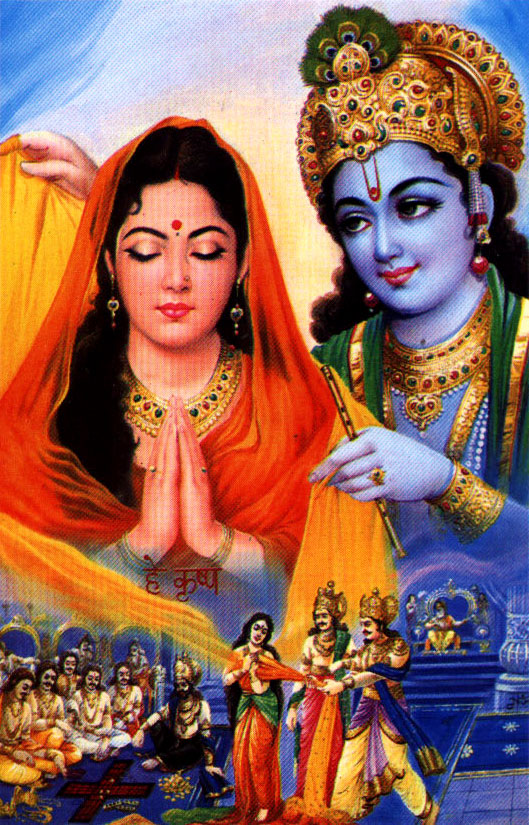
At a time of Cheer Haran of Draupadi.  Draupadi pleaded to everyone present in the courtroom to save her modesty. But no one came forward to help her. Frantically she called out Krishna's name who worked a miracle so that as Dushasana unwraps layers and layers of her sari, her sari keeps getting extended. Tired, Dushasana gave up the idea of stripping Draupadi.

Read more : Draupadi

Monday, 27 May 2019

Ancient Fort In Himachal Pradesh, India

1200px-Attock_Fort_-_Optographer.jpg
Forts in Himachal Pradesh portray the historical significance of this part of the country, and its royal heritage. Such forts have been witnessed several ancient episodes, invasions and regimes of different dynasties and conquerors. Though some of these forts have been destroyed and are in ruins, most of the forts have retained their glory and grandeur. Arki Fort, Kangra Fort, Nauni Fort and Kahlur Fort are the various forts which are existent here. Historians and tourists make a beeline for these monuments, mainly for their architectural charm.
arki-fort2-1.jpg
Arki Fort
Arki Fort was constructed in the period between 1695 and 1700. The Gurkhas had invaded the fort in the year 1806. In the ancient days, Arki served as the capital of the Princely state of Baghal which was established by a Panwar Rajput, Rana Ajai Dev.
Kangra_Fort.jpg
Kangra Fort
The Kangra Fort is believed to be the biggest fort in the Himalayan Ranges . Kangra Fort finds mention in Mahabharata and was also asserted in the war records of Alexander during the 4th century. A tiny courtyard was added to the fort premises during the rule of the Sikhs.
28596956
Nauni Fort
Nauni Fort is situated in the village of Nauni, on the Solan-Rajgarh Road, the Nauni Fort and Giri River is located at a distance of nearly 9 kms away from here. A few distance away from Nauni Fort is based the Dr. Yashwant Singh Parmar University of Horticulture and Forestry.

There are many other fort in Himachal Pradesh to know more : Forts in Himachal Pradesh