Showing posts with label history of literature. Show all posts

Friday, 10 January 2025

Languages Spoken in Andhra Pradesh


Andhra Pradesh, located in the southeastern part of India, is renowned for its rich linguistic diversity. The state is home to a wide variety of languages, reflecting its cultural heritage and social fabric. This article delves into the official language, tribal languages, and other commonly spoken languages in Andhra Pradesh. 

Official Language: Telugu

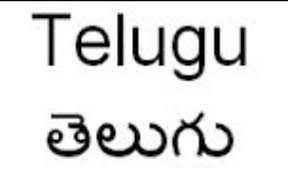
Telugu is the official language of Andhra Pradesh and holds a significant place in the state's cultural and administrative landscape. Often referred to as the "Italian of the East" due to its melodic nature, Telugu is one of the six classical languages of India. It is widely used in government proceedings, education, and media. The majority of the state's population communicates in Telugu, making it a unifying force among its residents. 

Tribal Languages

Andhra Pradesh is home to several tribal communities, each with its own linguistic traditions. Prominent tribal languages include Gondi, Koya, Savara, and Konda Dora. These languages are primarily spoken in the tribal-dominated regions, such as the districts of Visakhapatnam, Srikakulam, and East Godavari. 

The Gondi language, spoken by the Gond tribe, is one of the most widespread tribal languages in the state. Koya, another major tribal language, is spoken by the Koya community and is part of the Dravidian language family. Although these languages are predominantly oral, efforts have been made to document and preserve them through initiatives by local and national organizations. 

Other Languages

Apart from Telugu and tribal languages, a variety of other languages are spoken in Andhra Pradesh due to historical and cultural influences. 

Urdu: Urdu has a notable presence, especially in urban areas with significant Muslim populations, such as Vijayawada and Guntur. It is used in daily communication, religious practices, and cultural events. 

Hindi: As the national language of India, Hindi is understood and spoken by a segment of the population, particularly in urban centers and among migrant communities. 

Tamil and Kannada: Due to the state's geographical proximity to Tamil Nadu and Karnataka, Tamil and Kannada are spoken in border regions. These languages serve as a bridge for inter-state communication and cultural exchange. 

English: English is widely used for official purposes, education, and business. It serves as a link language, especially in metropolitan areas and among the younger generation. 

Oriya: In the northern districts bordering Odisha, Oriya is spoken by a small section of the population, highlighting the cultural ties between the two states. 

The linguistic diversity of Andhra Pradesh is a reflection of its rich cultural tapestry. While Telugu remains the cornerstone of the state's identity, tribal and other languages add to its vibrant linguistic landscape. This multilingual environment not only fosters inclusivity but also underscores the importance of preserving the linguistic heritage of Andhra Pradesh.

Wednesday, 8 January 2025

Poets of Bengal


Bengali literature has a rich and storied tradition, deeply influenced by poets across various eras. The poetic evolution in Bengal reflects the cultural, philosophical, and socio-political changes over centuries. From ancient texts to modern expressions, Bengali poets have made invaluable contributions to the region's literary heritage. 

Ancient Bengali Poets

The origins of Bengali poetry can be traced back to the “Charyapada,” a collection of mystical songs composed between the 8th and 12th centuries. These verses, attributed to Buddhist poets such as Luipada, Kanhupa, and Shabarapada, are considered the earliest examples of Bengali literature. Their works were spiritual and allegorical, exploring themes of life, enlightenment, and liberation. 

The “Charyapada” set the foundation for Bengali poetry, blending lyrical beauty with profound philosophical insights. These poets played a crucial role in shaping the early linguistic structure of Bengali, influencing subsequent generations. 

Medieval Bengali Poets

The medieval period of Bengali poetry, spanning the 14th to 18th centuries, was marked by the rise of devotional and romantic literature. One of the most notable figures from this era is Vidyapati, whose Maithili compositions profoundly impacted Bengali Vaishnava poets. His influence is evident in the works of Chandidas, a celebrated Bengali poet who wrote extensively about divine love and human emotions. 

Chandidas' poetry focused on the relationship between Radha and Krishna, portraying it as a symbol of spiritual union. His verses were deeply rooted in the Bhakti movement, blending devotion with lyrical elegance. 

Another significant Bengali poet of this period was Alaol, a court poet in Arakan (modern-day Myanmar), whose works reflect Persian and Islamic influences. His “Padmavati,” a romantic epic, showcases his command over language and narrative depth. 

Modern Bengali Poets

The modern era of Bengali poetry, beginning in the 19th century, witnessed a renaissance in literary expression. Rabindranath Tagore, the first non-European to win the Nobel Prize in Literature, is undoubtedly the most influential modern Bengali poet. His poetry, characterized by its universal appeal, explored themes of love, nature, spirituality, and humanism. Tagore's “Gitanjali” remains a masterpiece, blending introspection with profound philosophical musings.

Following Tagore, Kazi Nazrul Islam emerged as a revolutionary poet. Known as the "Rebel Poet," Nazrul’s works were marked by themes of equality, freedom, and anti-colonialism. His poetry, such as “Bidrohi” (The Rebel), continues to inspire movements for justice and social change. 

The modernist movement in Bengali poetry was further enriched by poets like Jibanananda Das, whose works introduced a new dimension of introspection and imagery. His “Ruposhi Bangla” and “Banalata Sen” are celebrated for their evocative portrayal of Bengal's natural beauty and existential reflections. 

Legacy and Impact

From the spiritual undertones of ancient poets to the revolutionary zeal of modern creators, Bengali poets have profoundly shaped the literary and cultural identity of the region. Their works not only reflect the evolution of Bengali literature but also capture the essence of Bengal's history and ethos. This literary tradition continues to inspire and influence generations of writers, ensuring its enduring relevance in the global literary canon.

Friday, 20 December 2024

Telugu Poets of India: Masters of Verses and Vision


Telugu, often hailed as the “Italian of the East,” boasts a literary tradition rich in history and cultural significance. Telugu poets have made immense contributions to Indian literature, creating works that resonate with timeless wisdom, beauty, and emotion. From classical to contemporary times, these poets have enriched not only Telugu literature but also the broader canvas of Indian literary heritage.


Nannaya Bhattarakudu: The First Telugu Poet

Nannaya Bhattarakudu, often referred to as "Adi Kavi" (the first poet), marked the dawn of Telugu literature. He undertook the monumental task of translating the Mahabharata into Telugu. His translation, however, extended beyond linguistic boundaries, blending Sanskrit elegance with native Telugu idioms. Nannaya's works laid the foundation for the Telugu poetic tradition, introducing a refined metrical structure and classical style. 

Tikkana and Errapragada: The Kavitrayam Trio

Continuing Nannaya's legacy, Tikkana and Errapragada completed the translation of the Mahabharata. Tikkana, known for his philosophical depth and lyrical prowess, brought a spiritual essence to his verses. Errapragada, often called "Errana," infused the work with creative originality. Together, they formed the Kavitrayam (Trinity of Poets), cementing the Mahabharata as a cultural cornerstone in Telugu literature. 

Srinatha: The Versatile Poet

Srinatha, a 15th-century poet, was celebrated for his mastery of Prabandha (narrative poetry). His works, such as Haravilasam and Palnati Veeracharitra, showcased his ability to weave mythological themes with local folklore, capturing the imagination of his audience. Srinatha’s lively descriptions and dramatic storytelling continue to influence Telugu poetry and drama. 

Krishnadevaraya: The Royal Poet

Krishnadevaraya, the illustrious Vijayanagara emperor, was an exceptional poet in his own right. His magnum opus, Amuktamalyada, narrates the story of the Tamil saint Andal with profound devotion and literary finesse. Krishnadevaraya's reign saw a golden age for Telugu literature, as he patronized numerous poets and scholars, fostering a vibrant literary environment. 

Gurajada Apparao: The Modern Voice

In the modern era, Gurajada Apparao brought a revolutionary shift to Telugu literature with his emphasis on social reform. His seminal work, Kanyasulkam, a play advocating women's rights and criticizing societal evils, remains a landmark in Indian drama. Gurajada’s call for “Desa Bhashalandu Telugu Lessa” (Telugu is the best among national languages) reflects his love for the language and its heritage. 

Sri Sri: The Progressive Poet

Srirangam Srinivasa Rao, popularly known as Sri Sri, pioneered the Navataram (New Age) movement in Telugu poetry. His anthology Maha Prastanam echoed the struggles of the common man, with themes of revolution and equality. Sri Sri's bold, free verse style broke away from traditional norms, inspiring generations of progressive poets. 

Contemporary Contributions

Modern Telugu poets such as Dasarathi Krishnamacharyulu and C. Narayana Reddy have continued to explore diverse themes, from nationalism to human emotions, showcasing the versatility of Telugu poetry in contemporary times. 

From the classical epics of Nannaya to the modern verses of Sri Sri, Telugu poets have left an indelible mark on Indian literature. Their works not only celebrate the beauty of the Telugu language but also offer profound insights into the human condition, making their contributions invaluable to India's rich literary tapestry.

Monday, 19 February 2024

Origin of Kashmiri Language


The Kashmiri language, spoken primarily in the Vale of Kashmir and the surrounding hills, holds a unique linguistic heritage shaped by the complex history of the region. Classified as a Dardic language by origin, it has evolved over time to exhibit predominantly Indo-Aryan characteristics. This linguistic evolution mirrors the rich tapestry of influences that have shaped Kashmir's cultural landscape throughout the ages. 

One of the distinctive features of the Kashmiri language is its eclectic vocabulary, which reflects the diverse linguistic influences that have left their mark on the region. Rooted in its Dardic origins, the language incorporates elements from Sanskrit, Punjabi, and Persian, underscoring centuries of interaction with neighboring cultures. This linguistic amalgamation is a testament to Kashmir's historical role as a crossroads of trade and cultural exchange. 

Religious differences also leave their imprint on the Kashmiri language, manifesting in vocabulary choices and script preferences. Muslims, for instance, freely incorporate Persian and Arabic words into their speech, reflecting the influence of Islam on the region. Moreover, they predominantly use the Persian script to write Kashmiri, despite its limitations in representing the language's diverse vowel sounds. This preference for the Persian script underscores the cultural and religious affiliations of the Muslim community in Kashmir. 

In contrast, Kashmiri Hindus exhibit a preference for vocabulary derived from Sanskrit, highlighting their cultural and religious heritage. Additionally, they often utilize the Sarada alphabet, an ancient Indian script, to write Kashmiri. While the Devanagari script is commonly employed in printed materials, the use of the Sarada script underscores the preservation of indigenous cultural traditions among Kashmiri Hindus. 

Despite its rich linguistic heritage, Kashmiri literature remains relatively limited in scope. However, the language boasts a small yet significant corpus of literary works that reflect the region's cultural and historical narratives. These literary endeavors serve as a testament to the resilience of Kashmiri identity amidst the region's tumultuous history. 

In terms of spoken dialects, Kashmiri exhibits notable variations across different regions. The major dialects include Kishtwari, Poguli, and Rambani, each with its own distinct linguistic features and regional variations. These dialectical differences further enrich the linguistic landscape of Kashmir, reflecting the diversity and complexity of the region's cultural tapestry. 

The origin of the Kashmiri language is deeply intertwined with the region's complex history and cultural dynamics. While rooted in its Dardic origins, the language has undergone significant evolution, incorporating Indo-Aryan influences and reflecting the diverse linguistic and cultural interactions that have shaped Kashmiri identity over the centuries. Despite the challenges posed by religious differences and script preferences, Kashmiri continues to thrive as a testament to the resilience and diversity of the people of Kashmir.

Monday, 16 October 2023

Local Dialects in India


India, known for its cultural diversity, boasts an intricate tapestry of languages and dialects, reflecting the richness of its heritage and history. Alongside the prominent languages, several lesser-known local dialects have flourished, preserving the essence of various communities. These dialects, often deeply intertwined with the region's culture, serve as a bridge to the past, binding communities together through linguistic bonds and shared traditions.


Manipuri Language:

Nestled in the northeastern state of Manipur, the Manipuri language, also known as Meiteilon, stands as a vibrant testament to the state's cultural heritage. This Tibeto-Burman language not only serves as a means of communication but also encapsulates the essence of Manipuri folklore and indigenous traditions. With a significant number of speakers primarily in Manipur and some parts of the neighboring states, Manipuri remains an essential conduit for preserving the distinct cultural identity of the region.

Sikkimese Language:

In the serene valleys and mountains of Sikkim, the Sikkimese language, or Bhutia, resonates as a crucial cultural symbol. Rooted in the Tibeto-Burman family, Sikkimese serves as the primary language of communication among the Bhutia community. This language, deeply entrenched in the state's customs and way of life, contributes to the rich tapestry of Sikkimese culture, fostering a sense of unity and solidarity among its speakers.


Kashmiri Language:

Nestled amidst the breathtaking landscapes of Jammu and Kashmir, the Kashmiri language echoes the soul of the region's rich heritage. With its origins traced back to the ancient Dardic languages, Kashmiri weaves a narrative that encapsulates the essence of the Kashmiri people. Despite the challenges posed by the region's complex sociopolitical landscape, Kashmiri language remains a resilient guardian of the cultural identity and traditions of the Kashmiri populace, serving as a medium for preserving their history, literature, and artistic expressions.


Haryanvi Language:

Embraced by the warm embrace of Haryana, the Haryanvi language emerges as a vibrant representation of the state's cultural fabric. Rooted in the Indo-Aryan language family, Haryanvi serves as a cornerstone of the region's rural and folk traditions, encompassing the spirited folk songs, literature, and vibrant customs that define Haryana's cultural ethos. Despite the dynamic shift in the linguistic landscape, Haryanvi endures as a resilient testament to the state's rural heritage and serves as a binding force within the Haryanvi community.


Awadhi Language:

Deeply entrenched in the heartland of Uttar Pradesh, the Awadhi language resounds as a key emblem of the region's cultural identity and historical legacy. Belonging to the Indo-Aryan language family, Awadhi serves as a conduit for the expression of the region's folklore, traditional music, and rich literary heritage. Known for its mellifluous poetic expressions, Awadhi has left an indelible mark on the cultural landscape of the Indian subcontinent, influencing the works of prominent poets and writers through the ages. Despite the contemporary influence of Hindi, Awadhi remains resilient, cherished by its speakers as a repository of their linguistic heritage and a source of communal pride, fostering a strong sense of belonging among the people of Uttar Pradesh.

Kokborok Language  

Kokborok, an indigenous language predominantly spoken in the Indian state of Tripura, holds a significant position in the cultural and linguistic fabric of the region. Primarily used by the Tripuri community, Kokborok serves as a vital medium for the expression of their traditions, folklore, and oral literature, reflecting the deep-rooted heritage of the indigenous people. With its origins tracing back to the Tibeto-Burman language family, Kokborok is characterized by its unique phonological and grammatical structures, distinguishing it from other languages in the region. 

Tribal Languages of Jharkhand

Jharkhand is known for its rich diversity of tribal languages. With a significant portion of the population belonging to various indigenous communities, Jharkhand boasts a linguistic landscape that reflects its cultural vibrancy. The region is home to numerous tribal languages, including but not limited to Santhali, Mundari, Ho, and Kurukh, each characterized by its unique phonological, morphological, and syntactical features. 

 In the intricate mosaic of India's linguistic diversity, local dialects play a pivotal role in preserving the cultural tapestry of the nation. These lesser-known languages, such as Manipuri, Sikkimese, Kashmiri, and Haryanvi, are not merely tools of communication but living embodiments of the regions they represent. By safeguarding these dialects, India continues to cherish its cultural roots, ensuring that the voices of its diverse communities remain vibrant and heard amidst the rapid winds of change.

Wednesday, 26 July 2023

Draupadi: The Enigmatic Heroine of Mahabharata


In the vast tapestry of the Mahabharata, one character shines brightly as a symbol of courage, resilience, and feminine strength - Draupadi. Her journey before, during, and after the Kurukshetra War showcases her exceptional character, unwavering devotion, and the complexities of her role as the shared wife of the Pandavas.


Before the Kurukshetra War:

Draupadi's life began in extraordinary circumstances, emerging from a sacrificial fire as the daughter of King Drupada of Panchala. Destiny had grand plans for her, and she was destined to play a pivotal role in the events that would unfold. Draupadi's marriage to the Pandavas was a unique and unconventional practice of polyandry, arising from the misunderstanding of a divine command by their mother, Kunti. Despite this, Draupadi embraced her unusual marital situation with grace, love, and an equal affection for all five Pandava brothers. Draupadi 

The infamous episode of the gambling match, where the Pandavas lost their kingdom and were forced into exile, thrust Draupadi into the center of a brewing storm. The Kauravas attempted to disrobe her publicly in the royal court, leading to a distressing and humiliating ordeal. In this darkest moment, Draupadi's faith in Lord Krishna and her unshakable courage shone through, as she called upon him for help. Through divine intervention, her dignity was preserved, and the attempt to dishonor her was thwarted. 

During the Kurukshetra War:

The Kurukshetra War became the ultimate test of Draupadi's strength and fortitude. As the conflict intensified, she transformed into a powerful and assertive figure, supporting the Pandavas and championing the cause of righteousness. Draupadi's presence on the battlefield acted as a moral compass, inspiring the warriors on the side of dharma. 

In the war, Draupadi's interactions with various characters were particularly significant. Her encounter with Karna, whom she had rejected during the Swayamvara due to his low birth, displayed her compassionate nature when she urged him to pause in battle to remove a splinter from his foot. This moment showcased Draupadi's capacity for forgiveness and kindness, even towards her perceived enemies. Pandavas  

The war, however, also brought moments of heartache for Draupadi. The tragic loss of their children during the war deeply wounded her, and her lamentations reverberated across the battlefield, reflecting the pain of a mother's love and the cost of war. 

After the Kurukshetra War:

Even after the war, Draupadi's trials were not over. Accompanying her husbands to the Himalayas, they prepared for their journey to heaven. Draupadi's unyielding loyalty and dedication to her family were evident in this final phase of the epic. 

The complexities of Draupadi's position as the shared wife of the Pandavas were evident throughout her journey. Her relationship with her co-wives, particularly with Duryodhana's wife Bhanumati, showcased the delicate balance she maintained as a part of the intricate familial dynamic. 

Draupadi's character remains an enigmatic and timeless figure in the Mahabharata, inspiring generations with her unwavering devotion, inner strength, and resilience. Her journey before, during, and after the Kurukshetra War serves as a reminder of the power of feminine virtue, compassion, and the unwavering pursuit of righteousness. 

Draupadi's portrayal in the Mahabharata stands as a testament to the depths of human emotion and the complexities of human relationships. Her unwavering support for her husbands, her courage in the face of adversity, and her capacity for forgiveness make her a heroine worth emulating. Draupadi's story continues to captivate hearts, leaving an indelible mark on the annals of ancient Indian epic literature and resonating with readers across cultures and generations.

Monday, 17 July 2023

Exploring the Brilliance of Hindi Poets


Hindi, one of the most widely spoken languages in the world, boasts a rich tradition of poetry that spans centuries. From the mystic verses of Kabir to the romantic musings of Mirza Ghalib, Hindi poets have left an indelible mark on the literary landscape. In this article, we delve into the lives and works of some notable Hindi poets, highlighting their contributions to the realm of poetry. Hindi Poets


Mirabai

Born in the 16th century, Mirabai stands as a revered figure in Hindi literature. Known for her deep devotion to Lord Krishna, her poems reflect both her love for the divine and her struggle against societal norms. Mirabai's verses, written in simple language, explore themes of love, longing, and spirituality. Her works continue to resonate with readers, transcending time and inspiring generations. 

Banabhatta

Harsha Charita is considered as the first Biography in Sanskrit. Banabhatta opens the Harsha Charita with a brief summary of the models of poetry whom he admired. It includes the author of the Bharata, of Vasavadatta, the prose of Harichandra, Satavahana`s treasure of song, the poem of Pravarasena. 

Kabir

Kabir, an iconic poet of the 15th century, is renowned for his philosophical and spiritual poetry. His verses, written in the form of dohas (couplets), blend Hindu and Islamic mysticism, advocating for universal harmony and the unity of all religions. Kabir's poetry, characterized by its directness and simplicity, addresses profound existential questions, making him an eternal voice of wisdom. 

Tulsidas

Tulsidas, a poet and philosopher who lived during the 16th century, is celebrated for his magnum opus, the Ramcharitmanas. This epic retells the story of Lord Rama in Hindi, making it accessible to the masses. Tulsidas's verses, adorned with bhakti (devotion) and rich imagery, have become an integral part of Hindi literary and cultural heritage. 

Mirza Ghalib

Mirza Ghalib, an influential figure in Urdu and Persian literature, is also considered a significant Hindi poet. His mastery over the ghazal form, characterized by intricate rhymes and profound emotions, earned him widespread acclaim. Ghalib's verses explore themes of love, loss, and existential dilemmas, resonating with readers across generations. His works continue to be celebrated for their sheer beauty and poetic depth. 

Harivansh Rai Bachchan

Harivansh Rai Bachchan, a prominent poet of the 20th century, played a pivotal role in shaping modern Hindi poetry. Known for his evocative imagery and profound philosophical insights, Bachchan's poems touch upon themes of love, human emotions, and social issues. His iconic collection "Madhushala" (The Tavern) remains a cornerstone of Hindi poetry, captivating readers with its metaphorical richness and lyrical brilliance. Hindi Literature 

The world of Hindi poetry stands as a testament to the creative genius and cultural richness of the Hindi-speaking people. Through their profound verses, Hindi poets have explored the depths of human emotions, delved into spiritual realms, and challenged societal norms. From the timeless devotion of Mirabai to the philosophical wisdom of Kabir, from the cultural epic of Tulsidas to the haunting beauty of Ghalib's ghazals, and from the modernist flair of Harivansh Rai Bachchan, these poets have left an indelible mark on Hindi literature. Their works continue to inspire, enlighten, and connect people, preserving the rich poetic heritage of the Hindi language for generations to come.


Thursday, 8 June 2023

Linguistic Diversity in Andhra Pradesh


Andhra Pradesh is a treasure trove of languages, each contributing to the linguistic tapestry of the state. Telugu, Kolami, Kannada, Urdu, Tamil, and several other languages and dialects add depth and richness to the cultural heritage of the region. Efforts to preserve, promote, and celebrate these languages are essential for safeguarding the diversity and identity of the people of Andhra Pradesh. By embracing linguistic diversity, the state can nurture a society that values and respects its cultural roots while embracing a future that is inclusive and interconnected. Languages of Andhra Pradesh


Telugu, the official language of Andhra Pradesh, plays a prominent role in the state's linguistic landscape. With over 80 million speakers globally, Telugu is the fourth most spoken language in India. Belonging to the Dravidian language family, Telugu boasts a rich literary tradition dating back to the 11th century.

Kolami, an indigenous language primarily spoken by the Kolam tribe in the hilly regions of Andhra Pradesh, holds immense linguistic and historical significance. As a member of the Dravidian language family, Kolami finds its primary usage in the districts of Visakhapatnam and East Godavari.

Kannada, another Dravidian language, plays a notable role in the linguistic mosaic of Andhra Pradesh, particularly in border regions such as Anantapur and Chittoor. While predominantly spoken in the neighboring state of Karnataka, Kannada-speaking communities exist in these regions.

Urdu, with its Persian and Arabic influences, holds a significant presence in Andhra Pradesh, especially in cities like Hyderabad and Kurnool. As the mother tongue of the region's Muslim population, Urdu acts as a cultural bridge, facilitating intercommunity connections.

Tamil, a classical language with an illustrious history, occupies a significant position in Andhra Pradesh, particularly in districts bordering Tamil Nadu, including Chittoor, Nellore, and Kadapa.

Languages of South India 

The linguistic diversity of Andhra Pradesh extends beyond the languages discussed in this article. Gondi, Odia, Marathi, Lambadi, and other languages and dialects contribute to the vibrant linguistic tapestry of the state. 

Friday, 24 March 2023

Indian English Literature

 Commencing from Mulk Raj AnandR. K. NarayanAnita DesaiSarojini NaiduToru Dutt to Salman RushdieVikram SethAllan SealyAmitav GhoshJhumpa Lahiri, Chitra Banerjee, Arundhati RoyVikram Chandra - the panache of fine Indian writers is long and much augmented.


Development of Indian English Literature
Indian English Literature precisely conforming to its gradual evolution had all begun in the summers of 1608 when Emperor Jahangir, in the court of the Mughals, had welcomed Captain William Hawkins, Commander of British Naval Expedition Hector, in a gallant manner. Though India was under the British rule, still, English was adopted by the Indians as a language of understanding and awareness, education and literary expression with an important means of communication amongst various people of dissimilar religions.

History of Indian English Literature
Indian English Literature dates back to two centuries. “The Travels of Dean Mahomet” by Sake Dean Mahomed and published in England in 1794 is the first book written by an Indian in English. Early Indian writers used unadulterated English in Indian words and style to convey an experience which was essentially Indian. Henry Louis Vivian Derozio is considered the first poet in the lineage of Indian English poetry followed by Rabindranath Tagore, Sri Aurobindo, Sarojini NaiduMichael Madhusudan Dutt, and Toru Dutt, among others. Bankim Chandra Chattopadhyay wrote “Rajmohan's Wife” and published it in 1864, making it the first Indian novel written in English. The novel earned tremendous admiration as one of the prominent Indian English novels. Bianca, or The Young Spanish Maiden (1878) by Toru Dutt was the first novel written by an Indian woman.

For more, visit the link below:

Thursday, 23 March 2023

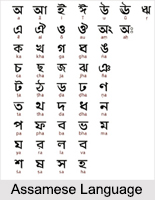
Assamese Language


Assamese Language, Languages of IndiaAssamese is the official language of the state of Assam in India. This language belongs to the easternmost group of Indo Aryan languages. Apart from Assam, it is also spoken in several parts of the state of Arunachal Pradesh and some more North Eastern Indian states. Assamese language is basically found along the Brahmaputra valley.

It is the easternmost native Indo-European language and is spoken by over 15 million native speakers. Its sister languages consist of MaithiliOriya, Chittagonian, SylhetiAngikaBishnupriya, Rohingya and Chakma. It is written in Assamese script, from left to right, with a large number of typographic ligatures.

Assamese literature
The prominent works in Assamese literature include ‘Giti Ramayana’, several poems and songs, etc. It was followed by a generation of novelists, writers and poets like Rajanikanta Bardaloi (1867-1939), Chandra Kumar Agarwala (1867-1938), Padmanath Gohain Baruwa (1871-1946), Hiteshwar Bezbarua (1871-1931), Benudhar Raj Khowa (1872-1935) and many more. Moreover several contemporary writers like Raghunath Chaudhari also wrote generously at the age of social reforms and nationalism. From the 15th and 16th centuries, songs like ‘Borgeets’, dramas like ‘Ankiya Naat’ and the first prose writings (by Bhattadeva) were created. The fictional language, based on the western dialects of Assam moved to the court of the ‘Ahom’ kingdom in the 17th century, where it became the state language. This period saw the well-known development of identical prose infused with spoken forms in ‘Buranjis’.

History of Assamese Language
The beginning of Assamese language is not comprehensible. Some suppose that it derived from ‘Kamarupi Prakrit’ used in earliest ‘Kamarupa’ Kingdom. On the other hand, it is believed that Assamese language developed at least before 7th century CE from the middle Indo-Aryan Magadhi Prakrit, but in some ways more ancient than Vedic Sanskrit with other Eastern Indo-Aryan languages.The earliest forms of Assamese in literature are found in the ninth-century Buddhist verses called ‘Charyapada’. In the late 13th century AD, Hema Saraswati, one of the oldest Assamese writers, wrote the very popular 'Prahlada Charita'. Another renowned figure of Assamese literature was ‘Madhava Kandali’.


For more, visit the link below:

Friday, 23 December 2022

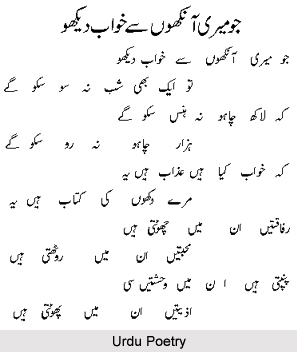
Urdu Poetry


Urdu PoetryUrdu poetry has a richness in tradition and has many different forms that were basically started from Arabic and borrowing mush from Persian Language. Urdu poetry witnessed its growth and development during the early eras of 13th century, when some bards of the north India initiated in varied experimentation with the style. However the ingrained classic forms of Urdu poetry that contemporary generation are accustomed with did not really take on a final shape until the 17th century, when Urdu became the official language of the court in the Indian subcontinent.

Today a significant part of Indian culture, just like other languages, the history of Urdu poetry also shares origin and its influences with other linguistic traditions within the Urdu-Hindi-Hindustani mix. Urdu poetry gained immense popularity in the 18th century when Urdu replaced Persian as a major language of the region. In the 18th there was a scarcity of newspapers. Urdu poetry's history is an amazing journey that is replete with intrigue for the curious onlookers. However, the amazing intensity with which it continues to thrive amidst the hurly burly of the cotemporary age bears the testimony of its presence.

Literary personalities, as far back as Amir Khusro (1253-1325) and Kabir (1440-1518) later inspired Urdu poets, and served as linguistic and intellectual sources. Ghalib, Anis, Meer, Dard, Dabeer, Iqbal, Zauq, Firaq, Josh, Jigar, Faiz and Syed Shmad Shah (Ahmad Faraz) are among the greatest poets of Urdu literature. The tradition is mainly concentrated in the subcontinent. In the year 1947, following the Partition of India, it found main scholars and poets residing mainly in present day Pakistan. Mushairas (or poetic expositions) are today held worldwide in metropolitan areas.

Like Elizabethan English which is complete with social and regional realities, Urdu holds a remarkable wealth of the conventions of many cultures and languages. This element got a great boost in the 18th century when there weren't many newspapers or media of information available to the public. Urdu poetry became a more intimate form of communication regarding the social and political tribulations of the time. The commonest form of communication, in tradition with the Arabic culture, was to read poetry in gatherings, called musha'era, where poets would gather to read poems crafted in accordance with a metrical pattern, which was often prescribed beforehand. Not only did the poetry have to meet the choice of word, and the loftiness of thought but also strict metrical patterns. There were competitions like those held in ancient Greek, Roman and pre-Islamic Arabic cultures. However, the intensity and warmth of the musha'eras that developed in Delhi were indeed unique and helped popularize Urdu as the language of poetry in the Mughal Empire. A culture built around taking lessons in writing Urdu poetry became the in-thing for the royalty, and the masters of poetry were given reverence worthy of kings.

For more, visit the link below:

Friday, 15 July 2022

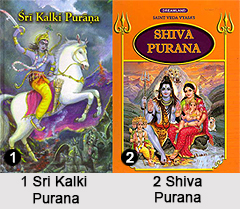
Indian Puranas


Indian PuranasIndian Puranas constitute one of the richest sources of Hindu Literature as well as mythology. They contain some important components of both Hinduism as well as Buddhism. The Puranas narrate various stories about the Gods and the Goddesses, rights and rituals and hymns. These scriptures have been passed from one generation to the other, either by word of mouth or stored scriptures. There are about 18 major Puranas along with some minor ones, which have been merged in various ideas from different faiths. The Indian Puranas are classified into the Mahapuranas (great) and the Upapuranas (lower, additional) and the classification of Puranas depends on the importance of each of these Indian Puranas.

Origin of Puranas
According to researches, the Puranas represent the earliest traditional history. Tradition has it that the Puranas were composed by Ved Vyas at the end of Dwapara Yuga, though the exact origin of Indian Puranas is not known. However modern scholars state that Indian Puranas existed from the 4th century BC to the 1st millennium AD. The Puranas undoubtedly reach back to great antiquity and are rooted in Vedic Literature; many a legend, already familiar from Hymns of Rig Veda and from the Brahmanas, reappears in the Puranas. Furthermore, history depicts that Puranas existed even before the advent of the Vedic texts. Age of the Puranas lies in the antiquity and in those past days, Puranas were given enough significance for the developed civilisation.

But, just as undoubtedly, those works which have come down to us under the title of " Purana" are of a later date, and up to the present day books are fabricated which assume the proud title "Purana," or claim to be parts of ancient Puranas. Even the latest productions of this literature have the external form and the archaic frame of the oldest Puranas.

Meaning of Puranas
The word "Purana" means originally nothing but Puranam Akhyanam, i.e. old narrative. In the older literature, in Brahmanas, Upanishadand old Buddhist texts, the word is generally found in connection with Itihasa. But the Itihasas and Puranas or Itihasapurana so often mentioned in olden times, do not mean actual books, still less, then, the epics or Puranas which have come down to us. It is indeed likely enough that the Puranas are only recasts of older works of the same species, namely, of works of religious didactic contents, in which were collected ancient traditions of the Creation, the deeds of the gods, heroes, saints and ancient ancestors of the human race, the beginnings of the famous royal families, and so on.

For more, visit the link below:

Saturday, 18 June 2022

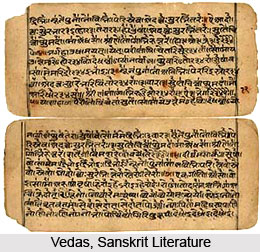
Sanskrit Literature

  Sanskrit literature bears its first initiations with the Vedas and continues with the Sanskrit epics of Iron Age. The golden age of Classical Sanskrit literature dates back to late Antiquity (approximately the 3rd to 8th centuries A.D). Sanskrit literature traces its roots back to the Vedic Age. Alexander's conquest of India was a significant episode in Sanskrit literature, which was fundamental to lay stress on Sanskrit drama. Despite the influence, Sanskrit plays uphold their individualism and subjects of the plays ranged from tragedy to light comedy. Many Sanskrit dramatists are also known to have based their works pivoting around the plot of Ramayana and Mahabharata. Sanskrit was the language spoken by a cultured minority.


Sanskrit LiteratureSanskrit in Vedas and Upanishads
The four Vedas in Sanskrit literature - Rig VedaYajur VedaSama Veda and Atharva Veda, each with a principal Samhita and a number of circum-Vedic genres, also includes BrahmanasAranyakas and Vedanga. The basic period of Vedic literary activity falls between the 9th to 7th centuries, when the various shakhas had amassed, collected and memorized their particular corpus. The older Upanishads (Brihadaranyaka, Chandogya, Jaiminiya Upanishad Brahmana, Katha, Maitrayaniya) also belong to the Vedic period, but the larger part of the Muktika canon is attributed to post-Vedic times.

Sanskrit Sutra Literature
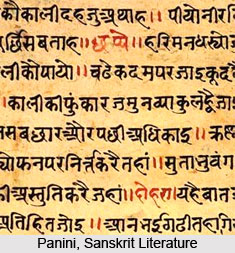
Sutra literature under Sanskrit literature was the upcoming genre that had indeed witnessed much advancement in ancient Indian literary forms. Late Iron Age scholarship (ca. 500 to 100 B.C.E.) had built up knowledge into the cardinal Sutra treatises. The Sanskrit Sutra treatises had included the Vedanga and the religious or philosophical Brahma Sutras, Yoga Sutras and Nyaya Sutras. In the Vedanga categories of grammar and phonetics, no author perhaps has had impressed greater influence than Panini with his Ashtadhyayi (ca. 5th century B.C.). Panini's grammar indeed had successfully mended the grammar of Classical Sanskrit literature. Panini's grammar includes the elements like recursion, metarules, transformation and others.

Sanskrit LiteratureSanskrit Literature in Hindu Epics
The evolution of Sanskrit literature indeed had happened in a rhythmic and systematic manner with each period significantly following its predecessor. The Epic Age with their priceless Sanskrit epic poetry had appeared approximately between the 6th to 1st centuries B.C. It also witnessed the authoring and editing of the two great epics, the Mahabharata and the Ramayana.

The Mahabharata is considered as one of the largest poetic treatises in the world. While it is indelibly a masterpiece poetic epic in Sanskrit literature, it also comprises enormous tracts of Hindu mythology, philosophy and religious tracts. Ramayana in Sanskrit literature includes tales that form the basis for modern Hindu festivals and even comprises a description of that parallel marriage practice which is still observed in contemporary times by people of Hindu beliefs and thoughts.

For more, visit the page below: