Showing posts with label poet. Show all posts

Thursday, 19 March 2026

Contribution of Women Writers to Kannada Literature

 Kannada literature, one of the oldest and most vibrant literary traditions in India, has evolved over centuries through the contributions of numerous poets, novelists, and thinkers. While early literary spaces were largely dominated by male writers, women gradually emerged as powerful voices in Kannada literature. Their writings brought fresh perspectives on social realities, gender roles, identity, and cultural transformation. Women writers in Kannada literature have played a crucial role in shaping literary discourse by addressing themes such as women's rights, social inequality, personal freedom, and the complexities of human relationships. 

From the medieval period to contemporary times, several women writers have left a lasting imprint on Kannada literature. Their works not only enriched literary traditions but also contributed to social awareness and intellectual discourse.

Early Contributions of Women in Kannada Literature

The presence of women writers in Kannada literature can be traced back to the Vachana movement of the 12th century. This movement emphasized spiritual equality, social reform, and devotion. Among the most prominent female voices of this era was Akka Mahadevi. 

Akka Mahadevi was a mystic poet and a major figure in the Vachana tradition. Her poems, known as Vachanas, expressed deep spiritual devotion to Lord Shiva while challenging social conventions and gender norms. Her works are known for their philosophical depth and poetic intensity. Through her writings, she articulated themes of spiritual freedom, individuality, and the rejection of material attachments. Akka Mahadevi remains one of the earliest and most influential female voices in Kannada literary history. 

Women Writers in the Modern Kannada Literary Movement

The twentieth century witnessed a significant rise in the number of women writers contributing to Kannada literature. With increased access to education and social reform movements, women began expressing their perspectives through novels, short stories, essays, and poetry. Their writings often explored women's experiences, societal constraints, and changing social dynamics. 

One of the earliest prominent women writers of modern Kannada literature was Tirumalamba. She is widely recognized for her contributions to fiction and social commentary. Her works often focused on the condition of women in society and highlighted issues such as education, marriage, and social reform. 

Another significant writer was K. Saraswathi Amma, who wrote short stories and essays addressing the social realities faced by women. Through her sharp observations and critical perspective, she questioned traditional expectations placed on women in society. 

Prominent Women Novelists in Kannada Literature

Several women novelists have played a major role in expanding the scope of Kannada literature by introducing new themes and narrative styles. 

Among the most notable is Triveni, the pen name of Anasuya Shankar. Triveni became widely popular for her psychological novels that explored the emotional struggles of women within family and societal structures. Her novels such as Sharapanjara and Belli Moda gained immense popularity and were later adapted into films. Triveni's works are known for their sensitive portrayal of women’s inner lives and their critique of social expectations. 

Another distinguished figure is Vaidehi, one of the most respected contemporary voices in Kannada literature. Vaidehi is known for her short stories, novels, and essays that capture the cultural landscape of coastal Karnataka. Her writings highlight women's lives, everyday struggles, and emotional complexities while reflecting regional traditions and linguistic richness. 

Early Female Voices in Kannada Literature

The earliest notable female presence in Kannada literature can be traced to the 12th-century Vachana movement, a spiritual and social reform movement that emphasized devotion, equality, and moral integrity. One of the most celebrated women associated with this movement was Akka Mahadevi. 

Akka Mahadevi was a mystic poet whose vachanas (short poetic prose compositions) expressed intense devotion to Lord Shiva. Her writings explored themes of spiritual liberation, the rejection of material attachment, and the quest for divine union. She also challenged social norms regarding gender and societal expectations placed upon women. Through her fearless voice and philosophical insight, Akka Mahadevi became one of the earliest female literary icons in Kannada literature. 

Emergence of Women Writers in Modern Kannada Literature

The twentieth century marked a turning point in Kannada literature as women began participating more actively in literary production. Social reform movements, educational opportunities, and increasing awareness about women’s rights enabled women writers to articulate their experiences and perspectives. 

One early modern writer was Tirumalamba, who wrote extensively about the social conditions of women. Her works reflected concerns about women’s education, social reform, and the cultural expectations imposed upon women. Tirumalamba’s writings played a role in encouraging female participation in literary and intellectual life. 

Another important figure was M. K. Indira, whose novels explored the lives of ordinary women within traditional social structures. Her writing often depicted the challenges faced by women in conservative societies and the emotional complexities of family life. Her novel Phaniyamma became particularly well known and was later adapted into a film. 

Psychological and Social Themes in Women’s Fiction

One of the most influential women novelists in Kannada literature is Triveni, the pen name of Anasuya Shankar. Triveni gained widespread popularity for her psychological novels that explored the emotional struggles of women within patriarchal family systems. 

Her novels such as Sharapanjara and Belli Moda portray the mental and emotional conflicts experienced by women who struggle to reconcile personal desires with social expectations. Triveni’s writing is notable for its psychological depth, realistic portrayal of domestic life, and empathetic understanding of women’s experiences. Her works became extremely popular and were later adapted into successful films, further extending their cultural influence. 

Contemporary Women Writers

In the late twentieth and early twenty-first centuries, women writers continued to expand the boundaries of Kannada literature by addressing diverse social, cultural, and political themes. 

One prominent contemporary writer is Vaidehi. Vaidehi is widely respected for her short stories, novels, and essays that vividly portray life in coastal Karnataka. Her works are known for their rich use of regional dialects and their nuanced depiction of women’s lives, traditions, and emotional experiences. Through her writing, she captures the complexities of rural and small-town life while highlighting the strength and resilience of women. 

Another significant literary figure is Sara Aboobacker, who wrote extensively about the lives of Muslim women in coastal Karnataka. Her novels and short stories address issues such as gender inequality, religious conservatism, and social reform. By portraying marginalized voices and communities, Sara Aboobacker added an important dimension to Kannada literature. 

Feminist Voices in Kannada Poetry

Women poets have also played a crucial role in shaping modern Kannada literature, particularly through feminist writing and social critique. 

One influential poet and scholar was Vijaya Dabbe. Her poetry addressed issues such as gender discrimination, social injustice, and women’s rights. Through her powerful poetic language and activism, Vijaya Dabbe became an important voice in the feminist literary movement in Karnataka. 

Her works often challenge patriarchal structures and advocate for equality and empowerment. She was also actively involved in feminist organizations and literary movements that promoted women’s participation in literature and public discourse. 

Popular Contemporary Women Writers

Among contemporary Kannada writers, Sudha Murty occupies a special place. Known for her simple yet meaningful storytelling, Sudha Murty writes novels, short stories, and children’s literature in both Kannada and English. 

Her writings often focus on human values, social responsibility, and moral lessons drawn from everyday life. Many of her Kannada works have gained wide readership and have been translated into several languages. Through her accessible style and relatable themes, Sudha Murty has helped bring Kannada literature to a broader audience. 

Impact of Women Writers on Kannada Literature

Women writers have significantly transformed Kannada literature by introducing new themes and perspectives. Their works have highlighted issues such as gender equality, family relationships, social reform, and cultural identity. They have also broadened literary representation by bringing attention to the lives and experiences of women from different social and cultural backgrounds. 

Through their contributions, women writers have not only enriched Kannada literature but also influenced social thought and cultural discourse in Karnataka. Their writings continue to inspire readers, scholars, and emerging writers. 

Women writers have played a vital role in shaping the development of Kannada literature across different historical periods. From the spiritual poetry of Akka Mahadevi to the socially conscious novels of modern writers and the feminist poetry of contemporary voices, their works reflect the evolving position of women in society. 

These writers have challenged social norms, voiced women’s experiences, and contributed to the richness and diversity of Kannada literary traditions. As Kannada literature continues to evolve, the contributions of women writers remain an essential part of its intellectual and cultural heritage.

Wednesday, 12 November 2025

Suryakant Tripathi ‘Nirala’: The Pioneer Who Redefined Modern Hindi Poetry


Suryakant Tripathi, widely known by his pen name ‘Nirala,’ meaning “unique”, was one of the most influential figures in modern Hindi literature. Born on February 21, 1896, in Midnapore (now in West Bengal), Nirala’s literary journey marked a turning point in Hindi poetry. His writings broke free from the conventions of the time and gave rise to a new era of expression, one that celebrated individuality, human emotion, and the struggles of life. 

Suryakant Tripathi or Nirala was a key figure in the Chhayavad movement, a literary renaissance in early 20th-century Hindi poetry. The movement emphasized romanticism, imagination, and the beauty of nature, often infused with deep philosophical undertones. Alongside other luminaries like Jaishankar Prasad, Sumitranandan Pant, and Mahadevi Verma, Nirala helped redefine Hindi poetry by introducing a more personal and reflective style of writing. However, what set him apart was his unconventional approach—he did not merely dwell in romantic idealism but also highlighted social injustice, poverty, and human suffering with raw honesty. 

His early life was filled with hardship and tragedy, which deeply influenced his writing. He lost his mother at a young age, and later his wife and daughter, leaving him in immense grief. These personal losses shaped his sensitivity towards the pain and struggles of others, which became a recurring theme in his work. Despite these challenges, Nirala’s spirit remained unbroken. His poems became a voice for the marginalized, reflecting his empathy and his defiance against societal inequality. 

Nirala’s poetry is known for its vivid imagery, emotional depth, and linguistic innovation. His works such as “Juhi Ki Kali”, “Saroj Smriti”, “A Parijat”, and “Geetika” are celebrated for their lyrical beauty and thought-provoking themes. “Saroj Smriti”, written in memory of his daughter, stands as one of the most poignant elegies in Hindi literature, blending personal sorrow with universal emotion. Through his words, Nirala explored not only love and loss but also the philosophical questions of life, freedom, and humanity. 

Beyond poetry, Nirala was a powerful essayist, novelist, and short story writer. His prose works often carried a tone of social criticism and reform. Novels like “Chaturi Chamar” and essays such as “Rasmi” reflected his progressive ideals and his concern for the downtrodden. He believed that literature should not exist in isolation but should serve as a mirror to society—a tool to awaken consciousness and inspire change. 

Nirala’s contribution to Hindi literature extends beyond his written works. He brought modernist sensibilities to the language and challenged traditional structures of rhyme and rhythm, making his poetry more fluid and free-flowing. His style, though sometimes misunderstood during his lifetime, later came to be recognized as revolutionary. 

Suryakant Tripathi ‘Nirala’ passed away on October 15, 1961, but his legacy continues to inspire generations of readers and writers. He remains a symbol of courage, creativity, and compassion, an artist who dared to be different and used his words to illuminate the human spirit. In the truest sense, Nirala lived up to his name: unique, unmatched, and timeless.

Wednesday, 8 January 2025

Poets of Bengal


Bengali literature has a rich and storied tradition, deeply influenced by poets across various eras. The poetic evolution in Bengal reflects the cultural, philosophical, and socio-political changes over centuries. From ancient texts to modern expressions, Bengali poets have made invaluable contributions to the region's literary heritage. 

Ancient Bengali Poets

The origins of Bengali poetry can be traced back to the “Charyapada,” a collection of mystical songs composed between the 8th and 12th centuries. These verses, attributed to Buddhist poets such as Luipada, Kanhupa, and Shabarapada, are considered the earliest examples of Bengali literature. Their works were spiritual and allegorical, exploring themes of life, enlightenment, and liberation. 

The “Charyapada” set the foundation for Bengali poetry, blending lyrical beauty with profound philosophical insights. These poets played a crucial role in shaping the early linguistic structure of Bengali, influencing subsequent generations. 

Medieval Bengali Poets

The medieval period of Bengali poetry, spanning the 14th to 18th centuries, was marked by the rise of devotional and romantic literature. One of the most notable figures from this era is Vidyapati, whose Maithili compositions profoundly impacted Bengali Vaishnava poets. His influence is evident in the works of Chandidas, a celebrated Bengali poet who wrote extensively about divine love and human emotions. 

Chandidas' poetry focused on the relationship between Radha and Krishna, portraying it as a symbol of spiritual union. His verses were deeply rooted in the Bhakti movement, blending devotion with lyrical elegance. 

Another significant Bengali poet of this period was Alaol, a court poet in Arakan (modern-day Myanmar), whose works reflect Persian and Islamic influences. His “Padmavati,” a romantic epic, showcases his command over language and narrative depth. 

Modern Bengali Poets

The modern era of Bengali poetry, beginning in the 19th century, witnessed a renaissance in literary expression. Rabindranath Tagore, the first non-European to win the Nobel Prize in Literature, is undoubtedly the most influential modern Bengali poet. His poetry, characterized by its universal appeal, explored themes of love, nature, spirituality, and humanism. Tagore's “Gitanjali” remains a masterpiece, blending introspection with profound philosophical musings.

Following Tagore, Kazi Nazrul Islam emerged as a revolutionary poet. Known as the "Rebel Poet," Nazrul’s works were marked by themes of equality, freedom, and anti-colonialism. His poetry, such as “Bidrohi” (The Rebel), continues to inspire movements for justice and social change. 

The modernist movement in Bengali poetry was further enriched by poets like Jibanananda Das, whose works introduced a new dimension of introspection and imagery. His “Ruposhi Bangla” and “Banalata Sen” are celebrated for their evocative portrayal of Bengal's natural beauty and existential reflections. 

Legacy and Impact

From the spiritual undertones of ancient poets to the revolutionary zeal of modern creators, Bengali poets have profoundly shaped the literary and cultural identity of the region. Their works not only reflect the evolution of Bengali literature but also capture the essence of Bengal's history and ethos. This literary tradition continues to inspire and influence generations of writers, ensuring its enduring relevance in the global literary canon.

Friday, 20 December 2024

Telugu Poets of India: Masters of Verses and Vision


Telugu, often hailed as the “Italian of the East,” boasts a literary tradition rich in history and cultural significance. Telugu poets have made immense contributions to Indian literature, creating works that resonate with timeless wisdom, beauty, and emotion. From classical to contemporary times, these poets have enriched not only Telugu literature but also the broader canvas of Indian literary heritage.


Nannaya Bhattarakudu: The First Telugu Poet

Nannaya Bhattarakudu, often referred to as "Adi Kavi" (the first poet), marked the dawn of Telugu literature. He undertook the monumental task of translating the Mahabharata into Telugu. His translation, however, extended beyond linguistic boundaries, blending Sanskrit elegance with native Telugu idioms. Nannaya's works laid the foundation for the Telugu poetic tradition, introducing a refined metrical structure and classical style. 

Tikkana and Errapragada: The Kavitrayam Trio

Continuing Nannaya's legacy, Tikkana and Errapragada completed the translation of the Mahabharata. Tikkana, known for his philosophical depth and lyrical prowess, brought a spiritual essence to his verses. Errapragada, often called "Errana," infused the work with creative originality. Together, they formed the Kavitrayam (Trinity of Poets), cementing the Mahabharata as a cultural cornerstone in Telugu literature. 

Srinatha: The Versatile Poet

Srinatha, a 15th-century poet, was celebrated for his mastery of Prabandha (narrative poetry). His works, such as Haravilasam and Palnati Veeracharitra, showcased his ability to weave mythological themes with local folklore, capturing the imagination of his audience. Srinatha’s lively descriptions and dramatic storytelling continue to influence Telugu poetry and drama. 

Krishnadevaraya: The Royal Poet

Krishnadevaraya, the illustrious Vijayanagara emperor, was an exceptional poet in his own right. His magnum opus, Amuktamalyada, narrates the story of the Tamil saint Andal with profound devotion and literary finesse. Krishnadevaraya's reign saw a golden age for Telugu literature, as he patronized numerous poets and scholars, fostering a vibrant literary environment. 

Gurajada Apparao: The Modern Voice

In the modern era, Gurajada Apparao brought a revolutionary shift to Telugu literature with his emphasis on social reform. His seminal work, Kanyasulkam, a play advocating women's rights and criticizing societal evils, remains a landmark in Indian drama. Gurajada’s call for “Desa Bhashalandu Telugu Lessa” (Telugu is the best among national languages) reflects his love for the language and its heritage. 

Sri Sri: The Progressive Poet

Srirangam Srinivasa Rao, popularly known as Sri Sri, pioneered the Navataram (New Age) movement in Telugu poetry. His anthology Maha Prastanam echoed the struggles of the common man, with themes of revolution and equality. Sri Sri's bold, free verse style broke away from traditional norms, inspiring generations of progressive poets. 

Contemporary Contributions

Modern Telugu poets such as Dasarathi Krishnamacharyulu and C. Narayana Reddy have continued to explore diverse themes, from nationalism to human emotions, showcasing the versatility of Telugu poetry in contemporary times. 

From the classical epics of Nannaya to the modern verses of Sri Sri, Telugu poets have left an indelible mark on Indian literature. Their works not only celebrate the beauty of the Telugu language but also offer profound insights into the human condition, making their contributions invaluable to India's rich literary tapestry.

Monday, 21 August 2023

Telugu Poets: A Glimpse into the Literary Titans


Telugu literature, with its rich history and cultural depth, has been adorned with the eloquent verses of countless poets who have left an indelible mark on the literary landscape. From the classical era to modern times, Telugu poets have consistently demonstrated their mastery of language and profound insights into the human condition. In this article, we delve into the lives and contributions of prominent Telugu poets from history as well as a selection of modern poets who continue to carry the torch of literary excellence.


Classical Era: 

Nannaya Bhattaraka (11th Century): Regarded as the "Adi Kavi" or the first poet of Telugu literature, Nannaya played a pivotal role in laying the foundation for classical Telugu poetry. His magnum opus, the "Mahabharata," is the first known translation of the epic into Telugu and stands as a testament to his linguistic prowess and cultural dedication. 

Tikkana Somayaji (13th Century): Tikkana, one of the "Kavitraya," or the trio of great poets, contributed to the Telugu literary canon through his rendition of the "Mahabharata." Known for his devotion to language and ethics, Tikkana's work continues to inspire generations. 

Modern Era: 

Gurajada Apparao (19th-20th Century): Often referred to as the "Father of Modern Telugu Literature," Apparao was a prominent playwright, poet, and social reformer. His play "Kanyasulkam" remains a classic critique of social issues and remains relevant to this day. 

Sri Sri (1910-1983): A pioneer of modern Telugu poetry, Srirangam Srinivasa Rao, known by his pen name Sri Sri, brought a contemporary touch to traditional themes. His poem "Mahaprasthanam" resonates with his philosophical reflections and societal concerns, becoming a landmark in modern Telugu literature. 

C. Narayana Reddy (1931-2017): Winner of the Jnanpith Award, Reddy was a prolific poet who effortlessly combined traditional poetic forms with modern sensibilities. His works, including "Viswambhara" and "Pakkaki Ottigilite," showcase his versatility and profound introspection. 

Modern Times: 

Varavara Rao (Born 1940): An influential poet, critic, and activist, Varavara Rao's poetry often reflects his deep engagement with social and political issues. His verses echo the struggles of the marginalized and marginalized, offering a poignant commentary on contemporary society.

K. Siva Reddy (Born 1943): A recipient of the Jnanpith Award, Siva Reddy's poetry stands out for its lyrical quality and exploration of human emotions. His collections like "Pakudu Rallu" and "Gaali Rangu" exemplify his ability to encapsulate the essence of life in vivid verses. 

Sailaja Neelapu (Born 1979): Representing the modern generation of Telugu poets, Sailaja Neelapu's work delves into personal experiences and emotions with subtlety and depth. Her poetry collection "Aagamana" received widespread acclaim for its intimate portrayal of life's nuances.

 Telugu Literature

Telugu poetry stands as a testament to the richness and diversity of the language and its cultural heritage. From the classical era with luminaries like Nannaya and Tikkana to the modern times with poets like Gurajada Apparao, Sri Sri, and the contemporary voices of Varavara Rao, K. Siva Reddy, and Sailaja Neelapu, Telugu poets have continuously evolved while staying rooted in their cultural ethos. These poets have not only shaped the literary fabric of Telugu but have also provided insights into the universal human experience, making their verses timeless treasures that continue to resonate with readers across generations. As we continue to appreciate and celebrate their contributions, we honor the enduring legacy of Telugu poets who have enriched our lives with their words.


Monday, 17 July 2023

Exploring the Brilliance of Hindi Poets


Hindi, one of the most widely spoken languages in the world, boasts a rich tradition of poetry that spans centuries. From the mystic verses of Kabir to the romantic musings of Mirza Ghalib, Hindi poets have left an indelible mark on the literary landscape. In this article, we delve into the lives and works of some notable Hindi poets, highlighting their contributions to the realm of poetry. Hindi Poets


Mirabai

Born in the 16th century, Mirabai stands as a revered figure in Hindi literature. Known for her deep devotion to Lord Krishna, her poems reflect both her love for the divine and her struggle against societal norms. Mirabai's verses, written in simple language, explore themes of love, longing, and spirituality. Her works continue to resonate with readers, transcending time and inspiring generations. 

Banabhatta

Harsha Charita is considered as the first Biography in Sanskrit. Banabhatta opens the Harsha Charita with a brief summary of the models of poetry whom he admired. It includes the author of the Bharata, of Vasavadatta, the prose of Harichandra, Satavahana`s treasure of song, the poem of Pravarasena. 

Kabir

Kabir, an iconic poet of the 15th century, is renowned for his philosophical and spiritual poetry. His verses, written in the form of dohas (couplets), blend Hindu and Islamic mysticism, advocating for universal harmony and the unity of all religions. Kabir's poetry, characterized by its directness and simplicity, addresses profound existential questions, making him an eternal voice of wisdom. 

Tulsidas

Tulsidas, a poet and philosopher who lived during the 16th century, is celebrated for his magnum opus, the Ramcharitmanas. This epic retells the story of Lord Rama in Hindi, making it accessible to the masses. Tulsidas's verses, adorned with bhakti (devotion) and rich imagery, have become an integral part of Hindi literary and cultural heritage. 

Mirza Ghalib

Mirza Ghalib, an influential figure in Urdu and Persian literature, is also considered a significant Hindi poet. His mastery over the ghazal form, characterized by intricate rhymes and profound emotions, earned him widespread acclaim. Ghalib's verses explore themes of love, loss, and existential dilemmas, resonating with readers across generations. His works continue to be celebrated for their sheer beauty and poetic depth. 

Harivansh Rai Bachchan

Harivansh Rai Bachchan, a prominent poet of the 20th century, played a pivotal role in shaping modern Hindi poetry. Known for his evocative imagery and profound philosophical insights, Bachchan's poems touch upon themes of love, human emotions, and social issues. His iconic collection "Madhushala" (The Tavern) remains a cornerstone of Hindi poetry, captivating readers with its metaphorical richness and lyrical brilliance. Hindi Literature 

The world of Hindi poetry stands as a testament to the creative genius and cultural richness of the Hindi-speaking people. Through their profound verses, Hindi poets have explored the depths of human emotions, delved into spiritual realms, and challenged societal norms. From the timeless devotion of Mirabai to the philosophical wisdom of Kabir, from the cultural epic of Tulsidas to the haunting beauty of Ghalib's ghazals, and from the modernist flair of Harivansh Rai Bachchan, these poets have left an indelible mark on Hindi literature. Their works continue to inspire, enlighten, and connect people, preserving the rich poetic heritage of the Hindi language for generations to come.


Friday, 24 March 2023

Indian English Literature

 Commencing from Mulk Raj Anand, R. K. Narayan, Anita Desai, Sarojini Naidu, Toru Dutt to Salman Rushdie, Vikram Seth, Allan Sealy, Amitav Ghosh, Jhumpa Lahiri, Chitra Banerjee, Arundhati Roy, Vikram Chandra - the panache of fine Indian writers is long and much augmented.


Development of Indian English Literature
Indian English Literature precisely conforming to its gradual evolution had all begun in the summers of 1608 when Emperor Jahangir, in the court of the Mughals, had welcomed Captain William Hawkins, Commander of British Naval Expedition Hector, in a gallant manner. Though India was under the British rule, still, English was adopted by the Indians as a language of understanding and awareness, education and literary expression with an important means of communication amongst various people of dissimilar religions.

History of Indian English Literature
Indian English Literature dates back to two centuries. “The Travels of Dean Mahomet” by Sake Dean Mahomed and published in England in 1794 is the first book written by an Indian in English. Early Indian writers used unadulterated English in Indian words and style to convey an experience which was essentially Indian. Henry Louis Vivian Derozio is considered the first poet in the lineage of Indian English poetry followed by Rabindranath Tagore, Sri Aurobindo, Sarojini Naidu, Michael Madhusudan Dutt, and Toru Dutt, among others. Bankim Chandra Chattopadhyay wrote “Rajmohan's Wife” and published it in 1864, making it the first Indian novel written in English. The novel earned tremendous admiration as one of the prominent Indian English novels. Bianca, or The Young Spanish Maiden (1878) by Toru Dutt was the first novel written by an Indian woman.

For more, visit the link below:

Friday, 23 December 2022

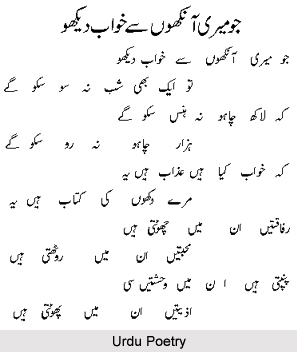
Urdu Poetry


Urdu PoetryUrdu poetry has a richness in tradition and has many different forms that were basically started from Arabic and borrowing mush from Persian Language. Urdu poetry witnessed its growth and development during the early eras of 13th century, when some bards of the north India initiated in varied experimentation with the style. However the ingrained classic forms of Urdu poetry that contemporary generation are accustomed with did not really take on a final shape until the 17th century, when Urdu became the official language of the court in the Indian subcontinent.

Today a significant part of Indian culture, just like other languages, the history of Urdu poetry also shares origin and its influences with other linguistic traditions within the Urdu-Hindi-Hindustani mix. Urdu poetry gained immense popularity in the 18th century when Urdu replaced Persian as a major language of the region. In the 18th there was a scarcity of newspapers. Urdu poetry's history is an amazing journey that is replete with intrigue for the curious onlookers. However, the amazing intensity with which it continues to thrive amidst the hurly burly of the cotemporary age bears the testimony of its presence.

Literary personalities, as far back as Amir Khusro (1253-1325) and Kabir (1440-1518) later inspired Urdu poets, and served as linguistic and intellectual sources. Ghalib, Anis, Meer, Dard, Dabeer, Iqbal, Zauq, Firaq, Josh, Jigar, Faiz and Syed Shmad Shah (Ahmad Faraz) are among the greatest poets of Urdu literature. The tradition is mainly concentrated in the subcontinent. In the year 1947, following the Partition of India, it found main scholars and poets residing mainly in present day Pakistan. Mushairas (or poetic expositions) are today held worldwide in metropolitan areas.

Like Elizabethan English which is complete with social and regional realities, Urdu holds a remarkable wealth of the conventions of many cultures and languages. This element got a great boost in the 18th century when there weren't many newspapers or media of information available to the public. Urdu poetry became a more intimate form of communication regarding the social and political tribulations of the time. The commonest form of communication, in tradition with the Arabic culture, was to read poetry in gatherings, called musha'era, where poets would gather to read poems crafted in accordance with a metrical pattern, which was often prescribed beforehand. Not only did the poetry have to meet the choice of word, and the loftiness of thought but also strict metrical patterns. There were competitions like those held in ancient Greek, Roman and pre-Islamic Arabic cultures. However, the intensity and warmth of the musha'eras that developed in Delhi were indeed unique and helped popularize Urdu as the language of poetry in the Mughal Empire. A culture built around taking lessons in writing Urdu poetry became the in-thing for the royalty, and the masters of poetry were given reverence worthy of kings.

For more, visit the link below:

Tuesday, 1 October 2019

Seshendra Sharma, Telugu Poet


ssss.jpg

gunturu-seshendra-sharma-memorial-trust-non-profit--somajiguda-hyderabad-telugu-literature-books-fr48t2Seshendra Sharma was one of the most outstanding Telugu Poet of modern Asia. He was the second person to have been nominated for the Nobel Literature Prize, after Rabindranath Tagore.

Seshendra Sharma, better known as ‘Seshendra’ was a Telugu poet, critic and litterateur. He was a colossus of Modern Indian poetry. His literature is a unique blend of the best of poetry and poetics.

Early Life of Seshendra Sharma
Seshendra Sharma was born on 20 October 1927 to his parents, G. Subrahmanyam Sharma and Ammaayamma. He spent his childhood in his ancestral home in Totapalli Guduru, 
Nellore District of Andhra Pradesh.
Untitled.png

Personal Life of Seshendra Sharma
Seshendra Sharma was married to Janaki. The couple had two girls and two boys; Vasundhara, Revathi, Vanamaali and Saatyaki. in 1970, he entered in a romantic relationship with Indira Devi Dhanrajgir, an Indo-Anglican poet.

Works of Seshendra Sharma
Seshendra Sharma’s first work in print appeared in 1952 which was a translation of Matthew Arnold’s "Sohrab and Rustum". In the beginning, he focused mainly on poetry and occasionally worked on literary criticism.
rr.png

He is well known for his works "Naa Desam, Naa Prajalu" and "Kaala Rekha".

Poems by Seshendra Sharmas.png

Achievements of Seshendra Sharma
The following are the awards and accolades received by Seshendra Sharma for his immense contribution to Telugu Literature: ‘Sahitya Akademi Award’ for his work ‘Kaala Rekha’ in 1994. ‘Sahitya Akademi Award’ for his work ‘Kaala Rekha’ in 1994.Untitled.png

Death of Seshendra Sharma
main-qimg-d41fb0b62cd42f0fd23f861fae19b4a4.jpgmain-qimg-e0e6b02e57091fc11dc5250a9b1c8e35.jpgSeshendra Sharma died on 30 May 2007. He lived with Indira Devi Dhanrajgir at her Gyanbagh Palace till his death.

In 1970, he entered in a romantic relationship with Indira Devi Dhanrajgir, an Indo-Anglican poet.

Read More :- Seshendra Sharma, Telugu Poet

Wednesday, 29 May 2019

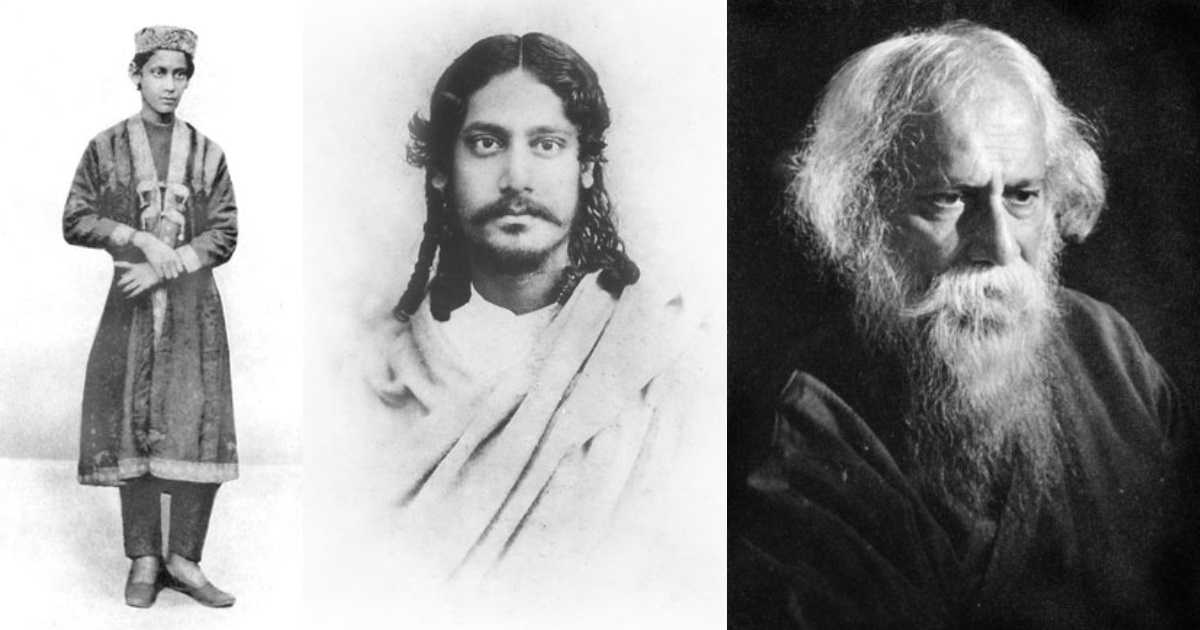
Rabindranath Tagore, Indian Poet

rabindranath_tagore.jpg
Rabindranath Tagore, a renowned poet and a Nobel award receiver for literature, was born in the year 1861. He grew up in the heart of Kolkata in a colonised country. Tagore's works focused on certain issues such as racial humiliation, search for self-esteem, education, and religion that was concerned with India. Literary works, nationalism and Santiniketan remained the passion of Tagore, for more than six decades of his life.
The-Prodigy-Of-Words-Rabindranath-Tagore-The-First-Asian-To-Win-The-Nobel-Prize-First-Indian-Be-An-Inspirer
download.jpg


Early Life of Rabindranath Tagore

Tagore was born the youngest of fourteen children, in the Jorasanko mansion, now known as
Tagore House, to parents Debendranath Tagore and Sarada Devi.  Rabindranath's father, Debendranath, was one of the leaders of the Brahmo Samaj.


9788121290586Rabindranath as a Poet  was known for his different forms of creative writing such as essays, letters, short stories, novels and dramas and is best known for his poems. Among his fifty and odd volumes of poetry are Manasi (1890), Sonar Tari (1894), Gitanjali (1910), Gitimalya (1914), and Balaka (1916).

Read more :Rabindranath Tagore, Indian Poet

Friday, 19 August 2016

Assamese Poetry in Jonaki Era

Assamese poetry in Jonaki Era was a further re-inforcing of the theme of Romanticism which was the hallmark of the period. There is seen in the poetry a search for the sublime and the beautiful, and the man-centric theme and his association with nature and beauty is carried forward in the poetry of the Jonaki era. To know more read:
http://www.indianetzone.com/49/assamese_poetry_jonaki_era.htm