Showing posts with label indian. Show all posts

Saturday, 18 June 2022

Indian Social Reformers


Indian Social ReformersIndian Social Reformers have successfully contributed in eradicating the social evils. While some of the eminent personalities voiced their support for Women Education, some Indian social reformers supported Widow Remarriage. The reformers in India have worked towards building a better nation without any bias.

In India, society and religion are interconnected. Hence the religious evils, such as, superstition, blind faith and others have affected the society again and again. Alongside the religious leaders the Indian social reformers also strove to liberate the people from such prevalent vices. Hailing from different religious and social backgrounds, they have adopted simple methods to educate the masses. Songs, poetry in colloquial languages, moral tales, organising community works and others are some of the methods that the Indian social reformers implemented to achieve their aims.

Famous Indian Social Reformers
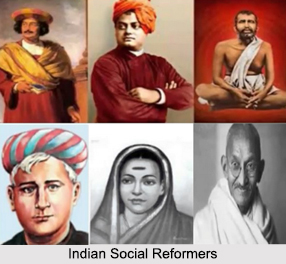
The Indian social reformers’ consistent efforts were recognised even by the British imperialists. Indian personalities like Swami VivekanandaIshwar Chandra VidyasagarRamakrishna ParamahansaDayanand Saraswati, Raja Ram Mohan Roy and others spoke up for the development and enlightenment of women. Under the British rule the Indian social reformers also popularised Western education. Amongst the most prominent Indian social reformers, Mahatma Gandhi, Shriram Sharma Acharya, Virchand Gandhi, Gopal Hari Deshmukh, Jamnalal Bajaj, Balshastri Jambhekar, Jawaharlal NehruVinoba BhaveDhondo Keshav KarveAnnie BesantB R Ambedkar, Vitthal Ramji Shinde, Pandurang Shastri Athavale, Kandukuri Veeresalingam and Kiran Bedi are worth mentioning.

Raja Rammohan Roy: Raja Ram Mohan Roy was the first person who recognized these inhuman practices and decided to fight against the same. He is considered as the architect of Indian Renaissance and father of modern India. This Indian social reformer was the founder of the Brahmo Samaj, a socio-religious reform movement in the Indian subcontinent, which crusaded against Hindu customs as sati, polygamy, child marriage and the caste system. Raja Ram Mohan Roy also demanded the property inheritance rights for women.
Indian Social ReformersSwami Vivekananda: Though Swami Vivekananda had not initiated any particular social reform but his speeches and writings were full of messages against all kinds of social and religious evils. His main focus was on removing the weakness of India’s youth of the time, both physical as well as mental. Vivekananda was one of the main Indian social reformers who preached Neo-Vedanta, which roughly translates to Hindu modernism. His reinterpretation of the concept is still very successful which has created a new understanding and appreciation of Hinduism within and outside India. It was his influence that was the principal reason for the enthusiastic reception of yoga, transcendental meditation and other forms of Indian spiritual self-improvement in the West.

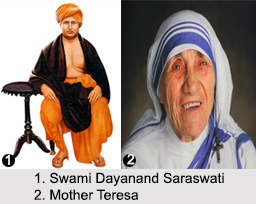
Swami Dayanand Saraswati: Swami Dayanand was the great believer in the teachings of Vedas. He criticized Hindu religious texts for perpetuating Idol worship and other superstitions. He argued against all wrong things being propagated in the name of Hinduism.

Jyotirao Phule: Jyotirao Phule devoted his whole life for the weaker and depressed section of society. He was also against child-marriages and was a great supporter of widow remarriage. He was very sympathetic to the cause of distressed women and opened a home for such poor and exploited women where they could be taken care off. He and his wife, Savitribai Phule, were pioneers of women education in India. The couple was among the first native Indians to open a school for girls of India.

In the rich tapestry of Indian literature, Kuvempu stands tall as a luminary, an icon whose work has left an indelible mark on Kannada literature and culture. Born as Kuppali Venkatappa Puttappa on December 29, 1904, in the quaint village of Kuppali in Karnataka, India, Kuvempu emerged as a prolific writer, playwright, and an ardent advocate of the Kannada language. Fondly remembered as the "Rashtrakavi" (National Poet), Kuvempu's literary journey traverses themes of humanism, nationalism, and the essence of nature, reflecting his profound vision and understanding of life's nuances.

For more, visit the page below:

Tuesday, 10 November 2020

Indian Aboriginal Tribes


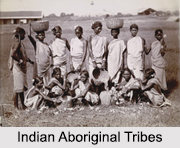
Indian Aboriginal TribesIndian Aboriginal Tribes are the ethnic inhabitants of the country, who have been termed as ‘Scheduled Tribes’ in the Indian Constitution and are scattered throughout India. The aboriginal tribes of India have been following their individual series of ancient traditions, cultures and customs since times immemorial. Presently, they constitute about 105 of the aggregate population of India, numbering over 700 distinct groups.

They reside in various portions of the nation, concentrated towards the Central India, the north-eastern Indian states, the Indian Union Territories and several other parts of India. Some of the native tribes are found concentrated in the belt along the Himalayas stretching through Jammu and KashmirHimachal Pradesh, and Uttar Pradesh in the west, to AssamMeghalayaTripuraArunachal PradeshMizoramManipur, and Nagaland in the northeast. There are no Scheduled Tribes in states like PunjabDelhiChandigarhPuducherry and Haryana.

Aboriginal Tribes of Northern India
The Jaunsari in Uttarakhand or the Kinnaura in Himachal Pradesh have been enlisted as Scheduled Tribe. They are deprived of basic education and health care facilities which puts them on a back foot. The life, culture, customs, traditions, manners and the heritage of the people of Kinnaura is a world in itself.

Aboriginal Tribes of Central and Western India
The Gondi tribe is one of the aboriginal tribes of central India. The Gondi, or Gond Tribe live across the states of Madhya Pradesh, eastern Maharashtra (Vidarbha), Chhattisgarh, northern Andhra Pradesh, and western Odisha. They make up the largest tribe in Central India.Indian Aboriginal Tribes

Bhil Tribe are the native tribes of Central India who are found in the states of Gujarat, Madhya Pradesh, Chhattisgarh, Maharashtra and Rajasthan in western and central India, as well as in Tripura in far-eastern India, on the border with Bangladesh. The Ghoomar dance is one of the oldest and most popular aspects of Bhil culture.

Aboriginal Tribes of North-Eastern India
In the north-eastern states of Arunachal Pradesh, Meghalaya, Mizoram and Nagaland, upward of 90 percent of the population is tribal. The Morans are considered as the aboriginal people of Assam. The Mishing people are an aboriginal tribal group, the second largest tribal group in North- East India, first being the Bodos in Assam.

Aboriginal Tribes of Eastern India
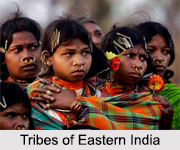
The 'Kolcaste is a generic name for the Munda TribeHo and Oraon tribes who are the aboriginal groups of eastern India. These tribes live in the states of Jharkhand, Odisha and West Bengal, and spread over into parts of Bihar, Chhattisgarh, Madhya Pradesh, Assam and Tripura. The Munda tribe is an aboriginal tribe of Austro-Asiatic physical type and in 1901 they inhabited the Chota Nagpur Division. The majority of the Kol people thought themselves to be Hindus with a syncretism admixture of innovative animistic beliefs. The village community in its ancient structure still exists among the Mundas. The 'Santhal' Tribes are the largest tribal community in India, found mainly in the states of West Bengal, Bihar, Jharkhand, Assam and Odisha.

For more visit the link below:

Thursday, 27 August 2020

Regional Theatre in India


Regional Theatre in IndiaRegional theatre in India encompasses all the regional flavour of the Indian states. The multilingual aspect of India's poetic articulation amidst Indian theatre, have been severely appreciated by people around the country. Diverse culture, varied religion and most importantly the multi-dimensional nature of Indian language has played a great role in shaping up India's rich heritage and culture. The fusion of different Indian language and the union of varied Indian traditions from different region have enriched India's ethnicity in quite a large way since the remote past. India, as a multilingual and multi religious state can not be allied with one particular kind of trend and aspect in its theatres and dramas. This is the reason why the deep fervor of Bengali theatre has gelled well with the passion of Hindi Manipuri, Kannada and Marathi theatre and has given birth to a whole new concept of "Indian theatre". It is right after the independence of India, Indian theatre in different Indian languages and regions developed as an important element in taking theatre to the further level of maturity.

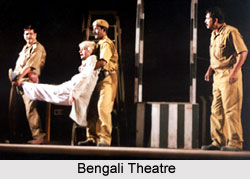
Malayalam TheatreGujarati TheatreKannada Theatre all has its roots associated with the British rule as the seed of the contemporary drama in India was sown during that era. Bengali theatre started with an intention of private entertainment however gradually it became the weapon to illustrate the dislikes and frustration of the British imperialism in India. As an art form Bengali theatre has its roots associated with the British Raj. Although started as private entertainment in the early 19th century Bengali theatre gradually became not only an eminent art form but also started playing the major role in illustrating the discomforts of the administration of British Empire in India. The year was 1947 and the day was 15th August - Indian Independence Day.

Girish KanradThe day is indeed a red letter day in the history of Indian theatre. Not only India stood apart as a socially and politically sovereign state but also Indian culture, art, music, literature all witnessed a colossal change. Theatre and Indian drama, in various regional languages of the state, gradually became an art form, to illustrate the social and political ailments of independent India. Right after the independence of India the communist consolidation and the growth of left ideologies in India specially in West Bengal, used Bengali theatre as a typical means of advertisement or propaganda. Quite ideally, therefore, a new trend in Multi lingual and regional theatre gradually developed and the emergence of the theatre companies in India is one of them. All these theatre groups carried somewhat an ideological belief at the same time as distinct cultural inspiration to differentiate themselves from the typical artistry of the ancient Indian theatre.


For more visit the page:


Tuesday, 4 August 2020

Indian Cricket Personalities

The game of Indian cricket from colonial era has generated a whole lot of unforgettable Indian Cricket Personalities, and this does not only consist of players. Unlike most other sports, where only the performers are remembered, cricket has equally immortalised coaches umpires and even commentators. Indian Cricket Personalities played a significant role in further strengthening the game after retirement. Some of the major Indian Cricket Personalities are R Ashwin, P Awana, PP Chawla, Mahendra Singh Dhoni, Zaheer Khan, Yuvraj Singh, UT Yadav, R Vinay Kumar, I Sharma, I Sharma, IK Pathan and many others.

S. Venkataraghavan
Srinivasaraghavan Venkataraghavan was an able off spinner, who captained India in the first two World Cups in 1975 and 1979. Nicknamed, Venkat, he also went on to become a reputed international umpire. He officiated in 73 Test matches and 52 one-day internationals during the period 1993 to 2004 following which he retired. After retiring from first-class cricket in 1985, he also became a cricket administrator and the manager the Indian Test team. Venkat was part of the famous quartet of Indian spinners in the 1970s. But he often lost out his place in the side to the other off-spinner Erapalli Prasanna, who was believed to be more talented of the two. For his all-round contribution to cricket, he was awarded the Padma Shri in 2003.Indian Cricket Personalities

Anil Dandekar
Anil Dandekar is an Indian cricket umpire. In India he has stood in matches in the 2015–16 Ranji Trophy, the 2015–16 Vijay Hazare Trophy and the 2015–16 Syed Mushtaq Ali Trophy.

Sanjeev Dua
Sanjeev Dua is an Indian cricket umpire. Sanjeev Dua has umpired 5 Women's One Day International cricket matches, 44 first-class matches, 33 List A matches and 20 Twenty20 matches.

Madan Lal
Madan Lal Udhouram Sharma coached India for a brief period in the 90s but did not taste too much success. He will be remembered more for being part of the World Cup winning squad in 1983. His statistics are not phenomenal but he had the ability of delivering with both the bat and ball. Lal played in played 31 Test matches for India and scored just over 1,042 runs averaging 22.65. He also picked up 71 wickets at an average of 40.08 and took 15 catches. He had much better figures at the first class level with 10,000 plus runs and 600 wickets.Indian Cricket Personalities

Kapil Dev
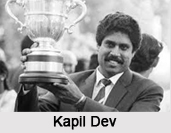
Kapil Dev Ramlal Nikhanj also famous as Kapil Dev is a former Indian cricketer. He captained the Indian cricket team which won the 1983 Cricket World Cup. He was named by Wisden as the Indian Cricketer of the Century in 2002, Kapil Dev was also India's national cricket coach for 10 months between October 1999 and August 2000.

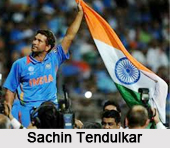
Sachin Tendulkar
Sachin Tendulkar is a former Indian cricketer and captain, widely regarded as one of the greatest batsmen of all time. He took up cricket at the age of eleven, made his Test debut on 15th November 1989 against Pakistan in Karachi at the age of sixteen, and went on to represent Mumbai domestically and India internationally for close to twenty-four years.

Virender Sehwag
Virender Sehwag is a former Indian cricketer. He is the former captain of India. Often considered as one of the most destructive batsman of the game, Virender Sehwag is an aggressive right-handed opening batsman and a part-time right-arm off-spin bowler. He played his first One Day International in 1999 and joined the Indian test side in 2001. In April 2009, Sehwag became the only Indian to be honoured as the Wisden Leading Cricketer in the World for his performance in 2008, subsequently becoming the first player of any nationality to retain the award for 2009.Indian Cricket Personalities

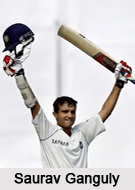
Saurav Ganguly
Sourav Chandidas Ganguly was born on 8 July 1972. He was affectionately known as Dada is a former Indian cricketer and captain of the Indian national team of Cricket. Presently Sourav Chandidas Ganguly is cricket commentator and President of Editorial Board with Wisden India. Born into an affluent Brahmin family, Saurav Ganguly was introduced into the world of cricket by his elder brother Snehasish Ganguly. Saurav Ganguly is regarded as one of India's most successful captains in modern times. Saurav Ganguly started his career by playing in state and school teams. Currently, Saurav Ganguly is the 5th highest run scorer in One Day Internationals (ODIs) and was the 3rd person in history to cross the 10,000 run landmark, after Sachin Tendulkar and Inzamam Ul Haq. In 2002, the Wisden Cricketers' Almanack ranked Saurav Ganguly the sixth greatest ODI batsman of all time, next to Viv Richards, Brian Lara, Dean Jones and Michael Bevan.

For more visit the page:

Thursday, 9 July 2020

Indian Revolts


The coinage 'revolt' always comes to one's mind associated with insurgencies, unrests, reckless crusades, surreptitious endeavours or just revolting in a rebellious note. And revolts in India are something that every Indian is absolutely acquainted with. It is universally recognised that since ancient Indian times, the country had stayed a mute witness to umpteen and uncountable revolts and invasions, post the Indus Valley Civilization. The Ancient Age or the Stone Age was one that had paved way for western and Persian civilisations to establish their sight upon India, laden with mysterious gifts and fineries, mysticisms, prowess and everything occult. This very tempting theory was carried on to Aryan invasion into India that had paved way for significant succession of Indian humanity to evolve still to this date. The Middle Ages, with the advent of Islamic rule with the Slave Dynasty, the Tughlaqs or the Lodis, culminated with Mughal rule establishment in India, once more profoundly altering the course of residing natives and its society. As such, Indian revolts was not much thing of innovation or awe, with every ruler and their subjects preparing themselves against sudden attacks and incursions, some with triumphant end-results, some the contrary, Yet, as is presently and truly accepted of what is termed as 'revolts in India', was horrifically ushered in by the British Empire during their early advent by sea during mid-1600s, the intention of whom had changed massively with time. The trade-makers had gradually and cleverly grounded themselves as nepotist rulers and colonialists, with the rulers turning into the ruled.

Tuesday, 7 July 2020

Forts in India

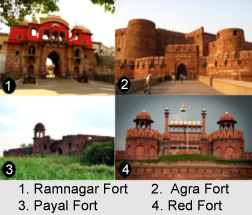
Forts in India have been constructed to protect the settlements against hostile attack and marauding wild animals. Due to successive waves of invasion, there was an ancient tradition in India to erect massive and strong forts to obstruct the invaders. The origins of some of the Indian forts are lost in the mists of time while some have been transformed or reconstructed after the invasion of the Muslims in the twelfth century.


Early History of Forts in India
The ancient treatises on Indian architecture and fortification can be retrieved from the 'Shilpa Shastras' and in some of the ancient Indian literature like the Indian Puranas and epics. This vast pool of knowledge gives a significant account of the development of the forts in India. 'Pur', a word which is mentioned repeatedly in the Vedas, means a rampart, fort or stronghold. Kautilya, in the forth century BC, wrote extensively regarding the protective fortifications. He differentiated forts as per the preferred types of site. The Nara Durg, a fort which was protected by men, gives an account of the Aryans correlation of a fort with a town.

Forts in IndiaMedieval History of Forts in India
After the invasion of the Muslims, construction of forts in India reflects many of the developments which took place in Europe. The central citadel was kept isolated and secure from the expansive outwork of curtain walls. Usually the citadel was sited on a naturally defensible outcrop of rock. The forts of the great Maratha Emperors of western India like the Purandhar, Raigarh and Sinhagarh have manipulated natural terrain to their strategic advantage. At Gulbarga, in Deccan, the central stronghold followed the practice of the Crusader castles of the Near East, with a robust donjon or inner redoubt at the heart of the defence.