Showing posts with label travelling. Show all posts

Thursday, 26 December 2024

Barbil, Odisha, An Emerging Tourist Spot


Barbil, situated in the Kendujhar district of Odisha, is a small yet significant town in eastern India. Nestled in the lap of nature, Barbil lies in the mineral-rich belt. The town is surrounded by dense forests and hilly terrain, with the Karo and Baitarani rivers flowing nearby, contributing to its picturesque landscape. Its location at the northern boundary of Odisha makes it well-connected to the neighboring states of Jharkhand and West Bengal. 

The region’s subtropical climate features hot summers and mild winters, with substantial rainfall during the monsoon season. This geographical setup has endowed Barbil with abundant mineral reserves, particularly iron ore, which forms the backbone of its economy. 

Economic Significance

Barbil is a prominent center of the mining and steel industry in India. The town is one of the largest iron ore-producing areas in the country, with extensive mining operations undertaken by both public and private sector entities. Major companies like Tata Steel, Jindal Steel, and SAIL have operations in the region, driving economic growth and generating employment opportunities. 

Apart from mining, ancillary industries such as transportation, heavy machinery maintenance, and logistics also thrive here. The mining activities contribute significantly to Odisha’s economy, making Barbil an industrial hub. However, concerns about environmental degradation have prompted efforts toward sustainable mining practices in recent years. 

Tourism in Barbil

Barbil is gaining recognition as a potential tourist destination due to its unique blend of industrial importance and natural beauty. The surrounding forests and hills offer a serene environment, attracting visitors seeking tranquility and adventure. 

One of the notable tourist attractions is the Kiriburu and Meghahatuburu hills, located on the Odisha-Jharkhand border. These scenic spots are known for their panoramic views and trekking opportunities. The Sundargarh forest near Barbil is another attraction, offering a glimpse into the region’s rich biodiversity. 

For those interested in local culture, Barbil provides insights into the traditional tribal communities of Odisha, who have preserved their distinct customs and way of life. The town is also close to Khandadhar Waterfalls, one of the highest waterfalls in Odisha, known for its breathtaking cascade. 

Connectivity and Infrastructure

Barbil is well-connected through rail and road networks. The Barbil railway station links the town to major cities like Bhubaneswar, Kolkata, and Ranchi, facilitating the transport of minerals and passenger movement. The road network, supported by state and national highways, ensures smooth connectivity to neighboring towns and industrial areas. 

Efforts are being made to improve infrastructure, with initiatives to upgrade schools, healthcare facilities, and public amenities to cater to the growing population and workforce. 

Barbil, Odisha, stands out as a vital economic center with its rich mineral deposits and burgeoning industrial activities. Its scenic landscapes and proximity to natural attractions hold great potential for tourism development. Balancing industrial growth with ecological preservation will be key to ensuring a sustainable future for this dynamic town.

Wednesday, 19 July 2023

Kolkata Municipal Corporation: Leading the City's Governance


The Kolkata Municipal Corporation (KMC) is an essential government body responsible for the governance and administration of the city of Kolkata, India. With a rich history dating back to its establishment in 1876, the KMC plays a pivotal role in shaping the city's infrastructure, public services, and overall development. Let's delve into the responsibilities and duties of this esteemed organization, as well as the legendary mayors who have led it.


One of the primary responsibilities of the Kolkata Municipal Corporation is to provide essential civic amenities to the residents of the city. These amenities include water supply, sanitation, solid waste management, maintenance of roads and bridges, and public transportation. The KMC also plays a crucial role in urban planning, issuing building permits, and regulating land use to ensure sustainable and organized development. 

The corporation is responsible for ensuring public health and safety within its jurisdiction. It operates and manages numerous healthcare facilities, including hospitals, dispensaries, and health centers, to provide accessible healthcare services to the citizens. Additionally, the KMC takes measures to control and prevent the spread of diseases, such as implementing vaccination drives, conducting health awareness campaigns, and inspecting food establishments to maintain hygiene standards. Kolkata  

Education is another crucial aspect overseen by the Kolkata Municipal Corporation. It manages and operates several primary and secondary schools, aiming to provide quality education to children in the city. The KMC also focuses on adult education programs and skill development initiatives to enhance livelihood opportunities for the citizens. By investing in education, the corporation contributes to the overall growth and prosperity of the city.

Over the years, the Kolkata Municipal Corporation has been led by some legendary mayors who have left an indelible mark on the city's history. One such iconic figure is Deshbandhu Chittaranjan Das, who served as the first mayor of Kolkata from 1924 to 1925. Das was a prominent freedom fighter, lawyer, and social reformer. His tenure witnessed several progressive reforms and infrastructure development, laying the foundation for a modern Kolkata. 

Another renowned mayor was Bidhan Chandra Roy, who served as the mayor from 1934 to 1938 before going on to become the second Chief Minister of West Bengal. Roy was a distinguished physician and a visionary leader. During his tenure, he initiated various healthcare reforms, including the establishment of the renowned Nil Ratan Sircar Medical College and Hospital, which still stands as a testament to his contributions. 

A prominent name in Kolkata's political landscape is Sovan Chatterjee, who served as the mayor from 2010 to 2018. Chatterjee focused on urban development, implementing key projects to improve the city's infrastructure and public transportation system. His tenure witnessed the introduction of the Kolkata Solid Waste Management Improvement Project and the modernization of street lighting systems. 

The current mayor of Kolkata is Firhad Hakim, who assumed office in 2018. Known for his dynamic leadership and administrative acumen, Hakim has been instrumental in driving the city's development. Under his stewardship, initiatives like the "Safe Drive Save Life" campaign have been implemented to ensure road safety and minimize accidents. 

As a vital governing body, the Kolkata Municipal Corporation shoulders the responsibility of providing essential services and improving the quality of life for the citizens of Kolkata. Through the efforts of its legendary mayors and dedicated personnel, the KMC has played a pivotal role in shaping the city's growth and development. With its commitment to progress and the well-being of its residents, the Kolkata Municipal Corporation continues to be a driving force in the city's journey towards a prosperous future.

Thursday, 23 March 2023

South Indian States


South Indian StatesSouth Indian states include Telangana, Andhra Pradesh, Tamil Nadu, Karnataka and Kerala. These South Indian states are covering the southern part of the peninsular Deccan Plateau. These states are bounded by the Bay of Bengal in the east, the Arabian Sea in the west and the Indian Ocean in the south. The geography of the region is diverse with two mountain ranges - the Western Ghats Mountain Range in India and Eastern Ghats Mountain Range in India, bordering the plateau heartland. 

History of South Indian States
Vijayanagara Empire was the last dynasty to rule the region and post that southern Indian has been through multiple invasions. Delhi Sultanate led to the fall of Vijayanagara Empire and eventually captured the region and ruled as Deccan Sultanate. The region was later invaded by the Marathas, Palaiyakkarars, and Nayaks. Southern India was initially colonized by the Europeans in the 15th Century and by the mid 18th Century the French and British constantly fought over for control of that region. After several battles like the Anglo-Mysore war and the Vellore Mutiny, the British took control over that region in 1857 with exception of Pondicherry (now Puducherry) which remained under French rule. The British Empire divided the region into a few states and presidencies such as Madras Presidency, Hyderabad State, Mysore, Travancore, Cochin, and Jeypore.

For more, visit the link below:

Thursday, 8 December 2022

Reserved Forests in India


Reserved Forests in IndiaReserved forests in India are rich sources of the diverse wildlife of the country. Reserved forests in India enjoy considerably a higher degree of security as compared to the protected forests of the country. It is because of the reason that reserved forests in India do not permit grazing or hunting in its confines while protected forests allow with some degree of constraints. The term reserved forest was first introduced in the Indian Forest Act, 1927, to refer to those forests granted defence by the government in British India. However, even after the independence of the country, the Government of India held the status of reserved forests as well as integrating new reserved forests. Thus, a large number of forests that came under the jurisdiction of the Indian Government during the political integration of the country were primarily granted such defence. All reserve forests in India, be it the mountainous terrain of the Gulmarg Biosphere Reserve or be it the green plains of Nandan Kanan Reserve Forest, are infused with the sense of adventure.

Features of Reserved Forests in India
Unlike the national parks or the wildlife sanctuaries of the country, the reserved forests as well as the protected forests in India are declared by respective state governments. However, protected forests and reserved forests differ significantly. Protected forests are basically of two types namely demarcated protected forests and un-demarcated protected forests. In reserved forests the rights to activities such as hunting and grazing are not allowed. The reserved forests carry a living indication to helping hands that have been forwarded by Indian environmentalists and keen animal lovers. Reserved forests in India are often raised to the status of wildlife sanctuaries, which in turn may be upgraded to the position of national parks. Like for instance, Sariska National Park was announced a reserved forest of India in the year 1955, later upgraded to the position of wildlife sanctuary in the year 1958, and eventually becoming a tiger reserve in the year 1978. It became a national park in the year 1992.

Reserved Forests in IndiaBhavnagar Amreli Forest
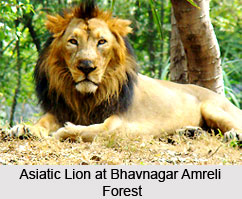
Bhavnagar Amreli Forest, situated in the Amreli district of Gujarat, is an Indian reserve forest famed for conserving Asiatic lions. Being the pride of Gujarat, the lions of the state were shifted to this forest on the instructions of the Central Government.

Banni Grasslands Reserve
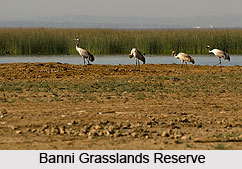
Banni Grasslands Reserve is a part of the arid grassland ecosystem on the southern edge of the desert of the marshy salt flats of Rann of Kutch in Gujarat. Spanning over an area of 3847 square kilometres, the forest is popular owing to its rich biodiversity of flora and fauna. According to the Wildlife Institute of India, it is enlisted amongst the last remaining habitats of the Cheetah in India. The land of the forest has been formed by the deposition of sediments by the Indus and other rivers over a period of about thousand years.

For more, visit the link below:

Tuesday, 30 August 2022

Tourism In Punjab


Tourism In PunjabPunjab which is also referred to as the land of five rivers is a traveller’s delight. The likely images that would crop up in an Indian mind on hearing Punjab are lush green fields ripe with corn and mustard. The tourists will perceive it as a sunburn land, flat as a pancake, sloping imperceptibly down from the Himalayan foothills towards the deserts of Rajasthan on the one side and the extensive plains of Hindustan on the other. The land of Punjab not only boasts of ancient monuments but throbs with historical embodiments. Tourism in Punjab is an amalgamation of religious monuments, historical buildings, wild life sanctuaries and more. Tourists to Punjab can enjoy culture, ancient civilisation, spirituality and history. The royal Punjabi palaces, historic battle sites, shrines, temples and examples of Sikh architecture are distinguished attractions. In fact, tourism is a rapidly escalating sector of Punjab.

Pilgrimage Tourism in Punjab
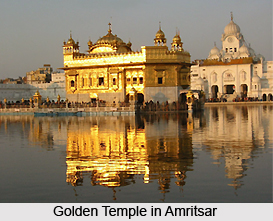
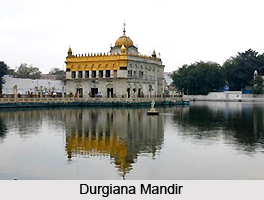
Punjab is truly a pilgrim’s paradise with Gurudwaras, temples, mosques, mausoleums and other pilgrimage sites. The Golden temple in Amritsar in Punjab is the most well known religious center of the state. It is the holiest shrine of the Sikh religion. During Maharaja Ranjit Singh's reign the lower half of the temple was ornamented with marble while the complete upper half was inlaid with copper and gold plated. Built with the blend of Hindu and Muslim style its four gates emblematically invite everyone from all directions. The Anandpur Sahib is one of the holiest places if the Sikhs in Punjab. It is closely linked with Sikh religious traditions and history. Keshgarh Sahib is the central place of Anandpur Sahib and is the main shrine of Anandpur. The Ram Tirth in Amritsar is an ancient temple that dates back to the period of the Ramayana. It is a Hindu temple. The Durgiana Mandir of Punjab is also a much visited site for the pilgrimage tourists. The other Hindu temples of Punjab include the Bhagwathi Mandir, the Shiv Mandir, the Panch Mandir and the Kali Devi temple. Islam was once a dominant religion in Punjab and this is evident in the mosques and mausoleums of the place. The Mazaar and Rauza Sharif mausoleums are frequented by tourists. The Moorish mosque is one of the famous mosques of Punjab.

Tourism In PunjabNature tourism in Punjab
Eco tourism is quite a common term today in the tourism industry. Punjab government too has big plans for this sector. With several wetlands and wildlife sanctuaries the eco tourism in this region is expected to receive a huge boost. Besides the forests and wetlands the tourists can also check out the beautiful gardens that adorn the cities. Punjab has beautiful natural landscape with plentiful water supply due to the rich rivers. The state is a natural habitat of several flora and fauna and this is a great attraction to tourists. Punjab wildlife is noteworthy as there are several wetlands, zoological parks and bird sanctuaries all over the place. It is an integral part of tourism in Punjab. This land of cultural colours allows the travelers to take pleasure in a lion safari at Chhatbir zoo adjacent to Chandigarh. Migratory birds fly at Hari Ke Pattan at Amritsar. The wildlife in Punjab especially at Hari Ke pattan is a national wetland and wildlife sanctuary at Amritsar. More than 350 migratory birds come here in the winter season. Several vibrant as well as exotic birds fly from Siberia. This is a famous home to wide-ranging wildlife. These wild life locations also serve as picnic spots to the tourists. The Punjab wildlife apart from exotic birds includes reptiles, amphibians, fishes, plants and endangered species. Few other appealing places are the Deer park at Neelon and the tiger safari adjacent to Ludhiana in Punjab. The wildlife in Punjab finds a natural habitat owing to the prosperous flora and fauna.

For more, visit the link below:

Tuesday, 2 August 2022

Tourism in Tripura


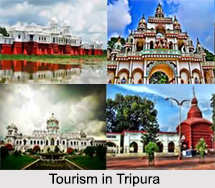
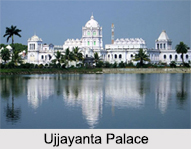
Tourism in TripuraTourism inTripura owes its splendour to its natural settings and dazzling heritage. The state government has given tourism the status of an industry. A plethora of delightful attractions are comprised in the historical palaces, rock cut carvings, stone sculptures,Hindu and Buddhist temples, wildlife sanctuaries and tribal people. The state has several places of tourist importance like Agartala, Unakoti, Pilak, Udaipur, Tripura Sundari Temple, Ujjayanta Palace, Neermahal, Jampui Hill, Bhuvaneswari Temple, Sepahijala, Kamalasagar Kali Temple, Deotamura and Dumboor Lake.

Tourism in TripuraMoreover, there are the Buddhist monasteries in Agartala, Pecharthal, Kanchanpur, Manu Bakul, Pilak and Boxnagar.

Pilgrimage Tourism in Tripura
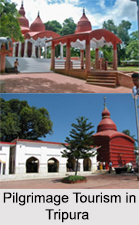
The entire origin of the land of Tripura is steeped in religion. The temple of Tripura Sundari in Udaipur, Tripura is one of the foremost religious shrines in Tripura. The state itself derives its name from the mother goddess. Most of the temples in Tripura are located at hilltops. Besides the Hindu shrines, Tripura is also the abode of Buddhist pilgrimages. Benuban Vihar in Agartala is one of the most attractive Buddhist destinations of Tripura.

Nature Tourism in Tripura
Tripura is endowed with natural landscape of hilly terrain, green vegetation and flowing rivers. It is marked by low ranges running in a north-west to south-east direction. These ranges reach up to 3000 feet. On the road to Udaipur, 35 km south of Agartala, the nature reserve at Sepahijala extends over 18 square kilometers, with a lake, zoo and botanical gardens, and is home to primates including the Hoolock gibbon and golden langur and around 150 species of birds. Trishna Wildlife Sanctuary is located 100 kilometres away from Agartala in South Tripura District. Besides these the travellers can also explore Dumboor Lake, near Agartala and Rudrasagar Lake, near Melaghar.

Tourism in TripuraLeisure Tourism in Tripura
The State Museum at Agartala displays interesting ethnographic and archaeological exhibits. One of its galleries is completely devoted to the excavations at Unakoti in the forests of northern Tripura.

For more, visit the link below:

Tuesday, 5 July 2022

Tourism In Manipur


Tourism In Manipur Manipur is a captivating state lying in the northeastern state. It is hailed as the land of Manipuri Dance, Phug Cholom and rich culture. The state of Manipur is protected by hills and mountains. The bracing climate lures travelers from all over the world to this part of India. The state of Manipur is one of the seven northeastern states in India. The places of tourist attraction in Manipur are the religious centers, the beautiful lakes, national parks, monuments and scenic hill station.

Pilgrimage Tourism in Manipur
Temples in Manipur are remarkable pilgrimage sites which makes the trip to this state more captivating. Almost all the temples of Manipur are created on Brahmanical rules of Vastu Shastra and have the Mandapas. The architectural style of the temples in Manipur resembles the Bengal temple architecture.

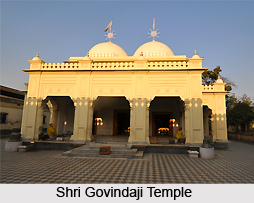
Temples: The Vishnu temple of Bishanpur town in Manipur is the oldest temple of the state. This temple is a significant religious structure of Manipur and is an important pilgrimage site. The temple is an eminent pilgrimage sight of the Hindus. Shri Govindaji temple in Manipur is one of the most visited religious centers of the state. It is a popular Hindu temple and the deities worshipped here are the Hindu gods, Radha and Krishna Govinda. Located in an easily accessible place in the capital of the state, Imphal, the temple is visited by large numbers of pilgrims every year. The tourists also have a high regard for the temple structure. Built of red bricks, the temple features a rectangular medieval style of architecture.

Nature Tourism in Manipur
The Keibul Lamjao National Park is one of its major tourist attractions. Located near the capital city of Imphal, this is a must visit tourist spot of Manipur. The sight of rare animals and birds is a delight for the nature lovers. Spread over forty square kilometers of wetland, the Keibul Lamjao National Park is debatably the world's only floating sanctuary.

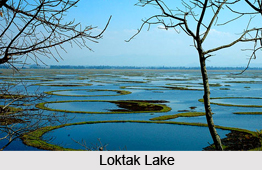
Tourism In ManipurAnimals and surrounding lakes: Apart from the foliage and topography the park consists of the Loktak Lake, which is the biggest freshwater lake in India. The star appeal, of the park is the Brow-antlered deer. This is a breed of the Thamin deer. Because of its fragile way of walking it is also affectionately called Manipur's dancing deer. Other species of deer seen here comprise the hog deer, sambar and muntjac. Various birds such as the Waterfowl, the Hooded Crane, the Black Eagle and the Shaheen Falcon are found here. The major fresh water lake of Manipur is the Loktak Lake which is also well known by the name of 'Floating Lake' as it one of the exceptional lakes in the world which have the Phundies or floating islands on it. Tourists visiting the lake can also go for the nearby attraction which is the ancient temple of the pre-Hindu deity, Lord Thangjing, located in the Moirang.

For more, visit the link below:

Thursday, 5 May 2022

Bird Sanctuaries in India


Bird Sanctuaries in IndiaBird sanctuaries in India are homes to various types of birds. Due to its vast and varied geographical setting and climate and extended coast line, India provides shelter to thousands of bird species. Out of 8650 species of birds seen in the world, India houses more than 1250 species. Some of the legendary species of birds observed in the bird sanctuaries and national parks of India are racquet tailed drogas, treepies jungle owlets, minvets, ioras, golden orioles, magpies, robins, sunbirds, white throated kingfisher, drogas, mynas, pipits, Asian paradise flycatcher, larks and Siberian cranes.

Aims and Features of Bird Sanctuaries in India
Establishment of bird sanctuaries is an attempt by the Indian administration to increase seasonal migration, security, forested areas and bird-watching and attract a large number of migratory birds, every year. Apart from birds, Indian bird sanctuaries support dense forests and a variety of vegetations. A noticeable feature of these bird sanctuaries is that they are surrounded by natural or man-made water bodies like rivers and lakes. This provides natural setting to different species of birds. Below the bird sanctuaries of India are enlisted region wise:

Bird Sanctuaries of Southern India
Atapaka Bird Sanctuary, Nelapattu Bird Sanctuary, and Uppalapadu Bird Sanctuary are located in the Indian state of Andhra Pradesh. Attiveri Bird Sanctuary, Bankapura Peacock Sanctuary, Bonal Bird Sanctuary, Gudavi Bird Sanctuary, Kaggaladu Bird Sanctuary, Magadi Bird Sanctuary, Mandagadde Bird Sanctuary, Puttenahalli Lake (Yelahanka) and Ranganathittu Bird Sanctuary are some of the important bird sanctuaries of Karnataka. In Kerala, there are five famous bird sanctuaries and they are Kadalundi Bird Sanctuary, Kumarakom Bird Sanctuary, Mangalavanam Bird Sanctuary, Pathiramanal Bird Sanctuary and Thattekad Bird Sanctuary etc. Bird sanctuaries of Tamil Nadu are Chitrangudi Bird Sanctuary, Kanjirankulam Bird Sanctuary, Koothankulam Bird Sanctuary, Suchindram Theroor Birds Sanctuary, Udayamarthandapuram Bird Sanctuary, Vedanthangal Bird Sanctuary, Vellode Birds Sanctuary, Pulicat Lake Bird Sanctuary and Vettangudi Bird Sanctuary.

For more, visit the link below: