Showing posts with label odisha. Show all posts

Thursday, 27 August 2026

Chasa Community of Odisha: History, Traditions and Cultural Heritage

 The Chasa is a prominent caste native to Odisha and is traditionally regarded as the chief cultivating community of the state. The word Chasa in Odia means “farmer” or “cultivator,” reflecting the community’s longstanding association with agriculture. Historically, members of the caste were primarily engaged in cultivation and played an important role in Odisha’s agrarian society. Over time, however, the Chasa community has diversified, and its members are now engaged in a variety of professions.


The Chasas constitute the third-largest caste in Odisha by population. The community has also developed a rich cultural heritage shaped by its agricultural traditions, social customs and religious practices. 

Historical Distribution and Identity

The Chasa community has historically been associated with Odisha, particularly the regions of Sambalpur and adjoining areas. In Sonepur, the community is also known as Alia. Earlier, Chasas were largely enumerated in Sambalpur and neighbouring regions, while a significant number are said to have migrated to Bengal in 1905. 

An interesting feature of Chasa social organisation is its relatively loose structure, which historically made it possible for outsiders to be admitted into the caste. This characteristic is reflected in the names of several Chasa subdivisions. For example, Kolta, Khandait and Ud are names that are also associated with distinct caste groups, indicating the diverse elements that became incorporated into the Chasa community. 

Marriage and Social Customs

Traditional marriage practices among the Chasas reflect distinctive social customs. Girls were historically married before reaching adolescence. In cases where a suitable match could not be found, a symbolic marriage could be performed with a flower or an arrow. When an appropriate husband was subsequently found, the woman could be united with him through a form of widow remarriage. 

Widow remarriage and divorce are traditionally permitted within the community, demonstrating the presence of comparatively flexible social practices concerning marriage and family life. 

Religious Practices and Funeral Customs

The Chasa community follows Hindu religious traditions and worships various Hindu deities. Religious ceremonies are generally conducted with the assistance of Brahmin priests. On certain occasions, animal sacrifice has also formed part of their religious practices, reflecting older ritual traditions associated with local forms of Hindu worship. 

Funeral customs traditionally differ according to marital status. Unmarried members of the community are buried after death, whereas married members are generally cremated. These practices form an important part of the community’s traditional social and religious observances. 

Cultural Heritage

The cultural heritage of the Chasa community is closely connected with its agricultural origins and the social life of rural Odisha. Although the community’s occupational profile has expanded considerably beyond cultivation, its historical identity as a farming community remains central to its cultural character. Its diverse subdivisions, marriage customs, religious practices and traditional ceremonies demonstrate the complex social history of the Chasas. 

Today, the Chasa community continues to form an important part of Odisha’s social fabric. Its transition from a predominantly agrarian community to one represented across a range of professions illustrates the changing nature of caste and society while retaining elements of a distinctive and enriching cultural heritage. 

Wednesday, 8 April 2026

A Look into the History & Culture of Dumal Community of Western Odisha

 The Dumal Caste, also known as Dumala or Mithila Nanda Gauda in eastern parts of Odisha, is a prominent agrarian community primarily found in the western region of the Indian state of Odisha. Historically associated with agriculture, cattle rearing, and dairy production, the Dumal community has played an important role in the socio-economic life of the region. Over time, the community has developed a distinct cultural identity rooted in traditions, historical narratives, and regional livelihoods.


Historical Background and Temple Association

One of the most widely circulated historical traditions of the Dumal community is linked with the revered Jagannath Temple in Puri. According to traditional accounts, members of the community were responsible for supplying essential dairy products such as milk, curd, and ghee to the temple. In addition to this responsibility, they were also entrusted with guarding the temple deity, Lord Jagannath. 

A legend recounts an unusual event when a vulture was found perched on the temple’s sacred Neelachakra. This occurrence was considered an ominous sign. A temple priest reportedly had a dream revealing that the ghee offered to the deity had become impure, causing divine displeasure. The priest secretly conveyed this message to the ruling king, the Gajapati Maharaja, who ordered punishment for those responsible. 

Before the punishment could be carried out, a sympathetic court official warned the dairy suppliers about the impending royal action. Fearing unjust punishment, the families supplying ghee left their homes in Puri overnight and migrated toward the western regions of Odisha. This migration is believed to have contributed to the establishment of the Dumal community in western Odisha. 

Origin of the Name

Several explanations have been proposed regarding the origin of the name “Dumal” or “Dumala.” One tradition traces the community’s roots to the village of Dumba Hadap in the former princely state of Athamallik. Another account suggests that the name derived from a gate called “Duma” in the town of Boudh.

Anthropologist Herbert Hope Risley also recorded that Dumals and Yadupuria Gauds formed a local social group. According to community traditions, their ancestors migrated to Odisha from a place called Yadupur. This origin story is linked to the mythical lineage of the Yaduvanshi branch of the Goala caste, traditionally associated with cattle herding and dairy activities. 

Distribution and Traditional Occupations

Today, the Dumal community is widely distributed across several districts of western Odisha, including Boudh District, Balangir District, Subarnapur District, Bargarh District, and Sambalpur District. The community is classified under the Other Backward Classes.

Historically, Dumals were deeply engaged in agriculture and animal husbandry. Their expertise in dairy production and cattle management formed an integral part of rural economic life. In several regions, particularly in the former Sonepur State, Dumals were known to be significant landowners and influential agriculturalists. 

The Dumal community represents an important agrarian group within the social structure of western Odisha. Their traditional connection with dairy production, agriculture, and regional history reflects a legacy shaped by migration, local livelihoods, and cultural identity. Today, the community continues to contribute to the rural economy while preserving historical traditions associated with its origins and heritage.

Thursday, 26 December 2024

Barbil, Odisha, An Emerging Tourist Spot


Barbil, situated in the Kendujhar district of Odisha, is a small yet significant town in eastern India. Nestled in the lap of nature, Barbil lies in the mineral-rich belt. The town is surrounded by dense forests and hilly terrain, with the Karo and Baitarani rivers flowing nearby, contributing to its picturesque landscape. Its location at the northern boundary of Odisha makes it well-connected to the neighboring states of Jharkhand and West Bengal. 

The region’s subtropical climate features hot summers and mild winters, with substantial rainfall during the monsoon season. This geographical setup has endowed Barbil with abundant mineral reserves, particularly iron ore, which forms the backbone of its economy. 

Economic Significance

Barbil is a prominent center of the mining and steel industry in India. The town is one of the largest iron ore-producing areas in the country, with extensive mining operations undertaken by both public and private sector entities. Major companies like Tata Steel, Jindal Steel, and SAIL have operations in the region, driving economic growth and generating employment opportunities. 

Apart from mining, ancillary industries such as transportation, heavy machinery maintenance, and logistics also thrive here. The mining activities contribute significantly to Odisha’s economy, making Barbil an industrial hub. However, concerns about environmental degradation have prompted efforts toward sustainable mining practices in recent years. 

Tourism in Barbil

Barbil is gaining recognition as a potential tourist destination due to its unique blend of industrial importance and natural beauty. The surrounding forests and hills offer a serene environment, attracting visitors seeking tranquility and adventure. 

One of the notable tourist attractions is the Kiriburu and Meghahatuburu hills, located on the Odisha-Jharkhand border. These scenic spots are known for their panoramic views and trekking opportunities. The Sundargarh forest near Barbil is another attraction, offering a glimpse into the region’s rich biodiversity. 

For those interested in local culture, Barbil provides insights into the traditional tribal communities of Odisha, who have preserved their distinct customs and way of life. The town is also close to Khandadhar Waterfalls, one of the highest waterfalls in Odisha, known for its breathtaking cascade. 

Connectivity and Infrastructure

Barbil is well-connected through rail and road networks. The Barbil railway station links the town to major cities like Bhubaneswar, Kolkata, and Ranchi, facilitating the transport of minerals and passenger movement. The road network, supported by state and national highways, ensures smooth connectivity to neighboring towns and industrial areas. 

Efforts are being made to improve infrastructure, with initiatives to upgrade schools, healthcare facilities, and public amenities to cater to the growing population and workforce. 

Barbil, Odisha, stands out as a vital economic center with its rich mineral deposits and burgeoning industrial activities. Its scenic landscapes and proximity to natural attractions hold great potential for tourism development. Balancing industrial growth with ecological preservation will be key to ensuring a sustainable future for this dynamic town.

Monday, 22 July 2024

Semi-Evergreen Forests in Odisha


Odisha, a state on the eastern coast of India, is renowned for its diverse forest ecosystems. Among these, the semi-evergreen forests hold a unique position due to their distinct characteristics and ecological significance. These forests are primarily found in the northern and northeastern parts of the state, contributing significantly to the region's biodiversity and ecological stability. 

Locations of Semi-Evergreen Forests in Odisha

The semi-evergreen forests of Odisha are predominantly located in the districts of Mayurbhanj, Keonjhar, Sundargarh, and Kandhamal. These forests thrive in areas with high rainfall and moderate temperature variations, typically at elevations ranging from 300 to 1,200 meters. The Similipal Biosphere Reserve in Mayurbhanj is one of the most prominent locations, hosting a rich variety of flora and fauna. Similarly, the forests in Keonjhar and Sundargarh districts are known for their lush vegetation and significant wildlife populations. 

Characteristics of Semi-Evergreen Forests

Semi-evergreen forests in Odisha are characterized by a mix of deciduous and evergreen species. These forests exhibit a two-layered structure, with the upper layer dominated by tall evergreen trees, while the lower layer consists of deciduous species that shed their leaves seasonally. This unique combination allows for a diverse range of plant and animal life to coexist. Key tree species found in these forests include sal (Shorea robusta), asan (Terminalia tomentosa), and jamun (Syzygium cumini), among others. 

Biodiversity and Ecological Significance

The semi-evergreen forests of Odisha play a crucial role in maintaining the ecological balance of the region. These forests serve as habitats for a wide array of wildlife, including several endangered and endemic species. The Bengal tiger, Asian elephant, Indian bison, and numerous species of birds, reptiles, and insects find refuge in these forests. The dense canopy and rich undergrowth provide ample food and shelter, supporting a complex web of life. 

Furthermore, these forests contribute significantly to soil and water conservation. The thick vegetation cover helps prevent soil erosion and enhances groundwater recharge, thereby maintaining the hydrological cycle. The forests also act as carbon sinks, sequestering carbon dioxide and mitigating the impacts of climate change. 

Socio-Economic Importance

Apart from their ecological benefits, the semi-evergreen forests of Odisha have substantial socio-economic importance. These forests provide a range of ecosystem services that are vital for the livelihoods of local communities. Non-timber forest products (NTFPs) such as fruits, nuts, medicinal plants, and resins are collected by indigenous and rural populations, contributing to their sustenance and income. Additionally, these forests support traditional agricultural practices and are integral to the cultural heritage of the region. 

Conservation Challenges

Despite their importance, semi-evergreen forests in Odisha face several conservation challenges. Deforestation, illegal logging, and land conversion for agriculture and development pose significant threats. Additionally, climate change impacts, such as altered rainfall patterns and rising temperatures, further exacerbate the vulnerability of these ecosystems in Eastern India. Effective conservation strategies, including strict enforcement of forest protection laws, community-based forest management, and habitat restoration initiatives, are essential to preserve these valuable forests.

 The semi-evergreen forests of Odisha are vital components of India's ecological landscape. Their unique characteristics, rich biodiversity, and numerous ecological and socio-economic benefits underscore the need for their conservation. Protecting these forests is not only crucial for maintaining regional ecological balance but also for supporting the livelihoods of local communities and mitigating climate change impacts. Sustainable management and conservation efforts are imperative to ensure the continued existence and health of these valuable forest ecosystems.

Monday, 24 June 2024

Kuldiha Forest


Kuldiha Forest, situated in the Balasore district of Odisha, India, is an epitome of natural splendor and biodiversity. Spanning approximately 272.75 square kilometers, this forest forms a part of the Eastern Ghats and lies in close proximity to the Simlipal National Park. The forest is accessible from the town of Balasore, which is about 30 kilometers away. The nearest railway station is Balasore, and the closest airport is in Bhubaneswar, approximately 220 kilometers from the forest. The strategic location of Kuldiha Forest makes it a vital ecological corridor in eastern India. 

Flora

Kuldiha Forest boasts a rich and diverse array of flora, characterized by a mix of tropical moist deciduous and semi-evergreen forests. The vegetation is dense, with towering Sal (Shorea robusta) trees being predominant. These trees are interspersed with a variety of other species such as Teak (Tectona grandis), Bamboo (Bambusoideae), and various types of grasses and shrubs. The forest floor is often covered with a thick layer of leaf litter, fostering a fertile ground for numerous plant species to thrive. Seasonal flowers add to the forest’s vibrant landscape, attracting a plethora of pollinators and contributing to the overall biodiversity. 

Fauna

The fauna of Kuldiha Forest is equally impressive, with a wide range of mammalian species, birds, reptiles, and insects inhabiting the region. The forest serves as a critical habitat for several endangered and threatened species, making it a key conservation area in Odisha. 

Mammals: Among the notable mammalian residents are the Indian Elephant (Elephas maximus), known for their large herds and migratory patterns. The forest also harbors the Indian Bison or Gaur (Bos gaurus), and the elusive Leopard (Panthera pardus). Other significant mammals include the Sambar Deer (Rusa unicolor), Spotted Deer (Axis axis), and the Barking Deer (Muntiacus muntjak). Predators like the Bengal Tiger (Panthera tigris tigris) are occasionally sighted, highlighting the forest’s role as a predator-prey dynamic ecosystem.

Birds: Kuldiha Forest is a paradise for bird watchers, with over 200 species of birds documented. Prominent among them are the Indian Peafowl (Pavo cristatus), Red Junglefowl (Gallus gallus), and various species of hornbills, such as the Indian Grey Hornbill (Ocyceros birostris). The forest’s diverse avian population also includes several migratory birds that visit seasonally, enriching the forest’s ecological diversity. 

Reptiles and Amphibians: The forest is home to a variety of reptiles, including the Indian Python (Python molurus), King Cobra (Ophiophagus hannah), and several species of lizards and turtles. Amphibians like the Indian Bullfrog (Hoplobatrachus tigerinus) thrive in the moist environments provided by the forest's numerous streams and water bodies. 

Insects: Insect life in Kuldiha is abundant, with countless species of butterflies, moths, beetles, and other insects playing crucial roles in the forest’s ecological processes. The presence of these insects supports a complex food web and aids in pollination and decomposition. 

Conservation Efforts

Conservation initiatives in Kuldiha Forest are aimed at preserving its rich biodiversity and ensuring the sustainability of its ecosystems. The forest is managed by the Odisha Forest Department, which undertakes various measures such as anti-poaching patrols, habitat restoration projects, and community engagement programs to protect the wildlife and their habitats. Eco-tourism is promoted under regulated conditions to raise awareness and support conservation efforts. 

Kuldiha Forest is a vital natural reserve that exemplifies the rich biodiversity of India. Its diverse flora and fauna, combined with ongoing conservation efforts, make it a significant ecological asset. Ensuring the preservation of this forest is essential for maintaining the ecological balance and protecting the myriad species that call it home.

Monday, 29 January 2024

Chief Ministers of Odisha


The state of Odisha, situated on the eastern coast of India, has witnessed the stewardship of various political leaders who have played pivotal roles in shaping the socio-economic and political landscape of the region. This article delves into the contributions of the former Chief Ministers of Odisha, providing a comprehensive overview of their governance. Additionally, it sheds light on the ongoing developments spearheaded by the current Chief Minister, Naveen Patnaik, who has been at the helm since March 2000. 

Biren Mitra (1950-1952):

Biren Mitra, the first Chief Minister of Odisha, laid the foundation for administrative structures in the nascent state after its formation in 1950. Although his tenure was brief, Mitra's commitment to establishing a functional government set the stage for subsequent leaders. 

Harekrushna Mahatab (1952-1961):

Mahatab's leadership witnessed the initiation of several developmental projects, focusing on agriculture, education, and infrastructure. His emphasis on economic reforms and the establishment of educational institutions contributed significantly to the state's progress during the formative years. 

Biju Patnaik (1961-1963, 1990-1995):

A charismatic leader, Biju Patnaik's two non-consecutive terms were marked by a focus on industrialization and infrastructure development. His contributions to the establishment of Paradip Port and the growth of the aviation sector underscored his vision for a modern Odisha. 

Janaki Ballabh Patnaik (1980-1985, 1995-1999):

J.B. Patnaik's leadership was marked by a commitment to social welfare and economic development. His policies aimed at poverty alleviation and the empowerment of marginalized communities, contributing to a more inclusive growth trajectory for the state. 

Naveen Patnaik (2000-present):

Naveen Patnaik, the current Chief Minister and scion of Biju Patnaik, has been in office since March 2000, making him one of the longest-serving Chief Ministers in the country. Under his leadership, Odisha has experienced a paradigm shift in governance and development. 

Naveen Patnaik's tenure has been characterized by a focus on poverty reduction, disaster management, and infrastructural development. The 'Biju Janata Dal' (BJD), founded by him, has been instrumental in implementing several welfare schemes and policies, such as the KALIA (Krushak Assistance for Livelihood and Income Augmentation) scheme for farmers and the Mission Shakti program for women's empowerment. 

One of the notable achievements under his leadership has been the successful management of natural disasters, especially cyclones. The state's disaster management strategies, including early warning systems and efficient evacuation plans, have garnered national and international acclaim. 

Furthermore, Naveen Patnaik's administration has prioritized inclusive growth, leading to advancements in sectors like education, healthcare, and rural development. His emphasis on transparency and accountability has also contributed to a positive governance model in the state. 

In the economic domain, the Chief Minister's proactive approach has attracted investments, fostering industrial growth and employment opportunities. Odisha's sustained economic development under his tenure has placed the state as a key contributor to the nation's progress. 

The Chief Ministers of Odisha, past and present, have played crucial roles in steering the state through various challenges and fostering its growth. The legacies of leaders like Biren Mitra, Harekrushna Mahatab, Biju Patnaik, and J.B. Patnaik have laid the groundwork for Naveen Patnaik's contemporary governance. 

Naveen Patnaik's leadership, spanning over two decades, reflects a commitment to inclusive development, disaster resilience, and economic progress. As Odisha continues to evolve, the state's political leadership remains pivotal in navigating the complexities of governance and shaping its future trajectory.

Friday, 24 February 2023

Jhoti Chita, Folk Paintings of Odisha


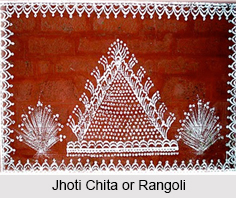
Jhoti Chita, Folk Paintings of OdishaJhoti Chita, also known as Rangoli, is a traditional art or painting of Odisha which is mostly found in the rural parts of the state. 

Colours of Jhoti Chita
Several figures and flower patterns are drawn in Jhoti Chita or Rangoli. Before starting the painting, an earthy red colour named ‘dhau’ is smeared on the walls and floors and then the Jhotis are created. It provides a contrasted colour. Dhau is also used as a background colour of Jhoti drawings.

Religious significance of Jhoti Chita
Jhoti Chita is made during certain festivals like marriage, Manabasa Gurubara, Basanti, Kaartika, Dola, Jhulana, Dhanalakshmi puja, Gaja Lakshmi puja and Raja. For different festivals, different types of motifs are drawn on the walls or floors. For example, during Lakshmi puja, a stack of paddy or rice sheaves is drawn on the walls structured like a pyramid as it symbolizes goddess Lakshmi. Small foot marks of goddess Lakshmi are a must in any Jhoti. During Durga Puja, white and red dots are painted on the walls. This combination of red and white signifies the worship of Shiva and Shakti. Intricate and beautiful floral designs like the lotus, elephants, symbols used in Patachitra find place in this form of free hand drawing.

For more, visit the link below:

Tuesday, 15 November 2022

Features of Odissi Music


Features of Odissi MusicFeatures of Odissi Music are neither completely Hindustani nor Carnatic. Odissi music has its own unique style of composition and performance which is typical to this classical art form from the eastern state of Orissa. Technically, one can divide the singing style of Odissi into four parts- Natyanga, Raganga, Dhirubapadanga and Bhavanga. These are briefly discussed below.

Natyanga
These are small compositions. These are sung in Natya (small musical plays) or with dance. Such compositions are used in Gotipua dance. The stress in such compositions is on Tala. Pada Vinyas or Swara Vinyas is very sparsely made. Very short Taan is also sandwiched in between.

Ragang
As in any other classical music system, this is the most important aspect of Odissi also. The minimum rules of Raaga Gayan are: at least five swaras must be there; this must belong to a Janya that; rules regarding Jati, Gayan Time, Vadi, Samvadi etc. must be followed; besides these general rules all the characteristics of the particular Raaga are also to be followed.

The Ragang of Odissi as passes through six stages like all other classical systems. These are discussed below.

(i) Anibaddha Alap: Though some practitioners today determine their Anibadha Alap according to the nature of the Raaga, the majority of the practitioners deride this as blind imitation of mainstream system. The latter compose their Anibadha Alap keeping in view the content, spirit and the tune of the composition, and not merely the Raaga.

(ii) Prabandh: In Odissi mostly compositions from medieval Oriya literature are selected as Prabandha. Some modern compositions following the form and content of medieval lyrics are also used. Just above the composition, Raga and Tala to be followed are mentioned by the poet and the Sthai, called 'Ghosa' by the lyricists are also mentioned within the body of the composition. The composition ends with a Vanita, a kind of short colophon in verse form where the name of the poet is mentioned. The singing passes through the three stages of Sthai, Antara and Padi.

For more, visit the link below:

Friday, 28 October 2022

Hill Stations of Odisha


Hill Stations of OdishaHill Stations of Odisha covers the small towns and villages, which are gifted with evergreen trees and coffee plantation gardens. These hill stations are ideal for the nine-to-six office goers. These serve as a place for nature tourism, leisure tourism and also pilgrimage tourism. Most of the hill stations are concentrated with the tribal settlements.

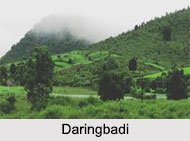
Daringibadi, Kandhamal district
Daringibadi is referred as a "Kashmir of Odisha", located at an elevation of 915 meters from the sea level. The lush green forests in Eastern Ghats Mountain Range in India end with Berhampur and Gopalpur Beach, near Bay of Bengal. The natural bounties include the coffee gardens and beautiful valleys. This serene hill station is surrounded by the rain forests and wild animals.

Taptapani, Ganjam district
Taptapani is a place of pilgrimage importance and it is easily accessible from Bhubaneshwar and Beherampur by roadways and railways. There is no airway connectivity except Biju Patnaik Airport. It is located very near to Gopalpur on Sea and a hot spring that has high content of sulphur.

Mahendragiri, Gajapati District
Mahendragiri Hill is a hill station with a height of 4,925 ft above sea level. This place is popular for the thick forest vegetation.

Dhenkanal, Dhenkanal District
Hill Stations of OdishaDhenkanal is a hill station and an educational hub in eastern India. There present a number of Hindu temples. The cynosure is Kapilash temple which was built in the traditional Kalinga style architecture.

For more, visit the link below:

Friday, 16 September 2022

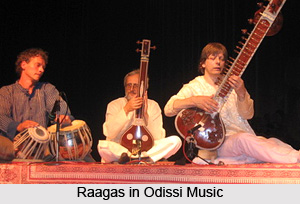
Raagas in Odissi Music


Raagas in Odissi MusicRaagas in Odissi Music can be divided into three major categories. There are some Raagas in Odissi music which are original and unique and are not found in the mainstream classical systems like Hindustani or Carnatic music. There are some other Raagas whose names are not similar but Swaras are similar with those in one or both the mainstream systems. Finally, there are some Raagas whose names are similar with the names of corresponding Raagas in one or both mainstream systems but Swaras are not similar.

Original Odissi Raagas
These Raagas are based on Udra tradition following Grama-Murchana theory but now-a-days these are being composed in Mela Padhati. Among the original Odissi Raagas are Raaga Abhiri, Raaga Karnata Abhirika, Raaga Kaushki, Raaga Nagadhyoni and Raaga Dhanyasika or Dhannasi.

Different Raaga name but same Swara
Raaga Sudha Kaushiki is included in this category. Raaga Malkaunsha of Hindustani music and Raaga Hindol of Carnatic music are very similar to this Odissi Raaga and their Swaras. There is no Sudha Kaushiki Raaga in any of the mainstream traditions. Apart from this, Raaga Kokila used in Odissi music is very similar to Hindustani's Bhupali and Carnatic's Mohana Raagas for its Swaras. However, the Chalana of Swaras and the Bhava of Raaga are very different from each other. There is no such Raaga by the name of' Kokil' in Hindustani music. In Carnatic music, although some forms with some affix like Kokiladhwani, Kokila pancham, Kokila ganclharva etc. are found simply 'Kokila' is not found.

For more, visit the link below:

Tuesday, 12 July 2022

Ratha Yatra, Indian Festival


Ratha Yatra, Indian FestivalRatha Yatra is the largest festival in Puri, Odisha. Ratha Yatra is a festival of renewal which ushers in the monsoon months of June-July. This festival rejuvenates the deities. The temple servants stand in a kinship relationship to the deities. These are the daitas and the Devadasis. The daitas are the "blood relatives" of Lord Jagannath and the Devadasis are the wives of Jagannath.

Mythological History of Ratha Yatra
This event marks Lord Jagannath, traveling in the chariot with his brother, Lord Balarama and sister Subhadra. It attracts pilgrims and visitors from all over the world. The festival has been celebrated since ancient times. According to a legend about its origin, Jagannath is said to have expressed his desire to visit his birthplace every year for a week. Thus, the deities are taken to the Gundicha Temple, Puri, Orissa every year. According to another legend, Subhadra, wanted to visit Dwaraka, her parent's home, and her brothers took her back to Dwaraka on this day. The Ratha Yatra is a commemoration of that visit. According to the Bhagavad Purana, it is also believed that it was on this day that Krishna and Balarama went to Mathura to participate in a wrestling competition, at Kansa's invitation. The chariots are cleaned by the Gajapati Maharaja, with a golden broom to proclaim that he is the first of the Lord's servants.

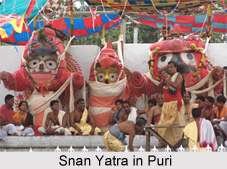
Snan Yatra before Ratha Yatra
The idols of Jagannath, Balabhadra and Subhadra are brought out and bathed on a pedestal known as the snanamandap amidst series of rituals and chanting of 'Jai Jagannath' and 'Haribol' and beating of conch shells, bathing ceremony was performed on Purnima of Jyestha month (Devasnan Purnima), to commemorate the appearance day of Lord Jagannath.

Anavarsha before Ratha Yatra
Ratha Yatra, Indian FestivalThe bathing ceremony discolours the painted wooden deities. Therefore nobody except the main priest is allowed to see and pay homage for a period of 15 days, which is known as Anavasara time. It is said that Lord Jagannath himself had ordered King Indradyumna about this Anavasara period.

Netrotsava before Ratha Yatra
For a staunch devotee of Lord Jagannath, the Anavasara time is really a tough time of separation. The images are re-painted and brought to the Ratnavedi or the main platform for the devotees to see and pay homage. This ceremony is named as Netrotsava. On this day people take the opportunity of seeing the deities in all new and young form. This is called 'Nava Yauvana Darshan'.

For more, visit the link below:

Tuesday, 28 June 2022

Performing Arts of Odisha


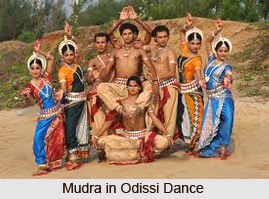
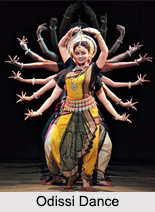
Performing Arts of Odisha, Arts in IndiaPerforming arts of Odisha have undergone a long process of evolution and development. The term Performing Arts mainly encompasses three art forms of dance, music and drama. Odisha has seen a lot of ups and downs, sways and evolutions over the ages which have been of main significance in the history of the nation. The wonderful art notions on the temples and monuments, the beauties of the green valleys and hills and rivers and the Performing Arts of Odisha are certainly the state's superiority.

Different types of Performing Arts of Odisha
Odisha has a prosperous cultural and creative inheritance. Following are the different types of Performing Arts of Odisha:

  • Odissi Music: Odissi music is a separate structure of Indian classical music and is having all the necessary and budding features of Indian Classical form. Odisha music is charming, multi-coloured, spotted including various types. The existing musical tradition of Odisha can largely be grouped under five categories such as:

Performing Arts of Odisha, Arts in India
  • Tribal Music: The tribal music signifies the tribals living mostly in the hilly and jungle regions and lightly in the coastal belt of Odisha. It is interesting to note that Odisha has the third largest attention of tribes constituting about one fourth of the total population. They are allocated over 62 tribal communities.


  • Folk Music: Folk music is the expression of the culture and traditions of the folk communities. Of the bewildering diversity of folk music of Odisha, state may be made of Geeta, Balipuja Geeta, Kela Keluni Geeta, Dalkhai Geeta, Kendra Geeta, Jaiphula Geeta, Ghumura Geeta, Ghoda Nacha and Danda Nacha Geeta, Gopal Ugala and Osa-Parva-Geeta etc.


  • Light Music: Bhajan, Janan, Oriya songs based on ragas, Rangila Chaupadi etc. are grouped under Light classical music, which forms an essential part of Odissi music. Sri Geetagovinda, Anirjukta Pravadha, Divya Manusi Prabandha, Chautisa, Chhanda, Chaupadi, Champu, Malasri, Sariman, Vyanjani, Chaturang, Tribhang, Kuduka Geeta, Laxana and Swaramalika are different sub-forms, which separately represent the traditional Odissi music.

  • For more, visit the link below: