Showing posts with label regional theatre. Show all posts

Monday, 13 April 2026

Pravritti in the Natyashastra: Regional Expression and Cultural Context

 The concept of Pravritti occupies a significant place in the Natyashastra, the ancient Indian treatise on dramaturgy attributed to Bharata Muni. It refers to the regional modes of expression reflected in dramatic performance, encompassing variations in language, costume, behavior, and cultural practices. Pravritti highlights how theatrical representation adapts to the socio-cultural diversity of different geographical regions, thereby enriching the aesthetic and communicative dimensions of performance.


Meaning and Concept of Pravritti

In the context of the Natyashastra, Pravritti denotes the external characteristics that distinguish dramatic performances based on regional identities. It serves as a framework through which drama reflects the customs, dialects, and traditions of specific areas. Bharata emphasizes that theatre is not merely an abstract art form but a reflection of lived realities. Therefore, Pravritti ensures that performances resonate with audiences by incorporating familiar cultural elements. 

Pravritti operates alongside other dramatic components such as Vritti (styles of expression) and Rasa (aesthetic emotions), contributing to the overall effectiveness of theatrical presentation. While Vritti governs the manner of expression, Pravritti grounds the performance in a specific cultural milieu. 

Types of Pravritti

The Natyashastra identifies four primary types of Pravritti, each associated with a particular region of ancient India: 

Avanti Pravritti: Linked to the western regions, this style emphasizes elegance and balanced expression. It is often associated with refined gestures and moderate emotional display.

Dakshinatya Pravritti: Originating from the southern regions, it is characterized by grace, elaborate costumes, and expressive movements. This Pravritti often incorporates musical richness and fluidity in performance. 

Panchali Madhyama Pravritti: Representing the central regions, it strikes a balance between vigor and subtlety. It integrates elements of both energetic action and composed expression, making it versatile in narrative presentation.

Odra-Magadhi Pravritti: Associated with the eastern regions, this style reflects simplicity and naturalism. It often emphasizes realism in speech and behavior, aligning closely with everyday life. 

These classifications demonstrate the diversity of theatrical traditions and the importance of regional identity in shaping performance aesthetics. 

Role in Dramatic Representation

Pravritti plays a crucial role in enhancing the authenticity of dramatic representation. By incorporating region-specific elements, it allows performers to create a believable and immersive experience for the audience. Costumes, dialects, and gestures aligned with a particular Pravritti contribute to character development and narrative clarity. 

Moreover, Pravritti aids in differentiating characters belonging to various social and geographical backgrounds. This distinction is essential in classical drama, where storytelling often involves multiple regions and cultural contexts. 

Contemporary Relevance

Although conceived in ancient times, the principles of Pravritti remain relevant in modern theatre and cinema. Contemporary productions frequently draw upon regional identities to create nuanced and relatable narratives. The use of dialects, traditional attire, and culturally specific behavior continues to enhance storytelling across various media. 

In a globalized world, Pravritti also underscores the importance of cultural sensitivity and representation. Productions that acknowledge and respect regional diversity tend to engage audiences more effectively and authentically. 

Pravritti, as outlined in the Natyashastra, serves as a vital link between drama and cultural reality. By emphasizing regional variations in expression, it enriches theatrical performance and ensures its relevance across diverse audiences. Its enduring significance lies in its ability to bridge tradition and innovation, making it a foundational concept in the study of Indian dramaturgy.

Tuesday, 1 August 2023

Powada: The Rich Heritage of Maharashtra's Folk Theatre


In the vibrant tapestry of Indian culture, the state of Maharashtra stands out for its diverse artistic traditions. One such gem in its cultural crown is the traditional folk theatre form known as "Powada." Rooted in history and closely tied to the spirit of Maharashtra, Powada weaves together a fascinating blend of storytelling, music, and performance. With a history spanning centuries, this indigenous art form continues to captivate audiences with its unique charm and socio-political relevance.


Historical Origins and Evolution

The word "Powada" finds its origin in the Marathi language, where "povada" means a eulogy or a ballad. Historically, Powadas were heroic ballads that narrated the tales of valor, courage, and triumph of Maratha warrior heroes. This form of oral tradition can be traced back to the 17th century during the reign of the legendary Maratha king, Chhatrapati Shivaji Maharaj. The stories were often composed and recited by itinerant bards known as "Shahirs," who were skilled in combining music and verse to create powerful narratives. Powada

Over the centuries, Powada evolved from being solely a medium to extol the bravery of warriors to encompassing various themes, including social issues, historical events, and cultural nuances. This metamorphosis allowed Powada to connect with a broader audience and remain relevant through changing times.

Structure and Performance

Powada performances typically feature a single performer, often the Shahir, who holds the audience's attention with compelling storytelling and expressive singing. The Shahir's voice resonates with passion and emotion as he recounts the heroic tales or historical events. Accompanied by traditional musical instruments such as the tambura, dholki, and harmonium, the performer creates an immersive atmosphere that captures the essence of the narrative.

The performance begins with a traditional invocation, seeking the blessings of the divine, which is followed by a brief introduction to set the context of the story. The main narrative then unfolds, with the performer skillfully blending prose and poetry to evoke a powerful emotional response from the audience. As the story reaches its crescendo, the performance often culminates with enthusiastic applause and appreciation from the spectators.

Socio-Political Relevance

Beyond its artistic beauty and cultural significance, Powada has consistently demonstrated its socio-political relevance. Throughout history, Powadas have been instrumental in instilling a sense of identity and pride among the people of Maharashtra. By celebrating the valor and achievements of Maratha warriors and leaders, Powada helped in uniting communities and preserving a collective memory of their glorious past. Folk Theatre In India 

Furthermore, Powadas have been employed as a tool for social commentary, enabling artists to voice dissent and critique prevailing social issues. From advocating for social justice to highlighting the plight of the downtrodden, Powada artists have fearlessly used their craft to drive societal change and raise awareness about pressing matters.

Despite its deep-rooted historical significance, Powada faces challenges in the modern era. The advent of technology and changing entertainment preferences have posed threats to the survival of traditional art forms like Powada. Additionally, the limited exposure and support from mainstream media have made it difficult for younger generations to fully appreciate and embrace this valuable heritage.

To safeguard and promote Powada for posterity, concerted efforts are necessary. Government institutions, cultural organizations, and educational institutions can play a pivotal role in supporting Powada artists, providing platforms for performances, and conducting workshops to pass on the knowledge to the next generation.

Powada, the folk theatre of Maharashtra, stands as a testament to the state's rich cultural heritage and artistic prowess. From narrating tales of valor and heroism to addressing contemporary social issues, Powada continues to be an integral part of the socio-cultural fabric of Maharashtra. Preserving and promoting this traditional art form is not only a responsibility but also an opportunity to celebrate the diversity and splendor of India's cultural heritage. By embracing and cherishing Powada, Maharashtra can ensure that this centuries-old art form continues to inspire, educate, and entertain generations to come.

Wednesday, 4 January 2023

Sangeet Natak Akademi Awards, Indian Drama & Theatre


Sangeet Natak Akademi Awards, Indian Drama & TheatreSangeet Natak Akademi Award is the most prestigious national award in performing Arts category in India. One of the significant activities of the Akademi has been to give appreciation and honors to artists as it would help in setting standards in these arts, and restore the art and artists to their rightful place in Independent India.

The award as of 2003 consists of Rs. 50,000, a citation, an angavastram (a shawl), and a tamrapatra (a brass plaque).The awards are given in the categories of music, dance, theatre, other conventional arts and puppetry, and for contribution/ scholarship in the theater arts.

History of Sangeet Natak Akademi Award
The body of Sangeet Natak Akademi Awards is now more than fifty years old and the great body of practitioners, gurus and scholars in the performing arts honored by the Akademi characterize the nation’s uppermost achievement in music, dance and drama. The Awards in Hindustani and Carnatic music were instituted as early as 1951 and these were known as Presidential Awards. With the arrangement of the Akademi, the Awards came to be known as Sangeet Natak Akademi Awards, and the inauguration became the accountability of the Akademi. The Presidential Awards for 1952 and 1953 were next included in the list of Sangeet Natak Akademi Awards.

Sangeet Natak Akademi Awards
Most popular awards by Sangeet Natak Akademi are:

Sangeet Natak Akademi Fellowship (Akademi Ratna Sadasyata): The most prominent and extraordinary honor of Sangeet Natak Akademi Fellowship (Akademi Ratna Sadasyata) was limited to 30 renowned persons at any given time till last year. The first Fellow of the Akademi was elected in 1954, and till date, the Akademi has honored 123 renowned personalities as Akademi Fellows (Akademi Ratna).

Akademi Puraskar (Akademi Awards): Akademi Awards may be conferred on eminent practitioners, gurus and scholars of music, dance and theatre for sustained individual achievement of high professional order. The Akademi Awards may be conferred annually and the total number of Awards in a year shall not exceed 33. Each Akademi Puraskar (Awards) will carry an amount of Rupees 50000/- (Rupees Fifty Thousand only) in cash, a Citation, an Angavastram and a Tamrapatra to be issued under the seal of Akademi and signature of its Chairman. Besides, they will also be eligible medical insurance cover up to Rupees One Lakh per annum.

For more, visit the link below:

Friday, 25 November 2022

Indian Theatre Stages


Indian Theatre Stages, Indian Drama & TheatreConsidered as one of the tradition of Indian culture, theatre since ages depicted the abundant tradition of the land. Right from the earliest days till the modern times, theatre happens to be one of the celebrated art forms in India. Although, the history of Indian theatre goes back to the mythological or the Vedic era yet it is during and after the medieval period theatre in India that gained its redefined structure.

History of Indian Theatre Stages
The Indian theatre has a belief going back to at least 5000 years. The first book on drama in the world was written in India. It was called ‘Natya Shastra’, the grammar or the sacred book of theatre by Bharat Muni. Its era has been placed between 2000 B.C. to 4th Century A.D. A long duration of time and performance is required for any art or movement to form its rules and notifications. Theatre with its appeal and art has always been the most important element in mouthing the unspoken. Theatre in India started as a storyline form, like reciting, singing and dancing becoming essential fundamentals of the theatre. This importance on narrative elements made theatre fundamentally theatrical right from the beginning. That is why the theatre in India has included all the other forms of literature and fine arts into its physical presentation: Literature, Mime, Music, Dance, Movement, Painting, Sculpture and Architecture - all mixed into one and being called ‘Natya’ or Theatre in English.

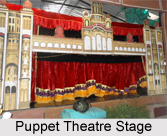
Indian theatre stages did not form in a day. The deep seated relation with folk drama forms like KabiganKirtan and Baul songsChhauGajanJatra and Paalaagaan, which were then mainly performed in open grounds, paved the way of setting up Indian theatre stages. The sound of the orchestra, the rich-red-ruddy illumination of those footlights offered that contour to theatre whilst making it lot more contemporary. The famous Indian theatre stages amidst its pits, galleries and dais thus murmurs the tale of a changing tradition.

Indian theatre stages slowly became the platform to illustrate the unspoken whilst manifesting the realisms. Theatre which was once an artistic illustration of the varied aspects those were larger than life, gradually became more contemporary. Natya then broke the barriers of eposes and raslila and became the weapon to free the world from the clutches of absolute corruption and exploitation.

For more, visit the link below:

Tuesday, 28 June 2022

Performing Arts of Odisha


Performing Arts of Odisha, Arts in IndiaPerforming arts of Odisha have undergone a long process of evolution and development. The term Performing Arts mainly encompasses three art forms of dancemusic and drama. Odisha has seen a lot of ups and downs, sways and evolutions over the ages which have been of main significance in the history of the nation. The wonderful art notions on the temples and monuments, the beauties of the green valleys and hills and rivers and the Performing Arts of Odisha are certainly the state's superiority.

Different types of Performing Arts of Odisha
Odisha has a prosperous cultural and creative inheritance. Following are the different types of Performing Arts of Odisha:

  • Odissi Music: Odissi music is a separate structure of Indian classical music and is having all the necessary and budding features of Indian Classical form. Odisha music is charming, multi-coloured, spotted including various types. The existing musical tradition of Odisha can largely be grouped under five categories such as:

Performing Arts of Odisha, Arts in India
  • Tribal Music: The tribal music signifies the tribals living mostly in the hilly and jungle regions and lightly in the coastal belt of Odisha. It is interesting to note that Odisha has the third largest attention of tribes constituting about one fourth of the total population. They are allocated over 62 tribal communities.


  • Folk Music: Folk music is the expression of the culture and traditions of the folk communities. Of the bewildering diversity of folk music of Odisha, state may be made of Geeta, Balipuja Geeta, Kela Keluni Geeta, Dalkhai Geeta, Kendra Geeta, Jaiphula Geeta, Ghumura Geeta, Ghoda Nacha and Danda Nacha Geeta, Gopal Ugala and Osa-Parva-Geeta etc.


  • Light Music: Bhajan, Janan, Oriya songs based on ragas, Rangila Chaupadi etc. are grouped under Light classical music, which forms an essential part of Odissi music. Sri Geetagovinda, Anirjukta Pravadha, Divya Manusi Prabandha, Chautisa, Chhanda, Chaupadi, Champu, Malasri, Sariman, Vyanjani, Chaturang, Tribhang, Kuduka Geeta, Laxana and Swaramalika are different sub-forms, which separately represent the traditional Odissi music.

  • For more, visit the link below:

    Thursday, 23 June 2022

    Jatra, Bengali Folk Drama


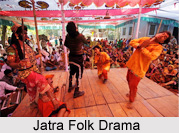
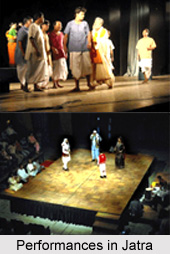
    Jatra, Bengali Folk DramaJatra is a famous folk theatre from Bengali theatre that is spread throughout most of Bengali speaking states of India including West BengalBiharAssamOrissa and Tripura. Lots of people, actors and actresses are involved in this form of art in West Bengal and other parts of India. Jatra is considered as a famous form of traditional folk theatre from the eastern region of India. It literally means a journey and hence, stylized delivery and exaggerated gestures and orations are some of features of Jatra.

    Jatra is believed to have originated from ceremonial functions that are called before starting on a journey. There are also the other legends saying, that it developed from processions brought out in respect of different gods and goddesses. These processions often included songs and dances as its primary part. Jatra is a form of Indian folk drama combining acting, songs and music and dance altogether by the troop that is travelling from one place to another. In the earlier years, the religious values were well communicated with the help of Jatra to the masses. Jatra performances in West Bengal resemble the Tamasha of Maharashtra, the Nautanki of Uttar Pradesh and Bhavai Dance of Gujarat. Even if the birthplace of Jatra lies in religious landscapes, filled with different Bhakticults of Hinduism, but it is replaced by morally educative contents by the end of 19th century. As a result, during Bengal Renaissance, it gained entry into the urban theatres.

    Various parts of Hindu epics like Mahabharata and Ramayana was also preformed. Later on, the Jatras were held beside palas, and sometimes even replacing it.

    Origin of Jatra
    The roots of Jatra may be traced back in at least the 16th century, in Bengal, where there was a famous form of singing called the Carya, which were characterized by the distinct use of language. This was a kind of musical drama, which was possibly prevalent during that time. Even Chaitanya (social reformer) and his followers contributed to a reawakening among the people and were responsible for bringing about a national integration in various parts of India at the cultural level, since Chaitanya himself played role of Rukmini in a drama. This drama was perhaps the beginning of the "Krishna Jatra". So he is respected as the predecessor of the contemporary Jatras of Bengal.

    Development of Jatra
    Jatra, Bengali Folk DramaMukunda Das (1878-1934) and his troupe, the Swadeshi Jatra Party, performed Jatras and represented colonial exploitation, patriotism and anti-colonial struggle, oppression of feudal and caste system etc through Jatra. During the 1940s, the socio-political content of Jatra superseded the religious-mythical theme. Apart from theme, major change that took place around this time was in the induction of actresses to enact female roles in the play. But the incident of Partition of India however, seems to have adversely affected Jatra as most of performances were performed related with historical plays, with a vague sense of nationalism and patriotism, or melodramatic social plays. Particularly popular during this period, especially in the southern district of Barisal, was Gunai Jatra. Gunai Jatra was based on the tale of a village maiden named Gunai Bibi. The tradition of religious tales continued, in the form of Bhasan Jatra and Krishna Jatra, both of which were dominated by songs and music in terms of its content.


    For more, visit the link below:

    Monday, 17 January 2022

    Ancient Indian Theatre Stages

     Ancient Indian Theatre StagesThe Natyashastra by Bharata Muni depicts the mature form of a classical theatre of ancient India. Natyashastra is the most detail and elaborate of all treatises on dramatic criticism and acting ever written in any language. Bharata Muni here have discussed about a variety of topics in relation to the stage. The topics discussed in this work are: Mythical origin of theatre, its coming down to earth; construction of a play house, a stage, a tiring room and auditorium etc., ceremonies relating to the construction, preliminaries to a dramatic performance (ceremonies including songs, chants dances and instrumental music), choreographic elements (dance, gestures and movements of different parts of the body) and body in some conventional postures, costumes and make-up, classification of plays analysis of their structure, poetic aspects of plays and figures of speech in them, theory of music, metres of songs, chants, elocution, modes of playing instruments (Veenaflutes and drums) and Talas (time measure) to be observed during songs and playing of instruments, Roles and characters in plays (their classification, description and training of actors and actresses, members of theatrical troupes, and qualification of an ideal stage manager), criticism of a dramatic performance. Bharata Muni thus laid the foundation of the classical Theatre by composing the Natysastra.

    Types of Playhouse
    In Natysastra Bharata has discussed about three types of playhouse, oblong, square and triangular. These three have been further divided into large, medium and small. These measurements could be in terms of dandas or cubits, naturally giving us eighteen different dimensions of playhouse.

    According to Natyasastra a regular theatre consists of three parts, the tiring room, the stage and the auditorium. The stage is required to have two Mattavaranis on the two sides. There was existence of permanent and temporary theatres in ancient India.

    For more, visit the link below:

    https://www.indianetzone.com/57/ancient_indian_theatre_stages.htm


    Tuesday, 28 September 2021

    Sangeet Natak Academy


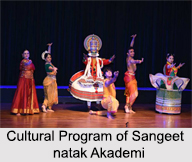
    Sangeet Natak Academy, Indian Drama & TheatreThe Sangeet Natak Akademi was set up in 1953 for the encouragement of performing arts. A surrounding up of Sangeet Natak Akademi is one of the chief recommendations of the National conference on Dance, Drama, and Music, held in New Delhi in 1951. The Sangeet Natak Akademi is India's nationalized academy for music, dance and drama and is the first National Academy of the arts set-up by the Republic of India. The Akademi became well-designed the next year, with the meeting of its first Chairman, Dr P.V. Rajamannar, and the arrangement of its all-India committee of representatives, the General Council.

    History of Sangeet Natak Academy
    The first President of India, Dr Rajendra Prasad, inaugurated it on 28th January 1953 in a special function held in the Parliament House. Maulana Abul Kalam Azad, who was then the Union Minister for Education at the inauguration of the Academy said -- "…It will be the aim of this Akademi to preserve our traditions by offering them an institutional form...”.

    The Akademi's license of functions was prolonged along with the original lines in 1961, when the Sangeet Natak Akademi was reconstituted by the Government as a society and registered under the Societies Registration Act of 1860 (as amended in 1957).

    Aims and Objectives of Sangeet Natak Academy
    It acts as the national level for the following reasons:
  • Encouragement and development of Indian music, dance and drama.
  • To persuade the switch of ideas and enhancement of techniques among the dissimilar regions in observance to the arts of music, dance and drama.
  • Preservation of standards of training in the performing arts.
  • Revitalization, protection, documentation and spreading of materials as well as instruments connecting to various forms of music, dance and drama.
  • To publish literature on Indian music, dance and drama counting orientation works such as an illustrated dictionary or handbook of technical conditions.
  • To give acknowledgment to and if not assist praiseworthy, theatrical organizations.
  • To revive folk musicfolk dance and folk drama in dissimilar regions of the country and to give confidence in the development of community music, martial music and other types of music.
  • To award prizes and feature and to give gratitude to individual artistes for outstanding achievement in the fields of music, dance and drama.


  • Functions of Sangeet Natak Academy
    The academy functions as the head body of the performing arts in the country to protect and endorse the huge cultural inheritance of India expressed in music, dance and drama. It also works with governments and art academies in states and territories of the country. SNA recognized quite a few institutions over the years and these are as follows:
    Sangeet Natak Academy, Indian Drama & Theatre
  • Manipur Dance Academy, Imphal.
  • Sattriya Centre.
  • Kathak Kendra, New Delhi.
  • Ravindra Rangshala.
  • Centre for Kutiyattam, Thiruvananthapuram.
  • Chhau Centre, Jamshedpur.
  • Northeast centre.


  • Felicitations of Sangeet Natak Academy
    SNA also offers felicitations or scholarships to deserving organisations in the same field.

    Scholarship to Cultural Institutions
    This scheme is proposed to allow the Sangeet Natak Akademi to tender grants-in-aid to select cultural institutions occupied in the endorsement of performing arts, namely, music, dance and drama. The grants-in-aid scheme is to hand out chiefly two objectives, explicitly, to offer financial support to institutions engaged in training in the fields of music, dance and drama and to encourage production of new plays and ballets, etc.

    Schooling and Preservation
    The Sangeet Natak Akademi extends support to identify forms of Indian music, dance and theatre and also crafts associated with performing arts, mainly through specialized training program under renowned masters.

    Tuesday, 18 May 2021

    Indian Puppet Theatre


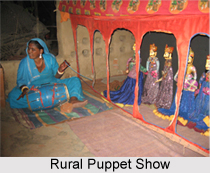
    Indian Puppet TheatreIndia is the abode of puppet theatre from the inception, especially in the 5th Century BC. Puppetry or the puppet theatre is one of the ancient forms of entertainment in India. Although primarily it is used as a form of entertainment; yet its importance in conveying significant meaning cannot be denied. For centuries, Indian puppet theatre in one form or the other flourished in India, particularly in the villages.

    Since ages, it has been an important part of folk culture depicting the folk traditions of India. From the ancient days, Indian puppet theatre therefore developed not only as an art form but also as an effort of conveying a lot whilst uttering actually nothing. India, which has a rich history of her creativity, has slowly become a name in the rich timeline of Indian natya with the emergence of this Indian puppetry as a typical visual art form. In Indian puppet theatre the puppets or the dolls comes alive, simulating life and reality whilst giving meaning to the creator's ideology.

    History of Indian Puppet Theatre
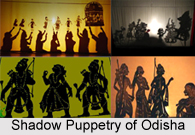
    History of Indian puppet theatre is long, enlaced with a rich past. The origin of puppetry somewhat dates back to the long gone era of the 5th Century BC. The chic dash was then missing; even the modish approach was not there; yet Indian puppetry as an enduring form of entertainment stood apart as an intense form of theatre since the historic days of ancient times. Indian Puppet TheatreWhile some says Indian Puppet Theatre did originate in medieval India, other says that it was there throughout, typically as an art form even at the time of the Indus Valley civilization. Not only as an art form Indian puppet theatre at that epoch was an effort of illustrating the histories of great prince, princes, and mythological heroes and even unveiled the legendary incidents and also portrayed those eposes and stories from the epics. Puppetry was then chiefly a media for entertainment; an effort to teach the mass and guide the then society amidst its creativity and in the midst of its story telling aspects. It was during this time, in Indian puppetry two distinct forms were evolved; while one form was then chiefly evolved as the religious portrayal, the other form mainly made satire and farce as the central theme. It is with the colossal development of the religious puppetry, shadow puppetry evolved as a medium in epitomizing the stories of Ramayana and Mahabharata. It was much later; in the history of Indian puppet theatre, satire and farcical comedies became quite an important part in articulating the socio political set up of India.

    Indian Puppet TheatreIndian Puppet Theatre as an Artistic Visual Art
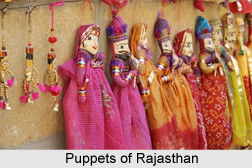
    Indian puppet theatre as an artistic visual art is still vibrantly alive in a variety of style. The major types of puppetry that are practiced in different Indian states are: rod, string, shadow and glove puppetry. The puppetry is very popular in the states like OdishaRajasthanKeralaAndhra Pradesh and Karnataka. Sometimes the puppets are made with leather and the movements controlled by stick and often they are made with wood or cloth where the movements are duly controlled by strings. The string puppetry is prevalent in Karnataka and Rajasthan. Correct string movement is very important to make the puppetry a thriving entertainment. The string attached to the puppet's head goes over the operator's hands and fingers which again are linked back to the puppet. The operator controls the movement of each hand of the puppet by separate strings. In Indian puppet theatre, the puppets which are used are generally small in dimension. The large head accompanied with prominent eyes offers a magical charm to the puppets whilst sketching their personality.

    Indian Puppet TheatreColours of Puppets in Indian Puppet Theatre
    The colour of the puppets also determines the portrayal of character in Indian puppetry. To depict a royal character mainly a light coloured puppet with impressive moustaches is used whereas a gawk eyed and dark coloured puppet usually paints a negative character. The female figures hold their skirts or Sarees in their hands while dancing; thus showcase a vibrant show. The male puppets are shown as the ones who excel in fighting; they dash against each other strike, chase, wrestle and even fall dead whist offering life to the entire puppet show.

    For more, visit the link below: