Showing posts with label drama. Show all posts

Wednesday, 27 May 2026

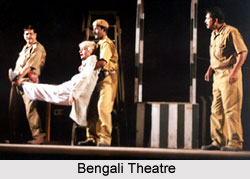
Surendranath Ghosh: The Enduring Legacy of Dani Babu in Bengali Theatre

 Surendranath Ghosh, popularly known as Dani Babu, remains one of the most enduring figures in the history of Bengali theatre. Born in 1868 in Bengal, he emerged during a transformative period for Indian performing arts when Calcutta, now Kolkata, served as the cultural centre of theatrical innovation and literary expression. Through his long and influential career as an actor, theatre manager, and partner of several theatre companies, he played an important role in shaping the evolution of Bengali stagecraft.


Early Life and Family Background

Surendranath Ghosh was the son of Girish Chandra Ghosh, one of the most celebrated personalities in Bengali theatre history. Born on 28 February 1844, Girish Chandra Ghosh earned immense recognition as an actor, playwright, director, and theatre reformer. He is widely regarded as one of the pioneers responsible for the golden age of Bengali theatre through his contributions to stage direction, dramatic literature, and performance. 

Despite belonging to such an illustrious theatrical family, Surendranath did not receive extensive formal guidance from his father. Girish Chandra Ghosh was deeply occupied with his professional commitments and reportedly had little time to train his son personally. Instead, Surendranath learnt the foundations of acting from his father’s favourite disciple, Amritalal Basu. This mentorship proved instrumental in shaping his theatrical abilities and understanding of stage performance. 

Entry into Theatre

Surendranath Ghosh received only a few years of primary education before becoming deeply involved in theatre. His early interest in performing arts led him to participate in local theatre groups, where he gradually developed a reputation for expressive acting and strong dialogue delivery. 

He made his first public appearance at the renowned Star Theatre in 1890 in the religious play “Chanda,” written by his father. This debut marked the beginning of a long and distinguished theatrical journey. Over the years, he became associated with several theatre companies, contributing not only as an actor but also as a manager and business partner. 

Artistic Style and Lasting Influence

Surendranath Ghosh was admired for his distinctive acting style, which combined emotional depth with measured restraint. His performances reflected the influence of traditional jatra theatre while also adapting to the emerging realism introduced by playwrights such as Bijon Bhattacharya and Utpal Dutt. He possessed the rare ability to internalize character psychology while maintaining the lyrical rhythm and elegance of Bengali speech. 

His long career allowed him to witness multiple phases of Bengali theatre, including its early growth, decline, and revival during the 1920s. Except for Amritalal Basu, he was perhaps among the few figures from the formative years of Bengali theatre who survived to observe its transformation across generations. 

Surendranath Ghosh’s contributions also helped sustain and revive urban theatre traditions in Bengal during the mid-twentieth century. His work laid important foundations for later experimental and political theatre movements that would emerge in Bengal in subsequent decades. 

As Dani Babu, Surendranath Ghosh occupies a respected place in the cultural history of Bengal. Through his dedication, artistic discipline, and lifelong association with theatre, he helped preserve and strengthen Bengali dramatic traditions. His legacy continues to be remembered as an important chapter in the evolution of Indian theatre.

Monday, 13 April 2026

Pravritti in the Natyashastra: Regional Expression and Cultural Context

 The concept of Pravritti occupies a significant place in the Natyashastra, the ancient Indian treatise on dramaturgy attributed to Bharata Muni. It refers to the regional modes of expression reflected in dramatic performance, encompassing variations in language, costume, behavior, and cultural practices. Pravritti highlights how theatrical representation adapts to the socio-cultural diversity of different geographical regions, thereby enriching the aesthetic and communicative dimensions of performance.


Meaning and Concept of Pravritti

In the context of the Natyashastra, Pravritti denotes the external characteristics that distinguish dramatic performances based on regional identities. It serves as a framework through which drama reflects the customs, dialects, and traditions of specific areas. Bharata emphasizes that theatre is not merely an abstract art form but a reflection of lived realities. Therefore, Pravritti ensures that performances resonate with audiences by incorporating familiar cultural elements. 

Pravritti operates alongside other dramatic components such as Vritti (styles of expression) and Rasa (aesthetic emotions), contributing to the overall effectiveness of theatrical presentation. While Vritti governs the manner of expression, Pravritti grounds the performance in a specific cultural milieu. 

Types of Pravritti

The Natyashastra identifies four primary types of Pravritti, each associated with a particular region of ancient India: 

Avanti Pravritti: Linked to the western regions, this style emphasizes elegance and balanced expression. It is often associated with refined gestures and moderate emotional display.

Dakshinatya Pravritti: Originating from the southern regions, it is characterized by grace, elaborate costumes, and expressive movements. This Pravritti often incorporates musical richness and fluidity in performance. 

Panchali Madhyama Pravritti: Representing the central regions, it strikes a balance between vigor and subtlety. It integrates elements of both energetic action and composed expression, making it versatile in narrative presentation.

Odra-Magadhi Pravritti: Associated with the eastern regions, this style reflects simplicity and naturalism. It often emphasizes realism in speech and behavior, aligning closely with everyday life. 

These classifications demonstrate the diversity of theatrical traditions and the importance of regional identity in shaping performance aesthetics. 

Role in Dramatic Representation

Pravritti plays a crucial role in enhancing the authenticity of dramatic representation. By incorporating region-specific elements, it allows performers to create a believable and immersive experience for the audience. Costumes, dialects, and gestures aligned with a particular Pravritti contribute to character development and narrative clarity. 

Moreover, Pravritti aids in differentiating characters belonging to various social and geographical backgrounds. This distinction is essential in classical drama, where storytelling often involves multiple regions and cultural contexts. 

Contemporary Relevance

Although conceived in ancient times, the principles of Pravritti remain relevant in modern theatre and cinema. Contemporary productions frequently draw upon regional identities to create nuanced and relatable narratives. The use of dialects, traditional attire, and culturally specific behavior continues to enhance storytelling across various media. 

In a globalized world, Pravritti also underscores the importance of cultural sensitivity and representation. Productions that acknowledge and respect regional diversity tend to engage audiences more effectively and authentically. 

Pravritti, as outlined in the Natyashastra, serves as a vital link between drama and cultural reality. By emphasizing regional variations in expression, it enriches theatrical performance and ensures its relevance across diverse audiences. Its enduring significance lies in its ability to bridge tradition and innovation, making it a foundational concept in the study of Indian dramaturgy.

Wednesday, 26 February 2025

Programs Broadcast by Star Plus


Star Plus, one of India's leading Hindi-language television channels, has been a significant player in the entertainment industry since its inception. Over the years, the channel has evolved, offering a diverse range of programs that cater to audiences of all ages. From family dramas to reality shows, Star Plus has maintained its dominance in Indian households. 

Evolution of Star Plus Programming

Launched in 1992, Star Plus initially aired international content in English. However, by the late 1990s, the channel shifted its focus to Hindi-language programming, which significantly increased its viewership. Over the years, Star Plus has adapted to changing audience preferences, introducing new genres and formats while maintaining its legacy of delivering high-quality entertainment. 

Family Dramas

Star Plus is best known for its family dramas, which have been the cornerstone of its programming. Shows like Kyunki Saas Bhi Kabhi Bahu Thi and Kahaani Ghar Ghar Kii set the trend for Indian soap operas in the early 2000s. More recent serials, such as Anupamaa and Ghum Hai Kisikey Pyaar Meiin, continue to captivate audiences with their compelling narratives and emotional depth. 

Reality Shows

In addition to scripted content, Star Plus has aired a variety of reality shows. Programs such as Nach Baliye, a celebrity dance competition, and MasterChef India, a culinary contest, have gained immense popularity. These shows not only entertain but also provide a platform for talented individuals to showcase their skills. 

Mythological and Historical Series

The channel has also produced successful mythological and historical series. Shows like Mahabharat and Siya Ke Ram have brought traditional stories to modern audiences, blending grand visuals with engaging storytelling. 

Comedy and Light-Hearted Shows

While drama remains a stronghold, Star Plus has also experimented with comedy and light-hearted series. Shows like Khichdi and Sarabhai vs Sarabhai have been well received for their humor and unique storytelling styles. 

Crime and Thriller Shows

Star Plus has occasionally ventured into crime and thriller genres with shows such as Arjun and Gumrah: End of Innocence. These programs provided gripping narratives and socially relevant themes, appealing to a niche audience segment. 

Popularity and Impact

Star Plus has remained one of India's most-watched channels, with its shows frequently topping TRP charts. The channel’s content has not only influenced Indian television but also inspired adaptations in other languages. Its programs have contributed significantly to shaping Indian television culture, with many becoming household names. 

Star Plus continues to evolve, introducing fresh content while preserving its rich legacy. With its diverse programming across multiple genres, the channel remains a dominant force in the Indian television industry. Whether through family dramas, reality shows, or historical series, Star Plus continues to engage and entertain its vast audience base.

Tuesday, 31 January 2023

History of Indian Drama


History of Indian DramaHistory of Indian Drama has originated and developed from storehouse of Sanskrit in India. Indian drama has given its incredible impact and limit to perfection since ancient times. Drama is basically a form of performing arts, where stories are enacted by the utilisation of dialogue, music, signal and dance. Traditional Indian drama, which is highly influenced by the Hindu religion, was developed by local artists and performers and is not a replication of western influx. Bharata is traditionally considered to be the father in the history of Indian drama. The history of Indian Drama is deeply rooted in Classical Sanskrit Theatre, which is the earliest existing form of drama and theatre.

Ancient Indian Drama
History of Indian drama dates back to the ancient Vedic period. It then moves on to the classical theatre traditions, also influencing modern theatre, particularly the Hindi, Marathi and Bengali theatres down the line. Looking back towards the bygone historical path, the beginning of the ancient dramas owes to the Rig Veda for its monumental source material, together with Pururava, Urvashi, Yama and Yami, Indra-Indrani, Sarma-Pani and Ushas Suktas. Even the epics of Ramayana, Mahabharata and Arthashastra are instilled with specific techniques of dramaturgy. Sages like Valmiki and Vyas and Panini also had shed decisive light and Patanjali had heartily contributed in his Mahabhashya that there existed two dramas, namely, Kamsa Vadha and Vali Vadha. As such, the origin of dramas from the early Vedic Age is considered to be the most authentic and authoritative amongst all the later creations.

Thursday, 23 June 2022

Jatra, Bengali Folk Drama


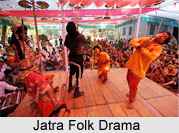
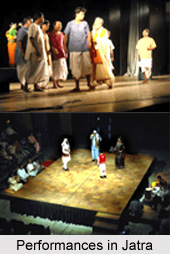
Jatra, Bengali Folk DramaJatra is a famous folk theatre from Bengali theatre that is spread throughout most of Bengali speaking states of India including West Bengal, Bihar, Assam, Orissa and Tripura. Lots of people, actors and actresses are involved in this form of art in West Bengal and other parts of India. Jatra is considered as a famous form of traditional folk theatre from the eastern region of India. It literally means a journey and hence, stylized delivery and exaggerated gestures and orations are some of features of Jatra.

Jatra is believed to have originated from ceremonial functions that are called before starting on a journey. There are also the other legends saying, that it developed from processions brought out in respect of different gods and goddesses. These processions often included songs and dances as its primary part. Jatra is a form of Indian folk drama combining acting, songs and music and dance altogether by the troop that is travelling from one place to another. In the earlier years, the religious values were well communicated with the help of Jatra to the masses. Jatra performances in West Bengal resemble the Tamasha of Maharashtra, the Nautanki of Uttar Pradesh and Bhavai Dance of Gujarat. Even if the birthplace of Jatra lies in religious landscapes, filled with different Bhakticults of Hinduism, but it is replaced by morally educative contents by the end of 19th century. As a result, during Bengal Renaissance, it gained entry into the urban theatres.

Various parts of Hindu epics like Mahabharata and Ramayana was also preformed. Later on, the Jatras were held beside palas, and sometimes even replacing it.

Origin of Jatra
The roots of Jatra may be traced back in at least the 16th century, in Bengal, where there was a famous form of singing called the Carya, which were characterized by the distinct use of language. This was a kind of musical drama, which was possibly prevalent during that time. Even Chaitanya (social reformer) and his followers contributed to a reawakening among the people and were responsible for bringing about a national integration in various parts of India at the cultural level, since Chaitanya himself played role of Rukmini in a drama. This drama was perhaps the beginning of the "Krishna Jatra". So he is respected as the predecessor of the contemporary Jatras of Bengal.

Development of Jatra
Jatra, Bengali Folk DramaMukunda Das (1878-1934) and his troupe, the Swadeshi Jatra Party, performed Jatras and represented colonial exploitation, patriotism and anti-colonial struggle, oppression of feudal and caste system etc through Jatra. During the 1940s, the socio-political content of Jatra superseded the religious-mythical theme. Apart from theme, major change that took place around this time was in the induction of actresses to enact female roles in the play. But the incident of Partition of India however, seems to have adversely affected Jatra as most of performances were performed related with historical plays, with a vague sense of nationalism and patriotism, or melodramatic social plays. Particularly popular during this period, especially in the southern district of Barisal, was Gunai Jatra. Gunai Jatra was based on the tale of a village maiden named Gunai Bibi. The tradition of religious tales continued, in the form of Bhasan Jatra and Krishna Jatra, both of which were dominated by songs and music in terms of its content.


For more, visit the link below:

Tuesday, 28 September 2021

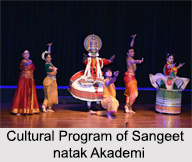
Sangeet Natak Academy


Sangeet Natak Academy, Indian Drama & TheatreThe Sangeet Natak Akademi was set up in 1953 for the encouragement of performing arts. A surrounding up of Sangeet Natak Akademi is one of the chief recommendations of the National conference on Dance, Drama, and Music, held in New Delhi in 1951. The Sangeet Natak Akademi is India's nationalized academy for music, dance and drama and is the first National Academy of the arts set-up by the Republic of India. The Akademi became well-designed the next year, with the meeting of its first Chairman, Dr P.V. Rajamannar, and the arrangement of its all-India committee of representatives, the General Council.

History of Sangeet Natak Academy
The first President of India, Dr Rajendra Prasad, inaugurated it on 28th January 1953 in a special function held in the Parliament House. Maulana Abul Kalam Azad, who was then the Union Minister for Education at the inauguration of the Academy said -- "…It will be the aim of this Akademi to preserve our traditions by offering them an institutional form...”.

The Akademi's license of functions was prolonged along with the original lines in 1961, when the Sangeet Natak Akademi was reconstituted by the Government as a society and registered under the Societies Registration Act of 1860 (as amended in 1957).

Aims and Objectives of Sangeet Natak Academy
It acts as the national level for the following reasons:
  • Encouragement and development of Indian music, dance and drama.
  • To persuade the switch of ideas and enhancement of techniques among the dissimilar regions in observance to the arts of music, dance and drama.
  • Preservation of standards of training in the performing arts.
  • Revitalization, protection, documentation and spreading of materials as well as instruments connecting to various forms of music, dance and drama.
  • To publish literature on Indian music, dance and drama counting orientation works such as an illustrated dictionary or handbook of technical conditions.
  • To give acknowledgment to and if not assist praiseworthy, theatrical organizations.
  • To revive folk music, folk dance and folk drama in dissimilar regions of the country and to give confidence in the development of community music, martial music and other types of music.
  • To award prizes and feature and to give gratitude to individual artistes for outstanding achievement in the fields of music, dance and drama.


  • Functions of Sangeet Natak Academy
    The academy functions as the head body of the performing arts in the country to protect and endorse the huge cultural inheritance of India expressed in music, dance and drama. It also works with governments and art academies in states and territories of the country. SNA recognized quite a few institutions over the years and these are as follows:
    Sangeet Natak Academy, Indian Drama & Theatre
  • Manipur Dance Academy, Imphal.
  • Sattriya Centre.
  • Kathak Kendra, New Delhi.
  • Ravindra Rangshala.
  • Centre for Kutiyattam, Thiruvananthapuram.
  • Chhau Centre, Jamshedpur.
  • Northeast centre.


  • Felicitations of Sangeet Natak Academy
    SNA also offers felicitations or scholarships to deserving organisations in the same field.

    Scholarship to Cultural Institutions
    This scheme is proposed to allow the Sangeet Natak Akademi to tender grants-in-aid to select cultural institutions occupied in the endorsement of performing arts, namely, music, dance and drama. The grants-in-aid scheme is to hand out chiefly two objectives, explicitly, to offer financial support to institutions engaged in training in the fields of music, dance and drama and to encourage production of new plays and ballets, etc.

    Schooling and Preservation
    The Sangeet Natak Akademi extends support to identify forms of Indian music, dance and theatre and also crafts associated with performing arts, mainly through specialized training program under renowned masters.

    Wednesday, 2 September 2020

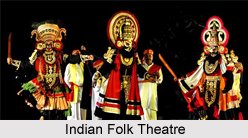
    Folk Theatre In India


    Folk theatre in India has a rich legacy. In the ancient Vedic culture and even in Buddhist literature folk theatre first made its presence felt as an art form to illustrate the unedited realities of life. However, it is only in the medieval period folk theatre gradually became an integral part of Indian drama. Historically folk theatre in India did emerge back in the 15th or 16th century as illustrations from puranas, eposes, historical epics, myths and biographies of the celestial heroes. It is right after the colossal success of Indian traditional theatre as an art form, the distinct style of Indian Natya changed and thus developed a whole new theatre form where Indian myth, dance, history, song, culture, mores, traditions, and beliefs all gained a matchless dimension.


    Although much later this particular theatre form was named as the Indian folk theatre, yet it is indeed not an overstatement to say that the very basic rudiments of folk theatre in establishing itself as an artform was there in the mores, heritage and tradition of India. In rural society which is still regarded as the base of folk theatre the activity which displayed the first rudiment of drama are the rituals. Quite ideally therefore rituals, their varied facets and their colossal impact on Indian culture and life formed the very base of the folk theatre in India. Folk theatre therefore boasts the rich history of Indian folk culture that dates back to the age-old antiquity.

    Folk theatre in India is mainly narrative in its form. This indeed point towards the origin and the age-old sagas of the sutradhara in Indian natya. The narrator or the sutradhara in order to make his visual art lot more inventive slowly involved acting into his narrative description which in an intimate manner later gave rise to the tradition of narratives in Indian folk theatre. Folk theatre in India still has retained its age old narrative form while echoing a highly dramatic narrative style. There is a long tradition of folk entertainers who either move alone or in groups in rural India. They are the entertainers as well as the preachers of value, philosophical tenets and indeed of religious cult. Folk theatre has adopted their mode of expression amidst dance, music and songs. Thus the spirited, dynamic and ingenious in forms and rich in variety, Indian folk theatre has established itself as the powerful medium of communication in folk cultures. With its timber and colour, dash and élan folk theatre in India is more than entertainment; rather an emotional experience and an effort of creating "an environment of receptivity in which communication of ideas is an effortless process".

    For more visit the page:

    Thursday, 27 August 2020

    Regional Theatre in India


    Regional Theatre in IndiaRegional theatre in India encompasses all the regional flavour of the Indian states. The multilingual aspect of India's poetic articulation amidst Indian theatre, have been severely appreciated by people around the country. Diverse culture, varied religion and most importantly the multi-dimensional nature of Indian language has played a great role in shaping up India's rich heritage and culture. The fusion of different Indian language and the union of varied Indian traditions from different region have enriched India's ethnicity in quite a large way since the remote past. India, as a multilingual and multi religious state can not be allied with one particular kind of trend and aspect in its theatres and dramas. This is the reason why the deep fervor of Bengali theatre has gelled well with the passion of Hindi Manipuri, Kannada and Marathi theatre and has given birth to a whole new concept of "Indian theatre". It is right after the independence of India, Indian theatre in different Indian languages and regions developed as an important element in taking theatre to the further level of maturity.

    Malayalam Theatre, Gujarati Theatre, Kannada Theatre all has its roots associated with the British rule as the seed of the contemporary drama in India was sown during that era. Bengali theatre started with an intention of private entertainment however gradually it became the weapon to illustrate the dislikes and frustration of the British imperialism in India. As an art form Bengali theatre has its roots associated with the British Raj. Although started as private entertainment in the early 19th century Bengali theatre gradually became not only an eminent art form but also started playing the major role in illustrating the discomforts of the administration of British Empire in India. The year was 1947 and the day was 15th August - Indian Independence Day.

    Girish KanradThe day is indeed a red letter day in the history of Indian theatre. Not only India stood apart as a socially and politically sovereign state but also Indian culture, art, music, literature all witnessed a colossal change. Theatre and Indian drama, in various regional languages of the state, gradually became an art form, to illustrate the social and political ailments of independent India. Right after the independence of India the communist consolidation and the growth of left ideologies in India specially in West Bengal, used Bengali theatre as a typical means of advertisement or propaganda. Quite ideally, therefore, a new trend in Multi lingual and regional theatre gradually developed and the emergence of the theatre companies in India is one of them. All these theatre groups carried somewhat an ideological belief at the same time as distinct cultural inspiration to differentiate themselves from the typical artistry of the ancient Indian theatre.


    For more visit the page:


    Wednesday, 8 July 2020

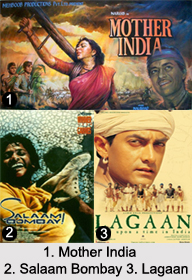
    Indian Films at the Oscars


    Indian Films at the OscarsIndian films have not marked a significant and prominent presence for themselves at the Academy Awards, commonly known by their nickname, the "Oscars". Although Indian Cinema produces numerous films in Hindi and multiple regional languages throughout the year, it has been mostly absent among the illustrious list of Oscar-nominated movies and winners, produced across the world. However, there have been a few noteworthy films that have experienced recognition at the Academy Awards through nominations and been worthy of being the country’s official entries to the Oscars for the pertaining year. The winners, though, have only been a handful Indian film personalities and not Indian movies.

    Over time, the facets and concepts of the Indian film industry have undergone major evolution and honest attempts have been made to inculcate realistic and artistic approach to films and film making. But even when the change has been evident, the ratio of such quality content in Indian cinema is quite low and till date the celluloid industry of the country focuses more on entertainment. Another issue that hinders Indian Cinema’s recognition at the Oscars is plagiarism in Indian films. Several admirable films in India are either an adaptation or remake of the Western classics. Indian films showcasing bona fide and appealing content often suffer lack of publicity due to which it fails to gather much attention at international level. Also on the contrary, few Indian films have received negligible or no recognition or promotion in the country, the reason being big production banners and distributors not signing up for such parallel cinematic ventures, but have been recognised at the international film festivals of other countries, and then come to be known amongst the Indian audience. The length of Indian films too is a factor that rules out their chances of being recognised at the Oscars.


    Thursday, 14 May 2020

    Characters in Ramayana

    The characters in jnhgfh.jpgare instrumental in narrating the entire Sanskrit epic. Most of the characters like Lord Rama, Sita, Lakshmana, Hanuman and others are considered as deities according to Hindu mythology.

    Characters in Ramayana
    Following are the different characters in Ramayana:

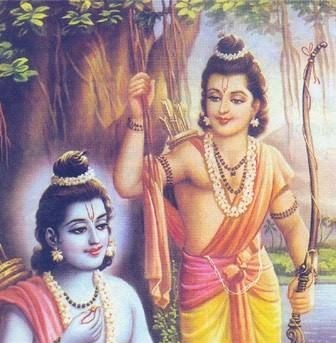
    ramaLord Rama: He was the son of King Dasaratha and Queen Kausalya. He was the prince of Ayodya. He is an ‘avatara’ of Lord Vishnu and was married to Sita.

    sita.jpgSita: She was the daughter of Mother Earth adopted by King Janaka. Sita married Lord Rama, and she is also regarded as an ‘avatara’ of the Goddess Lakshmi.

    ravanaRavana: Ravana was a devil who performed penance for a long time until Lord Brahma appeared before him and granted him a boon.

    lakmanLakshmana: He was the son of King Dasaratha and Queen Sumitra. He was dedicated to his brother and followed him throughout many adventures and hunts.  He is ascribed as the incarnation of ‘Ananta Sesha’, the 1000 headed Naga.

    darshrath.jpgKing Dasaratha: Dasaratha was the emperor of Ayodhya, father of Lord Rama, Lakshmana, Bharata, and Shatrughna.

    Kaushalya: She was the first queen of King Dasaratha and the mother of Lord Rama. She had a wonderful and liberal character.

    bharth.jpgBharata: He is famous for his love and devotion towards his elder brother Lord Rama.

    7a567caa9013ca977576e7dd250d8f67-e1551942420351.jpgLord Hanuman: He was the advisor of Sugriva. He was the son of Anjana and Kesari and he is believed to be an avatar of the supreme Lord Shiva. He was a guardian spirit, the offspring of a nymph and the Wind God.

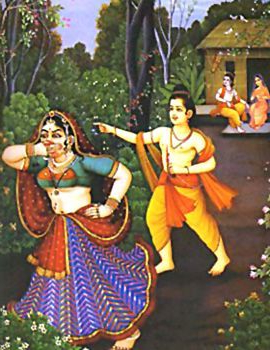
    surparnak.jpgSurpanakha: She was the sister of Ravana who was a powerful demon. She tried to seduce Lord Rama and kill Sita, but Lakshmana attacked her.

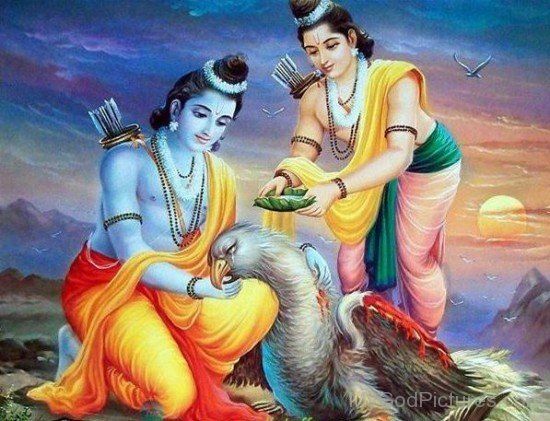
    llllllJatayu: Jatayu was a powerful golden eagle who spoke in the voice of a human being. He died protecting Sita from Ravana.

    kumar-e1551942493496.jpgShravan Kumar: He was as a dedicated son who carried his blind parents on his shoulders for a pilgrimage tour.

    Kumbhakarn.jpgKumbhakarna: He was Ravana's brother. He had a huge physique with unlimited strength. He used to sleep for six months at a time before waking up and eating everything he could see.

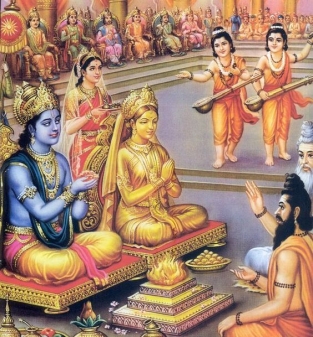
    luv-kush-e1551942533161.jpgLava: Along with Kusha, Lava was one of the student to whom Valmiki taught the Ramayana which he received from Narada.  Lava was the king of Sriwasti, in northern Kosala. He was the founder of the city of Lahore, which is named after him.

    ff.jpg

    Kusha: Kusha was one of the twin sons of Lord Rama and Sita. The other son is the Lava. He was born in a forest after Sita had been banished from Ayodhya.

    and many more characters are their in ramayana

    To know in detail read here : Characters in Ramayana


    Monday, 3 June 2019

    Forms of Indian theatre


    Untitled-design-2019-03-25T115754.224.png
    Forms of Indian theatre are numerous and the rich account of Indian drama unveils the verity that Indian theatre has a deep rooted relation with Indian epics and Indian mythologies. This later not only structured the rich forms of Indian theatre but also aided in making Indian 'Natya ' to stand apart as a whole new form of expression.

    shakuntala_201211_18.jpgHistory of Indian Theatre
    The history of Indian theatre that goes back to the mythological era. Sanskrit Dramas which were once the aristocratic way of reflecting the unedited realities of life . The  six different genres like :
    Bharatnatyam-indian-classical-dance-global-info
     Classical Indian Dance Drama
    The aristocratic and religious fervour of the Sanskrit dramas which ruled the Indian drama and art forms during the ancient era. Classical Indian dance drama forms of Kathak, Bharatnatyam, Odissi, Kuchipudi, Mohinittam and Yakshagana gained a rather cohesive and consistent dimension.

    dance.jpg
    Traditional Indian Theatre
    The forms of Indian theatre acquired a rather a whole new facet with the emergence of the traditional Indian theatres.

    Folk Theatre In India
    Gone are the days of traditional aspects which ruled the Indian theatre during the medieval period.

    54513772_642192486207214_7888287222895397698_n.jpgIndian Puppet theatre
    The Indian puppet theatre during the fag end of the medieval period. Shadow puppetry , 'Natyashastra' by Bharata etc popular as the classical forms of the Indian theatre.

    Modern Indian theatre
    Contemporary Indian theatre can be traced back to the British era.

    Read more : Forms of Indian theatre