Showing posts with label cultural. Show all posts

Monday, 3 July 2023

Ancient Indian Languages: A Journey into Linguistic Riches


In the vast tapestry of human civilization, India stands out as a land steeped in cultural heritage and diversity. Its ancient languages, like threads woven intricately, tell stories of an ancient past and unravel the mysteries of human expression. Among these languages, Sanskrit, Pali, Prakrit, Devanagiri, Tamil, Telugu, and Kannada hold significant positions, each with their unique origin and enduring significance.


Sanskrit, considered the mother of all Indian languages, holds a sacred place in Indian history and culture. Its origins can be traced back to the Vedic period, around 1500 BCE. With its refined grammar and extensive vocabulary, Sanskrit served as the language of Hindu scriptures, including the Vedas, Upanishads, and epics like the Ramayana and Mahabharata. Beyond religious texts, Sanskrit contributed immensely to various fields such as philosophy, literature, mathematics, and medicine, making it a reservoir of wisdom and knowledge. Ancient Indian Languages 

Pali, another ancient Indian language, holds special significance in the context of Buddhism. It originated as a derivative of Sanskrit and became the language of the Buddhist scriptures known as the Tripitaka. Pali's accessibility and simplicity made it an ideal medium for propagating the teachings of the Buddha. Pali texts such as the Dhammapada and Jataka tales continue to inspire and guide millions of Buddhists worldwide. 

Prakrit, a collective term encompassing various regional languages, emerged as a means of everyday communication among the masses. These vernacular languages, derived from Sanskrit, were spoken by ordinary people across different regions of ancient India. Prakrit's significance lies in its reflection of the linguistic diversity and cultural amalgamation that characterized ancient India. 

Devanagiri, a writing system used in several Indian languages, including Sanskrit, Hindi, and Marathi, holds immense importance in preserving and transmitting ancient texts. The script, characterized by its distinctive arrangement of letters, facilitated the propagation of knowledge through the ages. Devanagiri played a vital role in preserving the rich heritage of Indian literature, enabling the transmission of ancient texts to subsequent generations. Linguistic History of India 

Tamil, one of the oldest living languages in the world, traces its roots back to the Indus Valley Civilization. The Tamil language has a rich literary tradition, encompassing classical works such as the Sangam literature and the Tirukkural. Tamil's significance lies in its ancient literary heritage and its continuous usage and development, making it an integral part of South Indian culture. 

Telugu, a language spoken in the southern Indian state of Andhra Pradesh, has a history dating back over a thousand years. It is renowned for its extensive poetry and literary works, with notable contributions from poets such as Nannaya, Tikkana, and Yerrapragada. Telugu's significance lies in its status as one of the classical languages of India and its vibrant cultural expressions. 

Kannada, the official language of the Indian state of Karnataka, has a rich literary tradition spanning over a thousand years. The language flourished under the patronage of the Vijayanagara Empire, producing remarkable works in poetry, drama, and prose. Kannada's significance lies in its preservation of ancient knowledge and its contribution to the vibrant cultural mosaic of India. 

These ancient Indian languages collectively embody the cultural wealth and linguistic diversity of the subcontinent. They serve as a testament to the intellectual and artistic achievements of ancient India, fostering a deep sense of identity and pride among its people. From religious texts to philosophical treatises, from poetry to scientific treatises, these languages have shaped the intellectual and cultural landscape of India, leaving an indelible mark on humanity's shared heritage. 

As we delve into the origins and significance of these ancient Indian languages, it becomes evident that they have not only served as tools of communication but also as vehicles of cultural transmission and preservation. They have played a vital role in shaping the collective consciousness of the Indian people and fostering a sense of unity amidst the country's diverse linguistic landscape. 

The study of these languages has been instrumental in unraveling the mysteries of India's ancient past. Linguists, historians, and scholars have meticulously deciphered inscriptions, manuscripts, and ancient texts, shedding light on the social, cultural, and political dimensions of bygone eras. The preservation of these languages has enabled the exploration of India's rich historical tapestry and the understanding of its vibrant civilizations. 

Moreover, these languages have transcended geographical boundaries and played a significant role in the spread of Indian culture beyond its shores. Buddhist texts written in Pali, for instance, were instrumental in disseminating the teachings of Buddhism across Asia, leaving a profound impact on the region's religious and philosophical landscape. Similarly, the influence of Sanskrit extended beyond India, with its profound impact on neighboring countries like Nepal, Sri Lanka, and Indonesia. 

The enduring significance of these languages can also be seen in contemporary India. Despite the dominance of English and the rise of regional languages, Sanskrit continues to be studied and revered as a language of classical and intellectual pursuits. Tamil, Telugu, and Kannada, among others, flourish as living languages, fostering vibrant literary and cultural traditions that resonate with millions of people. 

The ancient Indian languages have not only shaped the literary and cultural realms but have also contributed to the development of scientific and technical knowledge. Ancient texts in Sanskrit and other languages contain profound insights into diverse fields such as astronomy, mathematics, architecture, and medicine. The meticulous documentation and transmission of this knowledge have paved the way for further advancements in these areas and continue to inspire contemporary scholarship. 

The ancient Indian languages, including Sanskrit, Pali, Prakrit, Devanagiri, Tamil, Telugu, and Kannada, stand as testaments to the rich linguistic and cultural heritage of India. They have played pivotal roles in preserving and disseminating knowledge, fostering a deep sense of identity and pride, and contributing to the intellectual and artistic achievements of ancient India. The study and appreciation of these languages provide a window into the multifaceted tapestry of Indian civilization and serve as a reminder of the timeless wisdom and cultural treasures they hold.


Tuesday, 13 June 2023

Rajasthani Language: Unveiling the Cultural Tapestry and Literary Heritage


Rajasthani language, spoken primarily in the Indian state of Rajasthan, is a vibrant and rich linguistic tapestry that reflects the region's cultural heritage and historical evolution. With its roots deeply intertwined with the history of Rajasthan, this language has played a pivotal role in shaping the cultural and literary landscape of the region. The origins of Rajasthani language can be traced back to the ancient Indo-Aryan language family, which includes languages such as Sanskrit, Hindi, and Gujarati. Rajasthani Language 

During the medieval period, Rajasthani emerged as a distinct language influenced by various linguistic and cultural factors. The Gurjara-Pratihara dynasty and the Rajput kingdoms brought their own influences, while waves of Turkic, Persian, and Arabic invasions further shaped its evolution. Over time, Rajasthani language evolved and branched into several dialects, each exhibiting unique linguistic and cultural characteristics. Major dialects include Marwari, Mewari, Shekhawati, Dhundhari, Harauti, and Wagdi. 

Rajasthani language holds immense cultural significance for the people of Rajasthan. It is not just a means of communication, but a cultural emblem that preserves and transmits folk tales, folklore, music, and oral traditions across generations. Rajasthani language embodies the spirit of the region, resonating with the vibrant Rajasthani culture, traditions, and ethos. 

Rajasthani language has played a pivotal role in the development of a rich and diverse literary tradition in Rajasthan. The region has produced a plethora of literary works in various genres, including poetry, prose, folk songs, and ballads. Early Rajasthani literature revolved around heroic tales, historical accounts, and religious themes, reflecting the valorous deeds of Rajput warriors and the influence of Bhakti and Sufi traditions.

 Throughout history, Rajasthani language has nurtured and inspired numerous poets and writers who have left an indelible mark on Rajasthani literature. Legends such as Meera Bai, Mirabai, Kavi Kallol, and Kanhaiyalal Sethia have enriched the literary landscape with their evocative verses, exploring themes of love, devotion, and the beauty of Rajasthan's landscapes. Languages of India 

In recent times, there has been a renewed focus on preserving and revitalizing Rajasthani language and literature. Organizations and institutions are actively working towards the documentation, promotion, and development of Rajasthani language. These efforts aim to ensure that the language continues to thrive and remain an integral part of Rajasthan's cultural fabric.

 Rajasthani language stands as a testament to the cultural richness and historical legacy of Rajasthan. From its ancient roots to the present day, it has witnessed the ebb and flow of history, absorbing influences and evolving into a vibrant linguistic entity. Its profound impact on Rajasthani literature has given voice to the region's ethos, serving as a powerful medium for creative expression and cultural preservation. As Rajasthan continues to forge ahead, cherishing and nurturing the Rajasthani language is essential to its cultural identity and heritage.


Tuesday, 9 May 2023

Lavani Dance: the Folk Tradition of Maharashtra


The history of Lavani traces back to the 18th century, during the reign of the Peshwas. Originally, it was performed in the courts of the Maratha kings, where talented dancers entertained the elite with their graceful movements and expressive storytelling. Over time, Lavani gained popularity and made its way into the hearts of the common people, becoming an integral part of their social and cultural fabric.


Lavani is typically performed by a group of female dancers known as 'Lavaniyas' or 'Tamashas,' accompanied by musicians playing traditional instruments such as the dholak, harmonium, and tabla. The dance is characterized by its energetic footwork, quick twirls, and dramatic hand gestures. The dancers often engage in a playful and flirtatious dialogue, known as 'baithakichi Lavani,' where they exchange witty and poetic verses with the audience. This interactive element adds an aura of spontaneity and liveliness to the performance. 

The costume of Lavani dancers is a visual spectacle in itself. The dancers adorn themselves with vibrant and ornate traditional attire, which includes a colorful nauvari saree (nine-yard saree) draped in a unique style. The nauvari saree allows freedom of movement and accentuates the fluidity and grace of the dancers. The dancers also wear exquisite jewelry, such as the traditional nath (nose ring), chandrakor (moon-shaped ornament), and bangles, which add a touch of elegance to their appearance. 

Lavani dances are often performed on various occasions and celebrations, including festivals, weddings, and social gatherings. The dance form serves as a medium for the expression of joy, celebration, and storytelling. Lavani songs often revolve around themes of love, romance, and social issues. The lyrics, often composed in the Marathi language, carry deep emotions and are delivered with utmost passion by the dancers. Through their performances, Lavaniyas have historically voiced societal concerns, shedding light on issues such as gender inequality, women's empowerment, and social justice. 

Lavani transcends boundaries and has found recognition not only within Maharashtra but also on national and international stages. With its infectious energy and soul-stirring melodies, Lavani has charmed audiences far and wide. Numerous festivals and events showcase Lavani as an art form, providing a platform for artists to display their talent and preserve this rich cultural heritage.

 For more, visit the link below:

https://www.indianetzone.com/6/lavani.htm

Wednesday, 14 December 2022

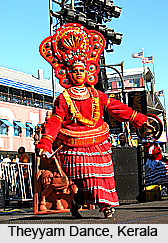
Theyyam , Folk Dance of Kerala


Theyyam , Folk Dance of KeralaTheyyam is one of the most outstanding and popular ritual arts of northern Kerala, particularly the area of Kolathunadu of the present Kannur and Kasargod District. As a living religious group with centuries old traditions, rituals and customs, it embraces almost all castes and classes of Hindu religion. The term Theyyam is a distorted form of 'Dhaivam' or God. It is a rare combination of dance and music and reflects important features of a tribal culture as a whole. This folk dance is believed to be a divine expression and the local residents of Kerala invoke the blessings of God through this dance form. This custom is also followed in the area of Tulu Nadu in Karnataka.

Origin of Theyyam Dance
Historians are of the view that Theyyam dance is an ancient folk form and possesses characteristics which suggest that it had originated as early as the Chalcolithic and Neolithic periods. There existed certain communities who refused to accept the supremacy of Brahmins, especially in temple worship. These people were major patrons of Theyyam, and this dance used to be practised by every Tharavadu. Brahmins were never permitted to participate in this dance form, as it belonged exclusively to the regional tribal communities of Kerala. However, some royal clans erected their individual shrines where Theyyam deities were established. In domestic shrines, Goddesses like Kurathi, Chamundi, Vishnumoorthi, Someshwari and Rakteshwari are appeased. Thus this dance is also based on caste system. Nowadays, Brahmin 'Thanthri' is invited to sanctify the 'Kavu' idols and the Thiyyas perform this dance as a significant religious custom.

Cults of Theyyam Dance
Theyyam dance, being an ancient tribal dance boasts of a widened scope which also includes the religion of Islam. 'Bhagawathi' or the cult of Mother Goddesses plays a significant role on this dance form. Besides Goddesses, other cults of Theyyam include serpent -worship, tree-worship, ancestor-worship, 'masathi'-worship, animal worship, Goddess of disease, spirit-worship and worship of village deity or 'Gramadevataa'. 'Shivani'or Durga, 'Vaishnavi' or Lakshmi and 'Brahmani' or Saraswati are the major Goddesses worshipped through Theyyam. The Theyyam deities who are worshipped by a cock sacrifice are not allowed to enter shrines. During the 13th century, Vaishnavism was a popular theme of Theyyam, in Tuluva region, under the reign of Vishnuvardhana belonging to Hoysala Dynasty. Shaktism and Shaivism are the other important categories of Theyyam.

For more, visit the link below:

Thursday, 17 November 2022

Andhra Pradesh Temple Festivals


Andhra Pradesh Temple Festivals, Indian Temple FestivalsAndhra Pradesh is famous for its varied culture and tradition. Andhra Pradesh is enamoured with thousands of religious centres, where weekly, monthly or annual Andhra Pradesh temple festivals are held. Every village and town in Andhra Pradesh has some kind of temple or place of worship where religious festivals are held, accompanied by fairs. Some of the Andhra Pradesh temple festivals are of local importance, while others have a wider significance.

Some of the popular temple festivals of Andhra Pradesh are as follows:

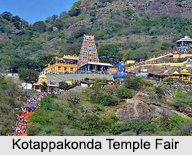
  • Kotappakonda Temple Fair: The famed ‘Kotappakonda Temple Fair’ is held each year on the eve of Maha Shivratri in February. Thousands of devotees swarm the temple with decorated and lighted prabhas (huge lamps) in their hands as a gift to Lord Shiva.


  • Andhra Pradesh Temple Festivals, Indian Temple Festivals
  • Sambhulingeswara Kalyanotsavam: It is another temple festival of Andhra Pradesh, celebrated during Mahashivaratri for five days. On the first day, Prabhas are come out in procession. Cash, silver and gold ornaments, coconuts, fruits and flowers are offered to the Lord, along with cows and calves, tying them to the Dhwajasthambha in fulfilment of their vows. It is believed that childless women, who perform Sambhulingeswara Kalyanotsavam for five days, wearing wet clothes, would surely be blessed with children. Fasting and Jagaranam are also observed. A large five-day fair including cattle fair is held near the temple.


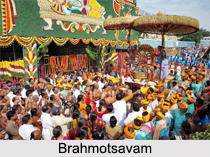
  • Tirupati Festival: There are a number of festivals that are held at Tirpupati in Andhra Pradesh. The most well known festivals are Brahmotsavam, which is the most affected festival of Lord Venkateswara that is held in the month of Asweeja. Every day during the festival, the idol is taken out in bright processions flanked by his companions. The Brahmotsavam continues for 10 days and is one of the most important festivals of the Tirupati temple.


  • Yellamma Jatara: Yellamma Jatara is renowned on the full moon day in the month of chaitra. Yellamma is friend of Kakatamma, the famed goddess of Kaktiya ruler. Goddess Yellamma (Yellaramma) is worshipped all over Andhra. The garaga parade of this place is very celebrated and a fair is also organised.


  • Durgamma Festival: This festival is celebrated for four days in the month of Bhadrapada. On the first day, the water for devotion is brought from a nearby river Majira. On the second day, a buffalo proposed for sacrifice and is taken to the river. After worshipping the water-goddess, the buffalo is washed there. It is then decorated and brought to the temple in a procession to the addition of music.

  • For more, visit the link below:

    Thursday, 10 February 2022

    Culture of Odisha


    Oriya Culture Oriya culture is a rich mix of ethnicity and tradition. Being the home of famous temples and religious shrines, the pious and spiritual customs intermingle in the social interactions of Oriyas. Music and dance compliment the religious rites and rituals. Oriya culture started its development process a long time back. Discussed below are some of the major aspects of Oriya culture which provide a deeper insight into the life and lifestyle of the Oriya people.

    Festivals of Odisha
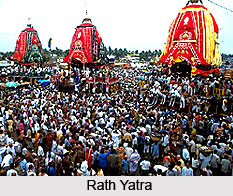
    Festivals are part and parcel of Oriya culture. All the popular Indian festivals are feted by the Oriyas along with some local festivals, incorporating religious rituals with social norms. The main festival of Odisha is the Rath Yatra. It is held on the second day of 'Asadha' or monsoon seasons. On this day, the idol of Lord Jagannath, together with Lord Balaram and Subhadra are being brought out in roads in chariots by thousands of devotees. Another popular festival, Dhanu Yatra, is held in the months of December or January to celebrate the occasion of the visit of Lord Krishna to Mathura. The Annual Konark Dance Festival is a huge celebration of Indian classical dance. Magha Saptami is feted in the month of 'Magha' to revere the Sun God at Konark. The five day long Puri Beach Festival starts from November 5, and is observed in the beautiful coastal beaches with great merrymaking and enthusiasm.

    Oriya CultureMusic and Dance of Odisha
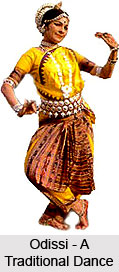
    Oriya music can broadly be divided into various genres of folk music, light music, light-classical music and classical music. Folk music like Balipuja Geeta, Kendra Geeta, Jaiphula Geeta depicts the woes and sorrows of the natives. Bhajan, a popular song type of light classical music is famous throughout the nation. Sariman, Champu, Malasri, Vyanjani, Chaturang, Tribhang, are the various sub categories of the conventional Odissi music. They fall under the Oriya classical music genre.

    For more, visit the link below:

    Monday, 13 December 2021

    Kashmiri Literature


    Kashmiri Literature, Indian LiteratureKashmiri literature consists of a variety of folk forms and is the most representative form. It signifies many features of social change, actions, patterns, hopes, suppressed wishes, creative thoughts, unconscious yearnings and collective dreams.

    Kashmiri literature examines the social drama in the geographical frame and with mention to the historical compulsions. For its beauty, assortment and difficulty of explanation, Kashmiri literature has received the attention of various scholars of different fields of learning.

    History of Kashmiri Literature
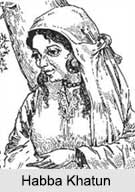
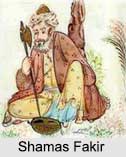
    Kashmiri Literature began with the work ‘Mahanayakaprakash’ (Light of the supreme lord) by Shitikantha in 1250 century. It was followed by the poet Lalleshvari or Lal Ded in 14th century. Habba Khatun came later in 16th century with her individual manner and was an exceedingly remarkable poetess, whose lyrics on love and romance referred to as ‘lol’, beguiles by the Kashmiri people even to this date. Rupa Bhavani, Arnimal, Mahmud Gami, Rasul Mir, Maqbool Shah Kralawari and the Sufi poets like Shamas Fakir, Wahab Khar, Soch Kral, Samad Mir, and Ahad Zargar enriched the history of Kashmiri Literature.

    Kashmiri Literature, Indian LiteratureA number of well educated youth turned to Kashmiri Literature in 1950s and some of them were Dinanath Nadim, Rahman Rahi, Ghulam Nabi Firaq Amin Kamil, Ali Mohd Lone, Autar Krishen Rahbar etc. During medieval times, the great Kashmir Valley School of Art, Culture and Philosophy recognised as 'Kashmir Shaivism' arose. Its memorable and irreplaceable masters comprise ‘Vasugupta’ (c. 800), ‘Utpala’ (c. 925), ‘Abhinavagupta’ and ‘Kshemaraja’. Names of the Anandavardhana and Abhinavagupta can successfully be enlisted in the theory of aesthetics. Several generations later, in the present-day contemporary times, a fresh lease of life given to identical "school of thought" was lent by Swami Lakshman Joo of Ishbher/Gupta Ganga, Srinagar.

    The earliest utilisation of Kashmiri literature can be witnessed in Kalhana's ‘Rajatarangini’ (12th century A.D.), in which a three-word phrase of Kashmiri ‘Apabhramsa’ was beautifully made use of. However, the earliest masterpiece in Kashmiri literature appears to be the ‘Mahanayaprakasa’ by Sitikantha Acharya, which belong to the period within, 1200-1500 A.D. Another work of supreme anonymity, without even a recognised date, is referred to as the Chumma-sampradaya, also furnishing as the oldest specimen of Kashmiri literature. The 14th century ‘Shaiva’ woman-saint Lal Ded, also admired as Lalla Didi, indeed had composed umpteen authorships in Kashmiri, which are still very much well liked, both amongst Hindus and Muslims. The sayings of another mystical and spiritualist poet Sheikh Nuruddin (1377-1440 A.D.) have been amassed in the book named ‘Nurnama’ or ‘Rshinama’. Utthasoma, Yodhabhatta and Bhatta Avatara were the substantial Kashmiri poets in the court of Zainul Abidin (1420-1470 A.D.). Utthasoma's treatise on music called ‘Manaka’, Yodhabhatta's ‘Jainacharita’ and ‘Jainaprakasa’ and Avatara's ‘Jainavilasa’were authoritative works of this period. ‘Banasuravadha’ is considered as the earliest epic poem in Kashmiri language.

    For more, visit the link below:

    Monday, 12 July 2021

    Indian Tribal Festivals


    Indian Tribal FestivalsIndian tribal festivals have been a part of the framework of tribal India for hundreds of years. Even today this tradition continues. In all, the 573 tribal groups prevailing in the country possess their individual kind of festival. Indian tribal festivals possess a distinctive quality of their own, standing out from the other regular city festivals happening each other day. The tribal mode of celebrating, their costumes, jewellery, dancing, singing, language or the quaint ceremonious atmosphere in some far-off jungle or mountain, makes it all the more interesting. Beginning from Jammu and Kashmir in the north, to Kerala in the south, to Gujarat in the west and Manipur in the east, tribal festivals exist in each corner of states and even in union territories of Andaman and Nicobar Islands, Daman and Diu and Lakshadweep Islands. It can also be noticed that tribal festivals in India are mostly meant to appease the presiding God, depending upon their religious importance.

    Tribal Festivals of Central India
    Tribal festivals in Madhya Pradesh consist of varied mood and modes, making the whole affair a happy and enchanting one. Some of the legendary tribal festivals in Madhya Pradesh include Madai festival, Bhagoriya festival, the tribal Dussehra of Bastar, the religious festival of Karma, festival of Nagaji. Musical and dancing festivals of this central Indian state include heavy and intoxicated episodes, with the sounding of drums, flutes, tables, ghungroos. The Gonds, the Bhils and several other tribes occupy centre-stage. The interesting factor that can be observed here is that, the above-mentioned tribal festivals from Madhya Pradesh are also enjoyably celebrated in Chhattisgarh as well.

    Tribal Festivals of Northern India
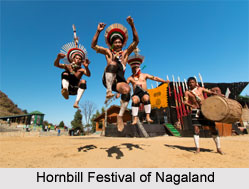
    The states of Nagaland and Mizoram with its long list of tribes varying in lifestyle, celebrate festive occasions on several days and dates. Some of them include, the Mim kut festival by Kuki tribe, the Sekrenyi festival by Angami tribe, the Tsukhenyi festival by Chakasang tribe, the Aoling festival by Konayak tribe, the Monyu festival by Phom tribe, the Moatsu festival by Ao Naga tribe, the Miu festival by Khaimggan tribe, the Tulini festival by Sema Naga tribe, the Nyanyulum festival by Chang tribe, the Nazu festival by Pochury tribe, the Metemneo festival by Yimchunger tribe, the Amongmong festival by Sangtam tribe, the Tokhuemong festival by Lotha tribe, the Ngada festival by Rengma tribe, the renowned Hornbill festival by every Naga tribe and the Nga-Ngai festival by Zeliang tribe.Indian Tribal Festivals

    Tribal Festivals of Eastern India
    The annual Mansa festival in Jharkhand is a big affair for the tribal people in Panchparanga, wherein the tribals are seen to appease Goddess Manasa by piercing their body. Tribal festivals in Orissa are a lavish and magnanimous affair, with perhaps a significant mass of Indian population joining in the festivities. Some of the much talked-about tribal festivals include Bali Jatra by Koraput tribe, Karama festival observed by the Ho, Kisan, Kol, Bhumij, Oraon, Bhuiyan and Binjhal tribes, the Sume-Gelirak festival by Bonda tribe of Koraput, Bija Pandu festival, also known as Chaitra Parva, observed by Koya tribe of Orissa, the Kedu festival of the Kondhs of Phulbani, Chaita Parva festival observed by tribes of Koraput and Bhuiyans and the Mage Parab festival of the Ho, Oraon, Kisan and Kol tribes.The Bohaggiyo Bishu tribal festival from Assam, observed by the Deori tribe, one of the four divisions of the Chutiyas is legendary within the tribal festivals included both in the state and India, with sublime implications. Sarhul is a festival of flowers and the most popular of all the tribal festivals in the country. The festival is observed by Mundas, Oraon and Santhal tribal communities, inhabiting in regions of Orissa, Jharkhand and Bihar.