Showing posts with label hindu temple. Show all posts

Tuesday, 5 May 2026

Rathnapureeswarar Temple: A Sacred Legacy of Shaivite Devotion and Chola Heritage

 Rathnapureeswarar Temple is an ancient Hindu shrine dedicated to Lord Shiva, located in the culturally rich region of Thirunattiyathangudi. This temple holds a distinguished place in the religious and historical landscape of Tamil Nadu, reflecting the deep-rooted traditions of Shaivism in South India. The temple is closely associated with the legacy of Kotpuli Nayanar, one of the 63 revered Nayanmars known for their unwavering devotion to Lord Shiva.


Historical and Religious Significance

The Rathnapureeswarar Temple dates back nearly a millennium and is believed to have been constructed during the reign of Ratnendra Chola. Historically, the temple was known as Natiyathankudi, derived from the name of the village in which it stands. Its spiritual importance is further elevated by its association with the Thevaram, where it finds mention in the hymns composed by the saint Sundarar. 

The temple is also recognized as one of the 275 Paadal Petra Sthalam, a group of temples celebrated in the Tamil Shaiva canon. These shrines, also referred to as Devara Sthalams, are sanctified by devotional hymns of the Nayanmars, making them significant centers of worship. Notably, Rathnapureeswarar Temple is the 118th temple located along the banks of the sacred Cauvery River to be praised in Thevaram. 

Deities and Sacred Features

The presiding deity of the temple is Lord Shiva, worshipped here as Rathnapureeswarar, also known by the name Manikkavannar. His divine consort, Mangalambikai, is enshrined within the temple complex. A distinctive aspect of this temple is that the main idol (moolavar) is a Swayambhu murthi, meaning it is believed to have manifested naturally rather than being sculpted by human hands. This feature enhances the temple’s spiritual aura and attracts devotees seeking divine blessings. 

The temple is also intrinsically linked to the life of Kotpuli Nayanar, who attained salvation through his unwavering devotion to Lord Shiva. The Nayanmars, including Kotpuli, are venerated for their profound bhakti and contributions to devotional literature during the 6th to 8th centuries. 

Architectural Elements

Rathnapureeswarar Temple exemplifies the traditional features of Dravidian temple architecture. The imposing Rajagopura, a five-tiered entrance tower, stands as a hallmark of South Indian temple design, adorned with intricate carvings and symbolic motifs. This structure not only marks the temple’s entrance but also signifies its spiritual grandeur. 

Another key feature is the Dhwaja Stambha, or flagstaff, positioned in alignment with the temple’s central axis, just before the mukhamandapa or front hall. This element plays an important role in temple rituals and festivals. Additionally, the sacred figure of Nandi, the bull mount of Lord Shiva, is prominently enshrined within the temple complex, symbolizing strength, loyalty, and devotion. 

Rathnapureeswarar Temple reflects the enduring legacy of Shaivite devotion, Chola architectural brilliance, and Tamil spiritual heritage. Its historical depth, religious significance, and architectural elegance make it a vital pilgrimage site and a remarkable representation of South India’s sacred traditions.

Monday, 23 March 2026

Pochamma Devi: The Sacred Village Deity and Protector of Devotees

 Pochamma Devi is a revered mother goddess widely worshiped by the people of Telangana and Andhra Pradesh in India. She is regarded as a powerful village guardian deity who protects devotees from diseases, enemies, and misfortunes. As a benevolent divine mother, Pochamma Devi is believed to bring prosperity, health, and protection to those who worship her with devotion. Her worship is deeply rooted in the rural traditions and cultural practices of southern India, where she is honored as a Village Devata, or village protector.


Pochamma Devi as a Guardian Goddess

Pochamma Devi is considered a guardian deity who safeguards the well-being of communities. Devotees believe that she has the divine power to protect people from various diseases and harmful forces. In many villages, she is worshiped as the primary protective deity who ensures peace, health, and prosperity. 

In local beliefs, it is said that if people neglect or reject the worship of Pochamma Devi, difficulties and illnesses may arise. However, devotees also believe that the compassionate mother goddess does not intend to harm her followers. Instead, she guides them toward self-realization and helps them understand the importance of devotion and moral conduct. Through this belief, Pochamma Devi is seen as both a protector and a teacher who corrects the mistakes of her devotees and leads them toward spiritual awareness. 

Connection with Goddess Kali

Pochamma Devi is often regarded as an aspect or manifestation of Goddess Kali, the fierce and protective form of the divine mother in Hindu tradition. Like Kali, Pochamma represents divine power, protection, and the ability to remove negative influences from the lives of devotees. This association reinforces her status as a powerful deity capable of guarding communities and maintaining spiritual balance. 

Idol and Symbolism

The idol of Pochamma Devi is traditionally made from fine wood and is usually placed near a neem tree, which is considered sacred and associated with healing properties. The goddess is commonly dressed in yellow-colored garments, symbolizing auspiciousness and divine energy. 

Devotees often create small idols of the goddess and place them in temples as offerings. These symbolic acts of devotion reflect the deep respect and faith that people have in Pochamma Devi as their divine protector. 

Regional Names and Associations

In the Adilabad district of Telangana, Pochamma Devi is known by another name, Gajjelamma. Despite the variation in name, her identity as a protective mother goddess remains the same. Her husband, Mahamuni, is believed to be the guardian deity of animals, birds, insects, ants, and trees in the forest, representing the protection of nature and living beings. 

Festivals and Ritual Worship

The most significant festival dedicated to Pochamma Devi is the Bonalu festival, celebrated during the months of July and August. During this festival, devotees offer prayers and special offerings to the goddess seeking her blessings for health and prosperity. In many villages, another celebration known as Pochamma Panduga is also conducted in her honor. 

Devotees usually worship Pochamma Devi on Sundays. Rituals include performing puja and abhishekham, decorating the deity with flowers, and offering fruits and food items such as sundal and mixed rice. These offerings are later distributed among the participants as sacred prasadam. 

Although the goddess is generally associated with compassion and protection, some temples continue the traditional practice of animal sacrifice as a means of appeasing the deity, even though it is believed that the divine mother herself does not prefer such offerings. 

Pochamma Devi holds an important place in the religious and cultural traditions of Telangana and Andhra Pradesh. As a village guardian and compassionate mother goddess, she symbolizes protection, discipline, and prosperity. Through festivals, rituals, and daily devotion, communities continue to honor her as a powerful spiritual presence who safeguards their lives and well-being.

Tuesday, 9 September 2025

Brahmin Castes in India

The caste system has been one of the defining features of Indian society for centuries, shaping social, religious, and cultural life in profound ways. At the top of this traditional hierarchy are the Brahmins, historically regarded as the priestly and scholarly class. Considered custodians of knowledge, rituals, and religious texts, Brahmins have played a significant role in preserving spiritual traditions and intellectual heritage in India. However, within the broad identity of Brahmins lies a remarkable diversity, with multiple castes and sub-castes spread across different regions of the country.


Historical Background

The origins of the Brahmin caste can be traced back to the Vedic period, when society was organized into four varnas—Brahmins (priests and teachers), Kshatriyas (warriors), Vaishyas (traders), and Shudras (laborers). Brahmins were entrusted with the duties of learning, teaching, and performing rituals, as well as guiding kings and communities in spiritual and ethical matters. Over time, as Hinduism evolved and spread across the subcontinent, the Brahmin community diversified into various castes and sub-castes adapted to regional customs and languages. 

Major Brahmin Castes Across India

Brahmin castes are not homogenous; instead, they reflect the cultural and linguistic variety of India. For instance, in North India, communities like the Gaur Brahmins, Saraswat Brahmins, and Maithil Brahmins have historically held prominence. In Eastern India, Bengali Brahmins such as Rarhi and Varendra Brahmins developed distinct traditions. Southern India is home to groups like Iyers and Iyengars in Tamil Nadu, Namboodiris in Kerala, and Deshastha and Chitpavan Brahmins in Maharashtra. Similarly, in Western India, Pushkarna and Nagar Brahmins are notable. 

Each of these castes has its own customs, practices, and in some cases, even distinct dialects of Sanskrit used in religious rituals. For example, Namboodiri Brahmins of Kerala traditionally held exclusive rights to temple rituals, while Chitpavan Brahmins of Maharashtra became prominent in administration and politics during the Maratha Empire. 

Social and Cultural Roles

Historically, Brahmins have been closely associated with temples, scriptures, and education. They were considered the interpreters of the Vedas and were responsible for transmitting religious knowledge across generations. Beyond religious roles, Brahmins have contributed significantly to Indian literature, philosophy, science, and politics. Thinkers such as Adi Shankaracharya, Chanakya, and later, leaders like Bal Gangadhar Tilak and Pandit Jawaharlal Nehru emerged from Brahmin communities. 

However, their privileged social status also made them a subject of critique during social reform movements. Reformers in the 19th and 20th centuries challenged the rigid caste hierarchy, calling for equality and questioning Brahmin dominance in education and religion. 

Contemporary Context

In modern India, the identity of Brahmins continues to evolve. While many Brahmins still serve as priests and scholars, others have moved into diverse professions, including politics, business, science, and the arts. The traditional occupations of ritual performance and temple service are now only part of a broader professional landscape. Moreover, affirmative action policies and changing social structures have reduced the influence of caste-based hierarchies in many areas. 

The Brahmin castes in India embody both the continuity of tradition and the dynamics of change. From their ancient role as keepers of spiritual knowledge to their diverse presence in modern society, Brahmins represent a significant, though complex, thread in the fabric of Indian civilization. Their journey reflects the larger story of India itself—a civilization rooted in tradition yet constantly adapting to new realities.

Wednesday, 2 April 2025

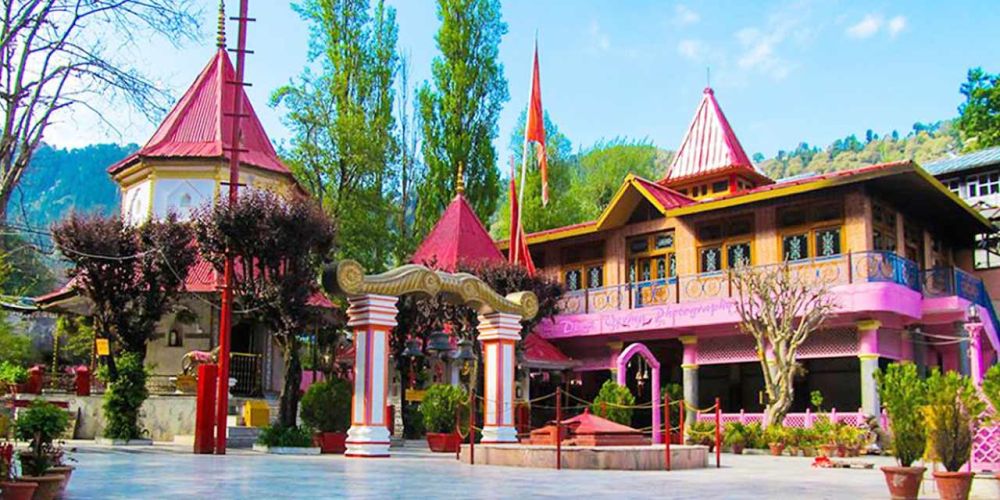
Naina Devi Temple, Nainital: A Sacred Site of Devotion and Heritage


Naina Devi Temple, located in the picturesque town of Nainital, Uttarakhand, is one of the most revered Shakti Peethas in India. The temple is dedicated to Goddess Naina Devi, an embodiment of Goddess Shakti. According to Hindu mythology, the temple marks the site where the eyes (nayan) of Goddess Sati fell after Lord Shiva carried her charred body across the universe in grief. This association makes it a significant pilgrimage destination for devotees of Goddess Shakti. 

The temple's origins date back to ancient times, but it was reconstructed in the 19th century after being destroyed by a landslide in 1880. The present structure, built with devotion and care, continues to attract thousands of worshippers annually. 

Religious Importance

As a Shakti Peetha, Naina Devi Temple holds immense religious value among Hindus. The main shrine houses the pindis (sacred stone representations) of Goddess Naina Devi, along with Goddess Kali and Lord Ganesha. Devotees believe that offering prayers at this temple brings protection, prosperity, and spiritual fulfillment. 

The temple witnesses an influx of pilgrims during Navratri, a festival dedicated to Goddess Durga. Special prayers, rituals, and celebrations mark this period, enhancing the temple's spiritual ambiance. Throughout the year, various Hindu festivals, including Maha Shivaratri and Makar Sankranti, are observed with great fervor. 

Cultural Significance

Beyond its religious aspect, Naina Devi Temple is deeply embedded in the cultural fabric of Nainital. The temple complex is a focal point of local traditions and customs. The annual Nanda Devi Mela, held in honor of Goddess Nanda Devi and Goddess Sunanda, attracts a large number of devotees and tourists. This fair showcases traditional dance, music, and local handicrafts, preserving the region’s rich cultural heritage. 

The temple also plays a vital role in promoting community participation, as many local artisans and traders benefit from the increased footfall of visitors. Additionally, the rituals and ceremonies conducted at the temple reflect the age-old traditions passed down through generations. 

Tourism and Accessibility

Situated on the northern shore of Naini Lake, the temple offers a serene and spiritually uplifting experience. Its strategic location makes it one of the prime attractions of Nainital. Visitors can reach the temple via a short walk from Mall Road, the town's bustling commercial hub. 

Tourists often combine their visit to the temple with other nearby attractions, such as Naini Lake, Snow View Point, and Tiffin Top. The temple complex also provides stunning panoramic views of the surrounding hills, making it a popular spot for photography enthusiasts. 

For travelers, Nainital is well-connected by road from major cities like Delhi and Dehradun. The nearest railway station is in Kathgodam, approximately 35 kilometers away, and the closest airport is Pantnagar Airport, around 70 kilometers from Nainital.

Naina Devi Temple stands as a symbol of faith, heritage, and cultural unity. Its historical and religious significance continues to draw pilgrims, while its scenic beauty makes it an essential destination for tourists. Whether seeking spiritual solace or cultural insight, visitors to the temple leave with a sense of divine connection and reverence. 

Thursday, 13 March 2025

Shri Durgiana Temple, Amritsar: A Centre of Devotion and Heritage


Shri Durgiana Temple, located in Amritsar, Punjab, is a revered Hindu religious site known for its spiritual, historical, and architectural significance. Often referred to as the "Silver Temple" due to its intricately carved silver doors, this temple attracts thousands of devotees and tourists annually. The cultural and religious prominence of Shri Durgiana Temple makes it one of the most important pilgrimage sites in northern India.


Historical Significance

Shri Durgiana Temple traces its origins to the early 20th century when it was constructed in 1908 under the patronage of Guru Harsai Mal Kapoor. The temple was modeled after the Golden Temple, which is situated nearby, reflecting a similar architectural style and layout. Despite its relatively recent construction, the temple is deeply rooted in Hindu traditions, as it is built on the site of an older temple believed to have existed for centuries. The temple is dedicated to Goddess Durga, a revered deity in Hinduism associated with power and protection. It also houses shrines dedicated to Lord Vishnu and Lord Hanuman, reinforcing its religious importance. 

Architectural Grandeur

The temple’s architectural design closely resembles that of the Golden Temple, featuring a gold-plated dome and a central shrine surrounded by a sacred water tank. The sanctum is connected to the surrounding area by a causeway, creating a serene and spiritually uplifting atmosphere. The temple's entrance gates are adorned with elaborate silver carvings, which have earned it the title "Silver Temple." The intricate craftsmanship displayed in the carvings and embellishments reflects the rich artistic heritage of the region. The temple complex also includes a spacious courtyard, prayer halls, and well-maintained pathways that enhance the overall experience for visitors. 

Religious Importance

Shri Durgiana Temple is a major center for Hindu worship, drawing devotees throughout the year, particularly during festivals such as Navratri and Dussehra. During these occasions, the temple is decorated with lights and flowers, and special prayers and religious ceremonies are conducted. Devotees visit the temple to seek blessings, offer prayers, and participate in rituals dedicated to Goddess Durga. The temple is also an important site for Hindu pilgrimage in Punjab, attracting visitors not only from across India but also from abroad. 

A significant religious practice associated with the temple is the offering of diyas (oil lamps) and prayers at the holy water tank, which is believed to have divine significance. Many devotees also believe that the temple’s spiritual aura helps in fulfilling wishes and bringing peace to their lives. 

Cultural and Social Role

Beyond its religious importance, Shri Durgiana Temple plays a crucial role in the cultural fabric of Amritsar. The temple serves as a hub for community gatherings, religious discourses, and charitable activities. Free meals (langar) are offered to devotees, following the long-standing tradition of service and hospitality in Indian temples. Various cultural events and spiritual programs are organized throughout the year, fostering a sense of unity and devotion among the visitors. 

Shri Durgiana Temple reflects the religious and cultural heritage of India. Its historical relevance, architectural brilliance, and spiritual significance make it a vital landmark in Amritsar. For devotees and tourists alike, the temple offers a place of worship, reflection, and cultural enrichment, preserving its legacy as an enduring symbol of devotion and tradition.

Friday, 21 February 2025

History of Indian Temples: Evolution of Temple Architecture Through Ages


The history of Indian temples reflects the country’s rich cultural and religious heritage. Temple architecture in India has evolved over centuries, reflecting the artistic, religious, and political influences of different periods. The architectural style of Indian temples can be broadly classified into three main phases: ancient, medieval, and modern. Each period saw significant changes in design, structure, and regional variations influenced by dynastic rule. 

Ancient Period:

The origins of Indian temple architecture can be traced back to the early centuries of the Common Era, influenced by Vedic traditions and Buddhist architectural styles. 

Early Rock-Cut Temples

The earliest temples in India were primarily rock-cut structures, influenced by Buddhist stupas and chaityas. Examples include the Ajanta and Ellora caves (Maharashtra) and the Udayagiri caves (Madhya Pradesh). These temples were often monolithic, with intricate carvings depicting mythological narratives. 

Gradually, structural temples made of brick and stone emerged. The Gupta period (4th-6th century CE) marked a significant development in temple architecture. The temples of this era, such as the Dashavatara Temple at Deogarh, showcased a square sanctum (garbhagriha) with a pyramidal shikhara (tower), a style that would influence later temple designs. 

Dravidian and Nagara Influences

By the 7th century CE, two primary architectural styles emerged:

  • Dravidian Style (South India): Characterized by towering vimanas (temple towers), pillared halls (mandapas), and enclosed courtyards. The Shore Temple at Mahabalipuram, built by the Pallavas, exemplifies this style.
  • Nagara Style (North India): Known for its beehive-shaped shikharas, these temples featured intricate carvings and mandapas. The Lakshmana Temple in Khajuraho is a fine example of the Nagara style. 

Medieval Period:

The medieval period (8th-15th century CE) saw a significant expansion in temple construction, with regional kingdoms contributing unique architectural elements. 

Chola and Vijayanagara Contributions

The Chola dynasty (9th-13th century CE) made substantial contributions to temple architecture. Temples such as the Brihadeshwara Temple (Thanjavur) introduced large-scale vimanas, extensive sculptures, and complex iconography.

The Vijayanagara Empire (14th-16th century CE) continued this tradition, incorporating elaborate entrance towers (gopurams) and massive temple complexes. The Virupaksha Temple in Hampi is a prime example of Vijayanagara craftsmanship. 

Rajput and Chandela Temples

In North India, the Rajput kingdoms and the Chandela rulers left an indelible mark on temple architecture. The Chandela dynasty (10th-12th century CE) is credited with the magnificent temples of Khajuraho, known for their intricate carvings and erotic sculptures.

The Rajput rulers, particularly in Rajasthan and Gujarat, constructed temples such as the Dilwara Temples (Mount Abu), showcasing exquisite marble work and detailed carvings. 

Islamic Influence

During the medieval period, the arrival of Islamic rulers led to a decline in temple construction in certain regions. However, temple architecture persisted in southern and western India, adapting to changing political landscapes. 

Modern Period:

The modern period (16th century CE onwards) witnessed a resurgence in temple construction and conservation efforts. 

Colonial Developments

During British rule, temple construction saw a decline due to shifting socio-political priorities. However, the 19th and 20th centuries marked a revival of temple architecture with the establishment of new temples and the restoration of historical sites.

Post-independence, temple architecture witnessed a blend of traditional and contemporary designs. Examples include the Akshardham Temple (Delhi) and the ISKCON temples, which integrate modern construction techniques while maintaining classical aesthetics. 

The history of Indian temples is a reflection of the country’s evolving religious and artistic expressions. From the rock-cut caves of ancient India to the towering vimanas of the Cholas, and from the grandeur of Khajuraho to the modern-day temple complexes, Indian temple architecture continues to be a vibrant testament to the nation’s spiritual and cultural identity. The preservation of these temples remains crucial in understanding India’s architectural and historical legacy.

Monday, 31 July 2023

Tourism in Uttarakhand: Exploring the Splendors of Hill Stations, Lakes, Temples, and Wildlife Sanctuaries


Nestled in the lap of the majestic Himalayas, Uttarakhand is a treasure trove of natural wonders, spiritual sanctuaries, and diverse wildlife. This Indian state, often referred to as "Devbhumi" or the Land of Gods, has been a magnet for tourists seeking respite from the hustle and bustle of urban life and a rendezvous with nature's finest offerings. Let's embark on a journey to explore some of the most popular hill stations, serene lakes, ancient temples, and thriving wildlife sanctuaries that adorn the breathtaking landscape of Uttarakhand. Tourism In Uttarakhand


Hill Stations: Embracing Nature's Serenity

Nainital: Among the most sought-after hill stations in India, Nainital exudes charm with its emerald Naini Lake surrounded by lush hills. Boating on the serene lake, strolling along the Mall Road, and visiting the Naina Devi Temple are experiences that leave visitors enchanted.

Mussoorie: Fondly called the "Queen of Hills," Mussoorie is famous for its scenic beauty and pleasant climate. The Kempty Falls, Lal Tibba viewpoint, and Camel's Back Road are some of the must-visit attractions that offer breathtaking panoramas.

Dhanaulti: A lesser-known gem, Dhanaulti is a tranquil hill station known for its peaceful ambiance and lush alpine forests. The Eco Park and Surkanda Devi Temple are popular spots that offer a perfect blend of natural beauty and spirituality.

Lakes: Mirror-like Reflections

Bhimtal: Encircled by hills, Bhimtal is a serene lake town with the Bhimtal Lake as its centerpiece. Visitors can enjoy boating, explore the lakeside aquarium, and savor the peaceful environment.

Naukuchiatal: True to its name, Naukuchiatal boasts a nine-cornered lake surrounded by dense forests. It is an idyllic spot for nature lovers, birdwatchers, and those seeking tranquility.

Sattal: Named after the interconnected cluster of seven freshwater lakes, Sattal offers a serene escape amid nature's bounty. It is a paradise for migratory birds, making it a birdwatcher's delight.

Temples: Spiritual Sojourns

Kedarnath Temple: Perched at an elevation of 3,583 meters, Kedarnath Temple is one of the revered Char Dhams and holds immense religious significance. The trek to this sacred abode of Lord Shiva is a journey of devotion and endurance. Uttarakhand

Badrinath Temple: Another essential destination of the Char Dham Yatra, Badrinath Temple is dedicated to Lord Vishnu. Surrounded by snow-capped peaks, the temple offers a divine ambiance.

Haridwar: One of the holiest cities in India, Haridwar is famous for the Ganga Aarti at Har Ki Pauri. Devotees from all over the country gather here to seek blessings and witness the mesmerizing Ganga Aarti ritual.

Wildlife Sanctuaries: Biodiversity Unveiled

Jim Corbett National Park: India's oldest national park, Jim Corbett, is a haven for wildlife enthusiasts and nature photographers. It is home to the majestic Bengal tiger, along with elephants, leopards, and a myriad of avian species.

Rajaji National Park: Named after India's freedom fighter C. Rajagopalachari, Rajaji National Park is famous for its herds of Asian elephants and a diverse range of flora and fauna.

Binsar Wildlife Sanctuary: Situated amidst dense forests, Binsar Wildlife Sanctuary offers breathtaking views of the Himalayas. It shelters various wildlife species, including leopard, barking deer, and langur.

Responsible Tourism

As Uttarakhand continues to attract tourists from far and wide, the need for responsible tourism practices becomes paramount. Local authorities, NGOs, and tour operators are increasingly focusing on sustainability, conservation, and community involvement. Travelers are encouraged to be mindful of their ecological footprint, respect local customs, and contribute to the welfare of the region and its inhabitants.

Uttarakhand's tourism landscape is a symphony of hill stations, tranquil lakes, sacred temples, and vibrant wildlife sanctuaries that captivate the hearts of travelers. Whether it's the spiritual seeker, the nature enthusiast, or the adventure lover, Uttarakhand's diverse offerings cater to the desires of all. As visitors revel in the state's beauty, embracing responsible tourism practices ensures that this land of sublime beauty continues to thrive and enchant generations to come.

Tuesday, 25 July 2023

Avatars of Lord Vishnu: Divine Incarnations in Hindu Mythology


In the vast tapestry of Hindu mythology, the Avatars of Lord Vishnu hold a significant place as divine incarnations that descend to Earth to restore balance and uphold dharma (righteousness). As the preserver and protector of the universe, Lord Vishnu is believed to take on various earthly forms in times of cosmic turmoil, ensuring the continuity of life and the triumph of good over evil. These avatars, known as the Dashavatara, exemplify the diversity of the divine and the principles they embody, each with its unique purpose and significance. Lord Vishnu


Matsya (The Fish Avatar): In the first avatar, Lord Vishnu incarnates as a fish to save humanity from a catastrophic flood. He guides the sage Manu's boat to safety, preserving the essence of life and knowledge. 

Kurma (The Tortoise Avatar): The second avatar sees Lord Vishnu taking the form of a tortoise to support the churning rod (Mandara Mountain) used by the gods and demons to extract the nectar of immortality from the cosmic ocean. 

Varaha (The Boar Avatar): In the third avatar, Lord Vishnu transforms into a boar to rescue Goddess Earth (Bhudevi) from the demon Hiranyaksha, who had submerged her into the depths of the cosmic ocean. Hindu Gods  

Narasimha (The Half-Man, Half-Lion Avatar): The fourth avatar portrays Lord Vishnu as a fierce lion-man who appears to protect his devotee Prahlada and annihilate the demon king Hiranyakashipu, who could not be killed by human, animal, or deity. 

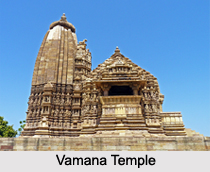
Vamana (The Dwarf Avatar): In this avatar, Lord Vishnu takes the form of a diminutive Brahmin named Vamana and approaches the benevolent demon king Bali to request three steps of land, which ultimately leads to the demon's humility and salvation. 

Parashurama (The Warrior Sage Avatar): Lord Vishnu incarnates as Parashurama, a fierce warrior wielding an axe, to eliminate the oppressive Kshatriya rulers and restore balance in society. 

Lord Rama (The Prince of Ayodhya): The seventh avatar of Lord Vishnu is the revered Lord Rama, the epitome of dharma and righteousness, as depicted in the epic Ramayana. He exemplifies the ideal king, husband, and son, and his life serves as a timeless lesson in moral conduct and devotion. 

Lord Krishna (The Divine Statesman): The eighth avatar, Lord Krishna, is one of the most celebrated and beloved incarnations of Vishnu. His life and teachings, as documented in the Mahabharata and Bhagavad Gita, emphasize duty, devotion, and the path of selfless action (Karma Yoga). 

Buddha (The Enlightened One): Lord Vishnu's ninth avatar is Buddha, who appears to alleviate suffering and delusion. Buddha's teachings emphasize compassion, non-violence, and the path to enlightenment. 

Kalki (The Future Avatar): The final and yet-to-come avatar of Lord Vishnu, Kalki, is prophesized to appear in the distant future as a warrior on a white horse, wielding a sword, to cleanse the world of darkness and reestablish dharma. 

The Avatars of Lord Vishnu showcase the complexity of divine intervention in Hindu mythology. Each incarnation serves a specific purpose, imparting valuable life lessons, and guiding humanity towards the path of righteousness and spiritual growth. These avatars, beyond their individual tales, collectively symbolize the eternal cycle of creation, preservation, and destruction, representing the cosmic dance of the divine. Their stories continue to inspire and resonate with millions of devotees worldwide, as they find solace in the notion of a benevolent and compassionate force watching over the universe.


Tuesday, 24 January 2023

Madhya Pradesh Temples


Madhya Pradesh TemplesThe state of Madhya Pradesh is located in central India. This ‘Central Province’ is the second-largest state in India by area (308,245 square kilometers) and the fifth-largest state in the country by population (over 75 million inhabitants). The geographical terrain of this state is characterized by a plateau streaked with the hill ranges of the Vindhyas and the Satpuras, rivers, lakes and dense forests. The natural beauty of Madhya Pradesh, along with world heritage sites, several cities, hill stationsnational parks, etc draw tourists to this state. Temples of Madhya Pradesh are no exception in this regard. They also serve as spots that have the potential to catch the attention of tourists visiting this state.

Mahakaleshwar Jyotirlinga
Mahakaleshwar Jyotirlinga is located in the ancient city of Ujjain. This Hindu temple is dedicated to Lord Shiva and is one of the twelve Jyotirlingams (most sacred abodes of Lord Shiva) in India. Mahashivratri is an important festival celebrated in this temple.

Lakshmana Temple
Lakshmana Temple is located in the small village of Khajuraho in the district of Chattarpur. This Hindu temple is dedicated to a form of Vishnu called Vaikuntha Vishnu and houses a tri-headed four-armed sculpture of this deity. This temple is a fine representation of Hindu temple architecture. The temple complex stands on a high platform and has an ardh-mandapa (entrance porch), mandapa, maha-mandapa, antarala and garbhagriha.

Chaturbhuj Temple
Chaturbhuj Temple is located in the town of Orccha. Currently, an image of Radha Krishna is worshiped in this temple. This temple was built in the 16th century by the rulers of the Orccha state called Bundela Rajputs. The Ram Raja Trust is recognized as the managing body of this temple. The State Archaeology Department is responsible for the conservation of the temple structure.

Annapurna Temple
Annapurna Temple is situated in Indore and is one of its famous pilgrimage sites. This Hindu temple is dedicated to goddess Annapurna. Architecturally, this temple is similar to the famous Meenakshi Temple of Madurai. It has three shrines of Shiva, Hanuman and Kalabhairava and the famous Pravachan Hall.

For more, visit the link below:

Thursday, 17 November 2022

Andhra Pradesh Temple Festivals


Andhra Pradesh Temple Festivals, Indian Temple FestivalsAndhra Pradesh is famous for its varied culture and tradition. Andhra Pradesh is enamoured with thousands of religious centres, where weekly, monthly or annual Andhra Pradesh temple festivals are held. Every village and town in Andhra Pradesh has some kind of temple or place of worship where religious festivals are held, accompanied by fairs. Some of the Andhra Pradesh temple festivals are of local importance, while others have a wider significance.

Some of the popular temple festivals of Andhra Pradesh are as follows:

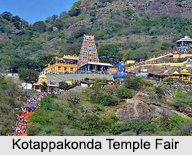
  • Kotappakonda Temple Fair: The famed ‘Kotappakonda Temple Fair’ is held each year on the eve of Maha Shivratri in February. Thousands of devotees swarm the temple with decorated and lighted prabhas (huge lamps) in their hands as a gift to Lord Shiva.


  • Andhra Pradesh Temple Festivals, Indian Temple Festivals
  • Sambhulingeswara Kalyanotsavam: It is another temple festival of Andhra Pradesh, celebrated during Mahashivaratri for five days. On the first day, Prabhas are come out in procession. Cash, silver and gold ornaments, coconuts, fruits and flowers are offered to the Lord, along with cows and calves, tying them to the Dhwajasthambha in fulfilment of their vows. It is believed that childless women, who perform Sambhulingeswara Kalyanotsavam for five days, wearing wet clothes, would surely be blessed with children. Fasting and Jagaranam are also observed. A large five-day fair including cattle fair is held near the temple.


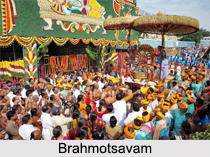
  • Tirupati Festival: There are a number of festivals that are held at Tirpupati in Andhra Pradesh. The most well known festivals are Brahmotsavam, which is the most affected festival of Lord Venkateswara that is held in the month of Asweeja. Every day during the festival, the idol is taken out in bright processions flanked by his companions. The Brahmotsavam continues for 10 days and is one of the most important festivals of the Tirupati temple.


  • Yellamma Jatara: Yellamma Jatara is renowned on the full moon day in the month of chaitra. Yellamma is friend of Kakatamma, the famed goddess of Kaktiya ruler. Goddess Yellamma (Yellaramma) is worshipped all over Andhra. The garaga parade of this place is very celebrated and a fair is also organised.


  • Durgamma Festival: This festival is celebrated for four days in the month of Bhadrapada. On the first day, the water for devotion is brought from a nearby river Majira. On the second day, a buffalo proposed for sacrifice and is taken to the river. After worshipping the water-goddess, the buffalo is washed there. It is then decorated and brought to the temple in a procession to the addition of music.

  • For more, visit the link below:

    Saturday, 5 March 2022

    Temples of Uttarakhand


    Temples of UttarakhandThe state of Uttarakhand is located in the northern part of India, more specifically, in the Himalayas. This state is divided into two parts namely, Garhwal and Kumaon and has a total of 13 districts. This state, also called Devbhumi has major rivers, nationally protected monumentsmuseumsforest reserves, national parks, hill stations and mountain peaks. They have not only beautified this state but have also made Uttarakhand one of the famous tourist destinations of India. Temples of Uttarakhand are no exception in this regard. They have also added value to the tourism of this state.

    Badrinath Temple
    Badrinath Temple is located in town of Badrinath in Chamoli district. This temple is devoted to Badrinath (Badrinarayan), a form of Lord Vishnu. The idol of Lord Vishnu is believed to be one of eight ‘swayam vyakta kshetras’ or self-manifested statues of Vishnu. This temple was established in 9th century C.E. by Adi Shankara.

    Kedarnath Temple
    Kedarnath Temple is situated at a height of about 3,583 m on the Garhwal Himalayan range near the River Mandakini in Kedarnath. This temple is dedicated to Kedarnath (Lord Shiva). It is believed that this temple was constructed in the 8th century CE.

    Yamunotri Temple
    Yamunotri Temple is situated in the western region of Garhwal Himalayas in Uttarkashi district. The ruling deity of this temple is Goddess Yamuna. This temple was established in the 19th century.

    Chandi Devi Temple
    The district of Haridwar serves as a home to Chandi Devi Temple. This temple is dedicated to Goddess Chandi Devi. It was created in 1929 by the King of Kashmir namely, Suchat Singh. Adi Shankaracharya, the savant of Bharat is credited with the installation of the main murti of Chandi Devi in the temple in the 8th century.

    For more, visit the link below: