Showing posts with label durgapuja. Show all posts

Wednesday, 2 April 2025

Naina Devi Temple, Nainital: A Sacred Site of Devotion and Heritage


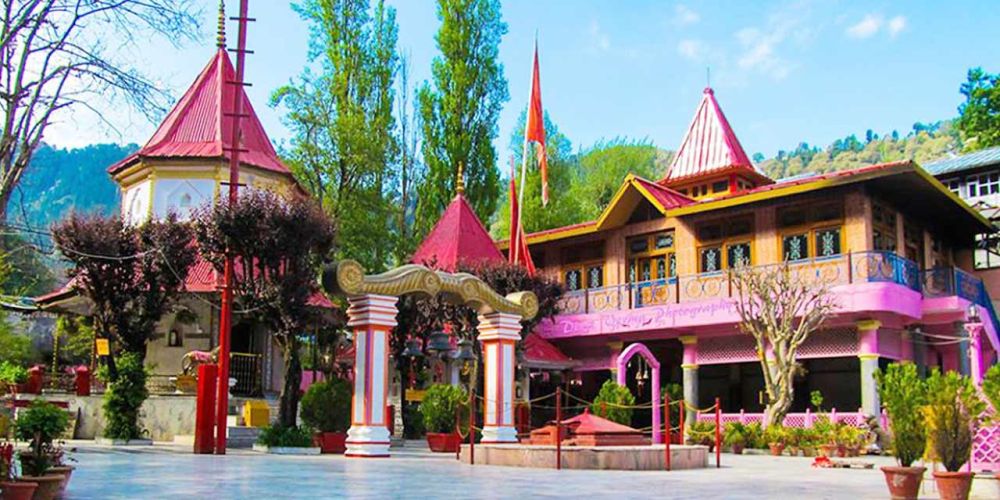
Naina Devi Temple, located in the picturesque town of Nainital, Uttarakhand, is one of the most revered Shakti Peethas in India. The temple is dedicated to Goddess Naina Devi, an embodiment of Goddess Shakti. According to Hindu mythology, the temple marks the site where the eyes (nayan) of Goddess Sati fell after Lord Shiva carried her charred body across the universe in grief. This association makes it a significant pilgrimage destination for devotees of Goddess Shakti. 

The temple's origins date back to ancient times, but it was reconstructed in the 19th century after being destroyed by a landslide in 1880. The present structure, built with devotion and care, continues to attract thousands of worshippers annually. 

Religious Importance

As a Shakti Peetha, Naina Devi Temple holds immense religious value among Hindus. The main shrine houses the pindis (sacred stone representations) of Goddess Naina Devi, along with Goddess Kali and Lord Ganesha. Devotees believe that offering prayers at this temple brings protection, prosperity, and spiritual fulfillment. 

The temple witnesses an influx of pilgrims during Navratri, a festival dedicated to Goddess Durga. Special prayers, rituals, and celebrations mark this period, enhancing the temple's spiritual ambiance. Throughout the year, various Hindu festivals, including Maha Shivaratri and Makar Sankranti, are observed with great fervor. 

Cultural Significance

Beyond its religious aspect, Naina Devi Temple is deeply embedded in the cultural fabric of Nainital. The temple complex is a focal point of local traditions and customs. The annual Nanda Devi Mela, held in honor of Goddess Nanda Devi and Goddess Sunanda, attracts a large number of devotees and tourists. This fair showcases traditional dance, music, and local handicrafts, preserving the region’s rich cultural heritage. 

The temple also plays a vital role in promoting community participation, as many local artisans and traders benefit from the increased footfall of visitors. Additionally, the rituals and ceremonies conducted at the temple reflect the age-old traditions passed down through generations. 

Tourism and Accessibility

Situated on the northern shore of Naini Lake, the temple offers a serene and spiritually uplifting experience. Its strategic location makes it one of the prime attractions of Nainital. Visitors can reach the temple via a short walk from Mall Road, the town's bustling commercial hub. 

Tourists often combine their visit to the temple with other nearby attractions, such as Naini Lake, Snow View Point, and Tiffin Top. The temple complex also provides stunning panoramic views of the surrounding hills, making it a popular spot for photography enthusiasts. 

For travelers, Nainital is well-connected by road from major cities like Delhi and Dehradun. The nearest railway station is in Kathgodam, approximately 35 kilometers away, and the closest airport is Pantnagar Airport, around 70 kilometers from Nainital.

Naina Devi Temple stands as a symbol of faith, heritage, and cultural unity. Its historical and religious significance continues to draw pilgrims, while its scenic beauty makes it an essential destination for tourists. Whether seeking spiritual solace or cultural insight, visitors to the temple leave with a sense of divine connection and reverence. 

Friday, 16 February 2024

Festivals of West Bengal

Festivals of West Bengal hold significant cultural and religious importance, reflecting the vibrant heritage and traditions of the state. Among the plethora of festivals celebrated throughout the year, some stand out prominently due to their grandeur and fervor. Durga Puja, Dol Purnima, Ratha Yatra, and Kali Puja are among the most notable festivals of West Bengal that capture the essence of Bengal's rich cultural tapestry.


Durga Puja, also known as Durgotsava, is undoubtedly the most widely celebrated festival in West Bengal. Occurring annually during the Hindu month of Ashwin (September-October), it commemorates the victory of Goddess Durga over the demon Mahishasura. The festival spans over four days, during which elaborate pandals (temporary structures) are erected across the state to house beautifully crafted idols of Goddess Durga and her divine entourage. Devotees throng these pandals to offer prayers, witness cultural performances, and partake in festivities. 

Dol Purnima, also known as Dol Jatra or Holi, is another significant festival celebrated with great zeal in West Bengal. Occurring during the spring season, usually in March, it marks the onset of spring and the triumph of good over evil. The festival involves smearing colored powder, known as abir, and spraying colored water on one another, symbolizing the joyous arrival of spring. 

Ratha Yatra, commonly known as the Chariot Festival, is celebrated in the holy town of Puri, Odisha, and also in some parts of West Bengal, particularly in the town of Mahesh. During this festival, idols of Lord Jagannath, Lord Balabhadra, and Devi Subhadra are placed on intricately decorated chariots and pulled through the streets by devotees. The procession is accompanied by chanting of hymns and bhajans, creating a spiritually uplifting atmosphere. 

Kali Puja, also known as Shyama Puja or Mahanisha Puja, is celebrated with great fervor in West Bengal, particularly in Kolkata, during the Hindu month of Kartik (October-November). It is dedicated to Goddess Kali, the fierce and powerful form of Goddess Durga. The festival involves the worship of Kali idols, elaborate rituals, and cultural programs. Devotees seek blessings from Goddess Kali for protection and prosperity. 

Apart from these major festivals, West Bengal also celebrates a plethora of other festivals throughout the year, each showcasing its unique cultural heritage. Some of these include Saraswati Puja, celebrating the goddess of knowledge and arts; Poila Boishakh, marking the Bengali New Year; and Diwali, the festival of lights. 

The festivals of West Bengal serve as a testament to the state's rich cultural heritage and religious diversity. They bring people from all walks of life together, fostering a sense of unity and camaraderie. Through vibrant rituals, age-old traditions, and spirited celebrations, these festivals continue to enrich the cultural tapestry of West Bengal, making it a land of joyous festivities and profound spiritual experiences.

Thursday, 6 October 2022

Rituals of Durga Puja


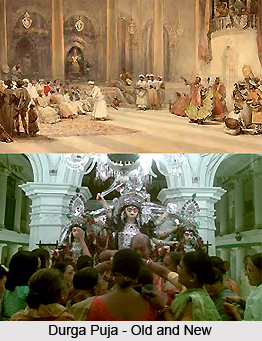
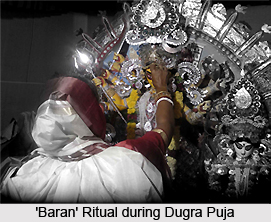
Rituals of Durga PujaRituals of Durga Puja start from the day of Mahalaya and continue till Dashami. The rituals include Bodhon, Amantron, mangal ghat, bathing of Nabapatrika and so on. Sacrifices are also included in the rituals. Earlier there was animal and human sacrifice. Since the rule of Vaishnava Kings there has been no such sacrifice. Vegetables are sacrificed instead. The sacrifice of pumpkin was one of the most common substitutes. Sacrifice is basically casting away of one's sins and faults.

Incantations
Mantra has the power to accomplish what they say in the context of the Puja. Chanting of Mantras in a Puja is very efficacious. The power of mantra is associated with Puja and kriya. One can take refuge in God as Mother.

One finds the following prayer to Mother Durga in the Mahanarayana Upanishad (2.2): I take refuge in Her, the Goddess Durga, who is fiery in lustre and radiant with ardency, who is the Power belonging to the Supreme, who manifests Himself manifold, who is the Power residing in actions and their fruits, rendering them efficacious (or the Power that is supplicated to by the devotees for the fruition of their work). O Thou Goddess skilled in saving, Thou takest us across difficulties excellently well- Our salutations to Thee.". She is duly worshipped in both aspects. One hymn praises Her benign Power, saying, "To Durga, the gracious and ever-benign, to the ever-auspicious One, the manifesto of all the worlds, I offer my respectful obeisance." With words of humility and reverence, another hymn praises both aspects: "Obeisance to Thee, O Divine Mother, Durga, the benignant and yet terrific roaring. Thou art power, the dark night of destruction." Both aspects, understood correctly, reveal Her benign redeeming grace. She destroys but to save. The vibrations give power. It is the sound that produces vibration. Mantra has the quality of a spell. People generally accept the action of the mantra when it is uttered by an ascetic. Mantras need to be pronounced correctly. Mantras contain the deity's name in a particular object in which it is invoked.

For more, visit the link below:

Wednesday, 14 October 2020

Indian Religious Festivals


Indian Religious FestivalsIndia is famous for celebrating several religious festivals of all religions including Diwali, Holi, Durga Puja, Navaratri, Raksha Bandhan, Eid, Christmas etc. Among them, Diwali is the most popular and celebrated festival of the country. Apart from these, there are several other festivals of all religions. Different festivals are celebrated in different times. Some of the festivals have been discussed in brief below.

Diwali
Diwali, Indian Festival of lights, is one of the grandest festivals celebrated across the nation. It is celebrated between the months of October and November with great enthusiasm and zeal. During this Hindu festival, people light up the entire house with earthenware lamps or ‘Diya’ and decorate the floor with ‘Rangoli’. They distribute sweets and gifts to their friends, families and neighbours. In some areas, fairs are also held during Diwali. In West Bengal, Diwali is celebrated as Kali Puja, where they worship goddess Kali and burn crackers. According to the Hindu calendar, it is celebrated in the last day of Ashvina and at the beginning of Kartika, which is exactly 20 days after Dussehra.

Durga Puja
Durga Puja is the most prominent and prime festival of West Bengal, which is celebrated between the months of September and November. The celebration is held for five days- 'Shashthi', 'Saptami', 'Ashtami', 'Navami' and 'Dashami'. Earlier, Durga Puja was only held in ‘Rajbaris’ (the palaces of royal families). Now it is also arranged by different clubs and associations. In this entire celebration along with Goddess Durga, Lord Shiva, Goddess Lakshmi, Goddess Saraswati, Lord Ganesha and Lord Kartikeya are also worshipped. It is imagined that they all come to visit the earth at this time.

Indian Religious FestivalsHoli
Holi is celebrated across the corners of India and is one of the major festivals of India and also the most vibrant of all. It is celebrated on the full moon day in the month of Phalguna between the months of February and March. The name ‘Holi’ comes from ‘Holika’, who was the sister of demon King Hiranyakashyap. Holi is celebrated with colours and sweets. Different states have different conceptions of celebrating Holi.

Christmas
Christmas celebrates the Nativity of Jesus Christ, founder of Christianity. The word Christmas comes from the words "Cristes Maesse", or "Christ's Mass." Historians claim that the first celebration of Christmas took place in Rome in 336 A.D. It was an important festival during British period all over India. After India achieved Independence from the British rule, this festival lost much of its official importance. The tradition of celebrating it as left behind by the British, continues even to this day. Indians celebrate the festival by Christmas trees and Santa Claus decorations along with lights and gifts and by giving a visit to the churches.

Eid Ul Fitr
Eid ul-Fitr occurs at the end of Ramzan, the ninth month of the Muslim year, on the first day of the new moon in Shawwal. Eid Ul-Fitr means the 'festival of breaking the fast'. 'Fitr' is derived from the word 'fatar' meaning 'breaking'. Another allegation suggests that it is derived from fitrah or 'alms'. A 30-day fast in the month of Ramzan is broken on Eid Ul-Fitr. It is broken with special prayers and festivities with sumptuous feasts. People embrace each other three times, as is laid down in the Quran (The Holy Book of Muslims).

For more click the link below:

Tuesday, 1 October 2019

Navaratri, Indian Festival


happy-navratri-new-card-3-e1569832305544.jpg

Navaratri is a colourful Indian festival of the worship of Devi Durga during the nine festive nights.

Navaratri is a Hindu festival celebrated every year in the month of October, according to the Hindu calendar.
ardhanarishvara-hd-wallpapers-2191269
Concept of Ardhanarishvara
This is the core Concept of Ardhanarishvara, in the religious parlance. The manner in which the origin of things operates in this world and our religious interpretation of this cosmic activity is in the form of the worship of Shiva or the worship of Shakti.
Durga-Puja.pngdsc_6163-2-780x405Dedication to Goddess Durga
Navaratri is dedicated to the goddess of Power, Durga. In ancient mythology, it is alleged that gods contributed Devi Durga with ten deadly weapons to save the world from evil in her battle with Asura.

Celebration of Navaratri
Navaratri comes twice a year, the Sukhla paksha(waxing moon) of the lunar month of Ashwin , being the first, in September or October in the
mm
 Autumn, and the second occurs during the first nine days of the bright two weeks of the Sukla Paksha of the lunar month of Chaitra, in mid March to mid April, the Spring time.
Gods worshipped in Navaratridurga maa.png
Read More:- Navaratri, Indian Festival

Wednesday, 19 October 2016

Maha Sashti, Sixth Day of Durga Puja


Maha Sashthi is the sixth day of Devi Paksha during Durga Puja. It is marked as the formal beginning of Durga Puja in West Bengal. To know more on the same visit:


Tuesday, 18 October 2016

Durga Aarti


Goddess Durga is the symbol of Power or 'Shakti' who fights against all the malign forces. Durga means 'She who is difficult to reach'. Durga is also called by other names like Parvati, Ambika, Santoshi Mata or Maa Durga. Durga Aarti is to praise goddess Durga who removes the unholy forces by destroying the demon. To know more read: