Showing posts with label god. Show all posts

Thursday, 27 August 2026

Vigneswara: The Auspicious Form of Lord Ganesha

Vigneswara, also known as Vinayaka or Ganesha, is one of the most widely revered deities in Hinduism. Worshipped prominently across the Indian subcontinent, he is associated with intelligence, wisdom, prosperity, and good fortune. The name Vigneswara is traditionally connected with the power to overcome vighnas, or obstacles, and he is therefore regarded as the remover of impediments. His blessings are especially sought before beginning important undertakings, as devotees believe that his divine presence can help ensure success and a smooth course of action.


Distinctive Iconography

The appearance of Vigneswara is both distinctive and captivating. He is generally represented with a human body, a prominent potbelly, and the head of an elephant. The potbelly symbolises the ability to assimilate both the pleasant and unpleasant experiences of life. His elephant head represents wisdom, intelligence, strength, and a profound connection with the natural world. It also signifies the discriminating intellect required to overcome difficulties and attain perfection in life. 

In several iconographic representations, Vigneswara is distinguished by a single tusk rather than the two tusks commonly associated with an elephant. This one-tusked form is depicted in a wide variety of poses, including standing, seated, and dancing forms. His large, floppy ears signify attentiveness, suggesting that he listens carefully to the prayers, concerns, and aspirations of his devotees. His wide mouth is associated with the human desire to experience and enjoy life, while his trunk symbolises the strength and adaptability needed to face the changing circumstances of the external world. 

Symbolism of the Tusks and Arms

Vigneswara is sometimes depicted with two tusks, each carrying symbolic significance. The right tusk represents wisdom, while the left tusk represents emotion. In representations where the left tusk is broken, the imagery conveys the principle that human beings must overcome emotional impulses through wisdom and discernment in their pursuit of perfection. 

The number of arms attributed to Vigneswara varies considerably, ranging from two to sixteen. Nevertheless, four-armed representations are among the most common. His hands may hold different objects associated with divine powers and spiritual attributes. Vigneswara is also frequently portrayed riding a mouse, an image that carries deeper symbolic meaning. The small vehicle contrasts with his large form and can be understood as representing the ability of wisdom to control desires and overcome limitations. 

Worship and Religious Significance

The worship of Vigneswara holds immense importance in Hindu culture. He is traditionally invoked before the commencement of a new undertaking to seek siddhi, or success, and buddhi, or intelligence. Devotees seek his blessings to remove potential obstacles and establish favourable conditions for their endeavours. 

His presence is considered particularly auspicious at the beginning of significant occasions. Vigneswara may be worshipped before the inauguration of a new business, the commencement of a wedding ceremony, or the initiation of a religious ritual. Through his distinctive form and rich symbolism, Vigneswara represents the triumph of wisdom over obstacles and the harmonious pursuit of success, knowledge, and fulfilment. 

Wednesday, 5 August 2026

Maheswara: The Supreme Manifestation of Lord Shiva in Hindu Tradition

 Maheswara, also known as Maheshvara, is one of the most revered names of Lord Shiva in Hinduism. The term "Maheswara" translates to "Great Lord," reflecting Shiva's supreme status and immense spiritual significance. Across various Hindu traditions, Maheswara is worshipped as a powerful deity who embodies creation, preservation, destruction, and transformation. His divine nature encompasses both compassionate and formidable qualities, illustrating the balance between creation and dissolution that governs the universe.


Lord Shiva's significance extends far beyond the role of a destroyer. He is regarded as a source of wisdom, spiritual liberation, and cosmic order. Through the name Maheswara, devotees acknowledge his supreme authority over the universe and his role in maintaining the eternal cycle of existence. 

Maheswara in the Shaivite Tradition

Within the Shaivite tradition, Shiva is regarded as the Supreme Lord who is responsible for the creation, preservation, and transformation of the universe. Shaivism recognizes Shiva not merely as one deity among many but as the ultimate reality from which all existence emerges and into which it ultimately returns. 

In this tradition, Maheswara is considered the source of divine knowledge, spiritual discipline, and inner awakening. Devotees worship him as the lord of meditation and asceticism, seeking his guidance in overcoming worldly attachments and attaining spiritual enlightenment. 

Maheswara in the Shakta Tradition

The Shakta tradition, which is centered on the worship of the Divine Goddess, or Devi, presents another important perspective on Maheswara. In this tradition, Shiva is viewed as the equal and complementary counterpart of Shakti, the Supreme Goddess who embodies the universe's creative energy and power. 

According to this philosophy, Shiva and Shakti are inseparable. While Shakti represents dynamic energy and creative force, Shiva symbolizes pure consciousness and transcendental wisdom. Together, they maintain the harmony of the cosmos and sustain the delicate balance of existence. 

Maheswara in the Smarta Tradition

In the Smarta tradition of Hinduism, Shiva is worshipped as one of the five principal deities of the Panchayatana Puja, a form of worship that emphasizes the unity of divine manifestations. This tradition acknowledges that the Supreme Reality can be approached through different forms of worship while ultimately remaining one and indivisible. 

Within this framework, Maheswara occupies a position of immense reverence and is honoured alongside other principal deities. His worship reflects the belief that divinity manifests itself in various forms to guide humanity toward spiritual realization. 

Maheswara and the Trimurti

The concept of the Trimurti occupies a central place in Hindu philosophy and theology. The Trimurti represents the threefold manifestation of supreme divinity, embodying the fundamental processes of creation, preservation, and dissolution. 

This sacred triad consists of Brahma, the Creator, Vishnu, the Preserver, and Maheshwara, the Destroyer and Transformer. Brahma is responsible for the emergence of the universe, Vishnu sustains and protects cosmic order, and Maheshwara governs the process of destruction and renewal. 

Far from representing an end, destruction in Hindu philosophy signifies transformation and the beginning of a new cycle of creation. Through this role, Maheswara symbolizes the eternal rhythm of life, death, and rebirth that sustains the universe. 

Maheswara represents one of the most profound manifestations of Lord Shiva, embodying both the limitless power of transformation and the boundless compassion of the divine. Revered across the Shaivite, Shakta, and Smarta traditions, Maheswara continues to inspire millions of devotees and remains a timeless symbol of spiritual wisdom, cosmic balance, and eternal truth.


Monday, 23 March 2026

Pochamma Devi: The Sacred Village Deity and Protector of Devotees

 Pochamma Devi is a revered mother goddess widely worshiped by the people of Telangana and Andhra Pradesh in India. She is regarded as a powerful village guardian deity who protects devotees from diseases, enemies, and misfortunes. As a benevolent divine mother, Pochamma Devi is believed to bring prosperity, health, and protection to those who worship her with devotion. Her worship is deeply rooted in the rural traditions and cultural practices of southern India, where she is honored as a Village Devata, or village protector.


Pochamma Devi as a Guardian Goddess

Pochamma Devi is considered a guardian deity who safeguards the well-being of communities. Devotees believe that she has the divine power to protect people from various diseases and harmful forces. In many villages, she is worshiped as the primary protective deity who ensures peace, health, and prosperity. 

In local beliefs, it is said that if people neglect or reject the worship of Pochamma Devi, difficulties and illnesses may arise. However, devotees also believe that the compassionate mother goddess does not intend to harm her followers. Instead, she guides them toward self-realization and helps them understand the importance of devotion and moral conduct. Through this belief, Pochamma Devi is seen as both a protector and a teacher who corrects the mistakes of her devotees and leads them toward spiritual awareness. 

Connection with Goddess Kali

Pochamma Devi is often regarded as an aspect or manifestation of Goddess Kali, the fierce and protective form of the divine mother in Hindu tradition. Like Kali, Pochamma represents divine power, protection, and the ability to remove negative influences from the lives of devotees. This association reinforces her status as a powerful deity capable of guarding communities and maintaining spiritual balance. 

Idol and Symbolism

The idol of Pochamma Devi is traditionally made from fine wood and is usually placed near a neem tree, which is considered sacred and associated with healing properties. The goddess is commonly dressed in yellow-colored garments, symbolizing auspiciousness and divine energy. 

Devotees often create small idols of the goddess and place them in temples as offerings. These symbolic acts of devotion reflect the deep respect and faith that people have in Pochamma Devi as their divine protector. 

Regional Names and Associations

In the Adilabad district of Telangana, Pochamma Devi is known by another name, Gajjelamma. Despite the variation in name, her identity as a protective mother goddess remains the same. Her husband, Mahamuni, is believed to be the guardian deity of animals, birds, insects, ants, and trees in the forest, representing the protection of nature and living beings. 

Festivals and Ritual Worship

The most significant festival dedicated to Pochamma Devi is the Bonalu festival, celebrated during the months of July and August. During this festival, devotees offer prayers and special offerings to the goddess seeking her blessings for health and prosperity. In many villages, another celebration known as Pochamma Panduga is also conducted in her honor. 

Devotees usually worship Pochamma Devi on Sundays. Rituals include performing puja and abhishekham, decorating the deity with flowers, and offering fruits and food items such as sundal and mixed rice. These offerings are later distributed among the participants as sacred prasadam. 

Although the goddess is generally associated with compassion and protection, some temples continue the traditional practice of animal sacrifice as a means of appeasing the deity, even though it is believed that the divine mother herself does not prefer such offerings. 

Pochamma Devi holds an important place in the religious and cultural traditions of Telangana and Andhra Pradesh. As a village guardian and compassionate mother goddess, she symbolizes protection, discipline, and prosperity. Through festivals, rituals, and daily devotion, communities continue to honor her as a powerful spiritual presence who safeguards their lives and well-being.

Tuesday, 25 July 2023

Avatars of Lord Vishnu: Divine Incarnations in Hindu Mythology


In the vast tapestry of Hindu mythology, the Avatars of Lord Vishnu hold a significant place as divine incarnations that descend to Earth to restore balance and uphold dharma (righteousness). As the preserver and protector of the universe, Lord Vishnu is believed to take on various earthly forms in times of cosmic turmoil, ensuring the continuity of life and the triumph of good over evil. These avatars, known as the Dashavatara, exemplify the diversity of the divine and the principles they embody, each with its unique purpose and significance. Lord Vishnu


Matsya (The Fish Avatar): In the first avatar, Lord Vishnu incarnates as a fish to save humanity from a catastrophic flood. He guides the sage Manu's boat to safety, preserving the essence of life and knowledge. 

Kurma (The Tortoise Avatar): The second avatar sees Lord Vishnu taking the form of a tortoise to support the churning rod (Mandara Mountain) used by the gods and demons to extract the nectar of immortality from the cosmic ocean. 

Varaha (The Boar Avatar): In the third avatar, Lord Vishnu transforms into a boar to rescue Goddess Earth (Bhudevi) from the demon Hiranyaksha, who had submerged her into the depths of the cosmic ocean. Hindu Gods  

Narasimha (The Half-Man, Half-Lion Avatar): The fourth avatar portrays Lord Vishnu as a fierce lion-man who appears to protect his devotee Prahlada and annihilate the demon king Hiranyakashipu, who could not be killed by human, animal, or deity. 

Vamana (The Dwarf Avatar): In this avatar, Lord Vishnu takes the form of a diminutive Brahmin named Vamana and approaches the benevolent demon king Bali to request three steps of land, which ultimately leads to the demon's humility and salvation. 

Parashurama (The Warrior Sage Avatar): Lord Vishnu incarnates as Parashurama, a fierce warrior wielding an axe, to eliminate the oppressive Kshatriya rulers and restore balance in society. 

Lord Rama (The Prince of Ayodhya): The seventh avatar of Lord Vishnu is the revered Lord Rama, the epitome of dharma and righteousness, as depicted in the epic Ramayana. He exemplifies the ideal king, husband, and son, and his life serves as a timeless lesson in moral conduct and devotion. 

Lord Krishna (The Divine Statesman): The eighth avatar, Lord Krishna, is one of the most celebrated and beloved incarnations of Vishnu. His life and teachings, as documented in the Mahabharata and Bhagavad Gita, emphasize duty, devotion, and the path of selfless action (Karma Yoga). 

Buddha (The Enlightened One): Lord Vishnu's ninth avatar is Buddha, who appears to alleviate suffering and delusion. Buddha's teachings emphasize compassion, non-violence, and the path to enlightenment. 

Kalki (The Future Avatar): The final and yet-to-come avatar of Lord Vishnu, Kalki, is prophesized to appear in the distant future as a warrior on a white horse, wielding a sword, to cleanse the world of darkness and reestablish dharma. 

The Avatars of Lord Vishnu showcase the complexity of divine intervention in Hindu mythology. Each incarnation serves a specific purpose, imparting valuable life lessons, and guiding humanity towards the path of righteousness and spiritual growth. These avatars, beyond their individual tales, collectively symbolize the eternal cycle of creation, preservation, and destruction, representing the cosmic dance of the divine. Their stories continue to inspire and resonate with millions of devotees worldwide, as they find solace in the notion of a benevolent and compassionate force watching over the universe.


Tuesday, 18 July 2023

Tantrism: Unveiling the Enigmatic Current of Hinduism


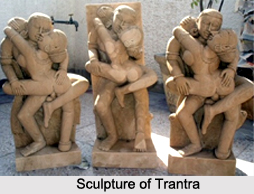
Tantrism, a mysterious current within the religion of Hinduism, stands apart for its distinct purpose: the pursuit of spiritual power and the ultimate realization of Truth. While it is often associated with the worship of Shakti, the divine feminine energy, Tantrism goes beyond and combines mystical elements with sacred writings, creating a unique movement within Hinduism.


Origins and Philosophical Departure

Tantrism traces its origins back to ancient India as a counterforce to the prevailing Vedic traditions. It emerged in contrast to the ascetic and ritualistic practices of Vedic Brahmanism, emphasizing direct divine experiences and harnessing spiritual energy through rituals, meditations, and yogic practices. Tantrism sought to bridge the gap between the transcendental and the immanent, embracing both the spiritual and the worldly aspects of existence. 

The Worship of Shakti

A defining characteristic of Tantrism is its focal point on the worship of Shakti, the primordial cosmic energy that animates the universe. Shakti, viewed as the creative and transformative force, is venerated through the worship of goddesses, allowing practitioners to tap into this divine power. Within Tantric philosophy, the feminine aspect of the divine holds immense reverence, representing the dynamic interplay between masculine and feminine energies within each individual and the cosmos. 

Practices and Rituals

Tantrism incorporates a diverse range of practices and rituals, often encompassing intricate symbolism and esoteric techniques. Essential components of Tantric rituals include mantra recitation, meditation, visualization, and the utilization of yantras (geometric diagrams). These practices aim to awaken dormant spiritual energies, known as Kundalini, and direct them towards self-realization and liberation. Indian Religion

 Sacred Texts: The Tantras

Sacred texts, known as Tantras, serve as authoritative sources of knowledge in Tantric traditions. These texts provide teachings, rituals, and philosophical insights that guide practitioners on their spiritual journey. Encompassing various aspects of life, such as cosmology, metaphysics, yoga, and devotion, the Tantras offer a holistic approach to spirituality. They emphasize the integration of all facets of human experience, providing a comprehensive roadmap for spiritual seekers. 

Influence and Expansion

While Tantrism is primarily associated with Hinduism, its influence transcends religious boundaries. It has left a lasting impact on diverse traditions, including Buddhism, Jainism, and Sikhism. Within these contexts, Tantrism has been adapted and integrated into their respective religious frameworks, infusing new dimensions into their practices and philosophies. 

Misconceptions and the True Essence

The enigmatic nature of Tantrism has spawned misunderstandings and misconceptions over time. Sensationalism and distortion of its core teachings have arisen due to the esoteric nature of its practices and the misuse of certain rituals. However, at its essence, Tantrism represents a spiritual path seeking to transcend dualities and realize the underlying unity of existence. It encourages practitioners to embrace both the light and the shadow within themselves, finding liberation through the integration of all aspects of their being. 

Tantrism, an intriguing current within Hinduism, weaves a rich tapestry of practices, rituals, and philosophical insights. As a spiritual path focused on the pursuit of spiritual power and Truth, Tantrism challenges conventional notions of spirituality. Embracing both the mundane and the divine, it offers a holistic approach to spiritual exploration and empowerment. Despite the misconceptions surrounding it, Tantrism continues to be a profound and transformative tradition that invites seekers to delve into the mysteries of existence and awaken to their highest potential.

Friday, 4 September 2020

Shaivism, Hindu Religion


Shaivism is the branch of Hinduism that worships Lord Shiva as the supreme deity. It is one of the major branches of Hinduism. Shaivism is a very deep, devotional and mystical denomination of Hinduism. It is considered the oldest of the Hindu denominations, with a long lineage of sages and saints who have outlaid practices and paths aimed at self-realization and the ultimate goal of Moksha, liberation.


The followers of Shaivism are called ‘Shaivas’ or ‘Shaivites’. They believe that Lord Shiva is the ultimate being and supreme God. According to the followers of Shaivism, Lord Shiva is the creator, destroyer, preserver, concealer and revealer. It is one of the oldest and one of the four major sects in Hinduism.

Scriptural Evidence of Shaivism
In the Rig Veda, Rudra is mentioned only in three suktas. He represents the destructive power of nature. He destroys men and animals but in the Rig Veda itself at some places he is described as a benevolent God. People pray to him for having children and being prosperous. In the Atharva Veda, the malignant aspect of Shiva is emphasized. He is called fearful and destroyer. He is described as having dark blue colour and is called the lord of animals. In the Yajur Veda, there are references to Rudra in two suktas i.e. Tryambaka-homa and Satarudriya.

In the Brahmanas, Rudra is called the chief of Gods i.e. Devadhipati, Lord Isana and the Great God Mahadeva. He is also called Bhutapati and is a dread figure who took over the dominion of Prajapati over all cattle. In the Svetasvatara Upanishad, Shiva is called the super God or Parabrahma and it is stated that with his power the Prakrti or Nature becomes active. In the Manavagrhya-sutra he is associated with the cremation ground. In the Apastamba Grhyasutra, Shiva is still classed among the minor Gods. In the Ramayana and the Mahabharata the full development of Shaivism can be seen.

For more visit the page:

Tuesday, 25 August 2020

Indian Monasteries


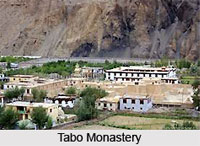
Indian MonasteriesIndian monasteries are believed to be some of the most pious pilgrimages all over the world. Religious pilgrims from all parts of the globe come to visit Sarnath, near the city of Varanasi, which is a sacred monastery of the Buddhist in India. The pilgrims often stay in these monasteries as they travel to other holy places. Many of the monasteries welcome foreign visitors as paying guests. The rules of Indian monasteries are basically the same in all over India. The authorities of Indian monasteries do not allow smoking, drinking or loud music.

Indian MonasteriesBuddhist Monasteries in India
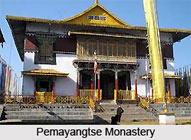
The Indian states of Arunachal Pradesh, West Bengal, Sikkim, Himachal Pradesh, Karnatakaand others comprise some of the most magnificent Buddhist monasteries. Bomdila Monastery and Tawang Monastery of Arunachal Pradesh, West Bengal's Ghum Monastery, Bhutia Busty Monastery, Tharpa Choling Monastery, etc., Rumtek Monastery, Phodong Monastery, and other monasteries of Sikkim, Dzongkhul Monastery, Shashur Monastery, of Himachal Monastery are a few of the famous Buddhist monasteries of the country. Nyingmapa Tibetan Buddhist Monastery is another important Buddhist monastery in India.

For more visit the page: 

Monday, 13 July 2020

Tantrism


TantrismTantrism has persisted and thrived throughout Asian history since the middle of the first millennium. It deals with spiritual practices and ritual forms of worship aiming at liberation from ignorance and rebirth. The universe is regarded as the godly play of Shakti and Shiva. Tantrism developed into a tradition by the end of the Gupta reign. However it has influenced major religions like Hinduism, Sikhism, Buddhism and Jainism. Tantrism is characterized by the use of rituals thereby identifying macrocosm and microcosm. In Tantrism one uses the heavenly power that flows through the universe to achieve certain goals.

Origin of Tantrism
Origin of Tantrism is a debatable issue. There are diverse views - some say that the Pre-Aryan Indians could have been the discoverers; others consider it as the tradition of ancient people. Historically it dates back to the time of the rise of the religion of Buddhism as the later Buddhists adopted some of the Tantric symbols.

Relation to Vedic Tradition
The tradition of Tantrism may be considered as intertwined with the Vedic tradition. The sources of written Tantric tradition are the agama which consists of four parts describing jnana, yoga, kriya and charya. Elements of Tantrism exist in Shaiva, Vaishnava, Ganapatya, Shaurya and Shakta forms. The basic ideas of Tantra as a philosophy are found in the Rig Veda. Tantrism is a build-up of various resources to change mundane into super mundane. There are some hymns and use of mystic words during the Rig Vedic period which proves the origin of Tantra.

Monday, 6 July 2020

Vastu Shastra

Vastu Shastra is a logical Indian science that deals with the ancient tradition of architecture. It is the science of construction and the traditional Hindu architectural system where the emphasis is laid in the directional alignments. Vastu Shastra, as is practised presently, is based on the 125 verses contained in ‘Brihat Samhita’ of Varahamihira. This very point indicates the vital link between Jyotish and Vastu.

Hindu philosophy considers nature and God synonymous; hence, it becomes all the more significant to build a home according to the principles of Vastu Shastra so that man can exist harmoniously with nature. There are 2 main branches of Vastu Shastra: "Manav Shilpa Shastra" relating to construction of buildings and "Deva Shilpa Shastra" dealing with the principles of constructing temples etc.

Origin of Vastu Shastra
The origin of Vastu Shastra is steeped in legends. It is said that Lord Brahma was the first recipient of this knowledge from Lord Shiva as a part of the Vedas, just like He received the knowledge of ‘Jyotish’. And then the knowledge of Vatu Shastra was gradually spread through the munis, seers and sages of ancient India. However, traditionally the foundation of Vastu is ascribed to the mythical sage Mamuni Mayan.Vastu Shastra, Society

Etymology of Vastu Shastra
The expression Vastu Shastra has its root in the Sanskrit term ‘Vastu’ which means any really existing or abiding substance or essence. In the context of this ancient science of architecture, ‘Vastu’ also mean the site or foundation of a house, site, ground, building or dwelling-place or habitation. The term ‘Shastra’ however means science, doctrine or teaching.

Principles of Vastu Shastra
Vastu Shastra follows the principle that postulates that in the world everything, substance, man and animals, are made from the ‘Panchabhuta’ that is the 5 basic elements: Earth, Water, Fire, Air and Space. These 5 elements have close relationship with man and his environment. Nature has given them their proper place according to merit. Hence it is necessary that man, too, grant a proper place to these elements in the space where he resides.


#history #astrology #architcture #interior 

Saturday, 29 February 2020

Hinduism, Indian Religion

krishna21200px-Om_symbol.svgHinduism is more of a philosophy which is a way of living according to the understanding of the principles of Vedas and Upanishads.

indexHinduism is a religion that does not have a single founder, a specific theological system, a single system of morality, or a central religious organization.
The definition of Hinduism entails that it is a term which denotes the religions of the majority of people in India. Hinduism is world’s third largest religion after Christianity and Islam.islam-fact
Origin of Hinduismhinduism-gettyimages-526751138
Origin of Hinduism is quite ancient and dates back to 5,000 or more years. This is the reason why it is regarded as the oldest organized religion of the world.
5bb7b2043c000018010d9fff
Features of Hinduism
Hinduism is often characterized as being polytheistic, and while it is true that innumerable deities are the objects of worship, many Hindus will regard these as an aspect or manifestation of sacred power.
04ajqdv94ox01
0 VWONDfirOZkcV0-JGods and Goddesses in Hinduism
The concept of Ishvara in Hinduism, recognises a single deity, and views other Gods and Goddesses as manifestations of that supreme God.

Development of Hinduism
Hinduism as a global religion with a distinct identity has arisen since the 19th century, clue in large part to the reformers.

Read More :- Hinduism, Indian Religion

Saturday, 1 February 2020

Vidyashankara Temple, Karnataka

images (1)imagesVidyashankara Temple located in Sringeri in Karnataka is an important pilgrimage centre. The procession of Saradamba and Navaratri festival is organised on a grand scale by the temple
.
Vidyashankara Temple is an important pilgrimage centre located at Sringeri in Karnataka.

images (2)As one enters the pristine premise of the Sringeri Temple complex, the stunning sight of the Vidya-Shankara Temple, shaped like chariot with its majestic gopuram soaring into the sky, attracts the visual senses. The presiding deity in this temple is the Shiva Linga known as Vidya-Shankara, installed over the Samadhi.
images (3)
History of Vidyashankara Temple
According to history the Vidyashankara Temple was constructed by Vidyaranya in memory of Guru Vidyashankara or Vidyathirtha.

Architecture of Vidyashankara Temple
Vidyashankara Temple is an ancient pilgrimage centre built according to the architectural designs of the Hoysala Empire and Dravidian style. The temple has been built on a beautifully designed basement. There are six doorways that lead to the temple.

images (4)unnamedThe walls of the temple are adorned with images from the Indian Puranas carved beautifully. The temple
portrays Lord Buddha as one of the incarnations of Lord Vishnu.

images (6)Image of Goddess Sarada
The original image of Goddess Sarada was made of sandalwood. Later in the 14th century it was replaced by a golden image. It portrays Ma Sarada sitting on the Sri Chakra Peetham. She has a Japa Mala in her hand and a parrot is seen sitting on her hand.

Read More :- Vidyashankara Temple, Karnataka

Wednesday, 29 January 2020

Lord Hanuman, Hindu God

ob_b3d771_hanuman-ram-lakshmanLord Hanuman is described as the monkey God. He was the son of Anjana and is believed to be an avatar of the supreme Lord Shiva.Lord Hanuman is the son of Vayu, the Hindu God of Wind. He was a devotee of Lord Rama.
hanumanLord Hanuman plays an important role in Ramayana, the Indian epic. Hanuman is considered to be an avatar (incarnation) of Lord Shiva.

3_1_2391433_835x547-mBirth of Lord Hanuman
Hanuman was born in the Treta Yuga. There are several stories in regard to his birth. Anjana was an apsara named Punjikasthala, who was cursed to be born on earth as a female monkey.
Legends of Lord Hanumanhanumanstory_647_042216105140
Hanuman is also considered as the incarnation of Lord Shiva. It is said that when Ravana once tried to enter Shiva’s abode in Himalayas, Nandi stopped him and Ravana mocked him as monkey, Nandi cursed Ravana that he will meet his end due to Monkey.

hanuman2-1449309831_835x547
Neanderthal-man-and-hominid-species-in-Ramayana7Lord Hanuman in Ramayana
Meeting of Hanuman with Rama is an important episode in the epic "Ramayana", as from then on Hanuman was a great follower of Rama. At the latter part of the 14 years exile, Rama and his brother Lakshmana were in search for Sita, who had been abducted by the Rakshasa emperor Ravana.
6965936_preview
They came near the mountain Rishyamukha where Sugriva and his followers along with Hanuman were hiding from his elder brother Bali, who had cast him out of the kingdom and kept his wife captive.

Read More :- Lord Hanuman, Hindu God

Thursday, 23 January 2020

Keshava Temple, Karnataka

keshav-temple-8-638keshav-temple-8-638Keshava Temple in Mysore is one of the major temples of South India. It is a symbol which shows the zenith which Hoysala architecture had reached during their reign.

keshav-temple-6-638The Keshava Temple in Mysore, Karnataka was built in 1268 A.D. by Somadannayaka, a minister to King Narasimha III of the Hoysala dynasty.
keshav-temple-9-638The most alluring of the art of the Somnathpur lies on its outer walls. The walls contain beautiful figures of gods and goddesses from the Hindu mythology, carved with a fineness that is exquisite.

keshav-temple-7-638220px-Close_up_of_decorative_lintel_over_shrine_entrance_in_the_Chennakeshava_temple_at_Somanathapurakeshav-temple-12-638Of the images, most represent Lord Vishnu in his different forms and avatars. Amongst the rest, those that deserve mention are of Garuda with Vishnu and Goddess Lakshmi on his shoulders, Indra on his divine elephant Airavata and the gods and goddesses like Ganapati, Lakshmi and Saraswati in various dancing poses.
vRunning completely around the walls of the temple are four friezes. The first contains rows of caparisoned elephants, each elephant being delicately sculptured in full detail.

The Ramayana, the Mahabharata and the Bhagavata are all represented there, one of the friezes being devoted for one incident from an epic.

Read More :- Keshava Temple, Karnataka

Thursday, 11 July 2019

Christianity Present In India

cc1
Christianity is a monotheistic religion founded by Lord Jesus Christ. The Christian religion is created on the life and teachings of Jesus. Christianity has been playing a prominent role in shaping of Western civilization since the 4th century. The religion is followed in South India, Konkan Coast, North-East India and also in Central India.
cc2Origin of Christianity

Christianity is the 3rd largest religion of the country. The origin of Christianity is credited to Jesus Christ who is believed to be the only begotten Son of God. In India, Christianity is believed to have arrived with the coming of Saint Thomas in 52 AD.

Concepts of Christianity
cc4
The true Concepts of Christianity implies that God is Jesus, God is Father, God is Love and the love of God is Redemptive. They believe each individual by their faith and life determines their eternal destiny - either in heaven or in hell.
cc5 
Holy Bible
The Holy Bible is the central religious text of Christianity. The Christians derive their inspiration from the 39 books comprising the Old Testament, and 27 books comprising the New Testament.

Christian Communities in India
cc6A great population belongs to the Christian Communities in India. The Anglo-Indian Community is the group that is descended from a European male progenitor. 
Read more : Christianity

Tuesday, 14 May 2019

Kubera, Indian Lord of Wealth


81c669+5tUL.png
Kubera is the king of the ‘Yakshas’ (nature spirits) and the God of wealth. In the Vedas, He is mentioned as the prince of demons and spirits which live in the shadows. He became the God of wealth and abundance only at a much later stage.

Iconography of Kubera
7d131bd4e0b74e8ad2b5682f6f7f9d14.jpgKubera is described as having three legs, only eight teeth, one eye and being adorned with jewels. He holds a mace, a pomegranate or a money bag in his hand. Kubera is usually depicted with a mongoose in Buddhist iconography. 

e5e513548c8e9024f2cb3705420e129f.jpgMyths of Kubera
Kubera has also been assimilated into the Buddhist and Jain pantheons. In Buddhism, he is known as Vaisravana.  It is believed that he used to travel in his ‘Pushpaka Vimana’. The glorious days of Lanka came to an end when Kubera’s step-brother Ravana, with a boon from Brahma, ousted him. Kubera then left Lanka and settled in Alakapuri near Kailash.However, in other Hindu epics such as Mahabharata
_bf3956bc-235b-11e7-a4a0-8e0501b9fa54.jpg and Ramayana, he is the wealthiest Hindu God. Kubera is frequently worshipped with Lakshmi for wealth and success, particularly during Diwali.


Read more about indian gods : Kubera, Indian Purans