Showing posts with label Churches. Show all posts

Tuesday, 20 December 2022

Churches and Convents of Goa


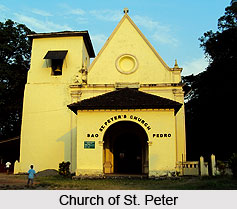
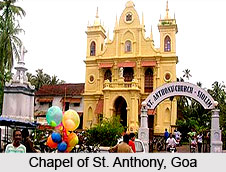
Churches and Convents of GoaGoa has some world famous churches and convents and the most comprehensive group of churches and cathedrals built during 16th and 17th century AD at Old Goa and are a legacy of the Portuguese. The famous churches of old Goa comprises of Se' Cathedral, Church and Convent of St. Francis of Assisi, Chapel of St. Catherine, Basilica of Bom Jesus, Church of Lady of Rosary, the Church of St Augustine and the Church of St. Cajetan. These monuments were influential in spreading forms of Manueline, Mannerist and Baroque art in all the countries of Asia where missions were established.

The churches display a combination of the Renaissance and Baroque styles. They are generally built of laterite and lime plaster. The paintings in the churches were done on wooden borders and fixed between panels having floral designs as in the chapels housing the tomb of St. Xavier, the arches above the altars in the transept of the Se' Cathedral and in the nave on either side of the main altar in the Church of St. Francis of Assisi. Excepting a few which are in stone, the statues are mostly in wood delicately carved and painted to adorn the altars. They depict mostly the saints, Mother Mary and Jesus on the cross.
Churches and Convents of Goa
The Basilica of Bom Jesus:The name Bom Jesus basically means "good Jesus" or "infant Jesus". The Basilica of Bom Jesus or Basilica of Bom Jesu is located in Goa. The church is located in Old Goa, which was the capital of Goa in the early days of Portuguese rule, about 10km from the city of Panjim. Close to the convent of St Francis, the 1605 church of Bom Jesus is known principally for the tomb and the mortal remains of St Francis Xavier, a member of the Society of Jesus, who came to India with the Portuguese to spread Christianity in India.

Se Cathedral: One of the oldest and most celebrated religious buildings in Goa, the Se cathedral is one of the largest churches in Asia and it took eighty years to get completed. It is dedicated to Catherine of Alexandria and is located in Old Goa. This monument truly represents the royalty of Goa in the early days, during the rule of Portuguese. One of the most sacred buildings for the Christians, Se cathedral has been declared a heritage site by UNESCO.

For more, visit the link below:

Monday, 13 July 2020

Tantrism


TantrismTantrism has persisted and thrived throughout Asian history since the middle of the first millennium. It deals with spiritual practices and ritual forms of worship aiming at liberation from ignorance and rebirth. The universe is regarded as the godly play of Shakti and Shiva. Tantrism developed into a tradition by the end of the Gupta reign. However it has influenced major religions like HinduismSikhismBuddhism and Jainism. Tantrism is characterized by the use of rituals thereby identifying macrocosm and microcosm. In Tantrism one uses the heavenly power that flows through the universe to achieve certain goals.

Origin of Tantrism
Origin of Tantrism is a debatable issue. There are diverse views - some say that the Pre-Aryan Indians could have been the discoverers; others consider it as the tradition of ancient people. Historically it dates back to the time of the rise of the religion of Buddhism as the later Buddhists adopted some of the Tantric symbols.

Relation to Vedic Tradition
The tradition of Tantrism may be considered as intertwined with the Vedic tradition. The sources of written Tantric tradition are the agama which consists of four parts describing jnana, yoga, kriya and charya. Elements of Tantrism exist in Shaiva, Vaishnava, Ganapatya, Shaurya and Shakta forms. The basic ideas of Tantra as a philosophy are found in the Rig Veda. Tantrism is a build-up of various resources to change mundane into super mundane. There are some hymns and use of mystic words during the Rig Vedic period which proves the origin of Tantra.

Friday, 3 July 2020

Indian Saints


Indian Saints have contributed greatly in the social reformations. They have revived spirituality in the subcontinent through their deep understanding of religion and life. They are believed to be the manifestations of God.


Indian SaintsIndian Saints embody the highest ideals and are credited for demonstrating the reality of spiritual awareness. India is known to be the land of Saints and Gods. They help people to attain positive actions, devotion, spiritual practice and mental discipline by providing appropriate conditions and knowledge. It is the legacy of Indian Saints that represents the true identity of Indian ideology. Since time immemorial, India has been the seat of several religions. Numerous Indian saints took up the responsibility of popularising the postulates of various sects.

Indian Saints are considered to be the manifestations of God. They have set themselves as role models for the masses to follow. Whether it was RamakrishnaShankaracharya or Khwaja Muinud-din Chishti, all of them have guided their followers to achieve peace of mind through spirituality. Indian saints have adopted simple measures to explain the religious philosophies. Most of them adopted the method of narrating tales to educate the masses. Some of the Indian saints, however, propagated renunciation of the worldly affairs to achieve salvation.

Born in 1486 in Nabadwip, a town in present-day West Bengal, India, Chaitanya Mahaprabhu emerged as a profound spiritual personality with a deep-rooted devotion to Lord Krishna. From an early age, he displayed remarkable intelligence, profound wisdom, and a captivating aura that drew people towards him. His charismatic personality and pure heart earned him admiration and respect from all walks of life.


For more visit the page:

#religion #saints #history #spirituality

Wednesday, 1 July 2020

Indian Communities

Indian Communities refer to a group of people, belonging to a certain religion and believing in one single united cause. The term Indian communities perhaps cannot be credited to any single individual. An omnipresent and unseen demarcation line had existed amongst the various Indian communities.

History of Indian Communities
In fact, ancient history in India does lend considerable and credible information regarding primeval communities, or organisations that had cropped up since the times of pre-Christian era. Since the eras of Indus Valley Civilization and Harappa, the concept of organising communities had been well assimilated within both uneducated and educated classes. Religious, economic, administrational, and even, societal classed communities had existed during ancient Indian evolvement.

Indian Communities under Hinduism
Caste system and class consciousness was one such idealistic concept that had driven these ancient Indian communities to behave the way they did. The gigantic awareness of belonging to a higher caste or higher religious order paved way for first ever establishment of Hindu religious community, divided into BrahminsKshatriyasVaishyas and Shudras. These four cardinal Hindu caste systems were further sub-divided into their own specific community, a concept that is very much retained in present-day Indian society.Indian Communities Some of the Hindu communities are; Maratha CommunityRajput CommunityNayar CommunityBunt CommunityLingayat CommunityMahar CommunityReddy CommunityYadava CommunityAhir CommunityAgrawal CommunityBania CommunityMaheshwari CommunityKayastha CommunityDogra CommunityKumaonis CommunityBaidya CommunityBhatia CommunityMadhava CommunityMaithil CommunityMohyal CommunityNagar CommunitySaraswat CommunityAnavil CommunityAndhra Brahmin CommunityAyyangar Brahmin CommunityDeshastha CommunityKarhada CommunityKashmiri Brahmin Community and Ardha Brahmans Community.

Indian Communities under Islam
Islamic invasion and subsequent extensive Muslim rule in India, wholly changed the concept of communities in India. The KhiljisTughlaqs, Lodis and finally the Mughals had entirely altered the graph of Islamic communities in India, with an overwhelming mass of the erstwhile populace joining in the various causes to form organisational communities. Emperors, army generals and high profile men had contributed whole-heartedly and honestly to each meticulous cause to make these Indian communities as well grounded as mountainous rocks. Some of the Islamic communities are; Sindhi CommunityMoplah CommunityDawoodi CommunityBohra CommunityKashmiri Muslim CommunitySulaimani CommunityMemon CommunityEzhava Community and Gujjar Community.
#history #people #culture #society #India #religion


Thursday, 26 December 2019

Churches in Goa

4-Must-Visit-Churches-of-Goa-IndiaChurches in Goa bear testimony to the Portuguese rule in India and are ancient pilgrimage spots, portraying gorgeous architectural styles.

Churches in Goa are amongst the most renowned institutions which are marvellous manifestations of Portuguese colonization in this part of the nation.
Goa_-_Basilica_of_Bom_Jesus,_views_inside_and_around1.jpgshutterstock_1073481062_20190822145857.jpgBasilica of Bom Jesus
The Basilica of Bom Jesus had been constructed during the 16th century and possesses the mortal remains of the famous saint, Francis Xavier, inside a silver container. Today, the church is a World Heritage Monument and it is dedicated to Infant Jesus.

se-cathedral-600x436 Se Cathedral
Se Cathedral is one the most popular churches of the state of Goa.

old_goachurch_and_convent_of_st._francis_assisi.jpgChurch of St Francis of Assisi
The Church of St Francis of Assisi church is situated in Old Goa and was erected during the year 1661 in the Portuguese Vice royalty of India, by the Portuguese rulers who governed this portion of India during this time.

121905971StAnnes_Church_Santana_Main.jpg
Church of St. Anne
Church of St. Anne, located at Talaulim is a reputed masterpiece of Christian architecture which had been erected in the year 1695 on the banks of Siridao River
.
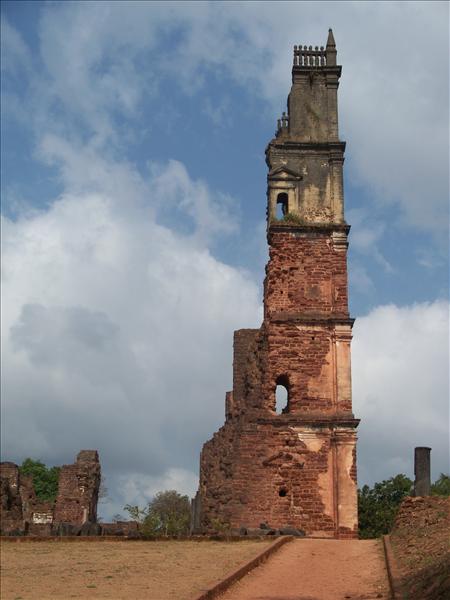
100_4254_Main_800Church Of St. Augustine
The Ruins Of The Church Of St. Augustine are present near the Nunnery and it is believed that it was a remarkably grand structure when it was intact.
p.jpg

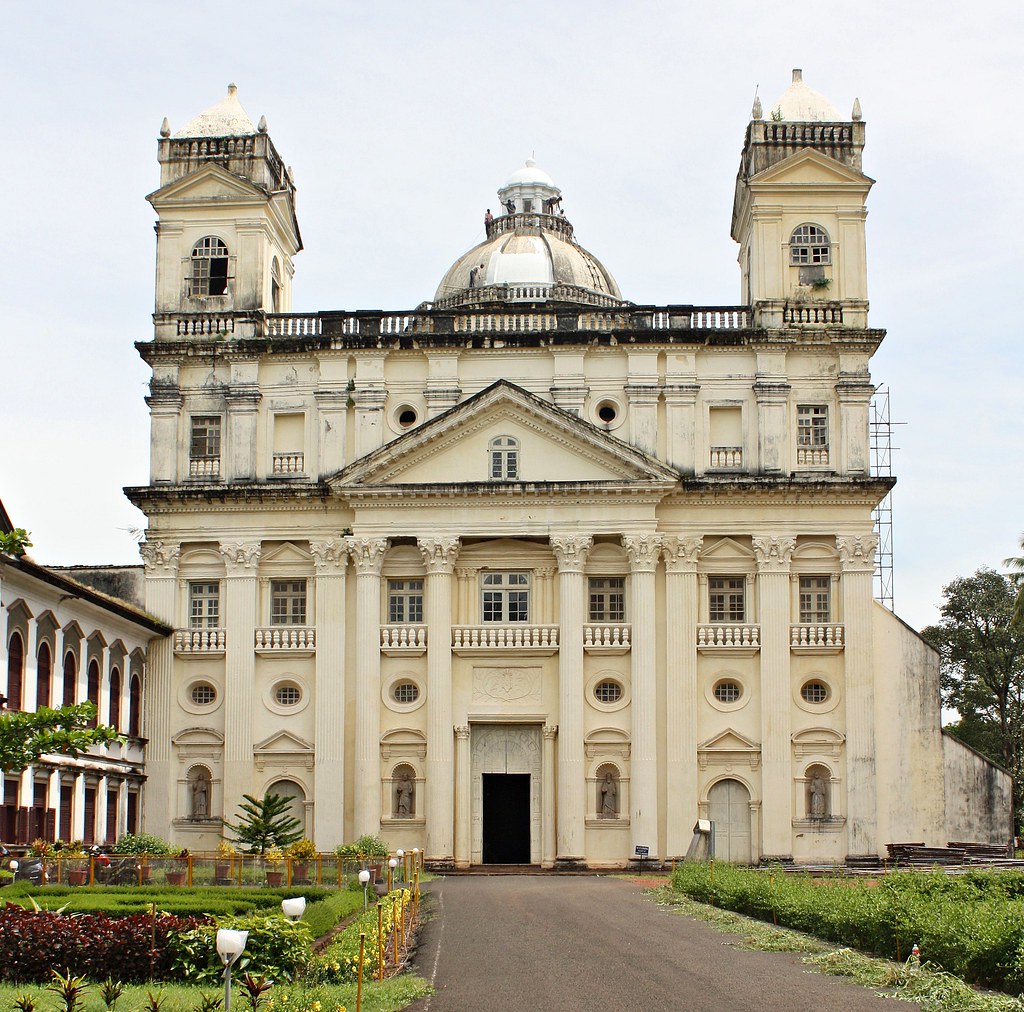
St. Cajetan Church
The architectural style of St. Cajetan Church is inspired by that of St. Peter's Basilica in Rome and is existent in Old Goa.

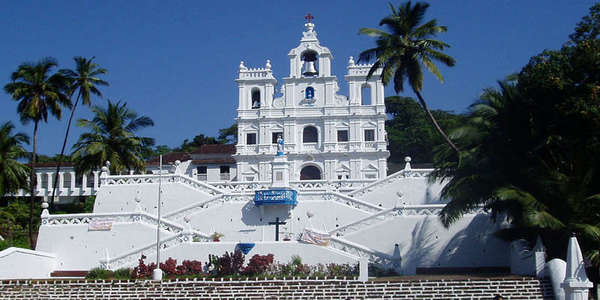
Our Lady of the Immaculate Conception ChurchImmaculate_Conception_Church_Panjim.jpg
Our Lady of the Immaculate Conception Church is situated at Panjim in Goa and is believed to be amongst the most ancient churches of this western Indian state.

Read More :- Churches in Goa