Showing posts with label christianity. Show all posts

Tuesday, 20 December 2022

Churches and Convents of Goa


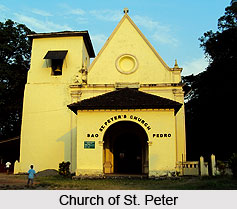
Churches and Convents of GoaGoa has some world famous churches and convents and the most comprehensive group of churches and cathedrals built during 16th and 17th century AD at Old Goa and are a legacy of the Portuguese. The famous churches of old Goa comprises of Se' Cathedral, Church and Convent of St. Francis of Assisi, Chapel of St. Catherine, Basilica of Bom Jesus, Church of Lady of Rosary, the Church of St Augustine and the Church of St. Cajetan. These monuments were influential in spreading forms of Manueline, Mannerist and Baroque art in all the countries of Asia where missions were established.

The churches display a combination of the Renaissance and Baroque styles. They are generally built of laterite and lime plaster. The paintings in the churches were done on wooden borders and fixed between panels having floral designs as in the chapels housing the tomb of St. Xavier, the arches above the altars in the transept of the Se' Cathedral and in the nave on either side of the main altar in the Church of St. Francis of Assisi. Excepting a few which are in stone, the statues are mostly in wood delicately carved and painted to adorn the altars. They depict mostly the saints, Mother Mary and Jesus on the cross.
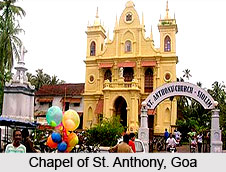
Churches and Convents of Goa
The Basilica of Bom Jesus:The name Bom Jesus basically means "good Jesus" or "infant Jesus". The Basilica of Bom Jesus or Basilica of Bom Jesu is located in Goa. The church is located in Old Goa, which was the capital of Goa in the early days of Portuguese rule, about 10km from the city of Panjim. Close to the convent of St Francis, the 1605 church of Bom Jesus is known principally for the tomb and the mortal remains of St Francis Xavier, a member of the Society of Jesus, who came to India with the Portuguese to spread Christianity in India.

Se Cathedral: One of the oldest and most celebrated religious buildings in Goa, the Se cathedral is one of the largest churches in Asia and it took eighty years to get completed. It is dedicated to Catherine of Alexandria and is located in Old Goa. This monument truly represents the royalty of Goa in the early days, during the rule of Portuguese. One of the most sacred buildings for the Christians, Se cathedral has been declared a heritage site by UNESCO.

For more, visit the link below:

Tuesday, 29 December 2020

Christian Influence on Indian Cuisine


Potato CroquettesChristian Influence on Indian Cuisine has been marked since the days of the colonial rule in India. The food that has emerged as a result of the impact of Christian influence on Indian cuisine is referred to as ‘Anglo-Indian Food’. Indian cuisine is ancient, diverse and is an amalgamation of different religious influences. The two major factors which have influenced and significantly impacted the growth of different kinds of cooking styles and food habits in India are religion and climate. The idea of cooking and the food habit changed a lot with the coming of the Christian missionaries. This was further influenced by the European settlers who came to trade with and colonise the country in the 19th century.

Impact of Foreign Traders on Indian Cuisine
In the 19th century, English and Portuguese traders came to India, and the advent of European traders permanently changed many aspects of eating habit in the Indian subcontinent. For the Europeans, who came in search of Eastern spices, brought with them the vegetables they had discovered in the New World. The Portuguese introduced new crops like tobacco, potato, cashew, papaya, guava and a host of vegetables. Portuguese influences were found on West Indian cooking in Goa, and French influences on South Indian cooking in Puducherry.

Impact of Christian influence on Indian Cuisine
Christian Influence on Indian Cuisine introduced the native Indians to various cooking techniques. The Indian food now incorporated many local ingredients and cooking techniques with European influences. Indian food reflected European customs and traditions and items such as different flavoured cake or sandwiches reflected the authentic eating habit of the Christians.

The Indian food habits now tended to incorporate various new kinds of tastes and delicacies. The British introduced many new food items to the Indian diet such as soups and salads. The Syrian Arab Christians fled to India and took refuge under the king of Kerala. They too left a rather heavy influence in the field of Indian cuisine. Syrian Christian dishes are richly flavoured.

For more visit the page below:

Wednesday, 1 July 2020

Indian Communities

Indian Communities refer to a group of people, belonging to a certain religion and believing in one single united cause. The term Indian communities perhaps cannot be credited to any single individual. An omnipresent and unseen demarcation line had existed amongst the various Indian communities.

History of Indian Communities
In fact, ancient history in India does lend considerable and credible information regarding primeval communities, or organisations that had cropped up since the times of pre-Christian era. Since the eras of Indus Valley Civilization and Harappa, the concept of organising communities had been well assimilated within both uneducated and educated classes. Religious, economic, administrational, and even, societal classed communities had existed during ancient Indian evolvement.

Indian Communities under Hinduism
Caste system and class consciousness was one such idealistic concept that had driven these ancient Indian communities to behave the way they did. The gigantic awareness of belonging to a higher caste or higher religious order paved way for first ever establishment of Hindu religious community, divided into BrahminsKshatriyasVaishyas and Shudras. These four cardinal Hindu caste systems were further sub-divided into their own specific community, a concept that is very much retained in present-day Indian society.Indian Communities Some of the Hindu communities are; Maratha CommunityRajput CommunityNayar CommunityBunt CommunityLingayat CommunityMahar CommunityReddy CommunityYadava CommunityAhir CommunityAgrawal CommunityBania CommunityMaheshwari CommunityKayastha CommunityDogra CommunityKumaonis CommunityBaidya CommunityBhatia CommunityMadhava CommunityMaithil CommunityMohyal CommunityNagar CommunitySaraswat CommunityAnavil CommunityAndhra Brahmin CommunityAyyangar Brahmin CommunityDeshastha CommunityKarhada CommunityKashmiri Brahmin Community and Ardha Brahmans Community.

Indian Communities under Islam
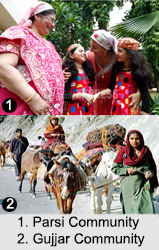
Islamic invasion and subsequent extensive Muslim rule in India, wholly changed the concept of communities in India. The KhiljisTughlaqs, Lodis and finally the Mughals had entirely altered the graph of Islamic communities in India, with an overwhelming mass of the erstwhile populace joining in the various causes to form organisational communities. Emperors, army generals and high profile men had contributed whole-heartedly and honestly to each meticulous cause to make these Indian communities as well grounded as mountainous rocks. Some of the Islamic communities are; Sindhi CommunityMoplah CommunityDawoodi CommunityBohra CommunityKashmiri Muslim CommunitySulaimani CommunityMemon CommunityEzhava Community and Gujjar Community.
#history #people #culture #society #India #religion


Tuesday, 30 June 2020

Types of Religion in India


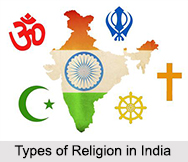
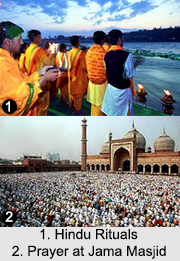
Types of Religion in IndiaTypes of Religion in India originated in Indian sub-continent. India is the land of spirituality and philosophy and is considered to be the birthplace of many religions. Indian religion is varied in approach and different in meaning. The major religions of India are Hinduism, Islam, Sikhism, Christianity, Buddhism, Jainism, Zoroastrianism, Judaism and the Baha’i Faith. Religion adds meaning and purpose to the lives of the people. It is actually a practice that enhances direct communication with God. A religion is a belief concerning one or more deities and incorporating rituals, ceremonies, ethical guidelines and life philosophies. Thus, religion has diversified and grown to include major monotheistic religions in the country. A wide assortment of religions exists in the country today.

Hinduism in India
It is more of a philosophy which is a way of living according to the understanding of the principles of Vedas and Upanishads. Hinduism is a colourful religion with a vast gallery of Gods and Goddesses. It originated with Brahmanas the central Lord. 

Jainism in India
Jainism is a self-help religion that relies on the self instead of Gods. The Jain religion is traced to Vardhamana Mahavira. This religion is all about promoting equality between humans, animals and plants those have souls. Jainism chronologically preceded the religion of Buddhism. It is considered as one of the oldest religions of India. Jainism starts with two principles, the living (jiva) and the non-living (ajiva).

Types of Religion in IndiaBuddhism in India
Lord Buddha was the one who was responsible for propagating the doctrines of Buddhism. Buddhism is a philosophy and a religion that encompasses a wide variety of beliefs based on the teachings of Gautama Buddha.

Sikhism in India
This religion was introduced by Guru Nanak. It stresses on the devotion of God. Service to mankind, hard work and dedication towards family life.

Christianity in India
Christianity came to India with the coming of Portuguese. Christianity is an Abrahamic religion which is cantered on God, Jesus Christ and the Holy Spirit. 

Islam in India
Islam is a religion which originated in the country with various invasions. The Muslims are spread about 12 percent of India’s population
For more visit the page:

Thursday, 11 July 2019

Christianity Present In India

cc1
Christianity is a monotheistic religion founded by Lord Jesus Christ. The Christian religion is created on the life and teachings of Jesus. Christianity has been playing a prominent role in shaping of Western civilization since the 4th century. The religion is followed in South India, Konkan Coast, North-East India and also in Central India.
cc2Origin of Christianity

Christianity is the 3rd largest religion of the country. The origin of Christianity is credited to Jesus Christ who is believed to be the only begotten Son of God. In India, Christianity is believed to have arrived with the coming of Saint Thomas in 52 AD.

Concepts of Christianity
cc4
The true Concepts of Christianity implies that God is Jesus, God is Father, God is Love and the love of God is Redemptive. They believe each individual by their faith and life determines their eternal destiny - either in heaven or in hell.
cc5 
Holy Bible
The Holy Bible is the central religious text of Christianity. The Christians derive their inspiration from the 39 books comprising the Old Testament, and 27 books comprising the New Testament.

Christian Communities in India
cc6A great population belongs to the Christian Communities in India. The Anglo-Indian Community is the group that is descended from a European male progenitor. 
Read more : Christianity