Showing posts with label islam. Show all posts

Wednesday, 10 September 2025

Mughal Emperor Humayun


Mughal Emperor Humayun, the second ruler of the Mughal dynasty, remains a significant yet often overshadowed figure in Indian history. Born on March 6, 1508, in Kabul, he was the eldest son of Babur, the founder of the Mughal Empire. Humayun’s reign was marked by both setbacks and recoveries, shaping the foundations upon which his son, Akbar the Great, would later build one of the most powerful empires in South Asia. 

Humayun ascended the throne in 1530, following the death of Babur. At the age of 22, he inherited an empire that was still in its formative stages, facing multiple internal challenges. Unlike his father, who had established authority through military strength, Humayun lacked decisiveness and consistent political strategies. His early reign was marred by continuous struggles against Afghan nobles, Rajput rulers, and the rise of formidable adversaries like Sher Shah Suri. 

One of the defining challenges of Humayun’s rule was his rivalry with Sher Shah Suri, a brilliant military leader and administrator. After a series of defeats, most notably at the Battle of Kannauj in 1540, Humayun lost control of his empire. Forced into exile, he sought refuge in Persia, where he received support from the Safavid ruler, Shah Tahmasp I. This period of exile was crucial, as it exposed Humayun to Persian art, culture, and administration, elements that later influenced the Mughal court. 

Despite the setbacks, Humayun demonstrated resilience. After nearly 15 years in exile, he successfully regained control over Delhi and Agra in 1555, defeating the successors of Sher Shah Suri’s short-lived Sur Empire. This restoration of Mughal power, however, proved short-lived. In January 1556, just six months after reclaiming his throne, Humayun tragically died after a fall from the stairs of his library in Delhi. 

Although his reign was marked by instability, Humayun’s legacy cannot be overlooked. His exposure to Persian culture during exile left a lasting impression on Mughal art and architecture. The fusion of Persian aesthetics with Indian traditions became a hallmark of Mughal identity, seen in manuscripts, miniature paintings, and architectural designs. Moreover, Humayun’s restoration of the Mughal dynasty ensured continuity, allowing his son, Akbar, to later consolidate and expand the empire into one of the most remarkable dynasties in world history. 

A notable symbol of his memory is Humayun’s Tomb in Delhi, commissioned by his widow, Empress Bega Begum, in 1570. This UNESCO World Heritage site is considered the first garden-tomb in the Indian subcontinent and served as an architectural inspiration for later Mughal masterpieces, including the Taj Mahal. 

In retrospect, Humayun’s reign reflected the struggles of a young empire finding its footing. While he lacked the military acumen of his father or the administrative genius of his son, his resilience and eventual restoration of the Mughal throne played a vital role in ensuring the dynasty’s survival. Humayun’s story stands as a testament to the challenges of empire-building and the enduring legacy of cultural exchange that defined the Mughal era.

Monday, 4 January 2021

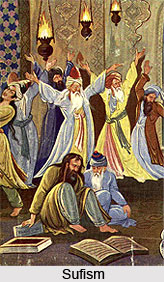
Sufism, Religious Movement

  Sufism, mostly referred to as a way of life, encompasses certain mysticism within it. To be a true human being, free from all bondages and honest with the Almighty is being a Sufi. Sufism is all about learning how to be a complete person, who exists in total harmony with the Universal Consciousness, who has surrendered his will completely to the will of the God and has merged his identity with that of God. Sufism is thus a matter of conduct. It concerns with one's conduct and is a matter of practice. It is difficult to explain Sufism theoretically but can only be understood.


Sufism, Religious MovementOrigin of Sufism
The origin of Sufism is a much-debated topic and is rather difficult to trace. With regard to the origin of the word 'Sufi', there are different views amongst scholars. The majority of them, however, agree that the use of wool (Suf in Arabic) in clothing by them has characterized Sufis. Use of coarse wool as clothing reflected upon one's inclination towards austerity and renunciation of worldly pleasures. Another view holds that Sufism has been derived from the word 'Safh' which means cleanliness or purity as the Sufis laid great stress on the purity of mind, body and behaviour.

Regarding the rise of Sufism it might be said that the extravagant life of the rulers after the establishment of the Islamic rule, heightened the need of a more sober way of life based on values and not just craving for materialistic pleasure. It was believed that Sufism had originated among Muslims near Basra in modern Iraq, and mostly all traditional Sufi schools owe their existence to the Prophet Muhammad via his cousin and son-in-law Imam Ali Ibn Abi Talib. Among this, the Naqshbandi Order is a notable exception to this rule, as it traces its origin to Caliph Abu Bakr. The spread of Sufism or to be more precise Sufism as a movement took place was during 1200-1500 CE, known as the Classical period of Sufism. Sufi movement was propagated from Baghdad's major Shia areas like Khorasa, Iraq, then Persia, Indian, African subcontinent and Muslim Spain.

Philosophy of Sufism
The essence of Sufism is the quest for absolute non-existence, a state that needs no existence besides the Almighty's Existence. The idea of an intimate communion of the self with the Eternal Reality is central to being a Sufi. Sufism is a kind of spiritual activation of the person, a process of the evolution of self in harmony with the others. Sufis believe in evolution of a man into a complete man by enlightenment through one's own experience and understanding.

For more visit the link below:

Tuesday, 30 June 2020

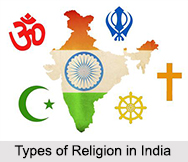
Types of Religion in India


Types of Religion in IndiaTypes of Religion in India originated in Indian sub-continent. India is the land of spirituality and philosophy and is considered to be the birthplace of many religions. Indian religion is varied in approach and different in meaning. The major religions of India are Hinduism, Islam, Sikhism, Christianity, Buddhism, Jainism, Zoroastrianism, Judaism and the Baha’i Faith. Religion adds meaning and purpose to the lives of the people. It is actually a practice that enhances direct communication with God. A religion is a belief concerning one or more deities and incorporating rituals, ceremonies, ethical guidelines and life philosophies. Thus, religion has diversified and grown to include major monotheistic religions in the country. A wide assortment of religions exists in the country today.

Hinduism in India
It is more of a philosophy which is a way of living according to the understanding of the principles of Vedas and Upanishads. Hinduism is a colourful religion with a vast gallery of Gods and Goddesses. It originated with Brahmanas the central Lord. 

Jainism in India
Jainism is a self-help religion that relies on the self instead of Gods. The Jain religion is traced to Vardhamana Mahavira. This religion is all about promoting equality between humans, animals and plants those have souls. Jainism chronologically preceded the religion of Buddhism. It is considered as one of the oldest religions of India. Jainism starts with two principles, the living (jiva) and the non-living (ajiva).

Types of Religion in IndiaBuddhism in India
Lord Buddha was the one who was responsible for propagating the doctrines of Buddhism. Buddhism is a philosophy and a religion that encompasses a wide variety of beliefs based on the teachings of Gautama Buddha.

Sikhism in India
This religion was introduced by Guru Nanak. It stresses on the devotion of God. Service to mankind, hard work and dedication towards family life.

Christianity in India
Christianity came to India with the coming of Portuguese. Christianity is an Abrahamic religion which is cantered on God, Jesus Christ and the Holy Spirit. 

Islam in India
Islam is a religion which originated in the country with various invasions. The Muslims are spread about 12 percent of India’s population
For more visit the page:

Wednesday, 11 September 2019

Muharram, Indian Festival

    Muharram is the saddest event for Shia Muslims. It is a period of intense grief.
Muharram is the tenth day of the first Muslim month. It commemorates the martyrdom of the Prophet's grandson Hussain and the battle at Karbala in 680 CE.
muharram-udaipur3
 The Shias consider the killing of Hussein at Karbala a particularly heinous crime and give themselves up to public lamentations during Muharram. Since Hussein was martyred on the tenth day of Muharram, the first ten days are spent in fasting, prayer and mourning.
VJTANHI-W105.AR+VJ25-MASULA-MUHARRA Some parts of India have masked dancers included who lead the procession. After the procession, the Taziahs are buried or sunk in tanks, rivers or the sea where a person does not have to

allahabad_muharram.jpg fast for the whole month.
The Shias observe this festival in a different fashion. They put on black clothes, as black is regarded as a colour of mourning.

It is a sad occasion and everyone in the procession chants "Ya Hussein", with loud wails of lamentation. Generally, a white horse beautifully decorated for the occasion is also included in the procession, to mark the empty mount of Hazrat Imam Hussein after his martyrdom.Muharram-2019-start-and-end-date-1175336
Some of the elegies sung by the Shias especially in Uttar Pradesh in their Muharram procession include uncomplimentary references to certain Caliphs, held in honour by the Sunnis who register the protest by pelting the singers with stones. The Muslims also believe that Allah created Adam and Eve on the tenth day of Muharram.

Read More :-Muharram, Indian Festival