Showing posts with label ceremony. Show all posts

Thursday, 25 September 2025

Teething Ceremony in Indian Customs


In India, every milestone in a child’s life is cherished with unique cultural practices, and the teething ceremony holds a special place among them. Known in different regions by various names such as Annaprashana, Mukhe Bhaat, or Choroonu, this ceremony symbolizes the child’s transition from a milk-only diet to the first taste of solid food. While teething itself is a natural biological process, Indian customs have long intertwined it with spiritual, cultural, and familial significance.

Traditionally, the ceremony takes place when a child begins to develop the first set of teeth—usually between six months and one year of age. Families consider this an auspicious time to celebrate growth, strength, and good health. In many Hindu households, the event is conducted with prayers, offerings, and blessings from elders, who play an important role in welcoming the infant into this new stage of life. 

The rituals vary across communities and states in India. In Bengal, for example, the ceremony is popularly called Mukhe Bhaat, where the maternal uncle often feeds the child a small morsel of rice for the first time. In Kerala, the custom is known as Choroonu and is usually performed in temples, with the child dressed in traditional attire and offered rice by parents and close relatives. In North India, families celebrate Annaprashana, which literally means "introduction to food," and it may be conducted at home or in a temple depending on family traditions. 

Food plays a symbolic role in the ceremony. The first bite, usually rice or a rice-based preparation, signifies nourishment and prosperity. It is not intended as a full meal but as a symbolic introduction to the world of solid foods. Following this, relatives may humorously offer small morsels, reflecting their love and hopes for the child’s future. These offerings are accompanied by blessings for health, wisdom, and longevity. 

Apart from the religious and cultural aspects, the teething ceremony serves a social function. It brings together relatives and friends in a joyous gathering, reinforcing family bonds. Music, rituals, and festive meals often accompany the event, transforming it into a celebration of community as much as a milestone for the child. Elders in the family also use this occasion to pass down traditional knowledge about childcare, nutrition, and values, strengthening intergenerational ties. 

While rooted in tradition, the essence of the ceremony has remained relevant even in modern times. Many urban families adapt the rituals to suit their lifestyles, holding smaller gatherings or simplified versions of the custom. Despite these changes, the core meaning of the ceremony—celebrating a child’s growth and seeking blessings for a healthy future—remains unchanged. 

The teething ceremony in Indian customs is more than just a ritual. It is an expression of joy, gratitude, and hope. By blending spiritual significance with familial affection, it transforms a biological milestone into a moment of cultural richness. As families across India continue to celebrate this age-old tradition, it highlights the enduring value of rituals that honor life’s simple yet profound transitions.

Tuesday, 30 June 2020

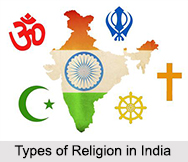
Types of Religion in India


Types of Religion in IndiaTypes of Religion in India originated in Indian sub-continent. India is the land of spirituality and philosophy and is considered to be the birthplace of many religions. Indian religion is varied in approach and different in meaning. The major religions of India are Hinduism, Islam, Sikhism, Christianity, Buddhism, Jainism, Zoroastrianism, Judaism and the Baha’i Faith. Religion adds meaning and purpose to the lives of the people. It is actually a practice that enhances direct communication with God. A religion is a belief concerning one or more deities and incorporating rituals, ceremonies, ethical guidelines and life philosophies. Thus, religion has diversified and grown to include major monotheistic religions in the country. A wide assortment of religions exists in the country today.

Hinduism in India
It is more of a philosophy which is a way of living according to the understanding of the principles of Vedas and Upanishads. Hinduism is a colourful religion with a vast gallery of Gods and Goddesses. It originated with Brahmanas the central Lord. 

Jainism in India
Jainism is a self-help religion that relies on the self instead of Gods. The Jain religion is traced to Vardhamana Mahavira. This religion is all about promoting equality between humans, animals and plants those have souls. Jainism chronologically preceded the religion of Buddhism. It is considered as one of the oldest religions of India. Jainism starts with two principles, the living (jiva) and the non-living (ajiva).

Types of Religion in IndiaBuddhism in India
Lord Buddha was the one who was responsible for propagating the doctrines of Buddhism. Buddhism is a philosophy and a religion that encompasses a wide variety of beliefs based on the teachings of Gautama Buddha.

Sikhism in India
This religion was introduced by Guru Nanak. It stresses on the devotion of God. Service to mankind, hard work and dedication towards family life.

Christianity in India
Christianity came to India with the coming of Portuguese. Christianity is an Abrahamic religion which is cantered on God, Jesus Christ and the Holy Spirit. 

Islam in India
Islam is a religion which originated in the country with various invasions. The Muslims are spread about 12 percent of India’s population
For more visit the page:

Tuesday, 7 January 2020

Hindu Wedding Rituals, Indian Weddings

image-4.jpgHindu Wedding Rituals are many in number and involve not only the bride and groom but family members and even the community.

Hinduism believes that there are four stages of life and married life of Grihastha is the second stage. It is the time of life when two individuals come together and learn the actual values of life through the institution of marriage.

header.jpgHindu Pre-Wedding Rituals
One of the earliest rituals is the Misri or ‘Ring Ceremony’. It is a pre-wedding ceremony and involves oral agreement and ‘Lagna Patra’ or written declaration. It proceeds with the ‘Mehendi Ceremony’ and ‘Sangeet Ceremony’.hindu.pngEach family member, who belong to the bride's relations adorn the groom's relatives with perfume, costumes and flowers. The ‘Nav-Graha Puja’ (Worship to the Nine Planets) is performed to ask for blessings from the Gods associated with the nine planets.
griha-shanti-puja.jpg
Hindu Wedding Rituals
The actual marriage ceremony
Marriage-Matrimony-Sites.jpg
begins with the ritual of the ‘Vara Satkaarah’ in which the bridegroom and his friends and relatives are welcomed and received at the entrance of the hall where the wedding is to be conducted. The officiating priest chants mantras and the bride's mother blesses the groom

The most important among the various ceremonies is the ‘Saptapadi’. After the tying of the Mangalsutra, the Saptapadi is symbolised by the marriage knot, tying one end of the groom's scarf with the bride's dress.
mangulstra.jpg
gor-maharaj.jpgThe last process in the Hindu wedding rituals includes the ‘Aashirvad’ or benediction by the elders followed by the Vidai CeremonyFeatured-Image-4-horz-min-1128x484.jpg
1.jpgHindu Post Wedding RitualAn integral part of every Indian wedding ceremony is the post wedding rituals. One of the more important post Indian wedding rituals is the ‘Griha Pravesh’.

Read More :- Hindu Wedding Rituals, Indian Weddings