Showing posts with label lord shiva. Show all posts

Tuesday, 18 August 2026

Siddeshwar Nath Temple in Ziro Valley: Home to World’s Tallest Natural Shiva Lingam

 Nestled amid the picturesque landscapes of Ziro in Arunachal Pradesh, the Siddeshwar Nath Temple at Kardo is a revered pilgrimage destination and a remarkable natural attraction. The temple is renowned for housing what is described as the world's largest naturally formed Shiva Lingam. Unlike conventional Shiva Lingams that are sculpted or carved, this extraordinary formation is believed to have emerged organically from beneath the ground.


Standing at an impressive height of approximately 25 feet, the natural Shiva Lingam has become an important spiritual landmark in the region. Its unusual origin, imposing size and sacred significance attract devotees as well as tourists who wish to experience this distinctive site. 

The Natural Shiva Lingam

The principal attraction of Siddeshwar Nath Temple is its towering natural Shiva Lingam. According to the belief associated with the site, the formation developed naturally over time rather than being created by human hands. This characteristic contributes greatly to the mystique surrounding the temple. 

In Hindu tradition, the Shiva Lingam is a sacred representation of Lord Shiva and is associated with the cosmic principles of creation and destruction. At Kardo, the naturally formed structure is worshipped with deep reverence, transforming a remarkable geological formation into a significant centre of devotion. 

The setting further enhances the experience. Surrounded by the tranquil beauty of Ziro Valley, the temple offers visitors a place where the natural environment and religious traditions exist closely together. 

Sacred Forms of Parvati and Ganesha

The spiritual importance of the temple extends beyond the main Shiva Lingam. Adjacent to it is a natural rock structure worshipped as Mata Parvati, the divine consort of Lord Shiva. Together, the two formations represent the enduring bond between Shiva and Parvati in Hindu mythology. 

Another distinctive feature is a rock formation attached to the Shiva Lingam that resembles the trunk of an elephant. Devotees worship this natural feature as Ganesha, the elephant-headed deity traditionally associated with wisdom and the removal of obstacles. These naturally occurring forms add another dimension to the religious character of the site. 

A Place of Devotion and Pilgrimage

Devotees visiting Siddeshwar Nath Temple participate in various traditional rituals and devotional practices. These include offering prayers, performing aarti and presenting flowers, fruits and sweets to the deities. For worshippers, the temple is not simply a tourist attraction but a sacred sanctuary where they can seek divine blessings. 

The combination of natural formations and religious belief makes Siddeshwar Nath Temple distinctive within Ziro Valley. The 25-foot Shiva Lingam, together with the formations revered as Parvati and Ganesha, creates a unique sacred landscape. 

Siddeshwar Nath Temple represents the fascinating intersection of nature, faith and local pilgrimage traditions. Its naturally formed Shiva Lingam stands as the site's defining feature, while the surrounding landscape of Ziro adds to its serene atmosphere. For devotees and visitors alike, the temple offers an opportunity to encounter a place where an extraordinary natural formation has become deeply embedded in spiritual practice.

Friday, 4 September 2020

Shaivism, Hindu Religion


Shaivism is the branch of Hinduism that worships Lord Shiva as the supreme deity. It is one of the major branches of Hinduism. Shaivism is a very deep, devotional and mystical denomination of Hinduism. It is considered the oldest of the Hindu denominations, with a long lineage of sages and saints who have outlaid practices and paths aimed at self-realization and the ultimate goal of Moksha, liberation.


The followers of Shaivism are called ‘Shaivas’ or ‘Shaivites’. They believe that Lord Shiva is the ultimate being and supreme God. According to the followers of Shaivism, Lord Shiva is the creator, destroyer, preserver, concealer and revealer. It is one of the oldest and one of the four major sects in Hinduism.

Scriptural Evidence of Shaivism
In the Rig Veda, Rudra is mentioned only in three suktas. He represents the destructive power of nature. He destroys men and animals but in the Rig Veda itself at some places he is described as a benevolent God. People pray to him for having children and being prosperous. In the Atharva Veda, the malignant aspect of Shiva is emphasized. He is called fearful and destroyer. He is described as having dark blue colour and is called the lord of animals. In the Yajur Veda, there are references to Rudra in two suktas i.e. Tryambaka-homa and Satarudriya.

In the Brahmanas, Rudra is called the chief of Gods i.e. Devadhipati, Lord Isana and the Great God Mahadeva. He is also called Bhutapati and is a dread figure who took over the dominion of Prajapati over all cattle. In the Svetasvatara Upanishad, Shiva is called the super God or Parabrahma and it is stated that with his power the Prakrti or Nature becomes active. In the Manavagrhya-sutra he is associated with the cremation ground. In the Apastamba Grhyasutra, Shiva is still classed among the minor Gods. In the Ramayana and the Mahabharata the full development of Shaivism can be seen.

For more visit the page:

Tuesday, 30 June 2020

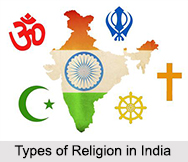
Types of Religion in India


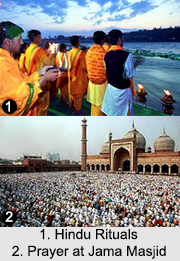
Types of Religion in IndiaTypes of Religion in India originated in Indian sub-continent. India is the land of spirituality and philosophy and is considered to be the birthplace of many religions. Indian religion is varied in approach and different in meaning. The major religions of India are Hinduism, Islam, Sikhism, Christianity, Buddhism, Jainism, Zoroastrianism, Judaism and the Baha’i Faith. Religion adds meaning and purpose to the lives of the people. It is actually a practice that enhances direct communication with God. A religion is a belief concerning one or more deities and incorporating rituals, ceremonies, ethical guidelines and life philosophies. Thus, religion has diversified and grown to include major monotheistic religions in the country. A wide assortment of religions exists in the country today.

Hinduism in India
It is more of a philosophy which is a way of living according to the understanding of the principles of Vedas and Upanishads. Hinduism is a colourful religion with a vast gallery of Gods and Goddesses. It originated with Brahmanas the central Lord. 

Jainism in India
Jainism is a self-help religion that relies on the self instead of Gods. The Jain religion is traced to Vardhamana Mahavira. This religion is all about promoting equality between humans, animals and plants those have souls. Jainism chronologically preceded the religion of Buddhism. It is considered as one of the oldest religions of India. Jainism starts with two principles, the living (jiva) and the non-living (ajiva).

Types of Religion in IndiaBuddhism in India
Lord Buddha was the one who was responsible for propagating the doctrines of Buddhism. Buddhism is a philosophy and a religion that encompasses a wide variety of beliefs based on the teachings of Gautama Buddha.

Sikhism in India
This religion was introduced by Guru Nanak. It stresses on the devotion of God. Service to mankind, hard work and dedication towards family life.

Christianity in India
Christianity came to India with the coming of Portuguese. Christianity is an Abrahamic religion which is cantered on God, Jesus Christ and the Holy Spirit. 

Islam in India
Islam is a religion which originated in the country with various invasions. The Muslims are spread about 12 percent of India’s population
For more visit the page:

Thursday, 6 February 2020

Tridev, Hindu Mythology

Origin-of-Lord-Shiva-and-Vishnu-Relationship-between-lord-shiva-and-lord-vishnuTridev, the trinity of Brahma, Vishnu and Maheshwara forms the psychological, physical and spiritual troika of humanbody

guru dattatreya wallpaper hdThe divine trio of Brahma, Vishnu and Maheshwara were born as the unique child of Dattatreya ( three children ,yet not born and were exquisite concept).

om-sign-of-light-blue-red-small-3The Hinduism is emblematized by the symbol "OM" or "AUM" which encompasses the aspect, trinity. The representation of "AUM" connotes Brahma(A), Vishnu (U) and Maheshwara (M).
imagesb22f3e6776d19494541a0aecc9d9f1ef0bf79485r1-745-512v2_uhq
Brahma, the absolute and the creator was born in a lotus out of the navel of the sleeping Vishnu. The speech originates from the mind corresponds to Brahma and is also representative of Vak Swarupa and Brihat Swarupa. Brahma is also the primordial sound and is named as Shabda Brahmamayi.

Untitledlord_vishnu_sitting_on_garuda-otherVishnu, the preserver, the second God of the tridev and the consort of Devi Laksmi, is portrayed as blue or black skinned and has four arms which bear Sankha , Chakra, Gada and Padma ."Atma" or the mind emerges from mind and as referred to in the dictum "Vishwam Vishnumayam" is also admitted as Vishnu Swarupa.

Shiva-worshipped-as-lingam
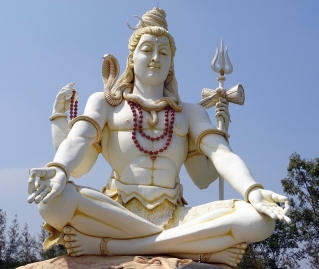
Untitled1cb46aaab229678132e5853571cb2549The third of the tridev is Maheshwara or Lord Shiva, the better half of Mother Parvati, is presented as white with dark blue throat and three eyes and is known to be the destroyer and also the creator.

By the divine dance "tandava", Maheshwara destroys the senile and decayed and out of his power creates regeneration. Lord Shiva as a symbol of creation is worshipped as "Linga".

indexLord-Vishnu-and-Goddess-Lakshmi-StoryBrahma's tongue is the abode of Saraswati , the goddess of knowledge and wisdom.

Goddess Lakhsmi , the consort to Lord Vishnu, stands for the compassion aspect of Vishnu.

unnamedGoddess Parvati is inseparable from Lord Shiva or Lord Shiva presents the image of "Ardhanarishwar"( the half male and the half female form).

Read More :- Tridev, Hindu Mythology

Thursday, 6 June 2019

History Of Kundalini Yoga

rubstr-kundalini-yoga1-300x200.jpgHistory of Kundalini Yoga states that the origins of Kundalini Yogacome from the form of Hinduism known as Kashmir Shaivism. This form of yoga comes from the Kashmir region of India where Hindus worship
FsRsL.png
 Lord Shiva. The history of Kundalini Yoga therefore establishes Kundalini Yoga as the process for enlightenment, manifestation and liberation and the most powerful of the 22 schools of yoga.

gettyimages-938890492-becc3fc4757849bea672f148454943f9.jpgConcept of Kundalini
Kundalini in English means the serpent power. Through practicing Kundalini yoga, along with chanting, meditation and an impartation from the guru one can have their Kundalini awakened.
Human chakra system
Kundalini and Human Body
The kundalini is found in the perineum region of the body. The masculine power is known to be Shiva and Shakti for the females.
Read more : History Of Kundalini Yoga

Wednesday, 29 May 2019

Kambala, Buffalo Race, Karnataka

dc-Cover-bsnudco08r3igtj44duecnr7m4-20170204044003.MediKambala or Buffalo Race is a well-known sport in Karnataka. Kambala is played before the harvesting season begins. It is a way of showing gratitude to gods who protect their crops from destruction. To celebrate Kambala, the farmers of Karnataka organize different kinds of outdoor sports. Kambala is also seen as the beginning of the sowing season for the next round of crops. Besides these, the sport is also organized during the religious festivals of the region.
lord-shiva-1800672_1280Legends of Kambala                                         It is difficult to trace the history of Kambala, yet it is popularly believed that Kambala is a sport festival that originated in the farming community of Karnataka . Kambala is considered as a sport of the royal (landlord) family of Dakshina Kannada and Udupi region of Karnataka. Kambala festival is dedicated to Kadri's Lord Manjunatha, a living form of Lord Shiva. Kambala was started by the Hoysala Kings. 
Categories of Kambala
kambala.png
  • Negilu: In Negilu Kambala, a lighter plough is made especially which is tied to the buffaloes.
  • Hagga: In Hagga Kambala, a rope is tied to the buffaloes.
  • Kane Halage: In Kane Halage Kambala, a rounded piece of wood is tied to buffaloes.
The winning pair of buffaloes was rewarded with coconuts and bananas. Now, gold coins, silver coins are given, cash award is also given.

Saturday, 20 August 2016

Kadamba Temple, Goa

Kadamba temple is a small Shiva temple dedicated to Shri Mahadeva at Tambdi Surla on the eastern border
of the territory. This magnificent temple dates back to the twelfth or thirteenth century and is a fine example of the Kadamba-Ghalukyan architecture. To know more read:
http://www.indianetzone.com/54/kadamba_temple.htm