Showing posts with label lordvishnu. Show all posts

Tuesday, 25 July 2023

Avatars of Lord Vishnu: Divine Incarnations in Hindu Mythology


In the vast tapestry of Hindu mythology, the Avatars of Lord Vishnu hold a significant place as divine incarnations that descend to Earth to restore balance and uphold dharma (righteousness). As the preserver and protector of the universe, Lord Vishnu is believed to take on various earthly forms in times of cosmic turmoil, ensuring the continuity of life and the triumph of good over evil. These avatars, known as the Dashavatara, exemplify the diversity of the divine and the principles they embody, each with its unique purpose and significance. Lord Vishnu


Matsya (The Fish Avatar): In the first avatar, Lord Vishnu incarnates as a fish to save humanity from a catastrophic flood. He guides the sage Manu's boat to safety, preserving the essence of life and knowledge. 

Kurma (The Tortoise Avatar): The second avatar sees Lord Vishnu taking the form of a tortoise to support the churning rod (Mandara Mountain) used by the gods and demons to extract the nectar of immortality from the cosmic ocean. 

Varaha (The Boar Avatar): In the third avatar, Lord Vishnu transforms into a boar to rescue Goddess Earth (Bhudevi) from the demon Hiranyaksha, who had submerged her into the depths of the cosmic ocean. Hindu Gods  

Narasimha (The Half-Man, Half-Lion Avatar): The fourth avatar portrays Lord Vishnu as a fierce lion-man who appears to protect his devotee Prahlada and annihilate the demon king Hiranyakashipu, who could not be killed by human, animal, or deity. 

Vamana (The Dwarf Avatar): In this avatar, Lord Vishnu takes the form of a diminutive Brahmin named Vamana and approaches the benevolent demon king Bali to request three steps of land, which ultimately leads to the demon's humility and salvation. 

Parashurama (The Warrior Sage Avatar): Lord Vishnu incarnates as Parashurama, a fierce warrior wielding an axe, to eliminate the oppressive Kshatriya rulers and restore balance in society. 

Lord Rama (The Prince of Ayodhya): The seventh avatar of Lord Vishnu is the revered Lord Rama, the epitome of dharma and righteousness, as depicted in the epic Ramayana. He exemplifies the ideal king, husband, and son, and his life serves as a timeless lesson in moral conduct and devotion. 

Lord Krishna (The Divine Statesman): The eighth avatar, Lord Krishna, is one of the most celebrated and beloved incarnations of Vishnu. His life and teachings, as documented in the Mahabharata and Bhagavad Gita, emphasize duty, devotion, and the path of selfless action (Karma Yoga). 

Buddha (The Enlightened One): Lord Vishnu's ninth avatar is Buddha, who appears to alleviate suffering and delusion. Buddha's teachings emphasize compassion, non-violence, and the path to enlightenment. 

Kalki (The Future Avatar): The final and yet-to-come avatar of Lord Vishnu, Kalki, is prophesized to appear in the distant future as a warrior on a white horse, wielding a sword, to cleanse the world of darkness and reestablish dharma. 

The Avatars of Lord Vishnu showcase the complexity of divine intervention in Hindu mythology. Each incarnation serves a specific purpose, imparting valuable life lessons, and guiding humanity towards the path of righteousness and spiritual growth. These avatars, beyond their individual tales, collectively symbolize the eternal cycle of creation, preservation, and destruction, representing the cosmic dance of the divine. Their stories continue to inspire and resonate with millions of devotees worldwide, as they find solace in the notion of a benevolent and compassionate force watching over the universe.

Tuesday, 11 October 2022

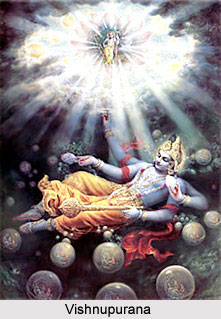
Vishnu Purana


Vishnu PuranaVishnu Purana, also known as the Puranratna, or the gems of Puranas, is one among the eighteen major Indian Puranas. It is the sacred text of the Vaishnava branch of Hinduism. In this work Vishnu is praised and glorified as the highest being, as the one and only god, with whom Brahma and Lord Shiva are one, and as the creator and preserver of the world. Similar to the other Puranas, the Vishnu Purana also narrates the story of the creation of Cosmos to its destruction at the end. The text of Vishnu Purana opens with the introduction of the four Yugas at the beginning of the text. In addition to these, there are widespread sections on lineage of the celebrated kings, heroes and demigods of ancient India, including those from the epics of Ramayana and Mahabharata. It has been enumerated in the text of Vishnu Purana, if a man gives as a gift a book of Vishnu Purana on the full-moon day in the month of Asadha (July) with Jaladhenu he will attain the sacred Vishnupada.

Origin of Vishnu Purana
In the Vishnu Purana the reference of the Maurya Empire is found. Hence the scholars have surmised it to be composed in the first or second century AD.

Composition of Vishnu Purana
It is divided into six Adisas or Khandas or chapters. It deals with the events of Varahakalpa and contains 23,000 Shlokas. Its character is more that of a unified composition than of a mere compilation, which the case with most of the other Puranas is. It has been narrated by the narrator himself that Vyasa, adept in the composition of Puranas, composed this Puranasarirhita with akhyanas, upikhyanas, githas and kalpanirnayas. A Suta named Romaharsana was Vyasa's chief disciple. Vyasa in order to propagate his teachings among his disciples gave that Samhita to that Suta. Romaharsana had six disciples named Sumati, Agnivarcas, Mitrayus, Sarhsapiyana, Akrtavrana and Savarni. Of these, Akrtavrana, Savarni and Sarhsapiyana born in the Kasyapagotra have composed Puranasamhitas, which are based on the teachings of Vyasa described in Samhita. There is yet another Samhita composed by Romaharsana which became the basis of the sarirhitas of his three disciples. The narrator says that he composed the Vishnu Purana based on the above four Samhitas.

For more, visit the link below:

Monday, 10 August 2020

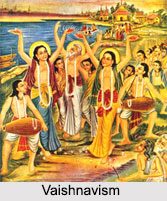
Vaishnavism


Vaishnavism is the branch of Hinduism in which Lord Vishnu or one of his incarnations is worshipped as the supreme God. Members of Vaishnavism are called Vaishnavites or Vaishnavas. Vaishnavism is the largest Hindu denomination and it has numerous subdivisions. In addition to the Vedas, Vaishnavites especially revere the Bhagavad Gita, the Bhagavata Purana, the Vishnu Samhita and the Gita Govinda. These texts focus especially on Lord Vishnu or his incarnations Lord Krishna and Lord Rama.


Vaishnavism is predominantly monotheistic in its philosophy, but not exclusive. Vaishnavism is also viewed as a part of Bhakti Movement. The faction's beliefs and practices, particularly the concepts of Bhakti and Bhakti Yoga, are based principally on Upanishads and associated with the Vedas and Puranic texts like the Bhagavad Gita, the PadmaVishnu and Bhagavata Puranas. Vaishnavism denounces caste system and the notion that intermediaries like Brahmins was needed to reach out to God.

Origin of Vaishnavism
The origin of Vaishnavism sect lies not in the Vedic Age, but in the pre-Vedic, non-Aryan Bhakti, devotional cult. As Vedism declined, this cult sprang forth strongly and was pivoted around Vasudeva. Vaishnavism faction was based on spiritual wisdom delivered by the Gods themselves. Lord Vishnu had delivered knowledge about the creation to Brahma. Brahma, in turn, passed this knowledge to Narada, his son. Narada imparted the wisdom to his disciples, including Vyasadeva. The latter is known to have resided in Badrinath, located amidst the sublime clime of Himalayas. In an attempt to save the spiritual wisdom from destruction in Kaliyug, Vyasadeva put it in a written form for the very first time. Till date the script of Vaishnava cult is transmitted from teachers to their disciples.

History of Vaishnavism
History of Vaishnavism depicts that Lord Vishnu had reincarnated himself as Sri Chaitanya Mahaprabhu to fight the Kaliyug. Chaitanya Mahaprabhu, in turn, had demonstrated the path of love, simple faith and devotion to reach out to God. Vaishnavism propagated that there is only one thing to which God responds and that is true devotion. Chaitanya Mahaprabhu, the reincarnation of Lord Krishna, was instrumental in helping the then contemporary society to break away from the shackles of rigid religious customs. The major characteristic of Vaishnavism, ‘Bhakti’ supports the devotee to escape from the ultimate cycle of death and birth. Besides Chaitanya, there also lies proof of various other committed Vaishnava religious leaders, who had become incidental to spread Vaishnavism. Some of these luminous sages include RamanujacharyaMadhvacharya, Manavala Mamunigal, Vedanta DesikaSurdasMeera BaiTulsidas, Jnanadeva, Anandamayi Ma and Tukaram.

For more read: 


Thursday, 6 February 2020

Tridev, Hindu Mythology

Origin-of-Lord-Shiva-and-Vishnu-Relationship-between-lord-shiva-and-lord-vishnuTridev, the trinity of Brahma, Vishnu and Maheshwara forms the psychological, physical and spiritual troika of humanbody

guru dattatreya wallpaper hdThe divine trio of Brahma, Vishnu and Maheshwara were born as the unique child of Dattatreya ( three children ,yet not born and were exquisite concept).

om-sign-of-light-blue-red-small-3The Hinduism is emblematized by the symbol "OM" or "AUM" which encompasses the aspect, trinity. The representation of "AUM" connotes Brahma(A), Vishnu (U) and Maheshwara (M).
imagesb22f3e6776d19494541a0aecc9d9f1ef0bf79485r1-745-512v2_uhq
Brahma, the absolute and the creator was born in a lotus out of the navel of the sleeping Vishnu. The speech originates from the mind corresponds to Brahma and is also representative of Vak Swarupa and Brihat Swarupa. Brahma is also the primordial sound and is named as Shabda Brahmamayi.

Untitledlord_vishnu_sitting_on_garuda-otherVishnu, the preserver, the second God of the tridev and the consort of Devi Laksmi, is portrayed as blue or black skinned and has four arms which bear Sankha , Chakra, Gada and Padma ."Atma" or the mind emerges from mind and as referred to in the dictum "Vishwam Vishnumayam" is also admitted as Vishnu Swarupa.

Shiva-worshipped-as-lingam
Untitled1cb46aaab229678132e5853571cb2549The third of the tridev is Maheshwara or Lord Shiva, the better half of Mother Parvati, is presented as white with dark blue throat and three eyes and is known to be the destroyer and also the creator.

By the divine dance "tandava", Maheshwara destroys the senile and decayed and out of his power creates regeneration. Lord Shiva as a symbol of creation is worshipped as "Linga".

indexLord-Vishnu-and-Goddess-Lakshmi-StoryBrahma's tongue is the abode of Saraswati , the goddess of knowledge and wisdom.

Goddess Lakhsmi , the consort to Lord Vishnu, stands for the compassion aspect of Vishnu.

unnamedGoddess Parvati is inseparable from Lord Shiva or Lord Shiva presents the image of "Ardhanarishwar"( the half male and the half female form).

Read More :- Tridev, Hindu Mythology

Tuesday, 4 June 2019

Panch Shilas, Badrinath, Uttarakhand

tapta-kunda-by-agkd.jpg
There are five blocks of stones around the 
Tapta Kund called the Narad Shila, Narsingh Shila, Varaha Shila, Garur Shila and the Markandey Shila. All these five Shilas are revered of mythological importance. Narad Shila is where the sage Narad meditated for several years and the conical shaped stone is standing in the midst of the Tapta Kund and the Narad Kund.
garuda-puran-img-798874_l.jpgGaruda or Garur, Vishnu's mount
desiring to be always with the Lord Vishnu fasted and meditated on this stone near the Tapta Kund. It is called Garur Shila.
Read more : Panch Shilas, Badrinath, Uttarakhand

Saturday, 1 June 2019

Temples of Chhattisgarh

bhoramdeo-temple.jpg
The state of Chhattisgarh is located in central India.  This state is beautified by mountains, rivers, waterfalls, forests etc. The natural beauty of this state along with museums, historical sites, national parks, monuments and statues draw tourists to this state.
10


Gandheswar Temple
Gandheswar Temple is located in the town of Sirpur. This temple is dedicated to Lord Shiva.
21img60Shivani Temple 
Shivani Temple is located in the city of Kanker. This temple is dedicated to Shivani Maa.
DSC_5545-copy-744x472.jpg
Vishnu Mandir
chandi mandir.jpgVishnu Mandir adorns the district of Janjgir- Champa. This temple is dedicated to Lord Vishnu.temple.jpg
Other Temples of Chhattisgarh
Some of the other temples of Chhattisgarh are Bambleshwari Temple, Chandi Temples, Laxman Temple, Shivarinarayan Laxminarayan Temple and Shankar Temple.

Read more : Temples of Chhattisgarh

Thursday, 25 August 2016

Upashya

Upashya is very useful to ascertain the nature of the disease. For example, when the doubt arises regarding the nature of the predominant dosha i.e. whether it is vata dominance or pitta dominance or kapha dominance, then upashya comes into play. Learn more about Upashya in the link below:
http://www.indianetzone.com/17/upashya.htm