Showing posts with label pilgrimage. Show all posts

Monday, 24 August 2020

Tourism in West Bengal


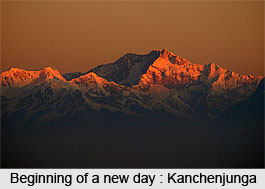
Tourism In West BengalWest Bengal, the state in eastern India is endowed with uniqueness in its diversity. It offers its visitors a matchless geographical variety. The state is a tourist's paradise which includes hill stations, religious centres, wild life sanctuaries, and sea beaches. West Bengal is a land of magnificent landscape, flora fauna amidst the undulating terrains of the north as well as the effervescent seas in the south. This state is an exceptional amalgamation of culture, entertainment, artistry and boundless life. The streaming populace of the streets offers a strange beauty of the urban milieu, whereas the remote hill stations and sea beaches are perfect retreat for that very hectic urban population. West Bengal has everything of its own to offer through its impeccable natural beauty.

Pilgrimage Tourism in West Bengal
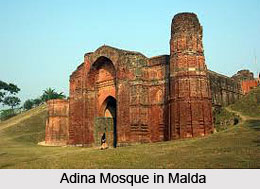
West Bengal is a home to many pilgrimage places and every year thousands of pilgrims come here to offer their prayers. Owing to the amalgamation of several cultures there are religious centres for all religious groups such as Hindus, MuslimsChristians and SikhsBishnupur in West Bengal has many Hindu temples that are renowned for their exclusive terracotta works. The temples are built mostly of brick, laterite, clay and sometimes wood and bamboo. Lord Krishna, an incarnation of Lord Vishnu and his love Radha, are deified in most of these temples. The Murali Mohana Temple and the Madana Mohana Temples in Bishnupur are popular religious sites for the Hindu pilgrims. The Shyama Raya temple built in the 17th century is the most visited religious site of this place. Religious centers in Kolkata in West Bengal reflect the secular nature of the city. The Dakshineshwar Temple is regarded as one of the major Hindu religious places. The Kalighat temple, well known for its Kali idol is visited by numerous devotees. The Nakhoda Mosque in Kolkata draws maximum Muslim devotees of the city. It has a very big structure and more than ten thousand men can perform the 'Namaaz' in the prayer hall of the mosque. Numerous ruins of mosques are still available at Malda in West Bengal. Tourism In West BengalThe St. Paul's cathedral in is one of the most important Christian religious center of Kolkata. People who come all across the globe and have a glance of the church get astonished at its beauty. The Shitalanatha temple of Kolkata is a Jain temple and is visited by many Jain disciples. The Gurudwara Bari Sangat in Kolkata attracts Sikh disciples from all over India. Murshidabad, a prosperous district in West Bengal houses the famous Katra Mosque that attracts numerous Muslim pilgrims. West Bengal is a home to Buddhist pilgrims as well. There are a large number of Buddhist monasteries in Kalimgpong and Gangtok in West Bengal, which are some of the finest Buddhist pilgrimage centers in India. The religious places in West Bengal will give the tourists an insight about the cultural heritage of the place.
For more visit the page:

Monday, 10 August 2020

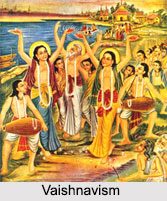
Vaishnavism


Vaishnavism is the branch of Hinduism in which Lord Vishnu or one of his incarnations is worshipped as the supreme God. Members of Vaishnavism are called Vaishnavites or Vaishnavas. Vaishnavism is the largest Hindu denomination and it has numerous subdivisions. In addition to the Vedas, Vaishnavites especially revere the Bhagavad Gita, the Bhagavata Purana, the Vishnu Samhita and the Gita Govinda. These texts focus especially on Lord Vishnu or his incarnations Lord Krishna and Lord Rama.


Vaishnavism is predominantly monotheistic in its philosophy, but not exclusive. Vaishnavism is also viewed as a part of Bhakti Movement. The faction's beliefs and practices, particularly the concepts of Bhakti and Bhakti Yoga, are based principally on Upanishads and associated with the Vedas and Puranic texts like the Bhagavad Gita, the PadmaVishnu and Bhagavata Puranas. Vaishnavism denounces caste system and the notion that intermediaries like Brahmins was needed to reach out to God.

Origin of Vaishnavism
The origin of Vaishnavism sect lies not in the Vedic Age, but in the pre-Vedic, non-Aryan Bhakti, devotional cult. As Vedism declined, this cult sprang forth strongly and was pivoted around Vasudeva. Vaishnavism faction was based on spiritual wisdom delivered by the Gods themselves. Lord Vishnu had delivered knowledge about the creation to Brahma. Brahma, in turn, passed this knowledge to Narada, his son. Narada imparted the wisdom to his disciples, including Vyasadeva. The latter is known to have resided in Badrinath, located amidst the sublime clime of Himalayas. In an attempt to save the spiritual wisdom from destruction in Kaliyug, Vyasadeva put it in a written form for the very first time. Till date the script of Vaishnava cult is transmitted from teachers to their disciples.

History of Vaishnavism
History of Vaishnavism depicts that Lord Vishnu had reincarnated himself as Sri Chaitanya Mahaprabhu to fight the Kaliyug. Chaitanya Mahaprabhu, in turn, had demonstrated the path of love, simple faith and devotion to reach out to God. Vaishnavism propagated that there is only one thing to which God responds and that is true devotion. Chaitanya Mahaprabhu, the reincarnation of Lord Krishna, was instrumental in helping the then contemporary society to break away from the shackles of rigid religious customs. The major characteristic of Vaishnavism, ‘Bhakti’ supports the devotee to escape from the ultimate cycle of death and birth. Besides Chaitanya, there also lies proof of various other committed Vaishnava religious leaders, who had become incidental to spread Vaishnavism. Some of these luminous sages include RamanujacharyaMadhvacharya, Manavala Mamunigal, Vedanta DesikaSurdasMeera BaiTulsidas, Jnanadeva, Anandamayi Ma and Tukaram.

For more read: 


Tuesday, 14 July 2020

History of West Bengal

The History of West Bengal reveals that it was divided into many small states. The Buddhist and Jaina works and the coins prove that towards the middle of the sixth century B.C. independent sovereign states were established in Vanga and Radha. However in the beginning of the fourth century B.C., a state called Gangaridai as arose out of the unison of lower and western Bengal. The Bhagavata Purana discusses the primitive people of Bengal as sinners because they were considered Dasyus and not Indo Aryans. But the Vanga and Anga in Bengal are identified as Indo-Aryans in the Jain scriptures. The remains of the settlements of the Copper Age suggest that the region of Bengal dates back to four thousand years. Earliest evidences of human settlements are derived from the stone tools and such pre historic stone tools have been found in many regions of Bengal such as Medinipur, Bankura and Bardhaman. In the Mahabharata there are references of Bengali kings like Chitrasena who was defeated by Bhima. The epic also suggests that Bengal was divided among various tribes or kingdoms such as southern, northern and western Bengal. Western Bengal was a part of Magadha. However it was under the Nanda Empire that the whole of Bengal came under the Indo Aryan rule.

History of West BengalAccording to belief Gangaridai was a part of King Ashoka's Empire. During the rule of the Kushanas the major part of the state was ruled by three agents. Over a period of time these rulers refused to accept the suzerainty of the Kushanas and thereby became independent. This was followed by a period of uncertainty and turmoil. According to an inscription Simha Varman and his son Chandra Varman were the rulers of Bengal when the Guptas had come to power (319-20 A.D.). As per the Allahabad Stone Pillar inscription Samatata was a part of Samudragupta's kingdom. The inscription gives evidence that North Bengal was included within the Gupta Empire.

For more visit the page:

Thursday, 23 May 2019

Tourism of Bardhaman District


[UNSET].jpg


terracotta-temple-vishnupur-NQ40_l.jpg
10968444-336456229882361-1835116002063548165-n_15_80046.jpgTourism in Bardhaman District includes the age old temples and the monuments. It is one of the busiest districts in Indian State, West Bengal.There was the Muslim dynastical rulers in the medieval times and the British Empire in India. Pirbaharam Shikiha Khwaja Anwar Berh, Shah Alam's Darga are the religious and  the rule of Hindu kings, the Maharaja Golapbag, Nawab Hat, Ramana Bagan, and the Palace of Burdwan Kings are built.

Pilgrimage Tourism in Burdwan District
Burdwan District has a multi-cultural heritage. The cultural heritage of Burdwan District is attracted by the people of West Bengal.
BISH_1505385350_1.jpg010_arch.jpgThe old Hindu temples bear signs of Hinduism, mostly belonging to the Sakta and Vaishnava followers. The famous shrine of Sarvamangala,said to contain the remnant of Sati's body (The wife of Lord Shiva), the umbilicus, is situated in Bardhaman District. In this district, there are several other Hindu Temples and Shivalingams.
Read more : Tourism of Bardhaman District

Tuesday, 18 April 2017

Jain Pilgrimages in Central Indian States

Jain temples throughout India are noted for their cleanliness and sacred atmosphere. Pilgrimage to sacred places is part of the tradition of Jainism religion in the world. Most of the great Jain pilgrimage sites are distant from the centres of population, almost always on the tops of hills or mountains, and often in surroundings of natural beauty conducive to devotion and meditation. To know more read: