Showing posts with label holy cities of India. Show all posts

Tuesday, 18 April 2023

Major Indian Rivers

 Indian Rivers play a huge role in the lives of the nation's residents. They provide drinking water, provide a living for a sizable population, and sustain flora and animals in India. The Indian rivers are essential to the livelihoods of many people, including farmers, fishermen, and boatmen. India, which is frequently referred to as the "land of rivers," has been gifted with several water features that add to the beauty of the nation. The mythology, religion, culture, history, and tales of India all revolve around its rivers. The first witnesses to India's civilization's development are these rivers.


Himalayan Rivers, Deccan Rivers, Coastal Rivers, and Inland Drainage Basin Rivers are the four basic categories into which Indian rivers can be divided. Indian mythological rivers are referred to as mythological rivers. Rupa, Pampa, Oghavati, Dhritamati, and Saraswati River are a few of these rivers.

Hindus worship the majority of Indian rivers because they are regarded as divine. The Ganga River is India's holiest river. The majority of the holy sites in northern India are either close to or on the banks of the Ganges River. India's gods are worshipped with the Ganga's sacred water. It is thought that a person's sins can be completely washed away by the sacred Indian rivers.

Indian Rivers provide irrigation and hydroelectricity production through dams. On various rivers, a plethora of dams and multipurpose river valley projects have been constructed. These rivers serve as waterways, making travel easier. One well-known watercourse that connects many Indian regions is the Ganga River. The growth of Indian crops is substantially impacted by Indian rivers. Rich soils are thought to be present in the areas close to Indian rivers. As a result, agriculture is the principal use of these areas and the main source of income for many farmers. The majority of the reason that Indian rivers and their tributaries draw visitors from throughout the world. River sports like river rafting and kayaking are popular in modern-day India on rivers like the Alaknanda River and others. 

Ganga River and Yamuna River are two significant Indian Rivers. The Ganga River, also known as Jahnavi, gushes down to the plains from the Himalaya Mountains. The Yamuna River has a length of 1,376 kilometres (855 mi) and is a tributary of the Yamunotri Glacier. Another important tributary of Ganga river is Padma river, majority of which flows through Bangladesh.

The Brahmaputra River, Krishna River, Kaveri River, Narmada River, Tapti River, Godavari River, Krishna River, Mahanadi River, Bhagirathi River, and Alaknanda River are a few of the other rivers in India.

The Banas is a river which lies entirely within the state of Rajasthan in western India. It is a tributary of the Chambal River, itself a tributary of the Yamuna, which in turn merges into the Ganga. 

For more, visit the link below:

Indian Rivers

 Ganga River 

Yamuna River

Kaveri River

Krishna River

Damodar River

Luni River

Periyar River

Ghaggar River


Thursday, 1 July 2021

Indian Holy Cities


Indian Holy CitiesIndian Holy Cities are considered as sacred from early era for the historical and mythological significances. HinduismIslamChristianityZoroastrianismBuddhism and Jainism rose into prominence for socio-political drama.

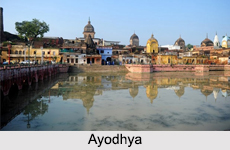
Ayodhya, Faizabad DistrictUttar Pradesh
Ayodhya is believed to be the birthplace of Lord Rama, who was known as greatest king of early history. Ayodhya is a city of many Hindu temples and mosques. The place is also known as "Ram Janmabhoomi".

Mathura, Mathura District, Uttar Pradesh
Mathura is renowned as the birthplace of Lord Krishna and it was developed near Yamuna. The spectacular ghats are located near river bank where devotees take bath. JanmashtamiHoli and Diwali can be witnessed here.

Haridwar, Haridwar DistrictUttarakhand
Indian Holy CitiesHaridwar is one among the four pilgrimage tourism sites where drops of "Amrita" (elixir) spilled over from the pitcher which was carried away by Garuda, the vehicle of Lord Vishnu.

Varanasi, Varanasi District, Uttar Pradesh
Varanasi, also known as Kashi is noted for Kashi Vishwanath Temple (where Lord Shiva and Parvati reside). Ghats of VaranasiSankat Mochan Hanuman Temple and Durga Temple are the popular places here.

Kanchipuram, Kanchipuram District Tamil Nadu
Kanchipuram, is known as "Golden City of Thousand Temples". Here one can find the Pallava architecture and the temples of Chola era. Kailasanathar Temple is the oldest existing temple of Kanchipuram.

Ujjain, Ujjain District, Madhya Pradesh
Ujjain is an ancient city of temples and this region is noted for KalidasaKing Vikramaditya and Raja Bhoj, who made the city historically significant.

Dwarka, Dwarka District, Gujarat
Dwarka was the dwelling place of Lord Krishna. Here one can also find the monasteries of Sri Adi Shankaracharya.

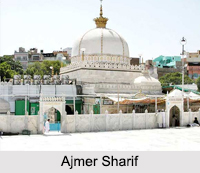
Ajmer, Ajmer DistrictRajasthan
Ajmer is noted for the presence of mortal remains of Khwaja Muinuddin Chisti which were buried in the Dargah SharifUrs festival is the cynosure of this place.

Tuesday, 14 July 2020

History of West Bengal

The History of West Bengal reveals that it was divided into many small states. The Buddhist and Jaina works and the coins prove that towards the middle of the sixth century B.C. independent sovereign states were established in Vanga and Radha. However in the beginning of the fourth century B.C., a state called Gangaridai as arose out of the unison of lower and western Bengal. The Bhagavata Purana discusses the primitive people of Bengal as sinners because they were considered Dasyus and not Indo Aryans. But the Vanga and Anga in Bengal are identified as Indo-Aryans in the Jain scriptures. The remains of the settlements of the Copper Age suggest that the region of Bengal dates back to four thousand years. Earliest evidences of human settlements are derived from the stone tools and such pre historic stone tools have been found in many regions of Bengal such as Medinipur, Bankura and Bardhaman. In the Mahabharata there are references of Bengali kings like Chitrasena who was defeated by Bhima. The epic also suggests that Bengal was divided among various tribes or kingdoms such as southern, northern and western Bengal. Western Bengal was a part of Magadha. However it was under the Nanda Empire that the whole of Bengal came under the Indo Aryan rule.

History of West BengalAccording to belief Gangaridai was a part of King Ashoka's Empire. During the rule of the Kushanas the major part of the state was ruled by three agents. Over a period of time these rulers refused to accept the suzerainty of the Kushanas and thereby became independent. This was followed by a period of uncertainty and turmoil. According to an inscription Simha Varman and his son Chandra Varman were the rulers of Bengal when the Guptas had come to power (319-20 A.D.). As per the Allahabad Stone Pillar inscription Samatata was a part of Samudragupta's kingdom. The inscription gives evidence that North Bengal was included within the Gupta Empire.

For more visit the page:

Friday, 3 July 2020

Indian Saints


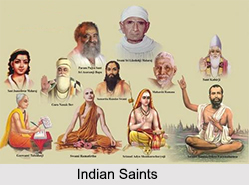
Indian Saints have contributed greatly in the social reformations. They have revived spirituality in the subcontinent through their deep understanding of religion and life. They are believed to be the manifestations of God.


Indian SaintsIndian Saints embody the highest ideals and are credited for demonstrating the reality of spiritual awareness. India is known to be the land of Saints and Gods. They help people to attain positive actions, devotion, spiritual practice and mental discipline by providing appropriate conditions and knowledge. It is the legacy of Indian Saints that represents the true identity of Indian ideology. Since time immemorial, India has been the seat of several religions. Numerous Indian saints took up the responsibility of popularising the postulates of various sects.

Indian Saints are considered to be the manifestations of God. They have set themselves as role models for the masses to follow. Whether it was RamakrishnaShankaracharya or Khwaja Muinud-din Chishti, all of them have guided their followers to achieve peace of mind through spirituality. Indian saints have adopted simple measures to explain the religious philosophies. Most of them adopted the method of narrating tales to educate the masses. Some of the Indian saints, however, propagated renunciation of the worldly affairs to achieve salvation.

Born in 1486 in Nabadwip, a town in present-day West Bengal, India, Chaitanya Mahaprabhu emerged as a profound spiritual personality with a deep-rooted devotion to Lord Krishna. From an early age, he displayed remarkable intelligence, profound wisdom, and a captivating aura that drew people towards him. His charismatic personality and pure heart earned him admiration and respect from all walks of life.


For more visit the page:

#religion #saints #history #spirituality

Tuesday, 3 March 2020

Holy Cities of East India

mahabodhi-temple-in-bodhgaya
VARANASIHoly Cities of East India refer the places of religious importance. Hinduism, Islam, Christianity and Buddhism are widely spread.

128102Holy Cities of East India includes Kolkata, Bankura, Jairambati and Malda district of West Bengal, Rajgir and Pawapuri of Bihar and Puri, Sambalpur and Konark of Odisha.
Bodh-Gaya-Buddha-gaya-950x754
Bodh Gaya
Bodh Gaya is a pilgrimage site associated with the Mahabodhi Temple Complex in Gaya district of Bihar.

agannath TemplePuri
Puri is known by several names since the ancient times and the eternal abode of Lord Jagannath. Jagannath Temple is one of the major Hindu temples built in the Kalinga style of architecture.
BhubaneswarBhubaneshwar-lead-866x487
Known as the city of temples; Bhubaneshwar was established in 1st century BC and later came under the influence of Buddhism.
Mayapur1569507442_tripoto
Mayapur is the place associated with Lord Chaitanya and Lord Krishna.
Nabadwipslider-4
Navadwip in located in Nadia District of West Bengal, and it is the oldest capital of Sena Dynasty in medieval era. Chaitanya Mahaprabhu was born here.

Nalandanalanda-university
Nalanda in Nalanda District of Bihar is a place where the largest Buddhist monastery in India is located. It is a religious place for Buddhists in eastern India now.

Read More :- Holy Cities of East India

Tuesday, 21 May 2019

Mahabaleshwar, Maharashtra

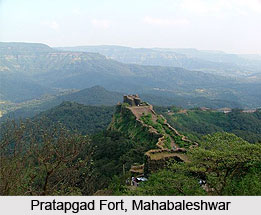
Mahabaleshwar is known as queen of the hill stations of Maharashtra with its plethora of attractive tourist points, cascading waterfalls, intriguing historical sites and pilgrimage places.
1547099542_blogs_5_incredible_experiences_in_indias_western_ghats.jpgMahabaleshwar is a spectacular hill station situated in the Western Ghats . Being laundered in the mighty ranges of Sahyadri, it has earned the name of "queen of the hill stations of Maharashtra". It is an integral part of the district of Satara and lies almost one hundred fifteen kilometres to the south west of Pune.

satara-mahabaleshwar-150036521515-orijgp.jpgHistory of Mahabaleshwar 
Mahabaleshwar originated in the early years of 1215. In the year 1828. Interestingly during the British period it was called the Malcolm Peth.

Geography of Mahabaleshwar
Mahabaleshwar, MaharashtraEtymologically, the word Mahabaleshwar has been derived from the Lord Shiva, popularly known as Lord Mahabali. A 'self-originated lingam', in the shape of a 'rudraksha' is placed at the temple of Gokarna.

murudeshwara-temple-gokarna-indian-tourism-entry-fee-timings-holidays-reviews-header.jpg


Tourism in Mahabaleshwar 
Mahabaleshwar, MaharashtraMahabaleshwar has a plentiful of magnificent palaces having mesmerizing natural beauty. Lodwick Point rises to a height of near about 1,240 metres. Elphinstone Point got its name from the then Governor of Mumbainamely Sir Elphinstone.

arthur-seat.jpg
Arthur's Seat is an other significant point of Mahabaleshwar.
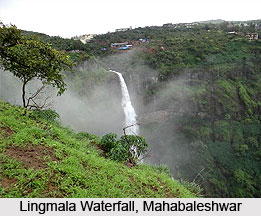
Mahabaleshwar, Maharashtra the famous Lingmala Waterfall of Mahabaleshwar. It runs through the Vennavalley.   Panchgani is   another hill resort, which lies at a little distance   from Mahabaleshwar. In the close proximity one finds Lord Hanuman Mandir.


Monday, 15 May 2017

Indian Holy Cities

Indian Holy Cities are places where people go to worship their revered deities. People consider a particular place as holy because of the presence of a particular temple. Most of the cities that are considered holy find reference in the sacred Indian Epics of different religious communities. A large number of pilgrims throng to the holy cities to offer prayers to their sacred deities. Indian Holy Cities are places where geography and history are so closely linked. Every holy city may have a history to tell. 
Haridwar 
Haridwar is one of the holy cities of Hindus situated in the Haridwar District of Uttarakhand. The word 'hari' means God and 'dwar' means gate. Therefore Haridwar means the Gateway to God. It is said that devas have left their footprints in the place. According to the Hindu Mythology, Haridwar is one among the four sites where drops of Amrita (elixir of immortality) spilled over from the pitcher which was carried away by the celestial bird Garuda, the vehicle of Lord Vishnu. 
Varanasi 
As per Jain mythology, places around Varanasi Is related to the birth of four Tirthankars, namely Parshav, Suparshav, Chandraprabhu and Shreas. This makes Varanasi an important pilgrimage and attracts numerous Jain devotees. Digambar and Shwetambar are the two main Jain temples standing adjacent to each other and are dedicated to Lord Parshvanatha, the 23rd Tirthankar. The architecture of these temples is a treat to the eyes. 

Ajmer 
Ajmer is one of the most pious destinations for Muslims. The mortal remains of Khwaja Muinuddin Chisti were buried in the Dargah Sharif, situated in Ajmer, which forms the centre of Islamic religious faith. It is believed that the wishes of a pure heart are always fulfilled in this place. The enchanting quwwali programs organized here during the popular annual Urs festival are also a point of attraction for the tourists all over the world. To know more read: