Showing posts with label kolkata. Show all posts

Wednesday, 27 March 2024

Indian Museum


The Indian Museum, situated in the heart of Kolkata, stands as a testament to India's rich cultural heritage and historical significance. Established in 1814, it is the oldest and largest museum in India, showcasing a diverse array of artifacts and exhibits spanning various epochs and civilizations. With its extensive collection and historical significance, the Indian Museum continues to attract visitors from all walks of life, both domestic and international. 

The genesis of the Indian Museum dates back to the early 19th century during the British colonial era. The idea behind its inception was to create a repository for the artifacts and antiquities amassed by the East India Company during its rule over the Indian subcontinent. Initially housed in the Asiatic Society of Bengal's premises, the museum was later shifted to its present location at Chowringhee in Kolkata. Over the decades, the museum has evolved and expanded its collection, becoming a custodian of India's cultural heritage and a center for scholarly research. 

The Indian Museum boasts an extensive collection of artifacts, spanning a wide range of disciplines including archaeology, anthropology, art, and natural history. One of its most prized possessions is the famed Egyptian mummy, acquired in the late 19th century. This rare exhibit offers visitors a glimpse into ancient Egyptian funerary practices and rituals. 

The museum's archaeological section houses a treasure trove of relics from the Indus Valley Civilization, showcasing the advanced urban planning and craftsmanship of ancient Indian civilizations. From intricately carved seals to pottery and sculptures, these artifacts provide valuable insights into India's rich cultural tapestry. 

Moving through the galleries, visitors encounter a fascinating array of exhibits representing different periods of Indian history. The sculpture gallery, for instance, features exquisite sculptures dating back to the Gupta and Mauryan periods, reflecting the artistic prowess of ancient Indian artisans. Meanwhile, the coin gallery showcases a diverse collection of coins spanning several centuries, offering a glimpse into India's economic history and trade relations with other civilizations. 

The museum's natural history section is equally captivating, with displays of taxidermy specimens, fossils, and geological artifacts. From prehistoric fossils to rare specimens of flora and fauna, this section appeals to both nature enthusiasts and scholars alike, providing valuable insights into India's biodiversity and geological evolution. 

In addition to its role as a repository of artifacts, the Indian Museum serves as a center for scholarly research and education. It regularly hosts seminars, workshops, and lectures on various subjects, inviting scholars and experts from around the world to share their insights and discoveries. The museum's library, with its vast collection of books, journals, and manuscripts, provides a valuable resource for researchers and academicians engaged in the study of Indian history, culture, and archaeology. 

The Indian Museum in Kolkata stands as a beacon of India's rich cultural heritage and historical legacy. It is counted among the prominent museums in West Bengal. From ancient artifacts to contemporary exhibits, it offers visitors a fascinating journey through time, providing valuable insights into India's diverse civilizations and cultural traditions. As a center for learning and scholarship, it continues to inspire curiosity and appreciation for India's rich and multifaceted heritage, ensuring its legacy endures for generations to come.

Wednesday, 19 July 2023

Kolkata Municipal Corporation: Leading the City's Governance


The Kolkata Municipal Corporation (KMC) is an essential government body responsible for the governance and administration of the city of Kolkata, India. With a rich history dating back to its establishment in 1876, the KMC plays a pivotal role in shaping the city's infrastructure, public services, and overall development. Let's delve into the responsibilities and duties of this esteemed organization, as well as the legendary mayors who have led it.


One of the primary responsibilities of the Kolkata Municipal Corporation is to provide essential civic amenities to the residents of the city. These amenities include water supply, sanitation, solid waste management, maintenance of roads and bridges, and public transportation. The KMC also plays a crucial role in urban planning, issuing building permits, and regulating land use to ensure sustainable and organized development. 

The corporation is responsible for ensuring public health and safety within its jurisdiction. It operates and manages numerous healthcare facilities, including hospitals, dispensaries, and health centers, to provide accessible healthcare services to the citizens. Additionally, the KMC takes measures to control and prevent the spread of diseases, such as implementing vaccination drives, conducting health awareness campaigns, and inspecting food establishments to maintain hygiene standards. Kolkata  

Education is another crucial aspect overseen by the Kolkata Municipal Corporation. It manages and operates several primary and secondary schools, aiming to provide quality education to children in the city. The KMC also focuses on adult education programs and skill development initiatives to enhance livelihood opportunities for the citizens. By investing in education, the corporation contributes to the overall growth and prosperity of the city.

Over the years, the Kolkata Municipal Corporation has been led by some legendary mayors who have left an indelible mark on the city's history. One such iconic figure is Deshbandhu Chittaranjan Das, who served as the first mayor of Kolkata from 1924 to 1925. Das was a prominent freedom fighter, lawyer, and social reformer. His tenure witnessed several progressive reforms and infrastructure development, laying the foundation for a modern Kolkata. 

Another renowned mayor was Bidhan Chandra Roy, who served as the mayor from 1934 to 1938 before going on to become the second Chief Minister of West Bengal. Roy was a distinguished physician and a visionary leader. During his tenure, he initiated various healthcare reforms, including the establishment of the renowned Nil Ratan Sircar Medical College and Hospital, which still stands as a testament to his contributions. 

A prominent name in Kolkata's political landscape is Sovan Chatterjee, who served as the mayor from 2010 to 2018. Chatterjee focused on urban development, implementing key projects to improve the city's infrastructure and public transportation system. His tenure witnessed the introduction of the Kolkata Solid Waste Management Improvement Project and the modernization of street lighting systems. 

The current mayor of Kolkata is Firhad Hakim, who assumed office in 2018. Known for his dynamic leadership and administrative acumen, Hakim has been instrumental in driving the city's development. Under his stewardship, initiatives like the "Safe Drive Save Life" campaign have been implemented to ensure road safety and minimize accidents. 

As a vital governing body, the Kolkata Municipal Corporation shoulders the responsibility of providing essential services and improving the quality of life for the citizens of Kolkata. Through the efforts of its legendary mayors and dedicated personnel, the KMC has played a pivotal role in shaping the city's growth and development. With its commitment to progress and the well-being of its residents, the Kolkata Municipal Corporation continues to be a driving force in the city's journey towards a prosperous future.

Monday, 24 August 2020

Tourism in West Bengal


Tourism In West BengalWest Bengal, the state in eastern India is endowed with uniqueness in its diversity. It offers its visitors a matchless geographical variety. The state is a tourist's paradise which includes hill stations, religious centres, wild life sanctuaries, and sea beaches. West Bengal is a land of magnificent landscape, flora fauna amidst the undulating terrains of the north as well as the effervescent seas in the south. This state is an exceptional amalgamation of culture, entertainment, artistry and boundless life. The streaming populace of the streets offers a strange beauty of the urban milieu, whereas the remote hill stations and sea beaches are perfect retreat for that very hectic urban population. West Bengal has everything of its own to offer through its impeccable natural beauty.

Pilgrimage Tourism in West Bengal
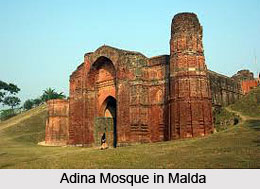
West Bengal is a home to many pilgrimage places and every year thousands of pilgrims come here to offer their prayers. Owing to the amalgamation of several cultures there are religious centres for all religious groups such as Hindus, MuslimsChristians and SikhsBishnupur in West Bengal has many Hindu temples that are renowned for their exclusive terracotta works. The temples are built mostly of brick, laterite, clay and sometimes wood and bamboo. Lord Krishna, an incarnation of Lord Vishnu and his love Radha, are deified in most of these temples. The Murali Mohana Temple and the Madana Mohana Temples in Bishnupur are popular religious sites for the Hindu pilgrims. The Shyama Raya temple built in the 17th century is the most visited religious site of this place. Religious centers in Kolkata in West Bengal reflect the secular nature of the city. The Dakshineshwar Temple is regarded as one of the major Hindu religious places. The Kalighat temple, well known for its Kali idol is visited by numerous devotees. The Nakhoda Mosque in Kolkata draws maximum Muslim devotees of the city. It has a very big structure and more than ten thousand men can perform the 'Namaaz' in the prayer hall of the mosque. Numerous ruins of mosques are still available at Malda in West Bengal. Tourism In West BengalThe St. Paul's cathedral in is one of the most important Christian religious center of Kolkata. People who come all across the globe and have a glance of the church get astonished at its beauty. The Shitalanatha temple of Kolkata is a Jain temple and is visited by many Jain disciples. The Gurudwara Bari Sangat in Kolkata attracts Sikh disciples from all over India. Murshidabad, a prosperous district in West Bengal houses the famous Katra Mosque that attracts numerous Muslim pilgrims. West Bengal is a home to Buddhist pilgrims as well. There are a large number of Buddhist monasteries in Kalimgpong and Gangtok in West Bengal, which are some of the finest Buddhist pilgrimage centers in India. The religious places in West Bengal will give the tourists an insight about the cultural heritage of the place.

For more visit the page:

Thursday, 16 July 2020

Indian Film Festivals

 Indian Film FestivalsIndian Film Festivals over the years, is gaining immense popularity among the people of India and around the world as well.

Foreign people have started to take notice of the films that are made in India and they come in large numbers to be a part of the Indian Film Festivals. Over the years, and especially in the two decades, the Indian Film Industry has grown leaps and bounds.

Origin of Film Festivals in India
The beginning of the film festivals in India can be traced to the stupendous rise of the cine-clubs and film societies that sprang up at various parts of the country during the 1950's, mainly in DelhiMumbaiKolkata and few other places in south India. The urge to set up cine clubs was seen as an effect of the rise Hollywood film industry, and over non-commercial movements dedicated to such causes as documentary and avant-garde film.

Indian Film FestivalsSuch societies and clubs popularized across the country, where they promoted the materialization of the historically important surrealist and impressionist cinemas, where they provided the only regular outlet for domestically produced movies. As such cine clubs grew and spread across India, they went ahead to organize international conclaves where their members, many of whom were aspiring filmmakers, could share thoughts, ideas and inspirations without any regard to national borders. Activities such as these were the prototypes and predecessors of film festivals.

Lists of Film Festivals in India
Indian Movies consists of films produced across the country, which includes the cinematic customs, tradition and cultures of various states like; Andhra PradeshHaryanaJammu and KashmirAssamGujaratKarnatakaKeralaPunjabTamil NaduMaharashtraOrissa and West Bengal. Indian movies are now being closely followed throughout Middle East and South Asia, and in parts of Europe. Cinema, as a medium of entertainment, has gained reputation in the India. And now we see as many as 1,000 films in a variety of Indian languages are produced every year.

For more visit the page:


Tuesday, 14 July 2020

History of West Bengal

The History of West Bengal reveals that it was divided into many small states. The Buddhist and Jaina works and the coins prove that towards the middle of the sixth century B.C. independent sovereign states were established in Vanga and Radha. However in the beginning of the fourth century B.C., a state called Gangaridai as arose out of the unison of lower and western Bengal. The Bhagavata Purana discusses the primitive people of Bengal as sinners because they were considered Dasyus and not Indo Aryans. But the Vanga and Anga in Bengal are identified as Indo-Aryans in the Jain scriptures. The remains of the settlements of the Copper Age suggest that the region of Bengal dates back to four thousand years. Earliest evidences of human settlements are derived from the stone tools and such pre historic stone tools have been found in many regions of Bengal such as Medinipur, Bankura and Bardhaman. In the Mahabharata there are references of Bengali kings like Chitrasena who was defeated by Bhima. The epic also suggests that Bengal was divided among various tribes or kingdoms such as southern, northern and western Bengal. Western Bengal was a part of Magadha. However it was under the Nanda Empire that the whole of Bengal came under the Indo Aryan rule.

History of West BengalAccording to belief Gangaridai was a part of King Ashoka's Empire. During the rule of the Kushanas the major part of the state was ruled by three agents. Over a period of time these rulers refused to accept the suzerainty of the Kushanas and thereby became independent. This was followed by a period of uncertainty and turmoil. According to an inscription Simha Varman and his son Chandra Varman were the rulers of Bengal when the Guptas had come to power (319-20 A.D.). As per the Allahabad Stone Pillar inscription Samatata was a part of Samudragupta's kingdom. The inscription gives evidence that North Bengal was included within the Gupta Empire.

For more visit the page:

Saturday, 1 June 2019

British Monuments in Mumbai


images.jpgBritish monuments in Mumbai were constructed as the result of the rule of the British East India Company and later the rule of the British crown which ruled India. With the rise of British rule under the East India Company and the Raj.In the year 1661, theBritish East India Company acquired Mumbai(Bombay) as part of the dowry of Catherine of Braganza when she married Charles II, but as it was notorious for its insalubrious climate, for many years it remained subordinate to Surat.
ayurvedaadf.jpg 
St. Thomas's Cathedral, Mumbai, St Mary's, and St George's, Chennai (Madras) and St John's, Kolkata (Calcutta).After the painful events of the Sepoy Mutiny, the balance of British commercial interests changed. Kolkata remained pre-eminent, but Chennai became less important.

1533295232_chhatrapati_shivaji_terminus.pngThe Victoria Terminus, Mumbai, or VT, as it is famously known, is the finest Victorian Gothic buildings in India. Constructed between the years 1878 to 1887, Mumbai had been in the forefront of railway building. The Great Indian Peninsular Railway reached Thane in the year 1853.


Read more : British Monuments in Mumbai

Wednesday, 29 May 2019

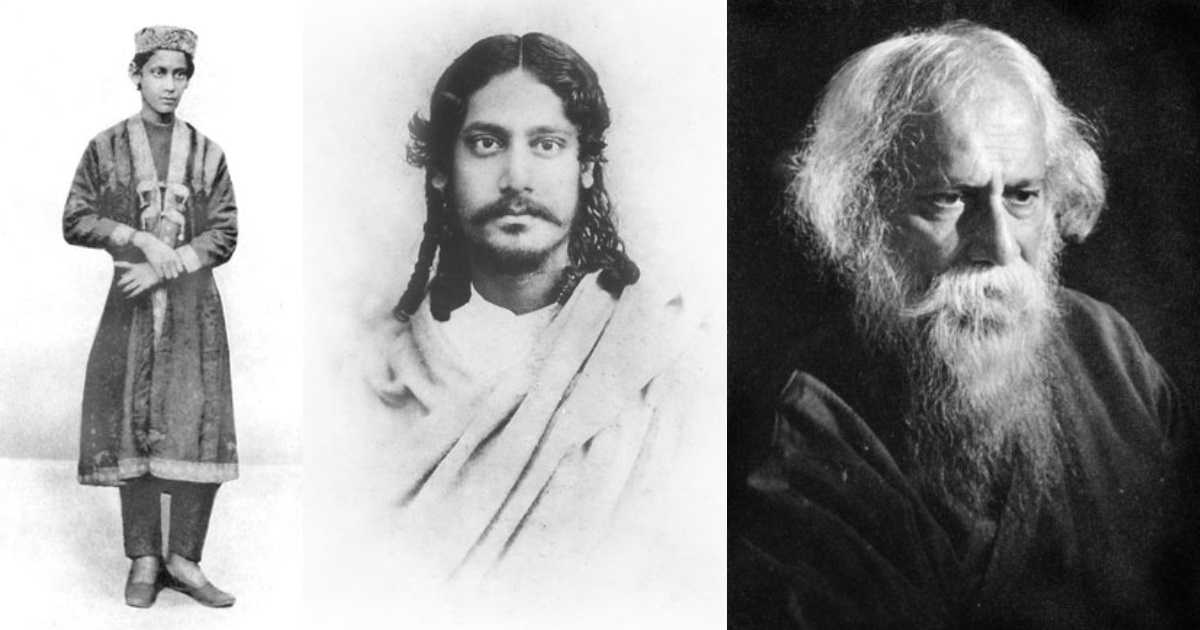
Rabindranath Tagore, Indian Poet

rabindranath_tagore.jpg
Rabindranath Tagore, a renowned poet and a Nobel award receiver for literature, was born in the year 1861. He grew up in the heart of Kolkata in a colonised country. Tagore's works focused on certain issues such as racial humiliation, search for self-esteem, education, and religion that was concerned with India. Literary works, nationalism and Santiniketan remained the passion of Tagore, for more than six decades of his life.
The-Prodigy-Of-Words-Rabindranath-Tagore-The-First-Asian-To-Win-The-Nobel-Prize-First-Indian-Be-An-Inspirer
download.jpg


Early Life of Rabindranath Tagore

Tagore was born the youngest of fourteen children, in the Jorasanko mansion, now known as
Tagore House, to parents Debendranath Tagore and Sarada Devi.  Rabindranath's father, Debendranath, was one of the leaders of the Brahmo Samaj.


9788121290586Rabindranath as a Poet  was known for his different forms of creative writing such as essays, letters, short stories, novels and dramas and is best known for his poems. Among his fifty and odd volumes of poetry are Manasi (1890), Sonar Tari (1894), Gitanjali (1910), Gitimalya (1914), and Balaka (1916).

Read more :Rabindranath Tagore, Indian Poet