Showing posts with label photography. Show all posts

Friday, 24 April 2026

Beyond the Lens: The Evolution and Discourse of Nude Photography in India

 Nude photography in India occupies a complex and often contested space, shaped by cultural traditions, legal frameworks, and evolving artistic expression. While the human form has been celebrated in Indian art for centuries, contemporary nude photography continues to provoke debate, oscillating between acceptance as fine art and criticism on moral or social grounds. This duality reflects broader tensions within Indian society as it negotiates modernity and tradition.


Historical and Cultural Context

The depiction of the human body in India is not a modern phenomenon. Ancient temple sculptures, miniature paintings, and classical art forms have long portrayed nudity as a symbol of divinity, fertility, and aesthetic beauty. These representations were not viewed through a lens of obscenity but rather as integral to spiritual and artistic narratives. However, colonial influences introduced more conservative attitudes toward nudity, reframing it within stricter moral codes that continue to influence public perception today. 

Artistic Expression and Contemporary Practice

In modern India, nude photography has emerged as a legitimate form of artistic exploration. Photographers use the medium to study form, texture, identity, and vulnerability, often challenging societal norms and encouraging dialogue. For many artists, the nude is not merely about physical exposure but about storytelling—addressing themes such as body positivity, gender identity, and human emotion. 

Despite this, practitioners frequently face challenges, including censorship, limited exhibition opportunities, and public backlash. Art galleries and independent platforms have played a crucial role in providing spaces for such work, though acceptance remains uneven across regions and communities. 

Legal and Ethical Considerations

The legal framework governing nude photography in India is nuanced. Laws addressing obscenity often lack clear definitions, leading to subjective interpretations. What may be considered artistic expression by one authority could be deemed inappropriate by another. As a result, photographers must navigate a delicate balance between creative freedom and legal compliance. 

Ethical considerations are equally significant. Issues of consent, representation, and exploitation are central to the practice. Responsible photographers prioritize transparency, respect, and collaboration with their subjects, ensuring that the work aligns with both artistic intent and ethical standards. 

Societal Perception and Media Influence

Public perception of nude photography in India is deeply influenced by media representation and social attitudes. While urban and younger audiences may exhibit greater openness, conservative views still dominate in many parts of the country. Social media has further complicated this landscape, offering both visibility and vulnerability. Platforms can amplify artistic work but also expose it to misinterpretation or harassment. 

At the same time, conversations around body positivity and self-expression are gradually reshaping attitudes. Increasingly, artists and audiences are engaging with nude photography as a means of challenging unrealistic beauty standards and promoting inclusivity. 

Nude photography in India stands at the intersection of art, culture, and controversy. Its evolution reflects broader societal shifts, highlighting the ongoing negotiation between tradition and modernity. As dialogues around artistic freedom and personal expression continue to grow, nude photography has the potential to move beyond stigma and be recognized for its aesthetic and conceptual depth.

Thursday, 9 January 2025

Indian Tit


India is home to a remarkable diversity of bird species, including several types of Tits. These small, agile birds belong to the family Paridae and are renowned for their vibrant plumage, melodious calls, and adaptability to various habitats. Found in forests, grasslands, and urban areas, Indian Tits play a significant role in maintaining ecological balance. Below is an overview of the primary Tit species found in India.


1. Great Tit (Parus major)

The Great Tit is one of the most widely distributed and recognizable Tit species in India. It inhabits forests, orchards, and gardens, particularly in the Himalayan region and adjoining areas. Characterized by its bold black cap, white cheeks, and bright yellow underparts, the Great Tit is an active forager. It feeds on insects, seeds, and fruits, often seen hanging upside down on branches to extract its prey. 

2. Cinnamon Tit (Machlolophus spilonotus)

The Cinnamon Tit is native to the Himalayan foothills and is particularly found in the northeastern regions of India. It has a striking appearance with a cinnamon-colored back, yellow underparts, and a black head with a distinctive crest. Preferring mixed forests and bamboo thickets, this species feeds on insects, larvae, and seeds, contributing to pest control and seed dispersal. 

3. Green-backed Tit (Machlolophus viridanus)

Endemic to the Indian subcontinent, the Green-backed Tit inhabits subtropical and temperate forests, particularly in the Himalayan belt. Its vibrant green back, yellow underparts, and contrasting black markings make it easily distinguishable. Known for its adaptability, the Green-backed Tit thrives in forest edges, plantations, and urban gardens. 

4. Black-lored Tit (Machlolophus xanthogenys)

The Black-lored Tit is commonly found in the western Himalayan foothills and central Indian forests. This species is recognized by its olive-green body, yellow underparts, and the distinct black "lore" or streak near its eyes. It is an omnivorous bird, feeding on insects, berries, and seeds. Its preference for mixed deciduous and evergreen forests makes it a key contributor to the ecosystem’s health. 

5. Cinereous Tit (Parus cinereus)

The Cinereous Tit is widely distributed across India, particularly in the southern and central regions. It has a muted grayish appearance with a black head and white cheeks, distinguishing it from other species. Adaptable to both natural and urban environments, the Cinereous Tit frequents woodlands, gardens, and agricultural areas, often seen foraging in pairs or small groups. 

Ecological Importance of Indian Tits

Indian Tits play a crucial ecological role by regulating insect populations, dispersing seeds, and contributing to forest regeneration. Their presence is a strong indicator of healthy ecosystems. Additionally, these birds have adapted to human-altered landscapes, demonstrating resilience to habitat changes. 

Conservation Concerns

Despite their adaptability, Indian Tits face threats from habitat loss, deforestation, and climate change. Protecting forested habitats and promoting community-driven conservation efforts are vital to ensuring the survival of these species. 

The diverse Tit species in India reflect the country’s rich avian biodiversity. By understanding their behavior, distribution, and ecological significance, we can appreciate the important roles these birds play in maintaining ecological balance. Conservation measures must prioritize these vibrant species to safeguard their future.

Friday, 5 April 2024

Museums of Goa


Museums serve as repositories of cultural heritage, offering glimpses into the past, art, and traditions of a region. In the small but culturally rich state of Goa, located on the western coast of India, several museums stand as testament to its vibrant history and diverse heritage. From artifacts showcasing the state's colonial past to exhibits highlighting its rich cultural traditions, museums of Goa offer visitors a unique opportunity to delve into its multifaceted identity. 

Museum of Goa

The Museum of Goa (MOG) stands out as a beacon of contemporary art in the region. Founded by acclaimed Goan artist Subodh Kerkar, MOG aims to promote contemporary art and provide a platform for emerging artists. The museum's exhibits feature a diverse range of artworks, including paintings, sculptures, and installations, reflecting the vibrant cultural landscape of Goa. With its dynamic exhibitions and engaging programs, MOG continues to enrich Goa's artistic community and attract art enthusiasts from around the world. 

Big Foot Museum

Nestled in the quaint village of Loutolim, the Big Foot Museum offers visitors a journey through Goa's traditional way of life. The museum's centerpiece is a giant foot impression, reminiscent of the legend of a giant who once roamed the village. Inside, visitors can explore a replica of a traditional Goan village, complete with ancestral homes, artisan workshops, and a spice plantation. Through its immersive exhibits and cultural performances, the Big Foot Museum celebrates the rich heritage and customs of Goa, providing a window into its rural past. 

Goa Chitra Museum

Dedicated to preserving Goa's agrarian heritage, the Goa Chitra Museum is a fascinating repository of ethnographic artifacts. Founded by anthropologist Victor Hugo Gomes, the museum houses a vast collection of agricultural tools, household implements, and artifacts dating back several centuries. Its meticulously curated exhibits offer insights into traditional Goan farming practices, indigenous crafts, and rural lifestyles. By showcasing the ingenuity and resilience of Goa's agrarian communities, the Goa Chitra Museum serves as a testament to the state's rich cultural legacy. 

Museum of Christian Art

Located within the Convent of Santa Monica in Old Goa, the Museum of Christian Art is a treasure trove of religious artifacts dating back to the Portuguese colonial era. The museum's collection includes exquisite examples of Christian art, including paintings, sculptures, and religious vestments. Highlights include intricately carved ivory crucifixes, ornate silverware, and vibrant frescoes depicting scenes from the life of Christ. Through its displays, the Museum of Christian Art offers visitors a glimpse into the rich religious heritage that has shaped Goa's identity over the centuries. 

The museums of Goa offer a rich tapestry of experiences, ranging from contemporary art to traditional crafts and religious artifacts. They stand out among all other museums in Indian states. Whether exploring the vibrant galleries of the Museum of Goa, stepping back in time at the Big Foot Museum, or delving into the agrarian heritage at the Goa Chitra Museum, visitors are sure to be captivated by the diverse cultural offerings of this coastal paradise. As guardians of Goa's heritage, these museums play a vital role in preserving its past and inspiring future generations to appreciate its rich cultural legacy.

Monday, 16 May 2022

Styles in Monochrome Photography


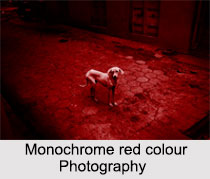
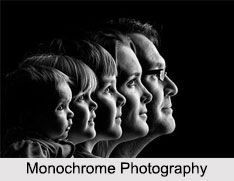
Styles in Monochrome Photography, Indian PhotographyMonochrome photography is a type of photography where the image has produced a single shade, rather than recording the colours of the object which was photographed. It includes all forms of black-and-white photography, which bring into being images containing tones of grey shades ranging from black to white. Earlier, photographers had no alternative but to shoot in black and white, because it was the only available medium at that time.

With the time Monochrome photography flourished. Contemporary black and white photography at its best is art and a lot of photographers regard it as the purest form of photography. It is recommended to shoot in RAW + JPEG format for Monochrome Photography.

The flattering and contrasting shades that bring a colour image to life are all decreased to black and white or shades of grey in a monochrome image. Black and white Photography is a very useful medium for landscape photography. It draws attention to the shapes and forms of the elements within the landscape, and the excellence of light.

Styles in Monochrome Photography
Styles in Monochrome Photography, Indian PhotographyThere are certain types of photo that rely on colour for impact. Monochrome images may be produced in a number of ways. Following are the different styles in Monochrome Photography:

Tone and Contrast Photography: The Monochrome photo’s subject works best when it has a varied range of black, grey and white shades. The dark and light areas in images create tone and contrast in a picture. Extended exposure shots work really fine in monochrome photography, in particular where there is moving water or clouds or moving subjects. The blurring of the movement also includes textural contrast with any solid objects in the frame and a tripod is needed to keep the camera at a standstill.

For more, visit the link below:

Saturday, 8 June 2019

Dimapur, Assam

59608270_1362616003893859_5013108375741617312_n.jpg
The district consists of Dimapur and Niuland sub-divisions, bifurcated from Kohima. The District is bounded by Kohima district on the south and east.
220px-KANTHI_WATER_FALL.jpg
152913878.jpgKarbi Anglong district of Assam on the West. The DAB (Disputed Area Belt) in the north borders
Golaghat district of Assam.

History of Dimapur 
The ancient Kachari capital Dimapur is one of the important sites of megalithic culture.  Besides the Monolithic, the ancient Kachari capital Dimapur contains other ruins of temples, embankment and tanks.
DKJRzoBX0AAmrlq.jpg
Intanki Wildlife Sanctuary
The Sanctuary is under the preservation of the Forest Wildlife Department. Habitat of various animals including some rare species of birds. Dimapur is the only Airport in Nagaland.

Read more : Dimapur, Assam

Tuesday, 4 June 2019

History of Indian Craft


IndianDesignHistory_osmhandicraft.com_1.jpgThe history of Indian handicrafts is an old saga. There are a myriad of craft traditions in India. The crafts which flourished in India are basically subject to the social, economic and regional factors. The primal references of Indian crafts were found in the remnants of Indus Valley Civilization (3000 B.C.-1700 B.C.).It has also got a technical brilliance in the arena of pottery- making, jewelry, threading, various sculptures like metal, stone and terracotta etc.
2011_CSK_05744_0293_000(a_group_of_indus_valley_terracotta_figures_harappa_north_pakistan_3rd).jpg
Artistic production of crafts, too, proliferated during Mauryan Empire, a landmark in Indian history, starting from 3rd century B.C. The "5ecce876b9c2e341fc940730ca0aad06.jpgSanchi stupa" is a part of it and has gained worldly fame for its beautiful stone carving and relief work.
The golden age of Guptas (AD 320-647) is not only esteemed the classical period in Indian history and that too of history of Indian crafts.The rock cut temples of
4-Days-Ajanta-and-Ellora-Caves-Tour-600x807.jpg
Collage3.jpgEllora and the
Ajanta murals are perfect examples of it.
pith-work-durga.jpgMughal era was the golden period in the history of craft. The famous Peacock Throne of the Mughals is one of the premium examples of precious stone decorative work and metal craft.
Easter states like Assam and West Bengal are far-famed for their exquisite 'Sholapith' and 'Shital Patti' works.

Read more : History of Indian Craft

Saturday, 1 June 2019

British Monuments in Mumbai


images.jpgBritish monuments in Mumbai were constructed as the result of the rule of the British East India Company and later the rule of the British crown which ruled India. With the rise of British rule under the East India Company and the Raj.In the year 1661, theBritish East India Company acquired Mumbai(Bombay) as part of the dowry of Catherine of Braganza when she married Charles II, but as it was notorious for its insalubrious climate, for many years it remained subordinate to Surat.
ayurvedaadf.jpg 
St. Thomas's Cathedral, Mumbai, St Mary's, and St George's, Chennai (Madras) and St John's, Kolkata (Calcutta).After the painful events of the Sepoy Mutiny, the balance of British commercial interests changed. Kolkata remained pre-eminent, but Chennai became less important.

1533295232_chhatrapati_shivaji_terminus.pngThe Victoria Terminus, Mumbai, or VT, as it is famously known, is the finest Victorian Gothic buildings in India. Constructed between the years 1878 to 1887, Mumbai had been in the forefront of railway building. The Great Indian Peninsular Railway reached Thane in the year 1853.


Read more : British Monuments in Mumbai

Monday, 27 May 2019

Ancient Fort In Himachal Pradesh, India

1200px-Attock_Fort_-_Optographer.jpg
Forts in Himachal Pradesh portray the historical significance of this part of the country, and its royal heritage. Such forts have been witnessed several ancient episodes, invasions and regimes of different dynasties and conquerors. Though some of these forts have been destroyed and are in ruins, most of the forts have retained their glory and grandeur. Arki Fort, Kangra Fort, Nauni Fort and Kahlur Fort are the various forts which are existent here. Historians and tourists make a beeline for these monuments, mainly for their architectural charm.
arki-fort2-1.jpg
Arki Fort
Arki Fort was constructed in the period between 1695 and 1700. The Gurkhas had invaded the fort in the year 1806. In the ancient days, Arki served as the capital of the Princely state of Baghal which was established by a Panwar Rajput, Rana Ajai Dev.
Kangra_Fort.jpg
Kangra Fort
The Kangra Fort is believed to be the biggest fort in the Himalayan Ranges . Kangra Fort finds mention in Mahabharata and was also asserted in the war records of Alexander during the 4th century. A tiny courtyard was added to the fort premises during the rule of the Sikhs.
28596956
Nauni Fort
Nauni Fort is situated in the village of Nauni, on the Solan-Rajgarh Road, the Nauni Fort and Giri River is located at a distance of nearly 9 kms away from here. A few distance away from Nauni Fort is based the Dr. Yashwant Singh Parmar University of Horticulture and Forestry.

There are many other fort in Himachal Pradesh to know more : Forts in Himachal Pradesh

Monday, 20 May 2019

Khasi Hills, Meghalaya

Karbi_anglong.jpg
Khasi Hills belong to the Garo-Khasi range in the north-eastern state of India, Meghalaya the hills are located in the central part of Meghalaya and the Garo Khasi range is a part of the Patkai range of the Meghalaya subtropical forests ecoregion.

The region is dominated by the Khasi tribal communities. The area consists mostly of hilly regions which also consist of the Shillongplateau. The highest peak of the region is Lum Shyllong which is 1968 meters high. It is drained by the tributaries of the Brahmaputra and the Surma Rivers.
shutterstock-651287953.jpg
Khasi Hills are mainly known for housing Sohra, popularly known as Cherrapunjee. It is recognized for being the wettest place on earth.

langshiang_falls_located_in_sangriang_nongstoin.jpgAdministration of Khasi Hills: In the yea 1976, the Khasi Hills District was divided into two districts, viz the West Khasi Hills District and the East Khasi Hills District.

West Khasi Hills: West Khasi Hills is presently the largest district of Meghalaya. There are various places in this region that can be visited like Langshiang Falls (third-highest waterfalls in India), Mawthadraishan Peak (second highest peak in Meghalaya)
1513059713-rotates-irctc-3558831282017081321-jpg-destreviewimages-720x512-1513059713-croppedNongkhnum River Island
, Weinia Falls, Thums Falls, Umyiap Paddy Field (longest paddy field in northeast India), Ranikor, Kyllang Rock, Rambrai, Langpih etc.

To Know More : Khasi Hills, Meghalaya

Saturday, 18 May 2019

Sculpture Of Veeranarayana Temple


Temple follows the Hoysala temple building idiom. Located in Belavadi the temple is a 'trikuta' or three shrined. Trikuta or three shrined temple is a common feature of Hoysala temples.

The usual building material chlorite schist or soapstone has been used for the Veeranarayana Temple built by Veera Ballala II. The most striking feature about the architecture of the temple is that two of the shrines face each other. They have a common open mandapa that has 37 bays.
Each of the shrines has a complete tower on its top. These superstructures are known to be the largest examples of Hoysala architecture.

The third shrine is quite ancient with both closed and open mandapas. The closed one has 13 bays and the open mandapa has 9 bays. The central shrine is situated at the end of the hall. This shrine has all the architectural elements of the Hoysala.
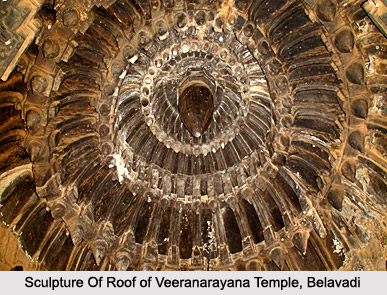
Sculpture of roof of Veeranarayana Temple, Belavadi
As is the Hoysala feature the inner wall is simply made up. But the roof is ornately decorated. It has 59 bays and the pillars constructed lathe turned. Some others have carvings on them. It is interesting to note that the ones that bear sculptures have been constructed manually.  The temple panels consist of the sculpted figures of Hindu deities and their attendants. Another sculptural element is the friezes or mouldings on the walls.

Read more :Sculpture Of Veeranarayana Temple, Belavadi, Hoysala Sculpture

Friday, 17 May 2019

Indian Shrikes, Indian Birds

The Indian Subcontinent provides suitable habitats to a species of birds called Shrikes.

The Indian Subcontinent provides suitable habitats to various species of birds 

maxresdefault-3.jpg
for residing and nesting. Shrikes are no exception in this regard. Various types of shrikes have been recorded in India. These shrikes are described below.

Bar Winged Flycatcher Shrike

bar_winged_flycatcher_shrike.jpg

Bar Winged Flycatcher Shrike has been found on the hills of the Indian Subcontinent. The subspecies capitalis is found along the Himalayas from Shimla, east to Manipur and Chittagong in India.

Long Tailed Shrike

long_tailed_shrike_bocos
Long-Tailed Shrike exists in the Indian peninsula except the eastern states as a common resident breeder. An eastern race which extends to Arunachal Pradesh in India has a black colored head.

Bay Backed Shrike

bay-backed-shrike-.jpg

Bay-Backed Shrike is a widespread resident breeder of India. This small shrike has a maroon-brown upper body and white colored under parts, with buff flanks.

Brown Shrike

brown-shrike-.jpg

Brown Shrike is a common winter visitor in India. This bird has brown colored upper parts and creamy underside.

To know in detail visit here : Indian Shrikes, Indian Birds

Friday, 16 June 2017

Documentary Photography in India, Indian Photography

Documentary photography pursues a particular topic or story in-depth over time. Documentary photography is a type of professional photojournalism. Documentary photography is more about capturing the truth in the social scenario around us. It is also referred to as Candid photography as the moments captured are true and real. Documentary photography, to a certain extent, captures the real essence of the photographers mind. They depict a certain perspective of the mind of the photographer. These photographs are usually for exhibition in an art gallery or other public forum. Sometimes an organization or company will commission documentary photography of its activities, but the pictures will only be for its private archives. 

The challenge for a documentary photographer is to make pictures of sensitive scenes and moments without changing them by the presence of a camera. People should not pose for the camera or else it won’t be real. The resulting pictures - the subjects facing the camera and seen from "top to toe" are a vivid historical documentary photography archive, and have established the posed "straight up" as a valid style of documentary picture-making.


Career in Documentary Photography 
The scenes of Indian Photography seem to be remarkably promising. It has innumerable branches to choose from along with the different courses and degrees for getting the skills. Photography can be treated both as an occupation and an art form. The economic returns are also not very reasonable in the beginning but there are many successful photographers in today. There are some diploma and certificate courses which can pursue to include technical specialisation. A documentary photographer can follow these courses along with the college. After the completion of the course, a photographer can get the job opportunity in various media sectors like - Add media, News mediaDocumentary firms, Magazines, Event management organizations, Theatre, Movies etc. To know more read:

http://www.indianetzone.com/5/documentary_photography.htm


Thursday, 20 April 2017

Pepita Seth, Indian Photographer

Pepita Seth is the British-born photographer and Theyyam researcher Pepita Seth is the only foreigner who is allowed entry into the centuries-old Guruvayur temple in Kerala. And this is entirely due to her complete devotion and what she describes as a "totally personal and internal process. She acknowledges this 'blessing' in the form of a book - "Heaven on Earth: The Universe of Kerala's Guruvayur Temple" - which is the culmination of seven years of research and documentation. 


Pepita Seth belongs to the clan of that Indian fighter as his great-grandfather was the one who marched the soldier walk in 1857 from Calcutta to Lucknow. And she retraced her roots from a diary of her great Grandfather from the attic. That was the beginning of a hard core relationship between a state and an angel, who fell in love with the culture of Kerala who was born and brought up in England. In honour of her contributions to the state of Kerala, she was awarded with "Padma Shri". She never had a proper educational backdrop, as she plants it "In my family education was only for boys not for girls". A prey of gender inequality she to a large extent is self-taught as she devoured books at young age and penetrated her self into the world of books, of knowledge and into self earned treats of enlightenment. Although born in London, she was brought up on a farm in a very rural part of England. Her parents hardly had time for looking after her attainment of formal schooling and, in a way, no interest in this femme fatale being educated. As soon as she could read, she began devouring books as a way of unconsciously educating herself. To know more read:


Wednesday, 30 November 2016

War Photography in India


War photography captures images of armed conflict and life in warn-torn areas. It depicts the terrors of war mingled with acts of sacrifice, emotions of civilians and the victims of war and the heroic deeds. To know more read: http://www.indianetzone.com/5/war_photography.htm