Showing posts with label himachal pradesh. Show all posts

Thursday, 12 September 2024

Embroidery of Himachal Pradesh

Himachal Pradesh, nestled in the lap of the Himalayas, is renowned not only for its scenic beauty but also for its rich cultural heritage. Among the various art forms that flourish in this region, embroidery holds a significant place. The embroidery of Himachal Pradesh is a testament to the intricate craftsmanship passed down through generations, reflecting the unique traditions and lifestyle of the region.


Historical Background

The art of embroidery in Himachal Pradesh has a deep-rooted history, dating back several centuries. It is believed that the craft was influenced by the diverse cultural exchanges that took place due to the state's strategic location along ancient trade routes. The embroidery techniques were initially practiced within households, primarily by women, who created beautiful pieces for personal use and religious purposes. Over time, the craft gained prominence and evolved into a significant aspect of the region's cultural identity. 

Distinctive Features

Himachali embroidery is characterized by its use of bright and vibrant colors, intricate patterns, and the incorporation of motifs inspired by nature. The most commonly used materials include wool, cotton, and silk threads, which are meticulously stitched onto fabrics like woolen shawls, caps, and traditional garments. The designs often depict elements such as flowers, birds, and geometric shapes, symbolizing the region's natural beauty and spiritual beliefs. 

The Chamba Rumal is one of the most famous embroidered products of Himachal Pradesh. Originating from the Chamba Valley, this square piece of cloth is adorned with fine needlework depicting scenes from Hindu mythology, daily life, and nature. The Chamba Rumal is not only a work of art but also a valuable cultural artifact, often exchanged as gifts during weddings and religious ceremonies. 

Another notable embroidery style is the Thangka embroidery, which involves the creation of religious scroll paintings. This form of embroidery is predominantly practiced by the Buddhist communities in the state and is known for its detailed depiction of deities and mandalas. The intricate needlework and the use of natural dyes make Thangka embroidery a revered art form, particularly in the monasteries of Himachal Pradesh. 

Usage and Contemporary Relevance

Embroidery in Himachal Pradesh continues to play a vital role in the lives of the local communities. Traditionally, embroidered items such as shawls, caps, and Cholis (blouses) are worn during festivals, weddings, and other significant events. These items are often passed down as family heirlooms, preserving the cultural heritage of the region. 

In recent years, there has been a renewed interest in Himachali embroidery, driven by both the preservation of traditional crafts and the growing demand for handmade and sustainable products. Artisans have adapted their skills to create contemporary designs that appeal to modern tastes while maintaining the authenticity of the craft. This has led to the introduction of embroidered home décor items, fashion accessories, and textiles in the market, both within India and internationally. 

The Himachal Pradesh government and various non-governmental organizations have also taken initiatives to promote and preserve this traditional craft. Training programs, exhibitions, and fairs are organized to provide artisans with a platform to showcase their work and connect with potential buyers. 

The embroidery of Himachal Pradesh is a vibrant representation of the state's cultural heritage. Its rich history, distinctive features, and continued relevance in contemporary times highlight the enduring significance of this craft. As efforts to preserve and promote Himachali embroidery continue, it remains a cherished art form that reflects the identity and traditions of the people of Himachal Pradesh.

Tuesday, 16 July 2024

Western Himalayan Sub-Alpine Conifer Forests


The Western Himalayan Sub-Alpine Conifer Forests represent a critical component of India's ecological tapestry. Located primarily in the states of Himachal Pradesh, Uttarakhand, and Jammu and Kashmir, these forests occupy the transitional zone between the temperate forests below and the alpine meadows above. This article explores the locations, characteristics, and ecological significance of these forests. 

Geographic Distribution

The Western Himalayan Sub-Alpine Conifer Forests are predominantly found at altitudes ranging from 2,600 to 3,600 meters. The forests span the northwestern Himalayas, including the regions of Himachal Pradesh, Uttarakhand, and Jammu and Kashmir. These areas experience harsh winters with heavy snowfall, which significantly influences the forest composition and structure. 

Flora

These forests are characterized by a mix of coniferous and broad-leaved tree species. Dominant coniferous species include the blue pine (Pinus wallichiana), deodar (Cedrus deodara), and fir (Abies pindrow). Broad-leaved species such as the Himalayan birch (Betula utilis) and various species of rhododendron (Rhododendron spp.) are also common. The undergrowth is typically composed of shrubs like Juniperus communis and Berberis spp., along with a rich variety of mosses and lichens. 

Fauna

The Western Himalayan Sub-Alpine Conifer Forests support a diverse range of wildlife. Mammalian species such as the Himalayan black bear (Ursus thibetanus), musk deer (Moschus spp.), and the endangered snow leopard (Panthera uncia) inhabit these forests. Avian species include the Himalayan monal (Lophophorus impejanus) and the koklass pheasant (Pucrasia macrolopha). The presence of these species underscores the ecological importance of these forests as critical habitats for wildlife. 

Biodiversity Hotspot

The Western Himalayan Sub-Alpine Conifer Forests are part of the larger Himalayan biodiversity hotspot. They contribute to the region's rich biodiversity, harboring numerous endemic and endangered species. The unique climatic conditions and altitudinal gradient foster a wide range of ecological niches, promoting species diversity. 

Climate Regulation

These forests play a vital role in climate regulation. The dense canopy and undergrowth act as carbon sinks, sequestering significant amounts of carbon dioxide. This helps mitigate the effects of climate change by reducing atmospheric carbon levels. Additionally, the forests influence local weather patterns and contribute to the regulation of hydrological cycles. 

Soil Conservation

The steep slopes of the Western Himalayas are prone to soil erosion. The root systems of the forest vegetation stabilize the soil, preventing erosion and landslides. This is particularly crucial during the monsoon season when heavy rains can lead to significant soil displacement. The forests' role in soil conservation is essential for maintaining the stability of the Himalayan ecosystem. 

Water Resources

The Western Himalayan Sub-Alpine Conifer Forests are integral to the region's hydrology. They act as natural water reservoirs, capturing and storing precipitation. The slow release of this water into rivers and streams ensures a continuous supply of fresh water, supporting both human populations and wildlife downstream. This function is particularly important in a region where water resources are increasingly under pressure. 

The Western Himalayan Sub-Alpine Conifer Forests are a vital component of India's ecological landscape. Their rich biodiversity, role in climate regulation, soil conservation, and water resource management underscore their ecological significance. Protecting and conserving these forests is crucial for maintaining the health and stability of the Himalayan ecosystem, ensuring that they continue to provide essential services to both nature and human society.

Wednesday, 10 July 2024

Western Himalayan Broadleaf Forests


The Western Himalayan broadleaf forests are a vital component of India's rich and diverse ecological tapestry. Spanning the western ranges of the Himalayas, these forests host a variety of flora and fauna, playing a crucial role in maintaining ecological balance. This article explores the locations of these forests and their significance in India's ecology. 

Locations of Western Himalayan Broadleaf Forests

The Western Himalayan broadleaf forests are primarily located in the states of Himachal Pradesh and Uttarakhand, extending into the western regions of Jammu and Kashmir. These forests typically thrive at altitudes ranging from 1,500 to 3,000 meters above sea level. 

Himachal Pradesh

In Himachal Pradesh, the broadleaf forests are spread across several districts, including Kangra, Kullu, and Chamba. The forests in this region are known for their dense canopy and rich biodiversity. Popular tourist destinations such as the Great Himalayan National Park and the Pin Valley National Park fall within these forested areas. 

Uttarakhand

Uttarakhand is another state where these forests are prominently found. The Kedarnath Wildlife Sanctuary and the Valley of Flowers National Park are notable examples of protected areas within the Western Himalayan broadleaf forests. These regions are renowned for their picturesque landscapes and are home to numerous endemic plant and animal species. 

Ecological Significance

The Western Himalayan broadleaf forests play a pivotal role in the ecological health of the region. Their significance can be broadly categorized into biodiversity conservation, water regulation, and climate moderation. 

Biodiversity Conservation

These forests are a hotspot for biodiversity, hosting a myriad of plant and animal species. The dense foliage provides habitat and food for various mammals, birds, and insects. Key species include the endangered Western Tragopan, the Asiatic Black Bear, and the Himalayan Musk Deer. The rich plant diversity includes species such as oak, rhododendron, and maple. By supporting such a wide range of species, these forests contribute significantly to the overall biodiversity of the Himalayan region. 

Water Regulation

The Western Himalayan broadleaf forests are critical for water regulation in the region. They play a crucial role in maintaining the hydrological cycle by absorbing rainfall and slowly releasing it into rivers and streams. This natural regulation helps prevent soil erosion and reduces the risk of floods during the monsoon season. Additionally, these forests ensure a steady supply of water to downstream areas, which is essential for agriculture and human consumption. 

Climate Moderation

These forests contribute to climate moderation by acting as carbon sinks. They absorb carbon dioxide from the atmosphere, thereby helping to mitigate the effects of climate change. The dense vegetation also helps in maintaining local microclimates by regulating temperature and humidity levels. This climate moderation is vital for the health of the Himalayan ecosystem and the well-being of the communities residing in and around these forests. 

The Western Himalayan broadleaf forests are an integral part of India's natural heritage. Their locations in Himachal Pradesh, Uttarakhand, and parts of Jammu and Kashmir make them accessible and significant for both ecological and economic reasons. By conserving biodiversity, regulating water cycles, and moderating climate, these forests play a crucial role in sustaining the ecological balance of the region. It is imperative to continue efforts to protect and preserve these forests to ensure the health and prosperity of the environment and the communities that depend on them.

Wednesday, 19 June 2024

Mountain Forests in India


Mountain forests in India are vital components of the country's diverse ecosystems. Spread across various altitudes and geographical locations, these forests contribute significantly to biodiversity, climate regulation, and local livelihoods. This article explores the types, locations, and ecological significance of mountain forests in India. 

Types of Mountain Forests

Mountain forests in India can be broadly categorized into Himalayan and non-Himalayan forests.

Himalayan Forests 

Subtropical Pine Forests: Found at altitudes between 1000 and 2000 meters, these forests are dominated by species like Chir Pine. They are prevalent in the lower regions of the Himalayas. 

Temperate Broadleaf and Mixed Forests: These forests, located between 1500 and 3000 meters, include species such as oak, rhododendron, and maple. They are known for their rich biodiversity. 

Subalpine Forests: Located between 3000 and 4000 meters, these forests transition into alpine meadows and are dominated by coniferous trees like fir, spruce, and juniper. 

Alpine Scrub: Above 4000 meters, where trees are sparse due to harsh climatic conditions, shrubs and small plants dominate the landscape. 

Non-Himalayan Forests 

Western Ghats: These forests include tropical and subtropical moist broadleaf forests, montane rainforests, and shola forests. They are found in states like Kerala, Karnataka, and Tamil Nadu. 

Eastern Ghats: These forests, extending across Odisha, Andhra Pradesh, and Tamil Nadu, consist of tropical dry and moist deciduous forests. 

Vindhya and Satpura Ranges: These regions have a mix of tropical dry deciduous and tropical moist deciduous forests. 

Locations

Mountain forests in India are predominantly located in the following regions: 

Himalayas: Spanning across the northern states of Jammu & Kashmir, Himachal Pradesh, Uttarakhand, Sikkim, and Arunachal Pradesh.

Western Ghats: Extending from Gujarat to Tamil Nadu, covering states like Maharashtra, Goa, Karnataka, and Kerala.

Eastern Ghats: Running parallel to the eastern coast, covering parts of Odisha, Andhra Pradesh, Telangana, and Tamil Nadu.

Vindhya and Satpura Ranges: Located in central India, primarily in Madhya Pradesh and Maharashtra. 

Significance in the Ecosystem

Mountain forests in India play a crucial role in maintaining ecological balance. Their significance can be highlighted in the following aspects: 

Biodiversity

Mountain forests are biodiversity hotspots, home to a wide range of flora and fauna, including many endemic and endangered species. The Western Ghats and Eastern Himalayas are recognized as two of the world's biodiversity hotspots. 

Climate Regulation

These forests act as carbon sinks, absorbing carbon dioxide and helping mitigate climate change. They also influence local and regional climate patterns by affecting precipitation and temperature. 

Water Resources

Mountain forests are vital for water conservation. They regulate the flow of rivers and streams, prevent soil erosion, and recharge groundwater aquifers. The Himalayas are the source of major rivers like the Ganges, Brahmaputra, and Indus, which support millions of people downstream. 

Soil Conservation

Forests in mountainous regions protect against soil erosion by stabilizing the soil with their root systems. This is particularly important in preventing landslides and maintaining soil fertility. 

Livelihoods

Mountain forests support the livelihoods of local communities through the provision of resources such as timber, fuelwood, medicinal plants, and non-timber forest products. Ecotourism in these regions also provides economic opportunities. 

Mountain forests in India are indispensable to the country's ecological and economic well-being. They offer a myriad of ecosystem services, from preserving biodiversity and regulating climate to supporting water resources and local livelihoods. Protecting and sustainably managing these forests is essential for maintaining their ecological integrity and ensuring the well-being of future generations.

Tuesday, 20 February 2024

Gugga Naumi Festival


Gugga Naumi, also known as Gugga Navami, is a significant festival celebrated predominantly in the northern Indian state of Himachal Pradesh. This festival holds great cultural and religious importance among the people of the region, marking the worship of Gugga, a revered serpent god believed to protect against snake bites and other ailments. The celebration of Gugga Naumi is deeply rooted in the folklore and traditions of Himachal Pradesh, reflecting the spiritual beliefs and cultural heritage of the local communities. 

The history of Gugga Naumi dates back to ancient times, with its origins intertwined with various legends and myths prevalent in the region. One of the most popular stories associated with this festival revolves around the life of Gugga, a legendary warrior and healer who lived during the medieval period. According to folklore, Gugga was born to Raja Zaildar, a powerful king, and his queen, who prayed fervently to the serpent gods for a child. Gugga was believed to possess extraordinary powers, particularly in curing snake bites and other ailments inflicted by venomous creatures. 

The festival of Gugga Naumi is celebrated with much zeal and enthusiasm by the people of Himachal Pradesh, especially in rural areas where the reverence for Gugga is particularly strong. The preparations for the festival usually begin weeks in advance, with devotees cleaning and decorating their homes and local temples dedicated to Gugga. Special prayers and rituals are conducted throughout the day, invoking the blessings of the serpent god for protection and well-being. 

One of the distinctive features of Gugga Naumi is the performance of traditional folk dances and songs, which form an integral part of the celebrations. People dressed in colorful attire gather in open spaces or designated areas to participate in these cultural performances, accompanied by the rhythmic beats of drums and other musical instruments. The dances often depict scenes from the life of Gugga and other mythological tales associated with serpents and divine intervention. 

Another highlight of the festival is the offering of prayers and sacrifices at various shrines dedicated to Gugga. Devotees present offerings of milk, sweets, and grains to the deity, seeking his blessings for prosperity and protection from snake bites. Community feasts are also organized during Gugga Naumi, where people come together to share meals and exchange greetings with friends and family members. 

Moreover, Gugga Naumi serves as an occasion for social gatherings and cultural exchange, strengthening the bonds within the community and fostering a sense of unity and solidarity among its members. The festival transcends barriers of caste, creed, and religion, bringing people from different backgrounds together in celebration of a shared cultural heritage. 

Gugga Naumi is a vibrant and spiritually enriching festival that embodies the rich cultural heritage and religious fervor of the region and is a significant festival of Himachal Pradesh. Through its rituals, traditions, and festivities, the festival pays homage to Gugga, the revered serpent god, while also promoting harmony, unity, and social cohesion within the community. As the festival continues to be celebrated with zeal and enthusiasm year after year, it remains an integral part of the cultural fabric of Himachal Pradesh, keeping alive the age-old traditions and beliefs passed down through generations.

Wednesday, 20 December 2023

Chief Ministers of Himachal Pradesh

Himachal Pradesh, nestled in the lap of the Himalayas, has witnessed a series of leaders at the helm, steering the state through various challenges and fostering its growth and development. The chief ministers of Himachal Pradesh have played a pivotal role in shaping the destiny of the state, leaving behind a legacy of governance and progress.


Yashwant Singh Parmar (1952-1956, 1957-1963):

Yashwant Singh Parmar, the first chief minister of Himachal Pradesh, laid the foundation for the state's administrative structure. His tenure saw the establishment of key institutions and the initiation of developmental projects, setting the stage for future leaders to build upon. 

Shanta Kumar (1977-1980, 1990-1992):

Shanta Kumar, a prominent political figure, focused on rural development and agriculture during his tenures. His emphasis on water conservation and agricultural reforms contributed to the economic upliftment of the state. 

Virbhadra Singh (1983-1985, 1985-1990, 1993-1998, 2003-2007, 2012-2017):

Virbhadra Singh, one of the longest-serving chief ministers, played a key role in infrastructure development, particularly in the fields of transportation and energy. His administration implemented social welfare schemes and worked towards improving healthcare facilities. 

Jai Ram Thakur (2017-2022):

Jai Ram Thakur focused on tourism and sustainable development during his tenure. Efforts were made to boost the tourism industry, and environmental conservation projects were initiated to preserve the natural beauty of the state. 

Sukhvinder Singh Sukhu (Assumed office in December 2022):

Sukhvinder Singh Sukhu, the current chief minister, has taken the reins of the state at a crucial juncture. His administration has prioritized inclusive development, with a focus on healthcare, education, and employment. Efforts are underway to enhance digital infrastructure and connectivity to bring remote areas into the mainstream. 

Furthermore, Sukhvinder Singh Sukhu has emphasized sustainable development practices, aiming to strike a balance between economic growth and environmental conservation. His government has been proactive in addressing the challenges posed by climate change, aiming to safeguard the state's natural resources for future generations. 

In addition to this, the current chief minister has worked towards strengthening the healthcare system in the wake of the global pandemic, ensuring that the state is better prepared to face health crises. 

Chief Ministers of Himachal Pradesh, through their distinct tenures, have collectively contributed to the state's growth and development. Each leader has left an indelible mark, building upon the foundation laid by their predecessors. As Himachal Pradesh continues on its journey of progress, the present leadership under Sukhvinder Singh Sukhu is poised to navigate the state towards a future marked by prosperity and sustainable development.


Tuesday, 2 May 2023

River Ravi


The Ravi River, one of the five rivers that flow through the Punjab region in South Asia, is an important waterway with significant historical, religious, and cultural importance in both India and Pakistan. This article highlights the source, course, and end of the river, its tributaries, and the Indus Water Treaty of Ravi River.


Historical Importance

The Ravi River played an important role in the development of ancient Indian civilizations. The river was used for trade and transportation of goods, and many ancient cities such as Harappa and Mohenjo-Daro were located along its banks. The Mauryan and Gupta Empires used it for irrigation and agriculture. 

Religious Significance

The Ravi River is considered sacred by Hindus and Sikhs. It is worshipped during the festival of Navratri and is believed to be a manifestation of the goddess Parvati. In Sikhism, it is believed that Guru Nanak, the founder of Sikhism, meditated along the banks of the Ravi River. 

Cultural Importance

The Ravi River is known for its picturesque scenery and has inspired many poets and artists. Traditional boat races are held annually in Pakistan, adding to the river's cultural significance. 

Source, Course, and End of the Ravi River

The Ravi River originates in the Himalayas in the Indian state of Himachal Pradesh and flows through the Indian state of Punjab before entering Pakistan and merging with the Chenab River. The river is approximately 720 kilometers long, with a catchment area of 20,800 square kilometers. 

Indus Water Treaty of Ravi River

The Indus Water Treaty of 1960 between India and Pakistan allocated the Ravi River, along with the Beas and Sutlej rivers, to India. The treaty allowed India to use 0.33 million acre-feet of water from the Ravi River for irrigation purposes. However, overexploitation and increasing water demands have had a negative impact on the river's ecological health, affecting agriculture in the region. 

Tributaries of the Ravi River

The Ravi River has several tributaries, including the Siul, Baira, and Ujh rivers. The Siul River originates in the Pir Panjal Range and flows through the Indian state of Jammu and Kashmir before merging with the Ravi River. The Baira River, also known as the Bara River, originates in the Dhauladhar Range and merges with the Ravi River in the Indian state of Himachal Pradesh. The Ujh River originates in the Indian state of Jammu and Kashmir and flows through the Kathua district of Jammu and Kashmir before merging with the Ravi River in Punjab, Pakistan. 

The Ravi River is a treasure trove of history, religion, and culture. However, overexploitation and increasing water demands have had a negative impact on the river's ecological health. It is important to conserve and sustainably manage the river's resources to ensure its continued significance in the future.

For more, visit the link below:

https://www.indianetzone.com/14/ravi_river.htm


Friday, 28 April 2023

River Chenab

 The Chenab River is one of the five major rivers of the Indian subcontinent. It is located in the northern region of India and has a length of around 960 kilometers. The river originates from the Himalayas in the state of Himachal Pradesh and flows through Jammu and Kashmir and Punjab before finally joining the Indus River in Pakistan.


The Chenab River is an important part of the culture and history of India. It has been mentioned in various ancient Indian texts, including the Rigveda and the Mahabharata. The river is considered holy by the people of the region and is believed to have great spiritual significance. Many temples and shrines are located along the river, and it is a popular destination for religious pilgrims.


The river has its source near the Baralacha La pass, at an altitude of around 4,900 meters above sea level. From there, it flows through the Lahaul and Spiti Valley and enters Jammu and Kashmir. In Jammu and Kashmir, the river flows through the districts of Doda, Kishtwar, Ramban, and Reasi. It then enters the plains of Punjab and flows through the districts of Jalandhar, Ludhiana, and Multan before entering Pakistan. 

The Chenab River has also played an important role in the history of the region. The river valley was home to several ancient civilizations, including the Harappan civilization. The region has also been the site of numerous battles and invasions over the centuries. The river valley was a major trade route during the medieval period, and many towns and cities developed along its banks. 

Apart from its cultural significance, the Chenab River also plays an important role in the economy of the region. The river is a major source of water for irrigation and is used extensively for agriculture in the region. The fertile plains of Punjab, through which the river flows, are known for their high agricultural productivity. The river also has significant hydroelectric potential and is the site of several hydroelectric projects, including the Dulhasti and Baglihar dams. 

Chenab River is an important part of the culture, history, and economy of India. It has played a significant role in the development of the region, and its waters have been used for agriculture, hydroelectricity, and transportation. The river valley has been home to several ancient civilizations, and the river is considered holy by the people of the region. However, the river faces several challenges today, and it is important that steps are taken to preserve and protect it for future generations.

For more, visit the link below:

https://www.indianetzone.com/7/chenab_river.htm

Wednesday, 26 April 2023

River Beas


Beas River is one of the most significant rivers in India. It originates from the Beas Kund, a holy place in the Himalayas, near the Rohtang Pass in Himachal Pradesh. The river flows through the states of Himachal Pradesh and Punjab before merging with the Sutlej River in Punjab. The Beas River is approximately 470 km long, and its basin area covers over 20,000 square kilometers. 


The Beas River has immense historical, cultural, and ecological importance. It was known as Hyphasis during Alexander the Great's invasion of India, and his troops reached the river before they refused to go any further, marking the easternmost limit of his conquests. The river finds mention in Indian epics like Mahabharata. According to the legend, the Pandavas bathed in the Beas River during their exile. 

The Beas River has been significant for agriculture since ancient times, and its fertile banks have been used for farming for centuries. The river basin is promoting agriculture by helping various crops sustain such as rice, wheat, maize, and sugarcane. The river is also an essential source for irrigation, hydroelectric projects, and drinking water. 

The Beas River has a significant cultural significance. It is a holy river for the Hindus, who believe that bathing in its waters will cleanse their sins. Many Hindu pilgrims travel to the river to perform religious ceremonies and rituals. The river is also significant for the Sikhs, as Guru Gobind Singh, the tenth Sikh Guru, spent a considerable amount of time on its banks during his travels. 

The Beas River basin is rich in biodiversity, and it is home to various flora and fauna species. The river supports a wide variety of fish species, including trout, mahseer, and catfish. The river basin is also home to many bird species, including the Indian pitta, the white wagtail, and the black-necked stork. 

Despite its significance, the Beas River faces several environmental challenges. The river's water quality is poor due to industrial pollution, untreated sewage, and agricultural runoff. This pollution has resulted in a decline in fish populations and increased health risks for people who rely on the river for their drinking water. 

In conclusion, the Beas River is a significant river in India, with immense historical, cultural, and ecological importance. It forms a crucial source for agriculture, religious practices, and economy of the region. However, the river faces several environmental challenges which need immediate attention to preserve its ecology so it can continue to be a vital resource for people of the region it flows through.

 For more, visit the link below:

https://www.indianetzone.com/6/beas_river.htm


River Ghaggar


Ghaggar River is a significant river in Indian history and mythology. It is believed to be the river Saraswati of the Vedic period and has been mentioned in ancient texts like the Rig Veda and the Mahabharata. The river was considered sacred by the people of the Harappan civilization and is known to have sustained their civilization in the Indus Valley.

 Ghaggar River, also known as Ghaggar-Hakra River, is a seasonal river in northern India and Pakistan. The river is approximately 1,600 km long and originates from the Shivalik Hills of Himachal Pradesh, India. The river flows through the Indian states of Haryana, Punjab, Rajasthan, and the Pakistani province of Punjab before finally ending at the Arabian Sea.

From an economical standpoint, the Ghaggar River has been instrumental in the development of agriculture in the region. The river is known to have supported the irrigation of crops like wheat, rice, and sugarcane in the states of Haryana and Punjab. The river also served as a major trade route during the Indus Valley Civilization, and many ancient towns and cities developed on its banks.

The river is also known for its religious significance. The Ghaggar River is considered sacred by the Hindus, and many festivals are celebrated on its banks. It is believed that taking a dip in the river during certain auspicious periods can wash away one's sins. The river is also considered to be an important pilgrimage site for the Sikhs, who visit the historic Gurdwara Ber Sahib on its banks. 

One of the most notable features of the Ghaggar River is its connection to the lost river of the Indus Valley Civilization, the Saraswati River. The Ghaggar River is believed to be the remnant of the Saraswati River, which once flowed through the region, sustaining the Indus Valley Civilization. The Saraswati River is considered to be the cradle of the Indian civilization, and the Ghaggar River serves as a reminder of its glorious past.

Ghaggar River is an essential river in Indian history, religion, and economy. The river has sustained civilizations and supported agriculture in the region for centuries. The Ghaggar River is not only a physical entity but also a cultural symbol, representing the rich heritage of the Indian subcontinent. Its importance in Indian history and mythology is unmatched, and it remains a vital source of inspiration for the people of the region.

For more, visit the link below:

https://www.indianetzone.com/10/ghaggar_river.htm

Monday, 27 March 2023

North Indian States

 The dominant geographical features of that demarcate North India from Tibetan Plateau are the Indo-Gangetic Plain and the Great Himalayas. The social, cultural, linguistic and religious unity helped the North Indian states to promote tourism and other industrial development in the modern India.


History of North Indian States
The Northern part of modern India has been the historical centre of the Mauryan EmpireIndo-Greek Empire, Northern SatrapsGupta EmpireHarsha EmpirePala EmpirePratihara EmpireDelhi SultanateMughal Empire, Sur, Sikh, Maratha Empire and British Empire.

Culture of North Indian States
North Indian States have diverse culture which is reflected in the different pilgrimages in this region. This includes HinduIslamicSikh, and Buddhist pilgrimages. Hindu pilgrimages include Haridwar, Char Dham, Mathura,Varanasi, Ayodhya, Pushkar, Allahabad, and Vaishno Devi. Sarnath and Kushinagar are famous Buddhist centers. The Taj Mahal, an Islamic monument, is one of the Seven Wonders of the World. Other Islamic pilgrimages in north India include Dargah HazratbalDargah of Khwaja Moin-ud-din ChishtiDargah Hazrat Nizamuddin, and Piran Kaliyar Sharif. The golden temple which is a Sikh pilgrimage is a world heritage site is located in Punjab.

North Indian StatesClimate of North India
Lying on the north of peninsular India, north Indian states form the coldest regions of the country. The average daily high temperature is at 32 degrees. For several months of the year, it is warm to hot at temperatures continuously above 25 degrees, sometimes up to 40 degrees. North India experiences winters in the months between October and March, as this time the weather remains pleasant and mildly cold to very cold and temperature ranges from a freezing -2 degree C to 14 degrees C.

Flora and Fauna of North India
North Indian states are rich in natural resources and have a large cover of forests. Due to this rich vegetation, several species of animals and birds are found in this region. The vegetation in north Indian states can be categories under Deciduous Foreststemperate foreststropical thorny forests, and evergreen forest. Animal species found in northern zone include elephant, snow leopard, Bengal tiger, Indian leopard, Asiatic stag, spotted deer, red deer, hog deer, Indian gazelleblackbuckNilgaiporcupinewild boar, Tibetan sand fox, Indian fox, rhesus monkeylangur, and jungle cat. Both indigenous and migratory birds can be found here.

Tourism in North India
The northern states have a diverse culture, and include different places of tourism interest that comprises nature tourism, leisure tourism, adventure tourism, and also pilgrimage tourism. Pilgrimage destinations include HaridwarAyodhyaMathuraAllahabad, and Pushkar for Hindus. Buddhist pilgrimage centers are Sarnath and Kushinagar. The Sikh Golden Temple as well as world heritage sites such as the Nanda Devi Biosphere ReserveForts in RajasthanJantar Mantar (Jaipur)Qutb MinarRed FortAgra FortFatehpur Sikri and Taj Mahal comprise the main tourist attractions in north India.

For more, visit the link below:

Friday, 23 December 2022

Rohtang Pass, Himachal Pradesh


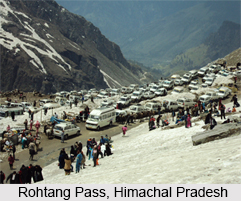
Rohtang Pass, Himachal PradeshRohtang Pass, or Rohtang La, is a high jeepable mountain pass amidst the eastern Pir Panjal Range of snow laden mountains, elevated at an altitude of 3,978 metres (13,051 feet) above mean sea level. It is located 51 kilometres (32 miles) along the Leh-Manali Highway from the tourist famous town of Manali, in the Indian state of Himachal Pradesh. A popular tourist destination during the summers, the Rohtang Pass provides some of the most scintillating and arresting visuals of the snow-capped Himalayan mountain peaks. It connects the Kullu Valley and the Lahaul and Spiti Valleys of Himachal Pradesh.

Etymology of Rohtang Pass, Himachal Pradesh
The Rohtang Pass derives its name from the unfortunate deaths of people who attempted to cross the pass in bad weather. ‘Rohtang’ in Bhoti language refers to a pile of corpses.

Geography of Rohtang Pass, Himachal Pradesh
The Rohtang Pass provides a natural divide between the humid Kullu Valley in the south which has a predominant Hindu culture and the higher and arid Lahaul and Spiti valleys in the north with a predominant Buddhist culture. In addition to Lahaul and Spiti, Rohtang Pass is a gateway to the Pangi valley in Himachal and the Leh valley in Ladakh.Rohtang Pass, Himachal Pradesh Rohtang serves as a gateway to Ladakh just as the Zojila Pass. It lies on the watershed separating the Chenab and the Beas river basins. The Beas River emerges from underground on the southern end of the pass, flowing southwards, while on its northern end, the Chenab River sources from the Chandra River flowing from the eastern Himalayas towards the west. The amazing visual of the Chandra River flowing down can be caught in the Lahaul valley along the pass, with that of the glaciers and peaks. The twin peaks of Geypan are also visible from the pass.

Tourism in Rohtang Pass, Himachal Pradesh
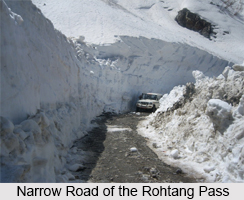
The Rohtang Pass remains open only during the summer months from May to November. Though not difficult or high to cross through as per the Himalayan standards, the pass is considered dangerous for being vulnerable to unpredictable snowstorms and blizzards.

Rohtang Pass enlists itself high on the itineraries of tourists who visit Manali, KulluShimla, Leh and other adjoining areas in summer, and is a hotspot for adventure enthusiasts. Adventurous activities such as trekkingskiingmountain biking, snow scooters, sledges, paragliding and ATVs (all-terrain vehicles) can be experienced while at Rohtang. There are also small eateries and stalls up there that serve snacks to the tourists.

For more, visit the link below: