Showing posts with label jammu and kashmir. Show all posts

Tuesday, 30 January 2024

Chief Ministers of Jammu and Kashmir

 Jammu and Kashmir, a region historically known for its rich cultural diversity and geopolitical significance, has witnessed a succession of Chief Ministers who have played pivotal roles in shaping the socio-political landscape of the region. However, since June 2017, following the abrogation of Article 370 and the reorganization of the state into two separate Union Territories, Jammu and Kashmir has operated without a Chief Minister. This marked a significant shift in the governance structure, with the region now under the direct rule of the Central government.


The era preceding the reorganization saw the leadership of various Chief Ministers, each contributing in their own way to the development and administration of Jammu and Kashmir. The last Chief Minister of Jammu and Kashmir was Mehbooba Mufti, a prominent political figure associated with the People's Democratic Party (PDP). 

Mehbooba Mufti assumed office as the Chief Minister of Jammu and Kashmir on April 4, 2016, succeeding her father, Mufti Mohammad Sayeed. Her tenure witnessed a complex political landscape, with challenges ranging from internal security concerns to issues of regional autonomy. The PDP-BJP coalition government, which she led, faced difficulties in navigating the delicate balance between regional aspirations and national interests. 

During her tenure, Mehbooba Mufti focused on a comprehensive development agenda for Jammu and Kashmir. Efforts were made to address issues related to infrastructure, education, and healthcare. However, the political climate remained volatile, marked by periodic unrest and tensions. The regional autonomy debate, a long-standing issue in Jammu and Kashmir, continued to be a focal point of discussions during her term. 

The turning point came in August 2019 when the Government of India, under the leadership of Prime Minister Narendra Modi, took a historic decision to abrogate Article 370, revoking the special status of Jammu and Kashmir. This move led to the bifurcation of the state into two Union Territories – Jammu and Kashmir, and Ladakh. Consequently, the position of Chief Minister ceased to exist, marking the end of Mehbooba Mufti's term. 

Since then, the region has been under the direct governance of the Central government. The absence of a Chief Minister has been a departure from the established political norm in the region. The Union Territory status has redefined the administrative structure, with the Lieutenant Governor appointed by the President of India serving as the chief executive authority. 

The decision to reorganize Jammu and Kashmir sparked debates on national integration, security, and the future trajectory of the region. The government asserted that the move was aimed at accelerating development, promoting good governance, and fostering inclusivity. However, it also generated concerns and apprehensions among certain sections regarding the impact on regional identity and autonomy. 

Chief Ministers of Jammu and Kashmir have played crucial roles in navigating the complex socio-political dynamics of the region. Mehbooba Mufti, as the last Chief Minister before the reorganization, faced the challenges of a shifting political landscape. The absence of a Chief Minister since June 2017 and the establishment of a Union Territory status signify a paradigm shift in governance. The region is now under the direct rule of the Central government, with implications that continue to unfold in the evolving narrative of Jammu and Kashmir.

Friday, 28 April 2023

River Indus


The Indus River is one of the longest and most significant rivers in Asia, flowing through India and Pakistan. Its origin, course, and end hold immense cultural, historical, and religious significance. In this article, we explore the story of the Indus River, its role in shaping India's past, present, and future.


The Indus River has been a crucial part of India's history and cultural heritage. It played a vital role in the rise and fall of ancient civilizations, including the Indus Valley Civilization, which thrived between 2600 BCE and 1900 BCE. The Indus River Basin was the primary location of this urban civilization. The river also played a significant role in the spread of Buddhism in India, with the famous Buddhist site of Taxila situated on its banks.

The Indus River originates in the Tibetan Plateau of the Himalayas, flowing for a total length of about 3,180 kilometers before emptying into the Arabian Sea. Its course can be divided into three main parts: the upper Indus, the middle Indus, and the lower Indus. The upper Indus flows through the Himalayas in India and is fed by tributaries such as the Zanskar River, the Dras River, and the Shyok River. The middle Indus flows through the Punjab region of Pakistan and is fed by the Jhelum River, the Chenab River, and the Ravi River. The lower Indus flows through the arid plains of Pakistan and eventually empties into the Arabian Sea.

 The Indus River is not just a source of life for millions of people, but also for the flora and fauna that thrive along its banks. The river supports a diverse range of fish species, including the critically endangered Indus River Dolphin. It is also home to many migratory birds that visit the river delta during the winter months.

The Indus River is a sacred river in Hinduism and is the location of many Hindu temples. It also holds immense importance in Sikhism, with the first Guru of Sikhism, Guru Nanak, born on its banks in Pakistan. The river continues to inspire writers, artists, and filmmakers to this day, serving as a source of inspiration for the likes of Rudyard Kipling and Satyajit Ray.

 Tributaries of the Indus River:


Zanskar River

Dras River

Shyok River

Jhelum River

Chenab River

Ravi River

Beas River

Sutlej River 

Indus River holds immense cultural, historical, and ecological significance. Its role in shaping India's past, present, and future cannot be overstated. As we face increasing pressure from climate change and human activity, it is essential to protect the Indus River and its ecosystem for future generations. The Indus River will continue to inspire and captivate us for generations to come.

For more, visit the link below:

https://www.indianetzone.com/14/indus_river.htm


River Chenab

 The Chenab River is one of the five major rivers of the Indian subcontinent. It is located in the northern region of India and has a length of around 960 kilometers. The river originates from the Himalayas in the state of Himachal Pradesh and flows through Jammu and Kashmir and Punjab before finally joining the Indus River in Pakistan.


The Chenab River is an important part of the culture and history of India. It has been mentioned in various ancient Indian texts, including the Rigveda and the Mahabharata. The river is considered holy by the people of the region and is believed to have great spiritual significance. Many temples and shrines are located along the river, and it is a popular destination for religious pilgrims.


The river has its source near the Baralacha La pass, at an altitude of around 4,900 meters above sea level. From there, it flows through the Lahaul and Spiti Valley and enters Jammu and Kashmir. In Jammu and Kashmir, the river flows through the districts of Doda, Kishtwar, Ramban, and Reasi. It then enters the plains of Punjab and flows through the districts of Jalandhar, Ludhiana, and Multan before entering Pakistan. 

The Chenab River has also played an important role in the history of the region. The river valley was home to several ancient civilizations, including the Harappan civilization. The region has also been the site of numerous battles and invasions over the centuries. The river valley was a major trade route during the medieval period, and many towns and cities developed along its banks. 

Apart from its cultural significance, the Chenab River also plays an important role in the economy of the region. The river is a major source of water for irrigation and is used extensively for agriculture in the region. The fertile plains of Punjab, through which the river flows, are known for their high agricultural productivity. The river also has significant hydroelectric potential and is the site of several hydroelectric projects, including the Dulhasti and Baglihar dams. 

Chenab River is an important part of the culture, history, and economy of India. It has played a significant role in the development of the region, and its waters have been used for agriculture, hydroelectricity, and transportation. The river valley has been home to several ancient civilizations, and the river is considered holy by the people of the region. However, the river faces several challenges today, and it is important that steps are taken to preserve and protect it for future generations.

For more, visit the link below:

https://www.indianetzone.com/7/chenab_river.htm

Monday, 27 March 2023

North Indian States

 The dominant geographical features of that demarcate North India from Tibetan Plateau are the Indo-Gangetic Plain and the Great Himalayas. The social, cultural, linguistic and religious unity helped the North Indian states to promote tourism and other industrial development in the modern India.


History of North Indian States
The Northern part of modern India has been the historical centre of the Mauryan EmpireIndo-Greek Empire, Northern SatrapsGupta EmpireHarsha EmpirePala EmpirePratihara EmpireDelhi SultanateMughal Empire, Sur, Sikh, Maratha Empire and British Empire.

Culture of North Indian States
North Indian States have diverse culture which is reflected in the different pilgrimages in this region. This includes HinduIslamicSikh, and Buddhist pilgrimages. Hindu pilgrimages include Haridwar, Char Dham, Mathura,Varanasi, Ayodhya, Pushkar, Allahabad, and Vaishno Devi. Sarnath and Kushinagar are famous Buddhist centers. The Taj Mahal, an Islamic monument, is one of the Seven Wonders of the World. Other Islamic pilgrimages in north India include Dargah HazratbalDargah of Khwaja Moin-ud-din ChishtiDargah Hazrat Nizamuddin, and Piran Kaliyar Sharif. The golden temple which is a Sikh pilgrimage is a world heritage site is located in Punjab.

North Indian StatesClimate of North India
Lying on the north of peninsular India, north Indian states form the coldest regions of the country. The average daily high temperature is at 32 degrees. For several months of the year, it is warm to hot at temperatures continuously above 25 degrees, sometimes up to 40 degrees. North India experiences winters in the months between October and March, as this time the weather remains pleasant and mildly cold to very cold and temperature ranges from a freezing -2 degree C to 14 degrees C.

Flora and Fauna of North India
North Indian states are rich in natural resources and have a large cover of forests. Due to this rich vegetation, several species of animals and birds are found in this region. The vegetation in north Indian states can be categories under Deciduous Foreststemperate foreststropical thorny forests, and evergreen forest. Animal species found in northern zone include elephant, snow leopard, Bengal tiger, Indian leopard, Asiatic stag, spotted deer, red deer, hog deer, Indian gazelleblackbuckNilgaiporcupinewild boar, Tibetan sand fox, Indian fox, rhesus monkeylangur, and jungle cat. Both indigenous and migratory birds can be found here.

Tourism in North India
The northern states have a diverse culture, and include different places of tourism interest that comprises nature tourism, leisure tourism, adventure tourism, and also pilgrimage tourism. Pilgrimage destinations include HaridwarAyodhyaMathuraAllahabad, and Pushkar for Hindus. Buddhist pilgrimage centers are Sarnath and Kushinagar. The Sikh Golden Temple as well as world heritage sites such as the Nanda Devi Biosphere ReserveForts in RajasthanJantar Mantar (Jaipur)Qutb MinarRed FortAgra FortFatehpur Sikri and Taj Mahal comprise the main tourist attractions in north India.

For more, visit the link below:

Wednesday, 7 September 2022

Beverages of Kashmir


Beverages of Kashmir, Kashmiri CuisineKashmiris are heavy tea drinkers. Kashmiri Cuisine cannot be complete without having beverages. "Kahwah" and "Sheer Chai" are the favourite beverages of the Kashmiri Cuisine. Tourists come to Kashmir not only for its natural beauty but also to have the refreshing beverages of the state. Being a cold region much of the beverages served here are served warm.

Over the past 100 years, the cuisine of Jammu and Kashmir has evolved to a great extent and this has been mainly due to the influence of Kashmiri Pandits that hail from the Hindu Community and the Kashmiri Buddhists from the valley. The cuisines of North India Plains, Persia and Central Asia have also marked their strong influence on the cuisine of this state. A few refreshing and notable beverages of Jammu and Kashmir have gained prominence amongst the tourists.

Kahwah
Kahwah is one popular drink that is served at religious places, and during special festivals and marriage fests. This is a warm kind of tea that is usually served after meals to wash the food down. Though every one of us is familiar with ginger tea that is prepared in our homes, yet the special Kashmiri tea which is a fragrant one blended with cardamom is must have. It is one of the delightful thirst quenching drink which the tourists ask for. Infact, the natives that prefer drinking Kahwah to settle their stomach upset. It is also believed to be good for digestion.

This drink hails its origin from an Arab coffee which was popular in 14th century. This drink has astonishing 20 varieties which are prepared in diverse households. Also called "Maugal Chai" by the Kashmiri Pandits, some people at times also add milk to alter its taste.

Ingredients:
  • Green tea leaves - 1 tsp
  • Green cardamoms - 2
  • Cloves - 2
  • Cinnamon - 2 inch stick
  • Almonds - 4 to 5
  • Sugar - 3 tsp
  • Saffron - 2 to 3 strands
  • Beverages of Kashmir, Kashmiri Cuisine

    Method:
  • Grind the cardamoms, cloves and cinnamon to powder.
  • Crush almonds and keep aside.
  • In a pan pour 3 cups of water, crushed green tea leaves, sugar, cardamom-cloves-cinnamon powder and saffron.
  • Leave to infuse over a very low flame for 10 minutes till the tea turns light golden. Strain into tea cups.
  • Sprinkle the finely ground almonds on top of each cup and serve hot.


  • Sheer Chai or Noon Chai
    Sheer Chai or Noon Chai is a common breakfast tea in Kashmiri households and is taken with breads like ‘Bakarkhani’. This tea is best served in large samovars. The word "noon" in Kashmiri language means Salt.

    This popular drink is a pinkish coloured salted tea which is made with green tea, milk, salt and sodium bicarbonate. The particular colour of the tea is a result of its unique method of preparation and the addition of soda. The Kashmiri Pandits more commonly refer to this Chai as "Sheer Chai".

    For more, visit the link below:

    Wednesday, 6 April 2022

    Hill Stations of Jammu and Kashmir


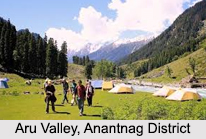
    Hill Stations of Jammu and KashmirHill Stations of Jammu and Kashmir are the prime tourist attractions in global tourism sector. The snow capped mountainsHimalayan subtropical pine forestslakes and small streams are the cynosure to the national and international level tourists. The destinations are also popular for the adventure and nature tourism. Some of the hill stations of Jammu and Kashmir are BhadarwahPatnitopAruGulmargPahalgamYusmargSrinagarSonamarg and Leh.

    Bhadarwah, Doda Districtâ
    Bhadarwah valley is located in the foothills of the Himalayan mountains. It is located about 80 kilometres from Batote.

    Patnitop, Udhampur District
    Patnitop is noted for the Shiwalik belt of the Himalayan Mountain Range. Patnitop is a popular place for paragliding in the summer times.

    Aru, Anantnag District
    Hill Stations of Jammu and KashmirAru makes one filled with joy while having a trek to Kolahoi GlacierTarsar-Marsar lakes and Katrinag valley.

    Gulmarg, Baramulla District
    Gulmarg is known as the "Meadow of Flowers". Gulmarg allures the tourists for the beauty of Pir Panjal Range.

    Pahalgam, Anantnag District
    Pahalgam acts as place for Bollywood shooting location, because are summers are covered with flowers.

    For more, visit the link below:

    Friday, 14 January 2022

    Tourism in Jammu and Kashmir


    Tourism in Jammu and KashmirJammu and Kashmir is a paradise for tourists. It is situated on the top most part of the country and it is set like a jewelled crown on the map of India. The majestic Himalayan Mountain Range and the Pir Panjal Range in Jammu and Kashmir, represent the awe-inspiring supremacy, beauty, and opulence of Nature.

    Pilgrimage Tourism in Jammu and Kashmir
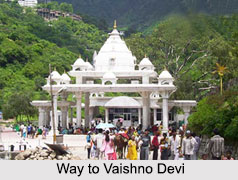
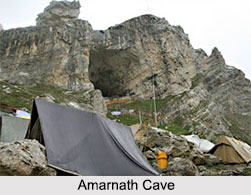
    Jammu and Kashmir is a home to several sacred places of worship. There are many lofty temples, which attract a large number of Hindu pilgrims. The sacred cave shrine of Vaishno Devi, in Jammu and Kashmir, is flooded with devotees almost all throughout the year. A pilgrimage to the Vaishno Devi mandir is regarded as one of the holiest pilgrimages. In the cave there are images of three deities, Mahakali, Mahasaraswati, and Mahalakshmi.Tourism in Jammu and Kashmir The Amarnath cave, located on the mount Amarnath, is another holy place for the Hindus. In the month of Shravan, on the full moon in August, thousands of Hindu religious devotees go on a pilgrimage up to the cave. The Mahakali temple at Jammu, in Jammu and Kashmir, is considered second to the Vaishno Devi in respect to spiritual power. The Khir Bhawani temple, in Srinagar, is a very important Hindu Shrine. It is dedicated to the Hindu goddess Ragnya Devi. Khir Bhawani temple is visited by Hindus in large numbers to offer prayers to seek the blessings of the deity. Charar-e-Sharif in Jammu and Kashmir is the mausoleum of Shaikh Noor-ud-Din Noorani, and is a holy place for the Muslim devotees. This shrine draws people from all division of life to seek his blessings and favour. The most important Gurudwara in Jammu and Kashmir is Chhatti Padshahi Gurudwara, situated near the Kathi Darwaza, Srinagar, which is held in great awe and reverence by devotees of all faiths especially the Sikhs.

    Nature Tourism in Jammu and Kashmir
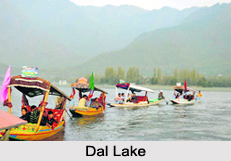
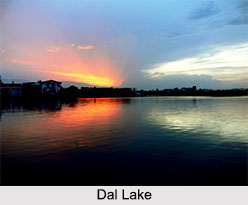
    Tourism in Jammu and KashmirThe beautiful natural landscape of Jammu and Kashmir makes it one of the most coveted destinations in India. The outstanding beauty of the Himalayan Mountain range attracts tourists from all over the world. The valleys in Jammu and Kashmir are an indispensable part of its tourism. The natural splendour of the Kashmir valley is bound to mesmerise the visitors. The Puga valley of Jammu and Kashmir is renowned for its borax and sulphur deposits and hot water springs. This valley is a major crowd pull. The Suru Valley forms the foundation of the Kargil district in Jammu and Kashmir. It is a fertile valley and a much visited destination of Jammu and Kashmir. The Nubra valley of Jammu and Kashmir, portrays some characteristics which are not seen any where else in the Himalayan valleys. The exquisite water bodies of Jammu and Kashmir enhance the beauty of the state. These water bodies are of great environmental and socio-economic implication. The most well-known of these are Dal Lake and Nagin Lake of Srinagar with their multi-faceted eco system and magnificence. National and international tourists horde to the place fascinated by the awe-inspiring beauty of the places.

    For more, visit the link below: