Showing posts with label uttar pradesh. Show all posts

Thursday, 20 March 2025

Fatehpur Sikri: A Historical and Architectural Marvel

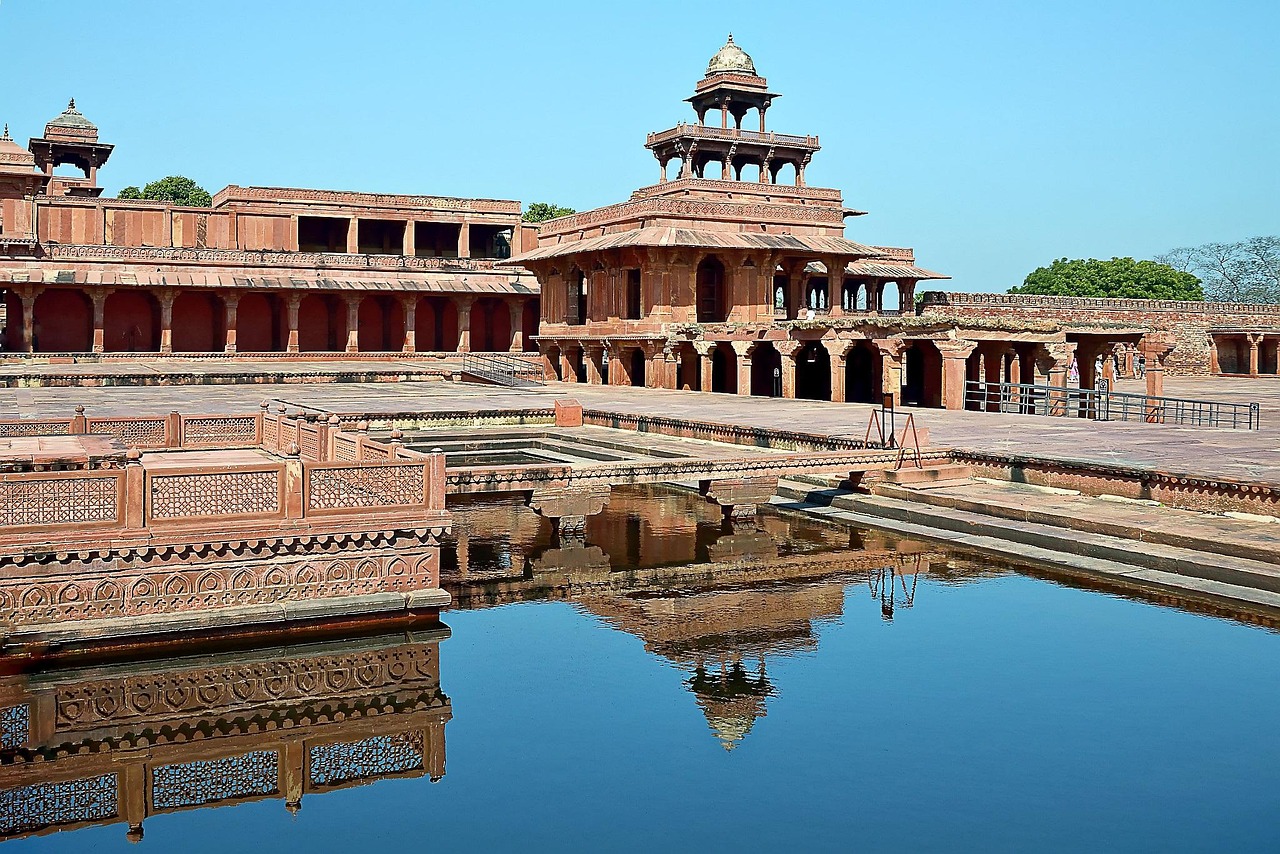
Fatehpur Sikri, a UNESCO World Heritage Site, stands as a remarkable example of Mughal architecture and urban planning. Located in Agra district, Uttar Pradesh, India, this historical city was founded by Emperor Akbar in 1569. It served as the Mughal capital from 1571 to 1585 before being abandoned due to water scarcity. Despite its short-lived prominence, Fatehpur Sikri remains an important cultural and architectural landmark, showcasing the grandeur of the Mughal Empire.


Historical Significance

The foundation of Fatehpur Sikri is closely linked to Akbar’s desire for an heir. The emperor visited the Sufi saint Sheikh Salim Chishti, who lived in the village of Sikri, seeking his blessings. When Akbar’s son, Prince Salim (later Emperor Jahangir), was born, he decided to establish a new city at Sikri in honor of the saint. The city was named Fatehpur Sikri, meaning the “City of Victory,” to commemorate Akbar’s military success in Gujarat. 

Fatehpur Sikri functioned as the political and administrative center of the Mughal Empire for nearly fifteen years. It was carefully planned with royal palaces, administrative buildings, religious structures, and public spaces. However, due to its inadequate water supply, the city was gradually abandoned, and the Mughal capital shifted back to Agra. Despite this, its architectural brilliance and historical importance have made it a significant heritage site. 

Architectural Features

Fatehpur Sikri reflects a blend of Persian, Indian, and Islamic architectural styles. The city is constructed primarily from red sandstone, which gives it a distinctive appearance. The structures exhibit intricate carvings, elaborate jali (lattice) screens, and expansive courtyards, demonstrating the advanced craftsmanship of the Mughal era. 

One of the most prominent structures is the Buland Darwaza, a 54-meter-high gateway built to celebrate Akbar’s victory in Gujarat. It serves as the main entrance to the complex and features Quranic inscriptions and geometric designs. The gateway exemplifies the grandeur and power of Mughal rule. 

Another significant monument is the Jama Masjid, one of the largest mosques of its time. It features a vast courtyard, arched entrances, and elegant domes. The mosque continues to serve as a place of worship. 

The Tomb of Sheikh Salim Chishti, situated within the mosque complex, is an exquisite white marble mausoleum. It is an important pilgrimage site, attracting visitors who seek blessings. The delicate marble lattice screens and intricate carvings make it a fine example of Mughal artistry.

Among the royal buildings, the Diwan-i-Khas (Hall of Private Audience) is notable for its central pillar, which supports a grand stone platform. This structure was used for discussions with Akbar’s advisors and reflects Persian and Indian architectural influences.

The Panch Mahal, a five-story palace, served as a recreational space for the royal women. Its open-pillared design allowed for natural ventilation, illustrating the architectural ingenuity of the period. 

Fatehpur Sikri reflects the vision and artistic excellence of the Mughal Empire. Though it was abandoned due to practical challenges, its historical and architectural significance endures. The site continues to attract scholars, historians, and tourists, offering a glimpse into India’s rich cultural heritage.

Wednesday, 10 July 2024

Western Himalayan Broadleaf Forests


The Western Himalayan broadleaf forests are a vital component of India's rich and diverse ecological tapestry. Spanning the western ranges of the Himalayas, these forests host a variety of flora and fauna, playing a crucial role in maintaining ecological balance. This article explores the locations of these forests and their significance in India's ecology. 

Locations of Western Himalayan Broadleaf Forests

The Western Himalayan broadleaf forests are primarily located in the states of Himachal Pradesh and Uttarakhand, extending into the western regions of Jammu and Kashmir. These forests typically thrive at altitudes ranging from 1,500 to 3,000 meters above sea level. 

Himachal Pradesh

In Himachal Pradesh, the broadleaf forests are spread across several districts, including Kangra, Kullu, and Chamba. The forests in this region are known for their dense canopy and rich biodiversity. Popular tourist destinations such as the Great Himalayan National Park and the Pin Valley National Park fall within these forested areas. 

Uttarakhand

Uttarakhand is another state where these forests are prominently found. The Kedarnath Wildlife Sanctuary and the Valley of Flowers National Park are notable examples of protected areas within the Western Himalayan broadleaf forests. These regions are renowned for their picturesque landscapes and are home to numerous endemic plant and animal species. 

Ecological Significance

The Western Himalayan broadleaf forests play a pivotal role in the ecological health of the region. Their significance can be broadly categorized into biodiversity conservation, water regulation, and climate moderation. 

Biodiversity Conservation

These forests are a hotspot for biodiversity, hosting a myriad of plant and animal species. The dense foliage provides habitat and food for various mammals, birds, and insects. Key species include the endangered Western Tragopan, the Asiatic Black Bear, and the Himalayan Musk Deer. The rich plant diversity includes species such as oak, rhododendron, and maple. By supporting such a wide range of species, these forests contribute significantly to the overall biodiversity of the Himalayan region. 

Water Regulation

The Western Himalayan broadleaf forests are critical for water regulation in the region. They play a crucial role in maintaining the hydrological cycle by absorbing rainfall and slowly releasing it into rivers and streams. This natural regulation helps prevent soil erosion and reduces the risk of floods during the monsoon season. Additionally, these forests ensure a steady supply of water to downstream areas, which is essential for agriculture and human consumption. 

Climate Moderation

These forests contribute to climate moderation by acting as carbon sinks. They absorb carbon dioxide from the atmosphere, thereby helping to mitigate the effects of climate change. The dense vegetation also helps in maintaining local microclimates by regulating temperature and humidity levels. This climate moderation is vital for the health of the Himalayan ecosystem and the well-being of the communities residing in and around these forests. 

The Western Himalayan broadleaf forests are an integral part of India's natural heritage. Their locations in Himachal Pradesh, Uttarakhand, and parts of Jammu and Kashmir make them accessible and significant for both ecological and economic reasons. By conserving biodiversity, regulating water cycles, and moderating climate, these forests play a crucial role in sustaining the ecological balance of the region. It is imperative to continue efforts to protect and preserve these forests to ensure the health and prosperity of the environment and the communities that depend on them.

Tuesday, 9 April 2024

Sarnath Museum


Established in 1904 under the auspices of the Government of India, the Sarnath Museum stands as a testament to India's rich cultural heritage, particularly its profound Buddhist legacy. Located adjacent to the excavated site at Sarnath, Uttar Pradesh, this institution is more than just a repository of antiquities; it is a custodian of history, meticulously preserving and showcasing artifacts that date back centuries. 

The genesis of the Sarnath Museum can be traced back to 1904 when the Government initiated its construction, spearheaded by Sir John Marshall, the Director General of Archaeology in India, and designed by Mr. James Ramson, the consulting Architect to the Government of India. Completed in 1910, the museum's architectural layout, resembling half of a monastery (Sangharam), was intricately crafted to house, display, and study antiquities with precision. 

Comprising five galleries and two verandahs, the Sarnath Museum is a treasure trove of ancient artifacts excavated from the Sarnath site. Each gallery is adorned with a plethora of antiquities that offer a comprehensive portrayal of India's rich cultural tapestry. From Buddha and Bodhisattva images to architectural remnants, the museum encapsulates the essence of Buddhist art and heritage. 

Undoubtedly, the most significant exhibit in the museum is the iconic Lion Capital of Ashoka. Erected around 250 BCE atop an Ashoka Pillar at Sarnath, this sandstone marvel holds profound historical significance. Its depiction, serving as the National Emblem of India, symbolizes the nation's ethos, with the Ashoka Chakra adorning the center of the National Flag. 

Among the myriad Buddhist artifacts, visitors can behold a sculpture of the Buddha from the 5th century, exuding serenity in deep meditation. Additionally, the museum houses an array of Bodhisattva figures, including a life-size standing Bodhisattva and delicate renditions adorned with lotus motifs. Bronze sculptures portraying Bodhisattvas with multiple arms further enrich the collection, offering insights into the diverse expressions of Buddhist artistry. 

Beyond Buddhist relics, the museum encompasses artifacts spanning the Mauryan, Kushana, and Gupta periods. Noteworthy among these are the earliest Buddha image discovered at Sarnath and numerous sculptures depicting Hindu deities from the 9th to 12th centuries. Each artifact serves as a poignant reminder of the cultural amalgamation and artistic prowess that thrived during these epochs. 

Sarnath Museum is not merely a repository of antiquities but a custodian of India's cultural legacy. Through meticulous preservation and scholarly interpretation, it endeavors to unravel the mysteries of the past, standing out among all other museums of Uttar Pradesh. As visitors traverse its galleries, they embark on a journey through time, encountering the echoes of civilizations long gone yet eternally enshrined in the artifacts that grace its hallowed halls. 

The Sarnath Museum stands as a beacon of cultural heritage, offering a glimpse into India's rich past and the profound influence of Buddhism on its artistic and architectural landscape. Its exhibits, meticulously curated and preserved, serve as a testament to the enduring legacy of ancient civilizations and the timeless beauty of human creativity.

Friday, 15 March 2024

Zoological Museum, Gorakhpur


The Zoological/ Science Museum at Gorakhpur University stands as a testament to the rich history and diverse offerings of scientific exploration. Established with the aim of fostering education and research in the field of zoology and allied sciences, this institution has evolved over the years into a hub of learning and discovery. 

The roots of the Zoological/ Science Museum at Gorakhpur University can be traced back to its inception alongside the university itself. Founded in 1958, the museum was established under the visionary leadership of the university's administration, with a focus on providing students and researchers with access to a wide array of specimens and exhibits for study and analysis. 

The Zoological Section of the museum boasts an extensive collection of specimens representing various taxa from the animal kingdom. Visitors can explore exhibits showcasing preserved specimens of mammals, birds, reptiles, amphibians, and fish, providing a comprehensive overview of biodiversity. Each specimen is meticulously curated and accompanied by detailed information regarding its taxonomy, habitat, and unique characteristics, offering visitors a deeper understanding of the natural world. 

In addition to its zoological offerings, the museum also houses a botanical section featuring an impressive assortment of plant specimens. From exotic flora to indigenous plants, this section provides valuable insights into the diverse plant life found across different ecosystems. Visitors can marvel at the intricate structures of leaves, flowers, and seeds, while learning about the ecological significance and economic importance of various plant species. 

The Geological Section of the museum offers a fascinating glimpse into the Earth's geological history. Here, visitors can explore exhibits showcasing rock and mineral specimens sourced from different geological formations, highlighting the geological diversity of the region. From igneous and sedimentary rocks to precious gemstones, each specimen serves as a window into the dynamic processes that have shaped the Earth over millions of years. 

The Anthropological Section of the museum provides insights into the cultural and evolutionary aspects of humanity. Visitors can explore exhibits featuring archaeological artifacts, skeletal remains, and cultural artifacts from different civilizations, shedding light on the rich tapestry of human history. From ancient tools and pottery to ceremonial objects and artwork, these exhibits offer a fascinating glimpse into the cultural heritage of diverse societies. 

The Zoological/ Science Museum at Gorakhpur University stands as a beacon of scientific inquiry and exploration, offering visitors a unique opportunity to delve into the wonders of the natural world. It is counted among the prominent museums in Uttar Pradesh. With its diverse exhibits spanning the realms of zoology, botany, geology, and anthropology, the museum serves as a valuable educational resource for students, researchers, and enthusiasts alike. As it continues to evolve and expand its collections, the museum remains committed to promoting scientific literacy and fostering a deeper appreciation for the marvels of nature.

Thursday, 11 January 2024

Chief Ministers of Uttar Pradesh


Uttar Pradesh, India's most populous state, has witnessed a plethora of leaders steering its political landscape. The role of Chief Minister is pivotal in shaping the destiny of the state, and over the years, several leaders have left an indelible mark with their contributions to governance, development, and social reforms. 

Govind Ballabh Pant (1950-1954): The first Chief Minister of Uttar Pradesh after independence, Pant laid the foundation for administrative reforms. His emphasis on education and industrialization set the state on the path of progress. 

Chandra Bhanu Gupta (1954-1960): Gupta's tenure witnessed the establishment of the first industrial policy in the state. His efforts in the field of economic development and social welfare are remembered as key milestones. 

Sucheta Kriplani (1963-1967): A trailblazer for women in politics, Kriplani was India's first woman Chief Minister. Her focus on social issues and women's rights paved the way for greater inclusivity in governance. 

Charan Singh (1967-1968): Although his tenure was short-lived, Singh's commitment to the welfare of farmers and the agricultural sector laid the groundwork for future agricultural policies. 

Hemvati Nandan Bahuguna (1973-1975): Known for his pro-poor policies, Bahuguna's leadership saw initiatives aimed at poverty alleviation and rural development. His contributions extended beyond Uttar Pradesh, influencing national politics. 

Virendra Pratap Singh (1985-1988): Singh's administration focused on economic development, leading to improved infrastructure and industrial growth. His tenure marked a period of stability and progress. 

Mulayam Singh Yadav (1989-1991, 1993-1995, 2003-2007): One of the most prominent political figures in Uttar Pradesh, Mulayam Singh Yadav's leadership saw a mix of social justice initiatives and infrastructure development. His focus on the upliftment of marginalized communities remains a significant aspect of his legacy. 

Mayawati (1995, 1997, 2002-2003, 2007-2012): Breaking gender and caste barriers, Mayawati became the first woman Chief Minister of Uttar Pradesh. Her tenure was marked by a strong emphasis on social engineering and infrastructure projects like the construction of the Noida Expressway and the Yamuna Expressway. 

Akhilesh Yadav (2012-2017): The youngest Chief Minister of the state, Akhilesh Yadav's term was characterized by a focus on youth-centric policies, infrastructure development, and social welfare schemes. The "Samajwadi Smartphone Yojana" and the "Agra-Lucknow Expressway" were some of his notable initiatives. 

Yogi Adityanath (2017-present): Yogi Adityanath's leadership since 2017 has been marked by a commitment to holistic development. He represents BJP. His administration has prioritized law and order, resulting in a noticeable decline in crime rates. The "Pradhan Mantri Awas Yojana" and the "Kisan Uday Yojana" have aimed at providing affordable housing and financial support to farmers, respectively. Yogi Adityanath's emphasis on infrastructure, education, and healthcare has been instrumental in propelling Uttar Pradesh towards prosperity. 

The Chief Ministers of Uttar Pradesh, past and present, have played instrumental roles in shaping the state's destiny. Each leader brought their unique vision and focus areas, contributing to the growth and development of this diverse and vibrant state. The legacy of leadership continues with Yogi Adityanath, whose tenure is marked by a relentless pursuit of progress and prosperity for the people of Uttar Pradesh.

Friday, 24 November 2023

Historical Forts in Uttar Pradesh


Uttar Pradesh, the heartland of India, boasts a rich tapestry of historical monuments that bear witness to the region's storied past. Among these ancient monuments in Uttar Pradesh, forts stand as formidable sentinels, embodying the architectural prowess and strategic significance of bygone eras. Two such notable structures are the Jhansi Fort and the Ramnagar Fort, each playing a pivotal role in the historical chronicles of Uttar Pradesh.


Jhansi Fort, situated in the city of Jhansi, stands as an enduring testament to the valor and resilience of Rani Lakshmibai, the iconic queen of the Maratha-ruled princely state of Jhansi. Constructed in the 17th century by Raja Bir Singh Deo of Orchha, the fort's primary purpose was to serve as a stronghold against invasions. The robust architecture of Jhansi Fort reflects a blend of Hindu and Mughal influences, showcasing the military acumen of its builders. 

The fort's strategic location atop a hill provides a commanding view of the surrounding plains, facilitating effective defense strategies. Its sturdy walls, bastions, and gates served as formidable deterrents, deterring potential invaders. The architectural layout is characterized by a series of courtyards, palaces, and temples, illustrating the multifaceted nature of the fort as both a military stronghold and a residential complex. 

Jhansi Fort gained historical prominence during the Indian Rebellion of 1857, when Rani Lakshmibai, popularly known as the "Rani of Jhansi," led a valiant defense against the British East India Company. The fort's role in this pivotal episode solidifies its historical significance, symbolizing the struggle for independence and the indomitable spirit of the people.


Similarly, the Ramnagar Fort, located in Varanasi along the banks of the Ganges River, stands as a formidable edifice that mirrors the cultural and historical vibrancy of the region. Constructed in the 18th century by Maharaja Balwant Singh, the fort serves as the ancestral home of the Maharaja of Varanasi, housing a museum that showcases a diverse collection of artifacts and memorabilia. 

The architectural style of Ramnagar Fort is predominantly Mughal, with ornate carvings, grand gateways, and intricately designed courtyards. The fort's proximity to the Ganges River accentuates its aesthetic appeal, and the scenic location adds to its historical allure. The fort's defensive features, including bastions and cannons, attest to its original purpose as a military stronghold during turbulent times. 

Ramnagar Fort is also renowned for hosting the annual Ram Leela, a traditional theatrical performance depicting the life of Lord Rama. The fort becomes a cultural hub during this event, attracting visitors from far and wide. This cultural tradition not only adds to the fort's significance but also highlights its role as a custodian of cultural heritage in Uttar Pradesh. 

The historical forts of Uttar Pradesh, particularly Jhansi Fort and Ramnagar Fort, stand as architectural marvels that encapsulate the rich history and cultural diversity of the region. Jhansi Fort's association with the heroic resistance of Rani Lakshmibai and Ramnagar Fort's dual role as a military bastion and cultural hub contribute to their enduring significance. As custodians of the past, these forts invite visitors to explore the annals of history and appreciate the architectural grandeur that has withstood the test of time.

Monday, 27 March 2023

North Indian States

 The dominant geographical features of that demarcate North India from Tibetan Plateau are the Indo-Gangetic Plain and the Great Himalayas. The social, cultural, linguistic and religious unity helped the North Indian states to promote tourism and other industrial development in the modern India.


History of North Indian States
The Northern part of modern India has been the historical centre of the Mauryan EmpireIndo-Greek Empire, Northern SatrapsGupta EmpireHarsha EmpirePala EmpirePratihara EmpireDelhi SultanateMughal Empire, Sur, Sikh, Maratha Empire and British Empire.

Culture of North Indian States
North Indian States have diverse culture which is reflected in the different pilgrimages in this region. This includes HinduIslamicSikh, and Buddhist pilgrimages. Hindu pilgrimages include Haridwar, Char Dham, Mathura,Varanasi, Ayodhya, Pushkar, Allahabad, and Vaishno Devi. Sarnath and Kushinagar are famous Buddhist centers. The Taj Mahal, an Islamic monument, is one of the Seven Wonders of the World. Other Islamic pilgrimages in north India include Dargah HazratbalDargah of Khwaja Moin-ud-din ChishtiDargah Hazrat Nizamuddin, and Piran Kaliyar Sharif. The golden temple which is a Sikh pilgrimage is a world heritage site is located in Punjab.

North Indian StatesClimate of North India
Lying on the north of peninsular India, north Indian states form the coldest regions of the country. The average daily high temperature is at 32 degrees. For several months of the year, it is warm to hot at temperatures continuously above 25 degrees, sometimes up to 40 degrees. North India experiences winters in the months between October and March, as this time the weather remains pleasant and mildly cold to very cold and temperature ranges from a freezing -2 degree C to 14 degrees C.

Flora and Fauna of North India
North Indian states are rich in natural resources and have a large cover of forests. Due to this rich vegetation, several species of animals and birds are found in this region. The vegetation in north Indian states can be categories under Deciduous Foreststemperate foreststropical thorny forests, and evergreen forest. Animal species found in northern zone include elephant, snow leopard, Bengal tiger, Indian leopard, Asiatic stag, spotted deer, red deer, hog deer, Indian gazelleblackbuckNilgaiporcupinewild boar, Tibetan sand fox, Indian fox, rhesus monkeylangur, and jungle cat. Both indigenous and migratory birds can be found here.

Tourism in North India
The northern states have a diverse culture, and include different places of tourism interest that comprises nature tourism, leisure tourism, adventure tourism, and also pilgrimage tourism. Pilgrimage destinations include HaridwarAyodhyaMathuraAllahabad, and Pushkar for Hindus. Buddhist pilgrimage centers are Sarnath and Kushinagar. The Sikh Golden Temple as well as world heritage sites such as the Nanda Devi Biosphere ReserveForts in RajasthanJantar Mantar (Jaipur)Qutb MinarRed FortAgra FortFatehpur Sikri and Taj Mahal comprise the main tourist attractions in north India.

For more, visit the link below:

Thursday, 6 January 2022

Monuments of Lucknow, Uttar Pradesh


Monuments of Lucknow, Uttar PradeshLucknow, the capital city of the state of Uttar Pradesh, is the administrative centre of Lucknow District and Lucknow Division. This city is popular for its multicultural identity. Beautiful gardens, courtly manners, music, poetry, and exotic cuisine of Lucknow are well known throughout the country and abroad. This city is also regarded as the 'The City of Nawabs', 'Golden City of the East' and 'The Constantinople of India'. This vibrant city has witnessed a tremendous economic boom over the years and is rated among the top ten developing metro cities of the country. This lavish city is renowned for its depth in the field of Urdu and Hindi literature. Lucknow also has several historical monuments and sites that attract the people from various regions of the world.

At Lucknow, for instance, Asafi Imambara, which is also known as known as Bara Imambara, Chhota Imambara, Shah Najaf, etc. are the popular monuments of architectural importance. Some other interesting places of exploration at this city are Chattar Manzil, Dilkusha, Picture Gallery, State Museum, Shaheed Smarak, Ambedkar Memorial, Planetarium, and more. Some of the monuments with architectural importance built in the British era in Lucknow comprise the 'Vidhan Sabha' (State Legislative Assembly), the Charbagh Railway Station, with its unique domes, pillars and arches, St Joseph's Cathedral and Clock Tower.

The 'Dilkusha' or Heart's Delight was built by Saadat Ali Khan in between 1798 to 1814 as a hunting-box in the centre of a large wooded park. It was constructed in a classical European style with square corner towers. But, it is now a ruin set among flower gardens. In the south-west of Dilkusha lies the 'Bibiapur Kothi', which is a two-storey building designed by architect Claude Martin. It is presently a Government Dairy Farm. To the north-west of Dilkusha stands 'La Martiniere Boys' School', formerly Constantia, one of the most fascinating buildings in the city. It was designed as a palace-tomb by Major-General Claude Martin (1735-1800). Constantia is a huge building with the most peculiar hybrid design. It is situated on a massive platform and it comprises a symmetrical block with curved semicircular wings added in the year 1840. The first storey has corner pavilions and statuary in full silhouette on the skyline. Another popular monument is Christ Church (1860) was designed by General Hutchinson as a memorial to the Mutiny dead and was enlarged and improved in the year 1904. It consists of many fascinating memorial tablets and brasses.Monuments of Lucknow, Uttar Pradesh

Bara Imambara is considered as the largest domed hall of the world. This monument significantly tells about the glory of the past. It was designed by Kifayat-ullah for Asaf-ud-Daula in the year 1784 as a famine-relief measure. It is one of the most impressive buildings in India, dominating the north-west corner of the city. An imambara is the general term for a building in which the festival of Muhar-ram is celebrated, and sometimes, as here, used for a mausoleum. It is approached through a square gateway crowned by an octagonal pavilion, from which two courtyards raise one above the other and linked by wide flights of steps. A lofty mosque with two minarets surrounds the west side. Over the main chamber a staircase leads to a series of rooms and passages designed as a maze, above which is a flat roof from which magnificent views of the city can be obtained. Outside the Great Imambara and straddling the road is the Turkish Gate or Rumi Darwaza that is a 60 feet high doorway. It is another very beautiful monument of Lucknow. It was constructed by Asaf-ud-Duala in between 1784 to 1786. It harmonizes with the adjoining Great Imambara to produce a wonderful complex of Oriental forms.

For more, visit the link below:

Thursday, 26 March 2020

Ayodhya, Uttar Pradesh

Ruhi
ayodhya-_AP_880255-ayodhyaAyodhya, a city in Uttar Pradesh is known for its glorious past. The name of Ayodhya is also closely associated with the name of Lord Rama. It is believed to be the birth place of Lord Rama.
index
Ayodhya is an ancient city of India lying on the bank of Ghaghara River. This is situated on the east of Faizabad district of Uttar Pradesh.

c2073e6d6922a811b01ec2f0d2570540unnamedEtymology of Ayodhya
The word ‘Ayodhya’ in Sanskrit means not to be warred against. Ayodhya is regarded as the birthplace of Rama. Many Hindus believe Lord Rama was born at this place and thus it is called Rama Janmabhoomi

History of Ayodhya
Ayodhya is believed to be the birthplace of the 7th incarnation of Lord Vishnu, Lord Rama. In the old books of the Hinduism religion as well as the great epic Ramayana, it is said that Manu founded the city of Ayodhya.
07ayodhya1
Religion of Ayodhya
Ayodhya had primarily been a Hindu city. But religions like Buddhism and Jainism had also flourished in the city with great gutso.
Historical Significance of AyodhyaUntitled
Manu was the first known king of India with Ayodhya as his capital, is corroborated by the Indian Puranas, the Mahabharata and the Arthashastra of Kautilya.

Read More :- Ayodhya, Uttar Pradesh

Monday, 10 February 2020

Triveni Sangam, Indian Pilgrimage Spot, Allahabad, Uttar Pradesh


Allahabad-Featured-ImageTriveni Sangam is the confluence of Ganga, Yamuna and the legendary Saraswati River near Allahabad, India. maxresdefault

Triveni Sangam is the convergence of three major Indian rivers, namely the Ganga, the Yamuna and the legendary Saraswati River near Allahabad, India. This spot have become a well-known pilgrimage spot in India.
images (1)300px-Triveni_SangamSangama is the Sanskrit term for confluence. The Triveni Sangam in Allahabad is a confluence of three rivers, the Ganga, Yamuna and Saraswati. Of these three, the river Saraswati is invisible and is known to be flowing in underground and join the other two rivers from below.
allahabad-triveni-sangam-14892481175-orijgpThe point of convergence is a sacred place for Hindus. A bath here is said to wash away all the sins and free the individual from the cycle of rebirth.

he sight of the Sangam is a splendid treat to the eyes. One can see the muddy and pale-yellow waters of Ganga merging with the serene blue waters of Yamuna.DAL4yOrUAAATTwz
slider-1-65
Pollution of this great river is a serious cause of concern for all religious-minded people.

Although the Indian Government has spent crores of
rupees to cleanse the Ganga, pollution has not left these two rivers completely.
ganga-ksJE--621x414@LiveMint
An earlier Prime minister of India, Indira Gandhi used to come for a holy dip in this place. The people should take immediate steps to stop the pollution of this great, holy river, where the "nectar pot" was kept, as mentioned in the Puranas.

Read More :- Triveni Sangam, Indian Pilgrimage Spot, Allahabad, Uttar Pradesh

Friday, 8 November 2019

Cities of Uttar Pradesh


map-23.jpeg

Cities of Uttar Pradesh are covering the places, where the cities are mostly enriched with history, religion and archaeology.
A large number of the cities of Uttar Pradesh are consecrated places drawing a large number of Hindus and Muslims.

Cities of Uttar Pradesh are sanctified by the holy waters of the Ganga River and the Yamuna River. These cities are the most populous state of India.

Varanasidest_head_img-451.jpeg
Varanasi is the spiritual capital of India, often referred to as "the holy city of India", "the religious capital of India", "the city of Lord Shiva", and "the city of learning".

Allahabadallahbad.jpeg Allahabad is a city in the north of Uttar Pradesh. It is the administrative headquarters of the Allahabad District.

Meerutdest_head_img-490.jpeg
Meerut is an ancient city with settlements dating back to the Indus Valley Civilization having been found in and around the area.

Aligarhaligarh.jpeg
Aligarh is a city in Uttar Pradesh. It is administrative headquarters of the Aligarh Division and Aligarh Police Range.

Noidanoida-4fcd3fcde44d78692f22ec7b.jpg
Noida is a city in India under the management of the New Okhla Industrial Development Authority. It is part of National Capital Region of India.

MathuraMathura .jpeg Mathura is best known as the abode of Lord Krishna.

FaizabadFaizabad.jpeg
Faizabad is the headquarters of Faizabad District. It is a joint municipal board with Ayodhya in the state of Uttar Pradesh.

JaunpurJaunpur.jpeg
Jaunpur is located to the northwest of the district of Varanasi in the eastern part of the North Indian state of Uttar Pradesh.

Lucknowdest_head_img-470
Lucknow is the capital city of the state of Uttar Pradesh. It is a major metropolitan city of India. It is the 10th most populous city of India and the second largest in North India after Delhi.

Read More :- Cities of Uttar Pradesh

Tuesday, 3 September 2019

Temples of Uttar Pradesh

The temples are mostly dedicated to the Temples of Uttar Pradesh are quite ancient and sacred. Since ancient times, these templesvaranasi have provided a healing touch to the innumerable devotees. Uttar Pradesh is one of the most culturally vivacious states in India and is the birthplace of two of the most popular deities of HinduismLord Rama and Lord Krishna.
941139192Vrindavan_Bankey_Bihari_Temple_Main

Banke Bihari TempleMathura
Banke Bihari Temple is dedicated to Lord Krishna and is located in Vrindavan city, in the district of Mathura. The term ‘banke’ implies ‘bent in three places’, while ‘bihari’ implies ‘supreme enjoyer’. Therefore, the idol of Lord Krishna based here displays a ‘Tribhanga‘ position. This
Kesava Deo Temple, Mathura
This Hindu temple is also locally known as ‘Krishna Janmasthan’ and is present in Mathura and is quite sacred since it is considered to be the birthplace of Lord Krishna. 
kashi_vishwanath_temple_1693284_835x547-mKashi Vishwanath Temple, Varanasi
Situated in the holy city of Varanasi, the Kashi Vishwanath Temple is one of the most famous Hindu temples dedicated to Lord Shiva and an important pilgrimage for numerous Hindus who visit this temple every year.
sri-sankat-mochan-hanuman-temple_1418898242


Sankat Mochan Hanuman Temple, Varanasi 
Literally, the word ‘Sankat Mochan’ means ‘deliverer from troubles’. This temple was created by the Indian freedom fighter named Pandit Madan Mohan Malviya during the 1900s, who was the founder of Banaras Hindu University.