Showing posts with label monument. Show all posts

Thursday, 20 March 2025

Fatehpur Sikri: A Historical and Architectural Marvel

Fatehpur Sikri, a UNESCO World Heritage Site, stands as a remarkable example of Mughal architecture and urban planning. Located in Agra district, Uttar Pradesh, India, this historical city was founded by Emperor Akbar in 1569. It served as the Mughal capital from 1571 to 1585 before being abandoned due to water scarcity. Despite its short-lived prominence, Fatehpur Sikri remains an important cultural and architectural landmark, showcasing the grandeur of the Mughal Empire.


Historical Significance

The foundation of Fatehpur Sikri is closely linked to Akbar’s desire for an heir. The emperor visited the Sufi saint Sheikh Salim Chishti, who lived in the village of Sikri, seeking his blessings. When Akbar’s son, Prince Salim (later Emperor Jahangir), was born, he decided to establish a new city at Sikri in honor of the saint. The city was named Fatehpur Sikri, meaning the “City of Victory,” to commemorate Akbar’s military success in Gujarat. 

Fatehpur Sikri functioned as the political and administrative center of the Mughal Empire for nearly fifteen years. It was carefully planned with royal palaces, administrative buildings, religious structures, and public spaces. However, due to its inadequate water supply, the city was gradually abandoned, and the Mughal capital shifted back to Agra. Despite this, its architectural brilliance and historical importance have made it a significant heritage site. 

Architectural Features

Fatehpur Sikri reflects a blend of Persian, Indian, and Islamic architectural styles. The city is constructed primarily from red sandstone, which gives it a distinctive appearance. The structures exhibit intricate carvings, elaborate jali (lattice) screens, and expansive courtyards, demonstrating the advanced craftsmanship of the Mughal era. 

One of the most prominent structures is the Buland Darwaza, a 54-meter-high gateway built to celebrate Akbar’s victory in Gujarat. It serves as the main entrance to the complex and features Quranic inscriptions and geometric designs. The gateway exemplifies the grandeur and power of Mughal rule. 

Another significant monument is the Jama Masjid, one of the largest mosques of its time. It features a vast courtyard, arched entrances, and elegant domes. The mosque continues to serve as a place of worship. 

The Tomb of Sheikh Salim Chishti, situated within the mosque complex, is an exquisite white marble mausoleum. It is an important pilgrimage site, attracting visitors who seek blessings. The delicate marble lattice screens and intricate carvings make it a fine example of Mughal artistry.

Among the royal buildings, the Diwan-i-Khas (Hall of Private Audience) is notable for its central pillar, which supports a grand stone platform. This structure was used for discussions with Akbar’s advisors and reflects Persian and Indian architectural influences.

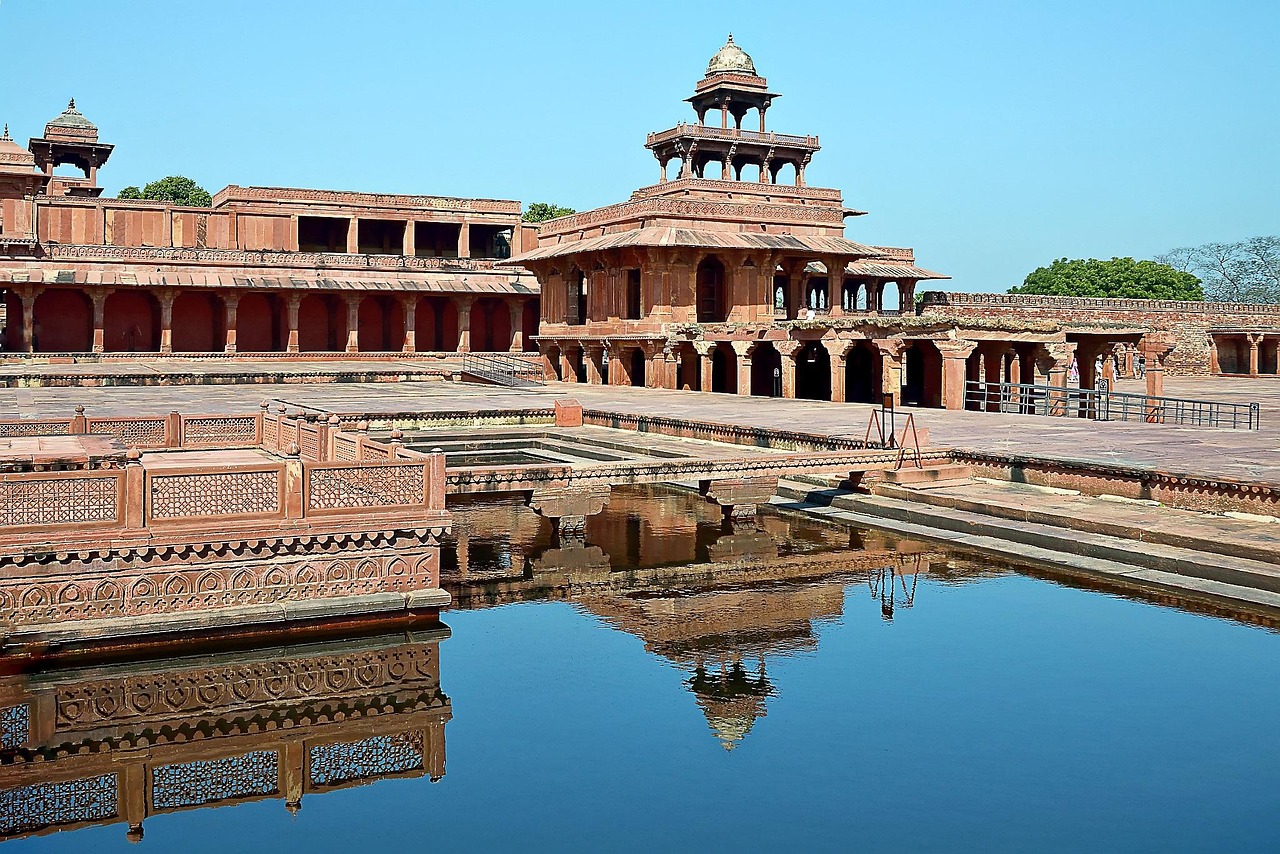
The Panch Mahal, a five-story palace, served as a recreational space for the royal women. Its open-pillared design allowed for natural ventilation, illustrating the architectural ingenuity of the period. 

Fatehpur Sikri reflects the vision and artistic excellence of the Mughal Empire. Though it was abandoned due to practical challenges, its historical and architectural significance endures. The site continues to attract scholars, historians, and tourists, offering a glimpse into India’s rich cultural heritage.

Saturday, 15 March 2025

Gobindgarh Fort, Amritsar


Gobindgarh Fort, located in Amritsar, Punjab, is a significant historical landmark that reflects the region's rich past. Built in the 18th century, the fort has played a crucial role in various historical events and continues to be an important cultural and architectural heritage site. 

Historical Significance

Gobindgarh Fort was originally constructed by the Bhangi Misl, one of the 12 Sikh Misls, during the late 18th century. In 1805, Maharaja Ranjit Singh, the founder of the Sikh Empire, took control of the fort and made significant modifications to strengthen its defenses. Under his rule, the fort became a crucial military stronghold, housing a substantial cache of weapons and serving as a key center for the empire’s military operations. 

During the British colonial period, the fort was occupied by the British Army in 1849 after the annexation of Punjab. It remained under British control until India gained independence in 1947. Post-independence, the Indian Army used the fort for military purposes before it was handed over to the Punjab government for preservation and public access. 

Architectural Significance

Gobindgarh Fort is an exemplary model of military architecture. It follows a circular layout with high walls constructed from brick and lime mortar. The fort is spread over 43 acres and features four grand bastions, which provided strategic defense advantages. The main entrance, known as Nalwa Gate, is named after Hari Singh Nalwa, a prominent general in Maharaja Ranjit Singh’s army. 

Inside the fort, several structures highlight its historical importance. The Toshakhana, or treasury, was used to store the famed Koh-i-Noor diamond before it was taken by the British. The Darbar Hall, formerly used for administrative and military meetings, now serves as a museum displaying artifacts from the Sikh Empire and British colonial rule. The fort also contains underground tunnels, bastions, and ramparts designed for defense purposes. 

Cultural Significance

Today, Gobindgarh Fort serves as a cultural hub, offering visitors an opportunity to engage with Punjab’s history. The fort has been developed into a heritage site with various attractions, including the Sher-e-Punjab museum, which presents a 7D multimedia show on the life of Maharaja Ranjit Singh. The Warfare Museum showcases weapons and uniforms used during different historical periods, and the Pagdi Museum highlights traditional Sikh headgear. 

Traditional performances such as Gatka, a Sikh martial art form, and Bhangra dance are regularly held within the fort premises. The fort also hosts light and sound shows that depict its historical significance. Additionally, local cuisine and crafts are available, providing visitors with an authentic cultural experience. 

Gobindgarh Fort stands as a symbol of Punjab’s rich history, showcasing its military, architectural, and cultural heritage. From its origins under the Bhangi Misl to its transformation under Maharaja Ranjit Singh and later control by the British, the fort has remained an enduring symbol of resilience and strength. Today, its restoration and conversion into a heritage site ensure that future generations can appreciate its historical and cultural value.

Friday, 24 November 2023

Historical Forts in Uttar Pradesh


Uttar Pradesh, the heartland of India, boasts a rich tapestry of historical monuments that bear witness to the region's storied past. Among these ancient monuments in Uttar Pradesh, forts stand as formidable sentinels, embodying the architectural prowess and strategic significance of bygone eras. Two such notable structures are the Jhansi Fort and the Ramnagar Fort, each playing a pivotal role in the historical chronicles of Uttar Pradesh.


Jhansi Fort, situated in the city of Jhansi, stands as an enduring testament to the valor and resilience of Rani Lakshmibai, the iconic queen of the Maratha-ruled princely state of Jhansi. Constructed in the 17th century by Raja Bir Singh Deo of Orchha, the fort's primary purpose was to serve as a stronghold against invasions. The robust architecture of Jhansi Fort reflects a blend of Hindu and Mughal influences, showcasing the military acumen of its builders. 

The fort's strategic location atop a hill provides a commanding view of the surrounding plains, facilitating effective defense strategies. Its sturdy walls, bastions, and gates served as formidable deterrents, deterring potential invaders. The architectural layout is characterized by a series of courtyards, palaces, and temples, illustrating the multifaceted nature of the fort as both a military stronghold and a residential complex. 

Jhansi Fort gained historical prominence during the Indian Rebellion of 1857, when Rani Lakshmibai, popularly known as the "Rani of Jhansi," led a valiant defense against the British East India Company. The fort's role in this pivotal episode solidifies its historical significance, symbolizing the struggle for independence and the indomitable spirit of the people.


Similarly, the Ramnagar Fort, located in Varanasi along the banks of the Ganges River, stands as a formidable edifice that mirrors the cultural and historical vibrancy of the region. Constructed in the 18th century by Maharaja Balwant Singh, the fort serves as the ancestral home of the Maharaja of Varanasi, housing a museum that showcases a diverse collection of artifacts and memorabilia. 

The architectural style of Ramnagar Fort is predominantly Mughal, with ornate carvings, grand gateways, and intricately designed courtyards. The fort's proximity to the Ganges River accentuates its aesthetic appeal, and the scenic location adds to its historical allure. The fort's defensive features, including bastions and cannons, attest to its original purpose as a military stronghold during turbulent times. 

Ramnagar Fort is also renowned for hosting the annual Ram Leela, a traditional theatrical performance depicting the life of Lord Rama. The fort becomes a cultural hub during this event, attracting visitors from far and wide. This cultural tradition not only adds to the fort's significance but also highlights its role as a custodian of cultural heritage in Uttar Pradesh. 

The historical forts of Uttar Pradesh, particularly Jhansi Fort and Ramnagar Fort, stand as architectural marvels that encapsulate the rich history and cultural diversity of the region. Jhansi Fort's association with the heroic resistance of Rani Lakshmibai and Ramnagar Fort's dual role as a military bastion and cultural hub contribute to their enduring significance. As custodians of the past, these forts invite visitors to explore the annals of history and appreciate the architectural grandeur that has withstood the test of time.

Friday, 3 February 2023

Monuments of Haryana


The monuments of Haryana would remind one about the state's rich opulent culture and tradition. Haryana monuments include the forts, palaces and tombs of the ruling dynasties that have now altered into different government offices of the state. Monuments of Haryana consist of the tomb of Ibrahim Lodi in Panipat, the Star monument Bhiwani in the Bhiwani complex which is situated approximately 12kms away from Bhiwani, the fort of Kalsia Raja, the Jal Mahal, tombs of Shah Quli Khan, Shiekh Chehli, and Feroz Shah' S Palace to name a few.


The architectural structures of different monuments of Haryana vary from each other. Different rulers of each and every dynasty constructed their structures with the mixture of traditional and modern equipments and techniques. Some monuments are of rectangular block shape constructed by Lakhori bricks, some are hexagonal pyramidal shaped having star shaped sides; some are constructed with absolutely no pillars and other constructions have been decorated wonderfully with the famous mural paintings.

Popular historical monuments of Haryana
The history of Haryana is one of the oldest histories dating back to the Vedic Period and is steeped in glory. It was the land where the epic battle of Mahabharata at Kurukshetra took place. It is the same land where Lord Krishna recited the Bhagwad Gita to the reluctant Arjuna and three other battles were fought at Panipat. Different religions have evolved during the thousand years of history of this state. Different rulers constructed several religious monuments including temples, tombs, churches, mosques and gurdwaras.

Rai Bal Mukund Das Ka Chatta
Also known as Birbal Ka Chatta, the palace belonged to Rai Bal Mukund Das (superintendent of Mughal emperor Shah Jahan). Rai Bal Mukund Das Ka Chatta is known for its architectural excellence, displaying a five storied structure with hall, terraces and room around a central courtyard. The building originally had three underground floors but presently only one level is accessible.

Jal Mahal
Jal Mahal was constructed by Shah Quli Khan in 1591 AD. Shah Quli Khan was the then governor of Narnaul and it said to be favourite of Emperor Akbar. It is a fusion of Hindu and Islamic architectural styles. The layout of Jal Mahal shows a finely developed system of filling the huge water tank with rain water.

Tomb of Ibrahim Khan Suri
Tomb of Ibrahim Khan Suri was built in 1538-1545 AD by Sher Shah Suri in the memory of this grandfather Ibrahim Khan Suri. it was built 50 years after the death of Ibrahim Khan Suri.

Buddha Stupa
Buddha Stupa in Chaneti was built in the 3rd century BC by Mauryan emperor Ashoka. This stupa is built on similar lines to the Shahpur and Dharamrajika stupas of Taxila.

Lat Ki Masjid
Lat Ki Masjid, constructed in the 14th century is a mosque located to the east end of the Feroz Shah complex, opposite to the Talaqi Gate. The monument gets its name from the ancient column located within the courtyard.

Tomb of Shah Quli Khan
Shah Quli Khan built this tomb in 16th century in the memory of this father. Shah Quli Khan was the governor of Narnaul during the Mughal emperor Akbar.

Tuesday, 20 December 2022

Churches and Convents of Goa


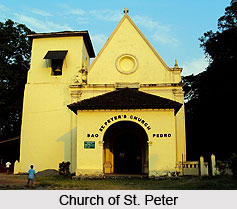
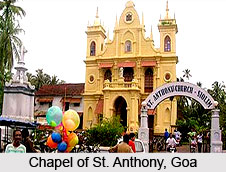
Churches and Convents of GoaGoa has some world famous churches and convents and the most comprehensive group of churches and cathedrals built during 16th and 17th century AD at Old Goa and are a legacy of the Portuguese. The famous churches of old Goa comprises of Se' Cathedral, Church and Convent of St. Francis of Assisi, Chapel of St. Catherine, Basilica of Bom Jesus, Church of Lady of Rosary, the Church of St Augustine and the Church of St. Cajetan. These monuments were influential in spreading forms of Manueline, Mannerist and Baroque art in all the countries of Asia where missions were established.

The churches display a combination of the Renaissance and Baroque styles. They are generally built of laterite and lime plaster. The paintings in the churches were done on wooden borders and fixed between panels having floral designs as in the chapels housing the tomb of St. Xavier, the arches above the altars in the transept of the Se' Cathedral and in the nave on either side of the main altar in the Church of St. Francis of Assisi. Excepting a few which are in stone, the statues are mostly in wood delicately carved and painted to adorn the altars. They depict mostly the saints, Mother Mary and Jesus on the cross.

Churches and Convents of Goa
The Basilica of Bom Jesus:The name Bom Jesus basically means "good Jesus" or "infant Jesus". The Basilica of Bom Jesus or Basilica of Bom Jesu is located in Goa. The church is located in Old Goa, which was the capital of Goa in the early days of Portuguese rule, about 10km from the city of Panjim. Close to the convent of St Francis, the 1605 church of Bom Jesus is known principally for the tomb and the mortal remains of St Francis Xavier, a member of the Society of Jesus, who came to India with the Portuguese to spread Christianity in India.

Se Cathedral: One of the oldest and most celebrated religious buildings in Goa, the Se cathedral is one of the largest churches in Asia and it took eighty years to get completed. It is dedicated to Catherine of Alexandria and is located in Old Goa. This monument truly represents the royalty of Goa in the early days, during the rule of Portuguese. One of the most sacred buildings for the Christians, Se cathedral has been declared a heritage site by UNESCO.

For more, visit the link below:

Tuesday, 6 December 2022

Indian Archaeological Museums


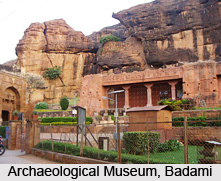
Indian Archaeological MuseumsIndian Archaeological Museums are famous for providing a vivid picture of the Indian subcontinent. They play an integral role in preserving the rich cultural heritage of India, and are present in almost all the major Indian cities. Indian Archaeological Museums exhibit a large variety of excavated materials from ancient and medieval India. Apart from providing information and exhibiting important archaeological elements of ancient times, Indian Archaeological Museums also conduct archaeological excavations. The main objective behind this is to discover archaeological evidences of ancient India and unfolding the history of Indian civilization. Archaeological records like sculptures, portraits, coins and currency, revenue and court fee stamps, wooden and bronze sculptures, armory etc are ideally housed in the Indian Archaeological Museums.

Archaeological Museum, Purana Quila
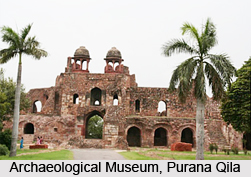
It is situated inside the fort called Purana Quila in Delhi. The Archaeological Survey of India (ASI) carried out excavations in the year 1955 and later again in the period of 1969 to 1973. The materials discovered through various excavations are displayed in the museum, which narrate the settlements in this region around 1000 BC. Cultural aspects of Mauryan, Mughal, Sunga, Rajput, Gupta, Kushana and Sultanate empires can be figured out from the artifacts of this museum. Antiquities excavated from other parts of Delhi are also exhibited in this museum.

Taj Museum, Taj Mahal
Indian Archaeological MuseumsIt is one of most famous archaeological museums of India in Agra district of Uttar Pradesh. It is situated within the Taj Mahal complex, more specifically, in the Jal Mahal. The three galleries of the museum exhibit artifacts related to the construction of Taj Mahal and the architects involved in building this magnificent structure. Manuscripts, paintings, specimen of calligraphy, government decrees, utensils, arms, marble pillars etc form the exclusive collection of this beautiful museum. The main hall of the museum houses the paintings of the Mughal emperor, Shah Jahan and his wife Mumtaz Mahal on ivory, encased within decorated wooden frames.

Archaeological Museum, Khajuraho
The Archaeological Museum in Khajuraho, Madhya Pradesh, was built in 1967. It displays the loose sculptures from the temples of Khajuraho. The most famous artifacts of this museum include sculptures of Jaina, Brahmanical and Buddhist faiths. The museums comprises of five galleries along with a massive hall.

For more, visit the link below:

Tuesday, 25 October 2022

Indian Dargas


Indian DargasSome of the Indian Dargas are Bara Shaheed Dargah, Moinuddin Chishti, Lateef Saheb Dargah, Piran Kaliyar Sharif, Jan Pahad Dargah, Peer Mohammed Dargah,Vaippar, Valinokkam, Nizamuddin Dargah, Rauza Sharif, Meher Ali Shah and many other dargas in India.

Bara Shaheed Dargah
Bara Shaheed Dargah is a dargah located in Sulurpet of Andra Pradesh. It is an open dargah measuring 144feet long and near to the Shaik Dawood Dargah.

Lateef Ullah Shah Quadri Darga
Lateef Ullah Shah Quadri Darga or Lateef Saheb Dargah is a sufi Muslim shrine located in the town of Nalgonda district of Andhra Pradesh. It is situated on hillock. A three-day Urs is celebrated every year

Indian DargasMoinuddin Chishti
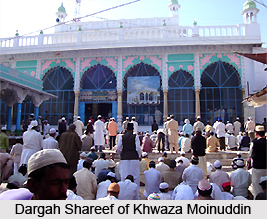
The dargah of Moinuddin Chisti, known as Dargah Sharif or Ajmer Sharif is an international wakf board. The Dargah Committee is appointed by the Government, manages donations, takes care of the maintenance of the shrine, and runs charitable institutions like dispensaries, and guest houses for the devotees. The dargah of Moinuddin Chisti is visited by Muslim pilgrims as well as Hindus and Sikhs as a symbol of inter-communal harmony.

Madurai Maqbara
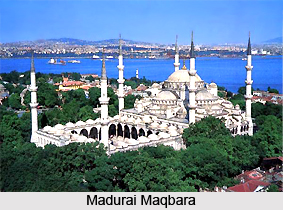
Madurai Maqbara refers to the Dargahs of three Sufi saints: Mir Ahmad Ibrahim, Mir Amjad Ibrahim, and Abdus Salaam Ibrahim. Though maqbara refers to the graves of all Muslims, it refers especially to the graves (Raula or Rauza) of religious figures or Waliyullahs who dedicated their life to Islam, striving to be true Muslims and training others to follow Islam as first preached by the Prophet Mohamed.

Indian DargasKanavai Dargha
Hazrat Varushai Syed Ibraheem Shaheed Waliyullah is the descendant of Hazrat Sulthan Syed Ibrahim Shahhed Badusha nayagam of Erwadi. He is the grand father of Hazrat Mursal Ibrahim shaheed, whose dargah is located in Thachuoorani. Thus he is the great grand father of Hazrat Nalla Ibrahim Waliyullah whose is the forefather of all the levvai mujavirs (huqdhars) of Erwadi dargah.

For more, visit the link below:

Friday, 1 April 2022

Palaces in Rajasthan


Palaces in Rajasthan, Indian MonumentsPalaces in Rajasthan are a common sight. Most of these belong to the Rajputs who occupied many states of Rajasthan until 1947. They were the royal families and their palaces and legacies are strewn throughout the now united state of Rajasthan. Today most of these palaces have been converted to heritage hotels in Rajasthan. The grandiose buildings reflect the sumptuous life of the Rajas. As tourists keep on coming across one palace after another they realize that the state is rightfully called the land of the Rajas.

Apart from the luxurious lifestyle the palaces in Rajasthan reflect the rich craftsmanship. Mostly the palaces of Rajasthan were citadels located within the city and heavily fortified. The medieval palaces had the defensive character of the Rajput constructions. Two large divisions of these forts are Diwan-i-Am or the Hall for the Masses and Diwan-i-Khas, Room for Private Audience. Other than these there are ceremonial rooms and other official structures. These fortified palaces had concealed passages, narrow corridors, ramps and stairways. Most of these magnificent structures are accompanied by well-maintained gardens.

Different Palaces in Rajasthan
As far as the palaces are concerned there is a strong influence of Mughal architecture as well. Following are some of the famous palaces in Rajasthan:

Bal Samand Lake Palace: Bal Samand Lake Palace was the previous holiday residence of royal families of Jodhpur. This is one of the best palaces in Rajasthan and is now converted into a heritage hotel.

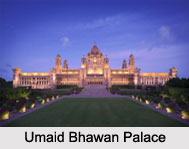
Palaces in Rajasthan, Indian MonumentsUmaid Bhawan Palace: The palace is a wonderful example of Indo-Saracenic architecture. One of the most significant parts of the palace is its museum which showcases a huge collection of vases, vehicles used by the maharaja, furniture, clocks etc.

Monsoon Palace: Previously counted as monsoon retreat for Mewar rulers, this palace was regularly visited by the royal families to enjoy monsoon. Surrounded by Sajjangarh Wildlife Sanctuary, this palace presents tremendous views of the lakes and Udaipur city.

Udai Bilas Palace: Udai Bilas Palace is a heritage hotel, which reveals old world glories. The elaborate balconies, central stone carvings and figurines which develop the beauty of the palace and its beautiful splendour and the personal infinity edge pool attract the tourists.

For more, visit the link below:

Friday, 21 January 2022

Monasteries of Sikkim


Monasteries of Sikkim, Indian MonumentsMonasteries of Sikkim are popular place of worship for the Buddhist monks who reside in Sikkim. These monasteries mainly follow the Nyingma and Kagyu order of Buddhism. There are about 200 big and small monasteries which not only depict the cultural heritage and life style of Buddhists in Sikkim but also preach the ancient rituals of Buddhism. These are mainly established by the well known and most revered monks who lay the foundation of these monasteries.

Monasteries of Sikkim are mainly known for upholding the tradition folk culture through the monk dances and mask dances that take place according to the calendar of ancient Tibet. Decorated with frescos of Buddhist legends, rare silk and brocade fabric are some of the most colourful sites in Sikkim. Established during the 17th and 18th century these monasteries are mainly known for their architecture as well as their religious practices.

Different Monasteries of Sikkim
Monasteries of Sikkim mainly follow the Nyingma and Kadyug order. This relates Sikkim with ancient Tibet. Among these Nyingma is among the four ancient Schools of Tibetan Buddhism. Following are the popular monasteries of Sikkim:

Rumtek Monastery: Rumtek Monastery is one of the major and most significant monasteries in Asia which is situated next to the capital city of Gangtok. It is the best model of Tibetan architecture in India.

Tashiding Monastery: The Monastery is part of Buddhist spiritual pilgrimage journey in Sikkim. Tashiding Monastery is the most stunning Monastery of North East India, located on top of the hill rising between the Rathong chu and the Rangeet River.

Monasteries of Sikkim, Indian MonumentsEnchey Gompa: The monastery has a big assortment of masks and Cham dance festival celebrates here each year. Enchey Monastery is one of the olden religious sites of the Buddhists in the state of Sikkim which was built around the then small hamlet of Gangtok.

Dubdi Monastery: Dubdi Monastery is also called as Yuksom Monastery, situated in the Geyzing part. Yuksom Monastery is the oldest monastery in Sikkim and strongly linked to the founding of the State.

Pemayangtse Monastery: The monastery is located at a height of 2085m and offers wonderful panoramic view of the Himalayan snow-capped mountains and Kanchenjunga peak. Pemayangtse Monastery is situated on a hill top near Pelling and one of the foremost monasteries of Sikkim.

For more, visit the link below: