Showing posts with label philosophy culture. Show all posts

Tuesday, 25 October 2022

Indian Dargas


Indian DargasSome of the Indian Dargas are Bara Shaheed Dargah, Moinuddin Chishti, Lateef Saheb Dargah, Piran Kaliyar Sharif, Jan Pahad Dargah, Peer Mohammed Dargah,Vaippar, Valinokkam, Nizamuddin Dargah, Rauza Sharif, Meher Ali Shah and many other dargas in India.

Bara Shaheed Dargah
Bara Shaheed Dargah is a dargah located in Sulurpet of Andra Pradesh. It is an open dargah measuring 144feet long and near to the Shaik Dawood Dargah.

Lateef Ullah Shah Quadri Darga
Lateef Ullah Shah Quadri Darga or Lateef Saheb Dargah is a sufi Muslim shrine located in the town of Nalgonda district of Andhra Pradesh. It is situated on hillock. A three-day Urs is celebrated every year
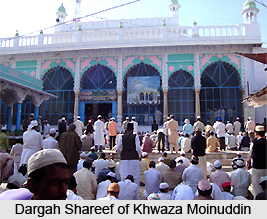
Indian DargasMoinuddin Chishti
The dargah of Moinuddin Chisti, known as Dargah Sharif or Ajmer Sharif is an international wakf board. The Dargah Committee is appointed by the Government, manages donations, takes care of the maintenance of the shrine, and runs charitable institutions like dispensaries, and guest houses for the devotees. The dargah of Moinuddin Chisti is visited by Muslim pilgrims as well as Hindus and Sikhs as a symbol of inter-communal harmony.

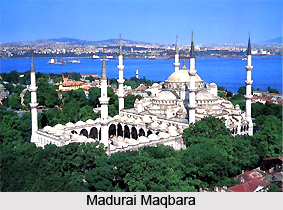
Madurai Maqbara
Madurai Maqbara refers to the Dargahs of three Sufi saints: Mir Ahmad Ibrahim, Mir Amjad Ibrahim, and Abdus Salaam Ibrahim. Though maqbara refers to the graves of all Muslims, it refers especially to the graves (Raula or Rauza) of religious figures or Waliyullahs who dedicated their life to Islam, striving to be true Muslims and training others to follow Islam as first preached by the Prophet Mohamed.
Indian DargasKanavai Dargha
Hazrat Varushai Syed Ibraheem Shaheed Waliyullah is the descendant of Hazrat Sulthan Syed Ibrahim Shahhed Badusha nayagam of Erwadi. He is the grand father of Hazrat Mursal Ibrahim shaheed, whose dargah is located in Thachuoorani. Thus he is the great grand father of Hazrat Nalla Ibrahim Waliyullah whose is the forefather of all the levvai mujavirs (huqdhars) of Erwadi dargah.

For more, visit the link below:

Tuesday, 25 January 2022

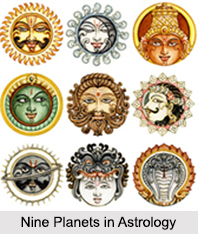
Nine Planets in Astrology


Nine Planets in Astrology, AstrologyNine Planets in Astrology, according to Vedas, are known as ‘Nava-Graha’. These planets exist in the entire sphere of celestial and astrological studies. In Astrology, Planets are the heavenly bodies, whose movements are tracked by keeping Earth as the central point; the heavenly objects casting their influence on earth, nature and its inhabitants to a great degree. Although, technically Sun and Moon are not planets, and Rahu and Ketu are just lunar nodes, still they are essentially referred as planets according to the Hindu astrology.

Each planet has a specific influence in astrology and governs a certain area of one’s personality or approach to life. For example, Mercury relates to the mental outlook; Venus governs the love nature. It is the placement of these planets in the various zodiac signs that determines how one expresses the different facets of their personality.

The Nine planets in Vedic astrology are of prime importance to Indian astrologers. Each of the nine planets, which are also known as ‘Nava-Graha’, is discussed below:

Surya or Sun
Sun bestows willpower, energy and fortune to each and every individual, enabling them to live life to its grandest level. Right from the looks of a being, to his personality, wisdom and achievements, Sun or Surya has the dominant role to play. Sun provides with the physical, as well as psychological well being of a person. Its benevolence is received by kings, leaders, politicians, artists, jewellers, gemmologists, actors, alike.

Chandra or Moon
Moon or Chandra is responsible for fertility, growth, long distance travel, mental peace, memory, relation with mother and childbirth. An excellent and powerful moon provides good emotional strength and harmonious life. A weak moon can cause mental anxiety, emotional disturbance and tough relations with mother and people all around.

Brihaspati or Jupiter
Brihaspati is known as the planet of luck and is responsible for all the success, fortune, intellect and religious aspects of lives. Jupiter or Brihaspati signifies high ambitions, knowledge and accomplishments. Consequently, it is a prominent planet in the charts of successful priests, religious leaders, politicians and people pursuing deep knowledge.

For more, visit the link below:

Monday, 5 October 2020

Culture of Rajasthan


Culture of Rajasthan declares the western Indian colourful culture, folk songs and the dances with balance.


Rajasthani culture is enriched in heritage and ethnicity, encompassing the whole of Indian cultural scenario. The royal dynasties, which had ruled over the region, patronized varied art forms. To add to these, the folk communities contributed to the Rajathani culture with its treasure of equally rich folk cultural exuberance. Music depicts the simple and mundane chores of the Rajasthanis, coupled by high standardization of Indian classics.


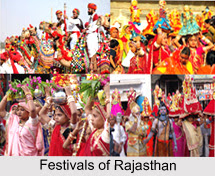
Festivals of Rajasthan
Festivals embellish the richness of Rajasthani culture, making the lives of Rajasthanis so full of colour and festivity. The pious Rajasthanis celebrate in great enthusiasm all the main festivals of India like Diwali, Holi, and Janmasthami. Desert festivals are exclusive to Rajasthani culture and the people fete in gusto.

Every year it is observed during the chilly seasons of winter. The fair too is organized with its own fun and frolic. Snake charmers, puppeteers, acrobats and artists enthral the tourists and the Rajasthani folks, glorifying the awe and beauty of the desert region. Camels are also a special attraction of the festival. In fact the festival plate certain wonderful game tricks perform by the camels that are part and parcel of Rajasthanis. Unique hard work is done in attiring the animal and prepares them to participate in the extravagant competition for judging the camel apparels. Other interesting competitions are the moustache and turban tying competitions and the people wholeheartedly enjoys these festivities. The Rajasthani damsels fete Gangaur, the eighteen-day long festival, in honor of Goddess Parvati, to seek husbands of their choice. In the month of August, a majestic fair is held at Gogamedi, in Rajasthan in August in memory of a folk god Gogaji.

Culture of RajasthanMusic and Dance of Rajasthan
Any study of Indian culture will be incomplete without taking some glimpse of its music and dance. Rajasthani culture, too, is quite opulent in this matter. Musical melodies of the folk culture are perfectly reflected by its tradition of dance and songs. Folk songs are usually ballads, which relate grand deeds of heroes and love tales. Religious and spiritual songs, namely, bhajans, and banis are also prevalent. They are usually performed in various joyful occasions in accompaniment of instruments like sarangi, dholak, sitar, etc. The Bhopa communities of Rajasthan sung narrative songs and strike the strings of 'Ravan -hatta' music instrument. Rajasthani culture has accumulated the prestige of worldly fame for its unique dance forms, namely, Kalbeliya dance of Jaisalmer and Ghoomar dance from Udaipur. Ghoomar is a customary female Rajasthani folk dance, participated by women dancers in whirling drapes, and accompanied by male and females singers.

For more click the link below:

https://www.indianetzone.com/5/rajasthani_culture.htm

Thursday, 14 May 2020

Characters in Ramayana

The characters in jnhgfh.jpgare instrumental in narrating the entire Sanskrit epic. Most of the characters like Lord Rama, Sita, Lakshmana, Hanuman and others are considered as deities according to Hindu mythology.

Characters in Ramayana
Following are the different characters in Ramayana:

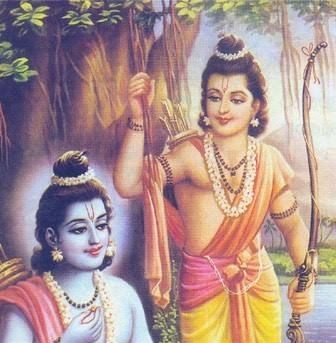
ramaLord Rama: He was the son of King Dasaratha and Queen Kausalya. He was the prince of Ayodya. He is an ‘avatara’ of Lord Vishnu and was married to Sita.

sita.jpgSita: She was the daughter of Mother Earth adopted by King Janaka. Sita married Lord Rama, and she is also regarded as an ‘avatara’ of the Goddess Lakshmi.

ravanaRavana: Ravana was a devil who performed penance for a long time until Lord Brahma appeared before him and granted him a boon.

lakmanLakshmana: He was the son of King Dasaratha and Queen Sumitra. He was dedicated to his brother and followed him throughout many adventures and hunts.  He is ascribed as the incarnation of ‘Ananta Sesha’, the 1000 headed Naga.

darshrath.jpgKing Dasaratha: Dasaratha was the emperor of Ayodhya, father of Lord Rama, Lakshmana, Bharata, and Shatrughna.

Kaushalya: She was the first queen of King Dasaratha and the mother of Lord Rama. She had a wonderful and liberal character.

bharth.jpgBharata: He is famous for his love and devotion towards his elder brother Lord Rama.

7a567caa9013ca977576e7dd250d8f67-e1551942420351.jpgLord Hanuman: He was the advisor of Sugriva. He was the son of Anjana and Kesari and he is believed to be an avatar of the supreme Lord Shiva. He was a guardian spirit, the offspring of a nymph and the Wind God.

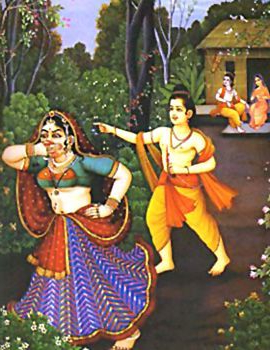
surparnak.jpgSurpanakha: She was the sister of Ravana who was a powerful demon. She tried to seduce Lord Rama and kill Sita, but Lakshmana attacked her.

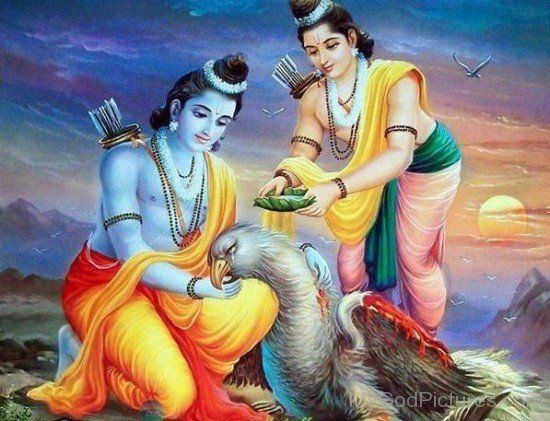
llllllJatayu: Jatayu was a powerful golden eagle who spoke in the voice of a human being. He died protecting Sita from Ravana.

kumar-e1551942493496.jpgShravan Kumar: He was as a dedicated son who carried his blind parents on his shoulders for a pilgrimage tour.

Kumbhakarn.jpgKumbhakarna: He was Ravana's brother. He had a huge physique with unlimited strength. He used to sleep for six months at a time before waking up and eating everything he could see.

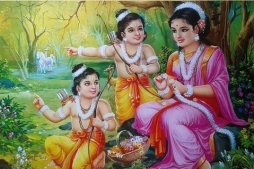
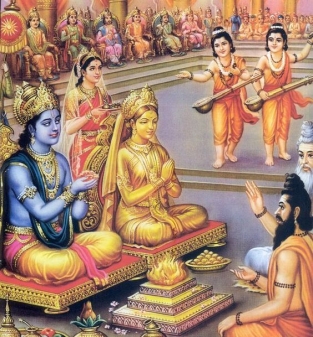
luv-kush-e1551942533161.jpgLava: Along with Kusha, Lava was one of the student to whom Valmiki taught the Ramayana which he received from Narada.  Lava was the king of Sriwasti, in northern Kosala. He was the founder of the city of Lahore, which is named after him.

ff.jpg

Kusha: Kusha was one of the twin sons of Lord Rama and Sita. The other son is the Lava. He was born in a forest after Sita had been banished from Ayodhya.

and many more characters are their in ramayana

To know in detail read here : Characters in Ramayana


Tuesday, 4 February 2020

Buddhist Philosophy

imagesimagesBuddhist Philosophy is based on the teachings of
Gautama Buddha. According to some scholars early Buddhist Philosophy was not connected with metaphysical or ontological speculation rather it was based on experimental evidences gained by sensory organs
Buddha-and-Mara
Buddhist philosophy deals broadly with problems associated with metaphysics, ethics, phenomenology and epistemology. Buddhism is a religion and philosophy with approximately 230 to 500 million disciples worldwide, the vast majority residing in Asia.
sarnath_4742854_m 
Buddha-621x414Features of Buddhist Philosophy
Since ancient times, Buddhism has utilised philosophy as a means to comprehending moral and what it means to live a meaningful life without repents in the end.

Buddhism in India
Equipped with a huge history of evolvement, Buddhism in India was, quite obviously, initiated by Gautama Buddha.
images
TripitakaTripitaka
Believed to be one of the earliest compilations of Buddha’s teachings, Tripitaka are the teachings or discourses that were penned in leaves and later sewed into baskets. The first Buddhist Council had decided the contents of the preaching, in the presence of Mahakasyapa.
qqq 
Vinaya PitakaVinaya Pitaka
Included in the Tripitaka section of Buddhist sermons and preaching, Vinaya Pitaka comprises a set of rules stressed by Buddha, which is meant to be followed by the nuns and monks to lead a restricted monastic life.

buddddhaSutra Pitaka
Included in the prestigious Pali Canon of Buddhist scriptures, Sutra Pitaka is known to contain more than 10,000 doctrines of the enlightened being, Gautama.
buddddhaAbhidhamma Pitaka
Abhidhamma Pitaka can be regarded as a novel scripture compilation among the three pitakas, with its planned group of preaching by the Buddha.
imagesContents of Abhidhamma Pitaka
The most scholarly and comprehensible book amongst the three pitakas, Abhidhamma Pitaka is exclusively separated into seven parts.

Read More :- Buddhist Philosophy

Saturday, 18 May 2019

Birth of Gautama Buddha


ASA-GB-2.jpg
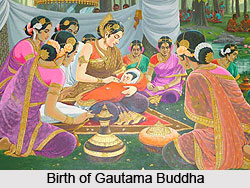
Siddhartha Gautama, popularly known as Gautama Buddha was born in 560 BC. He was the prince of Lumbini, Nepal at the foot of Mount Palpa in the Himalayan Ranges. He was born to Suddhodhana, King of the Sakyas and Maya Devi
Birth of Gautama Buddha.  Mayadevi was a Koliyaprincess. On the night Siddhartha was conceived, his mother Maya Devi dreamt that a
white
Untitled.png elephant with six white tasks entered her right side. According to the Sakya tradition, when queen Maya became pregnant she went to her father’s kingdom to give birth but after leaving the capital of Kapilavastu, she gave birth to Siddhartha along the way of Lumbini in a garden beneath a Sal tree.

Birthday Celebration of Gautama Buddha
 Buddha Jayanti is commemorated on the month ( Baisakh) of May by followers of Buddhism, and the festival is also recognised as Vesak or Buddha Day.
Vesak.jpg

Naming of Gautama Buddha
Siddhartha means ‘one who has accomplished his aim’. Gautama was the clan name or family name of Siddhartha. He was also known as
dea52f3b704ad55edf381e0c1ee00b49.jpg
Kaundinya-copy-223x300.jpgSakyamunias. King Suddhodhana  invited eight Brahmin Scholars to read the future. Kaundinya, the youngest of the Brahmins also told that the baby boy would become a ‘Buddha’.

Read more :Birth of Gautama Buddha

Saturday, 11 May 2019

Indian Philosophy

Indian Philosophy is intense spirituality that emphasises on the attainment of salvation and eternal bliss through a righteous path.
3_Jain_philosophy.jpg2_Books_of_Hindu_Philosophy_2.jpg2_Buddhist_Philosophy.jpg
1_Swami_Vivekananda_Spiritual_Leader.jpgThe philosophy of India originates into life and again transcends into life itself. The main components of the Indian philosophy are the Hindu philosophy, the Buddhist philosophy and the Jain philosophy with little influences of Sikhism and Islam during various time periods.
1_Sri_Ramanuja.jpg

History of Indian Philosophy
The philosophical tradition of India was carried forward by eminent personalities like Swami Vivekananda , Aurobindo Ghose and many more during the British period that is from 1750-1947 and is termed as the modern phase of Indian philosophy.

1_Lord_Krishna_Describing_Bhagavad_Gita.jpgSchools of Indian Philosophy

Indian Philosophy has been subdivided into different schools according to their beliefs, opinions, thoughts and way of action.

Religious Influence on Indian Philosophy
Indian_Philosophical_Texts_Indian_Philosophy.jpg
Indian Philosophical Texts:

Sacred texts like Bhagavad Gita, Manu Smriti, Nyaya Sutra, Vaiseshika Sutra, Arthashastra, and Upanishads have continued to nurture Indian Philosophy.

To know in detail visit here : Indian Philosophy

Monday, 28 January 2019

Metaphysics in Samkhya Philosophy

Generally, the Samkhya philosophy
Samkhya_Philosophy.jpg
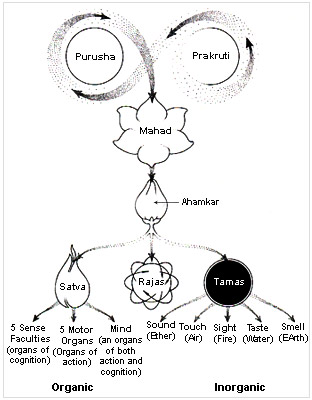
classifies all objects as falling under one of the two categories: Purusha and Prakriti.
Metaphysically, Samkhya maintains a revolutionary duality between spirit/consciousness (Purusha) and matter (Prakrti).
self

Purusha is the Transcendental Self or Pure Consciousness. It remains pure, "non-attributive consciousness ". Purusha is neither produced nor does it produce.

Prakriti.jpg
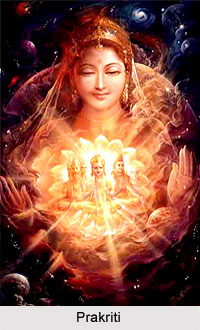
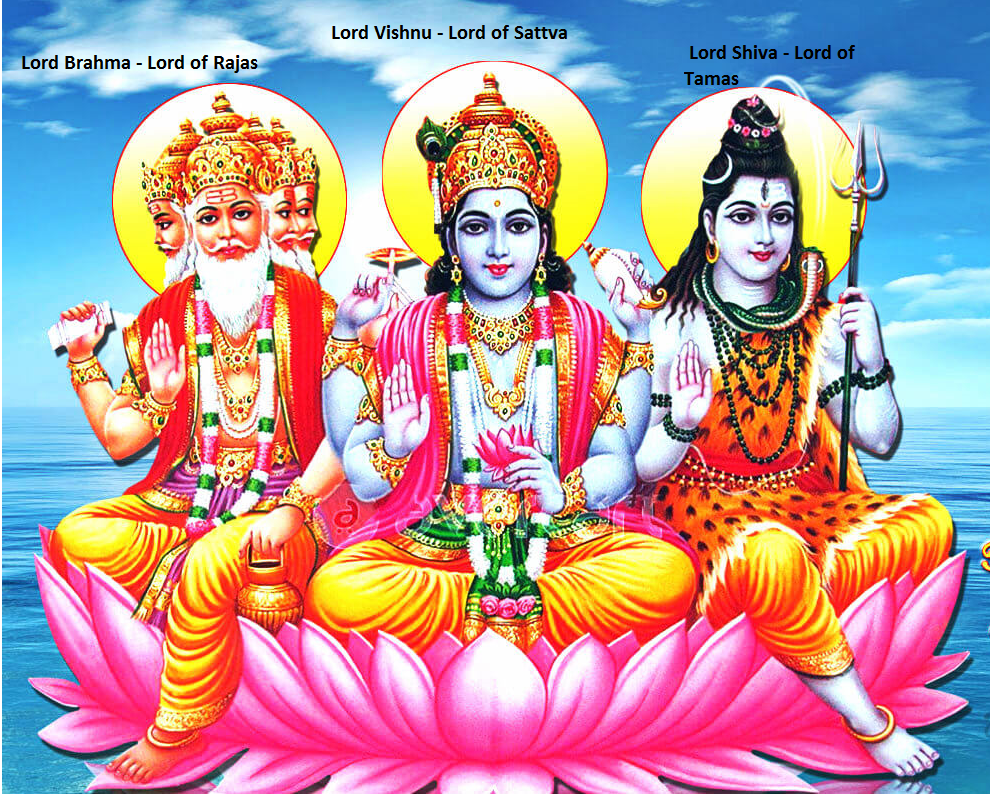
Prakriti is matter. Matter is inert, transient, and unconscious. It is made up of three qualities -Gunas
trimuthi
 equivalent to creation, sustenance, and destruction. They comprise:
sattva (goodness) - pure, elevating, enlightening
rajas (passion) - incites one to create, acquire and enjoy
tamas (ignorance) - dirty, demeaning, deceiving, and destructive.

Ishvara (Creationist God)
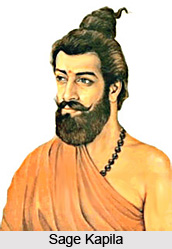
The original school of Samkhya was founded by sage Kapila
2_Sage_Kapila.jpg
The Samkhyan's argue that the existence of Ishvara cannot be testified and hence cannot be admitted to exist.
Later on followers of Samkhya adopted theism and included Ishvara within the system.

To know more visit here : Metaphysics in Samkhya Philosophy