Showing posts with label horoscope. Show all posts

Friday, 29 May 2026

Understanding the Lines of Brothers and Sisters in Palmistry

 Palmistry has long been regarded as a fascinating practice that interprets the lines and mounts of the hand to reveal insights about an individual’s personality, relationships, and future. Among the many markings observed by palmists, the lines of brothers and sisters hold special significance. These auxiliary or supplementary lines are believed to provide information about sibling relationships, family dynamics, and the well-being of brothers and sisters.


What Are the Lines of Brothers and Sisters?

The lines of brothers and sisters are supplementary markings found on the palm. These lines generally originate from the Mount of Venus, the fleshy area located at the base of the thumb, and gradually extend toward the region of Mars. Although these lines may vary in length and clarity, their appearance is considered meaningful in palmistry. 

Palmists study these lines carefully because they are believed to reveal details about an individual’s siblings and familial bonds. The number, depth, and condition of these lines are interpreted differently, making them an important aspect of palm reading. 

Significance of Hand Shape and Sibling Lines

In palmistry, the overall shape and size of the hand are thought to indicate different sibling dynamics and family relationships. However, the lines of brothers and sisters mainly represent the number of siblings a person may have during their lifetime. 

Palmists believe that each visible line corresponds to either a brother or a sister. The clearer and more distinct the lines appear, the stronger and healthier the sibling relationships are likely to be. Such lines are often interpreted as signs of harmony, support, and stability within the family. 

On the other hand, unclear or weak lines may indicate emotional distance or difficulties among siblings. Palmists often examine these markings in combination with other features of the palm to form a complete interpretation. 

Indications of Health and Well-Being

One of the most important interpretations associated with sibling lines relates to the health and well-being of brothers and sisters. According to traditional palmistry beliefs, deeply marked and unbroken lines suggest that siblings are likely to enjoy good health and vitality. 

Conversely, if a line appears broken, interrupted, or fragmented at any point, it is often regarded as a sign that the corresponding sibling may face health-related challenges or recurring ailments. Palmists interpret these breaks as indications of weakness, struggles, or periods of instability in the sibling’s life. 

Although these interpretations are rooted in traditional beliefs rather than scientific evidence, they continue to remain popular among those interested in palmistry and mystical practices. 

Difference Between Brothers’ and Sisters’ Lines

Palmists also distinguish between the lines representing brothers and those representing sisters. Generally, deep, broad, and clearly marked lines are believed to denote brothers. In contrast, faint, thin, or delicate lines are thought to signify sisters. 

This distinction allows palmists to estimate not only the number of siblings but also their gender according to traditional interpretations. However, interpretations may vary among practitioners, as palmistry is considered more of an intuitive art than an exact science. 

The lines of brothers and sisters are an intriguing aspect of palmistry that reflect beliefs about family connections, sibling relationships, and health. Originating from the Mount of Venus and extending toward the region of Mars, these lines are carefully examined for their depth, clarity, and continuity. Whether viewed as a symbolic tradition or a spiritual practice, the study of sibling lines continues to capture the curiosity of people interested in the mysteries of the human hand.

Thursday, 28 May 2026

Understanding the Lines of Friends in Palmistry

 Palmistry, the traditional practice of interpreting the lines and markings on the hand, associates different areas of the palm and fingers with various aspects of human life. Among these markings are the lines of friends, which are believed to reveal information about an individual’s social relationships, friendships, and support system. According to palmists, these lines provide insight into the sincerity of companions and the role friends may play throughout a person’s life.


What Are the Lines of Friends?

Lines of friends are considered auxiliary markings found on the palm, particularly as vertical lines located on the phalanges of the fingers. Expert palmists interpret these lines as indicators of the friends, associates, and companions an individual is likely to encounter during their lifetime. The number, depth, and clarity of these lines are believed to reflect the quality and strength of personal relationships. 

In palmistry, prominent and well-defined lines of friends are associated with meaningful friendships and reliable social support. Such markings are often interpreted as signs that the individual will enjoy the company of loyal companions who provide assistance and encouragement during important phases of life. 

Importance of Clear and Strong Friend Lines

Traditional palmistry places great importance on the condition and appearance of the lines of friends. Clear, deep, and flawless lines are believed to symbolize trustworthy friendships and dependable associates. Individuals with such markings are thought to receive moral support, cooperation, and genuine companionship from those around them. 

On the other hand, weak, thin, or feeble friend lines are considered unfavorable signs. According to palmistry interpretations, such markings suggest unreliable relationships and difficulties in maintaining dependable friendships. Thin or faint lines are often linked with betrayal, deception, or disappointment caused by people who appear friendly but may not have sincere intentions. Palmists believe that individuals with such markings may encounter untrustworthy companions during different stages of life. 

Absence of Friend Lines

The absence of both vertical and horizontal markings on the fingers is also given significance in palmistry. Such a condition is interpreted as a sign of detachment from social interactions and emotional connections. Individuals without noticeable friend lines are often believed to prefer solitude and may not enjoy social activities or close companionship. 

Palmistry further suggests that such individuals may live with limited support from friends and associates. They are thought to lead comparatively isolated lives, maintaining neither strong friendships nor notable rivalries. This interpretation presents the individual as someone who remains emotionally distant from the outside world. 

Signs of Betrayal and Hidden Enemies

Palmistry also associates certain markings with betrayal and concealed hostility. According to traditional interpretations, if a horizontal line emerges from the area known as High Mars and intersects the luck line, it is considered a warning sign. Such a marking is believed to indicate the possibility of deception or harm caused by an enemy or a false friend. 

People connected with this sign are often thought to encounter hidden adversaries in life. Palmists compare such deceptive individuals to a “snake in the grass,” appearing trustworthy outwardly while secretly waiting for an opportunity to betray. 

The lines of friends in palmistry are regarded as indicators of social relationships, companionship, and emotional support. Whether deep and clear or faint and broken, these markings are traditionally interpreted as reflections of the quality of friendships an individual may experience. Although palmistry is viewed as a traditional belief system rather than a scientific discipline, its interpretations continue to fascinate those interested in understanding personality and human relationships through the study of the hand.

Friday, 22 May 2026

Understanding the Life Line in Palmistry: Variations and Interpretations

 Palmistry, also known as chiromancy, is an ancient practice that studies the lines, shapes, and mounts of the hand to interpret personality traits and life patterns. Among the major lines found on the palm, the Life Line is one of the most recognized and widely discussed. Contrary to popular belief, the Life Line does not predict the exact length of a person’s life. Instead, it is believed to reveal information about vitality, physical energy, emotional strength, and significant life changes.


The Life Line begins between the thumb and index finger and curves around the base of the thumb toward the wrist. Its length, depth, shape, and markings are traditionally analyzed to understand a person’s general well-being and approach to life. 

Significance of the Life Line

In palmistry, the Life Line is associated with physical health, stamina, enthusiasm, and life experiences. Palmists consider it an indicator of a person’s energy levels and resilience rather than a literal measure of lifespan. 

A clear and well-defined Life Line is often interpreted as a sign of strong vitality and stability. Individuals with such a line are believed to possess determination, endurance, and a balanced approach toward challenges. On the other hand, a faint or fragmented line may suggest periods of stress, fatigue, or emotional uncertainty. 

The curve of the Life Line is also considered important. A wide and sweeping curve is traditionally linked to an energetic and adventurous personality, while a line that stays close to the thumb may indicate a more reserved and cautious nature. 

Different Types of Life Lines

Palmists identify several variations of the Life Line, each carrying different interpretations. 

Long and Deep Life Line

A long and deeply marked Life Line is generally associated with strength, good vitality, and emotional stability. It is often interpreted as a sign of a person who enjoys an active lifestyle and possesses strong inner resilience. 

Short Life Line

A short Life Line does not necessarily indicate a short life. Instead, it may suggest that the individual prefers a calm lifestyle or relies heavily on emotional and social support from others. 

Broken Life Line

Breaks or gaps in the Life Line are commonly interpreted as signs of major life transitions, challenges, or sudden changes. These may include changes in career, relationships, health, or living conditions. 

Double Life Line

Some individuals possess a secondary line running parallel to the main Life Line. This is often referred to as a “guardian line” and is traditionally associated with protection, strong support systems, or extra vitality. 

Markings and Their Interpretations

Palmists also pay attention to special markings found on the Life Line. 

·       Chains or islands may indicate periods of stress, confusion, or reduced energy.

·       Crosses are often linked to obstacles or important turning points.

·       Branches moving upward are considered signs of growth, ambition, and success.

·       Branches moving downward may represent emotional exhaustion or temporary setbacks. 

These markings are usually interpreted in relation to the overall structure of the palm rather than in isolation. 

The Life Line remains one of the central elements in palmistry due to its strong symbolic connection with vitality, personal growth, and life experiences. While interpretations vary across traditions and practitioners, the line is generally viewed as a reflection of energy, resilience, and emotional strength rather than a prediction of lifespan. As with all aspects of palmistry, the Life Line is best understood as part of a broader study of the hand, combining observation, symbolism, and cultural tradition.

Thursday, 16 April 2026

Decoding Chain Markings in Palmistry: Interpretations and Life Implications

 Palmistry, the ancient practice of interpreting the lines and markings on the hand, assigns significant meaning to various patterns that appear on the palm. Among these, chain signs—small, linked, island-like formations along a line—are considered particularly important. These markings are believed to reflect fluctuations in life energy, emotional states, and personal experiences. Their placement and clarity can influence how they are interpreted, offering insights into an individual’s life journey.


What Are Chain Signs?

Chain signs appear as a series of interconnected loops or islands that resemble the links of a chain. Instead of a clear, straight line, the line appears fragmented or wavering. These formations can occur on major lines such as the Life Line, Heart Line, or Head Line, as well as on minor lines.

In palmistry, a well-defined, unbroken line is typically associated with stability and clarity, whereas a chained line suggests interruptions, sensitivities, or periods of uncertainty. The degree of chaining—whether heavy, faint, or partial—also plays a crucial role in interpretation. 

Chain Signs on the Life Line

When chain signs appear on the Life Line, they are often associated with fluctuations in physical vitality and emotional grounding. A heavily chained Life Line may indicate a person who experiences recurring periods of low energy, stress, or health-related concerns. It can also reflect a life marked by frequent changes or instability. 

If the chain pattern is prominent at the beginning of the line, it may suggest a challenging or unsettled early life. Conversely, if the chaining appears toward the end, it can point to difficulties or transitions in later years. A chain that begins faintly and becomes clearer may indicate gradual improvement in health and stability over time. 

Chain Signs on the Heart Line

On the Heart Line, chain formations are often linked to emotional sensitivity and complexity in relationships. Individuals with a chained Heart Line may be deeply empathetic but prone to emotional ups and downs. These markings can also suggest difficulties in maintaining consistent emotional balance or experiencing repeated disappointments in relationships. 

However, such signs are not entirely negative. They may also indicate a rich emotional depth and a capacity for profound connections, albeit with a tendency toward overthinking or vulnerability. 

Chain Signs on the Head Line

When chain signs appear on the Head Line, they are generally associated with mental strain, indecision, or scattered thinking. A chained Head Line may suggest a person who struggles with concentration or experiences frequent mental fatigue. 

This marking can also point to a highly imaginative mind that tends to wander, making it difficult to maintain focus. In some interpretations, it reflects a tendency to overanalyze situations, leading to confusion or anxiety. 

Variations and Interpretative Nuances

The interpretation of chain signs is not fixed and must be considered alongside other markings on the palm. A lightly chained line may simply indicate temporary challenges, whereas a deeply etched chain suggests more persistent patterns. Additionally, the presence of supportive signs—such as strong secondary lines—can mitigate the negative implications of chaining. 

Chain signs in palmistry are complex indicators that highlight periods of fluctuation, sensitivity, and transformation. While they are often associated with challenges, they also reveal depth of experience and adaptability. A balanced interpretation requires examining the entire hand, ensuring that these markings are understood within the broader context of an individual’s life path.

Thursday, 9 April 2026

Understanding the Line of Education in Palmistry and What It Reveals

 Palmistry, an ancient practice rooted in the study of hand lines and mounts, has long been used to interpret personality traits, life patterns, and potential abilities. Among the various lines examined by palmists, the Line of Education holds particular significance as it is believed to reveal insights into an individual’s intellectual development, learning capacity, and academic journey. Although not always distinctly visible on every palm, this line is often analyzed alongside other markings to understand a person's inclination toward knowledge and education.


Understanding the Line of Education

In palmistry, the Line of Education is generally considered a minor line rather than a primary one like the Life Line, Head Line, or Heart Line. It is usually observed near the Mount of Mercury, located below the little finger, or sometimes emerging from or intersecting with the Head Line. Palmists believe this line reflects the individual’s pursuit of knowledge, intellectual curiosity, and potential success in academic or scholarly endeavors. 

The clarity, length, and depth of the line are thought to influence the interpretation. A well-defined and straight Line of Education is often associated with strong learning abilities, focus, and academic achievement. Conversely, a faint or broken line may indicate interruptions in education or challenges in maintaining academic consistency. 

Variations and Their Interpretations

The Line of Education can appear in different forms, each carrying its own symbolic interpretation in palmistry. 

A long and clear line is commonly interpreted as a sign of dedication to studies and a capacity for sustained intellectual effort. Individuals with such markings are often believed to excel in higher education or research-oriented fields. 

A short line, on the other hand, may suggest that formal education plays a limited role in the person's life. However, palmists often emphasize that this does not necessarily indicate a lack of intelligence. Instead, it may imply that the individual gains knowledge through practical experiences rather than traditional academic pathways. 

If the line appears broken or fragmented, it may symbolize disruptions in educational pursuits. These interruptions could stem from external circumstances such as financial constraints, family responsibilities, or personal challenges that affect academic progress. 

Relationship with Other Palm Lines

The Line of Education is rarely interpreted in isolation. Palmists typically analyze it alongside other significant lines to form a broader understanding of a person’s intellectual profile. 

The Head Line plays a crucial role in this interpretation. A strong and well-formed Head Line combined with a visible Line of Education is believed to indicate a balanced combination of intelligence, concentration, and academic ambition. 

Similarly, markings on the Mount of Mercury can influence the reading. A prominent mount with a distinct Line of Education may suggest strong communication skills, analytical thinking, and potential success in professions related to science, teaching, writing, or business. 

Symbolic Importance in Palmistry

In traditional palmistry, the Line of Education symbolizes more than just formal schooling. It is often associated with the broader pursuit of knowledge, intellectual discipline, and the desire for self-improvement. Palmists view it as an indicator of how an individual engages with learning throughout life, whether through academic institutions, professional training, or personal study. 

However, it is important to note that palmistry is considered a cultural and interpretive practice rather than a scientifically proven method. The Line of Education is therefore understood as a symbolic feature used within the framework of traditional palm reading. 

The Line of Education occupies a distinctive place in palmistry as a marker believed to reflect intellectual inclination and educational experiences. While its interpretations vary depending on its appearance and relationship with other lines on the palm, it is commonly associated with learning potential and scholarly pursuits. Although palmistry remains a traditional system of interpretation, the concept of the Line of Education continues to intrigue those interested in understanding the symbolic meanings embedded in the human hand.

Friday, 3 April 2026

Understanding the Trident Sign in Palmistry and Its Significance

 Palmistry, also known as chiromancy, is the ancient practice of interpreting the lines, shapes, and markings on the human hand to understand an individual’s personality and potential life events. Among the many symbols that may appear on the palm, the trident sign is considered particularly significant. This mark resembles a three-pronged fork or the shape of a trident and is generally viewed as a symbol of positive energy, success, and expansion in palmistry.


Understanding the Trident Sign

A trident sign appears when a line on the palm splits into three distinct branches at one end, forming a pattern that resembles a trident. This formation may appear at the termination or along the course of a major line such as the life line, heart line, head line, or fate line. In traditional palmistry interpretations, the trident is regarded as a fortunate symbol that enhances the qualities of the line on which it appears. 

Palmists often interpret the trident as an indicator of growth, opportunity, and prosperity. Unlike simple forks or breaks in the lines, the trident formation suggests that positive energy flows in multiple directions. This is believed to amplify the beneficial effects associated with the line where the symbol is located. 

Trident on the Sun Line

One of the most favorable placements of the trident sign is on the Sun line, also known as the Apollo line. When a trident appears at the end of the Sun line, it is commonly interpreted as a sign of great success, fame, or recognition. Individuals with this marking are often believed to achieve prosperity through their talents, creativity, or public reputation. 

This sign is frequently associated with artistic ability, leadership in creative fields, and financial rewards resulting from personal achievements. The trident on the Sun line is therefore considered a powerful indicator of professional accomplishment and social prestige. 

Trident on the Fate Line

When the trident appears on the fate line, it is interpreted as a sign of career advancement and multiple opportunities in professional life. The three branches symbolize different paths that may lead to success. Individuals with this mark are believed to possess strong determination and the ability to manage diverse responsibilities effectively. 

Palmists often associate this sign with people who experience growth through career changes, business ventures, or leadership roles. It may also suggest financial stability and recognition gained through sustained effort. 

Trident on the Life Line

A trident appearing at the end of the life line is often interpreted as a symbol of vitality and expansion later in life. It may indicate that the individual will experience improved circumstances, comfort, and stability as they grow older. In some interpretations, it also suggests opportunities for travel or relocation that bring positive outcomes. 

Rather than indicating a single direction in life, the trident suggests that multiple avenues may open up for personal development and fulfillment. 

Significance in Palmistry Interpretation

While the presence of a trident sign is generally considered auspicious, palmists emphasize that it should not be interpreted in isolation. The overall structure of the palm, the clarity of the lines, and the presence of other symbols must also be taken into account. 

In palmistry, the trident represents expansion, prosperity, and amplified potential. Its appearance on major lines is typically regarded as a favorable sign indicating success and the ability to achieve positive outcomes in various areas of life.

Wednesday, 11 January 2023

Gemstones


GemstonesGemstones are defined as organic materials, mineral or rock that are used for several purposes like Astrologyjewelleries and ornamentations. Gemstones are also known as crystalline rock. Gemstones appear like a piece of attractive mineral. Gemstones like pearl or opals are commonly styled into art or jewellery and they do not require any sort of polishing or cuts. On the other hand, Diamond is a type of gem that needs proper cutting as well as polishing for making its true beauty visible. Gemstones are highly prized and are known for their beauty, durability and rarity.

Origin of Gemstones
The origin of gemstones is from deep beneath the earth, while the others are formed from hot fluids and other chemical components. The gemstones that are formed deep beneath the earth ultimately brought to the surface by explosions of molten rocks. Some stones are also crystallised slowly from hot fluids and gases as they cooled and solidified eventually. These stones are formed far below the surface of the earth. Others stones are formed from liquids that are filtered into crack and pockets in the rock. Some stones are formed when rocks were heated and pressurised by the natural earth movements, and then again formed as a new, different mineral altogether.

Characteristics of Gemstones
The characteristics of gemstones can be explained by the Gemmologists. Gems are characterised by means of their refractive index, specific gravity, hardness, dispersion, lustre, etc. They may exhibit pleochroism or double refraction. Gemstones may also have a distinctive absorption spectrum and luminescence.

GemstonesThe colours of gemstones have a wide range of variations. The actual colour of a gemstone is because of the reflective and absorptive properties of any elements or impurities within the precious stone.

Types of Gemstones
There are various types of gemstones present. All the gemstones are basically differentiated in two distinct groups of precious and semi-precious stones. Diamonds have also been considered as the most valuable of such stones. Other precious gemstones are rubyemeraldstopazzircon and sapphires used in a wide range of purposes. Amethystopalaquamarinejadeturquoisegarnetagateonyxapis lazuli and malachite are some of the popular semi-precious stones.

For more, visit the link below:

Thursday, 11 August 2022

Numerology in India


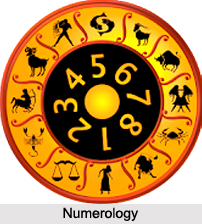
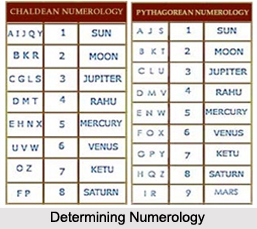
Numerology in IndiaNumerology is the study of relation between human beings and numbers. According to numerology each number acquires the sensations of a particular planet and accordingly each alphabet has the vibration of a particular number. These numbers reveals some of the behaviour traits, emotional reactions, talents, strengths and obstacles of a person. It has also been mentioned that numerology discloses the traits of human beings that exist in the human sub-conscious mind.

Concept of Numerology
Numerology is based on the concept that each number represents the vibrations of a particular planet and each alphabet corresponds to the vibration of a particular number. Right from the numbers influencing the core basis of the personality (birth date), or a changeable but important influence in a person’s life (name), numbers act as compelling forces in human destinies.

History of Numerology
Numerology in India is also known as ‘Vedic Numerology’ because it emerged in the era of the Vedas, some of the oldest and most sacred Indo-Aryan literature. Indian Vedic numerology is based on the idea that everything in this material word is influenced by one or more of the nine planets.

Process to Determine Numerology
Numerology in IndiaThe process of numerology is simple and effective. Like for instance, if a person was born on 23rd July, 1978. The core birth date will be 23. Thus, it can be written as - 2 +3 = 5. Five is the basic number with the vibrations of Mercury. This person’s personality will be coloured by the qualities bestowed by this number. Anyone born on 5th, 14th and 23rd of any month will have the basic number 5. For further conclusions, the entire birth date will be added. It is as follows -

23/ 07/1978
2 + 3+ 7+ 1+ 9+ 7 + 8 = 37
3 + 7 = 10
1 + 0 = 1

Number 1 possesses the strong vibrations of Sun. Thus, the person is also coloured to an extent by the characteristics of number 1.

For more, visit the link below:

Thursday, 21 April 2022

Vedic Astrology


Vedic AstrologyVedic Astrology is an ancient Indian science explaining movements of the planet and its positions with regards to time and effect on all entities on earth. Astrology is a Vedanga - a part of Vedas. Understanding of astrology was in its infancy in the Vedic period. It included gathering knowledge on the planets, their movements and their location. Earlier Vedic astrology was only based on the planetary movements but later on it included zodiac signs also.

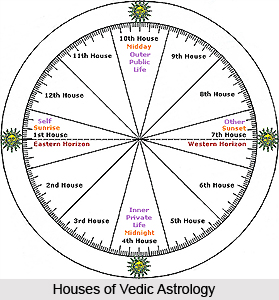
There are 27 constellations made up of 12 zodiac signs, 9 planets and 12 houses. Depending on when a person is born, the 12 signs are distributed among the 12 houses and 9 planets are placed in various houses. The visual representation of the signs and planets is called a horoscope chart. Vedic Astrology is inferring the meaning of these arrangements.

Types of Vedic Astrology
Vedic Astrology (Jyotisha) has Siddhanta, Samhita and Hora as its three main branches:

  • Siddhanta: Siddhanta implies Astronomy and its application to astrology. It provides planetary calculations from the beginning of Creation. Siddhanta is used only for creating Tantra and Karana texts for practical purposes.


  • Samhita: Samhita refers to ordinary astrology. It predicts important events related to countries such as political events, war, earthquakes, meteorology, financial positions, election, Vastu Shastra and so on.


  • Hora: Hora covers predictive astrology. It has predictions based on individual horoscope. It contains selection of favourable time to start an activity to get maximum fulfilment.

  • For more, visit the link below:

    Tuesday, 25 January 2022

    Nine Planets in Astrology


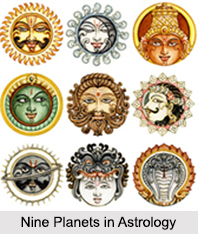
    Nine Planets in Astrology, AstrologyNine Planets in Astrology, according to Vedas, are known as ‘Nava-Graha’. These planets exist in the entire sphere of celestial and astrological studies. In Astrology, Planets are the heavenly bodies, whose movements are tracked by keeping Earth as the central point; the heavenly objects casting their influence on earth, nature and its inhabitants to a great degree. Although, technically Sun and Moon are not planets, and Rahu and Ketu are just lunar nodes, still they are essentially referred as planets according to the Hindu astrology.

    Each planet has a specific influence in astrology and governs a certain area of one’s personality or approach to life. For example, Mercury relates to the mental outlook; Venus governs the love nature. It is the placement of these planets in the various zodiac signs that determines how one expresses the different facets of their personality.

    The Nine planets in Vedic astrology are of prime importance to Indian astrologers. Each of the nine planets, which are also known as ‘Nava-Graha’, is discussed below:

    Surya or Sun
    Sun bestows willpower, energy and fortune to each and every individual, enabling them to live life to its grandest level. Right from the looks of a being, to his personality, wisdom and achievements, Sun or Surya has the dominant role to play. Sun provides with the physical, as well as psychological well being of a person. Its benevolence is received by kings, leaders, politicians, artists, jewellers, gemmologists, actors, alike.

    Chandra or Moon
    Moon or Chandra is responsible for fertility, growth, long distance travel, mental peace, memory, relation with mother and childbirth. An excellent and powerful moon provides good emotional strength and harmonious life. A weak moon can cause mental anxiety, emotional disturbance and tough relations with mother and people all around.

    Brihaspati or Jupiter
    Brihaspati is known as the planet of luck and is responsible for all the success, fortune, intellect and religious aspects of lives. Jupiter or Brihaspati signifies high ambitions, knowledge and accomplishments. Consequently, it is a prominent planet in the charts of successful priestsreligious leaders, politicians and people pursuing deep knowledge.

    For more, visit the link below:

    Wednesday, 24 November 2021

    Nakshatras in Astrology


    Nakshatras in AstrologyNakshatras in Astrology are the 27 constellations forming a belt, against backdrop of which the zodiacs are considered. Geographically, these Nakshatras are 300 to 400 light years away from earth. Nakshatras in Astrology have exclusive system of prediction which is based on the position of the moon in a given constellation in Vedic Astrology.

    Since ancient times, the Moon was looked for calculating time and connecting to the stars. In the Vedic system of Astrology, the 27 constellations are the key to understanding celestial influences on the planet. These 27 constellations are actually the 27 Nakshatras. Vedic or Hindu astrology offers a most powerful analytical technique which is based on the Nakshatra of a person at the time of birth. The zodiac is divided into 12 signs and 27 constellations. Each covers 13 degrees and 20 minutes of the zodiac. Each Nakshatra is defined as the head of a specific group of stars.

    Etymology of Nakshatras
    The term "Nakshatra" means ‘Sky Map’ due to ‘naks’ meaning ‘sky’ and ‘kshetra’ meaning ‘region’. Another translation is derived by using a different analysis; it says ‘Naksha’ is ‘map’ and ‘Tara’ is ‘star’ and so ‘Nakshatra’ means ‘Star Map’. Both these meanings clearly bring out the significance of the 27 Nakshatras and constellations. ‘Nakshatras’ is the name that is given to the constellations or mansions of the Moon, as the Moon resides in each of these constellations for one day.

    Concept of Nakshatras
    In Vedic astrology, Nakshatras are considered to be essential. The system of constellations is very ancient and dated back about more than 5,000 years. Its reference is found in the ancient Vedic scriptures. The concept of Nakshatra is known to give more accurate results. Nakshatras are also considered the backbone of astrology and interestingly they are considered throughout the astrological analysis. According to the saints, Nakshatras in Astrology represent the abodes into which the fruits of labour or Karma is transferred and stored. Thus, Nakshatras distribute the outgrowth of Karma according to Hindu scriptures.

    Mythological Significance of Nakshatras
    Several interesting legends are associated with Nakshatras in Astrology. As per the Hindu mythology, Chandra or Moon had married all 27 daughters of King Daksha, who are the star constellations in the sky. He used to spend more time with his beloved queen Rohini and because of this reason his other wives complained to their father. In spite of the repeated interference of King Daksha, Moon did not change his habit. Finally the king lost his cool and cursed the Moon. As a result, the size of Moon started diminishing. All the gods intervened and requested the king to withdraw the curse. King Daksha then assured that if Moon visits all his wives, he would recover his lost strength for half a month. Thus, this is stated as the reason why Moon visits all the 27 constellations during a month.

    Classification of Nakshatras
    Nakshatras are classified in several ways and the classification is made according to basic attribute. The primary motivation is Kama - sensual desires; Artha - material desires; Dharma - living life based on spiritual principles; Moksha - liberation from birth and death, sex, caste, species and so on. They are primarily revealed by their presiding deities, ruling planets and their symbolic form.

    For more, visit the link below: