Showing posts with label jain. Show all posts

Wednesday, 7 February 2024

Festivals of Jains


Festivals hold a significant place in the culture and religion of Jainism, one of the oldest religions in the world known for its principles of non-violence, truth, and self-discipline. These festivals of Jains, celebrated with devout reverence, mark important events in the lives of revered figures, moments of spiritual reflection, and occasions for community bonding. Among the array of Jain festivals, several stand out for their widespread observance and spiritual significance. 

Mahavir Jayanti, the most revered festival among Jains, commemorates the birth anniversary of Lord Mahavira, the 24th and last Tirthankara (spiritual teacher) of Jainism. Held in March or April, adherents engage in prayer, meditation, and recitations of teachings to honor the life and teachings of Lord Mahavira, emphasizing his principles of non-violence and compassion. 

Paryushan Mahaparva, also known as Daslakshana, is an eight-day festival of self-purification observed in August or September. During this period, Jains focus on introspection, repentance, and seeking forgiveness for past wrongdoings. The festival culminates with Samvatsari, the day of universal forgiveness, where Jains seek and grant forgiveness from one another, fostering harmony and unity within the community. 

Gyan Panchami is celebrated in November to commemorate the day when Lord Mahavira imparted his divine knowledge to his chief disciple, Gautama Swami. In this religious festival, Jains engage in study sessions, discussions, and lectures to honor the importance of wisdom and knowledge in the Jain tradition. 

Paush Dashami, observed in December or January, marks the day when Lord Parshvanatha, the 23rd Tirthankara, attained nirvana (liberation) at Shikharji. Devotees visit temples, participate in rituals, and reflect on the teachings of Lord Parshvanatha, emphasizing the path to spiritual liberation through austerity and renunciation. 

Akshay Tritiya Tapa holds special significance for Jain ascetics and lay followers alike. It falls in April or May and commemorates the day when Lord Rishabhanatha, the first Tirthankara, broke his year-long fast by consuming sugarcane juice. Jains observe this day by performing acts of austerity, charity, and fasting to cultivate spiritual discipline and inner strength. 

Snatra Mahotsav is a grand ceremonial bathing ritual conducted to honor the idols of Lord Mahavira and other Tirthankaras. Held throughout the year, devotees gather to bathe the idols with auspicious substances like milk, honey, and saffron water, symbolizing purification and spiritual cleansing. 

Yaksha Puja is a unique festival dedicated to the worship of Yakshas and Yakshinis, celestial beings revered in Jainism as guardians and protectors. Celebrated with fervor and devotion, devotees offer prayers, perform rituals, and seek blessings for prosperity, health, and spiritual well-being. 

Jain festivals play a crucial role in reaffirming the principles of non-violence, truth, and spiritual upliftment within the Jain community. Through rituals, prayers, and acts of devotion, adherents honor the lives and teachings of revered figures, fostering a deep sense of spiritual connection and communal harmony. These festivals serve as reminders of the rich cultural heritage and enduring values that define Jainism, inspiring adherents to lead lives of compassion, integrity, and self-realization.

Tuesday, 9 November 2021

Jain Sculptures of India


Jain Sculptures of IndiaJain sculptures were primarily notable for their splendour. The brilliance of the Jain sculptures can be seen from the fine images of the Jain Tirthankaras. Columned chambers, inner sanctums, domes and pointed spires are the common elements of the Jain Temples architecture.

Figurines of Jain Art
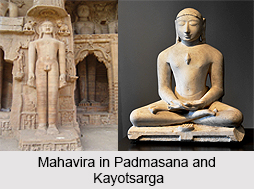
Jain sculptures are images of Jain Tirthankara. Jain sculptures are an example of Jain art. These figures, also known as "Tirthankaras" that are the principal focus of Jainism art. They are worshiped by followers of Jainism. The Tirthankara sculptures are mainly of Lord Parshvanatha, Rishabh Dev or Vardhaman. The highest ideal in Jainism is the wandering and passionless ascetic, which is why Jains are always depicted as mendicants or yogis. They are portrayed in only two positions: either seated in the lotus posture (Padmasana) or standing in the exclusively Jain body-abandonment posture (Kayotsarga).

In terms of style, ornament, subsidiary figures, Jain sculpture is indistinguishable from sculpture made for other Indian religious groups. Movements and innovations within the Jain religious communities are also depicted in sculpture, which proved influential to members of other religious traditions with which they regularly came in contact. Some features of Jain sculpture are Jain, unmistakable from imagery associated with other sects and they help one to identify the work as Jain in orientation. They include representations of the 24 Tirthankaras who are the liberated beings of Jainism. Narrative sequences that are found only in Jain devotional texts. Most common are scenes from the lives of the Tirthankaras especially Mahavira, Lord Parshwanatha or Rishavanatha.

Examples of Jain Sculptures
Giant rock-cut statues of Jain Tirthankaras are carved in the Gwalior Fort, Gwalior and Madhya Pradesh. Charans are footprints exclusive to Jain temples. The charans of Tirthankara Rishabha are present at the Badrinath Temple. Many Jain sculptures are kept in Government Museum, Chennai.

For more, check the link below:

Friday, 31 May 2019

Marwari Cuisine, Indian Regional Cuisine

nh_01_vt_bb_pk_380_1
Marwari Cuisine is the cuisine of the people from the east while princely state of Marwar in Rajasthan. It is primarily vegetarian and offers a fabulous variety of dishes. The cooking style used is mainly based on the natural climatic conditions of the desert land from where the Marwari people have originated.

Features of Marwari Cuisine
There are some specific reasons for the use of some specific ingredients. The local people who use various types of spices and herbs.
148359966556c2041f9ec671054405bc27-by-jodhpurispices.jpg.
The Marwari Jain people prepare food without using onions, garlic or any ingredient grown under the soil, except ginger and groundnuts.


dhokla.jpg
Delicacies of Marwari Cuisine
In Marwari cuisine, the use of gram flour and curds is very common, each tasting dhoklas different from the other. ‘Gatta’, ‘Chilla’, ‘Kadhi’, ‘Pitthor’, ‘Pakodi Ki S
9491a22f8ae0272abbdf6c5acc909c1cabzi’, all of these have gram flour & curds. The  flours such as bajra, makai, jawari are used in rotis, porridge, dhoklas and even in raitas. Some of the breakfast dishes are ‘Bajre Ka Khichdaa’, ‘Makai Ki Ghaat’, ‘Moong Dal Khichdi’, served during winter.

Read more : Marwari Cuisine, Indian Regional Cuisine

Tuesday, 14 May 2019

Kubera, Indian Lord of Wealth


81c669+5tUL.png
Kubera is the king of the ‘Yakshas’ (nature spirits) and the God of wealth. In the Vedas, He is mentioned as the prince of demons and spirits which live in the shadows. He became the God of wealth and abundance only at a much later stage.

Iconography of Kubera
7d131bd4e0b74e8ad2b5682f6f7f9d14.jpgKubera is described as having three legs, only eight teeth, one eye and being adorned with jewels. He holds a mace, a pomegranate or a money bag in his hand. Kubera is usually depicted with a mongoose in Buddhist iconography. 

e5e513548c8e9024f2cb3705420e129f.jpgMyths of Kubera
Kubera has also been assimilated into the Buddhist and Jain pantheons. In Buddhism, he is known as Vaisravana.  It is believed that he used to travel in his ‘Pushpaka Vimana’. The glorious days of Lanka came to an end when Kubera’s step-brother Ravana, with a boon from Brahma, ousted him. Kubera then left Lanka and settled in Alakapuri near Kailash.However, in other Hindu epics such as Mahabharata
_bf3956bc-235b-11e7-a4a0-8e0501b9fa54.jpg and Ramayana, he is the wealthiest Hindu God. Kubera is frequently worshipped with Lakshmi for wealth and success, particularly during Diwali.


Read more about indian gods : Kubera, Indian Purans

Saturday, 11 May 2019

Indian Philosophy

Indian Philosophy is intense spirituality that emphasises on the attainment of salvation and eternal bliss through a righteous path.
3_Jain_philosophy.jpg2_Books_of_Hindu_Philosophy_2.jpg2_Buddhist_Philosophy.jpg
1_Swami_Vivekananda_Spiritual_Leader.jpgThe philosophy of India originates into life and again transcends into life itself. The main components of the Indian philosophy are the Hindu philosophy, the Buddhist philosophy and the Jain philosophy with little influences of Sikhism and Islam during various time periods.
1_Sri_Ramanuja.jpg

History of Indian Philosophy
The philosophical tradition of India was carried forward by eminent personalities like Swami Vivekananda , Aurobindo Ghose and many more during the British period that is from 1750-1947 and is termed as the modern phase of Indian philosophy.

1_Lord_Krishna_Describing_Bhagavad_Gita.jpgSchools of Indian Philosophy

Indian Philosophy has been subdivided into different schools according to their beliefs, opinions, thoughts and way of action.

Religious Influence on Indian Philosophy
Indian_Philosophical_Texts_Indian_Philosophy.jpg
Indian Philosophical Texts:

Sacred texts like Bhagavad Gita, Manu Smriti, Nyaya Sutra, Vaiseshika Sutra, Arthashastra, and Upanishads have continued to nurture Indian Philosophy.

To know in detail visit here : Indian Philosophy

Wednesday, 9 January 2019

Temples - Dilwara temples

Jain-Temple-Rajasthan-Temples-Tour-Package-9-Nights-10-Days-Trip
The Dilwara temples are one of the finest Jain temples and Dilwara temple are regarded as the epitome of Jain art. It is known for its extraordinary architecture and marvellous marble stone carvings. This is a pilgrimage site for the Jains. According to the inscription found at Mount. Abu, it was basically a seat of Shaivism and Jainism and made its appearance only in 11th century.
Dilwara 3History of Dilwara Temples
Mount Abu located in the southwest part of Rajasthan is a part of the Aravalli Mouintain Ranges and is separated from the Aravalli by a narrow valley and Guru Shikhar is the highest point at the northern end. The Dilwara temples are dedicated to the Jain Tirthankars and served as storehouses of illustrated manuscripts and treatises. The temples at Mount Abu were constructed between 800 AD and 1200 AD. Vimala Shah,
templeArchitecture of Dilwara Temple 
. The temple is built in the Nagara style of architecture. The temple is spread across a vast area and most of the temples are single-storied structures.
Temples of Dilwara
The Dilwara Temple complex comprises of 5 temples, each with its own identity and these are named after the village in which they are located. Discussed elaborately below are the 5 main temples of Dilwara....
t    tt
For more, here is a great site you should checkout:   Dilwara Temple have five shrines that are dedicated to Lord Adinath, Lord Rishabh Dev, Lord Neminath, Lord Mahavira and Lord Parshvanatha respectively.

Friday, 29 July 2016

Jain Temples of Bihar

Bihar had been the genesis of both Jainism and Buddhism. Therefore, the temples of Bihar also comprise the Buddhist and Jain shrines.To know more read:
http://www.indianetzone.com/56/jain_tmples_bihar.htm