Showing posts with label spicy. Show all posts

Saturday, 2 April 2022

Kongunadu Cuisine, Tamil Nadu


Kongunadu Cuisine, Tamil NaduThe cuisine is extensive as the Kongu region is vast. Kongunadu is a region comprising the western part of the Tamil Nadu state of India. It includes towns like Ooty, Coimbatore, Pollachi, Tiruppur, Udumalpet, Avinashi, Palladam, Kangayam, Karur, Erode, Aathur, Salem, Palani Mettur and Dharapuram.
Features of Kongunadu Cuisine

The cuisine of Kongunadu has their origin and own style. The chefs of Kongunadu follow the traditional way of cooking. It does not involve marination of any raw material thereby giving the food a different taste and unique texture. Roasted groundnut, shallots add different flavours to the dishes. Turmeric is added in grated form and grounded after roasting, that gives the product a deep yellow colour and delectable aroma. The dishes are not very oily and chilli is used minimally. Considerable amount of pulses are also used. Other major specialties of Kongunadu cuisine are the usage of dry coconut, pickles, fried mutton, and chicken. Pickles happen to take an important part in the cuisines of Kongunadu.

Ingredients in Kongunadu Cuisine
Cereals like rye, bajra, jowar are used to prepare delicacies for their main course. The people of Kongunadu prefer the use of unpeeled potatoes and milk in curries. They also favour the usage of "Coparai" which means dry coconut in curries and gravies rather than fresh coconut. In Kongunadu mangoes are heavily used to prepare various sweets. The region is the highest producer in Gingely oil, Coconut oil and Turmeric, which is reflected in their cuisine. Blessed with an abundance of oil seeds growing, the region indulges in a variety of pickles soaked in oil. Lemon, Raw mango, Green pepper, Ginger, etc. are few of those which are made into pickles.

Kongunadu Cuisine, Tamil NaduDelicacies of Kongunadu Cuisine
Some of the popular vegetarian recipes of Kongunadu cuisine includes Benian, Mushroom thirattal, Ellu kara dosai, Ragi roti, Pallapatti kathirikai masala, Kathamba saadam, Kuchi kizhangu avail, Salavu kuzhambu, Drumstick leaf adai, Karur kaai kurma, Pachapuli rasam, Nila kuzhambhu, Kollu masiyal, Payiru thirattal, Kaalaan parangi kari. Thandu keema urundai, Karur mutton kuzhambhu, Keeranoor mutton kuzhambhu, Karimeen kuzhambhu, Pallipalayam kozhi varuval, Nathakadaiyur nandu masala, Attakatti yeral masala, and Aathur kozhi kuzhambhu are some of the non-vegetarian dishes.

As coconut grows everywhere in this area it is not surprising it plays a predominant role in all meals. Coconut chutney as side for staples like idli and dosa is almost an everyday affair. Tomato based side dishes like chutney and kuzhambu are also common. One of the most popular breakfast items is the coconut milk based kuzhambu which is called paal curry kuzhambu, usually served with dosa. Paniyaram with coconut chutney, sandhavai (string hoppers) with sweetened coconut milk are other popular breakfast items.

For more, visit the link below:

Monday, 27 December 2021

Bihar Cuisine, Indian Food


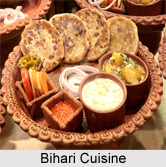
Bihar Cuisine, Indian FoodBihar Cuisine is predominantly vegetarian because traditional Bihar society, influenced by Buddhist and Hindu values of non-violence, did not eat eggs, chicken, fish and other animal products. However unlike Gujarat and other communities of the South, non-vegetarian food is quite acceptable in few traditional homes of Bihar. The cuisine of Bihar is similar to a great extent to North Indian Cuisine but has an influence from other East Indian Cuisine for example like Bengali Cuisine.

Variety of Food in Bihar Cuisine
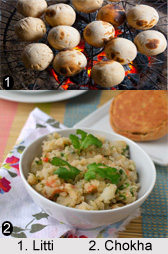
Bihar cuisine offers several tasty morning foods which have their immense nutritional value, some of them are "Sattu", considered as an appetizer, is taken with water and is served with pickle, onion and green chillies, is a common intake of the laboured class. Another preparation of Sattu is prepared with raisins, milk, cashew nuts and pista, a favourable drink of the elite. Other morning foods, prepared with Sattu are "Parantha" in which Sattu is mixed with spices and stuffed, and another one is "Litti" which come in large varieties, cooked with flour, ginger, garlic and pepper and served with chutney, curry or pickle. Among the popular as well as of high nutritional value food is "Chokha" which is a preparation made with mashed potatoes and other vegetables and are garnished with onion, chillies and mustard oil. "Baingan ka Chokha" is a famous dish of Bihar. "Bachka" is a fried food and it needs to slice the vegetables and fried in a chickpea batter to make these crispy fritters. "Chura Dahi" (flattened rice and curd), taken with sugar or jaggery, is a favourite breakfast among the people of Bihar. Bihar cuisine encompasses different types of bread and Parathas such as "Onion Paratha", "Potato Paratha", "Sattu Paratha", "Makai Roti", "Dal Puri", "Makuni" etc. "Samosa" and "Kachoris" are enjoyed as fast food all over Bihar. "Kachori" is prepared in various ways and are of different kinds like, "Sattu ki Kachori". "Pitha" and "Bakha", steam cooked is mainly prepared in North-Eastern Bihar. "Makhana", mainly water fruit, is prepared from lotus seeds, with milk and sugar is must during religious festivals and marriages. It can also be cooked as a salty puff. Makhana or 'Chura Bhunja' is paired with uncooked sprouts soaked in water and cherished by the locale.Bihar Cuisine, Indian Food

Bihar Cuisine has several ramifications of vegetarian and non-vegetarian foods. Most of the inhabitants of Bihar prefer to have vegetarian dishes which consist of ‘Rice’, ‘Roti’, ‘Lentils’, ‘Pickle’ and ‘Tarkari’, ‘Aloo Chokha’, ‘Kala Chana Ghoomni’, ‘Chana Dal ki Kachree’, ‘Subzi Jhingi’ or ‘Nenua Chana’, ‘Kafta’, ‘Shahi Paneer’, ‘Vegetable Korma’, ‘Palak Paneer’, ‘Bharwan Karela’ etc.

Bihar has a large number of Buddhists and Jains who consume a strict vegetarian diet and others prefer to have non-vegetarian foods. The Kayasthas of Bihar likes to consume healthy but vegetarian dishes as their meal. The Maithil Brahmins follow a tradition to offer goat or meat as ‘Prasad’ to God in many religious festivals. In Bihar, offering meat to a guest is considered as sacred. The Bihar cuisine has some special dishes among which "Tilba", "Chura", "Chitba", "Pitthow" and "Makhana" can be named. "Kadhi" is preferred among the Biharis, eaten with plain rice. "Dhuska" is a deep fried, salted item prepared from a mixture of powdered rice and ghee but is one of the many dishes of Bihar.

Tribal Food in Bihar Cuisine
Bihar Cuisine includes the food habits of the aboriginal tribes who are the residents of Chotanagpur, the Southern half of Bihar. The tribes mainly take boiled cereals, a curry of boiled vegetables or meat or edible roots seasoned with salt and chillies and millet. Among the tribal specialties are "Asur Pitha" (prepared from the flour of Mahua) and "Sauria Ghata" which is cooked like rice with the crushed maize. "Korwa Lata" and "Korwa Jatangi" are also famous among the tribes. Bihar Cuisine, Indian FoodThe tribes relish a beverage called "Handia" which is prepared by fermenting rice with the help of biro (a medicinal cake), partially cooked over fire in a Handi (earthen cooking pot). Then it is cooked and mixed with powdered biro. Then the pot is kept in a cool place for some days and after a certain time the Handia gets ready to be distributed.

For more, visit the link below:

Tuesday, 24 November 2020

Types of Spices


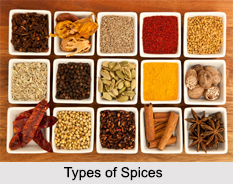
Types of Spices, Indian FoodIndian spices exhibit a great variety which adds different flavours and aroma to the food making them more luscious and in certain cases healthy. There is a popular belief that spicy foods are bad for health. This belief is not only far from the truth but also that; spices in fact have medicinal properties and are good for health.

Medicinal Properties of Different Types of Spices
Spices are well known as appetizers and digestives and are considered essential in the culinary art all over the world. Some of them have anti-oxidant properties, while others have preservative properties and are used in some foods like pickles and chutneys etc. Some spices also possess strong anti-microbial and antibiotic activities. Many of them possess medicinal properties and have a profound effect on human health. They cleanse the oral cavity from food adhesion and bacteria; they may help to check infection, and to protect the mucous membrane against thermic, mechanical and chemical irritation. Spices possibly activate the adrenal-cortical function and fortify resistance and physical capacity. Stroke volume, blood pressure and stroke frequency can be markedly diminished or augmented by means of spices. Spices inhibit thrombus formation and accelerate thrombolysis.

Production of Different Types of Spices
India has a glorious past, pleasant present and a bright future with respect to production and export of spices. Pepper, cardamom, chillies, turmeric and ginger are some of the important spices produced in India. India is a great exporter of spices.

Different Types of Spices
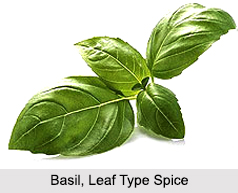
Types of Spices, Indian FoodThe important spices produced in India are black pepper, cardamom, ginger, turmeric, chilli, garlic, coriander, cumin, fennel, fenugreek, celery, clove, nutmeg, cinnamon, tamarind, kokum, garcinia, curry leaf, saffron, vanilla and mint. Some categories of the different types of spices are as follows:

  • Fruit Type Spices: Many fruits are used as spices in dried form. They are known for augmenting the taste and aroma of the food. Common fruit type spices include Cardamoms, Juniper, Nutmeg, Mace, Vanilla, Star Anise etc.


  • Seed Type Spices: Seed type spices are the fertilized and ripened ovule having a protective covering. Some of these are used in their original form while some are powdered before use. Common members of this type of spices are Caraway, Anardana, Ajwain, Celery etc. They do not possess much nutritional value, however their use in medicinal purpose, perfumery and making flavouring agent have been well established.


  • Bark Type Spices: Bark type spices are obtained from the bark of the trees. These are known to be highly flavoured imparting great taste to the food when added. The bark of the trees growing at higher altitudes produces better quality bark and high content of essential oils. Common bark type spices are Cinnamon and Cassias.

  • For more visit the link given below:

    Friday, 31 May 2019

    Marwari Cuisine, Indian Regional Cuisine

    nh_01_vt_bb_pk_380_1
    Marwari Cuisine is the cuisine of the people from the east while princely state of Marwar in Rajasthan. It is primarily vegetarian and offers a fabulous variety of dishes. The cooking style used is mainly based on the natural climatic conditions of the desert land from where the Marwari people have originated.

    Features of Marwari Cuisine
    There are some specific reasons for the use of some specific ingredients. The local people who use various types of spices and herbs.
    148359966556c2041f9ec671054405bc27-by-jodhpurispices.jpg.
    The Marwari Jain people prepare food without using onions, garlic or any ingredient grown under the soil, except ginger and groundnuts.


    dhokla.jpg
    Delicacies of Marwari Cuisine
    In Marwari cuisine, the use of gram flour and curds is very common, each tasting dhoklas different from the other. ‘Gatta’, ‘Chilla’, ‘Kadhi’, ‘Pitthor’, ‘Pakodi Ki S
    9491a22f8ae0272abbdf6c5acc909c1cabzi’, all of these have gram flour & curds. The  flours such as bajra, makai, jawari are used in rotis, porridge, dhoklas and even in raitas. Some of the breakfast dishes are ‘Bajre Ka Khichdaa’, ‘Makai Ki Ghaat’, ‘Moong Dal Khichdi’, served during winter.

    Read more : Marwari Cuisine, Indian Regional Cuisine

    Tuesday, 28 May 2019

    Soya Tikki, Indian Snack

    big_soyabean_tikki-1.jpg

    Soya Tikki is a popular Indian snack item relished almost all over the country. This mouth-watering snack is rich in protein and fibre. It is easy to cook and can be prepared at home.  Soya Tikki can also be purchased from various food stores.

    soya.jpgIngredients of Soya Tikki

      palak-soya-cutlets
    • Soya paneer, half kg
    • Soya flour, 100 gm
    • Potatoes, four to five
    • onion (finely chopped), one or two
    • Ginger (grated), two tsp
    • Peas (shelled), half cup
    • Coriander leaves (finely chopped), half cup
    • Green chillies (finely chopped), two tsp
    • Red chilli powder, one tsp
    • Cumin seed powder, two tbsp
    • Coriander (dhania) powder, two tsp
    • Cloves (ground), one tsp
    • Salt to taste
    • Cooking oil, as required
    Read more : Soya Tikki, Indian Snack

    Saturday, 12 November 2016

    Indian Culinary Influences by Indian Invasion


    The variety in the cuisine of India has originated on the basis of foreign invasions. According to history, it is proved that the Indian cooking style is an amalgamation of various cultures and traditions as well as beliefs. To know more read: http://www.indianetzone.com/39/indian_culinary_influences_by_indian_invasion.htm