Showing posts with label indian recipe. Show all posts

Wednesday, 15 July 2026

Nawab Mehboob Alam Khan: Preserving the Legacy of Hyderabadi Culinary Heritage

Hyderabad is celebrated for its rich culinary traditions, blending influences from the Deccan, Mughal, Persian, and Turkish kitchens. Among the foremost figures dedicated to preserving this remarkable food heritage is Nawab Mehboob Alam Khan, an Indian food connoisseur and culinary expert renowned for his extensive work in Hyderabadi cuisine. Through years of meticulous research, documentation, and practical application, he has played a significant role in restoring several forgotten recipes, ensuring that the authentic flavours of Hyderabad continue to be appreciated by future generations.


Early Life and Family Background

Mehboob Alam Khan was born into a distinguished noble family in Hyderabad. He completed his schooling at St. George's Grammar School, one of the city's well-known educational institutions. His family has long been associated with Hyderabad's social and business landscape. 

His father, Shah Alam Khan, was an eminent educationist and an influential personality in Hyderabad. He was also the son-in-law of the founder of the Hyderabad Deccan Cigarette Factory, a business that has remained closely linked with the family over the years. 

Today, Mehboob Alam Khan's family continues to own the Hyderabad Deccan Cigarette Factory in Hyderabad. In addition to his business interests, he serves as the director of the Anwar-uloom Educational Society, reflecting his continued involvement in educational and community development initiatives. 

A Lifelong Passion for Hyderabadi Cuisine

Mehboob Alam Khan's greatest contribution lies in his unwavering commitment to researching and preserving the traditional cuisine of Hyderabad. Over several years, he has undertaken detailed studies of historical recipes, culinary practices, and traditional cooking techniques that were once an integral part of the royal kitchens but gradually disappeared with changing lifestyles. 

His efforts have resulted in the revival of numerous lost recipes that showcase the richness and diversity of authentic Hyderabadi cuisine. By carefully documenting these dishes and encouraging their preparation using traditional methods, he has helped safeguard an important aspect of India's culinary heritage. 

Professional Contributions to the Hospitality Industry

Recognised for his deep knowledge of Hyderabadi food, Mehboob Alam Khan has worked as a culinary consultant for the Taj Group of Hotels. In this capacity, he has contributed to presenting authentic regional cuisine in prestigious hospitality settings while maintaining its historical integrity and traditional flavours. 

He has also worked with the government in planning and preparing menus for official state dinners, where regional culinary traditions are showcased before distinguished guests. His expertise has helped ensure that authentic Hyderabadi cuisine is represented with accuracy and elegance on such formal occasions. 

In addition, Mehboob Alam Khan is a stakeholder in Taj Holdings, reflecting his broader engagement with the hospitality sector. 

Promoting Authentic Hyderabadi Food

Beyond research and consultancy, Mehboob Alam Khan has promoted traditional cuisine through his chain of restaurants, which specialises in serving authentic Hyderabadi dishes. These establishments provide diners with an opportunity to experience recipes rooted in the city's rich culinary history. 

The family's association with Hyderabadi cuisine extends to the next generation as well. His nephew, Qutub Alam Khan, owns Chicha's, a well-known Hyderabadi restaurant located at Lakdi ka Pul, further contributing to the preservation and promotion of the region's distinctive food culture. 

A Lasting Culinary Legacy

Nawab Mehboob Alam Khan has established himself as one of India's foremost custodians of Hyderabadi cuisine. By reviving forgotten recipes, collaborating with leading hospitality institutions, and promoting authentic culinary traditions through restaurants and official events, he has made a lasting contribution to preserving one of India's most celebrated regional cuisines. His work continues to inspire chefs, food historians, and enthusiasts who value the importance of safeguarding India's diverse culinary heritage.

Wednesday, 22 March 2023

West Indian Cuisine

 The communities that belong to the western part of the country principally practise Jainism and the religion teaches them non violence. Indian regional cuisine is majorly influenced by religion and external invasions. The major states of the region comprise of Gujarat, Maharashtra, Goa and Rajasthan. West Indian Cuisine varies from region to region.

Features of West Indian Cuisine
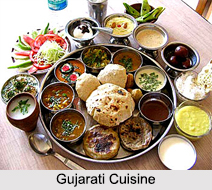
Essentially, the cookery in the western region of the country is simple with dishes like Aloo Bhaji (spicy potatoes), Kadhi (chickpea dumplings in yoghurt sauce) and preparations polished off with rice and pooris (puffed whole wheat fried breads).This region has diverse food culture that is spicy and largely vegetarian with some popular meat dishes. Gujarati cuisine has a special place for desserts and snacks. Gujarati prefer the thaali style meals where multiple dishes from starters, maincourse to side dishes and desserts are served in a large plate.

Maharashtrian cuisine among the West Indian Cuisine has mainly 2 sections defined by the geographical demarcations. A large portion of Maharashtra falls in the coastal regions and depends on rice, coconut and fish. Maharashtra also resides in the hilly regions of the Western Ghats and Deccan plateau regions and use groundnut. Their main cookery follows with jowar (sorghum) and bajra (millet) as staples.


Goan Cuisine
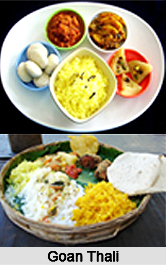
Goan cuisine, on the other hand is influenced by the Portuguese cookery as well. Goa with its lush green coastline makes fresh fish and seafood available in ample quantity. Goan cuisine is a typical blend of regional foods such as seafood, coconut milk, rice and paste. As the area is located in a tropical climate, Goan delicacies popularise the use of spices and intense flavours. The accepted dishes of the region are Vindaloo and Xacuti. Saraswat cuisine is found in the coastal areas of Goa and contributes to the Konkani food.


Gujarati Cuisine
Gujarati cuisine depends on the influence of Hinduism and Jainism. However, Gujarati cuisine is predominantly vegetarian. And the dishes are prepared with hint of sweetness adding sugar or brown sugar. A typical Gujarati Thali consists of Roti, daal or kadhi, rice and sabzi or shaak. Most of the Gujarati dishes are specifically sweet, salty, and spicy at the simultaneously.

For more, visit the link below:

https://www.indianetzone.com/2/western_indian_cuisine.htm

Tuesday, 7 February 2023

Dabbawala, Mumbai


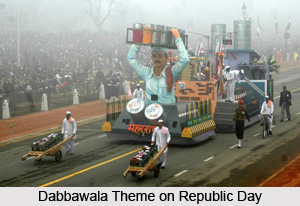
Dabbawala, MumbaiThe word "Dabbawala" can be interpreted as "box-carrier" or "lunchpail-man". In Marathi and Hindi, "dabba" means a box (usually a cylindrical aluminium container), while "wala" signifies someone in a trade concerning the object referred to in the former term. More specifically, the word dabbawala implies a person in the Indian city of Mumbai who carries and delivers freshly made food from home in lunch boxes to office workers. Dabbawalas are sometimes called tiffin-wallas. The profession of these people is a highly specialised trade that is more than a century old. They are a part and parcel of daily life of Mumbai Officegoers by providing food .

This trade has become integral to the culture of Mumbai. The concept of the dabbawala came into being when a person named Mahadeo Havaji Bachche started the lunch delivery service with about a hundred men. At the present time, Indian businessmen are the main customers for the dabbawalas, and the service often includes both cooking and delivery. Everyone who works inside this system is treated as an equal. Whatever may be a dabbawala's function, everyone gets paid about two to four thousand rupees per month. More than 175,000 or 200,000 lunch packages get delivered every day by an estimated 4,500 to 5,000 dabbawalas, all with an exceptionally small nominal fee and with maximum punctuality.

The BBC has formed a documentary on dabbawalas. Moreover, Prince Charles, during his tour to India, visited them. As a result of the tremendous publicity, some of the dabbawalas were asked to give guest lectures in top business schools of India. Interestingly, the success of the dabbawala trade has involved no Western up to date high technology. Dabbawala, MumbaiThe New York Times reported in 2007 that the 125 year old dabbawala industry continues to grow at a rate of 5- 10% per year.

For more, visit the link below:

Monday, 23 January 2023

Namkeen, Indian Snack


Namkeen, Indian SnackNamkeen refers to various savoury snack foods that are quick to prepare, spicy, usually fried, and eaten in the evening or morning with tea or with any one of the meals as a side dish. The term ‘Namkeen’ is probably derived from the Hindi word ‘Namak’ meaning salt. Thus, the word ‘Namkeen’ is used for salty snack foods.

There are many kinds of namkeen available in the market. A given snack may be part of a local culture and its preparation and popularity vary from place to place. These snack items are made by mixing several things like beaten rice, fried pulses, sev, gathiya, ground nuts, dry fruits, corn flakes etc. All these things are mixed together according to preferences and some spices are mixed with it and they become a very tasty accompaniment with tea. Some very famous snacks are as follows:

  • Chiwda: Chiwda is a fried snack very popular during festivals. It is made by deep frying poha and adding fried peanuts, coconut pieces, dry fruits and curry leaves.
  • Masala Ribbons: Masala ribbons are really easy to make. Just prepare a dough pass through kitchen press, deep fry and done.
  • Bhakarwadi: Bhakarwadi is simply amazing in taste bursting with flavours. It is a spicy tea time snack with a hint of sweet and slightly tangy.
  • Besan ki Sev: Besan ki Sev are quite easy to make at home. It is a crispy and light snack that goes perfect with tea.
  • Mathri: Mathri is one of the best Indian tea time snacks which are made with plain flour or wheat flour.

  • For more, visit the link below:

    Tuesday, 10 January 2023

    Cuisine of Haryana


    Cuisine of Haryana, Indian Regional CuisineCuisine of Haryana is traditional, simple and inextricably linked to the land. The people of Haryana are generally adventurous and outgoing inhabitants and believe in "eat well and drink well". They focus on the preparations that are wholesome, fresh, healthy and nutritious. They prefer zero usage of artificial flavours. Their food is designed both to delight and satisfy. The Haryanvis are predominantly vegetarian.

    Staple Food of Haryana
    Roti is one of the staple foods of Haryana and people are quite fond of this food item. Owing to this reason, the state is often called as the 'Land of Rotis'. The rotis that are mostly consumed here are made from wheat and baajra. In the earlier days, people used to make roti from a flour of wheat, gram and barley. The preparation was both nutritious and filling. Then came gochini atta made from wheat and gram flour which is equally nourishing. However, due to the rising price of gram and barley, people of Haryana now prefer the comparatively cheaper wheat flour. The preparation is filling but not nutritious like the rotis of early days.

    The people of Haryana sometimes also eat rice with lentils like rajma (kidney beans). Another dish for daily consumption is 'Bajra Ki Khichri' which is salty and wholesome millet porridge. It is served with side dishes like 'Karhi' (chickpea flour beaten in spiced yoghurt), Bathua-Ka-Raita (green leafy Bathua in delicately spiced yoghurt) and Aloo-ki-Tikiyas (mashed, browned potatoes patties, stuffed with spicy lentils, smothered in sour tamarind chutney). Mixed dal (an unusual combination of mixed, spiced pulses, simmered over a slow fire) is another side dish which is popular among the Haryanvis.

    For more, visit the link below:

    Monday, 19 December 2022

    Indian Snacks


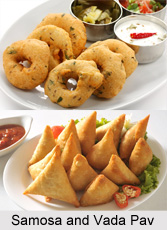
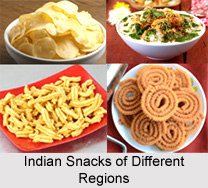
    Indian SnacksThe Indian snacks are usually delicious and mouth watering preparations. Savouries like "Samosa", "Aloo Tikki" and "Vada Pav" are easily prepared and are commonly served Indian snacks. The popularity of Indian snacks grew because of its easy process of preparation and that they can be prepared at any time. The crispness and tempting tastes of Indian snacks is liked by young and old alike. Snacks are generally eaten between meals. It is thought to be ideal to serve the appetizing Indian snacks while having coffee or tea.

    A snack is a portion of food, often smaller than a regular meal, generally eaten between meals. Traditionally, snacks are prepared from ingredients commonly available in the home. Snack foods are typically designed to be portable, quick and satisfying. A snack eaten shortly before going to bed or during the night may be called a midnight snack.

    Varieties of India Snacks
    "Bhajias" or "Pakoras" can be prepared in both vegetarian and non-vegetarian forms. Sometimes only fried forms of besan with onions can make lovely "Bhajias", at times chicken or vegetable puree is added to make it fulfilling. "Chaat" is a popular type of Indian snacks and vendors literally crowd the streets selling all kinds of delicious variations of chaats. "Bhelpuri" is a type of low fat, nutritious and delicious snacks found in India. It is just a mixture of puffed rice, sauces, dried chats and other spices. "Chiwda" is a Marathi snacks and is popular for its properties to be crispy and crunchy that can be easily stored for a long time in airtight container. Similarly "Vada Pav" can be said to be a principle dish of Maharashtra that is presently a popular Indian snacks across the nation. Breadcrumbs along with some delicious mixture of curry make the sumptuous "Vada Pav".
    Indian Snacks


    For more, visit the link below:

    Monday, 5 December 2022

    Thalipith, Indian Snack, Maharashtra


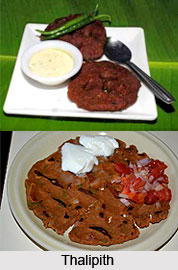
    Thalipith, Indian Snack, MaharashtraThalipith is a wonderful snack recipe from Maharashtra cuisine. It is a multi-grain mildly spiced pancake ideal for breakfast as well as lunch. It is made in various ways and one can choose different types of flours according to choice. Thalipith is easy to make and can be prepared at home.

    Ingredients of Thalipith
  • 1 cup whole wheat flour (atta)
  • 1 cup bajra flour
  • half cup rice flour
  • half cup besan
  • half tsp chilly powder
  • half tsp turmeric powder
  • 1 tsp cumin powder
  • 1 tsp dhania powder
  • Oil as required
  • Salt to taste


  • Method of Preparing Thalipith
  • Mix the flours and roast lightly in a pan or a griddle.
  • Add chilly powder, salt, turmeric powder, dhania powder and jeera powder.
  • Knead with water to make firm dough.
  • Roll into thin rotis and cook over a tawa (griddle), smearing oil on both sides, till crisp.
  • Serve hot.


  • Another method of preparing Thalipith is as follows:

    Ingredients of Thalipith
  • 1 cup whole wheat flour
  • 1/2 cup rice flour
  • 1/2 cup jawar flour
  • 1/2 cup gram flour
  • 2 tsp red chilli powder
  • 1/2 tsp turmeric powder
  • 2 tsp coriander powder
  • 1 tsp cumin seeds
  • 1/2 tsp carom seeds
  • 2 tbsp sesame seeds
  • 3/4 cup thick poha
  • 1" piece of ginger
  • 4 green chillies
  • 1 tsp garam masala
  • 1 cup finely chopped coriander leaves
  • 1/4 cup finely chopped onion

  • For more, visit the link below:

    Saturday, 19 November 2022

    Use of Spices in Ancient India


    Use of Spices in Ancient IndiaUse of Spices in Ancient India has been one of the important parts of Indian cooking. It indicates not only the types of spices used but also their cultivation in India. As the society was largely agrarian it cultivated a large variety of spices. Along with popular spices like cardamom, it also cultivated some specific spices in the form of seeds. Indian spices formed a major part of spice trade along with rest of the world. These highlight the popularity of Indian spices all over the world.

    Use of spices in India continued to remain popular in every age. The cultivation of spices in India began from pre-historic days. While some of the spices like cardamom, long pepper, black pepper, Turmeric and Asafoetida were commonly found in every generation, it also included some special types of spices that were imported from Afghanistan and other countries of the world. Cultivation of spices forms a major part of agriculture in India which formed the backbone of the Indian economy. Along with cultivation of vegetables and a number of pulses, ancient Indian society also cultivated spices which were used for both self consumption as well as trade. Use of spices in ancient India began with the Indus Valley Civilization which largely used spices like long pepper, black pepper, asafoetida along with salt. Among the Buddhists and Jains five varieties of salts were popular which included sea salt, black salt, rock salt, kitchen salt and red salt along with spices like pepper, long pepper, Cumin, Asafoetida, myrobalan, dry ginger and turmeric, Mustardand Clove. Vinegar and sour gruel was also used to garnish the food.

    For more, visit the link below:

    Friday, 21 October 2022

    Ayurvedic Vegetable Recipes

      Ayurvedic Vegetable Recipes and the vegetable dishes are akin to synagogue to the vegetable lovers. When the most of the world is paying accolades homage to the Western Culture and the adverse food habits Indian Vegetable Dishes are an entreaty to the Health diva.


    Ayurvedic Vegetable RecipesAyurvedic diet for Indian seasons includes a healthy diet plan for all the Indian seasons, namely summers, monsoons, autumns, winters and springs. This natural medicinal science emphasizes on the significance of a nutritious diet for maintaining the physical and mental stability of the human body, throughout the year. Seasonal ayurvedic diet is based on certain determinants like age, gender, immunity and various ' Doshas ' which are associated with the potency of body tissues. With a copious tradition of more than five thousand years ayurvedic diet is more than mere pathya but a holistic health treatment that include, herbs, mediation, massage and yoga.

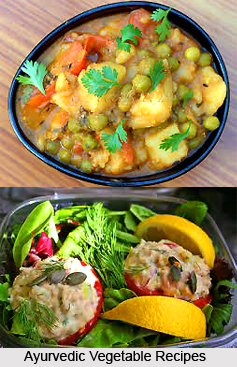
    Ayurvedic Green bean subji, Ayurvedic Grated potato subji, Ayurvedic Spinach subji, Ayurvedic Kidney bean subji, Ayurvedic Stuffed Tomato are some of the recipes that can be counted among Ayurvedic Indian Vegetable dishes. Indian cooking places vegetable to the pedestal of an all rounder. It is hardly confined to side dishes rather they are turned into appetizers, snacks, soups, main dishes, relishes, pickles, conserves, desserts, sweetmeats, breads and beverages. Just about any vegetable can be cooked in all these forms, using different ingredients and techniques. Vegetables served as side dishes with an Indian meal are cooked in just about every way conceivable to man.

    For more, visit the link below:

    Thursday, 22 September 2022

    Curry, Indian Cuisine


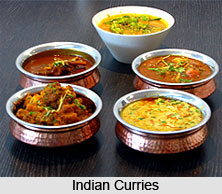
    Curry, Indian CuisineCurry is an incorporation of complex combinations of spices or herbs, usually including fresh or dried hot chillies. The decisive identity of India with the world starts with the flavours of the ubiquitous curry. It has successfully arrested the fascination of the globe all through. It is one delicacy that is prepared with different variations by different chefs.

    The origin of the word 'Curry' comes from the Tamil word 'Kari', which is a blend of spices and sauces, chiefly coconut. Curry may contain meat, poultry, fish, or shellfish, either alone or in combination with vegetables. Many are instead entirely vegetarian, especially among those who hold ethical or religious values against eating meat or seafood. However, it has spread all over the country with varieties sprouting up in every Indian province.

    In original traditional cuisines, the precise selection of spices for each dish is a matter of regional cultural tradition and religious practice. Such dishes are called by specific names that refer to their ingredients, spicing, and cooking methods.

    Traditionally, spices are used both whole and ground; cooked or raw; and they may be added at different times during the cooking process to produce different results. The main spices found in most curry powders are turmeric, coriander, and cumin; a wide range of additional spices may be included depending on the geographic region. Curries may be either ‘wet’ or ‘dry’. Wet curries contain significant amounts of sauce or gravy based on yoghurt, coconut milk, dal or stock. Dry curries are cooked with very little liquid which is allowed to evaporate, leaving the other ingredients coated with the spice mixture.

    Curry, Indian CuisineThe evolvement of curry in India has now led to a fantastic amalgamation of international cuisines, with the term being just not restricted to Indianised versions. It is usual to distinguish broadly between regional styles of Indian cuisine, recognizing that within those categories are innumerable sub-styles and variations. The distinction is commonly made with reference to the staple starch: wheat in the form of unleavened breads in the north; rice in the east; rice and millet in the south.

    For more, visit the link below:

    Wednesday, 10 August 2022

    Indian Soups


    Indian Soups, Indian FoodIndian Soups have become an important part in the list of Indian meal. Soups have a wide variety depending on the spices and vegetables used. Soups are generally added as the second course and are one of the main parts of South Indian menu. A number of ways are there to prepare soups. Sometimes the soups are taken with plain rice and in some parts of India these go simultaneously with various curries for side dish. The soups are considered as good appetizers.

    Indian Soups in Different Regions
    A number of vegetarian and non-vegetarian soups are in the list of favourites of the Indians. Soups like Mysore Spicy Lentil Broth, Spinach Soup, Cucumber Moong Bean Soup, Green Pea Soup, Hot Sour Soup, Mixed Vegetable Soup, Mushroom Soup, Spinach Soup, Tomato Soup, Potato Soup, Basil and Badam Soup, Curry Soup etc. are some of the well known and preferred soups among the Indians.

  • Rasam: The Sanskrit word for soups is ‘Rasam’, literally translated, it means broth. Rasam, a highly seasoned lentil broth, is a Southern delicacy. It is either mixed with rice and eaten, or drunk in cups as a soup. It is the most popular soup in India today. There are innumerable variations, but this version from the State of Mysore is the finest by far. Rasam is traditionally made with lentils to give the broth a thick, creamy, almost gelatinous texture. The main ingredients used include chilli, pepper, cumin seeds, tomato, tamarind juice and some spices. Lentils and other vegetables are steamed while preparing this soup.


  • Indian Soups, Indian Food
  • Haleem: Haleem is an immensely popular dish or stew which had originated from Central Asia, Middle East and later migrated to India. It can be vegetarian as well as non-vegetarian. Barley, lentils and wheat are the major ingredients in the vegetarian dishes of Haleem. Hyderabadi Haleem is a famous delicacy which is available in many portions of Southern India.

  • For more, visit the link below: