Showing posts with label Ramayana. Show all posts

Wednesday, 22 July 2026

Mahodara in the Ramayana: The Powerful Rakshasa Commander of Lanka

 Mahodara was one of the most prominent Rakshasa warriors in the Ramayana, serving as a trusted minister and one of the foremost army chiefs under the demon king Ravaṇa. Renowned for his immense strength, courage, and military skill, Mahodara played a significant role during the epic Battle of Lanka. Although he is not as widely remembered as Indrajit or Kumbhakarna, various versions of the Ramayana portray him as an influential figure in Ravaṇa's court and an important member of the Rakshasa leadership.


Parentage and Family Lineage

According to the Ramayana, Mahodara was one of the sons of the sage Visravas and his wife Puṣpotkata. Visravas was a celebrated sage, scholar, and ascetic who attained extraordinary spiritual power through years of rigorous penance (tapasya). His wisdom and spiritual accomplishments made him one of the most respected sages of his time. 

Puṣpotkata, also known as Nikasha in certain traditions, was a Gandharva princess and one of Visravas's wives. Through this distinguished parentage, Mahodara inherited a lineage that combined spiritual heritage with the powerful Rakshasa dynasty. His ancestry linked him to some of the most notable figures in the Ramayana, reinforcing his importance within the kingdom of Lanka. 

Role in Ravaṇa's Court

Mahodara occupied a prominent position in the court of Ravaṇa, the principal antagonist of the Ramayana. He served not only as a high-ranking military commander but also as one of Ravaṇa's trusted ministers. His responsibilities extended beyond the battlefield, as he advised the king on matters concerning warfare and the administration of the kingdom. 

Several versions of the Ramayana also identify Mahodara as one of the ministers of Sumali, the maternal grandfather of Ravaṇa. This association further establishes Mahodara as a respected member of the influential Rakshasa lineage that played a central role in the rise of Ravaṇa's power. 

Mahodara in the Battle of Lanka

Mahodara gained particular prominence during the great Battle of Lanka, the climactic conflict between the forces of Rāma and Ravaṇa. As one of Ravaṇa's foremost army chiefs, he commanded Rakshasa forces with exceptional skill and determination. His reputation for physical strength and military prowess made him one of the leading defenders of Lanka against the invading Vanara army led by Rāma, Lakshmana, Hanuman, and Sugriva. 

Throughout the battle, Mahodara remained loyal to Ravaṇa despite the mounting losses suffered by the Rakshasa army. Like many of Lanka's great warriors, he fought valiantly in defense of his king and kingdom, demonstrating the courage and dedication expected of one of Ravaṇa's principal commanders. 

Legacy

Although Mahodara is not among the most celebrated characters of the Ramayana, he remains an important figure in the epic's narrative. His role as both a minister and military commander highlights the organized structure of Ravaṇa's administration and the formidable strength of the Rakshasa forces. His distinguished ancestry, close association with Ravaṇa, and participation in the Battle of Lanka have ensured his place in the rich tradition of the Ramayana, where he is remembered as one of Lanka's most capable and loyal warriors.

Thursday, 11 July 2024

Forests in Ancient India


Forests have always played a significant role in the cultural, spiritual, and economic life of ancient India. These verdant expanses are frequently depicted in various mythological texts, most notably the Ramayana and the Mahabharata. These epic narratives not only provide a glimpse into the historical and religious significance of forests in ancient India but also highlight their importance in the daily lives of the people during those times. 

Forests in the Ramayana

The Ramayana, composed by the sage Valmiki, extensively references forests. One of the most significant forests in this epic is the Dandaka Forest. This forest serves as the setting for a considerable portion of the story, particularly during Rama's exile. The Dandaka Forest is depicted as a place of both beauty and danger, home to ascetics, sages, and various creatures, including demons (Rakshasas). It is within this forest that Rama, along with his wife Sita and brother Lakshmana, spends a significant part of their 14-year exile. 

The Panchavati forest, another crucial location in the Ramayana, is where the infamous abduction of Sita by Ravana occurs. This event sets off a chain of events leading to the eventual battle in Lanka. The forests in the Ramayana are portrayed as places of refuge, spiritual practice, and significant trials, reflecting their multifaceted role in ancient Indian life. 

Forests in the Mahabharata

The Mahabharata, attributed to Vyasa, also highlights the importance of forests. One notable forest in this epic is the Kamyaka Forest, where the Pandavas spend part of their exile. This forest is depicted as a place of solace and reflection, where the Pandavas engage in discussions about dharma (duty) and strategy. 

Another significant forest in the Mahabharata is the Khandava Forest, which is associated with the legendary figures Krishna and Arjuna. The burning of the Khandava Forest is a crucial event in the epic, symbolizing the transformation and renewal associated with forest landscapes. This act, though destructive, leads to the emergence of new life and serves as a metaphor for change and regeneration. 

Symbolism and Significance

Forests in ancient Indian mythologies are not merely physical spaces but are imbued with deep symbolic meaning. They often represent the wilderness and the unknown, contrasting with the ordered life of the towns and villages. Forests are depicted as places of penance and spiritual growth, where sages and ascetics retreat to meditate and seek enlightenment.

In both the Ramayana and the Mahabharata, forests serve as settings for critical events that shape the narratives. They are places of exile, reflection, and transformation, highlighting their importance in the moral and ethical framework of these stories. The depiction of forests in these epics underscores their role as sacred spaces that facilitate both physical and spiritual journeys. 

Forests in ancient Indian mythology, as depicted in the Ramayana and the Mahabharata, hold profound significance. They are portrayed as places of beauty, danger, refuge, and transformation. These narratives highlight the integral role that forests played in the cultural and spiritual life of ancient India. By examining these epic stories, one gains a deeper understanding of the reverence and importance attributed to forests in ancient Indian society. The forests, with their multifaceted roles, continue to be a testament to the rich cultural and spiritual heritage of India.

Friday, 8 September 2023

Kaushalya, Wife of Dasharatha


In the annals of Indian mythology, the name Kaushalya stands as a symbol of virtue, resilience, and devotion. As the first wife of King Dasharatha, she played a pivotal role in the epic Ramayana, showcasing a life marked by challenges and blessings.


Kaushalya, the daughter of King Suvarna, was born into a noble family in the kingdom of Kosala. From a young age, she exhibited qualities of grace, wisdom, and unwavering devotion to her dharma (duty). Her virtues did not go unnoticed, and it was no surprise when King Dasharatha of Ayodhya, known for his valor and righteousness, sought her hand in marriage. 

Their union was not just a coming together of two individuals, but a union of two kingdoms and the fates of countless subjects. Kaushalya, in accepting Dasharatha as her husband, embraced a life destined for both joy and sorrow.

Challenges and Struggles

The path of Kaushalya's life was marred by challenges, the most significant of which was her inability to bear a child. This was a source of great anguish and heartache for her, as the duty of a queen was to provide an heir to the throne. Her barrenness weighed heavily on her heart, and she endured years of pain and sorrow.

Despite her personal struggles, Kaushalya remained steadfast in her devotion to her husband. She never once wavered in her support for Dasharatha, even in the face of mounting pressure from the court and the populace. Her inner strength and resilience during these trying times were a testament to her unwavering commitment to her dharma as a wife and queen.

Motherhood and Blessings

Kaushalya's life took a momentous turn when, through divine intervention, she was blessed with a son named Rama. This was a moment of immense joy and relief for both her and King Dasharatha. Rama, born to Kaushalya, was not just a son; he was destined to be a beacon of righteousness and a symbol of dharma for all of humanity.

Kaushalya's role as a mother was marked by love, wisdom, and selflessness. She raised Rama with the utmost care and imparted the values of honor, duty, and humility to him. Her motherly blessings and guidance played a pivotal role in shaping Rama into the noble prince and later, the revered king that he became. Dasaratha 

The Ultimate Sacrifice

As the Ramayana unfolds, Kaushalya's devotion to her family and her sense of duty are put to the ultimate test. When Dasharatha, under duress, is compelled to send Rama into exile, Kaushalya's heart is shattered. Yet, she does not falter. She stands by her husband's decision, even though it causes her immeasurable pain.

Kaushalya's character shines in her unwavering support for her husband's choice and her unselfish concern for Rama's welfare. Her sacrifice and her ability to put the needs of her family and kingdom above her own desires exemplify the ideals of a devoted wife and queen.


Wednesday, 22 September 2021

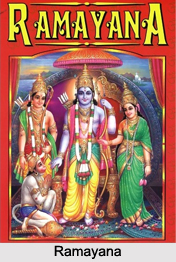
Ramayana, Indian Epic


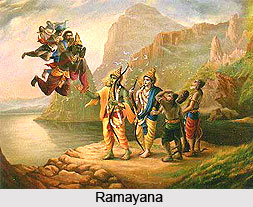
Ramayana, Indian EpicRamayana is one of the greatest Indian epics ever written and it forms an important part of Indian religious and literary history. Ramayana, even in the form in which it is read today, is still a fairly unified heroic poem. It is believed to have been written by a poet named Valmiki, and there is no doubt to believe that a poet of this name really lived and first shaped the ballads, which were scattered in the mouths of the bards, into the form of a unified poem. In fact, Valmiki is often said to be the first 'Kavi' or author of ornate poetry, Adikavi, and Ramayana is said to be the first ornate poem.

Origin of Ramayana
The great epic of Ramayana is traditionally attributed to Valmiki, who is considered to be the first poet of India. The Indian tradition believes that the great epic has been written by a single poet, the great sage Valmiki, who was also a contemporary of Lord Rama and also a marginal actor in the great epic. The original version of the story in Sanskrit language is called the Valmiki Ramayana, which dates back to the 4th century B.C. As per the Hindu tradition, the Ramayana was considered to have taken place during the period known as Treta Yuga. The beginnings of ornate epic poetry do indeed lead back to the Ramayana, and Valmiki has always remained the pattern to which all later Indian poets admiringly aspired.

Composition of Ramayana
In the composition of the Ramayana, as in all Kavyas, greater importance is attached to the form than to the matter and contents of the poem, and that so-called 'alankaras', i.e. embellishments such as similes, poetic figures, puns, and so on, are used largely, even to excess. Similes are heaped on similes, and descriptions, especially of nature, are spun out interminably with ever new metaphors and comparisons. Ramayana appears as a work that is a popular epic and ornate poetry at the same time.Ramayana, Indian Epic

Story of Ramayana
Ramayana presents the story of Lord Rama, who is also the main character in this epic. This great epic comprises of 24000 couplets in seven books which give an account of the royal birth of Rama and his other three brothers, the loss of his throne and his victory over evil. Dasaratha was Rama's father and was the king of Ayodhya. He had three queens named Kaikeyi, Kaushalya and Sumitra. Bharata was the second son of Dasaratha and Queen Kaikeyi. As a result of the jealously of Kaikeyi, Rama went into exile for fourteen years. Rama was accompanied voluntarily into the forest by his wife Sita and his brother Lakshmana. Lakshmana protected and served Rama and Sita in the forest. However, during their exile, Ravana abducted Sita with the help of an evil plot. Lord Hanuman also plays an important role in this epic by finding Sita and helping Rama to fight the battle against Ravana. The great monkey Sugriva and his alliance with Rama were also fruitful as he regained his wife and his kingdom and he in turn helped Rama in finding out Sita and employed his army of monkeys to fight for Rama against Ravana. After defeating Ravana, the victorious Rama returned to Ayodhya with his wife and was coronated as the new monarch. However owing to the long captivity of Sita the people of the kingdom could not accept her and she was forced to undergo an ordeal of fire, Agnipariksha, to prove her chastity. Even after Sita succeeds in proving her chastity through Agnipariksha, she remains as the subject of suspicion due to which Rama reluctantly abandons her while she was pregnant. Sita takes refuge in Valmiki's Ashram where she gives birth to twins Lava and Kusha. After the twin grows up and reunites with their father, Sita seeks refuge in the arms of her mother, the Earth, and frees herself from the unjust world.

For more, visit the link below:

Friday, 23 July 2021

Bhagavad Gita


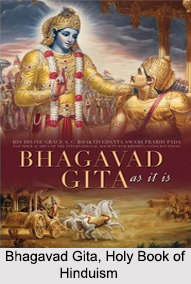
Bhagavad GitaBhagavad Gita, or the Lord's Song, is the greatest legendary text of the Hindus. It is in fact the holy book of Hinduism. Though it is the sacred book of the Bhagavatas, a Vaishnavite sect, it is a book of devotion and edification for every Hindu; to whatever sect he may belong. The Bhagavad Gita is also considered as one of the most substantial Sanskrit scriptural texts and religious classic over the world. The Gita constitutes a part of the Mahabharata and is treasured especially by the followers of Lord Krishna and is largely taken from the Bhishma Parva of the Mahabharata epic. There are many Hindus today who know the whole poem from memory. Countless are the manuscripts of it which have been preserved. And since it was printed for the first time in the year 1809 in Kolkata hardly a year elapses without a new reprint of the work appearing in India. Countless also are the translations into modern Indian languages.

Background of Bhagavad Gita
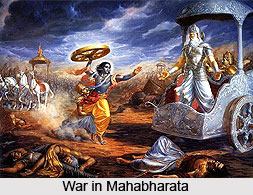
The poem is to be found at the beginning of Book VI, where the descriptions of the great fight commence. All preparations for the battle have been made. The two armies confront each other ready for the fray. Then Arjuna lets his war-chariot halt between the two armies and surveys the hosts of the Kauravas and Pandavas armed for the fight. And as he sees on both sides "fathers and grandfathers, teachers, uncles and brothers, sons and grandsons, friends, fathers-in-law and companions," he is overcome by a feeling of deepest pity. Horror seizes him at the thought that he is to fight against relatives and friends; it appears to him sin and madness to intend to murder those for whose very sake one otherwise goes to war. When Krishna reproaches him with weakness and soft-heartedness Arjuna declares that he is quite at a loss, that he does not know whether it is better to be victorious or to be defeated, and finally he implores Krishna to instruct him as to what he should really do in this conflict of duties. Thereupon Krishna answers him with a detailed philosophical discourse, whose immediate purpose is to convince Arjuna that it is his duty as a warrior to fight, whatever the consequences may be.

Composition of Bhagavad Gita
The date of composition of the text of Bhagavad Gita is not known with certainty, but it is believed to have been written around 150 B.C. The Gita contains 700 verses in 18 chapters. Krishna, the speaker of Bhagavad Gita, is looked upon as the Almighty, the Supreme Being himself. The Gita is penned down in the form of a dialogue between Krishna and Arjuna, taking place on the battlefield of Kurukshetra, just prior to the start of a climatic war.

For more. visit the link below:

Monday, 15 February 2021

Indian Mythology


Indian MythologyIndian Mythology encompasses a wide field of myths and legends concerning Indian religion. India is a country of diverse religious practices and socio-cultural habits which incorporates a saga of a nation with a vivid religious background. Indian Mythology takes into consideration all those myths related to Hindu, Buddhist, Jain and some other scriptures. Indian Mythology is among the richest elements of Indian culture. Vedas in India are important in shaping not only the culture but also the mythology of India. Through generations either by word of mouth or carefully stored scriptures, stories of Indian Mythology have been passed down. Indian Mythology is inseparable from Indian religion; the myths are religious accounts of Gods and Goddesses for many millions of people. The oral transmission of the stories could be trusted due to the strong religious aspects.

Indian Mythology in Indian Epic Poetry
Indian epic poetry is a rich reserve of epic poetry written in India and the deep seated inter relation of Indian epic poetry with Indian mythology cannot be denied. Indian mythology cannot be accounted without Hindi epic poetries. Memorable among them is Tulsidas’s ‘Ramcharitamanas’ based on Ramayana.

Indian MythologyVedic Mythology
Indian Mythology is incomplete without the mention of Vedic mythology. The Vedic tradition refers to the Vedic rituals, religious concepts that were essential in the development and evolution of Hinduism. The Vedic culture was constructed on the ruins of the Indus Valley Civilization. Indian mythology accounts for the existence of four Vedas namely Rig Veda, Yajur Veda, Sama Veda and Atharva Veda. Vedic mythology germinated from the Vedas, also known as Vedam, which are again a component of the Hindu Shruti. Vayu, Varuna, Indra, Surya, Agni, Yama, Kubera, Soma, Mitra, Kama, Gayatri, Aditi, Ushas, Saraswati and Rudra are the Vedic Gods.

Indian Mythology in Different Religions
Indian Mythology comprises a whole lot of myths and legends associated with different religions. They are discussed below:

Indian MythologyHindu Mythology
Hindu Mythology has its origins in the Vedas and they date back to the era around 7200 BC. Hindu Mythology refers to the Indian literature which is replete with deities, divine incarnations, legends with a huge lot of philosophical discourses and moral and ethical connotations. Divine incarnation is another feature of Hindu mythology.

Religious cosmology also forms a part of the Hindu mythology, these are the ways in which evolution of the universe and its history is explained. Hindu mythology has the concept of fourteen worlds (not planets) – seven higher worlds (heavens) and seven lower ones (hells). Different deities play their part in ruling these worlds.


In Hindu cosmology, the concept of "Lokas" holds a significant place, representing various planes of existence that comprise the vast and intricate structure of the universe. These Lokas, also referred to as worlds or realms, are believed to exist on different levels of reality, each with its own distinctive attributes and inhabitants. Understanding the framework of these Lokas provides a glimpse into the intricacies of Hindu cosmology and the spiritual dimensions it encompasses.


Friday, 3 July 2020

Indian Saints


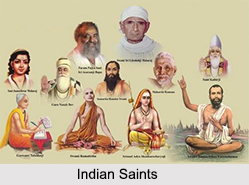
Indian Saints have contributed greatly in the social reformations. They have revived spirituality in the subcontinent through their deep understanding of religion and life. They are believed to be the manifestations of God.


Indian SaintsIndian Saints embody the highest ideals and are credited for demonstrating the reality of spiritual awareness. India is known to be the land of Saints and Gods. They help people to attain positive actions, devotion, spiritual practice and mental discipline by providing appropriate conditions and knowledge. It is the legacy of Indian Saints that represents the true identity of Indian ideology. Since time immemorial, India has been the seat of several religions. Numerous Indian saints took up the responsibility of popularising the postulates of various sects.

Indian Saints are considered to be the manifestations of God. They have set themselves as role models for the masses to follow. Whether it was Ramakrishna, Shankaracharya or Khwaja Muinud-din Chishti, all of them have guided their followers to achieve peace of mind through spirituality. Indian saints have adopted simple measures to explain the religious philosophies. Most of them adopted the method of narrating tales to educate the masses. Some of the Indian saints, however, propagated renunciation of the worldly affairs to achieve salvation.

Born in 1486 in Nabadwip, a town in present-day West Bengal, India, Chaitanya Mahaprabhu emerged as a profound spiritual personality with a deep-rooted devotion to Lord Krishna. From an early age, he displayed remarkable intelligence, profound wisdom, and a captivating aura that drew people towards him. His charismatic personality and pure heart earned him admiration and respect from all walks of life.


For more visit the page:

#religion #saints #history #spirituality

Thursday, 14 May 2020

Characters in Ramayana

The characters in jnhgfh.jpgare instrumental in narrating the entire Sanskrit epic. Most of the characters like Lord Rama, Sita, Lakshmana, Hanuman and others are considered as deities according to Hindu mythology.

Characters in Ramayana
Following are the different characters in Ramayana:

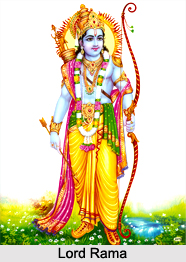
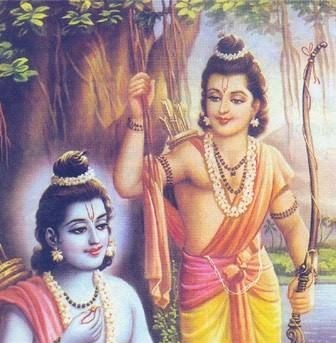
ramaLord Rama: He was the son of King Dasaratha and Queen Kausalya. He was the prince of Ayodya. He is an ‘avatara’ of Lord Vishnu and was married to Sita.

sita.jpgSita: She was the daughter of Mother Earth adopted by King Janaka. Sita married Lord Rama, and she is also regarded as an ‘avatara’ of the Goddess Lakshmi.

ravanaRavana: Ravana was a devil who performed penance for a long time until Lord Brahma appeared before him and granted him a boon.

lakmanLakshmana: He was the son of King Dasaratha and Queen Sumitra. He was dedicated to his brother and followed him throughout many adventures and hunts.  He is ascribed as the incarnation of ‘Ananta Sesha’, the 1000 headed Naga.

darshrath.jpgKing Dasaratha: Dasaratha was the emperor of Ayodhya, father of Lord Rama, Lakshmana, Bharata, and Shatrughna.

Kaushalya: She was the first queen of King Dasaratha and the mother of Lord Rama. She had a wonderful and liberal character.

bharth.jpgBharata: He is famous for his love and devotion towards his elder brother Lord Rama.

7a567caa9013ca977576e7dd250d8f67-e1551942420351.jpgLord Hanuman: He was the advisor of Sugriva. He was the son of Anjana and Kesari and he is believed to be an avatar of the supreme Lord Shiva. He was a guardian spirit, the offspring of a nymph and the Wind God.

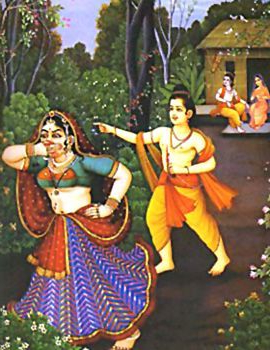
surparnak.jpgSurpanakha: She was the sister of Ravana who was a powerful demon. She tried to seduce Lord Rama and kill Sita, but Lakshmana attacked her.

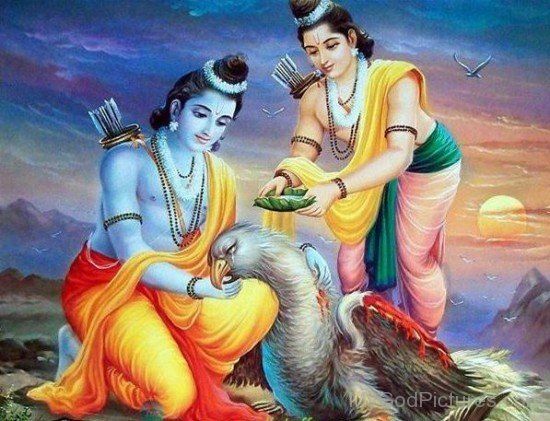
llllllJatayu: Jatayu was a powerful golden eagle who spoke in the voice of a human being. He died protecting Sita from Ravana.

kumar-e1551942493496.jpgShravan Kumar: He was as a dedicated son who carried his blind parents on his shoulders for a pilgrimage tour.

Kumbhakarn.jpgKumbhakarna: He was Ravana's brother. He had a huge physique with unlimited strength. He used to sleep for six months at a time before waking up and eating everything he could see.

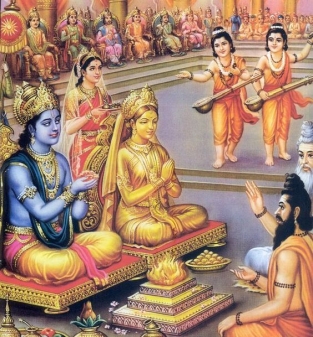
luv-kush-e1551942533161.jpgLava: Along with Kusha, Lava was one of the student to whom Valmiki taught the Ramayana which he received from Narada.  Lava was the king of Sriwasti, in northern Kosala. He was the founder of the city of Lahore, which is named after him.

ff.jpg

Kusha: Kusha was one of the twin sons of Lord Rama and Sita. The other son is the Lava. He was born in a forest after Sita had been banished from Ayodhya.

and many more characters are their in ramayana

To know in detail read here : Characters in Ramayana