Showing posts with label north india. Show all posts

Thursday, 25 July 2024

Forests in Sirsa District


Sirsa District, located in the state of Haryana, India, holds a significant position in the northwestern part of the country. Geographically, Sirsa is positioned between 29.14 degree N latitude and 75.03 degree E longitude. The district shares its borders with Punjab to the north and Rajasthan to the west and south. The Ghaggar River, which flows through the district, contributes to its diverse ecological landscape. 

Forest Cover in Sirsa District

The forests in Sirsa District, though limited in extent, play a crucial role in maintaining the ecological balance of the region. According to the Forest Survey of India, the district has a forest cover of approximately 2.3% of its total geographical area. This includes reserved forests, protected forests, and unclassified forests. These forest areas are primarily found in the northern and eastern parts of the district. 

Ecological Significance

The forests of Sirsa District are home to a variety of flora and fauna, contributing to the region's biodiversity. The predominant tree species include Khejri (Prosopis cineraria), Neem (Azadirachta indica), and Babul (Acacia nilotica). These species are well adapted to the semi-arid climate of the district. The forest areas also support various wildlife species such as the Indian hare, fox, jackal, and several bird species including peafowl and partridge. 

Soil Conservation

The forests in Sirsa District play a vital role in soil conservation. The tree cover helps in preventing soil erosion, particularly in areas prone to wind erosion. The presence of vegetation reduces the velocity of wind, thereby minimizing the displacement of topsoil. This is especially important in the context of the district's agricultural activities, as soil erosion can significantly impact crop productivity. 

Climate Regulation

Forests contribute to the regulation of local climate conditions. In Sirsa District, the forested areas help in moderating temperatures and maintaining humidity levels. The process of transpiration from trees adds moisture to the atmosphere, which can influence local weather patterns. Moreover, the shade provided by trees can reduce the heat island effect in surrounding areas, offering a cooler microclimate. 

Challenges and Conservation Efforts 

One of the significant challenges faced by the forests in Sirsa District is deforestation. The expansion of agricultural land, urbanization, and infrastructure development have led to the reduction of forest areas. Illegal logging and overgrazing by livestock further exacerbate the problem, leading to the degradation of forest resources. 

Conservation Initiatives

To address these challenges, various conservation initiatives have been undertaken by the government and non-governmental organizations. Afforestation programs, involving the planting of native tree species, aim to restore degraded forest areas. The Haryana Forest Department has implemented measures to protect existing forests through better patrolling and enforcement of forest laws. Community involvement in conservation activities, such as tree plantation drives and awareness campaigns, also plays a crucial role in preserving the district's forest cover

The forests in Sirsa District, though limited in coverage, are of immense ecological significance. They contribute to biodiversity conservation, soil preservation, and climate regulation. However, these forested areas face challenges from deforestation and human activities. Concerted efforts from the government, non-governmental organizations, and local communities are essential to safeguard and restore these valuable ecological assets. The preservation of Sirsa's forests is vital not only for the local environment but also for the broader ecological balance of the region.

Tuesday, 19 March 2024

Botany Museum, Gorakhpur


Botany Museum in Gorakhpur stands as a testament to the rich botanical heritage of the region. Established in 2018-19, this institution has been a pivotal center for botanical research and education. With its diverse collection of specimens and informative exhibits, the museum offers visitors a comprehensive insight into the fascinating world of plants. 

The inception of the Botany Museum traces back to the visionary efforts of renowned botanists and educators in Gorakhpur. It was established with the primary objective of promoting botanical knowledge and fostering an appreciation for the plant kingdom among the masses. Over the years, the museum has evolved into a distinguished establishment, garnering recognition for its valuable contributions to botanical science. 

The heart of the Botany Museum lies in its extensive collection of plant specimens sourced from various ecosystems. From towering trees to delicate ferns, the museum showcases a diverse array of flora, meticulously preserved and displayed for educational purposes. Each specimen is accompanied by detailed information regarding its taxonomy, habitat, and ecological significance, providing visitors with a deeper understanding of plant diversity. 

One of the highlights of the museum is its exhibit featuring rare and endangered plant species. Through these displays, visitors gain awareness about the pressing conservation issues faced by plant populations worldwide. By highlighting the importance of biodiversity preservation, the museum plays a crucial role in advocating for environmental stewardship and sustainable practices. 

Another notable section of the Botany Museum is dedicated to medicinal plants, showcasing the therapeutic properties of various botanical species. Visitors can learn about traditional remedies and modern pharmaceutical advancements derived from plant sources. This exhibit underscores the profound relationship between plants and human health, underscoring the significance of botanical research in medicine. 

The museum also offers insights into the ethnobotanical practices of indigenous communities, showcasing the cultural significance of plants in different societies. Through interactive exhibits and multimedia presentations, visitors can explore the traditional uses of plants for food, shelter, and rituals across various cultures. This aspect of the museum fosters appreciation for the intricate relationship between humans and plants throughout history. 

In addition to its exhibits, the Botany Museum organizes educational programs and workshops aimed at students, researchers, and nature enthusiasts. These initiatives provide opportunities for hands-on learning, scientific inquiry, and ecological awareness. Through guided tours and outreach activities, the museum strives to inspire curiosity and instill a sense of environmental responsibility in visitors of all ages. 

The Botany Museum in Gorakhpur stands as a beacon of botanical knowledge and conservation among all other museums of Uttar Pradesh. Through its rich history, diverse exhibits, and educational programs, it serves as a vital resource for understanding and appreciating the intricate world of plants. As we navigate the challenges of environmental sustainability, institutions like the Botany Museum play a crucial role in promoting biodiversity conservation and fostering a deeper connection with the natural world.

Friday, 3 November 2023

Forts in North India

North India is a region rich in history, boasting a plethora of ancient forts that stand as a testament to the architectural and military prowess of bygone eras. These forts, scattered across the region, offer a glimpse into the rich cultural heritage and tumultuous history of the Indian subcontinent. From the formidable Chunar Fort to the intriguing Asigarh Fort, each of these structures has a unique story to tell, steeped in the annals of time.


Chunar Fort:

Nestled on the banks of the Ganges River in the Mirzapur district of Uttar Pradesh, the Chunar Fort is a formidable structure with a history dating back to the 11th century. This imposing fort has witnessed the rise and fall of various dynasties, including the Guptas, the Mughals, and the British. Renowned for its robust architecture and strategic location, it served as a crucial military outpost for controlling the river trade routes. With its massive walls and intricate design, the Chunar Fort continues to command attention and admiration from historians and tourists alike. 

Kalinjar Fort:

Situated in the Banda district of Uttar Pradesh, the Kalinjar Fort is an ancient stronghold that has stood the test of time for over a millennium. This imposing fortification, perched atop the Vindhya Range, has witnessed the rise and fall of several empires, including the Chandela dynasty and the Delhi Sultanate. Known for its intricate carvings, grand gateways, and deep-rooted mythological significance, the Kalinjar Fort remains a prominent landmark, embodying the valor and grandeur of the bygone era. 

Allahabad Fort:

Located at the confluence of the Ganges and Yamuna rivers in Allahabad, Uttar Pradesh, the Allahabad Fort is a remarkable fusion of architectural styles, representing the amalgamation of Hindu, Islamic, and European influences. Constructed by the Mughal Emperor Akbar in the 16th century, this fort served as a strategic military stronghold and later became a pivotal site for the Indian Rebellion of 1857. With its monumental walls and impressive design, the Allahabad Fort continues to be a significant cultural and historical symbol in the heart of North India. 

Kuchesar Fort:

Nestled amidst the serene surroundings of Bulandshahr in Uttar Pradesh, the Kuchesar Fort, also known as Rao Raj Vilas, stands as a testament to the architectural finesse of the bygone era. Believed to have been built during the 18th century, this fort is known for its distinctive blend of Rajput and Mughal architectural styles. Surrounded by lush orchards and sprawling gardens, the Kuchesar Fort provides a tranquil escape for those seeking a glimpse into the opulent lifestyle of the erstwhile rulers of the region. 

Aligarh Fort:

Located in the city of Aligarh in Uttar Pradesh, the Aligarh Fort is an ancient structure that has witnessed the ebb and flow of numerous dynasties, including the Rajputs, the Mughals, and the Marathas. With its massive walls, imposing gateways, and intricate design elements, this fort has played a crucial role in the region's historical and cultural narrative. While parts of the fort have undergone restoration over the years, it continues to stand as a symbol of resilience and architectural brilliance. 

Siri Fort:

Built during the reign of Alauddin Khilji in the 14th century, the Siri Fort, situated in the heart of Delhi, remains a significant historical landmark. This imposing structure, known for its sturdy walls and strategic design, served as a pivotal military outpost during various medieval conflicts. Despite undergoing several alterations and renovations over the centuries, the Siri Fort stands as a living testament to the architectural prowess and military strategies employed during the medieval era in North India. 

Feroz Shah Kotla Fort:

Located in the bustling city of Delhi, the Feroz Shah Kotla Fort is an ancient citadel that dates back to the 14th century, commissioned by the Tughlaq dynasty's ruler, Feroz Shah Tughlaq. With its towering walls, intricate carvings, and monumental gateways, this fort served as a crucial administrative and military center during the Tughlaq era. Over the centuries, the Feroz Shah Kotla Fort has undergone various renovations, yet it continues to be a prominent historical and architectural marvel, attracting tourists and history enthusiasts alike. 

Salimgarh Fort:

Nestled on an island in the Yamuna River, adjacent to the Red Fort in Delhi, the Salimgarh Fort is an ancient structure with a storied past. Constructed by Islam Shah Suri, the son of Sher Shah Suri, this fort served as a vital military garrison during the Mughal era. Later, it became a prison for political dissidents during the British colonial period. With its commanding presence and strategic location, the Salimgarh Fort continues to evoke a sense of intrigue and fascination, offering visitors a glimpse into the region's tumultuous history. 

Bahu Fort:

Perched on a hill overlooking the city of Jammu in Jammu and Kashmir, the Bahu Fort is an ancient stronghold with a history that can be traced back to the 18th century. Constructed by Raja Bahulochan, the fort is dedicated to the Hindu goddess Kali and is renowned for its stunning architecture and panoramic views of the surrounding landscape. With its intricate design elements and historical significance, the Bahu Fort stands as a prominent cultural and religious symbol, attracting devotees and history enthusiasts from far and wide. 

Akhnoor Fort:

Situated in the town of Akhnoor in Jammu and Kashmir, the Akhnoor Fort is an ancient citadel that holds great historical significance in the region. Believed to have been built during the early 19th century, this fort served as a crucial military outpost for controlling trade routes along the Chenab River. With its robust architecture and strategic location, the Akhnoor Fort remains a significant historical landmark, offering insights into the region's cultural and military history. 

Hari Parbat Fort:

Perched atop the Hari Parbat hill in Srinagar, Jammu and Kashmir, the Hari Parbat Fort is a historical structure with deep-rooted cultural and religious significance. Built during the Mughal era, this fort is believed to have undergone various transformations under different rulers, including the Afghan and Sikh regimes. With its commanding presence and panoramic views of the surrounding valley, the Hari Parbat Fort continues to be a revered pilgrimage site and a prominent historical landmark, showcasing the architectural finesse of the bygone era. 

Asigarh Fort:

Situated in the city of Hansi in Haryana, the Asigarh Fort is an ancient stronghold that has withstood the tests of time and various historical upheavals. Believed to have been built during the 18th century, this fort served as a pivotal military outpost for various dynasties, including the Mughals and the Marathas. With its robust walls, grand gateways, and historical significance, the Asigarh Fort stands as a living testament to the region's rich cultural and military heritage, offering visitors a glimpse into the turbulent history of North India.

Thursday, 4 May 2023

River Kali/ Sharda in Uttarakhand


Kali River, also known as the Sharda River, is a significant river in India with immense potential for irrigation and hydroelectric power generation. Despite the challenges it faces, efforts have been made to address the issues and promote responsible behavior towards the river. With continued efforts, the Kali River can continue to support the livelihoods of people in the region and contribute to the development of the country. It flows from the Greater Himalayas near Kalapaani in Uttarakhand's Pithoragarh district. The river is approximately 400 kilometres long and has a basin size of 14,871 kilometres square. It is named after Goddess Kali, and her temple is located near the Lipu Lekh pass, which marks the border between India and Tibet.


 The Kali River enters the Terai plains after Brahmadev Mandi near Tanakpur, where it is called Sharda River. The river merges with the Gori Ganga at Jauljibi where a fair is held every year. The River then joins the Saryu River at Pancheshwar, and therefore the area around Pancheshwar is called 'Kali Kumaon. Belonging to the Ganges river system, the Kali River finally merges with the Ganga.

On its upper course from Kalapani to Tanakpur, the Kali River forms a continuous eastern boundary with Nepal. The river is called Sharda in the plains and flows along Nepal's western border with India. The river finally joins the Ghaghra River, a tributary of the Ganges. The river offers immense potential for irrigation and generation of hydroelectricity. It serves as the boundary between Uttarakhand's Kumaon Division and Nepal from a little below the Kalapani encamping ground. The Lipulekh pass, as well as the Limpayadhura pass or Limpiya pass, are on Uttarakhand's border with Tibet.

The Kali River offers potential for hydroelectric power generation, and the river is proposed as a source for one of the many projects in the Himalayan component of the Indian Rivers Inter-link project. The Pancheshwar Dam, a joint venture of India and Nepal for irrigation and hydro-electric power generation, was proposed on this river in 1995. However, Nepal and India have been unable to reach a decision on the 5,600-MW Pancheshwar multipurpose dam project because of political changes in two countries.

Efforts have been made to address these challenges. The Indian government has implemented several measures to reduce pollution in the river. Sewage treatment plants have been set up, and regulations have been put in place to control industrial pollution. Community participation and awareness campaigns have also been initiated to encourage responsible behavior towards the river.

For more, visit the link below:

https://www.indianetzone.com/14/kali_river_uttarakhand.htm


Tuesday, 18 April 2023

Major Indian Rivers

 Indian Rivers play a huge role in the lives of the nation's residents. They provide drinking water, provide a living for a sizable population, and sustain flora and animals in India. The Indian rivers are essential to the livelihoods of many people, including farmers, fishermen, and boatmen. India, which is frequently referred to as the "land of rivers," has been gifted with several water features that add to the beauty of the nation. The mythology, religion, culture, history, and tales of India all revolve around its rivers. The first witnesses to India's civilization's development are these rivers.


Himalayan Rivers, Deccan Rivers, Coastal Rivers, and Inland Drainage Basin Rivers are the four basic categories into which Indian rivers can be divided. Indian mythological rivers are referred to as mythological rivers. Rupa, Pampa, Oghavati, Dhritamati, and Saraswati River are a few of these rivers.

Hindus worship the majority of Indian rivers because they are regarded as divine. The Ganga River is India's holiest river. The majority of the holy sites in northern India are either close to or on the banks of the Ganges River. India's gods are worshipped with the Ganga's sacred water. It is thought that a person's sins can be completely washed away by the sacred Indian rivers.

Indian Rivers provide irrigation and hydroelectricity production through dams. On various rivers, a plethora of dams and multipurpose river valley projects have been constructed. These rivers serve as waterways, making travel easier. One well-known watercourse that connects many Indian regions is the Ganga River. The growth of Indian crops is substantially impacted by Indian rivers. Rich soils are thought to be present in the areas close to Indian rivers. As a result, agriculture is the principal use of these areas and the main source of income for many farmers. The majority of the reason that Indian rivers and their tributaries draw visitors from throughout the world. River sports like river rafting and kayaking are popular in modern-day India on rivers like the Alaknanda River and others. 

Ganga River and Yamuna River are two significant Indian Rivers. The Ganga River, also known as Jahnavi, gushes down to the plains from the Himalaya Mountains. The Yamuna River has a length of 1,376 kilometres (855 mi) and is a tributary of the Yamunotri Glacier. Another important tributary of Ganga river is Padma river, majority of which flows through Bangladesh.

The Brahmaputra River, Krishna River, Kaveri River, Narmada River, Tapti River, Godavari River, Krishna River, Mahanadi River, Bhagirathi River, and Alaknanda River are a few of the other rivers in India.

The Banas is a river which lies entirely within the state of Rajasthan in western India. It is a tributary of the Chambal River, itself a tributary of the Yamuna, which in turn merges into the Ganga. 

For more, visit the link below:

Indian Rivers

 Ganga River 

Yamuna River

Kaveri River

Krishna River

Damodar River

Luni River

Periyar River

Ghaggar River


Monday, 27 March 2023

North Indian States

 The dominant geographical features of that demarcate North India from Tibetan Plateau are the Indo-Gangetic Plain and the Great Himalayas. The social, cultural, linguistic and religious unity helped the North Indian states to promote tourism and other industrial development in the modern India.


History of North Indian States
The Northern part of modern India has been the historical centre of the Mauryan EmpireIndo-Greek Empire, Northern SatrapsGupta EmpireHarsha EmpirePala EmpirePratihara EmpireDelhi SultanateMughal Empire, Sur, Sikh, Maratha Empire and British Empire.

Culture of North Indian States
North Indian States have diverse culture which is reflected in the different pilgrimages in this region. This includes HinduIslamicSikh, and Buddhist pilgrimages. Hindu pilgrimages include Haridwar, Char Dham, Mathura,Varanasi, Ayodhya, Pushkar, Allahabad, and Vaishno Devi. Sarnath and Kushinagar are famous Buddhist centers. The Taj Mahal, an Islamic monument, is one of the Seven Wonders of the World. Other Islamic pilgrimages in north India include Dargah HazratbalDargah of Khwaja Moin-ud-din ChishtiDargah Hazrat Nizamuddin, and Piran Kaliyar Sharif. The golden temple which is a Sikh pilgrimage is a world heritage site is located in Punjab.

North Indian StatesClimate of North India
Lying on the north of peninsular India, north Indian states form the coldest regions of the country. The average daily high temperature is at 32 degrees. For several months of the year, it is warm to hot at temperatures continuously above 25 degrees, sometimes up to 40 degrees. North India experiences winters in the months between October and March, as this time the weather remains pleasant and mildly cold to very cold and temperature ranges from a freezing -2 degree C to 14 degrees C.

Flora and Fauna of North India
North Indian states are rich in natural resources and have a large cover of forests. Due to this rich vegetation, several species of animals and birds are found in this region. The vegetation in north Indian states can be categories under Deciduous Foreststemperate foreststropical thorny forests, and evergreen forest. Animal species found in northern zone include elephant, snow leopard, Bengal tiger, Indian leopard, Asiatic stag, spotted deer, red deer, hog deer, Indian gazelleblackbuckNilgaiporcupinewild boar, Tibetan sand fox, Indian fox, rhesus monkeylangur, and jungle cat. Both indigenous and migratory birds can be found here.

Tourism in North India
The northern states have a diverse culture, and include different places of tourism interest that comprises nature tourism, leisure tourism, adventure tourism, and also pilgrimage tourism. Pilgrimage destinations include HaridwarAyodhyaMathuraAllahabad, and Pushkar for Hindus. Buddhist pilgrimage centers are Sarnath and Kushinagar. The Sikh Golden Temple as well as world heritage sites such as the Nanda Devi Biosphere ReserveForts in RajasthanJantar Mantar (Jaipur)Qutb MinarRed FortAgra FortFatehpur Sikri and Taj Mahal comprise the main tourist attractions in north India.

For more, visit the link below:

Friday, 8 July 2022

Patiala Gharana, Khayal, Indian Music


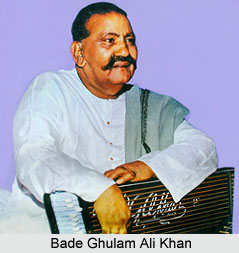
Patiala Gharana, Khayal, Indian MusicPatiala is considered a branch of the Delhi gharana. Though essentially a sarangi gharana, the Patiala style achieved its all-round distinction and excellence in the hands of its greatest and yet-to-be-surpassed genius, Ustad Bade Ghulam Ali Khan (1901-1969). The founders of this gharana were the brothers Ali Baksh (1850-1920) and Fateh Ali (1850-1909), popularly known as 'Aliya-Fattu'. They had learnt music from Miyan Kallu, a well-known sarangi player in the Patiala court, who also taught them dhrupad. The Aliya-Fattu pair, also popularly called 'Karnail' (Colonel) and 'Jarnail' (General) owing to their uncompromisingly powerful way of singing extremely fast taans, were popular performers. Bade Ghulam's father Ali Baksh Kasurwale, learnt under both Fateh Ali and Miyan Kallu.

Bade Ghulam was initially trained by his father and later by Miyan Kallu. Yet Bade Ghulam belongs to that class of extraordinary singers, the dazzle of whose native gifts by far exceeded what he received from the tradition he inherited. His style and approach are to this very day synonymous with the colourful and zesty Patiala style. Next to Abdul Karim Khan, it was he who made a tremendous impact in the conservative South during the 1950's. Bade Ghulam is also credited with fashioning the Punjab-ang style of singing thumri. His proficiency in light classical forms, more than his other innate gifts, paved the way for his deification in the hearts of innumerable numbers in this country.

Following his death, Bade Ghulam's gifted son, Munnawar Ali Khan, continued the legacy until his death in 1989. Today singers like Jagdish Prasad, the Pakistani representatives, Fateh Ali, Ammant Ali and Hameed Ali Khan, Ajoy Chakravorty and the dazzling duo Javaad and Mazhar Ali Khan continue the Patiala legacy.

Wednesday, 20 April 2022

Jharkhand Cuisine


Jharkhand Cuisine, Indian Regional CuisineJharkhandi cuisine encompasses the cuisine of the Indian state of Jharkhand. Staple food of Jharkhand are rice, dal, vegetable and tubers. Common meals often consist of vegetables that are cooked in various ways, such as curried, fried, roasted and boiled. Traditional dishes of Jharkhand may not be available at restaurants. Some dish preparations may be mild with a low oil and spice content, although pickles and festive dishes may have such characteristics. Jharkhand cuisine is visible in the tribal villages or weddings.

Features of Jharkhand Cuisine
Jharkhandi cuisine is traditional and combination of various localities in Jharkhand Region. Most of the Dishes of Jharkhand are traditional and some are adopted from mixed culture of adjoining areas. However, the Famous cuisines of Jharkhand, used in all the seasons are Rice, Roti, Daal, Tarkari and sweets, and much more. The food of Jharkhand is generally very light on the stomach and easy to digest. The native folks of Jharkhand have absorbed this fact very well, as showed by the food habits of Jharkhand people

Various Delicacies of Jharkhand
The staple diet of Jharkhand includes Urad Dal, Rahar Dal, Rice Marua Roti, Chilka Roti and Kanda. Kanda is the name for sweet potatoes which are eaten boiled with tea as breakfast. Other items used are: Konhra phool, Barri, Phutkal, Joki - Moringa oleifera, Saakhin, Khukhri and Sandhna. Sandhna are the bamboo shoots. They are cut into small size and made into a pulp which is added to as well as made into pickles. Jack fruits, Gourd, White pumpkin, Flat Beans, Long beans, Lady Finger are used in the dishes.

For more, visit the link below:

Friday, 4 March 2022

Cuisine of Uttar Pradesh


Cuisine of Uttar PradeshThe cuisine of Uttar Pradesh is just as diverse as its geography. It consists of both vegetarian and non-vegetarian dishes. Majority of the Uttar Pradesh cuisine comprise of simple and sober vegetarian meals. Dal, roti, subzi and rice constitute the essentials of daily food habits of the locals. Pooris and kachoris are relished on special occasions. Some of the popular preparations of Uttar Pradesh are Dum Biryani, Kebabs, Kulcha-Nihari, Pasanda Kebab, Mutton Kofta, Allahabad ki Tehri etc. ‘Banarasi Paan’ is famous all over the India for its taste and ingredients. It is taken after having the food as peppermint to digest them.

Awadhi Cuisine of Uttar Pradesh
Awadhi Cuisine is native to the city of Lucknow, capital of Uttar Pradesh. Most of the dishes of this region have been influenced by Mughal cooking techniques. The Awadhi cuisine has similarities to those of Kashmir and Punjab. The most famous cuisines in Oudh or Awadh are ‘Kebabs’, ‘Biryani’ and ‘Nihari’. Because of the Muslim dominance most of the items of this region chiefly concentrate on meat. Among the kebabs, ‘Shami’, ‘Kakori’, ‘Boti’ and ‘Galauti’ kebabs are the specialty of Lucknow and so are ‘Kulcha-Nihari’ and ‘Biryani’. Exceptional feature of the Awadhi tradition of cooking is the ‘Dum Pukht’ process of preparing food. In this exclusive style, food is sealed in large pots called Handi and placed over slow fire, allowing the ingredients to be cooked in their own juices under the strict supervision of specialist experts known as ‘Bawarchi’ (cooks). Hence, Dum Biryani (both in chicken and mutton) is one of the most popular and dominant dish originated from Awadhi cuisine. Awadh is also known as the place for ‘Nawabi Foods’.

Common Dishes of Uttar Pradesh
There are several popular veg and non-veg preparations in Uttar Pradesh. Wheat is the staple food of the state; breads are mostly used to prepare ‘Naan’ or ‘roti’. Plain rice and all kinds of vegetables are also included in the list of common dishes of Uttar Pradesh. Some of the common dishes of the state are Aaloo ParathaBaati chokha/ LittiBoondi, Chaat, Chilla, Chole Bhature, Daal Bhari Puri, Daal MakhaniDum Bhindi, Fara, Gobhi Mussallam, Kachori, Kadi Chawal, Pakoda Kadhi, Kofta, Korma, Laapsi, Meethi Roti, Methi Paratha, Nimona (Green Pea & Potato Curry), Palak PaneerPakoda, Pasanda Kebab (skewered boneless mutton), Pasanda Paneer, PuriRaitaRajma, Rizala, Saada Paratha, Samosa, Seek Kebab, Shab Deg (a winter dish, turnips and mutton balls with saffron), Sooji Halwa, Sultani Dal, Tehri etc.

For more, visit the link below: