Showing posts with label shimla. Show all posts

Wednesday, 26 April 2023

River Beas


Beas River is one of the most significant rivers in India. It originates from the Beas Kund, a holy place in the Himalayas, near the Rohtang Pass in Himachal Pradesh. The river flows through the states of Himachal Pradesh and Punjab before merging with the Sutlej River in Punjab. The Beas River is approximately 470 km long, and its basin area covers over 20,000 square kilometers. 


The Beas River has immense historical, cultural, and ecological importance. It was known as Hyphasis during Alexander the Great's invasion of India, and his troops reached the river before they refused to go any further, marking the easternmost limit of his conquests. The river finds mention in Indian epics like Mahabharata. According to the legend, the Pandavas bathed in the Beas River during their exile. 

The Beas River has been significant for agriculture since ancient times, and its fertile banks have been used for farming for centuries. The river basin is promoting agriculture by helping various crops sustain such as rice, wheat, maize, and sugarcane. The river is also an essential source for irrigation, hydroelectric projects, and drinking water. 

The Beas River has a significant cultural significance. It is a holy river for the Hindus, who believe that bathing in its waters will cleanse their sins. Many Hindu pilgrims travel to the river to perform religious ceremonies and rituals. The river is also significant for the Sikhs, as Guru Gobind Singh, the tenth Sikh Guru, spent a considerable amount of time on its banks during his travels. 

The Beas River basin is rich in biodiversity, and it is home to various flora and fauna species. The river supports a wide variety of fish species, including trout, mahseer, and catfish. The river basin is also home to many bird species, including the Indian pitta, the white wagtail, and the black-necked stork. 

Despite its significance, the Beas River faces several environmental challenges. The river's water quality is poor due to industrial pollution, untreated sewage, and agricultural runoff. This pollution has resulted in a decline in fish populations and increased health risks for people who rely on the river for their drinking water. 

In conclusion, the Beas River is a significant river in India, with immense historical, cultural, and ecological importance. It forms a crucial source for agriculture, religious practices, and economy of the region. However, the river faces several environmental challenges which need immediate attention to preserve its ecology so it can continue to be a vital resource for people of the region it flows through.

 For more, visit the link below:

https://www.indianetzone.com/6/beas_river.htm


Friday, 23 December 2022

Rohtang Pass, Himachal Pradesh


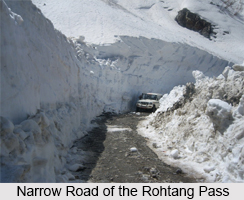
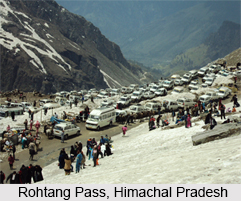
Rohtang Pass, Himachal PradeshRohtang Pass, or Rohtang La, is a high jeepable mountain pass amidst the eastern Pir Panjal Range of snow laden mountains, elevated at an altitude of 3,978 metres (13,051 feet) above mean sea level. It is located 51 kilometres (32 miles) along the Leh-Manali Highway from the tourist famous town of Manali, in the Indian state of Himachal Pradesh. A popular tourist destination during the summers, the Rohtang Pass provides some of the most scintillating and arresting visuals of the snow-capped Himalayan mountain peaks. It connects the Kullu Valley and the Lahaul and Spiti Valleys of Himachal Pradesh.

Etymology of Rohtang Pass, Himachal Pradesh
The Rohtang Pass derives its name from the unfortunate deaths of people who attempted to cross the pass in bad weather. ‘Rohtang’ in Bhoti language refers to a pile of corpses.

Geography of Rohtang Pass, Himachal Pradesh
The Rohtang Pass provides a natural divide between the humid Kullu Valley in the south which has a predominant Hindu culture and the higher and arid Lahaul and Spiti valleys in the north with a predominant Buddhist culture. In addition to Lahaul and Spiti, Rohtang Pass is a gateway to the Pangi valley in Himachal and the Leh valley in Ladakh.Rohtang Pass, Himachal Pradesh Rohtang serves as a gateway to Ladakh just as the Zojila Pass. It lies on the watershed separating the Chenab and the Beas river basins. The Beas River emerges from underground on the southern end of the pass, flowing southwards, while on its northern end, the Chenab River sources from the Chandra River flowing from the eastern Himalayas towards the west. The amazing visual of the Chandra River flowing down can be caught in the Lahaul valley along the pass, with that of the glaciers and peaks. The twin peaks of Geypan are also visible from the pass.

Tourism in Rohtang Pass, Himachal Pradesh
The Rohtang Pass remains open only during the summer months from May to November. Though not difficult or high to cross through as per the Himalayan standards, the pass is considered dangerous for being vulnerable to unpredictable snowstorms and blizzards.

Rohtang Pass enlists itself high on the itineraries of tourists who visit Manali, KulluShimla, Leh and other adjoining areas in summer, and is a hotspot for adventure enthusiasts. Adventurous activities such as trekkingskiingmountain biking, snow scooters, sledges, paragliding and ATVs (all-terrain vehicles) can be experienced while at Rohtang. There are also small eateries and stalls up there that serve snacks to the tourists.

For more, visit the link below:

Tuesday, 6 August 2019

Shimla, Himachal Pradesh

a
Shimla, as told by the Britons, the "Queen of Hill Stations." Shimla was the summer capital of India before independence. It is located in the north-west Himalayas and now the capital of Himachal Pradesh.

Geography
a2Shimla covers an area of 18 sq. km. at a height of 7,238 ft. Shimla is surrounded by pine, deodar, oak and rhododendron forests. Its well developed facilities, easy accessibility and numerous attractions make it one of Indian's most popular and biggest hill-stations.

Climate
a3
Situated in the North-West Himalayas, the climate of Shimla varies from a maximum of 10-11 degrees in winter to a maximum of 25-26 degrees in summers. The temperature never raised above the limit here. Moods of Shimla changed along with the seasons.
Tourism :
 
a4Jakhu Hill

Jakhu Hill is the highest peak situated at a distance of 2 km from Shimla, at a height of 8000 ft. It offers a beautiful view of the town and of the snow-covered Himalayas.

a5 
Summer Hill  Situated at a distance of 5 kms. From the Ridge is the lovely township of Summer Hill at a height of 6,500 ft. on the Shimla-Kalka railway line. Mahatma Gandhi lived in these quiet surroundings during his visits to Shimla.

a6
Tara Devi Temple

Tara Devi Temple has a temple dedicated to the goddess of stars on top of the hill. It stands 11 km from the bus stop. Tara Devi Temple is an ideal place for a person wanting peace and some rest.

Read more : Shimla, Himachal Pradesh