Showing posts with label arts and crafts. Show all posts

Tuesday, 14 July 2026

Kumhar Caste: History, Traditions, Pottery Craft, and Social Structure

 The Kumhar or Kumbhakar caste is one of India's oldest traditional artisan communities, renowned for its expertise in pottery and clay craftsmanship. In West Bengal, members of this community are commonly known as Kumars or Kumhars. For generations, they have been engaged in clay modeling and the production of earthenware used for household purposes, religious rituals, and decorative items. Besides West Bengal, the Kumhar community is widely distributed across northern, southern, and other regions of India, where pottery continues to be an important part of their cultural and occupational identity.


Mythological Origin and Religious Beliefs

According to a popular mythological tradition, the origin of the Kumbhakar community is closely associated with Lord Shiva. It is believed that during Shiva's marriage ceremony, he created a man and a woman from the beads of his garland and instructed them to make a kumbha (water pot), which was required for the wedding rituals. As a result, the Kumhars consider themselves descendants and devotees of Lord Shiva. 

This belief is reflected in their customs. Potters traditionally place an idol of Lord Shiva at the center of their potter's wheel and refrain from using the wheel throughout the first month of the Bengali calendar. On the last day of the month, they worship the deity with devotion before immersing the idol. The community also reveres Lord Viswakarma, the divine architect, believing that he bestowed upon them the sacred knowledge and artistic skill of pottery. 

Traditional Pottery and Craftsmanship

The Kumbhakar community is celebrated for producing a wide variety of earthen wares that serve both domestic and ceremonial purposes. Their handmade creations include kalshi (water vessel), handi (cooking pot), jala (large water jar), hara or dhakna (pot covers), shanki (dish), sharai (jug), plates, cups, badna (water pot), and dhupdani (incense vessel). 

In addition to household items, Kumhar artisans create clay toys and decorative clay fruits such as palm, banana, jackfruit, and mango. These products are especially popular at traditional fairs and festivals. Every piece is crafted by hand, demonstrating remarkable creativity, precision, and artistic ingenuity. 

Materials and Pottery Techniques

The strength and durability of Kumhar pottery depend on the careful selection and preparation of clay. Potters typically use two types of soil: bali, a sandy soil, and kalamati, a blackish sticky soil. These are mixed in a ratio of 1:2 to produce strong and durable pottery. 

For common red earthenware, artisans use red laterite soil obtained from Bhowal. Both red and black earthenware are made from the same clay mixture. The distinctive black finish is achieved by covering the kiln at a specific stage of firing and adding oil-cake to the fire, a traditional technique passed down through generations. 

Social Structure and Community Divisions

The Kumbhakar or Kumhar community is broadly classified into Hindu and Muslim cultural groups. Within the Hindu social system, the Kumhars have traditionally been recognized as an artisan caste and are generally placed within the Shudra varna. Historically, the Hindu Kumhar community has also been divided into clean and unclean caste groups based on traditional social classifications. 

Several regional and cultural subgroups exist within the community, including the Gujarati Kumhar, Kurali ke Kumhar, Lad, Haral, and Telangi. Although these groups differ in language, customs, or geographical origin, they are collectively regarded as part of the broader Kumhar caste cluster, united by their shared heritage of pottery and craftsmanship.


Monday, 9 September 2024

Crafts of Maharashtra

Maharashtra, a state rich in cultural heritage, boasts a wide range of traditional crafts that reflect its diverse history and vibrant cultural landscape. These crafts, deeply rooted in the region's traditions, have been passed down through generations and continue to hold significant value in India's cultural and economic fabric.


Historical Significance

The Crafts of Maharashtra have a long and storied history, dating back to ancient times. Many of these crafts were developed to cater to the needs of local communities and have since evolved into highly skilled art forms. The state's strategic location along trade routes facilitated the exchange of goods and ideas, which played a crucial role in the development of its crafts. Over the centuries, these crafts have been influenced by various dynasties, including the Marathas, Mughals, and British, each leaving its imprint on the art and techniques used by craftsmen. 

Variety of Crafts

Maharashtra is home to a diverse range of crafts, each with its unique characteristics and techniques. Some of the most notable crafts include: 

Warli Painting: Originating from the tribal communities of the North Sahyadri Range, Warli painting is a form of tribal art that uses simple geometric shapes to depict scenes from daily life. Traditionally, these paintings were created on the walls of village homes, using natural colors made from rice paste and cow dung. 

Paithani Sarees: Paithani is one of Maharashtra's most famous textiles, known for its intricate weave and vibrant colors. These sarees are woven from fine silk and often feature rich gold and silver brocades, making them a symbol of luxury and status. 

Kolhapuri Chappals: Handmade leather sandals from Kolhapur, known as Kolhapuri chappals, are renowned for their durability and comfort. These chappals are crafted using traditional techniques, with each pair reflecting the skill and artistry of the craftsman. 

Bidriware: Although originally from Bidar in Karnataka, Bidriware has found a significant presence in Maharashtra. This craft involves intricate metalwork, inlaying silver into a blackened alloy of zinc and copper, resulting in striking decorative items. 

Jewelry Making: Maharashtra is also known for its traditional jewelry, particularly the Thushi necklace from Kolhapur, and the Nath, a traditional nose ring worn by Maharashtrian women. These pieces are often crafted from gold and feature intricate designs that reflect the region's cultural heritage. 

Uses and Cultural Importance

The crafts of Maharashtra are not only aesthetically pleasing but also serve practical purposes. For instance, Paithani sarees are traditionally worn during weddings and other significant ceremonies, symbolizing the wearer's status and cultural identity. Warli paintings, once purely decorative, have gained recognition as a form of contemporary art, often used in home decor and even fashion. 

Kolhapuri chappals, originally designed for comfort in the region's climate, have become a popular fashion statement across India and internationally. Bidriware items, such as vases, trays, and boxes, are often used as decorative pieces in homes and offices, adding a touch of elegance to any space. 

The crafts of Maharashtra are a testament to the state's rich cultural heritage and the skill of its artisans. These crafts have not only preserved traditional techniques but have also adapted to modern demands, ensuring their continued relevance in contemporary India. As they continue to be appreciated both within India and globally, these crafts remain an integral part of Maharashtra's cultural identity.

Jute Crafts in India

Jute, often referred to as the "golden fiber," has been an integral part of India's cultural and economic fabric for centuries. The history of jute crafts in India dates back to ancient times when the fiber was primarily used for making ropes and sacks. Over time, with the advent of skilled artisans and evolving techniques, jute found its way into the creation of various handicrafts.


The cultivation of jute began in the fertile regions of Bengal, now split between India and Bangladesh. The climatic conditions in this area are ideal for jute farming, which allowed it to flourish as a major industry. The traditional artisans of Bengal have been at the forefront of jute craft, creating intricate designs that reflect the rich cultural heritage of the region. These crafts were initially simple, everyday items, but as the demand for sustainable and eco-friendly products grew, so did the diversity and sophistication of jute-based crafts. 

Traditional and Modern Uses of Jute Crafts

Jute crafts in India have evolved significantly from their humble beginnings. Traditionally, jute was used to make simple, utilitarian items such as mats, sacks, and ropes. These products were primarily functional, used in homes and for agricultural purposes. The strong and durable nature of jute made it an ideal material for these applications. 

In modern times, jute has found its way into a wide array of craft products, catering to both domestic and international markets. Today, jute is used to create a variety of items, including bags, rugs, wall hangings, and even fashion accessories. The versatility of jute allows artisans to experiment with different designs and forms, resulting in products that are not only functional but also aesthetically pleasing. 

One of the most popular uses of jute today is in the production of eco-friendly bags. As the global demand for sustainable products rises, jute bags have become a symbol of eco-consciousness. These bags are not only biodegradable and recyclable but also stylish and durable, making them a popular choice among consumers. 

Economic and Environmental Impact

Jute crafts play a significant role in the rural economy of India. The jute industry provides employment to millions of people, particularly in West Bengal, Assam, and Bihar. Artisans and small-scale industries thrive on the production of jute crafts, contributing to the socio-economic development of these regions. 

Moreover, jute is an environmentally friendly fiber. It is biodegradable, requires less water and pesticides compared to cotton, and helps in reducing the carbon footprint. The use of jute in crafts supports the sustainable development goals by promoting environmentally responsible production practices. 

Challenges of Jute Craft

Despite its many advantages, the jute craft industry in India faces several challenges. These include competition from synthetic materials, fluctuating prices, and limited access to global markets. However, with increasing awareness of environmental issues and the growing demand for sustainable products, the jute craft industry has the potential to expand significantly. 

Efforts are being made to modernize the industry through better marketing strategies, technological interventions, and government support. By promoting jute crafts as a sustainable alternative to synthetic products, India can preserve its rich tradition of jute craftsmanship while contributing to a greener future. 

Jute crafts in India reflect the country's rich cultural heritage and commitment to sustainability. From traditional uses to modern innovations, jute continues to be a valuable resource for artisans and consumers alike. With the right support and initiatives, the jute craft industry can overcome its challenges and continue to thrive as a symbol of eco-friendly artistry.

Saturday, 31 August 2024

Crafts of Jharkhand


Jharkhand, a state in eastern India, is renowned for its rich cultural heritage, which is reflected in its diverse and vibrant crafts. These crafts are not only a means of livelihood for many artisans but also play a significant role in preserving the state’s cultural identity. The crafts of Jharkhand, rooted in ancient traditions, continue to thrive, showcasing the state's artistic excellence and contributing to its socio-economic development.


Types of Crafts

1. Bamboo and Cane Work: Bamboo and cane work are among the most prominent crafts of Jharkhand. Artisans skillfully weave bamboo and cane into a variety of items such as baskets, mats, furniture, and decorative pieces. These products are known for their durability and intricate designs. The craft is particularly prevalent in rural areas, where bamboo is readily available and has been used for generations. 

2. Dokra Metal Craft: Dokra is an ancient metal casting technique that uses the lost-wax process. Artisans in Jharkhand have mastered this craft, producing a range of items including figurines, jewelry, and utensils. Dokra metal craft is highly valued for its aesthetic appeal and intricate detailing. The craft is traditionally practiced by the Malhar and Tentri communities, who pass down their skills from one generation to the next. 

3. Pottery: Pottery is another significant craft in Jharkhand, with artisans producing both utilitarian and decorative items. The pottery of Jharkhand is characterized by its simplicity and earthy tones, reflecting the state's connection with nature. Clay pots, lamps, and terracotta figures are commonly made and used in everyday life as well as in religious and cultural ceremonies. 

4. Wood Carving: Jharkhand is known for its exquisite wood carving, which involves creating intricate designs on wooden objects. Artisans carve out a variety of items such as door panels, windows, furniture, and religious idols. The wood carving craft holds cultural significance, as it is often associated with religious and social customs. The skill is typically inherited and remains an important aspect of Jharkhand's cultural heritage. 

5. Textile Weaving: Textile weaving in Jharkhand is a traditional craft practiced mainly by tribal communities. The weavers produce a range of textiles, including sarees, shawls, and blankets, using handlooms. The fabrics are often adorned with traditional motifs and designs, reflecting the cultural and social aspects of the region. The craft not only provides employment to many but also helps preserve the unique textile heritage of Jharkhand. 

6. Needle Craft embroidery: Needle Craft embroidery, known as Kasida, is practised widely by women in Mithila homes. Embroidery was created out of the women's love of decoration in Bihar.

Cultural Significance

The crafts of Jharkhand are deeply intertwined with the state's cultural and social fabric. These crafts are not merely artistic expressions but also serve as a medium to preserve and convey the region’s traditions, beliefs, and way of life. Many of these crafts are used in religious ceremonies, festivals, and daily life, reinforcing their cultural relevance. 

Additionally, the crafts play a crucial role in the socio-economic development of the region. They provide livelihoods to numerous artisans, many of whom belong to marginalized communities. By promoting and preserving these crafts, Jharkhand ensures the continuity of its cultural heritage while also fostering economic growth. 

The crafts of Jharkhand represent a rich tapestry of artistic tradition, skill, and cultural heritage. From bamboo work to metal crafts, these traditional arts continue to thrive, embodying the spirit and identity of the state. As Jharkhand progresses, the preservation and promotion of these crafts remain essential in maintaining its cultural legacy and supporting the artisans who keep these traditions alive.

Wednesday, 31 January 2024

Crafts of Arunachal Pradesh


Arunachal Pradesh, nestled in the northeastern part of India, is a region that boasts a rich cultural heritage, and one of the most significant expressions of this cultural wealth is its diverse and vibrant craft traditions. The state is home to a plethora of crafts, each unique in its own way, reflecting the artistic prowess and cultural nuances of the various tribes that inhabit the region. Among the prominent crafts of Arunachal Pradesh are bamboo and cane craft, handloom and weaving, wood carving, and more. 

Bamboo and cane craft form an integral part of Arunachal Pradesh's traditional craftsmanship. The state's topography, abundant in bamboo groves, provides the raw material for this craft. Skilled artisans transform bamboo and cane into a wide range of products, including baskets, mats, hats, and even furniture. The craft not only serves utilitarian purposes within the local communities but has also gained recognition on a national and international scale for its intricate designs and durable craftsmanship. 

Handloom and weaving are deeply ingrained in the cultural fabric of Arunachal Pradesh. The state is renowned for its traditional handwoven textiles, which bear the distinct identity of various tribes. The weavers, mostly women, skillfully create patterns and motifs that narrate stories of their culture and heritage. The vibrant colors and intricate designs of the woven fabrics showcase the artistic finesse of Arunachali weavers, making these textiles highly sought after not just within the state but also across the country. 

Wood carving is another prominent craft that flourishes in Arunachal Pradesh. Skilled artisans sculpt intricate designs on wood, creating decorative items, figurines, and even traditional masks. Wood carving reflects the deep connection the people of Arunachal Pradesh have with nature, often incorporating motifs inspired by flora and fauna found in the region. The craftsmanship not only serves as a form of artistic expression but also plays a crucial role in preserving and passing on traditional narratives and cultural symbols through the carved artifacts. 

The tradition of pottery is also prevalent in certain regions of Arunachal Pradesh. Artisans use locally available clay to create functional and decorative pottery items. These items often showcase the unique aesthetic sensibilities of the tribes, with each community having its distinct style and motifs. 

Apart from these major crafts, Arunachal Pradesh is also known for its traditional beadwork, carpet making, and mask making. Beadwork involves creating intricate jewelry and decorative items using colorful beads, while carpet making, though not as widespread, showcases the meticulous skill of artisans who weave beautiful carpets with traditional designs. Mask making is a ritualistic craft associated with various festivals and ceremonies, where artisans create masks that represent cultural deities and mythological characters.

The craft traditions of Arunachal Pradesh stand as a testament to the rich cultural heritage of the state. The artisans, with their skills passed down through generations, continue to contribute to the preservation and promotion of these crafts. The intricate bamboo and cane craft, the vibrant handwoven textiles, the expressive wood carvings, and the diverse array of crafts collectively form a tapestry that reflects the identity, traditions, and creativity of the people of Arunachal Pradesh. As these crafts continue to evolve, they play a crucial role in connecting the past with the present and ensuring the cultural legacy of the state endures for generations to come.


Tuesday, 30 January 2024

Crafts of Gujarat


Gujarat, situated in the western part of India, is not only known for its vibrant culture and rich history but also for its diverse and intricate crafts that have been passed down through generations. The state boasts a myriad of traditional crafts, each reflecting the skill, precision, and cultural ethos of the artisans who have meticulously preserved these art forms. From embroidery and textile craft to dye craft, clay craft, and wood craft, the traditional crafts of Gujarat stands as enduring legacy of handmade craftsmanship. 

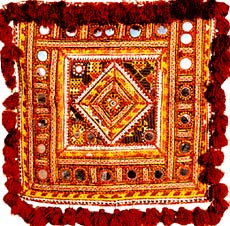
Embroidery, a time-honored tradition in Gujarat, is a craft that has been practiced with precision and dedication. The Kutch region is particularly renowned for its vibrant and elaborate embroidery work. Local artisans skillfully embellish fabrics with mirror work, intricate patterns, and vibrant threads, creating visually stunning pieces. The diversity in embroidery styles, ranging from Rabari and Ahir to Sindhi and Banni, reflects the cultural amalgamation within the state. 

Textile craft is another cornerstone of Gujarat's artisanal heritage. The Patola silk sarees from Patan are globally celebrated for their unique tie-and-dye technique. Skilled weavers painstakingly create intricate patterns by resist-dyeing both the warp and weft threads before weaving, resulting in a fabric that is both luxurious and visually captivating. This meticulous process has been handed down through generations, symbolizing the rich tapestry of Gujarat's textile traditions. 

Dye craft, with its roots deeply embedded in the state, showcases the expertise of Gujarat's artisans in creating vivid and durable colors. The Bandhani tie-and-dye technique, prevalent in regions like Jamnagar and Bhuj, involves tying small portions of the fabric with thread and then dyeing it. The result is a fabric adorned with vibrant patterns, often in a multitude of colors. This age-old craft not only adds to the visual appeal of textiles but also serves as a testament to the skillful utilization of natural dyes. 

Clay craft is yet another facet of Gujarat's artistic landscape. The terracotta works of the Panchmahal district and the ornate pottery from the Kutch region are prime examples of the state's proficiency in clay craftsmanship. Traditional potters create an array of items, including decorative figurines, functional utensils, and ceremonial items. The craft not only fulfills utilitarian needs but also carries forward the aesthetic sensibilities inherent in Gujarat's cultural heritage. 

Wood craft, deeply rooted in Gujarat's history, showcases the state's mastery in carving and woodworking. The artisans from Sankheda are known for their exquisite lacquer work on wooden furniture. Intricately carved pieces, adorned with vibrant colors, bring a touch of traditional elegance to homes. The craft not only demonstrates the technical prowess of the artisans but also reflects the cultural significance of wooden crafts in Gujarat. 

The crafts of Gujarat are a testament to the state's rich cultural heritage and the skilled artisans who have preserved these traditions through centuries. From the intricate embroidery of Kutch to the vibrant textiles of Patan, the meticulous dye craft of Jamnagar to the clay craft of Panchmahal, and the elegant wood craft of Sankheda, Gujarat's crafts weaves together history, culture, and skilled craftsmanship of the state to secure its position among the best crafts in India. These crafts not only contribute to the economic sustenance of the artisans but also play a crucial role in keeping Gujarat's cultural identity alive and thriving.

Friday, 4 November 2022

Diwali Dolls, West Bengal


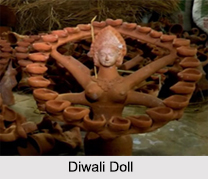
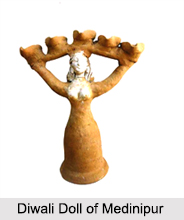
Diwali Dolls, West BengalDiwali Dolls are mainly made for Diwali festival and they are available in the districts of Purulia and Medinipur in West Bengal. These two districts have certain distinctions in the forms and shapes of the dolls they produce. Diwali Dolls are mainly used for the illumination with the lamps which are provided on the hands of the dolls. Apart from that, these dolls have some spiritual significance- Diwali Dolls symbolize Goddess Lakhshmi, who increases wealth. Thus, Diwali Dolls are one of the most prominent features of Diwali festival.

Shapes of Diwali Dolls
Diwali Dolls are mainly shaped in a female body, the lower portion of which is round and hollow and it serves as the stand of the lamps. The upper portion is given the shape of a female body whose arms are raised for putting lamps on each of the hand; a single lamp is put on the head of the doll. Thus, this doll is also called the ‘doll with three lamps’.

Diwali Dolls, West BengalTypes of Diwali Dolls
Apart from the ‘dolls with three lamps’, ‘dolls with trays on their heads’ are also found. The arms of these dolls are raised to hold the circular tray above their heads on which lamps are fixed in a neat arrangement. Sometimes, the dolls are seen to be carrying two semicircular trays with lamps on her shoulder, which are attached to a circular stand comprising the lower portion of the doll. Diwali Dolls are also shown to be carrying three, five, seven and nine lamps; dolls with seven lamps are called ‘Satbahania’. Dolls with two lamps each on one hand are often adorned with a crown on their heads.

For more, visit the link below:

Tuesday, 19 April 2022

Embroidery in India


Embroidery in IndiaEmbroidery Work in India is carried out in PunjabUttar PradeshWest Bengal and many other regions. Buttonhole or Blanket Stitch, Running Stitch, Cross Stitch, Satin Stitch and Chain Stitch are some of basic techniques of stitching used in Indian Embroidery. It has also given way to machine stitching with the advent of the industrial era. There are diverse varieties of Indian embroidery.

Influenced by a variety of cultures, India has downed during numerous invasions and settlements and Indian embroidery from all regions has an essence of its own.

History of Embroidery in India
Themes and designs have stayed as such for centuries. In the pre-historic civilization, it was the same embroidery needles which have been found in excavations. The patterns have always been floral, animals, geometric and religious. Each embroidery style has its own history and a story of expansion. Indian embroidery receives its inspiration from nature and religion. The colours, the bottom, the subject matter and the fashion, all are reflective of a particular area. Embroidery on leather, velvet, net, cotton and silk are through all over the country. The patterns are decided upon on the base of the fabric and its quality with the stitches depends upon the style and the produce to be created.

Materials for Indian Embroidery
The materials used in Indian embroidery like the fabrics and yarns vary from one place to another. Silk, wool and linen are predominantly used for thousands of years for both fabric and yarn. In the recent times, the thread used in traditional embroidery is manufactured in rayon, cotton, as well as traditional wool, silk and linen. In the techniques of canvas work, huge quantities of thread are buried on the back of the work to use more materials but provide a sturdier and more substantial finished textile. Further, in surface as well as canvas work techniques, an embroidery frame is generally used for stretching the material as it ensures that any sort of pattern distortion.

For more, visit the link below:

Thursday, 3 March 2022

Tanjore Paintings


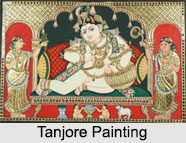
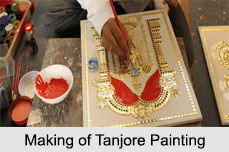
Tanjore Paintings, Indian PaintingsTanjore Paintings have a very rich heritage. Tanjore Painting is one of the most popular forms of classical South Indian painting. It is the local art form of Thanjavur city of Tamil Nadu. The pattern of art had flourished in Thanjavur, the capital of the Chola dynasty and since got such a name as Tanjore paintings.

The premise of Tanjore painting is essentially religious and spiritual and the art is renowned for its artistic portray of legendary characters and themes. The Brihadeeswara temple, for instance, houses several illustrations of Thanjavur paintings in the form of Chola murals and Nayak paintings. Even the Maratha palace is an ideal place to explore these paintings.

History of Tanjore Paintings
Tanjore Painting of India originated in the 16th century, under the sovereignty of the Cholas. The drop of the Vijayanagar Empire and dismiss of Hampi in the Battle of Talikota in 1565 CE effected the immigration of painters who had been dependent on the aid of the empire. Some of them roamed to Thanjavur and worked under the patronage of the Thanjavur Nayakas. Then, the Maratha rulers defeated the Thanjavur Nayakas and began to raise the Thanjavur atelier. During the Gupta Empire around 18th century, Tanjore had reached the peak of success. The Tanjore painting adorned the interiors of the palaces and soon found their place in every household. The "Saraswathi Mahal Library" in Tanjore displays the famous Tanjore paintings.

Features of Tanjore Paintings
Tanjore Paintings, Indian PaintingsTanjore paintings are famous for rich colour, exterior prosperity and compressed work of art. Tanjore Paintings are embellished with rich precious stones, glass pieces and gold that add colour to the surrounding. To include 3d effect, the painters use limestone. Subjects of most of the paintings are Hindu gods and goddesses and saints. The paintings are made on wood and cloth made canvass. Tanjore Paintings come in three finishes classic, stamped and exceptional. High quality of 22-carat gold foil is used to make sure that it lasts for generations.

The characteristic of Tanjore painting is that the figures in the paintings have a round body and egg shaped effulgent eyes and are surrounded by curtains and arch. These paintings illuminate in the dark room. The artists then sketches the meticulous pictures on the canvas while the paste of limestone and fastening substance is used during adorning and engraving ornaments into the paintings. The pillars, dresses, arch and thrones of the Tanjore paintings are gilded with the gold leaves and gems of different colours. After this, colours are painted on the sketch. For outlines dark brown is usually used. Red is preferentially used as the background colour but sometimes green is also used. The yellow colour is used for the Goddesses while for Gods it varies: blue for Lord Vishnu and white for Nataraja. Previously artists used the natural colours made from vegetable dyes. The portfolios of the old Tanjore paintings were restricted to the drawings of the divine figures. But now-a-days the modern artists explore new dimensions. They also start depicting the presiding deities of the famous temples.

For more, visit the link below:

Friday, 4 February 2022

Deccani School of Painting


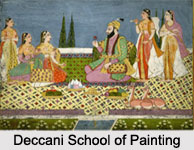
Deccani School of Painting, Indian PaintingsDeccan school of painting was effective in southern part of India in medieval age and later years. Adil ShahiNizam Shahi and Qutub Shahi rulers were the patrons in the development of Deccani School of painting. A lot of artists flourished during the rule of Ibrahim Adil Shah (II) (1580-1627), who was a great lover of painting. It is evident from the availability of numerous portraits of Ibrahim Adil Shah in different museums of the world. Deccani painting can be illustrated as a perceptive and an extremely included mix of original and overseas style of art.

History of Deccani School of Painting
The miniature painting method, which increased at first in the Bahmani court of Bahmani Sultanate and later in the courts of AhmadnagarBijapurBidar Berrar and Golkonda is generally well-known as the Deccan school of Painting. The Nujum-ul-ulum of 1570 is the first dated manuscript, appears to be a producer of Bijapur, which continued to be one of the major centres of the style. Deccani art also had its consequence on the expansion of miniature painting in the Hindu courts of Rajasthan and central India.

The art of painting carried with it the influence and essence of the culture it represented. The art of painting widespread in other parts of India were very much influenced. Ibrahim Adil Shah was shown as a musician in few other paintings available in the Naprstck Museum, Prague, and the Goenka Collection, Kolkata. Although the Mughal School of painting and the Deccani School of painting developed the naturalism due to European influence, yet there was a difference between the two. The Mughal school paintings were more dazzling in technique whereas the Bijapur or the Deccani School of painting represented more naturalism due to imaginative composition and poetic content.

Features of Deccani School of Painting
Deccani School of Painting’s style is a perceptive, highly integrated merge of indigenous and foreign art forms. The Vijaynagar painting’s similarity is seen in the lengthened figures while the floral backgrounds with a general use of landscape shows Persian influence. Deccani colours are rich and luminous, and much use is made of gold and white. For the most part of the colour of Deccani paintings are Islamic, Turkish and Persian tradition particularly the arabesques, but those are surmount by a pure Deccani part of undergrowth. These paintings have a distinct quality of their own in the very unconventional composition. The rich landscape mysterious atmosphere, gem-like colouring, lavish use of gold, exquisite finish, profusion of large plants, flowering shrubs and typical Dakhni castles in the background and above all, the sweeping decorative rhythm that is of Bijapur origin are quite visible in them.

For more, visit the link below:

Tuesday, 28 December 2021

Rajasthani Pottery


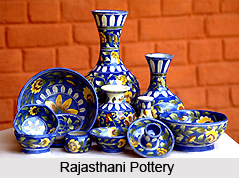
Rajasthani PotteryThe terracotta tradition in Rajasthan dates back to the Harappan age. Today too it continues, as it is one of the interesting pieces of art for the tourists. Most of these are made in the villages of Rajasthan. The state's excellent artistry has been instrumental in creating some of the most phenomenal images or art forms. A mixture of clay is used to on the potter's wheel and pots of various shapes and sizes are created manually. Patience, concentration and meticulousness are highly required to make the pots. Besides pots and water jars other object of arts, such as, warriors mounted on horses, elephants and their keepers, plaques of deities and votive images are also part of the pottery in Rajasthan.

The Blue Pottery of Jaipur is quite popular amongst art lovers. There is an interesting history regarding how this kind of pottery arrived at Rajasthan. Blue glazed pottery originated in China and was later perfected by the Persians. It was the Mughals who introduced it to India. This art form was brought to Jaipur by Sawai Jai Singh II. In the middle of 11th century Kripal Singh Shekhawat started experimenting with its form and colours under the patronage of Raj Mata Gayatri Devi of Jaipur. From then on Jaipur became the pioneer of Blue Pottery.

For more, visit the link below:

Monday, 20 September 2021

Handicrafts of Kutch


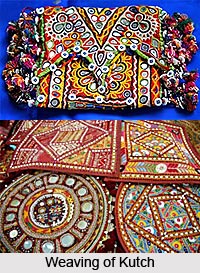
Handicrafts of KutchKutch is considered to be a haven for numerous handicrafts, which are carried on from generation to generation. The traditional basis of its prosperity has been its foreign trade in various handicrafts. The artifacts of Kutch moved not only the length and breadth of the country but also in the overseas market. The main handicrafts of the district are embroidery of ethnic style, Patchwork, terracotta, pen knives and nut crackers. A brief description of the various crafts is as follows.

Embroidery
Inherited by the bequest of craft making the Kutchi people weave their dreams in different forms of embroidery. Kutch is world renowned for its mirrored embroideries. Most of these were traditionally stitched by village women, for themselves and their families, to create festivity, honor deities, or generate wealth. Embroideries contributed to the substantial economic exchange required for marriage and fulfilled other social obligations which required gifts. Be it, thread work or leather every village has a different and a unique style of making embroidery.

Hand Block Printing
Kutch is the homeland of a variety of hand printing textiles. Important among them are Ajrakh prints, Batik prints and Rogan painting.

Wood Carving
Wood carving is one of the best handicrafts of Kutch. The Harijan people living in Dumaro and Ludia are master crafts persons of wood carving. They make various utensils like pastel roller, chapati disc, bottles, small table, glass etc. of the wood doing attractive carving. Generally, they use the teak wood and locally available 'bahuv wood to prepare the fine artifacts.

Mudwall painting
House in the Banni area are living museums of beautiful paintings Rabari and Harijan women folk are traditionally experts in depicting their dreams in painting. They turn houses into homes.

The clay collected is mixed with camel dung and kept for a few days. Then it is kneaded to obtain sufficient plasticity and designs are worked on the mud wall using this clay mixture. Designs of mor (peacock) Popat (Parrot) anghadi (Fingers) Vinjno (Fan).

Silver Work
Kutch is famous for its superior silver work, both of the design and engraving of jewellery.

Pen-knives and nutcrackers
Pen knives and nutcrackers of Kutch have travelled the length and breadth of the country. People of Kutch prefer to present penknives or nutcrackers to their relatives and friends living outside Kutch. The artisans, who made swords during the royal family's patronage, are now producing the penknives and nutcrackers. The iron bars are reduced to workable small pieces. Then the pieces are worked by using a forging machine.