Showing posts with label painting. Show all posts

Friday, 29 March 2024

Salar Jung Museum


Situated gracefully on the southern bank of the Musi River in the vibrant city of Hyderabad, Telangana, the Salar Jung Museum stands as an emblem of cultural richness and historical grandeur. Established in 1951, this distinguished museum was once the private collection of the illustrious Salar Jung family, renowned for their deep appreciation and relentless pursuit of art from across the globe. The museum owes its inception to Nawab Mir Yousuf Ali Khan, popularly known as Salar Jung III, who diligently collected and preserved a vast array of artistic treasures throughout his lifetime. 

The Salar Jung Museum serves as a testament to the eclectic tastes and refined sensibilities of its founders. Its collection spans diverse civilizations, ranging from ancient Indian artifacts to exquisite pieces of European art. Each exhibit is a poignant reflection of the cultural tapestry woven by humanity over the centuries. From intricately carved ivory figurines to stunning Persian carpets, every artifact housed within its walls tells a unique story, offering visitors a glimpse into the rich heritage of mankind. 

Exhibits at Salar Jung Museum

1. Artifacts from Ancient India: The museum boasts an extensive collection of artifacts dating back to ancient India, including sculptures, coins, and manuscripts. Highlights include the famous Veiled Rebecca, a mesmerizing marble sculpture crafted by Italian artist Giovanni Maria Benzoni, and the renowned double statue of Mephistopheles and Margaretta. 

2. Treasures of the East: Delve into the rich cultural heritage of the East with the museum's impressive collection of Asian artifacts. From exquisite Chinese porcelain to intricate Japanese netsuke, each piece showcases the unparalleled craftsmanship and artistic finesse of the region. 

3. European Masterpieces: Step into the world of European art with the museum's splendid array of masterpieces. Admire the works of renowned artists such as Raphael, Rembrandt, and Murillo, displayed alongside exquisite furniture and decorative arts from the Baroque and Rococo periods. 

4. Decorative Arts: Explore the finer nuances of decorative arts with the museum's diverse collection of textiles, ceramics, and metalwork. Marvel at the intricately embroidered textiles from Persia, marvelously crafted silverware from Europe, and exquisitely designed jewelry from India. 

Beyond its role as a custodian of cultural heritage, the Salar Jung Museum is dedicated to the preservation and conservation of its priceless artifacts. It is considered among the prominent museums of Andhra Pradesh. Through meticulous care and scholarly research, the museum strives to ensure that future generations can continue to appreciate and learn from these invaluable treasures. Conservation laboratories equipped with state-of-the-art facilities play a pivotal role in safeguarding the integrity of the museum's collection, employing cutting-edge techniques to restore and preserve artifacts for posterity. 

The Salar Jung Museum in Hyderabad stands as a beacon of cultural enlightenment, offering visitors a captivating journey through the annals of history and art. From its humble origins as a private collection to its current status as one of India's premier museums, it continues to inspire and enchant audiences from around the world. As we navigate the complexities of the modern age, institutions like the Salar Jung Museum serve as invaluable repositories of our collective heritage, reminding us of the enduring power of art and culture to transcend boundaries and unite humanity.

Friday, 2 February 2024

Art and Craft of Arunachal Pradesh


Arunachal Pradesh, the northeastern frontier of India, is a melting pot of diverse cultures and traditions, reflected vividly in its unique art and craft forms. The state's artistic heritage is deeply intertwined with its cultural diversity, with each community contributing to the vibrant tapestry that is Arunachali art. From bamboo and cane craft to carpet-weaving, painting, wood carving, jewelry making, and ivory craft, the art and craft of Arunachal Pradesh stand as a testament to the skilled hands and rich cultural heritage of its people. 

Bamboo and cane craft are integral components of Arunachal Pradesh's artistic legacy. Skilled artisans adeptly transform these natural resources into functional and aesthetically pleasing items. Baskets, mats, furniture, and even traditional headgear are crafted with precision and ingenuity, showcasing the seamless blend of utility and artistry. The intricate patterns and designs reflect the cultural ethos of the tribes, making each piece a unique representation of Arunachal's cultural diversity. 

Carpet-weaving is another significant art form in Arunachal Pradesh, with the Monpa tribe particularly renowned for their expertise. Using traditional techniques passed down through generations, Monpa weavers create exquisite carpets with intricate patterns and vibrant colors. These carpets often depict scenes from daily life, mythological stories, or symbols of religious significance. The meticulous craftsmanship and attention to detail make Arunachali carpets highly sought after, both locally and internationally. 

Painting, an art form that transcends boundaries, has found a distinctive expression in Arunachal Pradesh. The state boasts a rich tradition of tribal art, with each tribe contributing its unique style and symbolism. Thangka painting, practiced by the Monpas and Sherdukpens, involves intricate depictions of Buddhist deities and spiritual themes. The Apatanis are known for their vibrant murals, showcasing a keen sense of color and design. Through these paintings, Arunachali artists preserve and perpetuate their cultural narratives. 

Wood carving in Arunachal Pradesh is a craft that combines artistic finesse with practical utility. Skilled artisans carve intricate designs on wooden panels, doors, and furniture, reflecting the cultural motifs of their respective tribes. The carvings often depict animals, mythological figures, or scenes from tribal life, serving as both functional items and cultural artifacts. The craftsmanship in Arunachali wood carving is not merely aesthetic but also a manifestation of the deep connection between the people and their natural surroundings. 

Jewelry making is an art form that showcases the metalworking skills of the tribes in Arunachal Pradesh. Silver and brass are commonly used to create traditional jewelry pieces adorned with intricate patterns and symbolic motifs. Each piece of jewelry carries cultural significance, representing the wearer's identity, social status, or belonging to a specific tribe. The craftsmanship involved in jewelry making reflects the meticulous attention to detail and the reverence for tradition within Arunachali communities. 

Ivory craft, though now facing stringent regulations due to conservation concerns, has been a traditional art form in Arunachal Pradesh. Skilled artisans meticulously carve ivory into intricate sculptures, depicting religious and mythological themes. However, with increasing awareness about the need for wildlife conservation, the focus is shifting towards alternative materials, ensuring the preservation of this age-old craft without compromising on ethical considerations. 

The art and craft of Arunachal Pradesh embody the essence of its diverse cultural heritage. From the utilitarian bamboo and cane craft to the intricate carpet-weaving, painting, wood carving, jewelry making, and the traditional ivory craft, each form reflects the deep-rooted connection between art and culture in this northeastern state of India. As these traditional crafts continue to evolve, they serve as a testament to the resilience and creativity of the people of Arunachal Pradesh, preserving their heritage for generations to come.

Friday, 24 February 2023

Jhoti Chita, Folk Paintings of Odisha


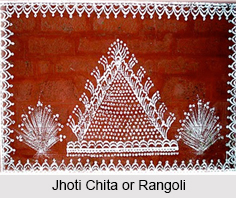
Jhoti Chita, Folk Paintings of OdishaJhoti Chita, also known as Rangoli, is a traditional art or painting of Odisha which is mostly found in the rural parts of the state

Colours of Jhoti Chita
Several figures and flower patterns are drawn in Jhoti Chita or Rangoli. Before starting the painting, an earthy red colour named ‘dhau’ is smeared on the walls and floors and then the Jhotis are created. It provides a contrasted colour. Dhau is also used as a background colour of Jhoti drawings.

Religious significance of Jhoti Chita
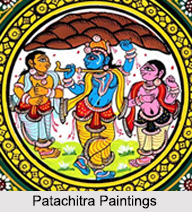
Jhoti Chita is made during certain festivals like marriage, Manabasa Gurubara, Basanti, KaartikaDolaJhulana, Dhanalakshmi puja, Gaja Lakshmi puja and Raja. For different festivals, different types of motifs are drawn on the walls or floors. For example, during Lakshmi puja, a stack of paddy or rice sheaves is drawn on the walls structured like a pyramid as it symbolizes goddess Lakshmi. Small foot marks of goddess Lakshmi are a must in any Jhoti. During Durga Puja, white and red dots are painted on the walls. This combination of red and white signifies the worship of Shiva and Shakti. Intricate and beautiful floral designs like the lotuselephants, symbols used in Patachitra find place in this form of free hand drawing.

For more, visit the link below:

Thursday, 15 December 2022

Pahari Painting, Indian Paintings


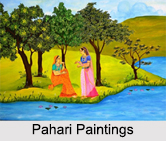
Pahari Painting, Indian PaintingsPahari painting refers to a painting from the mountainous regions and was developed in the independent states of the Himalayan foothills in India. It is one of the types of Indian paintings which are generally done in the miniature style. Pahari painting is the name given to Rajput paintings, made in Himachal Pradesh and Jammu and Kashmir states of India.

Origin of Pahari Painting
Pahari paintings developed and flourished during the period of 17th to 19th century. It was flourished in Basohli, JammuGarhwalChambaKangra, Guler and Mandiin the hilly areas in the northwest has been termed the Pahari School and was influenced to some extent by the Mughal painting of Aurangzeb’s period. Pahari paintings have been extensively influenced by the Rajput paintings, because of the family relations of the Pahari Rajas with the royal court at Rajasthan. There is strong influence of the Gujarat and Deccan paintings. With the appearance of Bhakti movement, new themes for Indian Pahari paintings came into practice. The ‘Shaiva-Shakta’ themes were increased by dialect poetry and folk songs of Lord Krishna and Lord Rama. At the same time, the themes of the paintings revolved around love and dedication also. There was also illustration of great epics, puranas, etc. The depiction of Devi Mahatmya manuscript painted at Kangra, in 1552, has been much acclaimed.

Types of Pahari Paintings
Following are the different types of Pahari Painting:

Basohli Paintings: Basohli town is situated on the bank of the Ravi River in Himachal which has produced splendid Devi series, magnificent series of the manifestations of the Supreme Goddess. Artist Devidasa painted it under the patronage of Raja Kirpal Pal. Gita Govinda of 1730 is also believed to have Basohli origin. Geometrical patterns, bright colours and glossy enamel characterize Basohli paintings.

Bilaspur Paintings: Bilaspur town of Himachal witnessed the growth of the Pahari paintings around the mid-17th century. Apart from the illustrations of the Bhagavata PuranaRamayana and Ragamala series, artists also made paintings on rumal (coverlets) for rituals and ceremonies.

Chamba Paintings: These are quite related in appearance to Mughalstyle of paintings, which strongly influences the Deccan and Gujarat style too. The late 17th century witnessed Chamba paintings of Himachal being dominated by Basohli style, which ultimately gave way to Guler painting tradition.

For more, visit the link below:

Wednesday, 19 October 2022

Folk Arts of India


Folk Arts of India, Arts in IndiaFolk Arts of India are quite well developed. They are different from primitive art forms in which they are more finished, polished, complex and stylised. Folk art came after the village settlements were established. It is marginally developed and more finished in nature. The common people are the mainspring of folk art.

Folk art forms may accompany the celebration of various religious, social and family festivals. The problem of fertility both in case of human beings and land, the problem of natural disasters like floodsfamines and fire, diseases and accidents, directly or indirectly, provide the theme for folk art. The main purpose of folk arts is three-fold; which satisfy people's passion for religious ritualsentertainment as well as social interaction.

Features of Folk Arts in India
Folk arts, as distinct from tribal art and traditional art, exhibit certain characteristics which are typical to this art form alone. The compositions either do not claim any author or are adopted from written texts. But neither the performers nor the audience are interested in the source of the text or the author. Folk art is mostly orally transmitted and passes from generation to generation through Guru-Sishya Parampara. The folk arts have no watertight compartmentalisation among themselves and there is seen a mixture of dance, song, music and drama.

The division into dance, drama and musical forms made basing on emphasis. The music used in the folk arts is mostly Bhava-centric music. The stress is on Tala (rhythm) and though all kinds of instruments are used, the most important instruments used are percussion instruments. Most common kinds of Anabadha (drum) Vadyas are Dhol, Mardal, KholPakhavaj etc. The Ghana (brass) instruments are Gird, Jhanja, Kartal etc. A particular feature of folk art is the presence of body language and histrionics even where no actual dramatic plot exists.

Types of Folk Arts in India
Earliest Indian folk painting and art styles have been passed down from invention to generation and are still practised in diverse parts of the country. Following are the main types of folk arts of India:

Miniature Paintings: Initiated in the Mughal period, about 16th century, Miniature paintings are inclined by Persian styles and prospered under Shah Jahan and Akbar's regulation. These paintings are symbolized by its miniature size but elaborate details and delicate expressions.

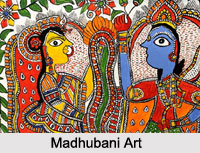
Madhubani: It is one of the most popular Indian folk arts, practiced mostly by women who wanted to be one with God. It is also called Mithila art; it initiated in the kingdom of Janak in Nepal and in there-day Bihar.

For more, visit the link below:

Tuesday, 23 August 2022

Folk Paintings in Rajasthan


Folk Paintings in Rajasthan, Indian PaintingsFolk paintings in Rajasthan are as different as its culture. The folk paintings in Rajasthan are completely handmade. They bring numerous talented painters of Rajasthan. The folk paintings of Rajasthan deal with pictorial depictions of popular Hindu gods, human portraits, common customs and rituals and the elements of nature. Some of the popular folk paintings of Rajasthan include sanjhya painting, phad paintingpichwai painting and miniature painting.

In Rajasthan, the folk paintings are typically done on some particular occasions like marriage, birth ritual and festivals. This tradition of folk paintings is found in villages and rural areas practiced by a variety of tribes. They are very unique, new and done with underdone-hand.

History of the Folk Paintings in Rajasthan
Throughout the early medieval period of the early 5th century, an exceptional art form was taking outline in and around two areas of western India namely, Marudesh and Gurjaratra which are Rajasthan and Gujarat in present day. Throughout this period, the Marudesh and Gurjaratra saw wonderful changes in the political and cultural field and these changes lent a helping hand in the further development of art.

Different types of the Folk Paintings in Rajasthan
Following are the different folk paintings of Rajasthan:

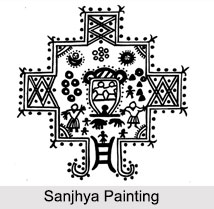
  • Sanjhya Painting: It is a traditional wall painting and is mostly popular in Mewar and Malwa regions. Young girls, especially the newlywed paint the walls for 14 to 15 days during the pitrapaksha. Every day in the evening, they wash the wall with cow dung and ochre. They use various materials to adorn the walls like motifs (made from the lumps of cow dung), flower, leaves, colourful papers of gilt, vermilion, head grains of maize and wheat etc.Folk Paintings in Rajasthan, Indian Paintings On the final day, the images are immersed in a river, pond or any source of water.

  • Thapa: In Rajasthan this art has gained different forms and multilevel representation. Along with the common hand prints, there are iconic depictions of a variety of gods and goddesses which are drawn in festivals and spiritual ceremonies to settle precise deities. Many of these drawings are connected with exact seasons.


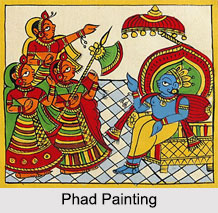
  • Phad Painting - Phad painting or Phad is a style of religious scroll painting. Since the last two centuries, the Joshi families of Bhilwara, Shahpura in Bhilwara district of Rajasthan are widely known as the traditional artists of Phad painting. Phad painting is traditionally done on a long piece of cloth or canvas, known as phad. These sorts of painting feature the narratives of the folk deities of Rajasthan, mostly of Pabuji and Devnarayan. Traditionally vegetable colours are used in these paintings. Some of the noted artists of phad painting are Shree Lal Joshi, Nand Kishor Joshi, Prakash Joshi and Shanti Lal Joshi.

  • For more, visit the link below:

    Monday, 4 April 2022

    Indian Village Art


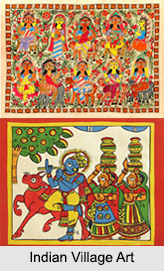
    Indian Village ArtIndian Village Art displays the culture and tradition of their respective villages. Every region in India has its own style and pattern of art. The Indian folk paintings, their styles and patterns are as diverse as the Indian nation itself. Folk paintings use very vibrant and natural colours and papers, clothes, leaves, earthen pots, mud walls, etc. are used as canvas. Indian Village paintings are diverse in India and reflect rich cultural heritage and they are the true examples of artistic expression. They are so variable from region to region because of the availability of material in different area.

    Types of Indian Village Art
    The most famous types of Indian Village art paintings hence include various ancient Indian art forms such as Madhubani, Phad, Kalamkari, Patachitra, Warli paintings, Gond paintings, etc.

    Madhubani Paintings: These paintings are an indigenous art form of a picturesque village of Bihar. The women have practiced this art form since many centuries and they maintain their dominance on this craft. The figures are painted on household and village walls to mark the seasonal festivals and special events. However, most of the Madhubani Paintings mostly feature nature related themes. Since this intricate skill is handed down the generations, traditional designs and patterns are widely maintained.

    Phad Paintings: Phad paintings are in fact, the most famous form of painting in Rajasthan. Phad paintings are characterized by their own unique styles and patterns. They are especially appreciated as they use vibrant colours and quaint historical themes, the life and times of valorous heroes and so on. The most popular heroes of Phad paintings include Prithviraj Chauhan, Goga Chauhan, Amar Singh Rathore, Papuji and so on.

    Indian Village ArtWarli Paintings: Originated by the Warli tribes from the Western Ghat of India, in 2500 BCE, this is easily one of the oldest art forms of India. It is mainly the use of circles, triangles and squares to form numerous shapes and depict daily life activities like fishinghunting, festivals, dance and more. All the paintings are done on a red ochre or dark background, while the shapes are white in colour. Another popular theme of this form of folk art is the dance that men and women perform in circles and spirals around a musician.

    For more, visit the link below: