Showing posts with label artwork. Show all posts

Friday, 24 April 2026

Beyond the Lens: The Evolution and Discourse of Nude Photography in India

 Nude photography in India occupies a complex and often contested space, shaped by cultural traditions, legal frameworks, and evolving artistic expression. While the human form has been celebrated in Indian art for centuries, contemporary nude photography continues to provoke debate, oscillating between acceptance as fine art and criticism on moral or social grounds. This duality reflects broader tensions within Indian society as it negotiates modernity and tradition.


Historical and Cultural Context

The depiction of the human body in India is not a modern phenomenon. Ancient temple sculptures, miniature paintings, and classical art forms have long portrayed nudity as a symbol of divinity, fertility, and aesthetic beauty. These representations were not viewed through a lens of obscenity but rather as integral to spiritual and artistic narratives. However, colonial influences introduced more conservative attitudes toward nudity, reframing it within stricter moral codes that continue to influence public perception today. 

Artistic Expression and Contemporary Practice

In modern India, nude photography has emerged as a legitimate form of artistic exploration. Photographers use the medium to study form, texture, identity, and vulnerability, often challenging societal norms and encouraging dialogue. For many artists, the nude is not merely about physical exposure but about storytelling—addressing themes such as body positivity, gender identity, and human emotion. 

Despite this, practitioners frequently face challenges, including censorship, limited exhibition opportunities, and public backlash. Art galleries and independent platforms have played a crucial role in providing spaces for such work, though acceptance remains uneven across regions and communities. 

Legal and Ethical Considerations

The legal framework governing nude photography in India is nuanced. Laws addressing obscenity often lack clear definitions, leading to subjective interpretations. What may be considered artistic expression by one authority could be deemed inappropriate by another. As a result, photographers must navigate a delicate balance between creative freedom and legal compliance. 

Ethical considerations are equally significant. Issues of consent, representation, and exploitation are central to the practice. Responsible photographers prioritize transparency, respect, and collaboration with their subjects, ensuring that the work aligns with both artistic intent and ethical standards. 

Societal Perception and Media Influence

Public perception of nude photography in India is deeply influenced by media representation and social attitudes. While urban and younger audiences may exhibit greater openness, conservative views still dominate in many parts of the country. Social media has further complicated this landscape, offering both visibility and vulnerability. Platforms can amplify artistic work but also expose it to misinterpretation or harassment. 

At the same time, conversations around body positivity and self-expression are gradually reshaping attitudes. Increasingly, artists and audiences are engaging with nude photography as a means of challenging unrealistic beauty standards and promoting inclusivity. 

Nude photography in India stands at the intersection of art, culture, and controversy. Its evolution reflects broader societal shifts, highlighting the ongoing negotiation between tradition and modernity. As dialogues around artistic freedom and personal expression continue to grow, nude photography has the potential to move beyond stigma and be recognized for its aesthetic and conceptual depth.

Wednesday, 29 January 2025

Vishwakarma Caste


The Vishwakarma caste is a community traditionally associated with craftsmanship, engineering, and artisanal work in India. Recognized for their contributions to architecture, sculpture, and metalwork, members of this community have played a crucial role in shaping India’s cultural and structural heritage. Their identity is deeply rooted in mythology and history, reflecting a blend of religious beliefs and social structures that have evolved over time.


Historical Background

The Vishwakarma community has been historically associated with skilled trades, including carpentry, blacksmithing, stone masonry, and metalwork. They were regarded as the principal artisans and engineers responsible for constructing temples, palaces, and intricate idols of deities. Historical records suggest that during various Indian dynasties, including the Maurya, Gupta, and Chola periods, Vishwakarmas were highly respected for their craftsmanship. Their work extended beyond architecture to include the development of tools, weaponry, and artistic embellishments that defined different historical eras. 

Mythological Origins

According to Hindu mythology, Vishwakarma is regarded as the divine architect of the universe. He is believed to have designed celestial weapons, palaces of gods, and legendary cities such as Dwarka, Indraprastha, and Lanka. The Vishwakarma community traces its lineage to this deity, considering him their progenitor and patron. Ancient texts, including the Rigveda and the Vishwakarma Puranam, mention Vishwakarma as a master craftsman who possessed unparalleled skill in constructing divine structures. 

The community is traditionally divided into five sub-groups based on their specific crafts:

  • Carpenters (Sutradhars) – Skilled in woodwork and architecture.
  • Blacksmiths (Lohars) – Experts in metal forging and tool-making.
  • Bronze and Bell Metal Workers (Kasars) – Known for crafting utensils and idols.
  • Goldsmiths (Sonars) – Engaged in jewelry-making and fine metalwork.
  • Stone Masons (Shilpis) – Specialists in carving and sculpture. 

Social Significance

The Vishwakarma caste has historically occupied an essential place in Indian society due to their technical expertise. Despite their contributions, they have often faced social stratification within the caste system. While some sub-groups enjoyed patronage from royal courts and religious institutions, others experienced marginalization, particularly in the colonial and post-independence periods when industrialization reduced the demand for traditional artisanal work.

In contemporary India, the Vishwakarma community continues to contribute to various fields, including modern engineering, manufacturing, and design. Many members have transitioned from traditional craftsmanship to higher education and professional careers in technology and mechanical engineering. 

The Vishwakarma caste holds a distinct identity rooted in historical craftsmanship, mythology, and social evolution. Their contributions to architecture, engineering, and the arts have been significant in shaping India’s cultural and material heritage. While societal changes have impacted their traditional roles, the community continues to adapt, preserving its legacy while embracing modern advancements.

Thursday, 7 March 2024

Folklore Museum, Mysore


Folklore Museum, Mysore, is an invaluable cultural institution situated in the heart of Karnataka, India. Established with the aim of preserving and showcasing the rich tapestry of folk traditions and heritage of the region, the museum stands as a testament to the vibrant cultural diversity of India. With its extensive collection and informative exhibitions, the Folklore Museum offers visitors a captivating journey through time and tradition. 

The history of the Folklore Museum dates back to its inception in 1968 under the aegis of the University of Mysore. Founded by the renowned folklorist and scholar, Prof. H.L. Nage Gowda, the museum was conceived as a repository of indigenous art, crafts, rituals, and folklore practices prevalent across Karnataka. Prof. Gowda's vision was to create a space where the intangible cultural heritage of the region could be preserved for future generations. Over the years, the museum has expanded its collection through donations, acquisitions, and collaborations with local communities, becoming one of the premier institutions dedicated to folk culture in India. 

The exhibition at the Folklore Museum offers a comprehensive overview of the rich cultural heritage of Karnataka. The museum's galleries are meticulously curated to showcase the diverse aspects of folk life, including art, music, dance, literature, religion, and social customs. Visitors are treated to a fascinating array of artifacts, including traditional costumes, musical instruments, masks, paintings, sculptures, and household objects, each offering insight into the unique traditions and practices of the region. 

One of the highlights of the museum's collection is its extensive display of folk art, encompassing various forms such as Mysore paintings, leather puppets, wood carvings, and terracotta figurines. These exquisite artworks not only exemplify the artistic prowess of Karnataka's folk artisans but also serve as windows into the cultural ethos and spiritual beliefs of the communities they represent. 

In addition to its permanent collection, the Folklore Museum also hosts temporary exhibitions and cultural events throughout the year, providing a platform for contemporary folk artists and scholars to showcase their work and engage with the public. These exhibitions often focus on specific themes or regions within Karnataka, offering visitors a deeper understanding of the cultural diversity and heritage of the state. 

The Folklore Museum, Mysore, plays a vital role in promoting awareness and appreciation of folk culture among both local residents and tourists. Through its educational programs, guided tours, and outreach activities, the museum seeks to foster a sense of pride and belonging among Karnataka's diverse communities while also fostering cross-cultural dialogue and understanding. By preserving and celebrating the rich tapestry of folk traditions, the museum ensures that Karnataka's cultural heritage continues to thrive and inspire future generations. 

The Folklore Museum, Mysore, stands as a beacon of cultural preservation and appreciation, offering visitors a captivating glimpse into the vibrant tapestry of Karnataka's folk traditions and is counted among the most popular museums of Karnataka. With its rich history, diverse exhibitions, and commitment to education and outreach, the museum remains a cherished institution that celebrates the timeless beauty and resilience of India's folk heritage.

Thursday, 8 February 2024

Metal Craft of Rajasthan


Metal craft in Rajasthan has a rich heritage deeply embedded in the state's cultural fabric. Renowned for its intricate designs and skilled craftsmanship, Rajasthan's metal artisans have been producing exquisite pieces for centuries. Among the plethora of metal crafts in the region, several stand out for their popularity and unique characteristics. 

Theva craft is one such prominent metal craft of Rajasthan. Originating from the Mewar region, Theva craft involves intricate designs etched onto brass or copper utensils. Artisans meticulously carve patterns depicting traditional motifs such as peacocks, elephants, and floral designs. Theva craft items are often used for decorative purposes and are prized for their ornate beauty. 

Filigree, another notable metal craft, is widely practiced in cities like Jaipur and Jodhpur. This delicate art form involves twisting and curling fine threads of silver or gold to create intricate patterns and designs. Skilled artisans meticulously shape the metal threads, often incorporating gemstones or enamel work to enhance the beauty of the final piece. Filigree jewelry, in particular, is highly sought after for its fine craftsmanship and timeless elegance. 

Rajasthan is also renowned for its exquisite jewelry-making tradition. From elaborate bridal sets to everyday adornments, the state's jewelry artisans excel in crafting pieces that reflect the region's rich cultural heritage. Kundan, Meenakari, and Thewa are some of the traditional techniques employed in Rajasthan's jewelry making. Kundan jewelry, characterized by its intricate settings of gemstones in gold, is particularly famous for its opulence and grandeur. Meenakari involves the painstaking process of enameling colored designs onto metal surfaces, while Thewa is a unique technique where intricate gold designs are fused onto glass, creating stunning pieces of jewelry. 

Aside from jewelry, Rajasthan is also known for its metalware, including utensils, decorative items, and religious artifacts. Brass and copper are commonly used metals, with artisans employing techniques such as embossing, engraving, and hammering to create intricate designs. Traditional utensils like 'thalis' (plates) and 'lota' (water vessels) are often embellished with ornate patterns, making them prized possessions in households across the region. 

The metal crafts of Rajasthan not only serve as decorative items but also hold cultural and religious significance. Items like 'Aarti' lamps and 'Kalash' (water pots) are integral to religious rituals and ceremonies, crafted with great care and precision by skilled artisans. 

The metal crafts of Rajasthan embody the state's rich cultural heritage and artistic prowess. From the intricate designs of Theva craft to the timeless elegance of filigree jewelry, these traditional crafts continue to captivate admirers worldwide. By preserving and promoting these age-old techniques, Rajasthan's metal artisans ensure that their legacy lives on for generations to come.

Thursday, 1 February 2024

Embroidery of Punjab


Embroidery in the state of Punjab is a testament to the rich cultural heritage and artistic finesse that has been passed down through generations. Punjab, with its vibrant and lively spirit, has given rise to various forms of embroidery that reflect the essence of the region. Among the myriad styles, Phulkari Embroidery, Bagh Embroidery, Aari Embroidery, and Chope Embroidery stand out as some of the most popular and distinctive forms. 

Phulkari Embroidery, which translates to "flower work," is perhaps the most well-known and cherished form of embroidery in Punjab. Originating from the rural areas of the state, Phulkari is characterized by its vibrant and bold patterns created using darn stitch. Traditionally, Phulkari is executed on a coarse cotton fabric with bright silk threads, resulting in intricate floral motifs that cover the entire cloth. The artistry lies in the careful arrangement of colors and the meticulous detailing of each stitch, showcasing the skilled hands of the artisans who have mastered this traditional craft of Punjab

Bagh Embroidery, on the other hand, is a style that embodies opulence and grandeur. This form of embroidery, primarily practiced in the Jallandhar and Faridkot regions, is characterized by its elaborate and dense patterns. Bagh, meaning garden, aptly describes the lush and dense embroidery that often covers the entire fabric. Gold and silver threads are intricately woven into the fabric, creating a regal and luxurious effect. Historically, Bagh Embroidery was reserved for special occasions and ceremonies, emphasizing its association with prestige and celebration. 

Aari Embroidery is another prominent form of needlework in Punjab, known for its fine craftsmanship and delicate detailing. Aari, or tambour, is a special type of hook that is used to create chain stitches on the fabric. This technique allows for precise and intricate designs, making Aari Embroidery popular for adorning bridal wear and other festive garments. The artisans often employ vibrant threads and incorporate mirror work, enhancing the visual appeal of the finished product. Aari Embroidery reflects the fusion of traditional techniques with evolving fashion trends. 

Chope Embroidery, originating from the regions of Bhatinda and Mansa, is distinctive for its geometric patterns and repetitive motifs. Traditionally executed on a plain white or light-colored fabric, Chope Embroidery uses contrasting colors to create a visually striking effect. The repetitive nature of the designs symbolizes unity and continuity, making it a popular choice for everyday wear. Chope Embroidery has evolved over time, adapting to contemporary tastes while retaining its cultural significance. 

The embroidery of Punjab is a reflection of the state's rich cultural tapestry and artistic heritage. Phulkari Embroidery, Bagh Embroidery, Aari Embroidery, and Chope Embroidery exemplify the skill and dedication of the artisans who have preserved and enriched these traditional forms over the years. These exquisite embroidery styles not only contribute to the visual splendor of Punjab's textiles but also serve as a testament to the enduring legacy of craftsmanship in the region. As we celebrate the diversity of Indian textiles, the embroidery of Punjab stands out as a beacon of tradition and artistry.

Tuesday, 30 January 2024

Crafts of Gujarat


Gujarat, situated in the western part of India, is not only known for its vibrant culture and rich history but also for its diverse and intricate crafts that have been passed down through generations. The state boasts a myriad of traditional crafts, each reflecting the skill, precision, and cultural ethos of the artisans who have meticulously preserved these art forms. From embroidery and textile craft to dye craft, clay craft, and wood craft, the traditional crafts of Gujarat stands as enduring legacy of handmade craftsmanship. 

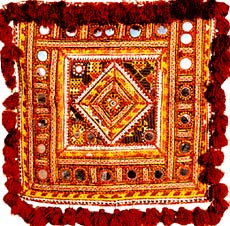
Embroidery, a time-honored tradition in Gujarat, is a craft that has been practiced with precision and dedication. The Kutch region is particularly renowned for its vibrant and elaborate embroidery work. Local artisans skillfully embellish fabrics with mirror work, intricate patterns, and vibrant threads, creating visually stunning pieces. The diversity in embroidery styles, ranging from Rabari and Ahir to Sindhi and Banni, reflects the cultural amalgamation within the state. 

Textile craft is another cornerstone of Gujarat's artisanal heritage. The Patola silk sarees from Patan are globally celebrated for their unique tie-and-dye technique. Skilled weavers painstakingly create intricate patterns by resist-dyeing both the warp and weft threads before weaving, resulting in a fabric that is both luxurious and visually captivating. This meticulous process has been handed down through generations, symbolizing the rich tapestry of Gujarat's textile traditions. 

Dye craft, with its roots deeply embedded in the state, showcases the expertise of Gujarat's artisans in creating vivid and durable colors. The Bandhani tie-and-dye technique, prevalent in regions like Jamnagar and Bhuj, involves tying small portions of the fabric with thread and then dyeing it. The result is a fabric adorned with vibrant patterns, often in a multitude of colors. This age-old craft not only adds to the visual appeal of textiles but also serves as a testament to the skillful utilization of natural dyes. 

Clay craft is yet another facet of Gujarat's artistic landscape. The terracotta works of the Panchmahal district and the ornate pottery from the Kutch region are prime examples of the state's proficiency in clay craftsmanship. Traditional potters create an array of items, including decorative figurines, functional utensils, and ceremonial items. The craft not only fulfills utilitarian needs but also carries forward the aesthetic sensibilities inherent in Gujarat's cultural heritage. 

Wood craft, deeply rooted in Gujarat's history, showcases the state's mastery in carving and woodworking. The artisans from Sankheda are known for their exquisite lacquer work on wooden furniture. Intricately carved pieces, adorned with vibrant colors, bring a touch of traditional elegance to homes. The craft not only demonstrates the technical prowess of the artisans but also reflects the cultural significance of wooden crafts in Gujarat. 

The crafts of Gujarat are a testament to the state's rich cultural heritage and the skilled artisans who have preserved these traditions through centuries. From the intricate embroidery of Kutch to the vibrant textiles of Patan, the meticulous dye craft of Jamnagar to the clay craft of Panchmahal, and the elegant wood craft of Sankheda, Gujarat's crafts weaves together history, culture, and skilled craftsmanship of the state to secure its position among the best crafts in India. These crafts not only contribute to the economic sustenance of the artisans but also play a crucial role in keeping Gujarat's cultural identity alive and thriving.

Friday, 24 February 2023

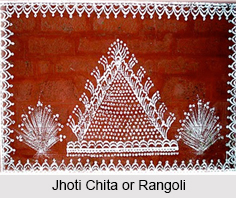
Jhoti Chita, Folk Paintings of Odisha


Jhoti Chita, Folk Paintings of OdishaJhoti Chita, also known as Rangoli, is a traditional art or painting of Odisha which is mostly found in the rural parts of the state

Colours of Jhoti Chita
Several figures and flower patterns are drawn in Jhoti Chita or Rangoli. Before starting the painting, an earthy red colour named ‘dhau’ is smeared on the walls and floors and then the Jhotis are created. It provides a contrasted colour. Dhau is also used as a background colour of Jhoti drawings.

Religious significance of Jhoti Chita
Jhoti Chita is made during certain festivals like marriage, Manabasa Gurubara, Basanti, KaartikaDolaJhulana, Dhanalakshmi puja, Gaja Lakshmi puja and Raja. For different festivals, different types of motifs are drawn on the walls or floors. For example, during Lakshmi puja, a stack of paddy or rice sheaves is drawn on the walls structured like a pyramid as it symbolizes goddess Lakshmi. Small foot marks of goddess Lakshmi are a must in any Jhoti. During Durga Puja, white and red dots are painted on the walls. This combination of red and white signifies the worship of Shiva and Shakti. Intricate and beautiful floral designs like the lotuselephants, symbols used in Patachitra find place in this form of free hand drawing.

For more, visit the link below:

Friday, 4 November 2022

Diwali Dolls, West Bengal


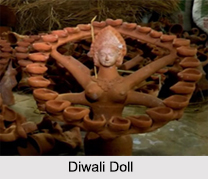
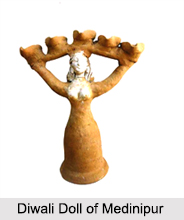
Diwali Dolls, West BengalDiwali Dolls are mainly made for Diwali festival and they are available in the districts of Purulia and Medinipur in West Bengal. These two districts have certain distinctions in the forms and shapes of the dolls they produce. Diwali Dolls are mainly used for the illumination with the lamps which are provided on the hands of the dolls. Apart from that, these dolls have some spiritual significance- Diwali Dolls symbolize Goddess Lakhshmi, who increases wealth. Thus, Diwali Dolls are one of the most prominent features of Diwali festival.

Shapes of Diwali Dolls
Diwali Dolls are mainly shaped in a female body, the lower portion of which is round and hollow and it serves as the stand of the lamps. The upper portion is given the shape of a female body whose arms are raised for putting lamps on each of the hand; a single lamp is put on the head of the doll. Thus, this doll is also called the ‘doll with three lamps’.

Diwali Dolls, West BengalTypes of Diwali Dolls
Apart from the ‘dolls with three lamps’, ‘dolls with trays on their heads’ are also found. The arms of these dolls are raised to hold the circular tray above their heads on which lamps are fixed in a neat arrangement. Sometimes, the dolls are seen to be carrying two semicircular trays with lamps on her shoulder, which are attached to a circular stand comprising the lower portion of the doll. Diwali Dolls are also shown to be carrying three, five, seven and nine lamps; dolls with seven lamps are called ‘Satbahania’. Dolls with two lamps each on one hand are often adorned with a crown on their heads.

For more, visit the link below:

Tuesday, 19 April 2022

Embroidery in India


Embroidery in IndiaEmbroidery Work in India is carried out in PunjabUttar PradeshWest Bengal and many other regions. Buttonhole or Blanket Stitch, Running Stitch, Cross Stitch, Satin Stitch and Chain Stitch are some of basic techniques of stitching used in Indian Embroidery. It has also given way to machine stitching with the advent of the industrial era. There are diverse varieties of Indian embroidery.

Influenced by a variety of cultures, India has downed during numerous invasions and settlements and Indian embroidery from all regions has an essence of its own.

History of Embroidery in India
Themes and designs have stayed as such for centuries. In the pre-historic civilization, it was the same embroidery needles which have been found in excavations. The patterns have always been floral, animals, geometric and religious. Each embroidery style has its own history and a story of expansion. Indian embroidery receives its inspiration from nature and religion. The colours, the bottom, the subject matter and the fashion, all are reflective of a particular area. Embroidery on leather, velvet, net, cotton and silk are through all over the country. The patterns are decided upon on the base of the fabric and its quality with the stitches depends upon the style and the produce to be created.

Materials for Indian Embroidery
The materials used in Indian embroidery like the fabrics and yarns vary from one place to another. Silk, wool and linen are predominantly used for thousands of years for both fabric and yarn. In the recent times, the thread used in traditional embroidery is manufactured in rayon, cotton, as well as traditional wool, silk and linen. In the techniques of canvas work, huge quantities of thread are buried on the back of the work to use more materials but provide a sturdier and more substantial finished textile. Further, in surface as well as canvas work techniques, an embroidery frame is generally used for stretching the material as it ensures that any sort of pattern distortion.

For more, visit the link below:

Friday, 18 February 2022

Indian Marble Sculptures


Indian Marble Sculptures, Indian SculptureIndian Marble Sculptures bear the excellent style and patterns of the finest craftsmanship that are achieved with quality. They provide an eloquent glimpse of strikingly attractive, versatile sizing of beautiful artistic designs and craftsmanship. The finest marbles used for sculpture does not contain stains. But some of natural stains are seen in the sculpture, which the sculptor skilfully incorporates into the sculpture.

History of Indian Marble Sculptures
The marble carving is the oldest art form concerning the formation of three dimensional forms from marble. Before the art of painting, the art of carving the shapes from the stones was started. There are records in the history stating that the art of carving statues and sculptures subsisted from the ancient times.

Famous Indian Marble Sculptures
Following are the Famous Indian Marble Sculptures:

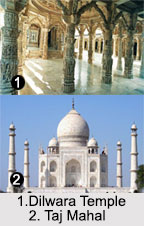
Dilwara Temple: Dilwara Jain Temples are one of the most outstanding and tantalizing marble stone cutting work of the temple and it is one of the finest Jain temples in the world over, known for its amazing architecture and wonderful marble stone carvings. There are total five shrines in these temples. All shrines are built with the help of white marble stones. Around the large courtyard of temples, numerous small shrines are seen. Every small shrine is employing a beautiful image of the tirthankaras with a series of elegantly carved pillars, giving rich look from the entrance to the courtyard. It is believed that this artwork was constructed during 11th and 13th centuries AD. In later period, many Hindu temples were carved with marble. The interiors of all these temples are covered with delicate design or religious symbols. Even Sanchi is famous for the Grand Stupa built by king Ashoka and there are total four gateways that were carved intricately in marble. The two richly carved pillars, rise to be crowned by carved lionselephants and dwarfs, from these the famous is Ashoka lions, the official seal of India.

For more, visit the link below:

Friday, 11 June 2021

Types of Indian Crafts


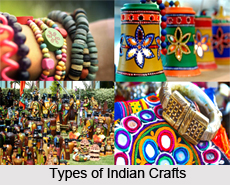
Types of Indian CraftsTypes of Indian crafts have undergone transformation over the years and the proficiency of construction has not altered to a great extent. Indian crafts are highly acclaimed throughout the world for their aesthetic appeal and magnificence. The diverse cultural traditions of India have enabled the accomplishment of producing various kinds of crafts. The crafts are composed of different materials, themes and proficiencies. Works on woodwork, pottery, hand looms, terracottapaintingsbeadwork, jewellery and embroidery etc have survived through centuries with fewer changes.

Bubblegram Craftof India
A bubblegram is a three dimensional image which is composed of points and remains suspended in a medium, usually a plastic block. Laser bubble-gram is in vogue. Crossing lasers in 'appropriately-doped' plastic, which may cause a chemical reaction through heat or 'photonic' inflammation makes these images. Such crafts are manufactured in several lanes of Kolkata and Mumbai.

Clay Craft of India
The origin of clay crafts in the country dates back to as early as the Indus Valley Civilisation. The Indian states of Himachal PradeshUttar PradeshGujaratWest Bengal and Rajasthan are renowned for their diverse form of clay crafts. The terracotta crafts of West Bengal, 'kagzi' or paper pottery made in Alwar region of Rajasthan and 'khurja' pottery of Uttar Pradesh are quite popular. During the Sultanateperiod in Delhi and Uttar Pradesh, India proceeded with its own manufactory of blue pottery.

Stone Craft of India
The art of sculpture is the poetic expression of stone craft. Sculptures of deities, decorative for house interiors, modelled on classical prototypes, continue to be made in every nook and corner of India. In the interiors of India such sculptures and exquisite figures are carved in relief with details engraved in fine lines. These objects are handmade artistic work made using hammer and chisels. Madhya PradeshBiharOrissa and Rajasthan are well-known centres of production of beautiful stone crafts.

Glass craft of India
As early as 800 B.C., i.e, at the time when the Yajur Veda was composed, glass craft was very popular. It is evident from the archaeological findings at Basti in Uttar Pradesh that glassware is about 2000 years old. The way glass is prepared transformed into various shapes is remarkable. Various decorative products like chandeliers, glass lamps, hanging lamp shades, glass lanterns, glass jewelleries like bangles and many other products are manufactured in different portions of India.

Metal Craft of India
Metal crafts in India include the numerous products which are made with the aide of several metals like gold, silver, bronze, brass, copper and bell metal. Silver filigree work of Andhra Pradesh and Orissa, brassware of Rajasthan, Orissa and other Indian states, 'dokra' metal crafts of Orissa, West Bengal and Madhya Pradesh, metal enamelled work of Himachal Pradesh, Gujarat and Uttar Pradesh and marvellous metal crafts of bell metal manufactured in Kerala, Bihar, Tripura and Assam are worth mentioning.

Lac Craft of India
The states of Gujarat, Andhra Pradesh, Jharkhand, West Bengal, PunjabRajasthan and Karnataka specialise in the production of magnificent lac crafts like bangles, utensils and decorative products. Lac industry has been growing since ancient times and over the years; many adept artisans have emerged throughout the country. Lac work is applied to furniture and other decorative items.

Horn and Bone Craft of India
The craftsmen of states like KeralaKarnatakaUttar Pradesh and the Gajapati district of Orissa are engaged in crafting various horn and bone crafts like walking sticks, pen stands, paper weights, snuff boxes, table lamps, lamp shades and many more.