Showing posts with label photograph. Show all posts

Friday, 24 April 2026

Beyond the Lens: The Evolution and Discourse of Nude Photography in India

 Nude photography in India occupies a complex and often contested space, shaped by cultural traditions, legal frameworks, and evolving artistic expression. While the human form has been celebrated in Indian art for centuries, contemporary nude photography continues to provoke debate, oscillating between acceptance as fine art and criticism on moral or social grounds. This duality reflects broader tensions within Indian society as it negotiates modernity and tradition.


Historical and Cultural Context

The depiction of the human body in India is not a modern phenomenon. Ancient temple sculptures, miniature paintings, and classical art forms have long portrayed nudity as a symbol of divinity, fertility, and aesthetic beauty. These representations were not viewed through a lens of obscenity but rather as integral to spiritual and artistic narratives. However, colonial influences introduced more conservative attitudes toward nudity, reframing it within stricter moral codes that continue to influence public perception today. 

Artistic Expression and Contemporary Practice

In modern India, nude photography has emerged as a legitimate form of artistic exploration. Photographers use the medium to study form, texture, identity, and vulnerability, often challenging societal norms and encouraging dialogue. For many artists, the nude is not merely about physical exposure but about storytelling—addressing themes such as body positivity, gender identity, and human emotion. 

Despite this, practitioners frequently face challenges, including censorship, limited exhibition opportunities, and public backlash. Art galleries and independent platforms have played a crucial role in providing spaces for such work, though acceptance remains uneven across regions and communities. 

Legal and Ethical Considerations

The legal framework governing nude photography in India is nuanced. Laws addressing obscenity often lack clear definitions, leading to subjective interpretations. What may be considered artistic expression by one authority could be deemed inappropriate by another. As a result, photographers must navigate a delicate balance between creative freedom and legal compliance. 

Ethical considerations are equally significant. Issues of consent, representation, and exploitation are central to the practice. Responsible photographers prioritize transparency, respect, and collaboration with their subjects, ensuring that the work aligns with both artistic intent and ethical standards. 

Societal Perception and Media Influence

Public perception of nude photography in India is deeply influenced by media representation and social attitudes. While urban and younger audiences may exhibit greater openness, conservative views still dominate in many parts of the country. Social media has further complicated this landscape, offering both visibility and vulnerability. Platforms can amplify artistic work but also expose it to misinterpretation or harassment. 

At the same time, conversations around body positivity and self-expression are gradually reshaping attitudes. Increasingly, artists and audiences are engaging with nude photography as a means of challenging unrealistic beauty standards and promoting inclusivity. 

Nude photography in India stands at the intersection of art, culture, and controversy. Its evolution reflects broader societal shifts, highlighting the ongoing negotiation between tradition and modernity. As dialogues around artistic freedom and personal expression continue to grow, nude photography has the potential to move beyond stigma and be recognized for its aesthetic and conceptual depth.

Monday, 16 May 2022

Styles in Monochrome Photography


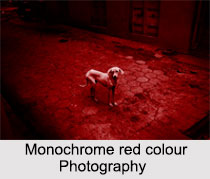
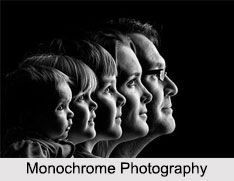
Styles in Monochrome Photography, Indian PhotographyMonochrome photography is a type of photography where the image has produced a single shade, rather than recording the colours of the object which was photographed. It includes all forms of black-and-white photography, which bring into being images containing tones of grey shades ranging from black to white. Earlier, photographers had no alternative but to shoot in black and white, because it was the only available medium at that time.

With the time Monochrome photography flourished. Contemporary black and white photography at its best is art and a lot of photographers regard it as the purest form of photography. It is recommended to shoot in RAW + JPEG format for Monochrome Photography.

The flattering and contrasting shades that bring a colour image to life are all decreased to black and white or shades of grey in a monochrome image. Black and white Photography is a very useful medium for landscape photography. It draws attention to the shapes and forms of the elements within the landscape, and the excellence of light.

Styles in Monochrome Photography
Styles in Monochrome Photography, Indian PhotographyThere are certain types of photo that rely on colour for impact. Monochrome images may be produced in a number of ways. Following are the different styles in Monochrome Photography:

Tone and Contrast Photography: The Monochrome photo’s subject works best when it has a varied range of black, grey and white shades. The dark and light areas in images create tone and contrast in a picture. Extended exposure shots work really fine in monochrome photography, in particular where there is moving water or clouds or moving subjects. The blurring of the movement also includes textural contrast with any solid objects in the frame and a tripod is needed to keep the camera at a standstill.

For more, visit the link below:

Saturday, 8 June 2019

Dimapur, Assam

59608270_1362616003893859_5013108375741617312_n.jpg
The district consists of Dimapur and Niuland sub-divisions, bifurcated from Kohima. The District is bounded by Kohima district on the south and east.
220px-KANTHI_WATER_FALL.jpg
152913878.jpgKarbi Anglong district of Assam on the West. The DAB (Disputed Area Belt) in the north borders
Golaghat district of Assam.

History of Dimapur 
The ancient Kachari capital Dimapur is one of the important sites of megalithic culture.  Besides the Monolithic, the ancient Kachari capital Dimapur contains other ruins of temples, embankment and tanks.
DKJRzoBX0AAmrlq.jpg
Intanki Wildlife Sanctuary
The Sanctuary is under the preservation of the Forest Wildlife Department. Habitat of various animals including some rare species of birds. Dimapur is the only Airport in Nagaland.

Read more : Dimapur, Assam

Tuesday, 21 May 2019

Mahabaleshwar, Maharashtra

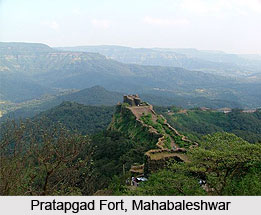
Mahabaleshwar is known as queen of the hill stations of Maharashtra with its plethora of attractive tourist points, cascading waterfalls, intriguing historical sites and pilgrimage places.
1547099542_blogs_5_incredible_experiences_in_indias_western_ghats.jpgMahabaleshwar is a spectacular hill station situated in the Western Ghats . Being laundered in the mighty ranges of Sahyadri, it has earned the name of "queen of the hill stations of Maharashtra". It is an integral part of the district of Satara and lies almost one hundred fifteen kilometres to the south west of Pune.

satara-mahabaleshwar-150036521515-orijgp.jpgHistory of Mahabaleshwar 
Mahabaleshwar originated in the early years of 1215. In the year 1828. Interestingly during the British period it was called the Malcolm Peth.

Geography of Mahabaleshwar
Mahabaleshwar, MaharashtraEtymologically, the word Mahabaleshwar has been derived from the Lord Shiva, popularly known as Lord Mahabali. A 'self-originated lingam', in the shape of a 'rudraksha' is placed at the temple of Gokarna.

murudeshwara-temple-gokarna-indian-tourism-entry-fee-timings-holidays-reviews-header.jpg


Tourism in Mahabaleshwar 
Mahabaleshwar, MaharashtraMahabaleshwar has a plentiful of magnificent palaces having mesmerizing natural beauty. Lodwick Point rises to a height of near about 1,240 metres. Elphinstone Point got its name from the then Governor of Mumbainamely Sir Elphinstone.

arthur-seat.jpg
Arthur's Seat is an other significant point of Mahabaleshwar.
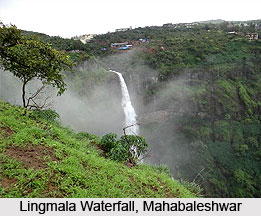
Mahabaleshwar, Maharashtra the famous Lingmala Waterfall of Mahabaleshwar. It runs through the Vennavalley.   Panchgani is   another hill resort, which lies at a little distance   from Mahabaleshwar. In the close proximity one finds Lord Hanuman Mandir.


Saturday, 18 May 2019

Sculpture Of Veeranarayana Temple


Temple follows the Hoysala temple building idiom. Located in Belavadi the temple is a 'trikuta' or three shrined. Trikuta or three shrined temple is a common feature of Hoysala temples.

The usual building material chlorite schist or soapstone has been used for the Veeranarayana Temple built by Veera Ballala II. The most striking feature about the architecture of the temple is that two of the shrines face each other. They have a common open mandapa that has 37 bays.
Each of the shrines has a complete tower on its top. These superstructures are known to be the largest examples of Hoysala architecture.

The third shrine is quite ancient with both closed and open mandapas. The closed one has 13 bays and the open mandapa has 9 bays. The central shrine is situated at the end of the hall. This shrine has all the architectural elements of the Hoysala.
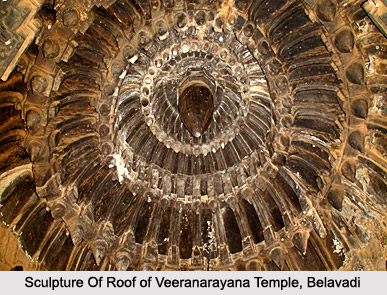
Sculpture of roof of Veeranarayana Temple, Belavadi
As is the Hoysala feature the inner wall is simply made up. But the roof is ornately decorated. It has 59 bays and the pillars constructed lathe turned. Some others have carvings on them. It is interesting to note that the ones that bear sculptures have been constructed manually.  The temple panels consist of the sculpted figures of Hindu deities and their attendants. Another sculptural element is the friezes or mouldings on the walls.

Read more :Sculpture Of Veeranarayana Temple, Belavadi, Hoysala Sculpture

Friday, 17 May 2019

Indian Shrikes, Indian Birds

The Indian Subcontinent provides suitable habitats to a species of birds called Shrikes.

The Indian Subcontinent provides suitable habitats to various species of birds 

maxresdefault-3.jpg
for residing and nesting. Shrikes are no exception in this regard. Various types of shrikes have been recorded in India. These shrikes are described below.

Bar Winged Flycatcher Shrike

bar_winged_flycatcher_shrike.jpg

Bar Winged Flycatcher Shrike has been found on the hills of the Indian Subcontinent. The subspecies capitalis is found along the Himalayas from Shimla, east to Manipur and Chittagong in India.

Long Tailed Shrike

long_tailed_shrike_bocos
Long-Tailed Shrike exists in the Indian peninsula except the eastern states as a common resident breeder. An eastern race which extends to Arunachal Pradesh in India has a black colored head.

Bay Backed Shrike

bay-backed-shrike-.jpg

Bay-Backed Shrike is a widespread resident breeder of India. This small shrike has a maroon-brown upper body and white colored under parts, with buff flanks.

Brown Shrike

brown-shrike-.jpg

Brown Shrike is a common winter visitor in India. This bird has brown colored upper parts and creamy underside.

To know in detail visit here : Indian Shrikes, Indian Birds

Wednesday, 30 November 2016

War Photography in India


War photography captures images of armed conflict and life in warn-torn areas. It depicts the terrors of war mingled with acts of sacrifice, emotions of civilians and the victims of war and the heroic deeds. To know more read: http://www.indianetzone.com/5/war_photography.htm