Showing posts with label movie director. Show all posts

Saturday, 15 October 2022

Indian Film Boards and Associations


Indian Film Boards and AssociationsIndian Film Boards and Associations provide the necessary ideal assistance and backing to the film industries of India, few of them acting as their regulatory bodies. The credible luminaries of Indian film fraternities have come together and steadily worked for the betterment of the industry, by collaborating and establishing these various associations. By setting up such organisations, they have proactively supported for the cause of growth and promotion of Indian Cinema, along with providing different benefits to the influential names in the industry. The following boards and organisations have been formed at the national level and all their activities are carried out at the national level.

Film and Television Institute of India (FTII)
One of Asia's premier film schools, the Film and Television Institute of India (FTII) is a member of CILECT (International Liaison Centre of Schools of Cinema and Television), an association of the world's leading schools of film and television. It is an autonomous institute under the Ministry of Information and Broadcasting of the Government of India. Television and film actor Gajendra Chauhan was appointed Chairman of the FTII in 2015.

Central Board of Film Certification (CBFC)
The Central Board of Film Certification (CBFC) certifies all films that get released and exhibited to public in India. Headquartered at Mumbai, it has 9 regional centres at BangaloreChennaiCuttackDelhiGuwahatiHyderabadKolkataThiruvananathapuram and Mumbai again. A Film Certification Appellate Tribunal (FCAT) has also been constituted under Section 5D of the Cinematograph Act, 1952 for hearing appeals against any order of the CBFC. While the work of certification of films is a central subject, the states have to enforce these censorship provisions and bring any violations to the notice of the CBFC. The organizational structure of the CBFC is based on the provisions of the Cinematograph Act and the Cinematograph (Certification) Rules 1983.

National Film Development Corporation of India (NFDC)
National Film Development Corporation of India (NFDC) is the central agency established to encourage the high quality cinema movement in the country. The primary goal of the NFDC is to plan, promote and organize an integrated and efficient development of the Indian film industry and foster excellence in cinema. Over the years NFDC has provided a wide range of services essential to the growth of Indian cinema. The NFDC (and its predecessor the Film Finance Corporation) have funded over 300 films. These films, in various Indian languages, have been widely acclaimed and have won many national and international awards.

For more, visit the link below:

Thursday, 4 August 2022

Landmark Films in Hindi Cinema


Landmark Films in Hindi Cinema, Indian CinemaThere are a number of genres and styles of Hindi cinema that a viewer encounters, such as, romantic comedies, slapstick comedies, gangster films, horror films, thrillers, sports movies, westerns, melodramas, musicals and historical epics. While some of these genres are present in Indian cinema, often as a consequence of the impact of the western films, the Bollywood filmmakers have also created some styles of their own that are acknowledged as their own. This is clearly discernible in the popular tradition of filmmaking in India.

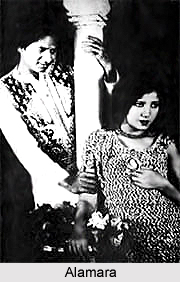
Right from the early years, Hindi cinema has played an important role in the Indian film industry. In the last 77 years the Hindi film industry has grown in leaps and bounds. The first talkie film in India was released in 1931, Alam Ara. It starred Prithviraj Kapoor, Master Vithal, Zubeida, Jagdish Sethi and others. The film was based on a play written by Joseph David and directed by Ardeshir Irani. Raja Harishchandra was the first one though a silent one. Alam Ara was followed by Indra Sabha directed by J.J Madan..

After Alam Ara it was Devdas directed by Pramatesh Chandra Barua that had set a cult in the Hindi film industry. The film had an impressive star cast that included KL Saigal in the lead role. Devdas epitomized the agony of love and in a way introduced the first anti-hero of the Indian cinema. The film was remade twice in Hindi; once by Bimal Roy and the latest was made by Sanjay Leela Bhansali. Love for the first time was treated aesthetically. Sanjay Leela Bhansali said in an interview that the love of Paro and Chandramukhi resemble that of Radha and Meera respectively. And truly enough every time Devdas was made love was redefined.

Mehboob Khan's Mother India dealt with several social issues. But it was also one of those earliest films that were women centric. The superb performances by Nargis, Sunil Dutt and Rajendra Kumar made the flick a landmark in the Hindi film industry. Andaaz by the same director was also an unforgettable movie with huge sets in Hollywood style, a casting coup (Nargis, Dilip Kumar and Raj Kapoor) that no other film could ever possibly repeat and their outstanding performances.

Landmark Films in Hindi Cinema, Indian CinemaBimal Roy's Do Bigha Zameen once again dealt with common man and exploitation. It was this film that bagged the first Filmfare Award for best film in 1953. Madhumati by Bimal Roy was probably the first film dealing with reincarnation. It set a trend that was followed by several later films. Some of them include Bees Saal Baad, Karz, Karan Arjun, Om Shanti Om and several others.

For more, visit the link below:
Thursday, 7 July 2022

Stages in Filmmaking


Stages in FilmmakingFilm is a term that encompasses motion pictures as individual projects, as well as the field in general. The origin of the name pertains to the fact that photographic films, also called Film Stock, have historically been the primary medium for recording and displaying motion pictures. They are a strip or sheet of transparent plastic film base coated on one side with a gelatin emulsion, containing microscopically small light-sensitive silver halide crystals. Films are produced by recording actual people and objects with cameras, or by creating them using animation techniques and/or special effects. They comprise a series of individual frames, but when these images are shown rapidly in succession, the illusion of motion is given to the viewer. Flickering between the frames is not visible due to an effect known as persistence of vision - whereby the eye retains a visual image for a fraction of a second after its source has been removed and replaced with that of the next image in sequence.

Film and filmmaking is considered by many to be an important art form; films entertain, educate, enlighten and inspire audiences. The visual elements of cinema need no translation whatsoever, giving the motion picture a universal power of communication. Any film can become a worldwide attraction, especially with the addition of dubbing or subtitles that translate the dialogue in different languages. Films are also artefacts created by specific cultures, reflecting those cultures and, in turn, affecting them as well. Films have an infallible characteristic of connecting with their audience.

The art of filmmaking production cycle consists of 5 main stages:

1. Development: The Development stage of filmmaking lays the very base of a prospective motion picture, wherein an idea is fleshed out into a viable script. The producer/director of the movie will establish a story, which may be inspired from books, other films, true stories, original fictional/non-fictional ideas, etc. and express it in a detailed script encompassing complete scenes, together known as Screenplay.

2. Pre-production: The pre-production is a crucial stage wherein the film is prepared to be shot in camera, involving multiple steps pertaining to different aspects such as film budget, logistics, locations and sets, sound design and music, etc. The entire production is also storyboarded and visualized with the help of illustrators and concept artists.

For more, visit the link below:
Monday, 11 April 2022

Indian Art Films


Indian Art FilmsArt films in Indian Cinema occupy their own distinct space. Though commercial films are considered the prominent genre of mainstream Indian cinema, artistic films are laudable cinematic pieces that staunchly showcase reality which often pertains to prevalent social scenario, traditions and practices. Such films are thought provoking, appealing and convincing, leaving the audience with a question, a thought or a relevant idea in their minds. These films are collectively referred to as Parallel Cinema, also Indian Art Cinema or "New Indian Cinema" by film critics or also sometimes "the Indian New Wave".

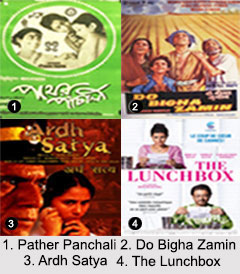
From the 1960s through the 1980s, art films were usually government-aided and directors of such films received federal or state government grants to make non-commercial films on Indian themes. Their films were showcased at state film festivals and on government-run television networks. The films also had limited runs in art house theatres in India and overseas, portraying Indian realities inspired by foreign influences, like Italian Neo-Realism or French New Wave. Satyajit Ray was the most flourishing maker of such films, like The Apu Trilogy which comprised his most famed films ‘Pather Panchali’ (1955), ‘Aparajito’ (1956) and ‘Apur Sansar’ (1959).

Bimal Roy was another such prominent filmmaker. His ‘Do Bigha Zamin’ (1953) was one of those few productions that encompass both commercial and artistic elements. It went a critical and commercial success. Another filmmaker whose integrated art and commercial cinema was Guru Dutt, whose 1957 film ‘Pyaasa’ featured in Time magazine's "All-TIME" 100 best movies list. Among the other notable Hindi art films fall ‘Ankur’ (1974), Shyam Benegal’s first feature film where esteemed parallel cinema actress Shabana Azmi made her debut. Its plot is based on a true incident that occurred in Hyderabad, apparently in the 1950s. It won 3 National Film Awards and earned nomination for the Golden Bear at the 24th Berlin International Film Festival.

For more, visit the link below:
Thursday, 10 March 2022

Documentary Films in India


Documentary Films in IndiaDocumentary films in India have acquired a significant position in the entertainment industry. These are mainly non fictional motion picture which documents real incidents for the purpose of historical record or creating awareness about some social issues.

Documentaries feature different styles of narrative, cinematography and other techniques. These are also categorized according to their nature such as animated documentary, ethnographic film, dance film, nature documentary, political cinema, travel documentary and many more. Although documentary films in India are pivotal in projecting diverse aspects of reality, their funding and distribution still remains challenging. However over time, documentary Films in India have attained better prospects and have carved a distinct niche in the international film arena by bagging prestigious awards in international film festivals. They have also achieved limited release in domestic theatres.

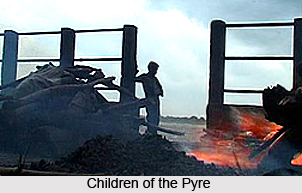
Children of the Pyre
Rajesh S. Jala's documentary film Children of the Pyre depicts the tales of seven children who work as shroud sellers at Mani karnika, India's largest crematorium. The film constitutes 100 hours of footage shot at the crematorium and surrounding sites with candid interviews with children who narrate their life as they gather shrouds from the dead bodies which are brought to the crematorium and resell them to local merchants at nominal amounts. The film won a number of awards including Silver Lotus Award at the 56th National Film Awards, Best Documentary Award at Montreal World Film Festival, 2008 and many others.

A Little Dream
A Little Dream captures the journey of former President Dr. A.P.J Abdul Kalam from Rameswaram to Rashtrapati Bhavan. The 60 minute documentary was scripted-directed by P. Dhanapal and the depiction reveals story in a story. The film focuses on the subject of significance of education and has been termed as a spark inducer for the younger generation.

Documentary Films in IndiaNaga Story: The Other Side of Silence
Naga Story: The Other Side of Silence is the creation of the Indian filmmaker Gopal Menon. The film documents the human rights abuses which the Naga people have suffered since years in the independent India. Continuing even in the present times, the Naga political struggle is the oldest nationality movements in South Asia. The movie won the Spirit of the Himalayas First Prize at Netherlands Himalayas Film Festival, Amsterdam, 2004.

One Crazy Ride
One Crazy Ride is a documentary film of India made in 2009, which is based on a 2002 route-charting expedition in India. The film, under the direction of Gaurav Jani, depicts the journey of five enthusiastic bikers across the Himalayas through a virgin route. The film explores many lesser known parts of the country. The film has been screened at a number of film festivals and has been the recipient of several accolades.

For more, visit the link below:
Friday, 25 February 2022

Golden Era of Indian Cinema


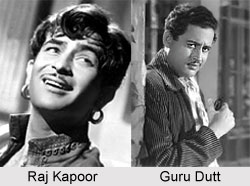
Raj Kapoor and Guru DuttGolden era of Indian cinema saw the release of some of the excellent and memorable cinemas in Bollywood. The outbreak of the Second World War in 1939 shifted the spotlight to the actors who were not only heavily paid but also as a result started their own companies. The directors like MehboobBimal RoyGuru Dutt and Raj Kapoor entered the film industry during the 1930s and 1940s, which were traumatic years for the Indian people. The fight for independence, famines, changing social mores, and global fight against fascism all contributed to the ethos in which the directors grew up. However, the 1950s saw the rise of these great directors, who changed the fate of Indian cinema.

It is the post independence period that saw the golden era of Indian cinema with melodious socials and melodramas, which made the Actors and the Actresses a household name. Raj Kapoor (RK Films) was one example. Awara, made by Raj Kapoor set the agenda for popular commercial cinema and was a hit within India as well as overseas. After Raj Kapoor, Dev Anand set up Navketan in 1949 with his brother Chetan Anand. The studio system however was not wiped off and Mehboob Khan (Mehboob Productions), Kidar Sharma and Bimal Roy proudly held aloft the banner.

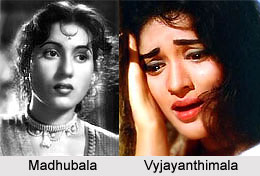
Madhubala and VyjayanthimalaFilms with various themes were now being made. The theme of lost brothers was being repeated (as many as 50 films). Side by side went on the tear-jerking melodrama, mostly in the films of the genre of Meri Behan, Choti Behan and the like. The humble position of the Indian bride was highlighted in pictures like Gumasta (1951) and the decoity aspect in films like Ganga Jammuna, Jis Desh Mein Ganga Behti Hai and Mujhe Jeena Do. In recent years this has produced a veritable harvest of crude dacoit films, spurred on by the spectacular success of Sholay.

Starting from Nitin Das's Chandidas, the inter-caste issue, especially in relation to the lower, depressed untouchable castes, has found reasonably good expression. Shantaram's Dharmatma, Chandulal Shah's Achhoot, Bombay Talkies Achoot Kanya, Bimal Roy's Sujata, Vasant Joglekar's Prarthna and Abbas Char Dil Char Rahein. The rural urban contrast has provided another theme for numerous films, generally favouring the village over the town.

For more, visit the link below:
Wednesday, 17 November 2021

Parallel Cinema in India


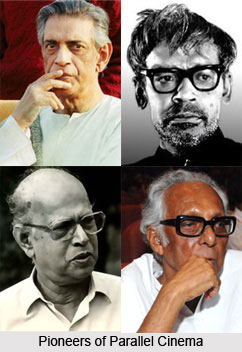
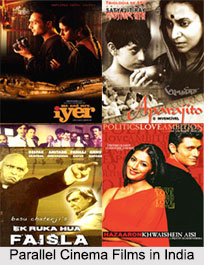
Parallel Cinema in IndiaParallel Cinema is a film movement in Indian Cinema, which originated in the state of West Bengal in the 1950s as an alternative to the mainstream commercial Indian cinema, represented especially by the popular Hindi cinema known as Bollywood. Such films, unlike the commercial flicks which follow the concept of conventional entertainment facets, are purely artistic cinematic pieces that mostly showcase reality and reality-oriented themes and stories that pertain to the prevalent social, political and cultural scenarios. Parallel Cinema in India is inspired by Italian Neo-realism, beginning just before the French New Wave and the Japanese New Wave, and was a precursor to the Indian New Wave of the 1960s.

Origin of Parallel Cinema in India
Parallel Cinema in India traces its origin back to the 1950s in the Bengali Cinema. It developed with the aim of developing an alternative to mainstream commercial films of India. It served as a precursor to the Indian New Wave which followed in the next decade. The movement of parallel cinema began in Bengali films with the initiatives of eminent filmmakers like Satyajit RayTapan SinhaRitwik GhatakMrinal Sen and others. Gradually, the concept got highlighted in other film industries as well. The prominent features that delineate parallel cinema from the commercial ones include serious and realistic content, illumination of socio-political scenario, naturalism and exclusion of typical entertaining elements of a commercial film.

The era of the 50s when parallel cinema gained prominence is often regarded as the Golden Age of Indian CinemaIndian Literature formed a vital inspiration for such films and thus they became the reflections of contemporary Indian society. Indian film industry has had, right from the beginning, members who have made efforts to use cinema as more than a medium for entertainment. Existing issues became the burning topics of parallel cinema often accompanied by the new thought provoking ideas. Although a few realistic films emerged in early phases of Indian cinema, Chetan Anand's ‘Neecha Nagar’ (1946) being an excellent example, the movement gained momentum a little later when a few filmmakers wanted to break the monotony of film genres made only for entertainment. Satyajit Ray, through his first film ‘Pather Panchali’ in 1955, was accredited as the pioneer of parallel cinema in India. His film attained a distinct stature in the film arena and became one of the greatest films of all time. The film was followed by ‘Aparajito’ (1956) and ‘Apur Sansar’ (1959), together forming The Apu Trilogy and winning several accolades and acclamations at major international film festivals. Other Bengali films that conferred momentum to parallel cinema include ‘Ajantrik’, ‘Abhijan’, ‘Bhuvan Shome’ and others.Parallel Cinema in India

Parallel Cinema in Bollywood
Bollywood, an industry known for its surrealism or “fantastical” movies, had a few notable films during the Golden Age that were art films but also garnered commercial success, made with a successful blend of art and commercial facets. An early example of this is Bimal Roy's ‘Do Bigha Zamin’ (1953), which was both a critical and commercial success. It won the International Prize at the 1954 Cannes Film Festival and paved the way for the Indian New Wave. Hrishikesh Mukherjee, one of Hindi cinema's most successful filmmakers, was named the pioneer of “middle cinema” and was known for making films that reflected the changing middle-class ethos. Filmmaker Basu Chatterjee too built his plots on middle-class lives in films like ‘Piya Ka Ghar’, ‘Rajnigandha’ and ‘Ek Ruka Hua Faisla’. Another filmmaker whose integrated art and commercial cinema was Guru Dutt, whose film ‘Pyaasa’ (1957) featured in Time magazine's "All-TIME" 100 best movies list, and is considered a landmark cult in Hindi Cinema.

The Government of India started financing such independent art films based on Indian themes in the 1960s, to popularize and render significance to this genre. Parallel cinema witnessed a wider reach and grew in Bollywood in 1970s and 1980s with the efforts of directors like GulzarSaeed Akhtar MirzaShyam BenegalRajinder Singh Bedi and Mani Kaul who were later joined by Govind Nihalani and Mahesh Bhatt. Their creations attained huge praises by critics on national as well as international arena with films such as ‘Uski Roti’ (1971), ‘Ashadh Ka Ek Din’ (1972), ‘Duvidha’ (1974) and ‘Ek Ruka Hua Faisla’ (1986). Kumar Shahani who was a student of Ritwik Ghatak made ‘Maya Darpan’ (1972), which marked itself as a landmark film of Indian art cinema. Parallel cinema in India also conferred prominence to the career of new genre of actors of immense artistic calibre and finesse, the likes of Smita PatilShabana AzmiNaseeruddin ShahPankaj KapoorOm Puri and many others. The actors of commercial cinema also ventured into this genre and got a platform to showcase their skills through unconventional portrayals.

Parallel Cinema in South India
Parallel Cinema entered the realm of the prominent South Indian film industries of Indian Cinema at a much later stage. Adoor Gopalakrishnan, who is often known as the spiritual heir of Satyajit Ray, brought this genre to Malayalam cinema in 1972 with his movie ‘Swayamvaram’. The period from 1980s to early 1990s marks the golden age of the Malayalam film industry. Other filmmakers who joined in the movement included Shaji N. Karun, T. V. Chandran, Bharathan and others. Some of the significant examples of parallel cinema in Malayalam films enlist ‘Elippathayam’ (1981), ‘Mathilukal’ (1989), ‘Vanaprastham’ (1999) etc. which were recognised with accolades at various prestigious film festivals.

For more, visit the link below: