Showing posts with label tamil movies. Show all posts

Saturday, 21 December 2024

Districts of South Tamil Nadu: A Gateway to Culture and Natural Splendor


South Tamil Nadu, with its rich history and cultural vibrancy, is home to a diverse array of districts, each offering unique contributions to the socio-economic and ecological fabric of the state. Spanning picturesque landscapes, bustling urban centers, and serene rural locales, these districts of South Tamil Nadu encapsulate the essence of Tamil heritage while paving the way for modern development.


Madurai: The Cultural Hub

Madurai, often called the "Athens of the East," is renowned for its ancient temples and vibrant traditions. The Meenakshi Amman Temple, an architectural marvel, serves as the heart of this city, drawing pilgrims and tourists from across the globe. Madurai’s bustling bazaars and thriving industries, particularly textiles and agriculture, underscore its economic importance.


Tirunelveli: The Land of Tamiraparani

Tirunelveli, situated along the banks of the Tamiraparani River, is celebrated for its natural beauty and spiritual significance. Known for the Nellaiappar Temple and Courtallam Falls, this district blends history and ecology seamlessly. Agriculture dominates the economy, with paddy and plantain cultivation being key contributors.


Thoothukudi: The Pearl City

Thoothukudi, or Tuticorin, is a prominent port city known for its rich maritime history and thriving salt pans. The district's economy is bolstered by industries such as shipping, fisheries, and agriculture. Thoothukudi also boasts historical sites like Our Lady of Snows Basilica, adding a spiritual dimension to its identity.


Virudhunagar: An Industrial Powerhouse

Virudhunagar is synonymous with trade and commerce, particularly in the matchstick and fireworks industries. This district, deeply rooted in entrepreneurial spirit, plays a vital role in Tamil Nadu's economy. The Aruppukottai region is also a notable center for cotton and oilseed production.


Ramanathapuram: A Coastal Jewel

Ramanathapuram, with its stunning coastline and historical significance, is best known for the sacred town of Rameswaram. The Pamban Bridge and the Ramanathaswamy Temple are key attractions, drawing devotees and tourists alike. Fishing and agriculture are the district's mainstays, supported by a growing focus on marine biodiversity conservation.


Sivaganga: A Heritage District

Sivaganga, famed for its palaces and temples, is steeped in history and tradition. The Chettinad region, part of this district, is renowned for its unique architecture, spicy cuisine, and entrepreneurial legacy. Sivaganga also contributes to the agricultural sector, particularly through its production of groundnuts and pulses.


Dindigul: The Land of Locks and Hills

Dindigul is celebrated for its craftsmanship in lock-making and its lush hill stations like Kodaikanal. The district's economy is bolstered by horticulture, floriculture, and tourism. Its verdant landscapes and cool climate make it a popular retreat for nature enthusiasts.


Kanyakumari: The Southern Tip

Kanyakumari, the southernmost district of India, is famed for its stunning sunrise and sunset vistas. The Vivekananda Rock Memorial and Thiruvalluvar Statue stand as symbols of cultural and philosophical heritage. With tourism, fishing, and agriculture forming its economic backbone, Kanyakumari plays a pivotal role in the state’s economy.


The districts of South Tamil Nadu reflect the region’s dynamic blend of tradition, innovation, and natural splendor. Each district, with its unique identity, contributes to the state’s cultural richness and economic progress, making South Tamil Nadu a treasure trove of opportunities and experiences.

Monday, 14 November 2022

Short Films in India


Short Films in IndiaShort films in India have always played a pivotal role in expressing new concepts in a short span of time. Short films have less duration than feature films and usually have a running time of 40 minutes or less. Short films in India are the hub of innovative storytelling. They are also cherished for their conciseness and entertainment value. Often new filmmakers step in the film arena through short films which render prominence to their new techniques and ideas. It acts as a first step of professional filmmaking. However, many eminent Indian filmmakers have also ventured in this arena and created some of the most admired short films of all times. Professional actors and filmmakers have many a times chosen short films as an alternative form of expression. Short films are a great way of expressing a new or poignant concept of any genre, be it fiction or non fiction. They also play significant roles in creating social awareness about critical social issues. Quite often short films adopt unconventional film making techniques and narratives devoid of dialogues.

Premiere of Short Films
Short films are greatly promoted and appreciated in various film festivals which confer recognition to the innovative efforts of the filmmakers. In fact most of the short films depend on festival exhibition for reaching the viewers. However some of them are also distributed on internet through various websites which over years have attracted a huge traffic of artists and viewers. A number of short films in India have walked away with prestigious accolades at Indian as well as international film festivals. Short films in contemporary times have gained huge popularity as it provides a great platform for the exhibition of art with low expenses.

Prarambha
Prarambha is a 2007 Kannada short film made to increase awareness about AIDS. The film was directed by Santosh Shivan and the story was written by Ritesh Menon and Mubina Rattonsey. The movie portrays the quest of a boy for the person who gave him birth and how a truck driver helps him in his quest and reinstates him in the school which dismissed him for being HIV positive. The film was premiered at Toronto International Film Festival in the year of its release and was screened in India at 38th International Film Festival of India. The movie was made for Richard Gere's AIDS foundation.

Little Terrorist
Little Terrorist is a Hindi short film released in 2004. It was written and directed by Ashvin Kumar and was nominated for an Academy Award in the year 2005. The movie depicts a Pakistani boy who enters the Indian land chasing a cricket ball and is then forced to a hide out. The film was invited by 103 film festivals and bagged awards in 14 of them. It is also the first Indian short film which got a theatrical release in the country.

Pikoo
Pikoo is a Bengali short film made in 1980 by the notable director Satyajit Ray. The movie is a soulful narration of a day in the life of a six year old boy in the backdrop of the extramarital affair of his mother. The film was made for a French television channel, France 3.

For more, visit the link below:

Thursday, 29 September 2022

Indian Regional Films


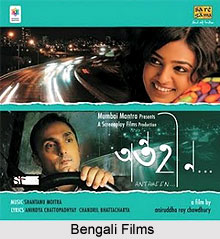
Bengali FilmsIndia is a land of diversity. There lies a huge blend of diverse cultures, regions and languages. This diversity has thus given rise to various regional Indian films apart from the largely known Hindi film industry or Bollywood. Regional Indian films are the keys to the Indian cinema. India is unique in its kaleidoscope of diverse languages and cultures. There are at least 15 languages and over 2000 dialects and films are produced in most of the official languages. In 1993, for example, 183 films were made in Hindi, 168 in Tamil and 148 in Telugu. The largest numbers of regional films are produced in these three languages. However, 78 films were made in Kannada, 71 in Malayalam, 57 in Bengali, 35 in Marathi and almost 10 in Assamese.

Although one can talk of regional films, there is an incessant crossover of talents - Bengali film directors direct Hindi or Oriya films; Tamil directors direct Telugu films. Actors and actresses from the South play leading roles in films made in the North. Furthermore, some of the well known figures in Indian cinema, particularly in the artistic tradition, come from the regional cinemas. The diverse regional cinemas in India strive to maintain their distinctive identities and provide an important dimension of the cultural wealth and diversity of India's regional films.

Marathi cinema has been graced by the presence of seasoned actors who have been instrumental in shaping the industry's identity. Artists like Dilip Prabhavalkar, Sachin Khedekar, and Nana Patekar have not only garnered praise for their acting prowess but have also played pivotal roles in the progression of Marathi cinema on the national stage. Marathi Actors


For more, visit the link below:

Wednesday, 17 November 2021

Parallel Cinema in India


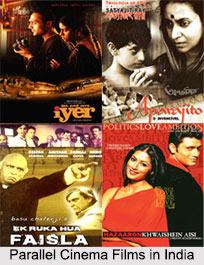
Parallel Cinema in IndiaParallel Cinema is a film movement in Indian Cinema, which originated in the state of West Bengal in the 1950s as an alternative to the mainstream commercial Indian cinema, represented especially by the popular Hindi cinema known as Bollywood. Such films, unlike the commercial flicks which follow the concept of conventional entertainment facets, are purely artistic cinematic pieces that mostly showcase reality and reality-oriented themes and stories that pertain to the prevalent social, political and cultural scenarios. Parallel Cinema in India is inspired by Italian Neo-realism, beginning just before the French New Wave and the Japanese New Wave, and was a precursor to the Indian New Wave of the 1960s.

Origin of Parallel Cinema in India
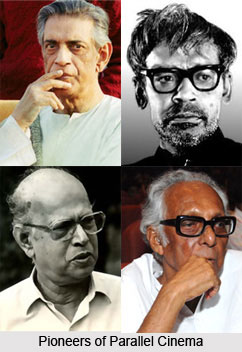
Parallel Cinema in India traces its origin back to the 1950s in the Bengali Cinema. It developed with the aim of developing an alternative to mainstream commercial films of India. It served as a precursor to the Indian New Wave which followed in the next decade. The movement of parallel cinema began in Bengali films with the initiatives of eminent filmmakers like Satyajit Ray, Tapan Sinha, Ritwik Ghatak, Mrinal Sen and others. Gradually, the concept got highlighted in other film industries as well. The prominent features that delineate parallel cinema from the commercial ones include serious and realistic content, illumination of socio-political scenario, naturalism and exclusion of typical entertaining elements of a commercial film.

The era of the 50s when parallel cinema gained prominence is often regarded as the Golden Age of Indian Cinema. Indian Literature formed a vital inspiration for such films and thus they became the reflections of contemporary Indian society. Indian film industry has had, right from the beginning, members who have made efforts to use cinema as more than a medium for entertainment. Existing issues became the burning topics of parallel cinema often accompanied by the new thought provoking ideas. Although a few realistic films emerged in early phases of Indian cinema, Chetan Anand's ‘Neecha Nagar’ (1946) being an excellent example, the movement gained momentum a little later when a few filmmakers wanted to break the monotony of film genres made only for entertainment. Satyajit Ray, through his first film ‘Pather Panchali’ in 1955, was accredited as the pioneer of parallel cinema in India. His film attained a distinct stature in the film arena and became one of the greatest films of all time. The film was followed by ‘Aparajito’ (1956) and ‘Apur Sansar’ (1959), together forming The Apu Trilogy and winning several accolades and acclamations at major international film festivals. Other Bengali films that conferred momentum to parallel cinema include ‘Ajantrik’, ‘Abhijan’, ‘Bhuvan Shome’ and others.Parallel Cinema in India

Parallel Cinema in Bollywood
Bollywood, an industry known for its surrealism or “fantastical” movies, had a few notable films during the Golden Age that were art films but also garnered commercial success, made with a successful blend of art and commercial facets. An early example of this is Bimal Roy's ‘Do Bigha Zamin’ (1953), which was both a critical and commercial success. It won the International Prize at the 1954 Cannes Film Festival and paved the way for the Indian New Wave. Hrishikesh Mukherjee, one of Hindi cinema's most successful filmmakers, was named the pioneer of “middle cinema” and was known for making films that reflected the changing middle-class ethos. Filmmaker Basu Chatterjee too built his plots on middle-class lives in films like ‘Piya Ka Ghar’, ‘Rajnigandha’ and ‘Ek Ruka Hua Faisla’. Another filmmaker whose integrated art and commercial cinema was Guru Dutt, whose film ‘Pyaasa’ (1957) featured in Time magazine's "All-TIME" 100 best movies list, and is considered a landmark cult in Hindi Cinema.

The Government of India started financing such independent art films based on Indian themes in the 1960s, to popularize and render significance to this genre. Parallel cinema witnessed a wider reach and grew in Bollywood in 1970s and 1980s with the efforts of directors like Gulzar, Saeed Akhtar Mirza, Shyam Benegal, Rajinder Singh Bedi and Mani Kaul who were later joined by Govind Nihalani and Mahesh Bhatt. Their creations attained huge praises by critics on national as well as international arena with films such as ‘Uski Roti’ (1971), ‘Ashadh Ka Ek Din’ (1972), ‘Duvidha’ (1974) and ‘Ek Ruka Hua Faisla’ (1986). Kumar Shahani who was a student of Ritwik Ghatak made ‘Maya Darpan’ (1972), which marked itself as a landmark film of Indian art cinema. Parallel cinema in India also conferred prominence to the career of new genre of actors of immense artistic calibre and finesse, the likes of Smita Patil, Shabana Azmi, Naseeruddin Shah, Pankaj Kapoor, Om Puri and many others. The actors of commercial cinema also ventured into this genre and got a platform to showcase their skills through unconventional portrayals.

Parallel Cinema in South India
Parallel Cinema entered the realm of the prominent South Indian film industries of Indian Cinema at a much later stage. Adoor Gopalakrishnan, who is often known as the spiritual heir of Satyajit Ray, brought this genre to Malayalam cinema in 1972 with his movie ‘Swayamvaram’. The period from 1980s to early 1990s marks the golden age of the Malayalam film industry. Other filmmakers who joined in the movement included Shaji N. Karun, T. V. Chandran, Bharathan and others. Some of the significant examples of parallel cinema in Malayalam films enlist ‘Elippathayam’ (1981), ‘Mathilukal’ (1989), ‘Vanaprastham’ (1999) etc. which were recognised with accolades at various prestigious film festivals.

For more, visit the link below:

Tuesday, 8 June 2021

Indian Art Cinema


Indian Art CinemaIndian art cinema differs sharply from popular films which are more commonly known as the commercial flicks. The conceptual notion of art cinema though differs from being one of the fuzziest to one of the contradictory topics ever touched upon. They are realistic, often ethnographic, and they seek to capture important aspects of Indian reality. By and large, they avoid glamour and glitz and use cinema as an artistic medium capable of exploring important areas of Indian experience.

Features of Indian Art Cinema
Indian art cinemas are usually low budget and are shown at international film festivals. The Indian art movies, understandably, do not attract the huge audiences that the popular films do. Often many regional films are made, which do not receive pan-Indian exposure. In terms of the commitment to serious cinema, to making cinema a significant medium of artistic communication, to eschewing the vulgarities and crudities often associated with Indian popular cinema, artistic filmmakers differ significantly from their counterparts in popular cinema. Art is mimesis, according to Aristotle, which is nourished by the concepts of twice placed reality. Cinema is the reel adaptation of the real. Discourses of the art house cinema have obviously two poles: as mode of narration and as institution.

Inception of Indian Art Cinema
Indian Art CinemaWhen one talks of art movies in India the first name that comes up is Satyajit Ray. This is because he was primarily responsible for fashioning this genre and gaining international recognition for it. His film Pather Panchali, made in 1955, was the first such film. In a poll conducted in 1992 by the magazine Sight and Sound, Pather Panchali was voted one of the ten greatest films of all time. Indian art films offer a striking contrast to Indian popular films. They use understatement effectively, something totally absent in popular films. There is a visual lyricism and a deep humanism which are intensely satisfying. Satyajit Ray made a number of significant films in the same moulds that have won international acclaim. His work provides a sense of the preoccupations of artistic cinema and how they differ from popular cinema. Satyajit Ray is generally regarded as India's greatest filmmaker and, along with Jean Renoir and Vittorio de Sica, he is rated among the great masters of humanist cinema.

Prominent Indian Art Films
Today, art movies in India no longer differ from the mainstream films in popularity. The audiences today look out for good films rather than popular or serious films. Hence while a multi-starrer Indian movie bombs at the box office, a film like Aamir is much appreciated by the cine goers. Thodasa Roomani Ho Jayen is another milestone depicting the tale an unmarriageable ugly girl. Hu Tu Tu exposes the politicians while Sookha is a realistic depiction of communal riots, politics and bureaucracy. Sushil Rajpal's Antardwand is another acclaimed film in this genre which portrays a real life experience. Kalpana Lazmi's Rudaali brilliantly presents the life and hardships of a woman who publicly express grief of family members who are restricted to display emotion owing to social status. Adoor Gopalakrishnan's film, Rat Trap (1981) has won many prestigious awards and in his film Face to Face (1984), Gopalakrishnan explores the theme of self and modernization, this time taking a different angle. Once again the style of the film follows the neo-realistic tradition. Other famed art movies of Bollywood include Ardh Satya, Suraj Ka Saatva Ghoda, Rajiv Patil's Jogwa (Marathi) and Aparna Sen's Sati (Bengali), Albert Pinto Ko Gussa Kyoon Aata Hai, Ankur, Parzania, Maya Darpan, Sardari Begum, Utsav, Ek Din Achanak, Ek Doctor Ki Maut and many more.

For more, visit the link below:

Wednesday, 14 April 2021

Telugu Cinema


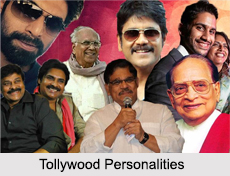
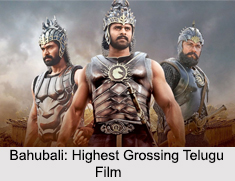
Telugu CinemaTelugu cinema is based in Film Nagar, a neighborhood of Hyderabad, India. The nickname Tollywood is a portmanteau of the words Telugu and Hollywood. Telugu cinema or tollywood is one of the three largest film industries in terms of the number of films produced every year. Telugu industry holds record of having largest film producing facilities in the world. History of Telugu Cinema

History of Telugu films starts in 1912 with silent movie Bhishma Pratigna directed by Raghupati Venkaiah Naidu and R.S. Prakash. This father son duo produced and directed dozens of films in Telugu cinema. In 1931, the first audible movie Bhakta Prahlada was released. H.M. Reddy produced it. Bhakta Prahlada was completed on 15 September 1931, which henceforth became known as "Telugu Film Day" to commemorate its completion. Popularly known as talkies, films with sound quickly grew in number and popularity. In 1934, the industry saw its first major commercial success with Lava Kusha. Directed by C. Pullaiah and starring Parupalli Subbarao and Sriranjani in lead roles, the film attracted unprecedented numbers of viewers to theatres and thrust the young industry into mainstream culture.

In early phase Mythological stories were dominating Telugu industry. By 1936, the mass appeal of film allowed directors to move away from religious and mythological themes. That year, under the direction of Krithiventi Nageswara Rao directed Prema Vijayam, a film focusing on social issues. Its success prompted the production of dozens of other immensely successful 'social films', notably 1939's Vande Mataram, touching on societal problems like the practice of giving dowry. Telugu films increasingly focused on contemporary living: 29 of the 96 films released between 1937 and 1947 had social themes. It influenced other film makers as well to raise the social issues. The issues like untouchablity, dowry, and feudal system were the subjects of Telugu cinema especially after 1939. In 1943 World War II and resource scarcity made British Raj to impose limit on the uses of filmstrip. It was reduced from 20000 to 11000 feet which decreased the number of production of films comparatively.

In 1938, Gudavalli Ramabrahmam, has co-produced and directed the social problem film, Mala Pilla starring, Kanchanamala, the film dealt with the crusade against untouchability, prevailing in pre-independent India. In 1939, he directed Raithu Bidda, starring thespian Bellary Raghava. The film was banned by the British administration in the region, for depicting the uprise of the peasantry among the Zamindars during the British raj. 1940 film, Viswa Mohini became the first Indian film depicting the Indian movie world. The film subsequently moved to sequel films Savithri and Sathyabhama (1941–42) casting thespian Sthanam Narasimha Rao.

Golden Era of Telugu Cinema
Till this era many individual studios were established, actors and actresses were signed on contract basis and Telugu industry was rising rapidly. In 1950 nineteen Telugu films were released in a year. Bilingual films were also in trend for Tamil and Telugu but the expression problems led to the stoppage of this trend. In 1950 NT Rama popularly known as NTR emerged as another great film personality. Akkineni Nageswara Rao and N.T. Rama Rao duo was a hit duo for telugu cinema and they both worked in 15 films including Palletnori pilla, Gundamma katha, Misamma, Chanakya- Chandragupta etc.

Maya Bazaar, Gumastha, Vinayaka Chavithi, Chandirani and others were made in the 1950 which were quite popular. Malliswari is the first Telugu film which had a public release with thirteen prints along with Chinese subtitles at Beijing on 14, March 1953, and a 16 mm film print was also screened in the United States. The film was directed by Bommireddy Narasimha Reddy, a recipient of the Dada Saheb Phalke Award, and the Doctor of Letters honour.

Relangi, and Ramana Reddy were a comedy double act during this era. Nartanasala won the best art direction award at the Afro Asian film festival in Jakarta. Donga Ramudu directed by K. V. Reddy was archived in the curriculum of the Film and Television Institute of India. Nammina Bantu received critical reception at the San Sebastián International Film Festival. 1967 film Ummadi Kutumbam was selected by Film Federation of India as one of its entries to the Moscow Film Festival. The 1968 cult classic Sudigundalu was screened at the Tashkent and Moscow Film Festivals.

Telugu CinemaDevelopment in Telugu Industry
Moola Narayana Swamy and B. N. Reddy founded Vijaya Vauhini Studios in 1948 in the city of Chennai. Indian film doyen L. V. Prasad, who started his film career with Bhakta Prahlada, founded Prasad Studios in 1956 based in Chennai. However, through the efforts of D. V. S. Raju, the Telugu film industry completely shifted its base from Chennai to Hyderabad in the early 1990s, during N. T. Rama Rao's political reign.

About 245 Telugu films were produced in 2006, the highest in India for that year. Film studios in Hyderabad, developed by D. Ramanaidu and Ramoji Rao, are involved in prolific film production and employment. The Film and Television Institute of Telangana, Film and Television Institute of Andhra Pradesh, Ramanaidu Film School, etc. are some of the largest film schools in India. The Telugu states consist of approximately 2800 theaters, the largest number of cinema halls in any state in India.

Modern Era of Telugu Cinema Bapu's directorial venture Sakshi was showcased at Tashkent International film festival in 1968. In 1976, he directed Sita Kalyanam that critically acclaimed at the BFI London Film Festival and Chicago International Film Festival, and is part of the curriculum at British Film Institute. Pan-Indian film Oka Oori Katha (1977) won special awards at Karlovy Vary International Film Festival and Carthage Film Festival.

To know more about Telugu films, visit the link below:

Thursday, 4 February 2021

Tamil Cinema


Tamil Cinema The history of Tamil cinema is as old as the history of Indian cinema. Needless to say Tamil films have evolved over the ages. At the beginning mostly mythological films were made. But with time romantic films, comic flicks and parallel cinema came into being. Some of the popular Tamil cinemas are Kalidas, Lavakusa, Balayogini, Ambikapathy, Seva Sadan, Ashok Kumar, Nandanar and many others. Some of the landmark films in the history of Tamil films are the following:

1931 - Kalidas: Directed by H.M. Reddy, the film starred T.P. Rajalakshmi, Thevaram Rajambal, T. Sushila Devi and L.V. Prasad. The first sound film of Tamil cinema, it was based on the Indian legend about poet-playwright Kalidasa. A princess is tricked into marrying the illiterate cowhand and prays to the goddess Kali who bestows literary genius on the groom - hence his name, Kalidasa. The film included approximately 50 songs, and the dialogues were in Tamil, Telugu and Urdu.

Tamil Cinema1934 - Lavakusa: Directed by C. Pullaiah, the film starred Parepalli Subba Rao, Sriranjani Sr., Master Bhimarao, Malleshwara Rao and Parepalli Satyanarayana. This Tamil film is based on the episode of the epic Ramayana and deals with Sita's twin boys Lava and Kusa. Their indomitable courage in blocking the progress of the ceremonial horse of the 'asvamedha' yagya being performed by Rama is shown. The film was the singer Sriranjani's debut film and the Telugu version ran for more than a year in some parts of Andhra Pradesh.

Balayogini: Directed by K. Subramanyam, the film starred K. Vishwanathan, R. Balasaraswathi, Baby Saroja, and V.R. Chellam. A Brahmin widow and her daughter are compelled to seek shelter with a lower-caste person. This upsets the caste-conscious Brahmins of the village. The casting was amazing. The role of the Brahmin widow was played by Chellam who was herself a Brahmin widow. Societal fury notwithstanding, the film makers - themselves Brahmins - proceeded to make other me conoclastic films. The director was pronounced an outcaste by other Brahmins - he chose to go far beyond caste issues and make Thyagabhoomi.

Tamil Cinema1937 - Ambikapathy: Directed by Ellis R. Duncan, the film starred Thyagaraja Bhagavathar, Serukalathur Sama, P.B. Rangachari, N.S. Krishnan, T.S. Balaiah and P.R. Mangalam. The hero is the son of the 11th century poet Kambar (author of Kambaramayana); the heroine is a princess. The king is willing to consent to their match provided the hero can prove his will-power. The film was highly successful and the second renowned historical film after Raja Desingu. The singer-musician K.C. Dey surpassed with his music. Bhagavathur achieved critical fame with this film.

1938 - Seva Sadan: Directed by K. Subramanyam, the film starred M.S. Subbulakshmi, F.G. Natesa Iyer, Mrs. Jayalakshmi, Varadachar and Rampiary. It is a ground-breaking film on the relevant issues of women's emancipation. Based on Premchand's Urdu novel. The Tamil version had the author's approval as Subramanyam had the courage to hold good to the novel's plot concerning prostitution and related matters. To appease the die-hards, Subramanyam presented the film as a musical. The film marked Subbulakshmi's debut.

For more visit the link below:

Indian cinema, often referred to as Bollywood, has a rich and diverse landscape that extends far beyond the confines of Mumbai. One of the major regional film industries that significantly contributes to the Indian film fraternity is the Tamil film industry, colloquially known as Kollywood. Over the years, Tamil actors have not only made significant contributions to the regional cinema but have also gained recognition on the national and even international stages.