Showing posts with label entertainment. Show all posts

Tuesday, 21 April 2026

Uttara Mhatre Kher: From Beauty Pageant Laurels to Environmental Advocacy

 Uttara Mhatre Kher, born on 29 December 1963, emerged as a prominent figure in India’s modeling and pageantry landscape during the early 1980s. Her journey into the public eye began with her victory at the Navy Queen Ball in 1981, a title that marked her early recognition in the world of beauty and style. This achievement laid the foundation for a promising career in modeling and national pageants.


Success in Beauty Pageants

In 1982, Uttara Mhatre Kher reached a defining milestone when she was crowned Femina Miss India World. This prestigious title earned her the opportunity to represent India at the Miss World 1982 pageant, placing her among the notable faces of Indian beauty on an international platform. Her success during this period reflected not only her poise and elegance but also her ability to stand out in a competitive arena. 

Career in Modeling and Media

Following her pageant success, Uttara established herself as a successful model. She featured in over a hundred commercials and print campaigns, becoming a recognizable face in the advertising industry. Her presence extended to numerous magazine covers, further solidifying her position as a leading model of her time. Her work during this phase contributed significantly to the evolving landscape of fashion and media representation in India. 

Personal Life and Transition

Uttara married Adwait Kher, also a former model and the son of renowned actress Usha Kiran. Through this marriage, she became the sister-in-law of actress Tanvi Azmi. The couple has two daughters, Saiyami Kher and Saunskruti Kher. Saunskruti made her debut in the Marathi film industry with Swami Public Ltd., while both daughters are actively working toward establishing themselves in the Hindi film industry. 

After marriage, Uttara and her husband chose to step away from the glamour world and relocate to Nashik, marking a significant shift in their lifestyle and professional pursuits. 

Entrepreneurial Ventures

In Nashik, the couple ventured into the hospitality and business sectors. They owned and operated three restaurants—Tandoor, Aangan, and The Bombay Talkies—which became part of the local culinary scene. Beyond hospitality, they explored the furniture business and regularly conducted exhibitions in Mumbai, showcasing their entrepreneurial versatility. 

Their ventures eventually expanded into hospitality once again with the establishment of Utopia Farmstay, a ten-room property in Nashik that reflects a blend of comfort and nature-centric living. 

Political and Social Engagement

In 2006, Uttara entered public life by joining the Maharashtra Navnirman Sena, where she served as the head of both the women’s wing and the environmental wing. However, her association with party politics was short-lived; she resigned in 2009 after becoming disillusioned with the political landscape. 

Since then, she has dedicated herself to environmental causes, working independently on various issues. Her commitment to social welfare is further reflected in her role as a trustee of Nashik Run, a charitable running event that supports community initiatives. 

Legacy and Continuing Influence

Uttara Mhatre Kher’s journey illustrates a dynamic transition from public glamour to private enterprise and social advocacy. Her life reflects adaptability and purpose, as she successfully navigated multiple roles—from model and beauty queen to entrepreneur and environmental activist. Today, her contributions continue to resonate beyond her early fame, highlighting a life shaped by both achievement and meaningful engagement with society.

Friday, 17 April 2026

Raavee Gupta: A Versatile Journey Through Indian Television

 Raavee Gupta is an Indian television and film actress whose career reflects versatility, consistency, and a strong on-screen presence. Known for her appearances in some of the most iconic Hindi television shows, she has built a reputation for portraying impactful characters, particularly in maternal and emotionally driven roles. Over the years, she has expanded her craft across multiple platforms, including films, theatre, and digital streaming services, demonstrating both adaptability and artistic depth.


Early Career and Rise in Television

Raavee Gupta gained recognition through her work in popular Hindi television serials such as Kyunki Saas Bhi Kabhi Bahu Thi and Kasautii Zindagii Kay. These shows, which defined an era of Indian television, provided her with a strong platform to showcase her acting abilities. Her performances were marked by emotional nuance and authenticity, allowing her to connect with audiences across demographics. 

Her ability to embody complex familial roles made her a reliable choice for strong supporting characters. Over time, she became associated with roles that required emotional gravitas, particularly those centered around family dynamics and interpersonal relationships. 

Versatility Across Genres and Platforms

While television remained a significant part of her career, Raavee Gupta did not limit herself to a single medium. She explored opportunities in films and theatre, further refining her craft. Her transition into digital platforms, including projects associated with Netflix, highlights her willingness to evolve with the changing entertainment landscape. 

One of her notable appearances includes the fantasy drama Naagin 5, where she contributed to a genre distinct from traditional family dramas. This shift demonstrated her ability to adapt to diverse storytelling formats, from mythological and fantasy narratives to contemporary themes. 

Signature Roles and Acting Style

Raavee Gupta is widely recognized for portraying strong character roles, particularly maternal figures that require emotional depth and resilience. Her performances often bring a sense of realism and relatability, which has contributed to her sustained presence in the industry. 

Her acting style is characterized by controlled expression, effective dialogue delivery, and a deep understanding of character psychology. This combination has enabled her to maintain relevance across different phases of Indian television and entertainment. 

Personal Life

In her personal life, Raavee Gupta marked a significant milestone by marrying actor Manoj Biddvai. The couple tied the knot in a picturesque beachfront ceremony at The Beach Resort in Goa, adding a memorable chapter to her life beyond the screen. The intimate setting reflected a blend of simplicity and elegance, aligning with her grounded public persona. 

Raavee Gupta’s career exemplifies dedication and adaptability in the evolving Indian entertainment industry. From iconic television serials to digital platforms, she has consistently delivered performances that resonate with audiences. Her ability to portray strong, emotionally rich characters has solidified her position as a respected figure in the industry. As she continues to explore new avenues, her journey reflects both artistic commitment and a readiness to embrace change.

Tuesday, 18 November 2025

Nandita Puri: The Kathak Virtuoso and Television Diva


For more than two decades, Nandita Puri has stood out as one of Indian television’s most versatile performers—a rare artist who effortlessly bridges the worlds of classical dance and screen acting. With her roots firmly planted in the centuries-old tradition of Kathak and her career flourishing across serials, stage shows, and cultural events, Nandita Puri has carved a distinct identity in the entertainment landscape. 

Born into a family that valued culture and the arts, Nandita was introduced to Kathak at a young age. What began as a childhood hobby soon evolved into a deep artistic calling. She trained rigorously under respected gurus, mastering the technical precision and expressive depth that define classical Kathak. Years of riyaaz not only sharpened her craft but also developed the poise and presence that later became her signature on screen. 

Before television found her, the stage had already become Nandita’s second home. Audiences remember her early performances for their striking blend of storytelling and emotion—hallmarks of a seasoned classical dancer. That same expressive power caught the attention of producers, who saw in her a natural fit for television’s growing appetite for strong, nuanced female characters. 

When Nandita stepped into the world of acting, she brought with her the discipline and emotional intelligence of a classical dancer. Her screen debut was met with applause, and it wasn’t long before she became a familiar face in Indian households. Whether portraying a resilient protagonist, a layered supporting character, or a graceful cultural figure, she added a quiet strength and authenticity to every role. 

What set Nandita apart was her ability to infuse her characters with a dancer’s understanding of rhythm and emotion. Her movements were controlled, her expressions refined, and her body language spoke as eloquently as her dialogue. Viewers noticed. Critically acclaimed performances across various television serials soon earned her a reputation as an actress who could convey complexity without theatrics. 

Yet Nandita never stepped away from her first love. Kathak continued to accompany her throughout her television career. She performed at festivals, collaborated with fellow classical artists, and conducted workshops for young dancers. For her, dance was not separate from acting—it was the foundation that shaped her entire artistic philosophy. 

Even as television evolved with new formats and audiences, Nandita remained relevant. Her adaptability, rooted in years of artistic discipline, helped her take on contemporary roles while staying true to her classical identity. Younger artists often cite her as an inspiration—someone who proved that traditional art forms and modern entertainment need not exist in separate worlds. 

Today, Nandita Puri stands as a testament to what happens when classical arts meet mainstream storytelling. She is celebrated not just for the characters she has brought to life but also for the grace, depth, and cultural richness she brings to every performance. In an industry that constantly reinvents itself, Nandita remains a timeless presence, an actress shaped by rhythm, expression, and the enduring spirit of Kathak.

Wednesday, 29 October 2025

Tina Parekh: The Graceful Soul of Indian Television


In the golden era of Indian television dramas, few faces captured hearts as effortlessly as Tina Parekh. A celebrated TV actress and accomplished voice artist, Tina became a household name through her memorable roles and versatile performances. With her expressive acting and captivating voice, she carved out a special space in the entertainment industry, one that continues to inspire young artists today. 

Tina Parekh’s journey in television began with a natural flair for acting and a deep understanding of human emotions. She first gained widespread attention for her role as Shruti in Kahaani Ghar Ghar Kii, one of the most popular soap operas of the early 2000s. Her portrayal of Shruti—torn between love, family, and moral dilemmas—was both relatable and riveting. Audiences connected with her vulnerability, and her nuanced performance earned her immense appreciation. 

However, it was her role as Mukti Deshmukh in Kasautii Zindagii Kay that solidified her place in television history. As Mukti, Tina showcased a rare combination of strength and sensitivity, creating one of the most memorable characters in Indian TV drama. Her chemistry with co-stars and her ability to express complex emotions made the character unforgettable. Through this role, Tina not only displayed her acting depth but also demonstrated how television characters could resonate powerfully with real-life struggles. 

Beyond acting, Tina Parekh also established herself as a talented voice artist, lending her voice to numerous advertisements, animated shows, and dubbing projects. Her clear diction, emotive modulation, and warm tone made her a sought-after professional in the voice industry. Voice acting, though often overlooked, requires immense skill, and Tina’s ability to breathe life into characters with just her voice reflects her versatility and artistic dedication. 

In addition to her work on television and behind the microphone, Tina has appeared in other projects that highlight her creative range. Whether performing in television commercials or making guest appearances in various shows, she brings authenticity and charm to every role. Her professionalism and discipline on set have earned her the respect of her peers and admiration from audiences who appreciate her understated yet powerful performances. 

Despite her success, Tina Parekh remains grounded, valuing the craft of storytelling above the glamour that often surrounds the entertainment industry. In interviews, she has emphasized the importance of continuous learning, adaptability, and emotional intelligence—qualities that have sustained her career across changing trends in television and media. 

Today, Tina Parekh stands as a reminder that true talent transcends screens and genres. Her transition from on-screen performances to voice artistry exemplifies her commitment to exploring new creative horizons. Whether through a dramatic scene that tugs at the heartstrings or a voiceover that captures a brand’s essence, she continues to leave a lasting impression. 

In a world where fame often fades quickly, Tina Parekh’s legacy endures, not just as an actress or a voice artist, but as a storyteller who connects with audiences in every form of expression. Her journey reflects dedication, authenticity, and a love for art that continues to inspire both aspiring actors and seasoned professionals alike.

Wednesday, 26 February 2025

Programs Broadcast by Star Plus


Star Plus, one of India's leading Hindi-language television channels, has been a significant player in the entertainment industry since its inception. Over the years, the channel has evolved, offering a diverse range of programs that cater to audiences of all ages. From family dramas to reality shows, Star Plus has maintained its dominance in Indian households. 

Evolution of Star Plus Programming

Launched in 1992, Star Plus initially aired international content in English. However, by the late 1990s, the channel shifted its focus to Hindi-language programming, which significantly increased its viewership. Over the years, Star Plus has adapted to changing audience preferences, introducing new genres and formats while maintaining its legacy of delivering high-quality entertainment. 

Family Dramas

Star Plus is best known for its family dramas, which have been the cornerstone of its programming. Shows like Kyunki Saas Bhi Kabhi Bahu Thi and Kahaani Ghar Ghar Kii set the trend for Indian soap operas in the early 2000s. More recent serials, such as Anupamaa and Ghum Hai Kisikey Pyaar Meiin, continue to captivate audiences with their compelling narratives and emotional depth. 

Reality Shows

In addition to scripted content, Star Plus has aired a variety of reality shows. Programs such as Nach Baliye, a celebrity dance competition, and MasterChef India, a culinary contest, have gained immense popularity. These shows not only entertain but also provide a platform for talented individuals to showcase their skills. 

Mythological and Historical Series

The channel has also produced successful mythological and historical series. Shows like Mahabharat and Siya Ke Ram have brought traditional stories to modern audiences, blending grand visuals with engaging storytelling. 

Comedy and Light-Hearted Shows

While drama remains a stronghold, Star Plus has also experimented with comedy and light-hearted series. Shows like Khichdi and Sarabhai vs Sarabhai have been well received for their humor and unique storytelling styles. 

Crime and Thriller Shows

Star Plus has occasionally ventured into crime and thriller genres with shows such as Arjun and Gumrah: End of Innocence. These programs provided gripping narratives and socially relevant themes, appealing to a niche audience segment. 

Popularity and Impact

Star Plus has remained one of India's most-watched channels, with its shows frequently topping TRP charts. The channel’s content has not only influenced Indian television but also inspired adaptations in other languages. Its programs have contributed significantly to shaping Indian television culture, with many becoming household names. 

Star Plus continues to evolve, introducing fresh content while preserving its rich legacy. With its diverse programming across multiple genres, the channel remains a dominant force in the Indian television industry. Whether through family dramas, reality shows, or historical series, Star Plus continues to engage and entertain its vast audience base.

Wednesday, 28 February 2024

Dilruba Musical Instrument


The Dilruba is a stringed musical instrument that holds a significant place in the rich tapestry of Indian classical music. Originating from the Indian subcontinent, it embodies a synthesis of diverse musical traditions and cultural influences. Its distinct design and melodic capabilities have made it a cherished instrument among musicians and enthusiasts alike. 

The history of the Dilruba traces back to the 19th century, primarily associated with the Sikh musical tradition. It is believed to have evolved from the Taus, another stringed instrument used in Sikh devotional music. Over time, modifications were made to the Taus, resulting in the creation of the Dilruba, which features a smaller size and a different playing technique. The name "Dilruba" itself translates to "heart-stealer" or "captivator of hearts," alluding to the instrument's ability to evoke deep emotions through its melodious sound. 

In terms of its structure, the Dilruba resembles a smaller version of the sitar, with a hollow wooden body, a neck, and sympathetic strings that resonate along with the main strings. It typically has a fretted fingerboard, allowing for precise control over pitch and intonation. The main strings are bowed with a horsehair bow, while the player uses their left hand to press the strings against the frets and their right hand to control the bowing motion. 

One of the distinctive features of the Dilruba is its versatility in producing a wide range of tones and expressions. Its melodic capabilities allow it to emulate the nuances of vocal music, making it a popular accompanying instrument in classical vocal performances. Additionally, it is adept at rendering intricate melodies and improvisations, adding depth and complexity to instrumental ensembles and solo performances. 

In the realm of Indian classical music, the Dilruba occupies a prominent role in various musical genres, including Hindustani classical music and Sikh devotional music. It is often used as a solo instrument in classical recitals, where its expressive capabilities are showcased through elaborate compositions and improvisations. Moreover, it serves as an accompaniment to vocalists, providing a melodic framework for the singer to embellish and explore. 

Beyond classical music, the Dilruba has also found its way into contemporary musical expressions, adapting to new styles and genres. Its soulful sound has been featured in fusion music projects, where it blends seamlessly with other instruments from around the world, creating innovative and eclectic musical experiences. 

In addition to its musical significance, the Dilruba holds cultural and spiritual importance in the Sikh tradition. It is often used in the performance of Shabad Kirtan, the devotional singing of hymns from the Guru Granth Sahib, the holy scripture of Sikhism. Through its resonant tones, the Dilruba helps to evoke a sense of reverence and devotion among listeners, facilitating a deeper connection with the divine. 

Dilruba, as a string musical instrument, reflects the enduring legacy of Indian musical craftsmanship and artistic expression. Its origins rooted in tradition, and its adaptability to contemporary contexts highlight its timeless appeal and relevance. As it continues to enchant audiences with its captivating melodies, the Dilruba remains an indispensable part of India's musical heritage.

Friday, 9 February 2024

Tappa Music


Tappa music, an integral part of the rich tapestry of Indian classical music, holds a distinct place with its emotive melodies and intricate compositions. Originating from the Indian subcontinent, particularly the regions of Punjab and Rajasthan, Tappa has undergone a fascinating evolution over the centuries, blending tradition with innovation to create a unique musical form. 

The history of Tappa music dates back to the 18th century, where it emerged as a form of folk music among the camel riders and traders of the Punjab and Rajasthan regions. Initially, Tappa was performed by wandering minstrels known as 'Mirasis' or 'Dhadhis,' who would entertain audiences with their soulful renditions during various social and festive occasions. The lyrics of Tappa typically revolved around themes of love, nature, and the trials of everyday life, reflecting the sentiments of the common people. 

As Tappa gained popularity, it began to incorporate elements of classical music, particularly from the North Indian Hindustani tradition. Influenced by the intricate ragas and talas of classical music, Tappa evolved into a more structured and refined art form. Renowned classical musicians such as Ustad Bade Ghulam Ali Khan and Ustad Barkat Ali Khan played a pivotal role in elevating Tappa to the status of a respected genre within Indian classical music. 

One of the distinguishing features of Tappa music is its fast-paced tempo and complex rhythmic patterns. Tappa compositions are characterized by rapid melodic improvisations, often interspersed with intricate taans (flourishes) and sargams (musical phrases). The intricate ornamentations and virtuosic techniques required to perform Tappa make it a challenging yet rewarding art form for musicians. 

Over time, Tappa music has continued to evolve, incorporating influences from other musical traditions while retaining its distinctive essence. Modern interpretations of Tappa have seen collaborations with jazz, fusion, and world music, resulting in innovative fusions that appeal to contemporary audiences while preserving the integrity of the classical form. 

Despite its evolution, Tappa music remains deeply rooted in tradition, with artists paying homage to the rich heritage of the genre while exploring new avenues of expression. The timeless appeal of Tappa lies in its ability to evoke a range of emotions, from joy and ecstasy to longing and melancholy, transcending linguistic and cultural barriers to resonate with listeners across the globe. 

In conclusion, Tappa music stands as a testament to the enduring legacy of Indian classical music, blending folk traditions with classical rigor to create a truly distinctive musical form. Its history and evolution reflect the diverse cultural landscape of the Indian subcontinent, while its continued relevance underscores its enduring appeal in the modern world. As Tappa continues to enchant audiences with its mesmerizing melodies and virtuosic performances, it remains an integral part of India's rich musical heritage.

Thursday, 8 February 2024

Clarinet, Musical Instrument


The clarinet, a versatile woodwind instrument with a rich history, has found its place in the musical traditions of various cultures around the world. In India, the clarinet has become an integral part of both classical and contemporary music, contributing to the country's diverse musical landscape. 

The history of the clarinet in India can be traced back to the colonial era when European settlers and missionaries introduced Western musical instruments to the Indian subcontinent. Initially, the clarinet was primarily used in military bands and orchestras established by the British East India Company. However, over time, Indian musicians began to adopt the instrument and incorporate it into their own musical traditions. 

One of the most notable figures in popularizing the clarinet in India was A. K. C. Natarajan, also known as "Clarinet Natarajan." Born in the early 20th century, Natarajan was a pioneering clarinetist who played a significant role in introducing the instrument to Indian classical music. He adapted the techniques and repertoire of the clarinet to suit the nuances of Indian ragas and talas, thus creating a unique fusion of Western and Indian musical styles. 

In Indian classical music, the clarinet is often used as a solo instrument or as part of an ensemble accompanying vocalists or other instrumentalists. Its distinctive sound adds depth and texture to traditional compositions, enhancing the overall musical experience. Clarinetists in India undergo rigorous training to master the intricate techniques required to navigate the complex melodies and rhythms of classical ragas. 

In addition to its traditional role as a wind instrument, the clarinet has also gained popularity in contemporary Indian music genres such as film music, fusion, and jazz. Many prominent composers and musicians have incorporated the clarinet into their compositions, experimenting with new sounds and arrangements. Its versatility allows it to seamlessly blend with various musical styles, making it a sought-after instrument in both live performances and studio recordings. 

Today, the clarinet continues to thrive in India's vibrant music scene, with a growing number of talented musicians embracing the instrument and pushing its boundaries. Concerts, festivals, and music schools across the country provide platforms for clarinetists to showcase their skills and connect with audiences from diverse backgrounds. 

However, despite its increasing popularity, the clarinet still faces challenges in India, including limited availability of quality instruments, lack of formal education and training opportunities, and the need for greater recognition and appreciation of the instrument's potential within the broader music community. 

The clarinet holds a special place in the musical heritage of India, bridging cultural divides and enriching artistic expression. From its humble beginnings in colonial times to its present-day prominence in classical and contemporary music, the clarinet continues to captivate audiences with its soulful melodies and timeless appeal. As India's musical landscape continues to evolve, the clarinet remains a symbol of innovation, creativity, and cultural exchange.

Saturday, 3 February 2024

Thumri, Indian Classical Music


Thumri, a delicate and emotive form of Indian classical music, holds a distinctive place in the rich tapestry of the country's musical heritage. Originating from the northern regions of India, Thumri has evolved over the centuries, adapting to changing cultural landscapes while retaining its essence as a profound expression of human emotion. 

Thumri finds its roots in the rich musical traditions of North India, particularly in the regions of Uttar Pradesh, Bihar, and Bengal. Its emergence can be traced back to the 18th century, during the reign of Nawab Wajid Ali Shah, the last ruler of Awadh (present-day Lucknow). The Nawab, a patron of the arts, played a pivotal role in nurturing the development of Thumri. Initially, Thumri was a form of light classical music that drew inspiration from the folk traditions of the region, incorporating elements of the 'kajri' and 'dadra' genres. 

Over time, Thumri underwent a transformation, adapting to the changing socio-cultural milieu of India. It evolved from a primarily devotional and folk-oriented form into a sophisticated genre, incorporating elements of classical ragas and talas. This evolution was catalyzed by the efforts of legendary musicians such as Siddeshwari Devi, Begum Akhtar, and Bade Ghulam Ali Khan, who elevated Thumri to new heights of refinement. 

One of the distinctive features of Thumri is its ability to convey a range of emotions, from the sublime to the playful. The lyrics, often in Braj Bhasha or Awadhi, depict themes of love, separation, and divine devotion. The emotive power of Thumri lies in its intricate melodic patterns, rhythmic nuances, and the skillful interplay between the vocalist and accompanying instruments. 

In the contemporary era, Thumri continues to thrive as a vibrant and dynamic form of Indian classical music. While its traditional musical roots remain firmly grounded, contemporary musicians have embraced innovation, experimenting with fusion and collaborating with artists from diverse musical genres. This adaptability has ensured that Thumri remains relevant to audiences across generations. 

The revival of interest in Thumri owes much to the efforts of music festivals, educational institutions, and dedicated practitioners who are committed to preserving and promoting this art form. Institutions like the Sangeet Natak Akademi and the ITC Sangeet Research Academy have played a crucial role in nurturing young talent and fostering an appreciation for Thumri. 

Thumri stands as a testament to the resilience and adaptability of Indian classical music. From its humble origins in the 18th century to its present-day status as a cherished form of artistic expression, Thumri has traversed a remarkable journey. Its ability to resonate with listeners on an emotional level, coupled with its capacity for innovation, ensures that Thumri remains a timeless and integral part of India's cultural heritage. As the echoes of Thumri continue to reverberate across concert halls and music festivals, they serve as a reminder of the enduring power of classical music to transcend time and connect with the human spirit.

Tuesday, 1 August 2023

Powada: The Rich Heritage of Maharashtra's Folk Theatre


In the vibrant tapestry of Indian culture, the state of Maharashtra stands out for its diverse artistic traditions. One such gem in its cultural crown is the traditional folk theatre form known as "Powada." Rooted in history and closely tied to the spirit of Maharashtra, Powada weaves together a fascinating blend of storytelling, music, and performance. With a history spanning centuries, this indigenous art form continues to captivate audiences with its unique charm and socio-political relevance.


Historical Origins and Evolution

The word "Powada" finds its origin in the Marathi language, where "povada" means a eulogy or a ballad. Historically, Powadas were heroic ballads that narrated the tales of valor, courage, and triumph of Maratha warrior heroes. This form of oral tradition can be traced back to the 17th century during the reign of the legendary Maratha king, Chhatrapati Shivaji Maharaj. The stories were often composed and recited by itinerant bards known as "Shahirs," who were skilled in combining music and verse to create powerful narratives. Powada

Over the centuries, Powada evolved from being solely a medium to extol the bravery of warriors to encompassing various themes, including social issues, historical events, and cultural nuances. This metamorphosis allowed Powada to connect with a broader audience and remain relevant through changing times.

Structure and Performance

Powada performances typically feature a single performer, often the Shahir, who holds the audience's attention with compelling storytelling and expressive singing. The Shahir's voice resonates with passion and emotion as he recounts the heroic tales or historical events. Accompanied by traditional musical instruments such as the tambura, dholki, and harmonium, the performer creates an immersive atmosphere that captures the essence of the narrative.

The performance begins with a traditional invocation, seeking the blessings of the divine, which is followed by a brief introduction to set the context of the story. The main narrative then unfolds, with the performer skillfully blending prose and poetry to evoke a powerful emotional response from the audience. As the story reaches its crescendo, the performance often culminates with enthusiastic applause and appreciation from the spectators.

Socio-Political Relevance

Beyond its artistic beauty and cultural significance, Powada has consistently demonstrated its socio-political relevance. Throughout history, Powadas have been instrumental in instilling a sense of identity and pride among the people of Maharashtra. By celebrating the valor and achievements of Maratha warriors and leaders, Powada helped in uniting communities and preserving a collective memory of their glorious past. Folk Theatre In India 

Furthermore, Powadas have been employed as a tool for social commentary, enabling artists to voice dissent and critique prevailing social issues. From advocating for social justice to highlighting the plight of the downtrodden, Powada artists have fearlessly used their craft to drive societal change and raise awareness about pressing matters.

Despite its deep-rooted historical significance, Powada faces challenges in the modern era. The advent of technology and changing entertainment preferences have posed threats to the survival of traditional art forms like Powada. Additionally, the limited exposure and support from mainstream media have made it difficult for younger generations to fully appreciate and embrace this valuable heritage.

To safeguard and promote Powada for posterity, concerted efforts are necessary. Government institutions, cultural organizations, and educational institutions can play a pivotal role in supporting Powada artists, providing platforms for performances, and conducting workshops to pass on the knowledge to the next generation.

Powada, the folk theatre of Maharashtra, stands as a testament to the state's rich cultural heritage and artistic prowess. From narrating tales of valor and heroism to addressing contemporary social issues, Powada continues to be an integral part of the socio-cultural fabric of Maharashtra. Preserving and promoting this traditional art form is not only a responsibility but also an opportunity to celebrate the diversity and splendor of India's cultural heritage. By embracing and cherishing Powada, Maharashtra can ensure that this centuries-old art form continues to inspire, educate, and entertain generations to come.

Thursday, 23 February 2023

Folk Dances of Arunachal Pradesh


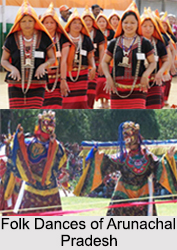
Folk Dances of Arunachal Pradesh, Indian Folk Dances, Indian DancesFolk Dances of Arunachal Pradesh form a vital element in the zest and joy of living of the tribal people in Arunachal Pradesh. The dances of the people of Arunachal Pradesh</b> express their joy, love, gratitude and emotions. Most of the Folk Dances of Arunachal Pradesh are performed adorn with best traditional costumes, decorated spears and multicoloured beads and ornaments. In Arunachal Pradesh, dance varies from martial steps and folk dances to highly specialized form of dance performed by the Buddhists.

Different Folk Dances of Arunachal Pradesh
The folk dances of Arunachal Pradesh are as follows:

Taapu Dance: This is a war dance of the Adi Tribes based on the myth of a struggling life of Tani (man) for survival. This dance is performed in order to drive out the evils from the village.

Folk Dances of Arunachal Pradesh, Indian Folk Dances, Indian Dances

Taapu Dance: This is a war dance of the Adi Tribes based on the myth of a struggling life of Tani (man) for survival. This dance is performed in order to drive out the evils from the village.

Ponung Dance: Ponung dance falls in the celebratory dance category where the young women execute the dance holding each others’ hands and moving in circles. The dance celebrates the crop season and mythological songs often relate the source of paddy and crops.

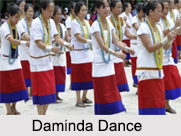
Daminda Dance: This artistic dance belongs to the Apatani Tribes. It is performed during the Dree festival to celebrate the beginning of rice planting season when the people pray for a good harvest and protection from natural calamities.

Wancho Dance: Wancho Dance belongs to a particular tribe of Arunachal Pradesh. According to the name of that tribe, "Wancho" the dance is named. This dance is preformed


Classification of Folk Dances of Arunachal Pradesh
Folk Dances of Arunachal Pradesh can be generally classified into four different groups of dances naturally enacted for a host of purposes. They are as follows:

1. Festive Dance performances which are mostly celebration orientated folk dances celebrated in individual occasions.

2. Ritualistic Dance is another type of folk dance in Arunachal Pradesh done with much enthusiasm through certain rituals.

3. Recreational Dance is performed as part of spare time purpose. These dances are not performed as part of any ceremony or festival although they are part of firm occasions creating a happy and joyful impression.

4. Pantomimes are a Dance Drama which aims at depicting a mythological story entitled with a moral.

Different Folk Dances of Arunachal Pradesh
The folk dances of Arunachal Pradesh are as follows:

Folk Dances of Arunachal Pradesh, Indian Folk Dances, Indian DancesPonung Dance: Ponung dance falls in the celebratory dance category where the young women execute the dance holding each others’ hands and moving in circles. The dance celebrates the crop season and mythological songs often relate the source of paddy and crops.

Daminda Dance: This artistic dance belongs to the Apatani Tribes. It is performed during the Dree festival to celebrate the beginning of rice planting season when the people pray for a good harvest and protection from natural calamities.

Wancho Dance: Wancho Dance belongs to a particular tribe of Arunachal Pradesh. According to the name of that tribe, "Wancho" the dance is named. This dance is preformed only in special occasions like festivals and ceremonies.

Taapu Dance: This is a war dance of the Adi Tribes based on the myth of a struggling life of Tani (man) for survival. This dance is performed in order to drive out the evils from the village.

For more, visit the link below:

Tuesday, 31 January 2023

History of Indian Drama


History of Indian DramaHistory of Indian Drama has originated and developed from storehouse of Sanskrit in India. Indian drama has given its incredible impact and limit to perfection since ancient times. Drama is basically a form of performing arts, where stories are enacted by the utilisation of dialogue, music, signal and dance. Traditional Indian drama, which is highly influenced by the Hindu religion, was developed by local artists and performers and is not a replication of western influx. Bharata is traditionally considered to be the father in the history of Indian drama. The history of Indian Drama is deeply rooted in Classical Sanskrit Theatre, which is the earliest existing form of drama and theatre.

Ancient Indian Drama
History of Indian drama dates back to the ancient Vedic period. It then moves on to the classical theatre traditions, also influencing modern theatre, particularly the Hindi, Marathi and Bengali theatres down the line. Looking back towards the bygone historical path, the beginning of the ancient dramas owes to the Rig Veda for its monumental source material, together with Pururava, Urvashi, Yama and Yami, Indra-Indrani, Sarma-Pani and Ushas Suktas. Even the epics of Ramayana, Mahabharata and Arthashastra are instilled with specific techniques of dramaturgy. Sages like Valmiki and Vyas and Panini also had shed decisive light and Patanjali had heartily contributed in his Mahabhashya that there existed two dramas, namely, Kamsa Vadha and Vali Vadha. As such, the origin of dramas from the early Vedic Age is considered to be the most authentic and authoritative amongst all the later creations.

Tuesday, 17 January 2023

Indian Film Awards


Indian Film AwardsIndian Film awards have a gala show as it appreciates and graces some of the best talents in Bollywood. The entire fraternity is awarded by a variety of Production and Television Channels in admiration of their laborious efforts of entertaining the nation with the copious number of films produced in the world each year. The Indian film Industry is appreciated not only in India but also in the western countries. There is no dearth of film awards in India. In fact first there were only the Filmfare Awards, which were considered to be the highest level of film awards. The Government of India instituted awards like Dadasaheb Phalke Award to promote Indian cinema.

After some years, there were other awards that came into being through the hands of the Screen Awards, the Zee Cine Awards and many more of them. With the immense popularity of these awards among the people, the customs of award ceremony in India became immensely significant. However, there are a few categories of work from other part of the country that need to be appreciated as well, but unfortunately are not done in some of the awards. Example the Filmfare awardees are only the ones that have their contribution in the Hindi films, thus the contribution of the people in the other regional films are neglected. This explains the need for the more new awards in the coming generations.

The IIFA Awards is one such example, where the Indian film industry is awarded on the international front. Though the presence of the Oscar awards has always been prominent, the most striking feature of this award is the excellence contributed by the luminaries of only the Hindi film industry.

Indians films still have a long way to go to achieve the standards of Oscar Awards. Even though India has been a leading player in international cinema, making almost the maximum number of movies annually, Bollywood's track record in the Oscar Awards fame is rather disappointing, even downright dismal. There have been the stray achievements in this direction, but reaching a balance between the commercial and award-oriented cinema seems a far cry yet. "Shwas" becomes the fourth Indian entry to the coveted annual academy awards and the first film in the Marathi language from Indian state of Maharashtra being sent for the Oscar. This was a poignant theme that has made an impression enough be nominated for the top shot.

For more, visit the link below:

Thursday, 5 January 2023

Drone Music, Indian Classical Music


Drone Music, Indian Classical MusicDrone music also known as drone-based music, drone ambient or ambient drone, dronescape or the modern alias dronology is representative of spirituality. This music is a simple musical style that gives emphasis to the use of sustained or repeated sounds, notes, or tone-clusters - called drones. The drone is the base provided in the actual practice of the musical art. The drone represents a spectrum of rich tones gravitating towards the fundamental sa, the sadja (sadja itself means the generation of other notes). This type of drone is the artistic, aesthetic need for a base, but the psychology for feeling such a need has been acquired through its growth in the environment and influence of Indian cultural spirit.

The various qualities that are required - repose, firmness, persistence, involvement, harmony, gravitation- are all present in the sound of the drone instruments of the tambura. To take an objective view, the Indian musician listens to the tambura endowing these qualities to it from himself as a response in resonance. The tambura sound acts as a signal for such responses in the Indian musicians. The context aspects of a raaga as developed during a performance are enhanced by the signalling sound of the tambura. This "basic" note is just a steady note, but a referential note, and a point of departure to be consciously undertaken for the flight of imagination.

In all melodic music, in the primitive, ethnic as well as folk expression, the basic note is the note of prime importance. It is the central point of reference. In India during and after the period of Bharata's Natyashastra, melodic music went through certain phases of evolution, viz. music as jati-gana, as raaga-jati gana and still later as raaga-gana giving greater emphasis or importance to the sadja grama and to the sadja, the very basis of melody. In earlier association with primitive music, ritual dance and magic, music must have played its role along with the incessant and repetitive rhythms of the drum as nerve medicine (as tranquillizer or exciter) or as an instrument of trance.

For more, visit the link below: